Sagicor Group ups dividend

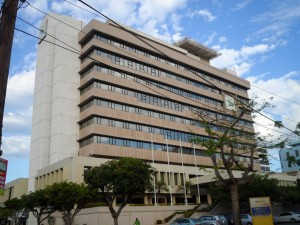
Sagicor Group Kingston head quarters.

Shareholders of Sagicor Group Jamaica are set to enjoyed an increase in the dividend for 2017 as the group has just announced an increase of 4 cents over the amount paid for the similar period in 2016.
The group in declaring the first dividend of 2016 has set a later date for payment than in 2016 with the a payment of Seventy Cents per share, payable on May 5, to shareholders on record as at April 24. The ex-dividend date will be April 20.
Last year Sagicor paid an interim dividend of sixty-six cents per share on April 19 and on November 25, 2016 an interim dividend of Forty-five Cents was paid, for a total for the year of one dollar and one cent or just under 35 percent of the profits.
Last year the company reported profit attributable to stockholders of $11.26 billion up 15 percent from the $9.79 billion earned in 2015, with earnings per share ending at $2.90 for 2016. Total revenue for 2016 amounted to $59.7 billion up from $55 billion in 2015.
The company’s shares closed trading on the Jamaica Stock Exchange on Thursday at $34, and is up from $23.10 at the same time last year, for a gain of 47 percent, just below the movement in the all Jamaica index of 47.5 percent, over the similar period.

2 for 1 stock Kingston Properties stock split

Gary Sinclair chairman of Kingston Properties

Shareholders of (KPREIT) will see the number of shares owned doubling when they voted to split the existing shares into two units at the Annual General Meeting scheduled for May 16, 2017.
The company’s Board of Directors took the decision on March 31, to recommend to the shareholders of that each of the 500,000,000 ordinary shares in the capital of the Company be subdivided into two ordinary shares each thereby making a total share capital 1,000,000,000 ordinary shares.
On March 6, the directors reported to the Jamaica Stock Exchange that they would be recommending a stock split to shareholders. The stock traded before the announcement at $11 moved up after to a record $16.35 on March 16 and remain sat that price on April 3.
The directors at the same meeting approved a dividend to shareholders on record as at April 18 in the amount of US$0.00124 per unit. The payment date is May 9 and the X-dividend date is April 12.

Dolphin Cove late dividend

Dolphin Cove.

The Board of Directors of Dolphin Cove is just announcing that they declared an interim dividend of 20 cents per share that is payable on April 4, 2017.
The only problem is that the public was not made aware of it until late on Monday when it was posted on the stock exchange website. Investors in the stock would not have benefited from the announcement as the record date has long gone from March 16, 2017. The ex-dividend date was March 14, 2017.
The company paid dividends of 20 cents per stock unit in May, August and November last year. The stock last traded at $18 on the junior market of the Jamaica Stock Exchange and is up from $15.50 at the start of 2017.

KLE profit but no profit in 2016

KLE reported profit of $164 million but $164 million came from a one off inflow from gain on sale of shares in a subsidiary. The breakeven performance for continuing operations is a huge improvement over the $64 million loss incurred in 2015.

Going forward, KLE needs to keep growing income faster than cost. At the end of nine months last year Administrative and other expenses came out at $32 million and $97 million year to date. The last quarter showed an unusual jump of $47 million, even as revenues in the December quarter was in line with that of the September quarter at $52 million. In contrast admin expenses were at $127 million in 2015 to September and ended at $143 million for the full year.
There are no indications from the revenue data that investors can expect good levels of growth in 2017, if the flat numbers for the last two quarters of 2016, is anything to go by. Big losses of recent years may be behind them, while franchising could add to profit, from royalty income.
The group’s balance sheet that was shattered up to 2014, has seen major repairs, not before some investors lost out big on the stock. Equity capital that was negative at $34 million at the end of 2015 is now $130 million with the overall profit reported for 2016 and long term liabilities stands at $11 million. Current liabilities are down to $80 million from $160 million the prior year while current assets sit at $71 million including cash of $9 million.
The stock last traded at $3.30 on the junior market of the Jamaica Stock Exchange.

Audit wrongly states ISP earnings as 32c

I$P Finance hits a new high recently.


ISP Finance earned $40 million for 2016 or earnings per share of 46 cents based on an average of 87 million shares in issue for the year, but the audited statement reported only 32 cents based on a non-existence average of 126.5 million.
The company only issued 105 million shares hence it is not possible for the average to be greater.
The above error along with glaring errors elsewhere in the financial system at large raise the question about the investing public being adequately protected, in spite of regulators in place to do police the system?
Auditors are required to use care and due diligence in undertaking their duties to ensure that the companies they audit maintain proper records that will give a fair view of a company’s profit and financial position. Users of audited statement is not expected to see glaring errors in them. It raises questions about the quality of the audit and the management of the company as well.
Knutsford Express’ audited reports for 2014 and 2015, were filled with errors or questionable treatment of transactions, raising questions about the accuracy of the entire reports.
The earnings per share for 2014 was overstated due to inaccurate computation of the average number of shares issued in 2013, while showing earnings per share of $1.07 for 2014. The income statement erroneously stated by way of note, that “using the weighted average number of shares at end of 2015 would result in earnings being 50 cents for 2014.” Since no new share were issued in 2015 there can be no there is no need for a computation of an average and there can be no change to the earnings for 2014 if the correct average was computed for 2014 in the first place.
The report had further stated “During January 2014, the company raised additional capital of $99,862,700 from its initial public offering of 99,999,003 shares for its enlistment on the Jamaica Stock Exchange Junior Market”. The company in fact issued 26 million bonus shares in 2013 while the public offering was for 20,000,000 ordinary shares, only 4,867,338 new shares were offered by the company while 15,132,662 shares existing shares were sold to the public in the IPO by shareholders. At the time the IPO, 95,132,662 ordinary shares were already issued, the average number of shares should be approximately 60 million rather than 46.8 million used to compute the 2014 EPS, which would have worked out around 83 cents.

According to ISP Finance prospectus, 1n January 2007 the company was incorporated with an authorised share capital of 10,000 ordinary shares at J$1 per share. In June 2007 the company’s authorised share capital was increased to 5,000,000 ordinary shares with all being subscribed for at $1 each.
On February 11, 2016 the company’s authorised share capital was increased to 105,000,000 ordinary shares. Of the 100,000,000 ordinary share increase, 51,017,500 shares were allotted to Gencorp Limited at J$2 per each being the same price at which shares were offered in the IPO. Of the balance just over 48.98 million units were offered to the general public in the IPO.

Sagicor caught in JSE ownership restriction

Sagicor Group JSE ownership exceeded 10% restriction..

Two blocks amounting to 35.2 million Jamaica Stock Exchange shares were traded in the local exchange morning session, one day after the exchange advised Sagicor Group that they were in breach of Article 48 of the Articles of Incorporation of the Company.
The article sets a 10 percent limitation for ownership by any one shareholder. The restriction is meant to prevent anyone shareholder from dominating management of the company. The prospectus when the company sold ordinary shares to the public in June 2103 stated: Ordinary Shares – Special Provisions to Prevent Unacceptable Control Situations. Article 48 of the Articles of Incorporation of the Company contains provisions that are designed to prevent any Shareholder (including a Member Dealer) from holding Shares above the “Prescribed Percentage”, being over 10 percent of the issued share capital of the Company. If the voting power of any person (either alone or together with others) is more than the Prescribed Percentage, the Articles deem that an unacceptable control situation exists. In those circumstances, the same Article also deems that any Shares above the Prescribed Percentage are default shares that no longer carry rights to vote at general meetings of the Company. The Company has a power to give notice to the holder to dispose of any default shares, failing which the Company may dispose of them.
On March 3, a total of 35.3 million units of Jamaica Stock Exchange shares were trading through the market.

Iron Rock underperforms in year 1

Iron Rock came to the general insurance market just about when premium rates for catastrophe coverage is under pressure with consumers enjoying some of the lowest rates in years and with one element of good revenue losing it sting.
Iron Rock ended 2016, their first full year of operations, with a loss of $50 million, before fair value gains on investments of $5.5 million, taking the net position to a loss of $45 million, up from the forecast in the prospectus of $30 million as the company underperformed on most fronts, compared to forecast. Gross premiums written projected at $170 million ended well down, with $127 million generated in the year. Profit before operating expenses came in at $9 million versus $20 million forecasted. Investment income ended at $17 million versus $39 million while foreign exchange gains ended at $15 million with forecast being $7 million. Operating expenses ended at $91 million, lower than the $96 million projected. Underwriting loss before other income ended at $82 million versus $76 million after a lower loss claim of $6 million than the $12 million projected.

William Mc Connel one of teh directors of Iron Rock

With premium rates locally, cut in half in some cases, this new kid on the block may find it most challenging to meet the $415 million projected for gross premium income, this year. Unless management takes a more aggressive stance on investments, it will be a stretch reaching the intake of $46 million projected in this area. In the end the company will need to become adept at cost containment and investment management and hope for a good underwriting loss experience, if they are to come close to the $3 million profit projected for 2017 in the prospectus.
On the plus side, the big expansion on the way in the hotel and BPO sectors and other areas will provide an expanded market going forward and thus provide a base that they can expand their income from.
In spite of the loss, the company ended with a capital base of $560 million and holds investments of $366 million with $85 million in quoted equities. There is also an additional $70 million in short term investments. With growth in local equities the company should enjoy above average returns from this area that will boost the overall investment performance that could push them into an overall profit in 2017, but they are unlikely to see the same levels of foreign exchange gains enjoyed in 2016. Overall investment income realized or accrued could end up around $50 million in 2017 and would be well ahead of forecast.

JSE climbs on Monday

The Jamaica Stock Exchange corrected Friday’s error in the movement of the market indices to reflect the correct changes based on the close on Thursday and Friday.
The error in the market indices showed the sharp difference reported for the rise in the indices on Friday. The report shows the indices above the closing levels on Thursday but the official market report shows that main market and composite indices fell by more than 1,200 points and the junior market rising only 7.21 points when the closing index on Thursday and Friday show a rise of 29.39 points.
The market closed on Monday with 25 securities changing hands with 2 trading in the US dollar market. In the main market, 9 stocks advanced and 10 declined.
Trading levels in main market ended at 2,602,058 units valued at $79,186,131 compared to 7,683,386 units valued at $59,552,400 at the close on Friday. Trading in the US dollar market accounted for 3,316 units valued at US$962.
The All Jamaica Composite Index advanced 828.57 points to close at 245,253.44 the JSE Market Index gained 754.92 points to finish at 223,453.67 and the JSE US dollar market index remained at 210.21.
IC bid-offer Indicator| At the end of trading in the main and US dollar markets, the Investor’s Choice bid-offer indicator reading shows 8 stocks with bids higher than their last selling prices and 4 with lower offers.
The main market ended trading with an average of 282,723 units on Friday, compared to an average of 184,556 units on the previous trading day. The average volume for the month to date, ended at 248,740 units versus 214,756 units on the prior trading day. The average volume and value for February, ended at 223,938 units and $1,379,459.
In market activity, Berger Paints closed at $13, losing $2 with 3,799 shares changing hands, Cable and Wireless lost 4 cents to close at $1.30 with trades of 645,652 shares, and Caribbean Cement closed 20 cents higher to $32.20 with an exchange of 19,345 units. Carreras traded at $69, for a loss of 50 cents with 6,800 shares exchanged, Grace Kennedy closed 50 cents higher to $43 with 6,757 units changing owners, Jamaica Broilers traded 61,027 shares at $16, Jamaica Producers gained 50 cents to close at $16 with 5,209 shares exchanged, and Jamaica Stock Exchange closed 23 cents higher to $7.53 with trades of 23,712 units. JMMB Group lost 50 cents, closing at $17 with 23,836 units traded, Kingston Properties closed at $16.35 trading 200 shares, Kingston Wharves gained 55 cents to close at $31.75, with 6,034 units changing hands, Mayberry Investments closed 60 cents lower to $4.70 with an exchange of 124,821 shares, NCB Financial Group lost 49 cents to close at $61.50, after exchanging 11,943 shares, 138 Student Living closed at $4.50 with 13,015 units exchanged, Pan Jamaican closed at $35.01, with gains of 76 cents trading 145,770 shares. Pulse Investments was down 5 cents, closing at $8.45 with an exchange of 1,809 units, Sagicor Group closed at $33.50 trading 86,987 shares, Sagicor Real Estate fund added 1 cent to close at $10.56 with 39,600 shares traded, Salada closed at $9, losing 24 cents exchanging 320 shares, Scotia Group added 65 cents to close at $39, with 1,960 units exchanged, Scotia Investments traded $2.05 higher to close at $38.05 with 105,759 units changing hands, Seprod closed at $38, for a loss of 55 cents with trades of 600 shares, and Supreme Ventures closed at $6, losing 29 cents trading 3,175 shares. Proven closed at 29 US cents with an exchange of 3,316 ordinary shares, JMMB 7.5% preference share traded 497,190 units at $2 and JMMB Group 7.5% preference share closed 1 cent lower to $1.09 with trades of 766,738 units.

Barita Q1 profit hit by one off items

Barita Investments 2017 AGM held on March 23, 2017


Barita Investments closed their 2016 fiscal year to September with profits of $207 million after taxation down from $242 million in 2015 form increased revenues of $1.9 billion up from $1.5 billion in 2015.
Cost grew faster than the increase in income and one off losses from impairment of investments and increased bad debts helped to pressure the bottom line.
The real story, however, is not to be found in the net profit for the year but in the quality of the earnings for the year and more so, that which is reflected in the fourth quarter.
Fees and commission income more than tripled to reach $127 million, while net interest grew sharply from $118 million to $158 million for the September quarter over the levels generated in 2015. The fourth quarter numbers are heralding healthy growth in these areas in 2017. The December quarter results show moderate change to net interest income year over year but is down sharply to a net of $77 million while there was 68 percent jump in fees and commission income to $105 million, as the portfolio under management grew. At the Annual General Meeting held this past week the Finance director Ian McNaughton explained that there was an adjusting entry for interest that relates to a prior period while US dollar investments declined in value during the quarter thus affecting the fee income. “Subsequent to the quarter, values have been normalizing” McNaughton stated.
Barita is set to benefit from appreciation in the value of the assets of unit trusts, especially in the equity-linked unit that will boost fee income. The company will also benefit from increased value to its equity portfolio that should grow sharply, allowing the company to realise investment gains that should add to profits. The equity unit trust fund should also enjoy healthy inflows from new investors as local stocks record gains and encourage new investors to use the unit trust as a viable vehicle for their investment funds.
The stock that is currently listed in IC Insider.com’s TOP 10 stocks,  is currently under some selling pressure and last traded at $6.90 on the Jamaica Stock Exchange.

1 stock falls in a day for gains

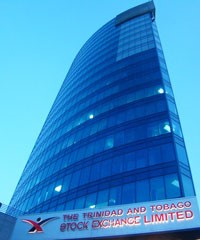
At the close of trading on the Trinidad & Tobago Stock Exchange all three indices recorded modest gains as 5 stocks advanced, 1 declined and 12 were unchanged.
Market activity resulted in 18 securities changing hands compared to 17 on Wednesday, leading to 610,096 units valued at $3,541,855 changing ownership, compared to Wednesday’s 193,335 shares valued at $2,067,973.
The Composite Index rose 1.17 points to 1,242.99, the All T&T Index gained 1.01 points to 1,829.32 and the Cross Listed Index was up 0.18 points to 88.05.
IC bid-offer Indicator|The Investor’s Choice bid-offer ended with 5 stocks with bids higher than last selling prices and 8 with lower offers.
Gains| Agostini’s added 1 cent to close at $18.51 with trades of 6,805 shares, Guardian Holdings closed at $16.05 with gains of 4 cents trading 5,405 units, NCB Financial Group gained 2 cents to close at $3.80 with an exchange of 95,364 shares valued at $362,282, Scotia Investments rose 5 cents to a 52 weeks’ high of $2.30 with 83,320 units changing hands and Trinidad & Tobago NGL advanced 60 cents, closing at $23.50 with 6,794 shares traded.
Losses| National Flour Mills lost 4 cents to close at $2.60 exchanging 330,107 shares valued at $858,278.
Firm Trades| Angostura Holdings traded 1,500 units at $15.01, Ansa Merchant Bank closed at $40 with 25,765 shares traded at a value of $1,030,608, Clico Investment closed at $22.51 with an exchange of 17,588 shares valued at $395,997 and First Caribbean International closed at $8.85 trading 1,200 units. JMMB Group held firm at $1.22 trading 21,959 units, Massy traded 200 shares at $53, One Caribbean Media closed at $16.48 trading 300 shares. Republic Financial Holdings exchanged just 20 units at $105.48, Sagicor Financial remained at $9.01 trading 10,000 units, Scotiabank closed at $59 with 2,616 shares changing hands, Trinidad Cement closed at $4.20 trading 1,103 units and West Indian Tobacco exchanged 50 shares at $127.