On the back of a strong 49 percent jump in first quarter profits to December last year to $3.56 billion, National Commercial Bank rose to $55 and helped pushed the all Jamaica Composite Index over the 218,000 points level in the first half an hour of trading on Friday and more than 219,600 by 10:45.
By the cut off of this report, the stock hit a new high of $26.98 with 18,574 shares trading. 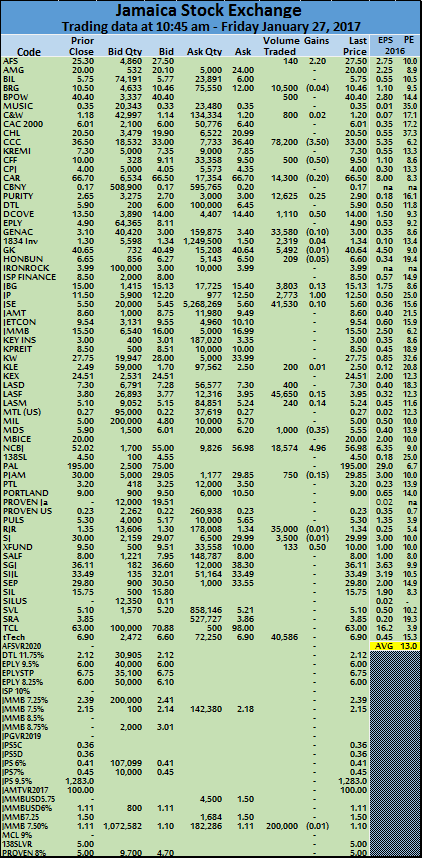 Jamaica Producers jumped to $12.50, a new high with 2,773 and Access Financial traded at $27.50 for a new high.
All major markets indices hit new records during the morning session but with moderate trading taking place. The all Jamaica Composite Index jumped 2,607.52 points to 219,646.41 the Jamaica Stock Exchange Market Index leapt 2,331.57 points to 200,777.50, the Jamaica Stock Exchange combined index surged 2,504.69 points to 215,422.02 and the junior market index climbed 33.33 points to 2,844.60. By 11:17 am the all Jamaican Index pushed over the 220,146.59 rising by 3,091.13 points and 201,209.93 Jamaica Stock Exchange Market Index.
Securities changing hands, amount to 28 at 10:45 am as a total of 13 advanced and 12 declined, resulting in a volume of 554,414 shares changing hands, carrying a value of $6,229,690. The average trade for the early session amounted to just 19,801 units.
NCB pushes all Jamaica by 2,600 points
New record close for JSE majors
Berger hit at a new 52 weeks’ high on Thursday.
The high levels of trading above the $220 million market seen in the market for the previous 5 trading days ended on Thursday with less than $100 million of trading. At the close, 3,687,829 units valued at $80,933,897 changed hands, compared to 13,315,100 units valued at $237,592,401 changing hands on Wednesday. Of the stocks traded, the junior market accounted for 542,606 units valued at $3,545,918.
The market closed with 43 securities changing hands, with 16 stocks rising and falling in the overall market, including 6 stocks rising and 5 falling, in the junior market. A total of 8 securities ended at new 52 weeks’ closing highs.
At the close the All Jamaica Composite Index gained 1,486.31 points to close at 217,038.89. The JSE Market Index rose 1,268.01 points to finish at 198,445.93 and the JSE combined index climbed 1,077.42 points to close at 212,917.33.
The average trade for the day in the main market ended at 116,490 shares compared to an average of 275,383 units traded on Wednesday. An average of 291,945 units traded for the month to date, versus 467,399 units on the previous trading day. The average for the month of December ended at 549,379 units.
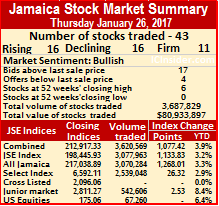 IC bid-offer Indicator| At the end of trading in the main and junior markets, the Investor’s Choice bid-offer indicator reading shows 21 stocks with bids higher than their last selling prices and 3 with lower offers.
In market activity, Berger Paints jumped $1, pushing the price to a new closing high at $10.50 while trading 123,265 shares, Cable and Wireless ended with 626,427 units at $1.18, after losing 7 cents, Caribbean Cement surged $3 in trading 865,850 shares to close at 52 weeks’ high of $36.50. Carreras closed at $66.70 with 27,280 shares changing hands, 1834 Investments traded 62,439 units at $1.30, Grace Kennedy had 50,652 units trading to close at $40.65, after gaining 15 cents, Jamaica Broilers lost 2 cents and closed at $15 with 21,213 shares changing hands. Jamaica Producers traded 250,000 shares after losing 30 cents to end $11.50, Jamaica Stock Exchange lost 10 cents to close at $5.50, having traded 51,865 shares, JMMB Group traded 114,080 units at $15.50, gaining 15 cents, Kingston Wharves ended up trading just 600 units and adding 26 cents to close at $27.75.
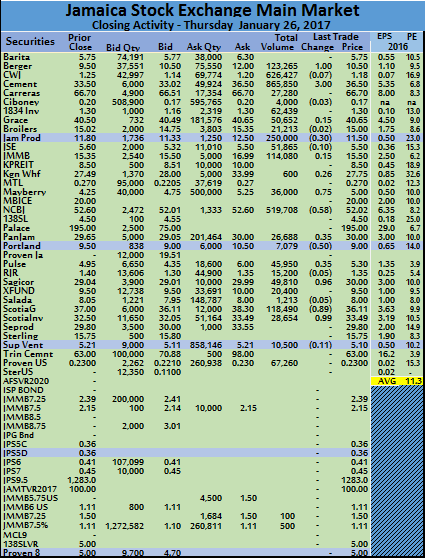 Mayberry Investments traded 36,000 shares with gains of 75 cents, to close at $5, National Commercial Bank lost 58 cents to close at $52.02 after swapping 519,708 shares, Pan Jamaican gained 35 cents and closed at $30 with 26,688 units traded, Portland JSX closed at $9 after falling by 50 cents while trading 7,079 units. Pulse Investments traded 45,950 units, gaining 35 cents to close at a 52 weeks’ high of $5.30, Radio Jamaica lost 5 cents, closing at $1.35 with 15,200 shares traded, Sagicor Group closed with 49,810 shares changing hands with a gain of 96 cents to $30. Sagicor Real Estate fund traded 20,400 units and closed at $9.50, Scotia Group, with 118,490 shares changing hands lost 89 cents to close at $36.11. Scotia Investments traded 28,694 units, gaining 99 cents to close at $33.49, Supreme Ventures lost 11 cents in trading 10,500 shares to close at $5.10 and Proven Investments traded 67,260 ordinary shares to close at 23 US cents.
Jamaican majors end at 214,159 points.
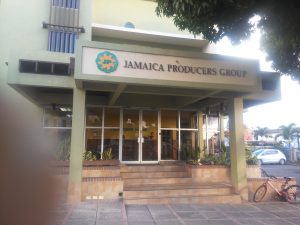
Jamaica Producers rose by $1.47 to end at a 52 weeks’ high of $11.
The market closed with 33 securities changing hands, 16 stocks gained and 10 declined in the overall market, including 6 stocks rising and 7 falling, in the junior market.
At the close the All Jamaica Composite Index gained 1,313.02 points to close at 214,159.89. The JSE Market Index rose 1,174.08 points to finish at 195,871.59 and the JSE combined index climbed 1,134.09 points to close at 210,232.22.
At the close with 20,100,275 units valued at $241,271,357 changed hands, compared to 38,043,877 units valued at $286,247,575 changing hands on Friday. Of the stocks traded, the junior market accounted for 1,892,208 units valued at $12,483,279.
 The average trade for the day in the main market ended at 958,319 shares compared to an average of 601,774 units traded on Monday. An average of 736,679 units traded for the month to date, versus 515,038 units on the previous trading day, compared with an average of 549,379 units, December ended with.
IC bid-offer Indicator| At the end of trading in the main and junior markets, the Investor’s Choice bid-offer indicator reading shows 14 stocks with bids higher than their last selling prices and 5 with lower offers.
In market activity, Investors continued to react positively to nine months results, showing a sharp hike in profit for Berger Paints, pushing the price to a new closing high at $7.99 while trading 25,000 shares. Cable and Wireless ended with 465,017 units at $1.19, after gaining 7 cents, Caribbean Cement traded 46,985 shares to close at $30.52 with a rise of 2 cents, Grace Kennedy had 177,361 units trading, to close at $40.48, after gaining $1.48, Jamaica Broilers lost 3 cents and closed at $15.47 with 6,876,548 shares changing hands. Jamaica Producers traded 22,200 shares, rising by $1.47 to end at a 52 weeks’ high of $11, Jamaica Stock Exchange traded 75,579 shares at $5.60,
 JMMB Group traded 42,686 units at $15.31, Kingston Wharves ended up trading 8,361 units to close at $25.01, after losing 29 cents. Mayberry traded 7,500 shares and closed at $4.25, gaining 20 cents in the process, National Commercial Bank added 50 cents in swapping 381,306 shares to close at $52, Pan Jamaican traded 12,723 units to close at $29.75, Portland JSX added 1 cent to close at $9.01 while trading 10,000,000 units. Sagicor Group closed with 37,440 shares changing hands with a loss of 4 cents at $29, Sagicor Real Estate fund gained 20 cents in trading 2,000 units to close at $10.20, Scotia Group, with 900 shares changing hands, gained 50 cents to close at $35.50 and Supreme Ventures traded 5,500 shares to close at $5.21.
Juniors inch forward on Friday

Jamaican Teas traded at a new high of $6.50 after rising $1.
Trading was dominated by Lasco Distributors with 7,130,521 units trading with a loss of 5 cents to end at $7.35, Lasco Financial with 3,895,608 shares at $3.69, after rising 6 cents and Lasco Manufacturing with 10,576,878 units changing hands with a rise of 18 cents closed at $5.18.
The junior market index climbed 15.93 points to a record close of 2,777.87 with 21 security trading versus 17 that traded on Thursday. Trading ended with prices of 9 stocks gaining and 7 declining, on heavy volumes.
An average of 1,095,216 units with an average value of $6,075,413 traded, compared to 269,597 units with an average value of $1,551,515 on the preceding trading day. The average for the month to date is 197,604 units with an average value of $1,049,152 versus 128,556 units with an average value of $662,517 on Thursday. The average for December is 131,147 units, at an average of $672,488.
 The market closed with 7 stocks with bids higher than their last sale and none with a lower offer, than their last sale.
At the close of trading, AMG Packaging rose 12 cents to close at $24.52 with 700 units changing hands, Blue Power closed with 1,850 units changing hands at $37, Cargo Handlers lost 90 cents in trading 9,968 shares at $20, Caribbean Cream rose 30 cents and closed trading at $7.30 with 78,104 units trading. Caribbean Producers, traded 60,454 shares and rose 10 cents to $4.10, Consolidated Bakeries ended at $2.60 with 110,268 shares changing hands, after rising by 20 cents, Dolphin Cove lost 50 cents trading 650 shares at $14, General Accident Insurance traded 18,567 shares to end at $2.95 after falling 13 cents. Honey Bun closed with 497,760 shares changing hands, at $6.21, Jamaican Teas jumped $1 to end at a new high $6.50 with 2,000 shares being exchanged, after the company reported that the board of directors will be considering a stock split at its upcoming meeting in February.
 Jetcon Corporation traded 48,465 shares to end at $10 after trading at a new intraday high of $10.50, Key Insurance traded 33,300 units to close at $3 after losing 10 cents, Medical Disposables lost 25 cents to close at $4.45 with 27,900 shares changing hands, tTech traded 2,000 shares to close at $6.50. Eppley 9.5% preference share, ended with 307,319 units changing hands to close at $6 after falling 6 cents and Eppley 8.25% preference share, ended with 185,036 units changing hands to close at $6.
Berger’s stellar performance

Berger price jumped on Friday after posting strong 2016 results.
For the quarter, earnings were $185 million versus $80 million in the 2015 quarter, with revenues climbing 17.8 percent in the December quarter to $895 million.
Berger ended with cash of $158 million in December, having generated $370 million from operations before build up in working capital. The gross cash inflows, places it in a good position to continue to pay out a rich dividend, which they should do later in the year. According to the cash flow statement, receivables jumped by $378 million over the March 2016 position. That would put it at $700 million, as of December 2016. The majority of this amount should be cleared by the end of March.
Unfortunately, the Berger report does not conform to international standards for reporting interim results. The effect is there is no information on direct and indirect cost and gross profit and the balance sheet carries little information as to the composition of the current assets and liabilities. Accordingly, investors, cannot make proper assessment of its performance.
A final dividend of 20 cents per share totalling $42.864 million was paid July 2016. The stock responded well to the numbers, with investors pushing it to a new record high of $6.75 in early morning trading on Friday, on the Jamaica Stock Exchange. IC Insider.com forecast earnings of $1.10 for the full year to March 2017 and $1.60 for the 2018 fiscal year.
Main Event priced to bounce
 The Main Event Entertainment Group Initial Public offer of shares seem set to deliver a strong increase in share price once the stock list on the junior market probably in February. There are a number of positives to greet the issue.
The stock market is in a bull run currently. The stock is priced at just $2 which many small investors will be attracted to. The historical PE is just 7, compared to an average of 15 for junior market stocks, based on 2016 earnings. IC Insider.com is projecting earnings in the order of $100 million for 2017, assuming a 15 percent revenue gain, for earnings per share of 33 cents. Based on this, the stock should more than double in 2017.
The company grew revenues by 11 percent in 2016 over 2015 to an estimated $1.13 billion and by 55 percent over 2014 while that for 2013 was flat at $517 million. The company indicates that they had to recently turn away business due to capacity constraints which the fresh capital will fix.
Gross profit has been strong at 36 to 38 percent level in 2016, but it may be somewhat lower, as some items in administrative and general expenses may be directly related to events, rather than overheads.
Main Event,should benefit from the strong growth in the tourism sector and pickup in economic activity locally, that should see a greater number of Jamaicans patronising entertainment events, allowing for more events to be staged.
 Importantly, the profile of the company will grow with the listing, as they benefit from daily exposure based on trading activity. The expanded directorship and regular examination of operations by the board and the infusion of capital will result in even better performance going forward and that should boost revenues and hold cost in check. This is a factor that should not be lost on investors.
Only 60 million shares are being sold, with few being available to the general public. The issue opens at 9 am, Tuesday 24 January and is likely to close at the same time. On the negative side, the company suffered a large fall in digital signage income with $75 million inflows in the 11 months to September 2016 from $139 million in the similar period in 2015. Receivables tend to be on the high side of nearly 2 months of sales, tying up nearly $100 million in excess of normal levels, while payables are running at 2.3 months at $181 million.
IC Insider.com is according an investment in the stock to be BUY RATED.
IS PE of 40 rational for junior stocks?

Honey Bun shot up by more than 500% in 2016 shortly after stock split.
Yes, interest rates are at their lowest levels in decades, the Jamaican dollar hit rock bottom and bounced and business confidence as measured by the stock market, is at an all-time high. Even then there is little rationale for Cargo Handlers to be selling at a PE of 38 based on estimated 2017 earnings and worse, 51 times 2016 earnings.
IC Insider.com checked with an officer of the company, to get an understanding as to what was going on with the stock. Are profits running well ahead of 2016, there was no evidence of that, according to the company, operations are running close to that of 2016, was the response. Are there expansion plans on the table? The answer was there are no such plans in the works. Well, it could be the fact that the economy of Montego Bay where the company operates, is said to be growing at 7 percent per annum, be a factor. Some persons think it may be the dividend yield, but that makes no sense whatsoever as the yield would be a mere 2 percent, at the present stock price if all profit of 41 cents per share for 2016 were paid out. The only answer, the stock appears cheap to many, in dollar terms with the 10 to 1 stock split that took place in late 2016 and supply continues to be relatively low.
 The stock is selling well in excess of the average market and the next highest valued in the junior market, Honey Bun that is at a PE of 21 based on 2016 earnings but a more moderate 14 times projected 2017 earnings.
It not surprising that Cargo Handlers heads the list of most overvalued stocks on both the main and junior market.
The company reported profit climbing 25 percent for their September quarter last year and 31 percent for the full year before taxation and could result in earnings of 55 cents per share for 2017. That would still leave it with an eye popping PE of 38 times current year’s earnings. At this level of PE investors are assuming that profits will be rising around 38 percent per annum for a while and that does not seem rational, if that were the case, then Access Financial should be selling around $137 per share, with earnings seemingly likely to grow around 30-40 percent per annum, for a while.
Paramount exits TOP 5 overvalued stocks

Paramount
Iron Rock Insurance entered the junior list as operating results fall behind forecast.
There seems to be little rationale for Cargo Handlers to be selling at a PE of 35 based on estimated 2017 earnings and worse 51 times 2016 earnings. The stock is selling well in excess of the average market and the next highest valued in the junior market, Honey Bun that is at a PE of 21, based on 2016 earnings but a more moderate 14 times projected 2017 earnings.
It not surprising that Cargo Handlers heads the list of most overvalued stocks on both the main and junior market, followed by Kingston Wharves and 138 Student Living.
 Iron Rock projected losses in the prospectus for 2016 of $30 million and a small profit of $3 million which includes foreign exchange gains of $7 million in 2018. Year to date losses to September last year, are running well ahead of the prospectus’ forecast with losses of $38 million with the September quarter’s losses ended at $14 million. More worrying is that projections of gross premium income of $169.36 million in 2016 rising to $414.97 in 2017 are well off what seems to be occurring in 2016 with results for the nine months showing gross premium of just $59 million well below forecast by $110 million. With all of this happening investors pushed the stock up to $4 for a premium above the listed price.
Added cost hits Kremi’s profit
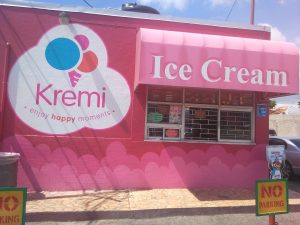 Caribbean Cream (KREMI) sales are still growing but it reported a fall in earnings of five cents for its third-quarter ending November 2016, down from 10 cents a year earlier.
The ice cream company packed on more expenses during the quarter as it secured a distributor and launched a new coffee-rum product while incurring added cost from repair of equipment.
Over nine-months, the company earnings are still up at 36 cents from 33 cents a year earlier in spite of the reduction in the third quarter.
Quarterly revenues rose 5 percent to $271 million from $258 million but the cost of sales increased, cutting gross profit down 13 per cent to $89 million. The increase in direct cost stemmed primarily from increased repairs and maintenance, some of which were unscheduled.
Revenues for the nine months rose 8.3 percent from $818 million to $886 million while profit moved to $137 million from $124 million for the 2015 period. The company is yet to increase prices for its product after an increase two years ago, but are constantly assessing the possibility of doing so, subject to feedback from the market. But Kremi seems to have lots of room to adjust prices with the Nestles’ Buckingham selling a 946 milli-litre container at $802, while Kremi sells at just $421 in the supermarket. With continue attractive growth in volumes they may be reluctant in moving prices as they gain market share.
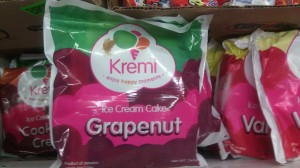
Caribbean Cream is one of NCBCM’s recommendations
Sales are still going ahead of last year Christopher Clarke told IC Insider.com in response to questions posed to him. We had a series of breakdown of equipment and our two year scheduled maintenance occurred in the quarter Clarke advised.
Sales over the important Christmas period and gross profit continue to be satisfactory, but raw material cost inched up a bit Clarke indicated.
In light of the lower than expected third quarter numbers, IC insider.com revised its estimate for earnings to 55 cents for the current year ending in February and 90 cents for 2018.
Is C&W buy out back in vogue?
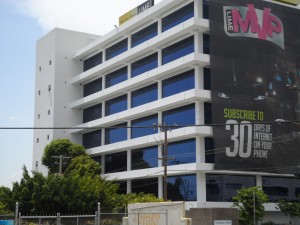
Cable & Wireless HQ – The company’s stock traded at a high of $1.87 in November 2014.
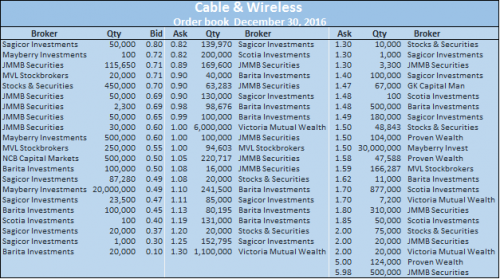
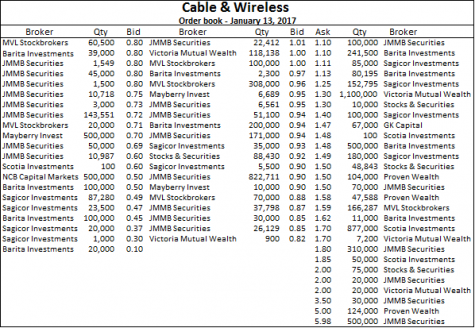
On Friday last, the stock traded 603,857 units between 92 cents and $1.08. The order book for the stock changed markedly, from a bearish posture to a more aggressive one. Unlike the end of January when sell orders dominated buyers, the situation at the close on Friday was reversed, with buyers almost twice the number of sellers. Importantly, Mayberry’s 30 million units sell order at $1.50 for own account, is removed.
The market activity, suggests that something major is in the offing. In 2015, a group of large minority shareholders approached Cable & Wireless PLC to buy their shares. The Liberty Global takeover of the London listed company intervened. Local investors were expecting that the local company’s minority shareholders would have been made an offer for their shares. After not seeing an offer, interest in the stock fell and took the price with it, down to 65 cents. IC Insiders’ source indicates that a potential offer is likely to be in the making.
Cable and Wireless struggled for years as Digicel, its main rival, clobbered it in the Cell phone market, but the company has been making big strides in reversing the trend.
 In addition C&W that focused attention on data service, is seeing that strategy paying rich dividends. The company reported just a small loss of $200 million in the September quarter and seemed to be on the way to making positive profit for 2017 onwards, with revenues growing 15 percent in the quarter and 13 percent for the six months. On the other hand Digicel is struggling as the market has moved towards data than voice and C&W grabs a larger share of the mobile market locally, leading Digicel to be looking at a sharp cut in staff numbers in the not too distant future.
With revenues likely to continue to grow for a while, around $3 billion per year, C&W seems on target to make huge profits down the road, with the prospects of big gains in the stock price ahead.
 Not many investors seem to see this picture, instead they focus on the short term developments, raising foolish questions about dividend payments and debt, when the two can’t be avoided. Under the companies Act dividends can’t be paid based on the large accumulated losses that have to be cleared first, while debt has been used to support the operations while it went through restructuring. The company is now cash flow positive and that should lead to debt reduction going forward subject to any large acquisition. Some minority shareholders who sought legal advice indicates that there were transactions that were effected that were not in the interest of the company.