Business conditions surged

Business and investors’ confidence is climbing with the Bank of Jamaica perceptions of present and future business conditions survey showing strong improvements in the latest reading, done in August this year.
Grph of fut BCon 8-16The All-Jamaican stock market composite index also confirms the gains in confidence as can be seen from the chart. The stock market index dipped ahead of the survey numbers and started the rebound earlier than the survey figures.
The future conditions index rose to its highest level on record to 175.7 from 153.0 in the previous survey while the index of present business conditions rose to 211.7 from the 186.8 attained in the previous survey. According to the country’s central bank “Both indices reflected increases in the proportion of respondents of the view that conditions are or will be “better.” In addition, there were decreases in the proportion of respondents indicating that conditions are or will be “worse.”

The construction sector is one area reflecting improved confidence in the economy.

The construction sector is one area reflecting improved confidence in the economy.

There was also a slight decline in the proportion of respondents that indicated that present conditions are ‘about the same’ while there was an increase in the number of respondents that indicated that future business conditions would be ‘about the same’.”
With the stock market moving from 178,203.70 points at the end of August to 185,329 points at the end of October, it is expected that perception of business conditions would have improved over the August levels as the stock market seems to mirror very well the sentiments of the business sector.

2016 T-Bill rates slow JSE gains

TB 10-16Rates on Treasury bill slipped in the latest issues for October with the 91 days instrument coming in at 5.7 percent, down from 5.86 percent in September and the 28 days falling to 5.78 percent a decline from 5.84 percent previously.
The 192 days Treasury bill rate inched up from 5.81 percent to 5.83 percent. The latest rate out turn, comes off changes in rates with the 192 days instrument rate at 5.75 percent February 2013, rising to hit 9.11 percent in March 2014 and been on the decline since, with a few minor hiccups along the way. The trend continues downwards with the rate of decline having slowed markedly with the Bank of Jamaica repo rate set at 5.25 percent since May.
In June, the 192 days rate climbed to 6.01 percent from a 2016 low of 5.73 percent in February, at the same time, the 91 days instrument, fell to 5.65 percent in April and moved up to 5.86 in June and September. The 28 days T-bill fell to a 2016 low of 5.37 percent in April but rose to 5.95 percent in August.
The stock market has been heavily influenced by the decline in interest rates in late 2014 to the end of 2015 has struggled since, with rates being flat in 2016 with a few cases of it having risen.

Major gains in Jamaica’s Caricom trade

Bauxite shipJamaica’s trade deficit with CARICOM dropped sharply or 29.7 percent to end at US$123 million at the end of the year to April 2016, for a fall of US$52 million, from US$174.5 million for the similar period in 2015.

Jamaica’s imports from CARICOM declined by 25.3 percent to US$148 million, from US$198 million for January to April 2015. Mineral Fuels fell 36.5 percent to US$72 million from US$113 million, Chemicals declined by 29.2 percent to US$8 million and Food amounted to US$46 million, a fall of US$3.5 million or 7 percent. Beverages & Tobacco imports declined by 26.2 percent to US$7.7 million and Manufactured Goods rose 14.5 percent to US$7.5 million.
Exports to the region increased by 18.3 percent or US$2 million, to US$25 million. Re-exports climbed 53.4 percent were to US$5.6 million. Domestic exports were valued at US$19.7 million, 1.2 percent less than the US$20 million recorded for January to April 2015. Lower exports of Manufactured Goods were the main contributor to this decline, due mainly to lower exports of cement related products.

Jamaican GDP doubles 2015 growth

Image courtesy of arztsamui/FreeDigitalPhotos.net

Image courtesy of arztsamui/FreeDigitalPhotos.net

The Jamaican economy is growing in 2016 at twice the pace it grew in 2015 up to June, according to data released by the Statistical Institute of Jamaica, the entity that has the final say on the economic performance.
The economy that rose by 0.8 percent in the March quarter over the similar period in 2015 is up by 1.4 percent for the second quarter of 2016, compared to the similar quarter of 2015. If the trend were to continue, growth for the full year could hit 2 percent, the fastest pace of growth since 2006 with growth of 2.9 percent. The only other time since 2004 that the economy grew close the 2016 pace is 2007 when the economy grew by 1.45 percent and 1.43 percent in 2011.
Growth in 2015 over 2014 reflected an increase of 0.4 percent in the March quarter and 0.8 percent for the second quarter.
Agriculture added the most to GDP in Q2

Agriculture added the most to GDP in Q2

The 2016 second quarter increase, is attributed to improved performances in the Goods Producing industries 3.3 percent and the Services industries 0.8 percent but Mining & Quarrying industry declined by 1.9 percent. Increased outputs were recorded for Agriculture, Forestry & Fishing 9.4 percent, Manufacturing 0.6 percent and Construction 1.6 percent.Major growth in the service sector came from, Electricity & Water Supply grew by 5.0 percent, Hotels & Restaurants 1.3 percent, Finance & Insurance Services 1.4 percent.

Shaw’s tax-take jumps sharply

Minister of Finance Audley Shaw is raking in a big up tick in revenues to August ahead of forecast.

Minister of Finance Audley Shaw is raking in a big up tick in revenues to August ahead of forecast.

Excluding divestment proceeds of nearly $15 billion government revenues from taxes, fees and grants are ahead of budget by $13 billion to August this year and are ahead of the same period in 2015, by 18 percent or $20 billion.
The big increase over 2015, includes very little new taxes imposed in the budget presentation in May, this year. The increase over 2016 fiscal year annualises out at $48 billion and $60 billion when the new taxes are included. Compared to budget, revenues are running at $31 billion ahead of forecast on an annualised basis.
It means that Minister Shaw has fully funded the revenues given up by increasing the PAYE tax threshold, well ahead of the year-end and just around the time the reduced PAYE taxation takes effect to affect tax revenues with August being the first month that the reduced payment would be effected. PAYE enjoyed inflows of $1.9 billion more than planned, bringing in $29 billion to August. In 2015 for the same period, a total of $28.45 was generated from this item.
Collector of Taxes office, Constant Spring, Kingston.

Collector of Taxes office, Constant Spring, Kingston.

While revenues climbed sharply, expenditure so far is well below forecast by $13.8 billion. Employees’ compensation is down by $2.7 billion, interest cost shaved $2.5 billion off forecast, capital spend so far, is under spent by $7 billion and other expenses are down by $2.5 billion. The net effect higher revenues and reduced cost is a reduction of the fiscal deficit that was projected at $46.2 billion and ended at $19.5 billion, $26.7 billion less than planned. The primary surplus is running well ahead of plan with an out turn of $41.65 billion up from $17.5 billion budgeted.

Inflation set to fall below 2% for 2016

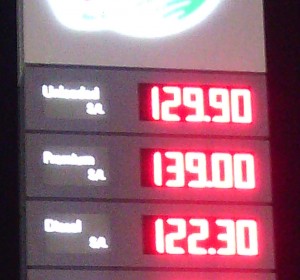
Fuel prices at the pumps in May 2015.

Fuel prices at the pumps in May 2015.

The inflation rate to August based on the consumer price index rose by 0.4 percent over July 2016, bringing the year to date inflation to 0.3 percent. With just 4 more months to go for the completion of the year and with the price of oil on the world market declining, Jamaica seems set to enjoy one of the lowest inflation for 2016, in decades.
The calendar year-to-date inflation is only 0.3 percent, while the year over year movement is 1.8 percent. IC Insider is forecasting the full year inflation to end just below 1.5 percent, barring major negative developments. If the forecast is closely achieved, it would be the lowest rate in four and a half decades and will better the 3.66 percent achieved in 2015, the previous lowest rate over the same period. The rate for 2016 would be well below the 4.2 percent forecast by the IMF for the calendar year and the Bank of Jamaica the fiscal year forecast to March 2017 with a target of 4.5 percent to 6.5 percent.
JPSAccording to Statin, inflation for August was driven mainly by the division ‘Housing, Water, Electricity Gas and Other Fuels’ which recorded the highest movement, 1.8 percent, primarily due to the increase in rates for electricity and water. The group ‘Food and Non-Alcoholic Beverages’ division increased by 0.4 percent and was influenced by the upward movement in the group ‘Vegetables and Starchy Foods’ up by 0.9 percent. The increases were partially offset by a fall in ‘Transport’ by 0.2 percent, due to lower petrol prices on the local market for the month of August.
The low level of inflation comes against the back ground of a 5 percent devaluation of the Jamaican dollar versus the US dollar and a tax package earlier in the year that saw an increase in the price of petroleum as well as a fiscal deficit that is close to zero and well below forecast.

Jamaica’s NIR jumps by US$250M

US$ bungleJamaica’s Net International Reserves (NIR) benefited from buoyant flows during the summer months to shoot up by US$250 million, taking the net reserves US$2.52 billion at the end of August. The reserves shot up by US$124 million in July and jumped by US$126 million in August, as the banking system raked in much more foreign currency over the two months than they sold.
In spite of the net heavy inflows during the period, the local dollar declined marginally by less than two percent against the critically important US dollar, with the selling rate moving from $125.46 at the end of June to $127.57 at the end of August.
The build-up of the NIR took place over the period when bankers net purchasing of foreign currency amounted to just under US$300 million in July and August.
The reserves at the end of August are above the 2016 peak of US$2.42 billion at the end of March, just before the central bank intervened by selling to the market, pulling the reserves to a low of US$2.265 billion in June.
The build in the NIR places the country’s central bank in a good position to control of the foreign exchange market in the months ahead, before the next period of higher inflows starts in mid-December.

40,100 Jamaicans found jobs

Staff at Derrimon Trading.

Staff at Derrimon Trading.

Jamaica’s unemployment rate rose in March this year, compared with the similar period in 2015, but 40,100 more Jamaicans found work in the 2016 period than at the similar time last year, data released by the Statistical Institute of Jamaica (STATIN) revealed.
The unemployment rate decreased for men from 10.3 percent to 9.6 percent but women had a big setback with unemployment for them increasing from 16.8 percent to 18.4 percent.
The year over year change resulted in the Employed Labour Force for March 2016 was 1,168,600 up from 1,128,500 reported in March 2015 and left the Unemployment Rate for March 2016 at 13.7 percent an increase of 0.5 percentage points when compared to the March 2015 rate of 13.2 percent.
StatinAccording to Statin, “the industry group “Wholesale and Retail, Repairs of Motor Vehicle and Equipment” provided employment for the majority (253,400) of the employed persons. This industry provided employment for the majority of females (117,100) but the largest number of males (157,100) were employed in the industry group “Agriculture, Hunting, and Forestry & Fishing”.
The number of persons classified as being outside the Labour Force fell by 49,000 (6.3 percent) to 735,400 in the March 2016 survey bringing the number of persons in the Labour Force to 1,353,500, which was 53,100 (4.1 percent) greater than the 1,300,400 recorded in March 2015.

GOJ income big outperformer

Audley Shaw at PTLThe Jamaican government has already covered in just four months, all the revenues that will be lost for the fiscal year even before the revenue lost from the higher threshold, starts to impact the fiscal operations from the increase in the threshold for PAYE contributors.
The data suggests that there is no need for there to be an alarm about funding the additional tax relief in 2017 as the performance to date indicates that the added break will be funded from the 2016/17 fiscal performance.
The savings on the interest cost and the added revenue intake, translate to just about $40 billion for a full year, and this on top of the $13 billion in new taxes the government imposed in May, plus the projection of additional taxes, included in the budgeted projections based on normal annual increase.
With the threshold coming into effect in July, the reduction in taxes to be paid won’t show up until August inflows. Data out of the ministry released on Thursday show revenues $11 billion ahead of projections and spending is down by $14 billion. The reduced spend, includes under spending on capital projects, amounting to $5.8 billion and housekeeping expenses of $3.8 billion.

Collector of Taxes office, Constant Spring, Kingston.

Collector of Taxes office, Constant Spring, Kingston.

Importantly, interest cost dropped $2.8 billion. The savings on interest and the increased revenues above budget amounts to just under $13 billion, more than the revenues given up by the increased in the threshold, this year. Taxes already applied to raise funds to cover the lost PAYE revenues will be collected in the remaining 8 months of the fiscal year. In effect the government has covered the revenue losses with the performance to July. Collection to be made for the balance of the fiscal year based on the increased taxes that were applied starting in May but with collection starting in June will be available to fund other fiscal endeavours or used to ensure that the fiscal year will end without a fiscal deficit.
There is one factor to be considered, the original budget was projected a fiscal deficit for the year of $17 billion and the focus could be on ensuring that this is wiped out and there is none in 2017/18. The new IMF agreement could have different terms than the very restrictive ones the country has been undergoing over the past 4 years.

Price increases slowed in July

Price fallWith more than half of the calendar year gone, overall price movements in Jamaica remained slightly negative at minus 0.1 percent, but inflation for the last twelve months amounts to 2.1 percent, while inflation since April is up 1.2 percent.
The rise in the Inflation Rate since April 2016, emanated mainly from 0.5 percent rise in prices in July 2016, according to the latest figures released by the Statistical Institute of Jamaica and a 0.9 percent movement in June.
July’s prices were mainly impacted by Electricity, Gas and Other Fuels rising 4.6 percent and Water Supply and Miscellaneous Services Related to the dwelling climbing 2.8 percent.

Increased fuel prices added to inflation.

Increased fuel prices added to inflation.


Food and Non-Alcoholic Beverages increased by a mere 0.3 percent due mainly to increased prices for vegetables and starchy foods. Price movements elsewhere for July were mild.
The decline in the price of oil on the world market in recent weeks should have a moderating effect on prices overall in August and September. Regardless, if inflation were to remain at the 0.5 percent per month as occurred in July the country is likely to enjoy one of the lowest year of inflation for some time and Jamaica seems set to report an inflation rate that is below 2 percent for 2016.