Big betting losses drop pushes SVL profits

Supreme Ventures profit rose sharply for the 2017 March quarter.

A huge fall in losses of Supreme Ventures sports betting, a fall of $82 million in operating expenses plus a 20 percent jump in revenues pushed profit up 51 percent to $416 million for the 2017 first quarter to March.
Profit before taxation grew by a much slower 39 percent, moving from $415 million in 2016 to $549 million in 2017. Earnings per stock unit ended the quarter at 15.8 cents up from 10.44 cents in 2016.
Sports betting lost just $9.5 million, sharply down from $68 million in the 2016 quarter, from $39 million fall in revenue, to $157 million, while Gaming that used to be a big loss maker chipped in with improved segment profit of $21 million, up from $10 million in 2016 with an increased revenue flow of $16 million to end $114 million. The group lost $19 million on its newly acquired subsidiary Caymanas Track, from revenues of $328 million. Caymanas Track Limited acquisition from the Government of Jamaica was effected on March 7. Lottery revenues rose from $8.8 billion to $10.4 billion for the quarter and contributed $556 million to profit up from $452 in the 2016 period.
Group revenues amounted to $13.4 billion, 20 percent higher than $11.2 billion in the corresponding period in 2016. Gross profit climbed 6 percent from $1.15 billion to $1.22 million. Administrative expenses rose 7 percent from $236 million to $252 million, finance cost fell from $40 million to $31 million.
SVL generated cash flows of $600 million in the quarter, up from just $49 million in 2016 as corporation taxes of $409 million paid in 2016 pulled down inflows for that period while tax payment for 2017 was just $121 million.
Shareholders’ Equity stands at $4 billion with borrowings at $380 million and cash and short term investments of $2 billion. Current assets amounted to $3 billion and current liabilities at $1.9 billion.
The Company is listed on the Jamaica Stock Exchange and last traded at $6.38 for a PE of 11 based on estimated earnings of 60 cents for 2017, the stock could pock higher with the average market PE at 13 times this year’s estimated earnings.
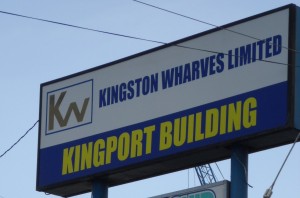

Profit rises 20% at Kingston Wharves

Kingston Wharves saw net profit attributable to shareholders growing by $56 million to $333 million in the quarter ending in March for a 20 percent over the comparable period in 2016. Profit before taxation grew 24 percent from $325 million in 2016 to $402 million in 2017. Earnings per stock unit ended the quarter at to 23.25 cents up from 19.34 cents in 2016. The 2017 performance was achieved from a combination of rising revenues and lower cost but higher taxation.
Group revenues amounted to $1.4 billion, 16 percent higher than or $1.2 billion in the corresponding period in 2016. Gross profit climbed 19.4 percent from $557 million to $662 million. Administrative expenses rose 7 percent from $236 million to $252 million, finance cost fell from $40 million to $31 million.
Terminal Operations| Operating revenue of the Terminal Operations Division amounted to $1.1 billion, a 14 percent increase over last year. Divisional profits increased by 21 percent from $274 million to $331 million. “The main driver behind this growth was the container handling operations which advanced by 8 percent over the corresponding period of the prior year,” chairman stated in the chairman’s report to shareholders.
Logistics & Ancillary| Logistics and Ancillary Services segment revenues grew 18 percent to $327 million, over the similar period in 2016. “This was achieved primarily through an expanding customer base as a result of deliberate marketing and business development efforts as well as the deployment of new technology to improve our integrated logistics services and allow for improved security and more efficient systems for the warehousing, delivery and timely receipt of cargo. The Logistics Services division earned operating profits of $98 million, an increase of 33 percent over the prior year,” Hall stated.
“We have invested considerably in our physical and technological infrastructure, embarking on significant terminal rehabilitation as well as the construction of a near-port domestic automotive centre to the benefit of both our terminal operations and our integrated logistics efforts. Our Total Logistics Facility, a purpose-built, state-of-the-art logistics complex will open our doors later this year, creating further opportunity to improve on our product offering and to execute planned vertical integration,” Hall further stated.
Shareholders’ Equity stands at $19 billion with borrowings at $2.2 billion and cash and short term investments of $2.7 billion.
The Company is listed on the Jamaica Stock Exchange and last traded at $30 for a PE of 26 based on estimated earnings of $1.15 for 2017.

Honey Bun’s sales up margin down

Honey Bun Sales up 17% in Q2

High riding Junior Market listing, Honey Bun enjoyed a huge bounce in profit in the year to August 2016, but in 2017 it not only failed to repeat that performance but ended up with reduced profit in its latest half year results.
A fall in gross profit margin and slow growth in revenues were the major contributing factors for the decline. Gross margin, fell to 43 percent of sales down from 46 percent in 2016 for the first quarter and 43.6 percent for the six months from 46.7 percent for the half year in 2016.
Profit before tax for the March quarter fell 12 percent to $45 million and for the six months the company best known for its pastries suffered an 11 percent decline in profits to $91 million from the prior year.
Profit after tax for the quarter chipped in $40 million versus $49 million in 2016 and for year to date March $77 million compared with $95 million for the same period last year. Earnings per share ended at 8 cents for the quarter and 16 cents for the half year.
In the second quarter of financial year 2017 sales increased by $53 million or 17 percent over the corresponding period in 2016, to reached $368 million with the pace of growth coming well ahead of the 7 percent increase for the year to date. Revenues for the half year rose $73 million to end at $680 million.

One Honey Bun’s Products.

form a major part of sales during Easter and the timing of the important Christian season, can result in big sales shift. Importantly, while all Easter sales would have been included in the 2016 half year results, with Easter falling towards the end of March 2016. For 2017, with Easter falling in mid-April, would have resulted in a shift in some revenues coming in the June quarter. The 17 percent sales increase in the second quarter is therefore far more impressive than it appears on the surface.
“Administrative, selling and distribution costs combined increased by 20 percent mainly due to the investment in capacity building programmes to facilitate business growth” Michelle Chong, the company’s CEO stated in her report to shareholders. Honey Bun’s corporate income tax incentive was reduced from 100 percent to 50 percent.
Honey Bun declared an interim dividend of two cents per share payable on June 1, to shareholders on record as at May 17. The stock will start trading ex-dividend, on May 15, 2017. The company last paid a dividend of 2 cents on January 9, in June 2016 a dividend of 3 cents per share was paid.

Late Easter hits Purity profit

Consolidated Bakeries proift down in Q1.

Consolidated Bakeries suffered a reversal in fortunes in their first quarter results to March this year, with Easter falling in mid-April.

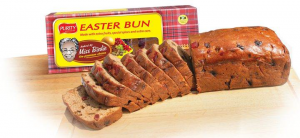
Easter was celebrated towards the end of March last year resulting revenues for Easter buns being reflected in full during the first quarter. Revenues for the recent quarter fell  to $228 million from $261 million last year and profit declining from $22.8 million down to $5.8 million in the latest quarter.
Administrative, Selling and Distribution cost were effectively flat during the quarter versus that of the 2016 period. Gross profit margin ended at just over 36 percent compared to 37 percent in 2016. Earnings per share end at 3 cents in 2017 and 10 cents in 2016.

138% pretax gains for Jetcon

Jetcon JSE listing ceremony last year March

Pre-owned car dealer Jetcon Corporation, generated strong growth in revenues of 75 percent to end with $258.5 million in the first quarter ending March, this year compared to 55 percent growth in the same period in 2016.
The company results benefited from gains in gross margin during the quarter, from 18.5 percent to 20.7 percent and an increase of 138 percent in pretax profit, to $37.3 million versus $15.7 million in 2016. Earnings per share ended at 19 cents versus 7.5 cents last year, partially due to taxation in the first quarter in 2016 and increase in pretax profit.
The growth in revenues for the quarter is in line with the increase in the December 2016 quarter, and slightly lower than the September quarter of 86 percent increase, but well ahead of the June 2016 quarter of 39 percent, the company reported in its release of the first quarter results to the Jamaica Stock Exchange.
Cost of sales for the 2016 quarter, was adjusted upward while some items in administrative expenses were reclassified to direct cost, the net result is downwards revision to the profit, reported in our first quarter results released in 2016. There are also major changes to inventories and amounts in receivables relating to amounts paid for goods in Transit.
Inventory of motor vehicles and parts more than doubled since March 2016 and is up by $51 million since December 2016, to $292 million, a deliberate strategy to increase choice for customers and sales, Jetcon stated in their quarterly report. The company stated that sales for the period after the quarter, continue to be ahead of 2016 with an increase of 52 percent.
Jetcon traded on the Jamaica Stock Exchange at $13.25 and is up from $2.25 when it listed in March 2016.
John Jackson is a director and Chairman of Jetcon Corporation.

NCB buy rated for growth

NCB Financial Group’s shares look likely to rise.

NCB Financial Group (NCBFG) reported net profit of $9.5 billion for the six months ended March 31, 2017, an increase of 58 percent over the prior year, with profit for the quarter to March, ended with a 63 percent increase to $5.9 billion, up from $3.59 billion in 2016.
Operating income amounted to $29.2 billion, an improvement of $3.8 billion or 15 percent over the similar period in 2016. The increase the Group said “was driven gains realised on investment activities increasing by $1.8 billion or 96 percent mainly due to improved investor confidence as a result of the improved macroeconomic fundamentals of Jamaica. Net fee & commission income increasing by $1.7 billion or 33 percent, primarily due to credit related fees from volume growth in loan product sales, point of sale and e-commerce commissions, coupled with corporate finance and unit trust fees.”
Loans the main driver of profits, increased by $34.6 billion or a strong 20 percent to $207.3 billion at the end of March over a year ago. The increase was driven by a 22 percent in Retail Banking and 17 percent increase in Corporate Banking portfolio, Patrick Hylton, the Managing director, advised investors in a report accompanying the results.
Operating profit rose about the similar period in 2016 by 150 percent for Retail & SME divisio0n, 16 percent for payment services, 77 percent for Corporate Banking. Treasury and Correspondent Banking enjoyed a 46 percent rise, Wealth, Asset Investment Banking operating profit jumped 67 percent, Life Insurance and Pension Fund Management rose 50 percent general insurance grew 42 percent and other 45 percent
The Group approved an interim dividend of 60 cents per ordinary stock unit at its board of directors meeting on April 27. The dividend will result in a total payment of $1.48 billion. Earnings per share ended at 42.39 for the March quarter and $3.84 for the six months and seems on target to exceed IC Insider.com target of $8 for the full year to September.
In trading on the Jamaica Stock Exchange, the group’s stock traded at $63.75 and at TT$3.99 on the Trinidad Stock Market.

Profit for C2W Music

Things seem to be looking up at financially challenged C2W Music. The company reports profit of US$42,573 for the 2016, a major improvement over the years of losses since it listed on the Junior Market of the Stock Exchange a few years ago. In 2015 the company lost US$18,510.

Profit arose from fees and royalties amounting to US$$40,569, up from US$7,048 in 2015 and other income of US$26,180 compared to US$14,476 in 2015. Operating and administrative expense declined to US$17,849 almost half of the US$33,693 incurred in 2015. Cost was cut in bad debts to zero from $3,517 in 2015, drop in depreciation and amortization from $8,759 to $423 and travel expenses was wiped out in 2016 compared to $6,577 in 2015 but development and song writing expenses added $13,275 versus a credit of $4,440 in 2015.
The company ended with cash at bank of US$42,728, up from $21,417 at the end of 2015. Shareholders’ equity moved up to US$67,114 from US$24,541, Current liabilities stood at US$190,062 versus US$173,012 in 2015, including loans of $89,312. Current assets are much less than liabilities with only US$44,140 in this category.
If the 2016 results is anything to go by, the stocks is worth watching but the company’s auditors, Baker Tilly Strachan Lafayette, in their report made a number of observation about the contents of the financial report, “We were unable to obtain sufficient appropriate audit evidence about the completeness of royalty income due to the inability of the external monitoring agencies to properly document the company’s repertoire of works with their current technological systems. Additionally, due to difficulties with the systems of performing rights societies in the region and the reporting by them to the company, we were unable to determine completeness of sub-publishing revenues. Accordingly, we were unable to determine whether any adjustments to the amounts recorded were necessary.”
“Further, the company derives a portion of its income from sponsorship which cannot be controlled until they are recorded in the accounting records and are, therefore, not susceptible to independent audit verification. Accordingly, we were unable to satisfy ourselves as to the completeness of the contributions recorded.”
“It has been established that the Performing Rights Societies of the Caribbean legally owes C2W Music publishing and sub-publishing, royalties for the years 2012, 2013, 2014, 2015 and 2016, and are working to rectify systems issues so such royalties could be identified and paid. In addition, the company has moved into a 360 all Rights revenue model which will increase revenues based on numerous other revenue streams other than music publishing revenue, which was previously the Company’s primary source of revenue. The expectations are that the company will generate adequate cash flows and profitability to allow the company to continue in operational existence in the foreseeable future. On this basis, the Directors have maintained the going concern assumption in the preparation of these financial statements.”

I$P Finance earnings now officially 46c

I$P hits a new high on Friday.

I$P Finance have now posted amended audited results showing correct earnings of 46 cents per share for 2016, following IC Insider.com’s disclosure that the earnings much higher than the 32 cents posted in the initial release of the audited accounts.
The original audited report had the average number of shares issued at 126.5 million instead of 88.44 million which the amended report now shows.
The company reported profit of $40.24 million after tax from increased revenues of $30 million to reach $241 million in 2016. Other operating expenses jumped sharply from $36.6 million to $64.8 million. Individual items did not move much during the two years. In 2015 a refund of insurance premium amounting to $12.3 million was offset against expenses, reducing expenses from $49 million to $37 million, while 2016 figures had a few items of cost not reflected in the 2015 results. These include directors’ fees, bond issue cost and consultancy fees of $6 million. ISP also benefited from loan loss recovery, leading to lower loan loss provisioning at year end, from $19 million 2015 to just $10 million in 2016. Some debt was, however, fully written off, management informed IC Isider.com, reducing the overall provision to $53.7 million from $63 million at the end of 2015.
The company is gearing to grow. Last year apart from restructuring it finances that led to a public share issue, the company floated a bond issue that raised over $140 million net, which will be used to supplement cash flow from earnings. Discussion with the company’s management team led by Dennis Smith, reveal, that the $60 million growth in loans in the December quarter mostly remains on the books while the plan is for a 30 to 40 percent expansion in the current year. If that level of growth is achieved it would take net loans to more than $400 million by year end and raise revenues in a full year to more than $400 million and raise profit sharply from the current levels.
The company started off serving the security guard sectors but is targeting new areas within the business sector for expansion as well as areas outside of the corporate area.
Management appears to be gathering information as to the feasibility of a stock split and that seems to be a logical move, with just 105 million shares now issued and prospects for a rapid increase in profits going forward. Management would neither deny nor confirm if that is on the cards.
IC Insider.com is forecasting earnings in the current year to be in the order of $1.40-$1.75, with continued strong increase into 2018. The stock closed on the Junior Market of the Jamaica Stock Exchange at and 52 weeks high of $15.50 on Friday, resulting in gains of 675 percent, since it was listed at the end of March 2016.
With the potential to grow rapidly, the stock remains BUY RATED even with the price now at the level reached on Friday.

Increased tax pushed JPS profit down

Jamaica Public Service Company (JPS) reported lower profit for 2016 after profit tax after profit before tax increased from US$30.83 million to $33 million. Taxes more than doubled to US$8.94 million cutting profit to US$24 from US$26.5 million in 2015.

While the Jamaican economy grew nearly 1.5 percent in 2016 JPS’ gross revenues went in the opposite direction, falling to US$713 million from US$759 million. The decline in revenues could well be attributable to an increasing switch to solar energy by many corporate clients which may continue for a while as the cost of installing solar declines.
Gross profit contracted to $284.7 million from $286.2 million. Operating expenses rose by $20 million to $220 million leaving operating profit at $64.4 million well off from $86 million in 2015. Net finance cost hit $39.8 million down from $42.58 million while the company garnered $10.37 million from other income compared to $2.45 million in 2015.
Equity grew to $395.4 million at the end of 2016 up from $366.9 million. The company borrowed $369 million at the end of the year. JPS reports their results in US dollars.
JPS has a number of preference shares listed on the Jamaica Stock Exchange but so far the ordinary are not listed.

KLE profit but no profit in 2016

KLE reported profit of $164 million but $164 million came from a one off inflow from gain on sale of shares in a subsidiary. The breakeven performance for continuing operations is a huge improvement over the $64 million loss incurred in 2015.
Going forward, KLE needs to keep growing income faster than cost. At the end of nine months last year Administrative and other expenses came out at $32 million and $97 million year to date. The last quarter showed an unusual jump of $47 million, even as revenues in the December quarter was in line with that of the September quarter at $52 million. In contrast admin expenses were at $127 million in 2015 to September and ended at $143 million for the full year.
There are no indications from the revenue data that investors can expect good levels of growth in 2017, if the flat numbers for the last two quarters of 2016, is anything to go by. Big losses of recent years may be behind them, while franchising could add to profit, from royalty income.
The group’s balance sheet that was shattered up to 2014, has seen major repairs, not before some investors lost out big on the stock. Equity capital that was negative at $34 million at the end of 2015 is now $130 million with the overall profit reported for 2016 and long term liabilities stands at $11 million. Current liabilities are down to $80 million from $160 million the prior year while current assets sit at $71 million including cash of $9 million.
The stock last traded at $3.30 on the junior market of the Jamaica Stock Exchange.