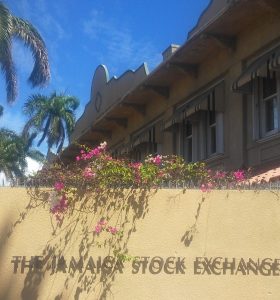
 A sharp fall of $92 million in Exchange Operations’ revenue for the half year to June, resulted in the segment results falling $110 million to $41 million but a 41 percent rise in Depository Services’ revenues to $156 million and 20 percent in Trustee Services’ income to $137 million resulted in the segments’ profit rising by 83 percent and 17 percent to $82 million and $75 million respectively.
The improved performance in the newer services of the Jamaica Stock Exchange saw second quarter results increasing over the performance of the first quarter with a rise of 41 percent in profit after tax compared to a decline in the first quarter versus the strong 2016 first quarter. The gains in the June quarter reduced the fall in profits for the by percent to $102 million, compared with the corresponding financial period last year of $158 million. The six months performance resulted in earnings per share of 15 cents, the June quarter returned 6 cents per share.
Total Expenses grew 19 percent over the 2016 quarter to $167 million and 13 percent for the six months to $330 million. Major increases were experienced in professional fees which included cost for defending claims against an employee and advertising and marketing.
“It is expected that for the remaining quarters there will be more companies listing their securities on the exchange and a positive movement in fee income due to the expected increase in trustee Services clientele,” the chairman, Ian McNaughton and Managing Director Marlene Street Forrest stated in a release to shareholders accompanying the financials.
The balance sheet shows assets of $1.24 billion, cash funds of $517 million and stockholder’s equity of $891 million.
IC insider.com is forecasting earnings per share of 35 cents for 2017. The stock last traded on the Market of the Jamaica Stock Exchange at $6.
JSE Q2 profit jumps 41% one to watch
Lasco Financial setting for profit explosion

Lasco Financial enjoyed decent gains in profit for Q1
Revenues at Lasco Financial Services jumped 22.4 percent for first quarter over the similar 2016 period to reach $319 million for an increase of $58.5 million, but importantly trading income climbed 31 percent to $303 million.
According to Managing Director, Jacinth Hall-Tracey “this result represents year over year growth of and is being driven by our strategy of expansion which began in the previous financial year”.
Profit before taxation, moved from $69.7 million in 2016 to $81 million, a 16.5 percent increase with profit after tax increasing 15.8 percent to $66.9 million, compared with the corresponding financial period and resulting in earnings per share of 5.4 cents.
Total Expenses grew 24.6 percent over the 2016 quarter to $238 million with Selling and Promotion cost rising by 31 percent. The increase was “largely driven by increases in Selling and Promotion as we continue to push the LASCO Money consumer facing brand name. This brand has resonated well with our customers and has enabled us to fully explain all our services. Previously, most customers were only aware of our Cambio and MoneyGram services. This brand awareness has been paying off in the increased transactions in all our locations as our customers embrace our more friendly community brand,” Hall-Tracey advised shareholders in a release accompanying the financials.
In the previous financial year, Lasco began the implementation of a strategy to expand the Loans Division by adding a Business Loans Unit. This expansion gave rise to several new loan offices as well as an increase in administrative and sales staff. Increased focus on lending, resulted in 70 percent growth in the loan portfolio that should move the portfolio in the region of $340 million. At the end of March loans amounted to $282 million up 43 percent over the $197 million due at the end of March 2016, no figures for loan is disclosed in the quarterly.
The balance sheet shows assets of $1.54 billion, cash funds of $574 million and stockholder’s equity of $1.22 billion.
IC insider.com is forecasting earnings per share of 30 cents for 2018 and should go on to about double in 2019. Lasco Financial last traded on the Junior Market of the Jamaica Stock Exchange at $3.55.
Prestige profit fall blamed on T&T economy
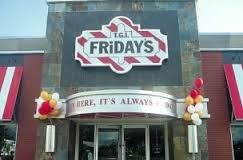
Prestige Holdings brand – TGIF
For the first half 2017 Prestige Holdings revenue increased 6 percent to TT$505 million but profit before tax decreased by 24 percent to $24.6 million, from $32.2 million in the previous year.
Profit attributed to shareholders decreased by 31 percent to $15.8 million, from $23 million the year before, as cost rose faster than income by 9.6 percent while revenue was up 6 percent.
Earnings per share were 26 cents for the 2017 half year. Gross profit margin held at 35 percent for both quarters in 2017 a 1 percentage point slippage from 2016 six months period resulting in profit for the May 2017 quarter ending at $6.7 million after tax compared to $10.6 million in 2016.
Earnings per share were 26 cents for the 2017 half year. The results were generated from an average of 119 restaurants. “The difficult economic environment in Trinidad and Tobago continues to weigh heavily on many sectors of the economy and on consumer spending. Despite this trend, across the majority of our restaurants we experienced stable or improved sales as a result of the strong market position of our brands, as well as attractive and innovative value food offerings. However, profitability fell short of prior year as a result of higher food costs and other inputs as a result of higher commodity prices, the depreciation of the Trinidad and Tobago Dollar and the higher tax rate, when compared to the corresponding period in 2016,” Christian E. Mouttet, Chairman of the company told shareholders in a written report accompanying the results.
The company indicates that they are implementing initiatives on containing cost driving sales and transactions of all our brands.
A fourth Starbucks restaurant was opened in May 2017 at Gulf City Mall in San Fernando, and the company plans to open at least one more Starbucks restaurant in this financial year.
“While we do not anticipate any improvement in the Trinidad and Tobago economy in the second half of 2017, we expect to maintain the positive sales experienced in the first half. We also expect that the initiatives to manage our higher costs coupled with new and innovative menu offerings will yield an improved performance in the second half but the full year’s performance will not likely be comparable to the prior year,” the chairman further stated in commenting on the company’s outlook.
The stock which is listed on the Trinidad and Tobago Stock Exchange, last traded at $10.64, but had no bids on Friday with an offer at $10.74 to sell 750 units.
SOS solidly BUY RATED
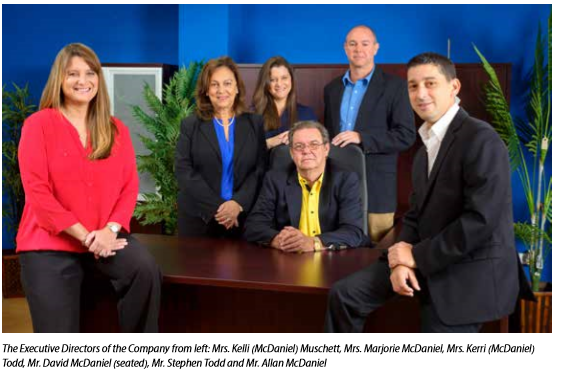 Stationery and Office Supplies reported earnings of 26 cents per share for 2016 and IC Insider.com forecast 40 cents pretax for the current year from just over $90 million in pretax profit, a near doubling in profits over the $53 million reported in 2016.
Revenues increased 11 percent in 2013, just 5 percent in next year, 14 percent in 2015 and 12 percent in 2016 and 20 percent for the first six months of 2017, hitting $702 million in 2016 and seems on target to get to around $850 million for 2017.
Pre-tax Profit in 2016, pre-tax profits jumped 279.5 percent to end at $53 million compared to only $14 million in 2015, and $8 million in 2014.
Improvement in the Company’s revenues has been attributable to organic expansion driven by the achievement of deeper penetration in the market for the Company’s products and services but inflation and devaluation of the Jamaican dollar versus the United States currency would also play roles. Improved profit and cash flow generated in the last two years helped to fund increased inventory making more choices available to customers and that is reflected in a noticeable pick-up in sales. The Company has expanded its product offerings, adding to the list of brands it distributes and venturing into manufacturing its own brands of furniture – Image and Torch.
 Gross profit as a percentage of sales was a strong 48 percent in 2016, coming from 43 percent in 2015 and 44.55 percent in 2014. Lower cost of sales led to an improved gross profit position of $339 million in 2016, which 26.09 percent increase over that earned in 2015 and 10 percent more in 2015 over 2014.
As at the 31 March 2017, SOS reported first quarter revenues of $220 million, 20.7 percent more than the $182 million reported in the corresponding period for 2016. Cost of sales as a proportion of revenue remained in line with the FY 2016 representing 50.66 percent of total revenue; this percentage was however slightly higher than the 48.75 percent for all of 2016. The company reported pretax profits of $30 million compared to $29.5 million in Q1 2016. A number of factors impacted the 2016 results that resulted in higher profits than would normally be the case as such the 2017 profit are better than the figures suggest. In effect the 2016 first quarter could be around $20 million from normal ongoing operation.
Gross profit for the three month period ended 31 March 2017 was $108.64 million or 16.2 percent more than the $93 million reported in 2016. SOS also reported an increase in administrative costs of 21 percent to $53 million and selling expenses climbed 37.5 percent to $18 million.
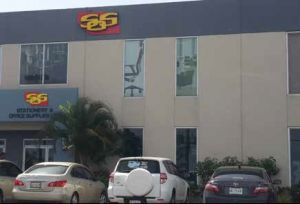 Total assets were valued at J$498 million at the March this year comprising current assets of $243 million. Inventories stood at $117 million, receivables $93 million and cash of J$12 million. Total liabilities amounted to J$231 million, with trade and other payables of J$78 million. Shareholders equity stood at $270 million or $1.35 per share.
The company will benefit greatly from listing and sales to climb above recent levels form the increased exposure that will be gained from listing on an ongoing basis as well as the increased working capital that will provide additional choices for customers and help fuel increased sales. IC Insider.com accords the stock BUY RATED with the price to rise sharply after the stock list.
Express Catering stock a fair buy

Ian Dear, Chief Executive Officer of Express Catering
The 100 percent shareholder of Express Catering, Margaritaville St Lucia, are offering up to 327,500,000 of existing shares for sale at $1.50 each, to raise approximately J$490 million from the public. Most of the shares are reserved for special interest groups.
The issue opens at 9 am on Wednesday 12 July and is scheduled to close at 4 pm, Wednesday 19 July 2017.
Up to 16,500,000 shares are Company Reserved Shares, 32,750,000 are Mayberry Reserved Shares, 245,625,000 shares are Key Partner Reserved Shares with 32,625,000 slated for the General Public Shares. The company has 1,637,500,000 issued and this will not change with the issue. The stock will be listed on the Junior Market of the Jamaica Stock Exchange. Mayberry Investments are the broker to the offer.
The stock appears to be a fair buy with growth to come from expansion into the Starbucks franchise to be located at the Sangster Airport and continued growth in visitor arrivals through that airport going forward as the sector expands.
 The selling shareholder will use the funds raised in the Invitation for the purposes of the Group’s liquidity inclusive of the continued improvement and expansion of the Company’s operations, working capital and general corporate purposes. The proceeds of sale will also be used to pay the expenses of the Invitation out of the fundraising, which the Directors expect will not exceed J$27.5 million.
Franchises operated include; Quiznos Subs and Salads, Dairy Queen, Nathans Famous Hot Dogs, Domino’s Pizza, Auntie Anne’s Pretzels, Wendy’s, Cinnabon, Moe’s South Western Grill, Island Deli, Viva Fresh Market Grab & Go, Cricket Sports Bar, Connections Bar, Air Margaritaville Arrivals Bar, Jamaican Bobsled Cafe and The Groovy Grouper The Bar.
The Company achieved revenue of US$14.1 million in the financial year ended May 2016, an increase of US$460,000 or 3.4 percent over the previous financial year’s Revenue of US$13.6 million. Revenue for financial years 2013 and 2014 was US$10 million and US$12.2 million respectively. While the financial show gross margins stable around 73 percent of revenue, while administrative and other costs as reported accounts for 58 percent of revenue for 2016 and slightly more for the comparative period in 201. Administrative costs include some items that should be included in cost of sales as they are not administrative expenses. Included here for the 2017 figures in US dollars are; Franchise fee $1,264,282 fuel $39,098, bar and restaurant supplies $373,127, staff cost of $1.39 million and rent of $2.8 million as well as electricity.
Net Profit of US$1.1 million was realized in 2016 up from US$590,000 in 2015. For 10 months of financial year to March 2017 revenue grew to US$11.54 million with net profit before tax of US$1.15 million from revenues of US$11.52 million in the 10 months of the prior year and profit of US$904,144 in the same period the prior year. Profit before tax should end the 2017 fiscal year around $1.25 million for earnings per share of .076 US cents or 9.7 cents Jamaican.
In the period to March 2017 launched a 7 year preference share to raise US$3.5 million. Proceeds from this issue was earmarked for the construction of the Starbucks Coffee outlets at Sangster International Airport, and to settle certain Group obligations.
The board of directors comprises, Winston Dear, Ian Dear, Roland Clarke, John Byles, Tania Waldron-Gooden.
The stock is being sold at a big premium to net asset value of $0.36 with equity valued at US$4.6 million, but at a PE of 15 based on 2017 earnings. Earnings for the May 2018 period could rise to $1.65 million or earnings per share of US 1 cents per share or J$0.13, excluding the new franchise operation. The average of the Junior Market of approximately 12.5.
Radio Jamaica looks promising
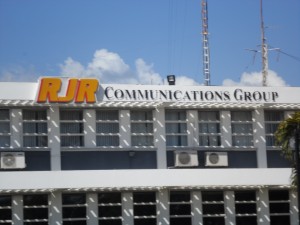 Radio Jamaica generated revenues of $1.2 billion in the March 2017 quarter, $156 million less than the December quarter but had $49 million more in direct expenses in the March quarter when it was expected that direct expenses would have fallen in keeping with the reduced income.
The group also reported lower profits in the March quarter compared with the December quarter and suffered a loss before taxation of $30 million and $65 million after an increased taxation charge of $35 million, bringing the full year taxation provision to $75 million. RJR ended the fiscal year with profit after tax of $145 million or just 6 cents per share. Results for 2018 should be much better as staff cost will fall with reduction in staffing while some one off cost that affected profit, should not recur.
In the March quarter, general expenses fell by $110 million from the December quarter to reach $562 million. The sharp change could result from reclassification of some expenses to direct cost, resulting in the jump in this area in the last quarter of the fiscal year. In the December quarterly report, the company stated that “increased cost of $64 million was incurred largely from further operational investments and one- off costs”. The areas that incurred the cost are continued rollout of 1 Spot Media, legal expenses incurred in protecting copy rights and defending legal action and repairs to broadcast transmitters. This was reconfirmed by Managing Director, Gary Allen in response to questions posed by IC Insider.com as the reason why profit in the Television segment had fallen even as revenues rose.
“The figures have seven months of the old structure. Only five months of HR synergies were realised in the financial year under review, as redundancies took place in September/November” Gary Allen, Managing Director advised IC Insider.com, in response to our question of how much staff cost is in the 2107 figures for person who were made redundant?
Prior to the merger investors were advised of major cost reduction and improved revenues that will flow from the merged entity. Allen stated ‘they have started with the HR synergies. Others are being realised as we integrate systems in the operations. Most elements will be implemented by the end of 2018/2019.”
Cash flow from operating activities was $363 million but $248 million was spent on acquiring fixed assets with the group ending with cash and equivalent of $291 million at the end of the year. RJR also has investments in bonds and Government of Jamaica securities amounting to $487 million.
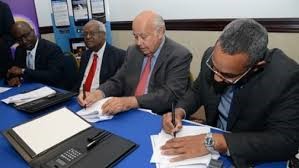
Gleaner & RJR execs signing merger agreement in 2015
The RJR Group underwent major changes with the acquisition of the Gleaner media business. Comparing the 2017 fiscal year’s results with that of 2016 makes little sense with the latter having very little financial data of the acquired business.
Data contained in the segment results, provide some indication as to the performance of various parts of the group. The performance of the segments in 2017 over 2016 show, Audio Visual generating just $65 million more in revenues in 2017 to end with $1.868 billion and contributed $72 million to profits compared to $157 million in 2016, Audio comprising radio operations had revenues of $711 million compared to $567 million and contributed profit of $238 million versus $112 million, Independent Radio coming on stream and growth in Outside Broadcasts contributed to the increase. The print division showed revenues of only $78 million in 2016 and a loss of $190 million saw a major about turn, with revenues of $2.8 billion and profit of $173 million for 2017.
Allen went on to state that “the market will remain competitive and the economic conditions of Jamaica will continue to impact media spend. Improvements will come from those able to leverage market leadership positions, product diversification, overseas earnings and new marketing strategies. RJR has all the necessary ingredients to meet these challenges and the opportunities on the horizon.”
The stock traded at $1.60 on the Jamaica Stock Exchange on Friday and with IC Insider.com projecting earnings of 25 cents per share for 2018 fiscal year ending in March, the stock seems attractive coming against a back ground of continued growth in the Jamaican economy.
Jamaica Broilers’ profit jumps 28%
Jamaica Broilers
The financial year to April 2017 was a good one for Jamaica Broilers Group, with attractive revenue and profit growth. For the full year, profit after tax attributed to the company’s shareholders rose 28 percent to $2.23 billion from $1.74 billion in 2016.
Sales revenues grew 15.3 percent to $44.44 billion for the year from $38.52 billion in 2016. The group enjoyed a 17% increase in revenues in the fourth quarter to $12.32 billion up from $10.52 in 2016 but profit but rose from $900 million to $1 billion at a slower pace than the growth in revenue.
A fall in the pace of growth in gross profit was a major factor in the slower growth in the last quarter as direct cost rose limiting gross profit to a rise of 13 percent to $3.57 billion in the quarter from $3.16 billion in 2016.
Segment results showed the Jamaican segment generating revenues of $31.96 billion up from $28.4 billion but segment results fell from $3.6 billion to $2.87 billion. Revenues for the US based operations grew to $10.86 billion from 8.8 billion and generated segment profit of $1.3 billion compared to $1 billion in 2016. Other Caribbean Countries generated revenues from third parties of $1.6 billion up from $1.3 billion in 2016 and contributed $944 million to profit up from $254 million in 2016.
While some Jamaican companies are by passing cheap borrowed funds for expansion purposes, Jamaica Broilers with equity capital of $14.4 billion has $7.7 billion in debt. The group holds $2.76 billion in cash with loan receivable of $2.55 billion of which $500 million is due within 12 months. Cash flow from operations is attractive at approximately $3 billion for 2017. During the past year $749 million was expended on the acquisition of fixed assets compared to $800 million in 2016 and the group paid dividends of $420 million for the 2017 fiscal year, up from $311 million in the prior period.
Forecast for 2018 is for EPS of $2.60, up from $1.85 for 2017. The stock closed on the Jamaica Stock Exchange on Friday at $18 at 10 times 2017 earnings but 7 times 2018 earnings compared to an average of the main market of 13.7. IC Insider.com rates the stock a buy for growth and income.
Main Event inadequate Q2 report

Three directors of Main Event, including the mentor who is respossible to ensure compliance with teh JSE rules.
The 2017 junior listed Main Event Entertainment, made a loss in the last six months of the 2016 fiscal year, ending the year with a profit of $56 million, down from $64 million for the six months to April.
The latest figures from the entertainment company for 2017, show a profit of $75 million for the half year and $51 million for the April quarter.
The figures reveal seasonal differences in the operation, with higher revenues and profit in the first half and lower revenues and losses or minimal profit in the second half. The Jamaica Stock Exchange rules require that seasonality in operations is to be reported on, in a listed company financial report. There is total silence on this issue in Main Event’s report, leaving investors to guess what the second half will be like, it should not take the stock exchange rules to put to this. Good investors’ relations suggest that this is absolutely needed in this situation of wide variation in the two periods. Astonishingly, a review of the company’s prospectus gives no indication of seasonality of revenues and earnings.
The directors’ report accompanying the half year results, speaks to a reduction in direct expenses due to continued investment in fleet and transportation solutions, and rental equipment and human resources. At the same time administrative cost had a big increase due mainly to increased transportation and fleet management costs. It appears that these added costs should be treated as a part of direct cost and not administrative.
Revenue in the April quarter at $319 million was flat with the 2016 out turn but the half year rose 8 percent to $652 million. The data to date show no indication that the second half year results will show much if any improvement over the outcome for 2016 except for the removal of taxes.
At the initial public offer in January the issued share capital was 240,004,000 shares and 60,001,000 shares were issued to the public, resulting in an average number of shares issued for the April quarter of 300,005,000 units but only 270 million units for the half year. The report shows the fully issued number of shares at the end of April is used in computing earnings per share (EPS) for all periods.
The effect is that the  reported in the interim results are wrong and in effect understated as the number of shares used in the computation is overstated. Instead of earnings per share of 25 cents for the half year it is 27.7 cents and for the 2016 period 26.8 cents and not 21 cent. The earnings for the 2016 April quarter, is 17.2 cents and for the full 2016 fiscal year 23.5 cents.
There are clearly weaknesses in the report and its handling, but worse it is also showing weaknesses in the overall management inclusive of the directorate.
The company expended over $107 million on fixed assets, increased borrowed funds by a mere $10 million more than at the end of October with cash ending at $65 million from just $19 million at the end of October.
With the interim results ending at 28 cents per share, it is going be challenging for earnings for the full year to be much higher than 35 cents IC Insider.com is forecasting for the year to October, barring a sizable rise in revenues. It could go on to earn 50 cents for 2018, IC Insider.com’s forecast shows. At the current price of $6 on the Junior Market of the Jamaica Stock Exchange the PE ratio is 17, suggesting that the price may revolve around this level for a while.
Q2 profit up 26% for CAC 2000
 Air-conditioning contractor, CAC 2000 enjoyed a moderate 5.6 increase in revenues for the second quarter to April this year to $266 million, but profit climbed 26 percent after tax to $27.5 million.
Profit for the half year net of tax rose 6.5 percent to $51.6 million from an increase in revenues of 18 percent to $568 million. Earnings per share was flat at 40 cents for the half year but rose from 18 cents to 21 cents for the second quarter.
Profit before taxation just inched up in the half year to $51.4 million from $50.3 million in 2016 while the second quarter moved from $23.6 million to $27.3 million.
Gross profit margin for the latest quarter dipped to 37.25 percent from 38.3 percent in 2016 and to 35.8 percent for the half year to April this year from 37.8 percent last year. Administrative and other expenses rose to $147 million from $128 million for the half year and from $69 million to $70 million for the quarter. Interest cost dipped a tad in both the quarter and the half year ending at $7.8 million for the six months period and $4 million for the quarter.
Current assets amounted to $742 million including cash of $110 million and current liabilities of $261 million which includes accrual of $68 million for court awarded damages and provision for legal cost, while borrowed funds stood at $158 million. The issue is that the provision included for interest is far too low and when agreed to, will end up hitting the company’s profit by a tidy sum.
The stock traded at $7.50 on the junior market of the Jamaica Stock Exchange on Tuesday and has a PE ratio of 10 times earnings well below the Junior Market average of 13. The company results suggest that the business is at a fairly mature stage.
No progress for Scotia Investments
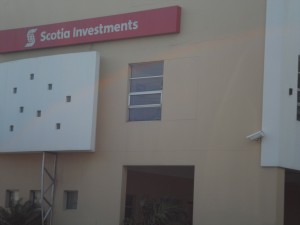 Scotia investments (SIJL) has been in transition for a long time from their original business based substantially on repos, to one based on pool funds. In the latter half of 2016 the company showed strong signs returning to pathway of growth but the latest half year results have put that on hold, at least for the time being.
A big part of the investment banker’s problem is the strangulation the Scotia Culture has placed on clients that is driving business away. Examples of this is the length of time it takes to place stock brokerage orders and its execution, or the inability now to get statement of accounts.
The company’s half year report, shows profit of $451 million for the period ended April 2017 compared to $457 million for the prior period, in 2016 from revenues of $2.3 billion, a reduction of $64 million in the corresponding period in 2016. The net profit for the second quarter to April this year, ended at $302 million, down from $339 million for the same quarter in 2016 from revenues of $1.14 billion compared to $1.19 billion in 2016.
SIJL earned 71 cents per share in the April quarter, down from 80 cents in the 2016 period and $1.07 for the half year compared to $1.08 in 2016. At the rate of growth for the half year, it looks as if profit for the full year should hoover around the $3.19 earned in 2016.
Total Comprehensive Income for the half year amounted to $546 million, compared to $663 million reported for the same period last year and for the quarter $454 million versus $468 million.
Total revenues for the six months from pool management funds fees grew 18 percent in the half year over that of 2016 while fees from pension and portfolio management, increased year over year by 34 percent.
Net Interest Income after impairment losses for the period was $685 million, a reduction of $60 million from $745 million in the corresponding period last year.
Other Revenue, comprising fee income, securities trading gains and net foreign exchange trading income, rose by $32 million to $866 million for six month period, above the same period last year, but was down slightly for the quarter to $463 million from $481 million in the previous year’s quarter.
Operating Expenses for the 2017 half year ended at $889 million, compared to $913 million for the corresponding period last year and $385 million for the April quarter versus $395 million in 2016.
Total assets stood at $67 billion at the end of April while financial assets under administration not included in the financial statements, amount $193 billion versus $169 billion in 2016
A dividend of 45 cents per share was declared payable July 20, 2017, the same amount being paid for some time. The stock traded at $36.50 on the Jamaica Stock Exchange on Friday.