Audit wrongly states ISP earnings as 32c

I$P Finance hits a new high recently.


ISP Finance earned $40 million for 2016 or earnings per share of 46 cents based on an average of 87 million shares in issue for the year, but the audited statement reported only 32 cents based on a non-existence average of 126.5 million.
The company only issued 105 million shares hence it is not possible for the average to be greater.
The above error along with glaring errors elsewhere in the financial system at large raise the question about the investing public being adequately protected, in spite of regulators in place to do police the system?
Auditors are required to use care and due diligence in undertaking their duties to ensure that the companies they audit maintain proper records that will give a fair view of a company’s profit and financial position. Users of audited statement is not expected to see glaring errors in them. It raises questions about the quality of the audit and the management of the company as well.
Knutsford Express’ audited reports for 2014 and 2015, were filled with errors or questionable treatment of transactions, raising questions about the accuracy of the entire reports.
The earnings per share for 2014 was overstated due to inaccurate computation of the average number of shares issued in 2013, while showing earnings per share of $1.07 for 2014. The income statement erroneously stated by way of note, that “using the weighted average number of shares at end of 2015 would result in earnings being 50 cents for 2014.” Since no new share were issued in 2015 there can be no there is no need for a computation of an average and there can be no change to the earnings for 2014 if the correct average was computed for 2014 in the first place.
The report had further stated “During January 2014, the company raised additional capital of $99,862,700 from its initial public offering of 99,999,003 shares for its enlistment on the Jamaica Stock Exchange Junior Market”. The company in fact issued 26 million bonus shares in 2013 while the public offering was for 20,000,000 ordinary shares, only 4,867,338 new shares were offered by the company while 15,132,662 shares existing shares were sold to the public in the IPO by shareholders. At the time the IPO, 95,132,662 ordinary shares were already issued, the average number of shares should be approximately 60 million rather than 46.8 million used to compute the 2014 EPS, which would have worked out around 83 cents.

According to ISP Finance prospectus, 1n January 2007 the company was incorporated with an authorised share capital of 10,000 ordinary shares at J$1 per share. In June 2007 the company’s authorised share capital was increased to 5,000,000 ordinary shares with all being subscribed for at $1 each.
On February 11, 2016 the company’s authorised share capital was increased to 105,000,000 ordinary shares. Of the 100,000,000 ordinary share increase, 51,017,500 shares were allotted to Gencorp Limited at J$2 per each being the same price at which shares were offered in the IPO. Of the balance just over 48.98 million units were offered to the general public in the IPO.


Iron Rock underperforms in year 1

Iron Rock came to the general insurance market just about when premium rates for catastrophe coverage is under pressure with consumers enjoying some of the lowest rates in years and with one element of good revenue losing it sting.
Iron Rock ended 2016, their first full year of operations, with a loss of $50 million, before fair value gains on investments of $5.5 million, taking the net position to a loss of $45 million, up from the forecast in the prospectus of $30 million as the company underperformed on most fronts, compared to forecast. Gross premiums written projected at $170 million ended well down, with $127 million generated in the year. Profit before operating expenses came in at $9 million versus $20 million forecasted. Investment income ended at $17 million versus $39 million while foreign exchange gains ended at $15 million with forecast being $7 million. Operating expenses ended at $91 million, lower than the $96 million projected. Underwriting loss before other income ended at $82 million versus $76 million after a lower loss claim of $6 million than the $12 million projected.

William Mc Connel one of teh directors of Iron Rock

With premium rates locally, cut in half in some cases, this new kid on the block may find it most challenging to meet the $415 million projected for gross premium income, this year. Unless management takes a more aggressive stance on investments, it will be a stretch reaching the intake of $46 million projected in this area. In the end the company will need to become adept at cost containment and investment management and hope for a good underwriting loss experience, if they are to come close to the $3 million profit projected for 2017 in the prospectus.
On the plus side, the big expansion on the way in the hotel and BPO sectors and other areas will provide an expanded market going forward and thus provide a base that they can expand their income from.
In spite of the loss, the company ended with a capital base of $560 million and holds investments of $366 million with $85 million in quoted equities. There is also an additional $70 million in short term investments. With growth in local equities the company should enjoy above average returns from this area that will boost the overall investment performance that could push them into an overall profit in 2017, but they are unlikely to see the same levels of foreign exchange gains enjoyed in 2016. Overall investment income realized or accrued could end up around $50 million in 2017 and would be well ahead of forecast.

Barita Q1 profit hit by one off items

Barita Investments 2017 AGM held on March 23, 2017


Barita Investments closed their 2016 fiscal year to September with profits of $207 million after taxation down from $242 million in 2015 form increased revenues of $1.9 billion up from $1.5 billion in 2015.
Cost grew faster than the increase in income and one off losses from impairment of investments and increased bad debts helped to pressure the bottom line.
The real story, however, is not to be found in the net profit for the year but in the quality of the earnings for the year and more so, that which is reflected in the fourth quarter.
Fees and commission income more than tripled to reach $127 million, while net interest grew sharply from $118 million to $158 million for the September quarter over the levels generated in 2015. The fourth quarter numbers are heralding healthy growth in these areas in 2017. The December quarter results show moderate change to net interest income year over year but is down sharply to a net of $77 million while there was 68 percent jump in fees and commission income to $105 million, as the portfolio under management grew. At the Annual General Meeting held this past week the Finance director Ian McNaughton explained that there was an adjusting entry for interest that relates to a prior period while US dollar investments declined in value during the quarter thus affecting the fee income. “Subsequent to the quarter, values have been normalizing” McNaughton stated.
Barita is set to benefit from appreciation in the value of the assets of unit trusts, especially in the equity-linked unit that will boost fee income. The company will also benefit from increased value to its equity portfolio that should grow sharply, allowing the company to realise investment gains that should add to profits. The equity unit trust fund should also enjoy healthy inflows from new investors as local stocks record gains and encourage new investors to use the unit trust as a viable vehicle for their investment funds.
The stock that is currently listed in IC Insider.com’s TOP 10 stocks,  is currently under some selling pressure and last traded at $6.90 on the Jamaica Stock Exchange.

Jamaica Broiler’s profit rises strongly

Jamaica Broiler’s profit from continuing operation climbed 25 percent to $721 million up from $579 million for the January quarter and rose just 4 percent to $1.55 billion compared to $1.49 billion for the nine months to January.
Sales of table eggs in Haiti, penetrated the market sharply for the group, with market share nearly doubling to 21 percent of the market up from 13 percent in 2015, the company reported in their latest fiscal quarterly, to January this year.
The strong growth in market share, helped profit in the Caribbean division to climb 161 percent from $115 million to $299 million from continuing operations, but profit in the Jamaican operations fell 20 percent to $1.9 billion while the US division recorded flat profits. Importantly, the Jamaican operations recorded an increase of 24 percent in segment results reversing the negative growth experience in the previous quarters. Gross profit margin for the year to date, fell slightly to 25.8 percent from 25.9 percent in 2016 but grew nicely in the January 2017 quarter, to 26.3 percent from 25.6 percent in the prior year. The improved margin enjoyed in the January quarter over the previous two quarters, translates to increased profit before tax of $200 million per year.
Earnings per share ended at 60 cents for the quarter and $1.29 for the nine months and should end up around $1.70 for the full year, from net profit of $2 billion. The 2018 fiscal profit is preliminarily forecasted by IC Insider at $2.
Revenue for the group climbed 12 percent, to $11.7 billion in the latest quarter, from $9.9 billion and $32 billion compared to $28 billion for the nine months to January. Divisionally, revenues to third parties in the Caribbean division climbed 23 percent from $1.15 billion, the Jamaican operations rose 13 percent to $23.4 billion while the US division recorded an increase of 20 percent to $7.5 billion. Broilers produced positive cash flows of $2.4 billion in the nine months, but ended up with just $303 million more at the end of the period after a net inflows of loan proceeds, paying dividends and capital spend, as the group continues to expand.
The stock traded at $15 on Tuesday on the Jamaica Stock Exchange for a PE of 7.5 based on 2018 estimated earnings and is well below the market average of 12.6.

Car dealer doubles 2015 profit

Jetcon ends at a new closing high of $13 on Tuesday.

Profit for 2016 more than doubled for pre-owned car dealer, Jetcon Corporation, moving from $51 million in 2015 to $105 million before tax and from $40 million to $98 million after tax and resulted in a 49.4 percent average rate of return on capital, up from 46.6 percent in 2015.
Earnings per share ended the year at 54 cents for the first year that the company listed on the junior market of the Jamaica Stock Exchange.
Revenues for the year grew by 64 percent, higher than the 49 percent increase for 2015 over 2014. The performance resulted in revenues of $858 million versus $524 million in 2015. The company’s revenues increased over the prior year, in each quarter, ending at $148 million in the first quarter, $195 million in the June quarter, $268 million in the September quarter and $228 million in the December quarter.
Gross profit increased by 75 percent as gross profit margin increased over 2015. Selling and marketing expenses more than doubled to $13 million from $6 million in 2015 while administrative and other expenses climbed by a third to $36 million from $27 million.
Growth in profit, helped to propel the stock from its initial listing price of $2.25 to a high of $13 reflecting a gain of 478 percent since it listed in March 2016. A trade at $14.80 towards the end of trading on Tuesday was cancelled.
Capital| Jetcon put the net new capital of just under $90 million raised in the initial public offer (IPO) into increased inventory, resulting in increased choices and strong sales growth in the post listing period.
The economic environment is positive to allow for increased business. Some of these are reduction in lending rates and a high percentage of the value of vehicles covered by lending institutions. Improvement in the wider economy backed by tax reductions for some workers, along with increased remuneration and the lowest inflation rate in several decades would all have played a part.
Gross cash flow generated from operations, ended at $100 million but inventories grew by $166 million, to end the year at $251 million, including goods in transit. The capital from the IPO and the profit for the year strengthened to financials, with equity capital of $294 million up from just $107 million at the end of 2015.

Jetcon Corporation revenues enjoyed strong growth for 2016

The directors approved an interim dividend of 7 cents per share, payable on March 15, 2017 to shareholders on record as of February 24, 2017 and will be recommending that a 3 for 1 stock split be considered by shareholders for approval at the upcoming annual general meeting to be hold later this year.
Update| According to a release by the company, revenues for 2017 up to the date of the report, is 77 percent ahead of the first two months of 2016. “Based on orders on our books and sales for 2017 towards the end of February, we expect revenues and profit in Q1, to be ahead of that for 2016, barring unforeseen developments.”
“Whilst we cannot say with certainty that the above pace of sales growth will continue for the full year, our budgets, forecast and strategies for the year, is for increased revenues and profit as we work as a team to build the company into one that the stakeholders will view positively”, the statement concluded.
If the pace of growth in revenues seen for the first two months, continues to the end of March, revenues for the quarter would be the higher than in any quarter for 2016.
Persons contributing to articles on listed companies may have connection with them and may have interest in their shares.

Profit climbs 31% at Cargo Handlers

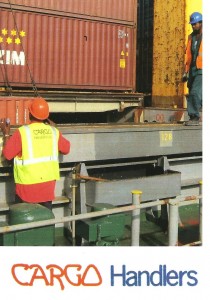
Overvalued Cargo Handlers.

Revenues rose 32 percent for the Montego Bay based, Cargo Handlers, in the December 2016 quarter, with profit rising 31 percent to $46 million after tax.
The company recorded earnings per share of`12 cents for the quarter which is in line with IC Insider.com’s forecast of 55 cents, for the full year. “Increased passenger vessel traffic coupled with the seasonal increases in containerized cargo, pushed revenues to $91.1 million,” management stated in their report accompanying the results. While revenues grew quite strongly, cost also grew, with operating cost rising in line with revenues by 33.5 percent to $33.5 million and administrative expenses climbing by 36 percent to $4.5 million.
Gross cash flow, generated in the quarter was $52 million, increased receivables and reduction in payables help to reduce the net flows for the quarter to just $6 million, but still ending with a healthy cash position of $232 million at the end of the year. Receivables ended the year at $86 million and current liabilities at just $27 million.
Montego Bay is one of the fastest growing regions in Jamaica, with increasing tourism and BPO activities and more expansion in these areas to come. The port is likely to be used as the centre for exporting of LNG to the Eastern Caribbean, Cargo Handlers should benefit from the growth in the area down the road. Cargo Handlers last traded on Tuesday at $24.50 for a rich PE of 45, based on IC Insider.com’s forecast of 55 cents per share.
The company is slated to pay an interim dividend of 13.5 per stock unit on March 21.

Profitable growth continues at Access

Access closed last traded at $30 on the junior market.

Profit grew by an impressive 87 percent at Access Financial Services (AFS) to $142 million after tax for the quarter ending December, last year. In 2015 AFS reported net profit of $76 million for the corresponding period. The result represents a return on average equity of 49 percent.
Profit for the nine months to December rose 67 percent to $494 million and should end up around $740 million for the full year or $2.75 per share.
Net operating income for the quarter ended December 2016 amounted to $378 million, an increase of $83 million, or approximately 28 percent, when compared to the corresponding 2015 period. For the nine months it moved from $917 million to $1.07 billion. Income from loans increased by $30 million or 10 percent to $312 million for the quarter and from $824 million to $931 million of the nine months for a 13 percent increase.
Operating expenses for the quarter, increased by only 4 percent or $8 million when compared to the corresponding period ended December 2015 as a result of an increase in staff cost and other operating expenses. The company recorded a reduction in provision for loan loss based on portfolio risk assessment which showed improved credit quality. For the nine months operating expenses fell to $526 from $581 as loan loss provisions drop sharply from $195 million to just $94 million in 2016. While other operating expenses grew from $145 million to $199 million.
The net loan portfolio continues to show growth, with an increase of $441 million or 20 percent for the quarter since December 2015 to $2.65 billion. The Asset base of the company grew by $443 million which represents an 18 percent increase over the comparative period.

Berger’s stellar performance

Berger price jumped on Friday after posting strong 2016 results.

Berger Paints released results to December, showing profit of $251 million and $1.17 per share for the nine months period, versus $110 million for 2015. Revenues climbed 17.8 percent in the December quarter, to $1.9 billion or 14.4 percent from $1.67 billion in 2015.
For the quarter, earnings were $185 million versus $80 million in the 2015 quarter, with revenues climbing 17.8 percent in the December quarter to $895 million.
Berger ended with cash of $158 million in December, having generated $370 million from operations before build up in working capital. The gross cash inflows, places it in a good position to continue to pay out a rich dividend, which they should do later in the year. According to the cash flow statement, receivables jumped by $378 million over the March 2016 position. That would put it at $700 million, as of December 2016. The majority of this amount should be cleared by the end of March.
Unfortunately, the Berger report does not conform to international standards for reporting interim results. The effect is there is no information on direct and indirect cost and gross profit and the balance sheet carries little information as to the composition of the current assets and liabilities. Accordingly, investors, cannot make proper assessment of its performance.
A final dividend of 20 cents per share totalling $42.864 million was paid July 2016. The stock responded well to the numbers, with investors pushing it to a new record high of $6.75 in early morning trading on Friday, on the Jamaica Stock Exchange. IC Insider.com forecast earnings of $1.10 for the full year to March 2017 and $1.60 for the 2018 fiscal year.

Added cost hits Kremi’s profit

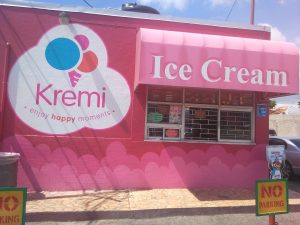
Caribbean Cream (KREMI) sales are still growing but it reported a fall in earnings of five cents for its third-quarter ending November 2016, down from 10 cents a year earlier.
The ice cream company packed on more expenses during the quarter as it secured a distributor and launched a new coffee-rum product while incurring added cost from repair of equipment.
Over nine-months, the company earnings are still up at 36 cents from 33 cents a year earlier in spite of the reduction in the third quarter.
Quarterly revenues rose 5 percent to $271 million from $258 million but the cost of sales increased, cutting gross profit down 13 per cent to $89 million. The increase in direct cost stemmed primarily from increased repairs and maintenance, some of which were unscheduled.
Revenues for the nine months rose 8.3 percent from $818 million to $886 million while profit moved to $137 million from $124 million for the 2015 period. The company is yet to increase prices for its product after an increase two years ago, but are constantly assessing the possibility of doing so, subject to feedback from the market. But Kremi seems to have lots of room to adjust prices with the Nestles’ Buckingham selling a 946 milli-litre container at $802, while Kremi sells at just $421 in the supermarket. With continue attractive growth in volumes they may be reluctant in moving prices as they gain market share.

Caribbean Cream is one of NCBCM’s recommendations

“Selling and distribution costs in the quarter increased by 38 per cent or $3.8 million as a result of increased marketing expenditure which included the launch of our new coffee rum cream in pints and quarts. We are also outsourcing the delivery of our products. We are anticipating greater efficiencies in the distribution of our products,” said management.
Sales are still going ahead of last year Christopher Clarke told IC Insider.com in response to questions posed to him. We had a series of breakdown of equipment and our two year scheduled maintenance occurred in the quarter Clarke advised.
Sales over the important Christmas period and gross profit continue to be satisfactory, but raw material cost inched up a bit Clarke indicated.
In light of the lower than expected third quarter numbers, IC insider.com revised its estimate for earnings to 55 cents for the current year ending in February and 90 cents for 2018.

Five for one stock split for AMG

AMG Packaging to split stock by 5.

AMG Packaging to split stock by 5.

AMG Packaging directors agreed a stock split, for each ordinary share of the company to be subdivided into five units. The matter is to be decided at the upcoming annual general meeting of in January.
The move by AMG continues a trend that has been seen since Lasco companies split their stocks 10 units for each one issued in 2013, continuing with Jamaican Teas early in 2016 and a string of others since, which have all helped in increasing the value of the shares. Investors are betting that the same will happen here as they responded to the announcement on Thursday, driving the price up by $3 in exchanging 7,999 shares at $21.50. The announcement confirms an earlier report by IC Insiders’ that the company was set to split the stock.
For investors to benefit fully from a rising stock price, the company will need to improve on its 2016 results of $83 million or 81 cents per share, with the start-up of the tissue operation, dragging profits down by $41 million as a result of start-up and operating cost and sales of tissue paper of only $2.3 million.
If approved at the Annual General Meeting, the issued capital of the company will move from 102,378,857 shares to 511,894,285 with the authorised capital jumping from 140,000,000 shares to 700,000,000. The split is to allow for greater liquidity in the shares as the stock has been trading infrequently.
The 2016 results saw a major improvement in cost of sales which fell from $483 million to $451 million and includes cost of inventories expensed of $320 million and $380 million in 2015. The cost of inventories recognized as an expense includes $33 million and in 2015, $54 million in respect of write -downs of inventories to net realisable value.