Access vs Dolla Financial

Investors chased shares in the recent Junior Market listed Dolla Financial as high as $3.60 at 18 times 2022 estimated earnings but is now priced at $2.90 at 14 times earnings. At the same time, Access Financial trades around $22 with a PE of 6.5 times this year’s projected earnings. Why the vast difference in valuation?

The above is based on projections that could vary from the actual outturn to be known in the first half of 2023. Using historical earnings, Dolla earned 7 cents per share for 2021 and now trades at 40 times those earnings, while Access earned $1.60 and trades at a more appealing PE of 14.5. Historical data suggests that Dolla could enjoy growth in profits close to 100 percent per annum for several years. ICInsider.com projections for Access are for a 126 percent increase in profit this year as it continues to recover from the declines caused by Covid. In the year to March 2024, profit is projected to rise 70 percent and thereafter 40 percent. Notably, the stock price should increase about 1,000 percent to more than $250 per share by 2026. Projections for Dalla are for profits to rise 230 percent this year to 20 cents and 70 percent next year and 60 percent for the next two years, with the price increasing 524 percent to $17.50.
The above data suggest that investors should pay greater attention to the less expensive stock that could deliver twice the returns over the next four years.
Helped by reduced provision for doubtful loans and an adverse economic environment, Access’ profits dropped from $2.61 per share in 2018 to $1.63 in 2019 and bottomed out at $1.05 in 2021 before bouncing to $1.60 for this year to March as credit losses declined from $388 million to $282 million, these are up from $177 million in 2019, having peaked at $507 million in 2020.

Access Financial HQ

Access loan portfolio amounts to $4.5 billion compared to, Dolla is at $751 million at the end of 2021 and $917 at March this year, up from just $350 million at the end of March last year, that is rapid growth, that should continue to increase with additional funds coming from the inflows from the IPO of $250 million and more profits to come.
The high returns possible from these micro financiers provide fresh capital from profits to on-lend during the year. This is what is so attractive about them, even after providing for loan losses. But Access has an added advantage over Dolla, as the Development Bank of Jamaica accredits it to on-lend funds originating from them at rates much lower than micro lenders typically charge.
For the year just ended, loan interest income at Access grew 8 percent, but other income fell 6 percent to $142 million. Fees and commissions inched marginally from $413 million to $417 million. Other income slipped from $149 million to $142 million. Interest expenses declined 14 percent to $220 as loans received were reduced to $2.3 billion from $2.7 billion. Provision for loan losses dipped 51 percent to $145 million, staff costs climbed 3 percent to $690 million. In comparison, other operating expenses rose 5 percent to $275 million, loans written off jumped 48 percent to $139 million from $93 million in 2021 and depreciation was flat at $117 million.
Access wrote off $138.5 million in loans in 2022 for the group, with $93.4 million in 2021 and $36.6 million for the company in 2022 and $12.9 million in 2021, with the largest portion by far being for the USA segment. But the bulk of the provision for expected losses is for the Jamaica segment. Allowance for credit losses for the group was $144.7 million in 2022 and $295 million in 2021 and for the company $134.6 million versus $324.7 million in 2021.
Segment results show that in 2021, the Jamaican market had a profit of $354.7 with a loss of $13.4 million for the USA market while for 2022, the Jamaican market ended with a profit of $650 million, with a loss of $77 million for the USA market. The data suggest that future earnings could come out with lower costs in this area.
Profit ended 51 percent up at $438 million after taxation of $135 million. Dolla may be growing quickly, but as the loan portfolio grows, the growth rate could slow until it becomes more mature, but that does not seem to be anytime soon. They could be constrained by relatively small capital based for now.
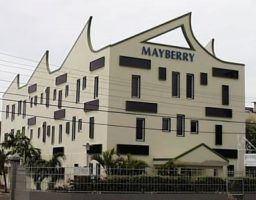

Mayberry coming structure

Mayberry Investments announced its intention to undertake a reorganization of the Group to facilitate ease of ongoing regulatory monitoring and allow for greater flexibility in operating to take greater advantage of opportunities in unregulated markets.

Mayberry Ithe lead broker.

The reorganisation which will be undertaken pursuant to a Court-approved Scheme of Arrangement will result in a new parent company, Mayberry Group Limited, will be established in Saint Lucia and will, in turn, and a new financial holding company in  Jamaica, Mayberry Holdings Limited
Mayberry Jamaica Equities and Widebase will become direct subsidiaries of Mayberry Group. Mayberry Investments will become a wholly-owned subsidiary of Mayberry Holdings.
Shareholders in MIL will become direct owners Mayberry Group, the ultimate parent company. The reorganization is conditional upon the Scheme of arrangement being approved by the Jamaican Supreme Court and the Jamaica Stock Exchange (“JSE”) approving Mayberry Group, the new parent company, for listing by Introduction on the main market of the JSE, in place of MIL.
For the quarter to March this year, Mayberry Investments reported a profit attributable to shareholders of $692 million up from a loss of $331 million for the first quarter in 2021, with a major turnaround in net unrealized losses of $761 million on investment in associates to gains of  $868 million.

Broilers profit jumps – stock IC BUYRATED

The discovery and spread of Covid-19 in Jamaica in March 2020 led to the closing of the country’s borders and resulted in a significant scaling down of business operations. The most affected were the tourism sector and the closure of hotels. The result is that thousands of people were out of a job and had either little or no income.

Christopher Levy – Jamaica Broilers President and Chief Executive.

Gross domestic production fell sharply, affecting many companies, including most listed companies. Jamaica Broilers was one of those companies to feel the effect of the economic dislocation. Two years on, the company has bounced back with record revenues and profit even as the local economy is still not a maximum capacity during the fiscal year to April 2022.
Revenue rose sharply for the group for the year to April this year to $75.72 billion, up 33 percent from the $57 billion delivered in 2021. Cost of sales rose faster than revenues by 36.3 percent, to $57.7 billion from $42.3 billion in 2021, resulting in Gross Profit increasing 23 percent to $18 billion from $14.6 billion in 2021. Other income delivered $480 million, down 43 percent on the $848 million in 2021.
Revenues for the Jamaican operations jumped sharply by 33 percent to $45 billion from $34 billion in 2021, while the United States segment comprising eggs and poultry meat surged 41 percent to $29 billion from $21 billion in 2021. The Haitian market suffered a big blow, with sales nosediving 44 percent to $1.3 billion from $2.4 billion in 2021 as that country continues to suffer from economic and social instability. That segment results worsened to a loss of $365 million, from a loss of just $7 million in 2021. Up to the January quarter, the results showed a loss of just $11 million from revenues of $1.1 billion, but the company made an impairment provision of $141 million for this operation which is charged to cost of sales and administration and other expenses. Overall the group wrote down the value of their investment in Haiti by $904 million to just $308 million.
The group’s overall improved performance in Jamaica comes against continued economic dislocation. Data up to March shows the country’s economy growing 8 percent above the prior year but still 4 percent lower than the 2020 fiscal year. The company is a major distributor to the hotel sector with about 15 to 20 percent of local sales, but that industry was down around 30 percent compared to the 2020 fiscal year. The group will benefit from increased demand for its products, with the tourist industry back to 2019 levels in the June quarter.
Profit before taxation rose by 28 percent to $4.1 billion from $3.2 billion and net profit rose 35 percent to $3.2 billion from $2.4 billion in 2021 after taxation of $1 billion for fiscal 2022 rose 24 percent from $807 million in 2021. The company enjoyed onetime finance income of $592,756, the result of debt forgiveness and is, therefore, non-recurring. Excluding this one off income, profits would be up by less than $450 million to $2.7 billion for an increase of 16 percent instead of the 35 percent it grew by and earnings per share would be $2.70 instead of $3.11 reported.
Distribution costs rose a subdued 12 percent to $2.3 billion from just over $2 billion in 2021, while administration and other expenses climbed 23 percent to $11.6 billion from $9.4 billion. Depreciation and amortisation costs rose to $2.1 billion from $1.9 billion in 2021 and Finance costs jumped 32 percent to $1.1 billion, up from $859 million in the previous year.

Jamaica Broilers brand

Gross cash flow brought in $6 billion and $2.2 billion after working capital increase. Addition to fixed and intangible assets consumed $3.5 billion. Net borrowings of $3 billion funded the cash deficit created by purchasing assets. Long term borrowings stood at $10.3 billion and short term at $13.5 billion for a total debt financing of $23.8 billion, moved up from $21 billion in 2021. The group ended with a cash surplus of $556 million after paying dividends of $463 million. At the end of April, shareholders’ equity stood at $21 billion, up from $18.7 billion in 2021. Current assets ended the year at $40 billion, including inventories and biological assets of $31 billion, receivables of $5.4 million, cash and bank balances of $3.8 million. Current liabilities ended the period at $27 billion. Net current assets ended the period at $13 billion.
IC Insider.com forecasts $4.50 per share for the fiscal year ending April 2023, with a PE of 6 times the current year’s earnings based on the price of $27 the stock traded on the Jamaica Stock Exchange Main Market. Net asset value is $9.88, with the stock selling at a premium of 173 percent or 2.7 times book value.
ICInsider.com accords the stock the convicted BUY RATED accreditation based on the immediate growth prospects and the focus on increasing investment in the operation for long term development and growth. The growth is enhanced by increased borrowings, which grew from $18 billion in 2020 and a rise in shareholders’ equity invested in the business.

Wigton falling sales higher cost

Revenues at Wigton Windfarm fell a sharp 21 percent to $2.05 billion from $2.59 billion in the year to March 2021, with a decline in revenues for the number two turbine that suffered a sharp tariff reduction under the agreement with Jamaica Public Service Company. Still, the fall was not purely tariff reduction, as revenues generated by the other turbines also fell.
Wigton closed at anew high of $1Revenues generated by the number one turbine fell to $753 million from $802 million in 2021. The number two turbine hauled in $796 million in 2021 but just managed $459 million in 2022 and the third bought $994 million in revenues for 2021 and only $837 million in 2022. A close examination of the audited accounts reveals that the number two turbine ran at a loss.
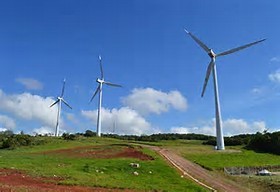
Cost of sales was relatively steady but up a bit to $820 million from $789 million in 2021 and along with the fall in revenues resulted in Gross Profit dropping a sharp 32 percent to $1.23 billion, from $1.8 billion. Other income, comprising mainly interest and forex gains, rose to $256 million from $218 million.
General administrative expenses rose to $608 million, an increase of 24 percent over the $491 million incurred in 2021. The company incurred lower interest costs of $335 million, down from $503 million, partially due to renegotiating the interest on the loans. Taxation also fell from $234 million in 2021 to $70 million. Depreciation, one of the single most significant expense, amounted to $693 million, up marginally from $680 million in 2021.
The operations generated positive cash inflows of $1.58 billion for the year before capital payments and had a net of $493 million at the end of the year.
Profit fell a hefty 40 percent from $792 million to $472 million for 4 cents per share, exactly in line with ICInsider.com forecast. Depending on how well cash funds are managed, to take advantage of much higher local interest rates this year, earnings for the 2023 fiscal year could hit 5 cents per share.
At the end of March, shareholders’ equity stood at $4.5 billion, with long term borrowings at $4.5 billion and short term at $890 million.

.

Current assets ended the period at $4.3 billion inclusive of trade and, with most of it, cash and bank balances of $3.8 billion. Current liabilities ended the period at $1.2 billion. Net current assets ended the period at $3.1 billion.
New bids are in to supply renewable energy to the system. Prior to that, Wigton was gearing to make a bid to supply renewables. If successful, this could provide a significant source of added revenues and profit if a new plant is commissioned.
The stock, traded at 56 cents on Friday on the Jamaica Stock Exchange Main Market, boasts a PE of 11.2 times the current year’s earnings. That compares to the market average of 14. Around half of the Main Market stocks are trading at lower PE ratios, with far more greater growth prospects.  The net asset value is 41 cents, with the stock selling at a 37 percent premium to book value.

Improved tourist arrivals boost CPJ earnings

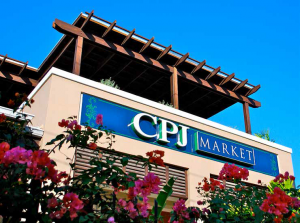
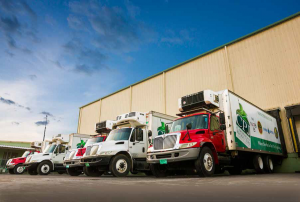
Caribbean Producers transformed itself following the pressures posed by the closure of the hotel sector it primarily serves in 2020 and the relatively prolonged period taken to get back to normal levels.

Caribbean Producers

Notably, revenues are rising again and delivering record profits even for a period when tourism numbers were 28 percent down for the March 2022 quarter from 2019. The June quarter could see 30 percent higher arrivals than the March quarter resulting in more revenues for the June quarter compared with that for the March quarter.
The above data portends more positive revenue growth for the coming fiscal year that starts in July. There will be a significant revenue hike in the first three quarters of the 2023 fiscal year, compared to the current fiscal year, with the tourism sector back to normal as indicated by preliminary June quarter arrivals. There should also be improved performance in the June quarter of 2023 compared to 2022, which enjoyed much recovery but was still not at full capacity.
According to Mark Hart and Tom Tyler, directors of the company, “the group remains optimistic for the fourth quarter of the financial year due to strong hotel bookings reported by our customers.”
The group is diversifying their revenue stream, making more investments in stores and adding new product lines for local consumption.
Revenues for the March quarter surged 123 percent to US$28.36 million over 2021 with just $12.7 million with the nine months to March delivering revenues of $86.44 million, up 133 percent above the $37.11 million generated in 2021. Interest and other income generated $89,700 for the quarter, down from $182,000 in 2021 and $652,000 for the nine months to date, up 93 percent over 339,000 in 2021. Profit margin slipped to 31 percent in the quarter but rose to 32 percent for the year to date, with gross profit of $8.9 million from $3.5 million in 2021 and $27.6 million for the nine months to March versus $9.9 million in 2021.
Depreciation cost was steady at just over 1 million for the quarter in both years and $3.2 million for the year to date but Administrative and selling expenses jumped 63 percent in the quarter to $5.2 million from $3.19 million in 2021 and rose 57 percent to $14.7 million for the nine months from $9.4 million in 2021. Finance cost rose 80 percent to $794,810 from $441,626 for the quarter and 71 percent to $2,290,676 from $1,336,016 for the nine months.

Gross cash flow brought in $10.2 million, but growth in receivables, inventories and addition to fixed assets resulted in outflows of $2.4 million, but net loan inflows amounting to $2.4 million resulted in a slight dip in cash funds on hand at the end of the quarter. At the end of March, Current assets amounted to $53.5 million, including Inventories of $30 million, receivables of $19.3 million and cash and bank balances of $4.2million. Current liabilities ended at $25.3 million, resulting in net current assets of $28.2 million. Heavy debt is a major concern at US$43 million in borrowings with equity of just $22 million.
Earnings per share came out at 0.14 of one US cent for the quarter and 0.62 of a US cent for the nine months. IC Insider.com forecasts J$1.65 per share for the fiscal year ending June 2022, with a PE of 8.55 times the current year’s earnings based on the price of $14.11, the stock traded on the Jamaica Stock Exchange Main Market and EPS of $2.60 for 2023 with a PE of a mere 5.4 and putting the stock price in the $50 range by 2023. Net asset value is $3.14, with the stock selling at 3.5 times book value.
All currency is the US dollar unless otherwise stated.

Stock split to lift Fosrich to 3rd largest

Fosrich proposed 10 to 1 stock split will lift the issued shares to the third highest in Jamaica with 5 billion shares and make by far the company with the largest number of issued shares on Junior Market if shareholders approve the split as proposed.
Only Wigton Windfarm with 11 billion issued shares and Transjamaican Highway with 12.5 billion will be ahead of Fosrich. The next closes will be Sagicor Group with 3.9 billion issued shares.
Shareholders of Fosrich at the Annual General Meeting scheduled to be held on June 21 will consider increasing the authorised share capital of the company from 512,821,000 to 15 billion by the creation of an additional 14,487,179,000 ordinary shares.
The shareholders are asked to approve the splitting of issued shares into 10 units with effect from the close of business on July 6. If approved will result in the total issued shares being increased to 5,022,755,550 ordinary shares of no par value.”
The Company is requesting authorisation to issue up to 126 million shares by way of a Rights Issue to existing stockholders and or the public, on terms to be decided by the directors.
The company expanded into the manufacturing of PVC pipes and the repairs of transformers, resulting in a big surge in revenues and profits that helped in fueling the stock price to a high of $38 this year from just $7.20 a year ago.
Or the quarter to March this year revenues jumped a solid 64 percent to $900 million and profit surged 314 percent to $159 million, with earnings per share of 32 cents.

First quarter profits surge 44%

With just 11 percent of listed companies left to report first quarter earnings, preliminary results show a major surge in profits with an increase of 44 percent over the 2021 first quarter, from a 20 percent increase in revenues. Excluding results for the two Trinidad based, Guardian Holdings and Massy Holdings, profits would rise by 55 percent for the rest, from a 26 percent rise in revenues.
Profits exclude exceptional one off items and do not include other comprehensive income. NCB Financial Group, JMMB Group and Scotia Group suffered major unrealized losses in their investment portfolio as a result of increased interest rates. These losses are shown in other comprehensive income that when included reduces the strong operating profit substantially.

Contributing to the strong rise in overall profits are companies that suffered losses or sharply reduced profits in the 2021 period and were recovering in 2022, from the economy that was mired in restrictions on trade within the local economy.
The results to date show that the educational sector grew by 1,880 percent but only two companies are on the list with a mere $12 million in profit. Medical & Pharmaceutical revenues rose a strong 35 percent to $1.33 billion with profits surging 463 percent to $113 million. Restaurants profit rose 118 percent to $26 million, up from a loss of $143 million in 2021. Banking profit is up 104 percent to $12.5 billion, from a 33 percent rise in revenues to $116 billion, with all the gains in profit flowing from NCB.
The most outstanding segment based on size and the large number of companies is the Financial Services, with 18 out of the 20 companies reporting so far, enjoying a rise of 65 percent in after tax profit while revenues rose 26 percent to $53 billion. Distribution revenues climbed 30 percent to $33.2 billion and profit rose 53 percent to $2.24 billion from just $1.5 billion last year.
Conglomerates were disappointing, with no growth in profits of $5.8 billion from a 13 percent rise in revenues to $113 billion and Manufacturing was only able to squeeze out a 13 percent rise in profit to $3.8 billion from a 22 percent increase in revenues to $34 billion, but eight of the 13 companies reporting enjoying double digit profit gains of 24 percent and six above 45 percent.

8 Junior Market stocks that should split

Stock splits and bonuses are two tools companies have in their tool kit to deliver value to their shareholders if used appropriately. Interestingly while the Scotia Group has used these tools repeatedly for the past several decades, Directors at NCB Group have frowned on the practice seeing no value to the group.
The critical point is that directors run a company for the benefit of shareholders not solely for the benefit of the company. Shareholders are kings and queens of the companies they own shares in and directors should not lose sight of that factor.
Some companies have split their stocks and investors love the results of these splits as they see where the values have mostly gone up, before and after the split. Some companies like the Lasco group have handled the split badly by overdoing it and creating too much liquidity that kills the value of the stock for years. The split is also an indication that a company’s profit is likely to grow short term which would cause the stock to struggle as the price gets more expensive without the split.
A look at the Junior Market shows 27 of the 45 companies listed trading below four dollars, with seven priced at more than twice $4. The price differential between the two groups suggests that a stock split is warranted if management is serious about the minority shareholders as well as creating the liquidity in the stock to maximize publicity from listing.
The seven companies are Access Financial, with only 270 million issued shares, with a stock split well overdue that will result in improved liquidity and build interest in it. Cargo Handlers at $11.50 has limited liquidity and needs a split to build back excitement into trading it. Dolphin Cove is the third one with the price at $15.25 and recently much higher, but the majority owner may not be so inclined to go the route of a split, but one never knows as local shareholders could well prevail on them to do so. Fosrich now trading around $27, is proposing a 10 to 1 stock split at the Annual General Meeting (AGM) this month. Honey Bun trading at $8.50 has the potential to move up to the $20 region later this year or early in 2023 and warrants a second split, having done one a few years ago.

Fosrich to vote on a 10 to 1 stock split at the coming AGM this month.

Back in 2020, management of ISP Finance had indicated that a split was on the cards, but even with the stock at more than $22 and highly illiquid with less than 3 percent of shares freely available for regular trading action to split the stock is nowhere in sight. Main Event is just at the borderline at $8.20 so a split may be in the future when it has fully recovered from the loss in business, with the advent of the covid-19 pandemic. There are 300 million shares issued with the top 10 holdings accounting for 93.5 percent. Stationery and Offer Supplies hinted at a past AGM that they had looked at it but felt the time was not right. The time may well be very close with the price trading recently around the $12 region with record profits expected this year a split could well happen with the AGM coming up later this year. The company has only 250 million shares issued of which 90 percent are held by the Top10 shareholders. Medical Disposables trades at $7-8 region, with the price not yelling for a split just yet but if management is smart they would split the stock with only 263 million shares issued, a two for one basis as rising profit this fiscal year will probably put the price to around $5 after such a split when all is said and done.

Barita to pay $666M in dividend

Barita Investments will be paying an interim dividend of 54.6 cents per stock unit on June 30, 2022, the company advised.

The company’s Board of Directors approved a Resolution on June 9, 2022, for the payment to shareholders on record at the close of business on June 23, 2022, and will cost $666.3 million.  The stock will trade ex-dividend on June 22, 2022. The company last paid a dividend of $3.029 per stock unit on October 7, last year, to shareholders on record at the close of business on September 23, 2021.

.

Elsewhere, Scotia Group reported financial results with a net income of $4.4 billion for the six months ending April 2022, down from $4.48 billion in 2021 for the same period.
The Directors of Scotia Group approved a dividend of 35 cents per stock unit in respect of the second quarter, payable on July 20, to stockholders on record on June 28. The dividend amounts to $1.09 billion amounting to 42 percent of the profit on 83 cents per share in the April quarter.

SOS buys printing press, set for record profits

Stationery & Office Supplies announced the acquisition of assets of D&K’s Printing and Office Supplies including 10 additional book manufacturing machines effective, Monday, June 6, 2022.

Stationery & Office Supplies is back in the TOP 10 but could fall in prive this week before moving higher.

The purchase will diversify the product range and increase the manufacturing capacity of the range of products produced by SEEK. Seek which was acquired in April 2018 produces exercise and hardcover books steno books and binder refills. The acquisition will allow them to print books with working in them such as receipts books, invoice books, graph paper and notebooks. In short, it expands the range of products that it can now print, some of which it currently sells which will improve profit margins.
The acquisition which is expected to contribute some 20-25 percent to Seek’s revenues, ICInsder.com gleaned and continues the process of acquiring strategic assets or businesses to accelerate business growth and will add 12 employees to the printing operation.
In 2021 revenues from the book manufacturing were $48 million and in 2019, some $62 million which is expected to hit around $80 million in 2022 and should reach into the $100 million range in 2023.
Revenues seem to be back to normal with January 2019 generating revenues of $344 million that were overtaken this year and June 2019 being $295 million which seems set to be exceeded in the June quarter as well. Based on the acquisition which will add to revenues and profit and the expected continuation of the robust first quarter revenue growth of 36 percent. Revenues for the rest of the year could accelerate, with the economy opening up since the first quarter.
The company gave a glimpse of what the rest of the year could be like, with SOS setting a new record for monthly sales, of $140 million in February, with sales reaching $173 million in March, 25 percent higher than February. If the trend continues into the second quarter, revenues could reach $480 million and may well continue the acceleration to the end of the year.
ICIinsider.com has upgraded earnings to $1.70 excluding the $23 million gain on the sale of property in the first quarter and that would put the stock at a PE well under 10 times this year’s earnings, assuming no major negative developments that could impair revenues and profits.