Abysmal reporting continues at MPC for Q1

MPC Caribbean Clean Energy’s financial wellbeing continues to be clouded in secrecy, with investors not being provided with a full set of financial reports showing the full financial status of the company and the group.
Wigton closed at anew high of $1

The last year’s interim reports for the first three quarters and the first quarter this year, defiles logic. Those reports show the group operating at a break even for four quarters, three in 2021 and one in 2022. The fourth quarter results ends up with a profit from unrealized investment gains of US$1.347 million. The same situation occurred in 2020. How is this possible, when the directors’ report shows varying levels of  EBITDA per quarter?
The directors reported to shareholders that “In the first quarter of the year, the commercial and technical development of the Company’s underlying assets were within the expected range. The weather conditions have had a negative impact on revenues due to lower electrical energy production than initially forecasted, which has been reflected in the financial results. Technically, there was a high system availability.”
The report also shows that in the quarter EBITDA was US$2,206,018. In 2021 first quarter EBITDA was US$1.81 million. The first quarter statements show no income but from its three projects, it is invested in similar to 2021.
There are questions that need answering. Is the valuation that results in a fourth quarter surplus done quarterly or not for the subsidiary that holds the direct investments in the energy projects and if not why not?  Regardless, what is the net position for each quarter and why is it not included in the quarterly report to the Jamaica Stock Exchange so that shareholders can see what is happening to their investment?
Investors in publicly listed companies should expect full disclosure as to what is happening to their investments. This is not the case with MPC Caribbean Clean Energy Fund LLC and there is no good reason for it.
Some investors may recall the story of Enron that went busted but shareholders were unaware of the true status of the group as financial statements of some subsidiaries were not included in the group report. Unfortunately, MPC reporting is akin to Enron as the quarterly results fail to meet the minimum standards for continued listing. When will the Jamaica Stock Exchange and the Financial Services Commission take action to protect investors in this company?
 

Caribbean Cement and poor management

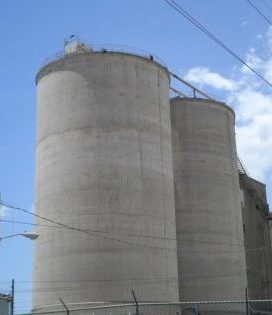
Investors entrust capital to public companies with the expectation that their interests will be properly protected, but that does not appear to be the case with local investors at Caribbean Cement Company. Last year against to outcry of local investors the company rammed through fees for royalty to be paid in addition to management fees already be paid to Cemex, the ultimate parent company.

Caribbean Cement proposed a $1.50 dividend per share in August

Last month, the company proposed a meeting to consider the payment of a dividend that was not managed appropriately by the company, neither before nor after the meeting.
The Board of Directors Caribbean Cement Company advised shareholders that a meeting of the board that was held on May 26, 2022, recommended presenting an ordinary resolution to shareholders to declare a final dividend of $1.5032 per share payable on August 15, 2022. 
That is a great development, considering the company last paid a dividend in 2004, but the wider public was deprived of such price sensitive information. To compound the problem, the company haled the meeting and kept the information for a week before communicating the decision to the exchange, even though the rules require immediate release of the decision immediately after the meeting.
In an article reporting the decision of the board, the company through its secretarial department took issue with the article stating that they seem to have breached the JSE rules that require that any meeting to consider the payment of a dividend must be communicated to the JSE at least 7 days ahead of the meeting. So far no such notification was posted on the Stock Exchange’s website up to Tuesday evening.
The company provides the evidence of two letters addressed to the Jamaica Stock Exchange notifying that a meeting would be held initially on May 23 another dated May 20 indicates a change in the date to May 26. None of these letters are yet on the Jamaica Stock Exchange’s website.
A spokesperson at the JSE confirms that the letters were in fact received but that it is the responsibility of the respective companies to ensure that the notice is uploaded to the JSE portal from which the relevant staff would approve the same to be uploaded to the website.
While the JSE was informed by letter technically, the company is in breach as they did not follow up to ensure the information was received and in fact posted to the website what was very sensitive information considering this is the first time that the company would be considering a dividend payment since 2004 when they last paid one amounting to 7 cents per share amounting to $60 million.

Based on the price movement in the market last week it appears that the information was already in the market.
While Caribbean Cement cannot escape responsibility for the matter not being communicated to its shareholders on a timely basis, The JSE cannot escape some blame either. Once the letters were received they should have followed up with the company since it was not on the portal.
No one seems to be following up on electronic communication in this modern era. The handling above, epitomizes, what seems like today’s communication practice that assumes once an email is sent, the other party must have read it, and therefore there is no need to follow up.
Cement traded at $67 on the 16 of May, the next day the last price fell to $64.80 and then to $61.50 on the 18, bouncing to $63 on May 19, but back to $60.51 on the May 24. On the 26 and the 27, the price moved up to $63 and moved to $69.70 on the first of June and traded at $66 on June 6, and jumped to $74 on the 7th.

Big dividend payout by Caribbean Cement

Caribbean Cement Company is set to make a sizable dividend payment in August. The Board of Directors advised that a meeting of the board that was held on May 26, 2022, recommended to present an ordinary resolution to shareholders to declare a final dividend of $1.5032 per share payable on August 15, 2022. 
The proposed payment represents 29.475 percent of the profit of $5.10 per share for 2021. The proposed record date is August 4, 2022, with an ex-dividend date of August 3rd. The recommendation will be made to shareholders at the Company’s next Annual General Meeting.

The company seems to have breached the JSE rules that require that any meeting to consider the payment of a dividend must be communicated to the JSE at least 7 days ahead of the meeting. So far no such notification was posted on the Stock Exchange website.
The payment if approved would amount to $1.28 billion and would represent the first such payout since 2004 when 7 cents per share was paid amounting to $60 million.

Results push Junior Market to record 4,613

The release of results for Junior Market companies since Friday’s market close helped to push the Junior Market to a new record of 4,613.27 points after the market opened on Monday, surpassing the record close of 4,537.15 on Friday, with the index crossing over into the 4,600 mark for the first time.
Spur Tree Spices generated revenues of $237 millionin their first quarter to March, an increase of 40.7 percent over the $168 million in 2021, helped by the newly acquired subsidiary, Exotic Products generated revenues of $73 million for the quarter, with only $2.18M is included in the consolidated revenue of $237 million. Profit before tax was $51 million, an improvement of $28.6M or 128 percent above the $22.4 million for the 2021 quarter. Investors traded 9 million shares for $36 million up to $4.30.

Dolphin Cove reported US$2.3 million in revenue in quarter Q1 2022, up from just US$374,000 in 2021, as visitors to the parks bounced sharply in the quarter to reach 58 percent of the attendance in the first quarter of 2019. Profitability was enhanced by the strict management of costs, with the quarter incurring only US$1.5 million of expenses, a decline of almost US$1 million compared to the first quarter of 2019, reflecting permanent efficiencies that were put in place. Net profit amounted to US$795,000, compared to a loss of US$154,000 in 2021. The stock traded up to $23.25 before settling at $22.51 after trading 131,329 shares.

Fosrich traded 368,000 shares early Monday.

Fontana grew revenues by 24 percent to $1.52 billion, over the $1.22 billion for the 2021 first quarter, with net profits popping by 43.4 percent, to $105 million from $72.9 million in the first quarter last year. Investors traded the stock at $11.18 after an exchange of 158,512 shares.
Fosrich posted blowout results with a 64 percent surge in revenues to $900 million from$549 million in 2021 and profits surging 314 percent to $159 million in the March Quarter from just $38 million in 2021. The investors responded instantly to the news by trading 368,361 shares up to $36.22.

Profit grows 35% at Wisynco

Profit before Taxation for the March quarter at Wisynco Group jumped $283 million from $813 million for a 34.8 percent increase to $1.1 billion, from the comparative year ago quarter and for the nine months to March, pretax profit climbed $1.2 billion for a 46.4 percent increase to $3.9 billion, up from $2.7 billion in the prior year.  After provision for taxes on profit, earnings attributable to stockholders rose 24 percent to $831 million from $673 million earned for the preceding year.

Wisynco ended at $25 on Friday.

The current quarter “includes foreign exchange loss of $35.4 million compared with a $68 million foreign exchange gain for the 2021 quarter,” the directors William and Andrew Mahfood stated in their commentary on the results.
The results equate to earnings per share of 22 cents for the quarter, up from 18 cents in the 2021 quarter and 79 cents, up from 59 cents in 2021 for the nine months. ICInsider.com projects earnings of $1.20 for the year to June or $4.4 billion, with earnings of $1.70 or $6.3 billion in 2023.
The 2022 quarter’s revenues rose 27.8 percent to $9.7 billion, the highest in the company’s history, above the $7.6 billion achieved in the 2021 third quarter.  Revenues for the nine months rose at a much slower pace than the current quarter of 20 percent to $28.4 billion, from $23.6 billion in 2021.
“Revenues were driven by strong demand in all product categories and channels. Usually, our Q1 and Q2 Revenue patterns represent our higher earning quarters, however, this Fiscal Q3 trended higher than Fiscal Q1 and Q2, reflecting the anticipated bouncing back of our economy from the Covid measures being relaxed. Additionally, our increased focus on Exports continued driving growth in the channel and we are embarking on additional strategies to continue this trajectory,“ the Mahfoods stated.
The period was not without its challenges. Cost of sales rose 31 percent in the quarter to $6.6 billion resulting in gross profit rising at a much slower pace of 21.6 percent to $3.1 billion from $2.6 billion in the previous year. “Gross Margin at 32.3 percent was 170 basis points lower than the 34 percent for the corresponding quarter in the prior year due mainly to our LNG plant experiencing disruption in energy supply resulting in the company having to spend an additional $81m to purchase electricity,” the directors reported. They went on to state, “additionally, we had production downtime which led to some higher costs of production as well as increased input costs.”

True Juice bottled and distributed by Wisynco.

Selling and Distribution expenses increased 16 percent for the quarter to $1.78 billion from 1.54 billion in 2021 and increased 12.8 percent to $5.2 billion in the nine months from $4.6 billion in 2021. Administrative expenses fell in the latest quarter to $289 million from $339 million in 2021 and slipped slightly to $1.02 billion from $1.03 billion for the nine months. Depreciation fell from $782 million to $718 million for the nine months and taxation jumped 108 percent from $465 million to $957 million and 86 percent from $141 million to $265 million for the quarter.
Gross cash flow brought in $4.3 billion and $3.3 billion after working capital growth and ended at $1.2 billion after investments, addition to fixed assets and paying $1.5 billion in dividends.
But the group remains in robust financial health, with shareholders’ equity of $17 billion and long term borrowings at $1 billion, while short term loans stood at $800  million. Current assets ended at $16 billion, including trade and other receivables of $3.6 billion, and inventories of $3.4 billion, while cash, bank balances, and investments stood at $9.2 billion. Current liabilities ended the period at $5.8 billion and net current assets ended at $10.4 billion.
The stock traded on the Main Market of the Jamaica Stock Exchange at $25 at a PE of just over 20 times earnings and seems to be heading for the mid $30 region over the next twelve months.

Sagicor snaps up another Alliance company

Sagicor Investments signs a definitive agreement to purchase the securities dealer book of business of Alliance Investment Management, a release to the Jamaica Stock Exchange by Sagicor Group stated.
Sagicor Group & PanJam hit new closing highs.Sagicor Group subsidiary, Sagicor Investments entered into a definitive agreement for the purchase of the securities dealer book of business of Alliance Investment Management. The purchase, which is subject to due diligence, is expected to be completed over the next two months. Sagicor Group President and CEO, Christopher Zacca stated that “this latest acquisition of the AIML book of business will further expand SIJL’s client base and allow us to offer the best possible service and investment returns to our new investment clients.”
This news comes on the heels of the Sagicor Group purchase of 100% of the shares in Alliance Financial Services and would have been encouraged by the reputational damage emanating from the debacle with their principals and the country’s central bank.

MPC Caribbean’s awful reporting

Disclosure of relevant information by listed companies provides information for proper investment decision making and reduces concerns and mistrust if all materially important information is disclosed, thus improving investor confidence in those companies.
In order to deliver pertinent information to investors, management including directors of listed companies will have to go beyond providing the minimum information stipulated by law or accounting regulations.

Against that background, it is instructive to examine MPC Caribbean Energy a company with its shares listed on the Jamaica and Trinidad stock exchanges.  In looking at this company and its extremely poor reporting it is worth noting that the state-owned Development Bank of Jamaica invested US$1 million in the company’s shares. It has become the norm that companies that hold subsidiaries must consolidate the financial results of the subsidies with that of the parent company so that investors can get a full picture of the financial performance and standing of the group as a whole.
The company has been an excellent example of how not to communicate with investors as they destroy credibility with investors. That is pitiful when it is considered that it has a need to go back to the market for fresh capital to continue expansion.
The company made two public share offers to raise funds from the public with both coming up short of the target, due to poor communication and the management’s lack of understanding investors and how to communicate with them effectively.
MPC recently reported comprehensive income of US$1.14 million for the year to December 2021, flowing from the net change in unrealized gain on investment amounting to $1.136 million less expenses of US$205 million. Both the auditors and directors failed to inform investors as to the true nature of the gain. At the end of the year, the above mentioned gains, pushed shareholders’ equity to US$20.8 million with total funds invested at US$30.9 million.
The auditors’ report states, “as required by IFRS 10.31, the Company has reflected the 85.69 percent ownership in MPC CCEF at fair value through profit or loss.”
Of course, the above method of providing financial Statements to investors is clearly not acceptable for a publicly listed company as investors are not getting a clear picture of what is happening within the group. The question that arises is whether the fair value gain is equal to normal profit from operations or not? Investors should not have to guess about this. This is important due to the most important method that investors use to value companies.
In addition, shareholders should know what is the income, expenses and profit that are generated by the group and what the full financial status is. The current approach does not disclose this information which is critical, but awfully sad. There is no other company on the JSE that reports in the above manner.

Shareholders deserve better from MPC

The structure between the listed company and its subsidiary is confusing with each having similar names making it much more difficult to understand which one does what. The company’s management is German, which adds uncertainty to it. The directors by and large are not well known and the manner of communicating with the public makes it abundantly clear that they are not in sync with investors.
Another issue that exists with the company, is that directors tend to use industry jargon in their commentary. The December report starts with – “In the fourth quarter of the year, the commercial and technical performance of the underlying assets of the Company’s investment in the Investment Company were within the expected range. Necessary technical measures were carried out, thereby, stabilizing the production of the underlying assets. ”That is great but they go on to spoil it by talking about OpEx value in the next paragraph. What is OpEx value? They know but few others do.
The bright spot is to be found in the Outlook released at the time of the interim report. “After implementing all the technical measures to resolve limitations that took place in the course of 2021, we are looking forward to 2022. In addition to the expected performance improvement of the underlying assets, the Investment Company expects to further diversify its portfolio with the operational asset Monte Plata Phase 1 Solar Park (33.4 MWp) in the Dominican Republic. The expansion of the Monte Plate Asset with Phase 2 (40.5 MWp) is progressing well and financial closing with the senior lenders FMO and DEG is expected to take place in Q2 2022. The completion of the acquisition remains subject to CNE approval, which is expected to be obtained in the course of Q1 2022. The start of operations of the expanded solar park with a total capacity of 74 MWp is targeted for Q2 2023. The PPA was signed on 15th October 2021 for a period of 15 years starting from the Commercial Operation Date. It will become the largest asset in the portfolio expanding the geographic footprint to a total of four countries incl. Jamaica, Costa Rica, El Salvador and the Dominican Republic.”
Here again, investors are left in the dark as none except the directors have any indication as to what is to be expected. Investors cannot be asked to invest in companies with such poor reporting. The Jamaica Stock Exchange owe the investing public to bring this terrible reporting and lack of information on the finances of the group to an end. The least that can be done is for investors to be presented with the audited accounts of the subsidiary along with those of the listed company for the annual as well as quarterly, that way the full picture will be disclosed.

SVL profit for Q1 surges 68%

Gaming company Supreme Ventures posted a net profit of $1 billion for the 2022 first quarter to March, an increase of $400 million or 68 percent compared to the first quarter in 2021, resulting from Gaming income climbing just 18.7 percent to $12.7 billion, compared to $10.7 billion generated in the corresponding period in 2021.
“This huge uplift in profitability for the three months is a result of several factors including the hugely successful re-introduction of the popular Instants “Scratchaz” game and our successful implementation of significant cost-savings initiatives,” Gary Peart, Executive Chairman, stated in his report accompanying the results.

“Total gross ticket sales for the quarter was $27.7 billion, an increase of 164 percent over the corresponding period in 2021, as customers welcomed new initiatives that positively impacted their pockets during a difficult economic downturn,” Peart continued to state.
Direct expenses amounted to $9.8 billion and were $1.2 billion, or 13 percent, higher than the $8.7 billion incurred for the 2021 first quarter. Peart further reported that “with a continued focus on expense management, we have further invested in expanding the business as we prepare for the reopening of the economy and the expected upturn that will result. The increased cost resulted from the higher amounts paid to our key partners and regulators during the quarter.”
Gross profit for the quarter amounts to $2.9 billion, representing a rise of $864 million or 42.8 percent compared to the $2 billion pulled in during the first quarter of 2021.
Segment results show the Lotteries segment being the star performer in the group, accounting for nearly 93 percent of segment results in generating gaming income of $6 billion, a 31 percent increase of $1.4 billion in revenues, while segment results showed an increase of 82 percent to $1.2 billion from $630 million in 2021.

Supreme Ventures traded at a new high of $33.41 on Friday.

The Sports Betting segment reported $287 million and gaming income increased 16.6 percent by $490 million, to $3.5 billion, over the first quarter of 2021. PIN codes sales saw an increase of $116 million or 3.9 percent to $3 billion for the quarter, resulting in segment results of $85 million, almost doubling that earned in 2021.
Cash inflows from operations hauled in $1.65 billion, up from $1 billion in 2021, but mainly due to dividends paid amounting to $686 million, purchase of shares in a subsidiary and purchase of property and equipment, the company used up $935 million of the surplus at the end of December last year of $4.4 billion.
At the end of the period, Shareholders’ Equity stood at $4.55 billion and was augmented by borrowing $6 billion in long term loans and $443 million in short term funding. Current Assets ended the quarter at $7.6 billion, up from $7.1 in the previous year’s first quarter. Current Liabilities stood at $5.7 billion compared to $3.7 billion at the end of 2021 first quarter. Cash funds and short term investments ended the period at $3.4 billion, down from $5 billion in 2021.  Net current assets deteriorated over the past year ending at $1.9 billion compared to $3.45 in March last year.
Earnings per share for the quarter is 37.79 cents, up 68 percent over the EPS in 2021 of 22.46 cents, if the trend continues, earnings for the full year should hit the $1.60 mark for the year with a PE of 20 at Friday’s closing price of $32. The company will pay a dividend of 34.01 cents per share on May 20.

Profit surges 156% at AMG Packaging

Profit at AMG Packaging surged 156 percent in the February quarter, to $18 million after tax from $7 million in 2021, even after suffering a loss on foreign exchange of $4 million versus a $4 million gain in the prior period. For the six months to February, profit jumped 150 percent to $53 million from $21 million in 2021.
The increase in profit follows moderate growth for 2021 over the previous year when the company posted $61 million after tax compared to $56 million in 2020.
Sale revenues rose 32 percent for the quarter, to $217 million from $165 million in 2021 and jumped 44 percent for the six months, to $487 million from $338 million in 2021.
The cost for inventories used in production increased slightly less than growth in revenues, with a rise of 30.5 percent in the latest quarter to $117 million compared to 2021, million ut cots rose faster than six months sales, after increasing 48.5 percent for the half year to $273 million. Direct costs rose well below the increase in revenues for both the quarter and six months, up just 10 percent to $38.7 million and 27 percent to $79 million for the six months.
Gross profit margin in the February quarter remained at 28 percent, similar to the 2021 half year and rose to 28.3 percent in the latest quarter from 24 percent for the 2021 quarter. Operating profit rose just 52.5 percent in the quarter to $61 million from $40 million and spiked 41 percent for the year to date, to $135 million from $93 million in 2021.
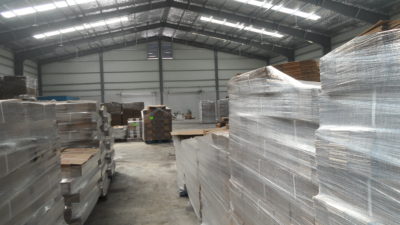
Administrative expenses rose 6 percent to $24 million in the quarter and 7 percent in the six months to $46 million. Depreciation increased to $7.6 million in the quarter from $6 in 2021 and $13.7 million for the six months from $12.3 million in 2021. The increased charge in the second quarter results from the addition to the factory and equipment for box production. The company will enjoy reduced production costs due to the new equipment that will replace an older machine. Finance costs declined in the quarter to $1.7 million, from $2 million in 2021 and $4.2 million to $3.6 million for the six months.
Taxation on profit moved from $919,135 in the February 2021 second quarter to $3.2 million in 2022 and for the half year, it jumped from $3 million to $13.5 million.

New addition to the AMG factory

Gross cash flow brought in $85 million. Increased working capital saw the amount falling to $52 million. Funds were reduced to $12 million after adding $26 million in fixed assets and loan payment of $10 million, thus pushing cash and equivalent on hand of $131 million at the start of the year, falling to $143 million at the end of February.
At the end of February, shareholders’ equity stood at $661 million, with long term borrowings at $99 million and short term at $13.5 million. Current assets ended the period at $509 million, including Inventories of $207 million, trade and other receivables of $150 million, and cash and bank balances of $143 million. Current liabilities ended the period at $188 million and resulted in net current assets ending at $321 million.
Earnings per share came out at 3 cents for the quarter and 10 cents for the year to date. IC Insider.com forecasts 35 cents per share for the fiscal year ending August 2022 and a 60 cents per share projection for 2023. The PE stands at 11 times the current year’s earnings and 6 times 2023 earnings based on the price of $3.70, the stock last traded on the Jamaica Stock Exchange Junior Market.

Knutsford Express revenues & profit nearing normal

Knutsford Express, the Montego Bay based cross country luxury transport, is set to deliver increased revenues and profit for the fiscal year to May, compared to 2021, but the results will be far from normal levels, nine months’ results to February show.
Revenues and profit for the third quarter reveal that things are not far from normal, following the economic fallout in 2020 from the impact of the covid-19 virus. Revenues for the nine months rose 70 percent to $775 million from $456 million in 2021 and delivered a profit of $52 million, a big turnaround from a loss of $55 million in 2021, but the third quarter numbers saw revenues jumping 63 percent to $301 million from $185 million same the similar quarter in 2021 with a profit of $37 million compared to a slight loss of $1 million.

Knutsford Express

Revenues in the latest quarter are just 5 percent below the $318 million generated in the February 2020 quarter when the company reported a profit of $40 million before tax and for the nine months with revenues then, of $925 million or 20 percent higher than the current period, with a profit of $113 million before tax.
Administrative and other operating costs rose 39 percent from $515 million in the nine months to February 2021 to $716 million in 2022, with the third quarter ending with $258 million, up 38 percent versus $187 million in 2021. Depreciation rose from $87 million for the nine months in 2021 to $107 million in 2022. Finance cost amounts to $7 million in the 2022 latest quarter against $4 million in 2021 and year to date $17 million, compared to $11.4 million in 2021.
Gross cash flow brought in $190 million, a $144 million addition to fixed assets offset by loan inflows of $50 million, increased payables and dividends paid of $40 million, resulting in cash on hand at the beginning of the period of $132 million falling by $36 million.
At the end of February, shareholders’ equity stood at $845 million, with long term borrowings at $223 million and short term debt at $21 million. Current assets ended the period at $357 million, including trade and other assets of $103 million, cash and equivalent of $236 million. Current liabilities amount to $94 million at the close of the period and net current assets of $263 million.
Earnings per share for the quarter was 8 cents and 9 cents for the nine months. ICInsider.com projections suggest earnings per share for the fiscal year to May at 20 cents and 2023 at 50 cents.
The February quarter results fall in a period when tourism flows to the country were down around a third compared with the 2020 period, suggesting a better period ahead for traffic as the company benefitted from patronage from visitors coming into the island. Accordingly, the coming fiscal year should see the company’s revenues and profit bouncing sharply over that of the current fiscal year.
The stock last traded on the Junior Market of the Jamaica Stock Exchange at $7.99, with a PE of 40 versus the market average of 24, the PE falls to 16 versus 13 for the market.