Some big Buy Rated gains more ahead

Hardware & Lumber with its Rapid True Value retail arm gained 265% since place on BUY RATED list

Hardware & Lumber with its Rapid True Value retail arm gained 265% since place on BUY RATED list

IC Insider Buy Rated stocks have chalked up 3 winners with gains in excess of 100 percent and two over 200 percent and one at 99 percent. 8 stocks have declined so far with losses between 7 percent and 27 percent but that should change as the year rolls on. There are no additions to the list, a few have been removed or put on hold.
Blue Power is now removed based on flat sales for the year to April and no immediate signs of a pickup. Dolphin Cove that was added in May last year and gained 48 percent is being moved to hold as revenues in the other half of the year to December is unlikely to grow to justify market out performance. The company had only a 6 percent increase in first quarter revenues down from 13 percent in 2014 and profit fell 10 percent to $133 million. Hardware and Lumber with buy out talks to acquire majority ownership with a maximum price of $18.50 and Scotia Investments are shifted to hold while JMM Group is moved from Buy Rated to Watch or accumulate based on the current price of $7.50.
As much as stocks with high gains may be view as already providing rich returns, there are much more gains left to be made. Carib Cement should report earnings in the $1 region this year with reduced cost, increased sales and the future should be even brighter as the local economy moves slowly into growth and lower interest rates will help boost building construction. Caribbean Cream has more than doubled this year in price but with lower input cost and increased sales should earn around 60 cents per share this year, at the present price of $1.60, there is room for growth. BUY Rated fn 7-15Jamaica Stock Exchange has had a phenomenal run this year with increased revenues and profit. Profit this year could reach $1.20 which should lift the stock some more and 2016 could be an even bigger year for it. Paramount Trading at $6 is still about 50 percent undervalued based on 2015 earnings and even more based on 2016 projected earnings. Lasco Manufacturing is yet to deliver in price movement but the 78 percent jump in the March quarter profits is a development that investors should be paying attention to.
Over in Trinidad, investors keep on ignoring Trinidad Cement but they should not, even with the 190 percent gain in the stock price. IC Insider sees higher profits flowing from increased sales, cost reduction including interest cost on loans. National Flour which we added in May is now up 21 percent still has more room to grow. The Trinidad market is likely to experience slow growth this year as such, many of the listings may not deliver much in the short term but investors should keep their eyes on Scotiabank that produced a nice lift in second quarter profits.

Another bank for JMMB stable

JMMB_Building600x250JMMB Group has acquired ninety percent (90%) of the shares of Banco Ahorro y Credito Rio (Banco Rio) through the group’s Dominican Republic subsidiary, JMMB Holding Company Limited after obtaining regulatory approval for the acquisition, the group informed the Jamaica and Trinidad & Tobago Stock Exchanges today.
Banco Rio is a savings and loans bank, in accordance with the Financial and Monetary Law of the Dominican Republic they are licenced to provide consumer loans; loans to small and medium enterprises (SMEs); commercial loans; credit lines; credit cards, cambio services; savings accounts and certificates of deposit.
“This acquisition serves as another key step in JMMB’s strategy of building out an integrated financial services business model in the Dominican Republic (DR) market. In particular, for all current and prospective JMMB and Banco Rio clients in the DR, this acquisition will pave the way for them to access an even more diversified bundle of financial solutions (through banking and investments), that will serve to achieve their financial goals and objectives at every stage of their life,” states JMMB in its report.
JMMB 3-15JMMB is a diversified financial group with operations in Jamaica, Trinidad and Tobago and the Dominican Republic.
JMMB made revenues of $4.5 billion in the March 2015 quarter 13 percent ahead of the $3.96 billion generated in the 2014v period but was only able to report a disappointing $119 million in the quarter compared to $488 million in 2014. For the 2015 fiscal year revenues amounted to $18.46 billion or 17 percent ahead of that of 2014 of $15.75 billion. Increased cost which climbed much faster than revenues held profits down for the year but more so in the final quarter. JMMB shares trade on the Jamaica Stock Exchange, and was last quoted at $7.50, or just 6.4 times 2015 earnings.

Political Mismanagement kills J$

Poor Jamaican dollar. killed by political mismanagement

Poor Jamaican dollar. killed by political mismanagement

The Jamaican dollar reached an unfortunate mile stone at the end of trading on Wednesday, when it crossed over the $117 mark to one US dollar, after decades of political experimenting and mismanagement that led to long periods of overvaluation for the currency.
Unfortunately, if this was the end of devaluation for the local currency, it may be considered not too bad but things look as if there is more decline coming with the country’s central bank is ensuring that the target they secretly hold is met, with a hike in the compulsory take from authorized dealers moving up sharply last year to 25 percent of each day’s inflows. Interestingly, while the currency has slipped since the last quarter of 2014, inflation at the same time has been virtually zero, thus giving the currency a real increase in competiveness.
Trading in foreign currencies in Jamaican closed with dealers buying the equivalent of US$38,333,260 in contrast to US$34,883,289 on Tuesday, while they sold the equivalent of US$37,824,842 versus US$38,197,799 previously and pushed the average selling rate for the US dollar over J$117 for the first time.
In US dollar trading, dealers bought US$36,094,493 compared to US$27,766,608 on Tuesday. The buying rate for the US dollar rose 6 cents to $116.41 and US$36,465,228 was sold versus US$35,932,831 on Tuesday, the selling rate rose 3 cents to $117.01. The Canadian dollar buying rate declined $1.07 FX Sum 1-7-15.docxto $91.49 with dealers buying C$1,004,694 and selling C$649,575, at an average rate that rose 20 cents to $94.04. The rate for buying the British Pound fell $1.93 to $180.32 for the purchase of £877,924, while £437,821 was sold, at an average rate that rose 1 cent to $183.79. At the end of trading, it took J$130.34 to purchase the Euro, 11 cents less than on Tuesday, according to data from Bank of Jamaica, while dealers purchased the European common currency at J$127.69 for 3 cents less than Tuesday’s rate. Other currencies bought, amounted to the equivalent of US$89,263, while the equivalent of US$149,848 was sold.
Highs & Lows| The highest buying rate for the US dollar rose 15 cents to $117.25, the lowest buying rate jumped $4.82 to $95.82, the highest selling rates was unchanged at $122.78, while the lowest selling rate jumped $19.34 to $114.95. FX HL 1-7-15The highest buying rate for the Canadian dollar dropped $2.88 to $94, the lowest buying rate lost 33 cents at $74.70. The highest selling rate inched up 27 cents to $97 and the lowest selling rate lost 50 cents to $89.50. The highest buying rate for the British Pound, and the lowest buying rate remained at $183.90 and $147.82,respectively, with the highest selling rate rising $3.61 to $190.99 and the lowest selling rate was up $1.30 to $178.

Tax Inflows up cost down for GOJ

Phillips pulling in revenues ahead of target and holding on cost.

Phillips pulling in revenues ahead of target and holding on cost.

Lower borrowing cost and big increases of $3.3 billion over forecast for General consumption and special consumption taxes on local and imported items, helped to push revenues for May and April above budget by $1.3 billion, in spite of a shortfall of $1 billion in grants and a $345 million in the bauxite levy.
Expenditure is down by $3.76 billion, with reduced spend on capital expenditure accounting for $2.1 billion, interest $571 million and other programmed expenditure of $1 billion. Programmed expenditure savings, may include amounts budgeted for wage increases but not yet paid and may be purely a timing issue than a real savings.
Taxes280x150Government borrowed $13 billion less than forecast, paid out $1.7 billion more than budgeted and that should result in a reduction in interest cost going forward. Overall, the Fiscal deficit for the two month period, is $5 less that budgeted and pushed the overall deficit to $11.5 billion down from $16.5 billion planned.
The wage bill is $27 billion for the two months. A settlement of 5 percent for the year would add $8 billion to the cost, but government would get taxes direct and indirect form its payment. The longer the parties take to settle the less costly it will be for the government, or the easier it will become to pay a higher amount, but there is a matter of year two to contend with as well.

Profit drops at Blue Power

BluePower150x150Sales for the Blue Power to April this year increased from $1.046 billion to $1.06 billion, with both divisions showing improvement. Lumber Depot division moved from sales of $728 million to $735 million while the Blue Power division improved from $318 million to $325 million.
While revenues were flat administrative cost climbed 16 percent or $22 million to $157 million, helping to push profits down for the full year.
Profits for the financial year stood at $71 million before tax with the Lumber Depot division contributing $26 million and the Blue Power division adding $45 million in 2014 profit was $93 million. The company produced only $7 million in profit in the final fiscal quarter compared to $12.4 million in the January quarter from slightly less sales in the fourth quarter. After providing for corporate taxes $654,000 were profit for the year ended at $70 million as the company became liable to tax after completing five years on the Junior Market in the third week of April compared to net profit for the previous year of $93 million. Earnings per share ended at $1.24.
The company that will meet shortly to consider a dividend has cash of $166 million on and as of April with cash generated from operations being $55 million compared to just $13 million in the prior year.
The stock which is priced at $9.50 on the junior market of the Jamaica Stock Exchange may be fully priced currently.

LascoMan profit jumps 78% in Q4

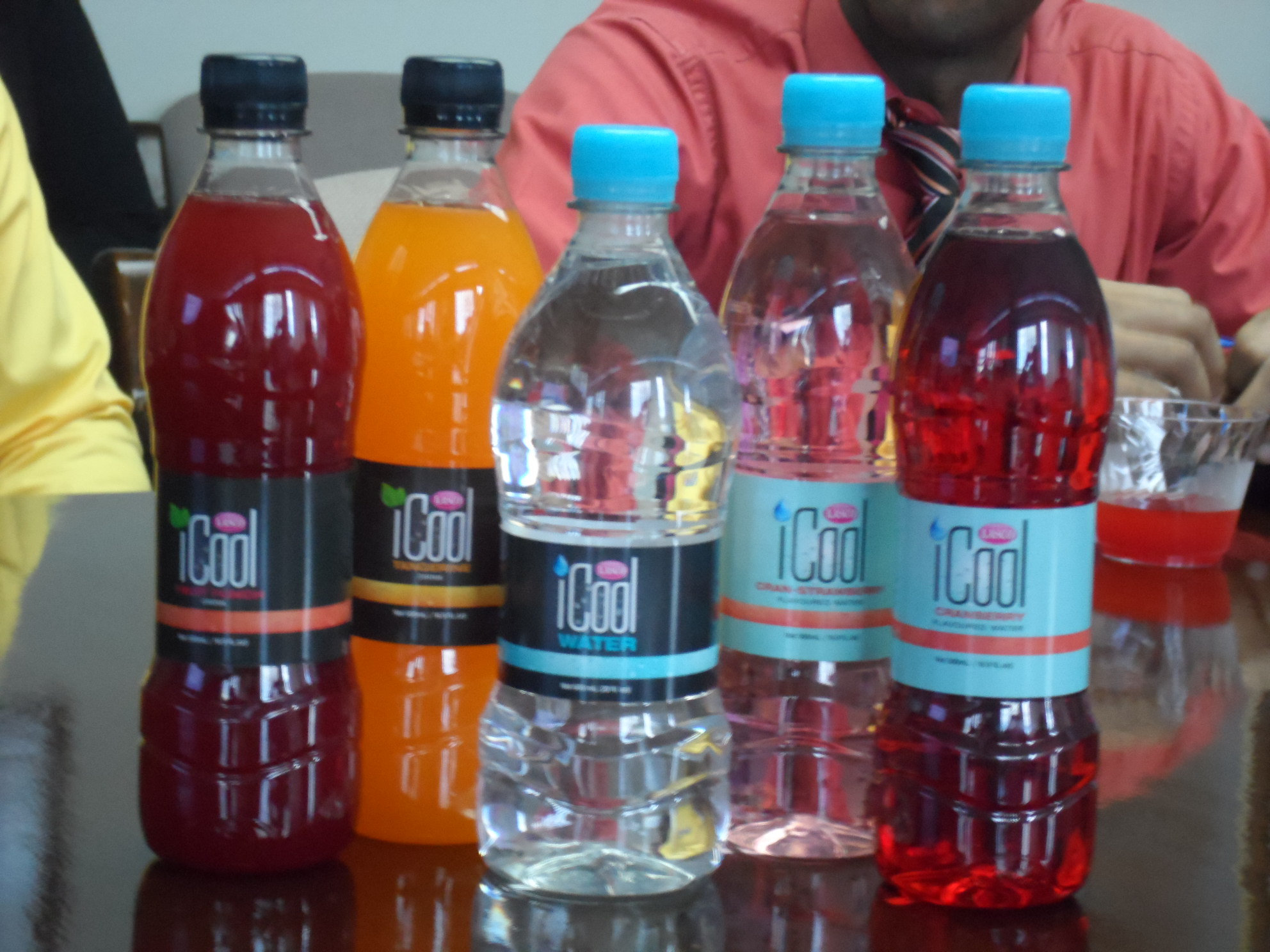
Lasco's new I Cool drink where demand is resulting in an increase in the plant size.

Lasco’s new I Cool drink where demand is resulting in an increase in the plant size.

Lasco Manufacturing generated total revenues of $1.45 billion, 27 percent more than the $1.14 billion garnered in the March 2014 quarter, resulting in a 78 percent jump in profit for the quarter to $243 million from $138 million.
For the financial year, revenues climbed 19.4 percent to $4.8 billion from $4.03 billion and profit of $669 million is up from $584 million. Gross profit climbed 34.7 percent well above the growth in revenues, a very positive development. Gross profit for the quarter jumped a huge 86 percent helping to deliver the stunning increase in profit for the quarter and augurs well for results for the coming fiscal year, and is a result of new products now being produced by the new plant.
Administrative expenses climbed 44 percent to $555 while finance cost moved from $73 million to $125 million. The average number of persons employed by the company during the year was fifty-one up from forty-two in 2014 helping to push labour cost from $147 million to $209 million. With the new factory facilities operational, depreciation ended at $67 million up from $27 million in 2014 but is set to jump in 2016 with only a Borrowingfraction of the annual charge booked in 2015, additionally, there are more assets to be transferred to fixed assets that will give rise to even higher depreciation charges.
Borrowing climbed to $1.64 Million from $1.49 billion at the end of March 2014, the increase helped to fund capital expenditure of $523 million during the year. A total of $329 million was paid back on loans during the year.
The last quarter numbers suggest that profit could end around $1.2 billion for the year or around 30 cents per share. While the company becomes taxable this year capital allowances coupled with tax payable at 12.5 percent, will result in little or no taxes being paid on profit for the year.
The net book value of property, plant and equipment includes assets under construction amounting to $1.34 billion. The cost will be depreciated once the property is complete and available for use. The estimated additional cost of completion of the facility is $373 million.
The company is listed on the junior market of the Jamaica Stock Exchange and last traded at $1.31 for an historical PE of just over 8 and around 4 based on IC Insider’s projected earnings. The stock should deliver a healthy increase in price during the fiscal year.

595 phone numbers switched

CWJ old OffCable & Wireless (C&W) is the clear winner in the number portability so far a 91 percent switching to Cable & Wireless according to data provided by C&W CEO Gary Sinclair on Thursday afternoon.
With only a few days since the sector started to allow the swapping of numbers in response to an IC Insider query Sinclair said “the numbers are overwhelmingly in our favour. Latest count 543 ported to us from Digicel and 52 ported out to Digicel from us”. Up to press time, Digicel representative who was contacted has not yet submitted their numbers.
Digicel off prtThe changes although more than the 200 the Minister responsible for telecommunication disclosed earlier this week, represent only a small fraction of the total number of more than 2 million phone customers in the island. Number portability has been long in coming and was promised to be in effect from last year but was put back based on request from Cable & Wireless.
While the change will provide telecom users with more flexibility it could be problems for some users in determining which numbers belong to which carrier with different pricing structure in place by the two dominant carriers.

Something stinks in Trinidad

TCement_280x150Something stinks in the land of calypso and it has nothing to do with football. Trinidad Cement offered rights to purchase shares in the company early this year but only some shareholders were invited. No one has done anything about this stinking thing. One investors in the twin island state made a stink about the issue but not really about the salient point.
They are of the view that with Cemex controlling a large block of the shares by way of the rights issue made it tantamount to a takeover, hence they ought to have made an offer to the other shareholders to buy their shares. With officially less than 50 percent of the shareholdings that seems a bit farfetched.
What is of far greater import are two issues that go to the heart of good corporate governance, equitable treatment of shareholders and proper disclosure. The first issue is that all shareholders were not treated equally as is the norm for all holders of the same class of shares.
TCL directors found it convenient to deprive shareholders who reside overseas except for a select few from participating in the offer. It is interesting that when Guardian Holdings had a rights issue it was open to all shareholders whether residing in Trinidad or not. TCL had lots of time to have prepared themselves and others for the rights.
“TCL has advised that at a meeting of the Board of Directors of TCL held on Thursday, February 26, 2015, the board confirmed a decision to offer the shares in the Rights Issue of 124,882,568 new shares in Trinidad and Tobago only, and to exclude all other jurisdictions in which TCL`s shares are listed – including Jamaica. This decision was based on the following: (1) The complexities involved in satisfying the requirements of the various regulatory bodies in all jurisdictions in which the Company is listed and its effects on the stringent timeframe for the Rights Issue, especially having regard to the fact that the condition imposed by TCL`s Lenders; and (2) the de minimis shareholding and trading activity in the other jurisdictions (including Jamaica).”
The second and even more serious concern has to do with disclosure or lack of it. One would hardly be regarded as foolish as to think that the deal was hatched to get Cemex controlling interest by the back door.
First overseas based shareholders were excluded from the issue, no shareholder was allowed to subscribe to more than their allotment and the scheme provided for Cemex to have their required holding whether the rights was successful or not by the agreement to issue added shares if the amounts from the rights did not allow them at least 35 percent ownership.
The offer document stated “If Sierra Trading has not achieved a shareholding in TCL of 35%, then subject to receiving all required approvals, including Shareholder approval, a private placement of TCL shares will be issued in favour of Sierra Trading in an amount that will permit Sierra Trading to achieve a shareholding of 35% of TCL’s outstanding shares”

Carib Cement a subsidiary of TCL

Carib Cement a subsidiary of TCL

The grave error is that the company withheld important and extremely relevant information from shareholders. In fact they got noted auditors to issue report that is questionable in one critical area for what it did not disclose that was a part of the offer document. Why did PriceWaterhouse (PW) signed off on it and leaving out one of the most critical bit of information on the profit in 2015 and thus giving great validity to the numbers is a mystery? The information would have led any reasonable reviewer to the conclusion that the group made no profit for the March quarter, the hiding of this critical information is very unfortunate. If TCL who would have been in a good position to know what the profit for the quarter was likely to be had disclose same to investors many more would probably have taken a more positive view of the company as the numbers showed a vastly better picture than was released to the investing public.
According to the offer document TCL made no profit between December and March this year and this was critically false information. Yet the company posted a huge improvement in profit in the March quarter. That is odd, so hear what PW said in their report about the financial position and forecast prepared by management of TCL. Extract from the PW report states, ”in our opinion the projection has been properly compiled on the basis of the assumptions set out in note 1 and the basis of accounting used is consistent with the accounting policies of the group.” It goes on to suggest that actual results may vary materially from forecast. That is fine for projection somewhere down the road but can’t be good for information that has already been known.
Retained earnings at December 2014 is included in the balance sheet at $64.257 million and the same figure of $64.257 million on April 1, 2015, the conclusion here is that there was no profit nor loss in the quarter and if so many would consider the price of $2.90 too high. On April 23 the TCL directors signed off on the first quarter results showing a big jump in profit to $43 million up from $11 million in 2014. Was all the profit made in March alone ahead of the rights issue document and if not, why was it not disclosed in the report? Certainly for the months or the period that they had information investors should have been provided with it and with some guidance for the rest of the months for the quarter and for the full year as well. The numbers for the quarter puts full year’s earnings around 64 cents without any savings from debt restructuring that makes the $2.90 rights issue price extremely cheap, few would have known what the numbers were likely to be based on the silence of the company’s “dumb” directors.
Why hasn’t the FSC of Trinidad and the stock exchanges on which the stock is listed not taken up the matter in the interest of the investing public? Caribbean investors deserve far better treatment than this shabby approach.

Trading picked up on junior market

Jamaican Teas is one of 3 stocks closing at 52 weeks' high on Friday.

Jamaican Teas is one of 3 stocks closing at 52 weeks’ high on Friday.

Trading on the junior market ended with 13 securities trading, and with 973,318 units changing hands valued at $2,695,211. The JSE junior market index gained 5.30 points to close at 918.26, with the price of 8 stocks advancing, 4 declining with 3 closing at 52 weeks’ high.
At the close of the market, there were 2 stocks with bids higher than their last selling prices, 2 with lower offers and 5 securities closing with no bids to buy and 6 that had no stocks being offered for sale.
Stocks trading in the junior market are, Access Financial lost 35 cents to close at $15.50 while trading 100 shares, AMG Packaging ending with 1,233 shares changing hands to close unchanged at $3.16, Caribbean Flavours closed with16,581 shares trading at $2.30, while gaining 21 cents. Caribbean Producers with 76,978 shares trading, ended lower by 12 cents to $2.88, Consolidated Bakeries finishing trading with 33,200 shares, the price inched up 1 cent to a 52 weeks’ high of $1.18 at the end. JM 19-6-15
Dolphin Cove closed trading with 11,167 shares at a new high of $12 after gaining 50 cents, General Accident Insurance concluded trading with 10,590 shares changing hands to close 11 cents higher at $1.67. Jamaican Teas closed trading with 47,930 shares and gained 48 cents for a 52 weeks’ high of $4. Lasco Distributors traded 18,564 shares, 3 cents lower at $1.65, Lasco Financial Services in trading with 432,000 units, gained 5 cents to end at $1.95, Lasco Manufacturing in trading 14,349 shares, ended 8 cents higher at $1.40, but closed with an offer to sell at $1.37 and Paramount Trading ended with 123,959 shares changing hands with an increase of 11 cents to $5.11.

Little profit in Q4 for Lasco Financial

Lasco FinLasco Financial Services reported profit of $191 million or EPS of 15.5 cents for the March 2015 year, an improvement of 8 percent over the $177 million made in 2014. The last quarter was poor with only $10 million in profit, down sharply from $41 million made in 2014, due to a combination of developments.
Revenue for the last quarter hardly grew, ending at $148 million versus $145 million in the 2014 quarter while expenses grew by $28 million due mainly to increased spend on marketing and selling expenses. Jacinth Hall-Tracey, Managing director indicated that the period suffered from squeezed margins on foreign exchange trading and foreign exchange losses in the quarter, resulting from the revaluation of the Jamaican dollar and greater stability of the exchange rate. Loan disbursements slowed as credit rating data used in assessing potential clients resulted in lower loan approvals.
The PE ratio of the stock is 13 based on the last reported earnings, normally the ratio would not be that high. Mayberry’s acquisition of 20 percent of the company’s shares has changed the dynamics and remove some supply from the market.
The company has cash of $500 million and is generating over $200 million per year. If the company can find the formula to ramp up good quality lending successfully, the profit outlook can be transformed considerably with high profit margins for lending. “We are working on a number of initiatives that will help in the transition from lower income in foreign exchange activity” Hall-Tracey said. The area of credit approval is one that they is being revisited as the use of credit rating information is stymying lending. But Hall-Tracey expects profit for this year that ends March 2016 to be higher than for the year just ended, subject to taxes on profit which the company will start bearing at fifty percent of the official tax rate of 25 percent.
The equity capital of Lasco is $812 million and is well below that of its two siblings who have equity in equity of more than $2.4 billion each. The company has done well from the money remittance and cambio operations but it is in the lending that the future growth prospects seems to rest. Hence the connection between Mayberry with the know-how having been exposed at Access Financial. The company has the free capital to increase lending with only $147 million in loans at March.