 Jamaica’s Berger Paints reported big improvement in profit flowing from a near 14 percent increase in sales revenue to $440.6 million up from $387.3 million, in the 2014 first quarter, with profit ended at $17 million after tax well up on the reported a loss of $372,000 in 2014.
Earnings per share ended at 8 cents and for the year earnings should be in the 55 cents per share region, if the present trend continues which should be helped by the low price of oil on the world market as a major input into the production of paints is fuel oil based.
For 2015 fiscal year to March, Berger reported profit of $67 million after tax and earnings per share of 31 cents from sales revenues of $1.85 billion.
Gross profit was slightly up on 2014 with $1.286 billion realized in the March 2015 quarter and $1.257 billion in 2014. ”The company continues to yield benefits from process improvements, energy cost savings and its plant and Machinery upgrade, these along with growth in sales contributed to the profit performance” Mustafa Turra, General Manager reported in a short report to shareholders.
Berger last traded on the Jamaica Stock Exchange at $2.55 but that is before the above results were disclosed on Friday.
Berger Jamaica in big profit upturn
138SL 2016 profit could hit $80M
 “Handing over of the buildings by the contractor will be in stages, scheduled for August 10, August 20 and mid-September. The Management team is now in place and support staff have been recruited to deliver a new experience in student living and to welcome the first batch of 576 students at 138 Student Living in early August 2015,” John Lee, Chairman of the company advised shareholders recently in the release of their June quarter financials.
Based on the completion the units, the company looks set to earn around $80 million in profit in its first full year of operating, well above a loss of $71 million that was projected in the prospectus. By year 2 profits should be hitting the $120 million mark or 30 cents per share, on the assumption that the exchange rate will remain relatively stable versus the US dollar.
Phase 1 of the Construction commenced September 2014 and is being financed by a joint $1.35B loan from Jamaica Mortgage Bank (JMB) and National Commercial Bank (NCB) and from proceeds of the public share issue of more than $500 million raised. Long term funding, by way of a bond, to repay the construction loan received from Jamaica Mortgage Bank and National Commercial Bank has been secured and will be paid on the completion of the buildings, Lee stated.
Construction of phase 2 consisting of another 576 rooms is scheduled to commence in September 2015 and will come into operation in August 2016. Negotiations have commenced with the preferred contractor which should lead to a final construction contract.
The company has signed a new concession agreement with UWI Mona for the restoration and

138 Student Living, artist impression of a block.
The company incurred cost on construction of just over $1 billion up to June that was partially financed by $617 million in loans.
The company has not yet commenced operation, as such there is no income statement as all cost is capitalized as a part of the construction expenditure.
Profit or loss| The company had projected rental income of $335 million based on the exchange rate being at $122 by September 2015 and J$131 by September 2016. Nevertheless, rental income is more likely to be in the region of $320 million, assuming all rooms are rented for 12 months. On the plus side, the cost of electricity that was projected at $67 million may come in under that amount with the fall in the cost of electricity since last year. Interest cost was projected at $270 million but that seems to be far over the actual figure that is likely to be incurred and charged against income in the year to September 2015. Actual interest plus preference dividend chargeable against income in 2016 is likely to be the order of $100 million based on the amount borrowed to complete phase 1 and the issued preference shares of $168 million.
Investments push JMMB profit 111%
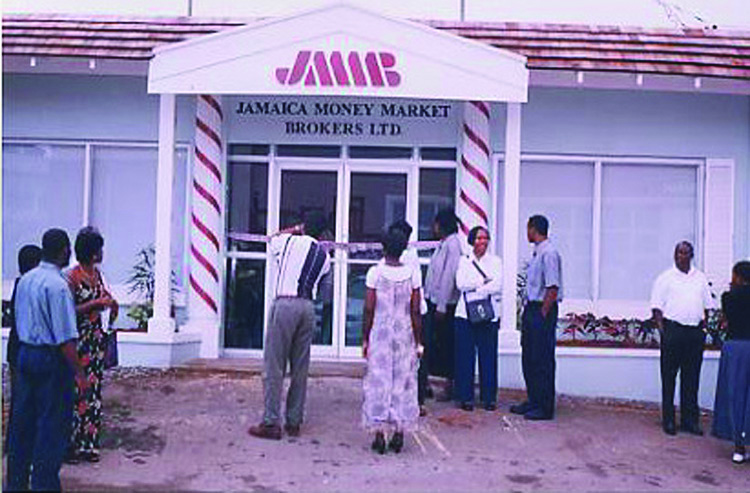 JMMB Group posted a net profit of $586 million, an increase of 111 percent over the profit of 2014 after asset tax of $398 million was fully expensed in the 2015 quarter. JMMB earned profit of $278 million and earnings per share of 36 cents for the quarter ended June, this year. The profit for the quarter shows a marked improvement over the mere $79 million reported in the March quarter.
Net Interest Income grew year-over-year moving from $1.29 billion to $1.44 billion, an increase of J$147 million or 11.4 percent. This increase was driven mainly by increased margins, resulting from growth in Group’s loan portfolio in Jamaica and Trinidad coupled with reduced costs of funds.
“Other operating revenues, namely, gains on securities trading, foreign exchange margins from cambio trading and commission income, showed increases of 62 percent, 20.5 percent and 39 percent respectively, driven largely by increased volume activity and taking advantage of one-off market opportunities,” Noel A. Lyon, Chairman and Keith Duncan, Group Chief Executive Officer, advised shareholders, in a release accompanying the quarterly.
Net gains on securities trading, accounted for $1.23 million, was generated in the 2015 period and in 2014, $757 million. After booking the large investment gains, the group still has investment revaluation reserve amounting to $2.25 billion at the end of June which can be shifted to the normal profit stream.

Keith Duncan, Group Chief Executive Officer of JMMB
The released from management continued, “In Trinidad and Tobago, the Group’s operations continue to move in a positive trajectory, contributing J$41 million for the quarter. Management continues to build out its integrated financial services model through JMMB Investments Trinidad and Tobago and its commercial banking arm, Intercommercial Bank.”
Operating expenses for the quarter totalled $2.3 billion, up 13 percent compared to $2 billion for the prior year. This increase was mainly attributable to staff related costs, asset tax and expansion of business activities regionally.
The asset base of the JMMB Group increased by J$4.8 billion to J$222.5 billion from J$217.7 billion as at 31 March 2015. This increase in assets was mainly funded by client deposits and repurchase agreements.
Kingston Properties pulls in $650m

One of Kingston Properties units at Red Hills Rd, Kingston
The Rights Issue which opened on Wednesday, July 22 closed on Friday; August 7, 2015 after an extension by a week. The company stated that there were over one hundred (100) subscribers to the issue.
The plan was that the issue would raise at least $954 million from the 136,271,694 units on offer at $7 each. The amount raised more than doubled the issued share capital that was just over 68 million shares, moving it to 160 million units and the overall equity base to $1.5 billion.
KPREIT reports currently owning fifteen units in the Miami Loft II condominium building, as well as a nineteen unit residential complex in South Florida and an office and warehouse complex in Jamaica. The company will use the proceeds to pursue expansion plans in various real estate markets in the United States and Caribbean countries.
The company is yet to release the second quarter results. For the first quarter, rental income of $25.6 million was recorded versus $25 million in the prior year, with profit before tax of $2.9 million compared to a loss $680,000 in 2014 and total comprehensive income came in at $12.3 million for the March 2015 quarter versus $18.2 million in 2014.
Carreras recovers all taxes
 The balance of $870 million due from the tax department for taxes over paid by its subsidiary, Cigarette Company of Jamaica was recovered in full by the company, Carreras reported in a release of the June quarterly results.
This means that the large special capital distributions that the company has been paying for a few years will soon come to an end. The company declared a total dividend of $1.80 per share payable September 3.
Carreras also reported a 6 percent improvement in profit flowing from a 1 percent increase in sales revenue of $2.6 2 billion, up from $2.59 billion in the 2014 first quarter, with profit ending at $622 million, in 2014 profit of $589 million was generated. Gross profit was slightly up on 2014 with $1.286 billion realized in the June 2015 quarter and $1.257 billion in 2014.
The company suffered from decline in volume sales in the quarter due to the price increase effected earlier in the year, which saw a shift in sales taking place in the March quarter as dealers sought to take advantage of the price change. Administrative cost fell from $372 million to $356 million while distribution and marketing expenses declined from $185 million to $164.
Earnings per share came in at $1.28 and should be in the $6 range for the full year.
JMMB managed funds jump 51%
 JMMB Group enjoyed a big jump in the total amount of managed funds being handled by the group in addition to the $223 billion that the group has on its balance sheet.
Off balance sheet funds jumped 51.2 percent to $58.8 billion, compared to J$38.9 billion for the prior year and is consistent with the Group’s strategy of moving assets off balance sheet as well as the dictates of the International Monetary Fund and the country’s Financial Securities commission. JMMB would be using the slate of Unit Trust as vehicles for shifting funds from on balance sheet to off balance sheet.
This trend is not peculiar to JMMB as other institutions have been on this path for some time. Effective October last year the Financial Services Commission, set a minimum amount for a retail repo. Currently the level is J$500,000 and US$5,000 and is scheduled to be increased on a phased basis to $1 million and US$10,000 by the end of December, this year.
JMMB stated in it release with the quarterly results to June that “the Group is now poised to expand its range of services in the Dominican Republic with the approval of its money market mutual funds”.
Gleaner’s media assets valued at $1.16
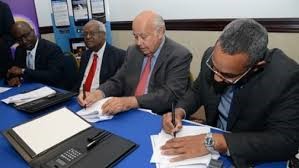 The Gleaner’s media assets to be transferred to RJR in the recently announced merger, is now valued at $1.16 per shares based on RJR’s closing stock price on Monday of $4. The Gleaner’s stock traded at $1.89 on Monday.
The proposed merger of the media arm of the Gleaner Company with Radio Jamaica (RJR) will see the Gleaner’s shareholders being compensated for the media business that RJR is acquiring at the rate of 1 RJR share for each Gleaner share. The initial information led to the interpretation that the Gleaner shareholders would be getting 1.2 billion of the RJR shares while the RJR shareholders would remain with just over 350 million shares. According to information on the Gleaner’s website, RJR will increase the issued shares to 2.4 billion units that will then be shared equally between the shareholders of both companies. RJR will do a combination of a share split and issues of new shares of which 1.2 billion of the shares will be given to Gleaner shareholders as the payment for the Gleaner Company (Media) Limited subsidiary.
RJR currently has 350.154 million shares issued to get the numbers to 1.2 billion for the company’s shareholders would translate to a split of roughly 3.43 to each existing share.
In addition to the value of the media assets, the Gleaner shareholders will retain shares in the new company that will retain the non-media assets. IC Insider.com pieced together information that suggests that these assets which include the current headquarters of the Gleaner, could be valued around $2 billion or roughly $1.70 per share.
Unilever trying to recover from IT issues

Some of Unilever products
The company has now reported that in the second quarter the issues were resolved and service levels are now fully restored to our customers, thanks to enormous effort by employees succeeded in bringing about the turnaround. Despite these efforts, half year sales declined by 10.3%, driven predominantly by the declines in the first quarter performance. Profit after tax fell to $18.3 million down from $30.8 million in the prior year six months period. Earnings per share were 70 cents compared to 117 cents in the prior year. For the June quarter, the company generated revenues of $140.5 million versus $148 million in 2014 resulting in aftertax profit hitting $12.5 million from $17 million in 2014. A fall in selling, distribution and administrative cost in the 2015 second quarter versus 2014 helped cushioning the fall off in revenues and decline in gross profit that fell by $8.6 million, in 2014 there was $5.4 million in other revenues with none being earned in 2015.
“Looking forward we expect the challenges of the regional economies to impact our growth prospects. In Trinidad and Tobago the uncertainty of the upcoming elections continues to affect the business environment. Regionally, recovery continues to be slow due to the depreciation of local currencies and shortage of US dollars across markets, which is cause for concern. While the recovery from the first half of the year remains a challenge, Unilever Caribbean is optimistic that the investment in our new IT systems and infrastructure will build the foundation for future growth. However, at this time the outlook for the rest of the year remains moderate” Pablo Garrido, Chairman of the company reported to shareholders.
The stock last traded on the at $67 placing the PE at over 30 times earnings.
Sagicor funds unmasked
 The best way to make money in the stock market or to minimise losses is to understand what is being invested in an avoid overpriced stocks. Investors have bought heavily into the concept of tourism industry being a winner in Jamaica but they need to know that it is highly seasonal with the bulk of the income earned in the period from Christmas Eve to somewhere in April and again between July and August.
Entities involved in the hotel traded will note that earnings slump sharply for the rest of the year but cost fall much more slowly. Against this factor is not surprising to see the Sagicor Real Estate Fund’s highly inflated first quarter profit, gave way to more realistic results in the company’s second quarter, with profit of 8 cents per share in the June quarter down from 11 cents in the June 2014 quarter. Buoyed by an abnormal first quarter results, earnings ended at 46 cents per share to June versus 27 cents for the six months to June last year. As the year progresses earnings per share should fall, with the lower tourism inflows for the remainder of the year.
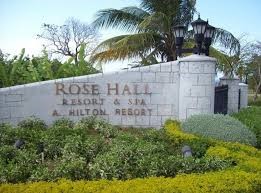
The fund acquired the Hilton Rose Hall in January 2015, adding 489 hotel rooms directly under its ownership. The acquisition helped the fund to report $570 million in profit after tax for the March quarter. Not disclosed to investors, is the fact that the expenses reflected in the March interim results were not the normal amount one would expect from the level of business attained. While the income in both the June and the 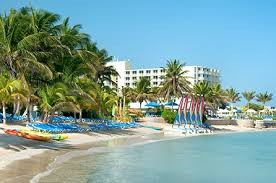 March quarters were virtually the same, operating expenses were nearly $200 million more in the June quarter than in March. Why is this so? In all probability the former operators of the hotel would have spent on marketing and refurbishing that would have helped to generate the income without some of the attendance cost, not so in the June quarter. While profit before taxation in the first quarter was $293 million from revenues of $1.19 billion, the net position in the June quarter was only $72 million from just $37 million less income from the hotel.
What can be expected is that revenues could be down by about 30-40 percent while expenses won’t fall much, resulting in large losses for the rest of the year. With the rate of exchange of the local dollar stabilizing, appreciation from the units held in the Sagicor Unit Trust is unlikely to show much gain. What now exist is a company whose earnings, at best may have peaked and at worse, could end up being lower than the 46 cents per share reported to date, then there is 2016 when the hotel expenses will reflect a full year’s expenditure and profits from it won’t be as robust as in the March quarter. Where will the profits come from to justify the high stock price? These are questions that investor should be asking themselves and management.
The FSC and the Stock Exchange need to ask themselves if allowing companies to leave inadequate information in the market place is the best way to protect investors and the integrity of the capital market?
$6.95 much for Sagicor X fund rights

Hilton Rose Hall Sagicor X Fund recent acquisition
The stock closed at $8.50 on the Jamaica Stock Exchange on Friday August 7th with 34,000 shares changing hands. The closing date for the issue is September 2, 2015, with the opening on August 19. The gross funds expected to be raised is J$4,157,036,165 and are intended to be used to assist Fund to acquire a convention hotel in Orlando, Florida, which is affiliated with a major hotel chain. The rights issue document states that the “resort has 742 rooms with over 62,800 square feet of meeting and convention space. It is located in Orlando at the entrance to the Universal Theme Park. The balance of the purchase price is expected to be funded by way of a loan”.
Sagicor Pooled Diversified Investment Fund and other connected Sagicor entities which together own approximately 80% of the stock units of the Company have stated that they intend to take up all their Rights. Shareholders who do not take up any of their Rights will be diluted by 28.57% assuming that all the Rights Shares are taken up and the Rights Issue is not up-sized.
The Fund reserves the right, in the event of over-subscription for shares from the Un-allocated Pool to upsize the Rights Issue by releasing up to maximum of 149,533,675 shares into the Un-allocated Pool to meet demand from its shareholders. X Fund does not intend to up-size the Rights Issue beyond the aforesaid maximum. If the Rights Issue is up-sized to the maximum the issued share capital of the Company would be increased by 50% over the current amount of shares in issue of 1,495,336,750 stock units and a shareholder who did not take up any of his Rights Shares would be diluted by 33⅓%.

Sagicor group a better buy with a PE around 6 times 2015 earnings
The stock which is overvalued is unlikely to enjoy the generation of profits in the short run from ongoing operations to justify the price being asked. In a market where few stocks are selling at a premium to net asset value, it is difficult to see why rational investors would want to pay a premium to the market for such an investment and suffer later the prospects of disappointing earnings that will justify the price either. One only has to look at Proven Investments shares, where investors gobbled up the stock at inflated prices as high as 22 US cents only to see few buyers for it now at 18 US cents to realise that hype will often will out in the short run but reality sets in after.
Investors should know what they are buying but that is not clear from the offer document but Sagicor Group selling at a PE of 6-7 times this year’s earnings with a book value of $12.17 versus last traded price of $13 is a far better buy. The issue is taking place in a bull market so who knows what will happen?