Profit jumps 59% at Carib Cream

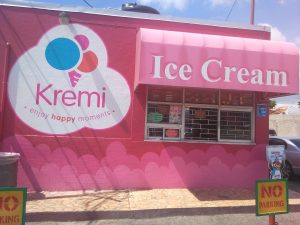
Caribbean Cream outlook.

Profit jumped 59 percent in the quarter to May, to $55 million from $35 million in 2017 from sales revenue that rose 29 percent to $412 million from $319 billion in 2017 for Caribbean Cream that trades as Kremi.
The improvement brings to an end falling profit for the past fiscal year when profit fell to $90 million from $176 million in 2017, from increased revenues and from profit of $164 million in 2016.
For the quarter, gross profit margin rose to 36 percent from 34 percent in the 2017, as input cost climbed 25 percent, compared over for the 2017 first quarter. The net effect, operating profit rose 37 percent to $147 million from $107 million.
Administrative expenses increased 25 percent to $76 million and marketing and sales expenses climbed 24 percent to $13 million. Finance cost was up to $3.4 million from $3.15 million.
Earnings per share came out at 15 cents for the quarter and should end the year around 70 cents, just slightly lower than the 80 cents forecasted at the end of the fiscal year.
According to Chairman Carol Clarke Webster and Managing Director, Christopher Clarke in their joint statement to shareholders, “these results are attributable to improved products supply as a result of greater production efficiencies, along with the introduction of a new range of novelties which are performing well in the market. In addition, we continued our sales and marketing thrusts to expand our market penetration and ‘Top of the mind” awareness of our product range.”
Gross cash flow brought in $65 million but growth in receivables, inventories, offset by payables reduced it to $44 million, in addition, fixed assets purchased for $101 million offset by net loan inflows of $65 million resulted in a cash increase of $8 million, pushing the cash and bank balances to $183 million. Shareholders’ equity stands at $693 million with borrowings at just $147 million. Net current assets ended the period at $221 million well over Payables of $134 million.
The stock traded at $4.90 on the Junior Market of the Jamaica Stock Exchange with a PE ratio of just 7 times 2019 earnings leaving quite some room for a good bounce from the current price. The stock is one of the TOP 10 Junior Market listings.
The company declared a dividend of 4.8 cents payable on September 21 to shareholders on record at the end of September 7. The stock will traded ex dividend on September 6.

Derrimon hikes profit 45%

Staff at Derrimon Trading.

Revenues for the Derrimon Trading first quarter March this year, climbed 27 percent to $1.94 billion above the $1.53 billion reported for the 2017 quarter and led to a big hike in profit.
The company reported a strong 45 percent jump in its first quarter results, from $35 million to $52 million or 21 cents per share to March this year, but profit could have been even higher had they not incurred finance cost which jumped 56 percent to $38 million from $25 million in 2017, in refinancing the preference shares they held previously at higher rates than the new ones. IC Insider.com is forecasting earnings per share of just over 80 cents for the current year.
This year is the last for profit to enjoy full tax free status, in 2019 profit will be taxed at half the usual 25 percent rate less payroll tax credits.
“The full quarter’s performance of the retail stores as well as the impact of the joint venture positively influenced the growth of the revenue during this reporting quarter,” Derrick Cotterell, the chairman reported to shareholders.
Gross profit for the period was $353 million representing 18 percent of revenues and was up from gross profit of $279 million in the 2017 period with a similar percentage of revenues. According to Cotterell there was improved margin in the core business resulting from “a combination of improvement in margins arising from strategies employed within both the distribution & retail segments of the business, the positive impact from the culled distribution portfolio and improved margins from growth of the supermarket portfolio.” Margins for the non-manufacturing arm rose to 17.2 percent from 16.94 percent in 2017.
The company’s equity position is $1.04 billion but borrowed funds stand at $1.22 billion, cash and investments amounts to $432 million thus negating some of the negative of the high leveraging of the group. With much of the cash and investments held by Caribbean Flavours, the larger portion is not readily available to Derrimon. Current assets amount to $2 billion and current liabilities at $413 million.
The company is proposing to do a major increase in the authorized share capital, with some being set aside to facilitate the 10 for 1 stock split. With the stock price having climbed to the $20 region, the company should take the opportunity to raise equity capital and retire some of the debt now being carried by the parent company.

Stock split for Blue Power?

Blue Power stock split to be considered by the directors.

A stock split could be coming for Junior Market listed Blue Power Group that is currently selling at $30. The directors of the company advised the Jamaica Stock Exchange on Wednesday.
The company also advised that a meeting of their Board will be held on July 2, will consider the declaration of a dividend and Whether the Board should recommend a stock split to the shareholders. IC Insider.com gathers from unconfirmed sources that the although the wording suggest that there could be a decision not to split the stock there is a strong possibility that the decision end up being being a 10 to 1 split.
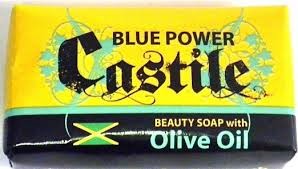
Blue Power reported full year earnings to April with a fall from $122 million to $102 million as other income dropped from $8 million to $3.4 million and net finance income nosedived from $21 million to just $66,000, after revenues grew 8 percent from $1.4 billion to $1.5 billion and gross profit fell from $327 million to $323 million. The company reported strong growth in export sales of soap but say they are gearing for increased completion within the region including new soap plant in Jamaica. The increase in export sales over the previous year was 34% from $70 million to $94 million Dhru Tanna stated in his report accompanying the audited financial statements.
Earnings per share was $1.81 for the just concluded 2018 fiscal year.

Q2 profit doubles at CAC

CAC closed at a new high on Monday.


After a poor first quarter, profit at CAC 2000 more than doubled in the April quarter, to $59 million from $23 million in 2017. For the six months to April, profit was just ahead of the 2017 results and ended at $54 million from $51.4 million in 2017.
Sale revenues rose 45 percent for the quarter, to $384 million from $266 million and rose 10 percent for the year to date, to $623 million from $568 million in 2017.
Improvement in profit margin in the first half of the year, increased from 36 percent to 40 percent and in the April quarter to 43 percent from 37 percent in the 2017. The effect, gross operating profit rose a sharp 68 percent in the quarter to $167 million from $99 million and increased 23 percent for the year to date, to $249 million from $203 million in 2017.
Administrative expenses jumped a sharp 68 percent to $101 million in the quarter and increased 39 percent in the six months period to $179 million. Steve Marston, Managing Director, stated in his report accompanying the quarterly that the increase in administrative cost was primarily related in salaries, professional fees, including cost related to the recent preference share issue and travel related expenses.
Selling and distribution expenses declined by 11 percent to $9 million and fell by 9 percent to $17 million for the half year. Finance cost rose 33 in the quarter, to $5.5 million from $4.1 million in 2017 and rose 41 percent from $8 million to $11 million for the six months period.

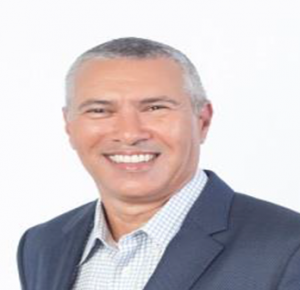
Steven Marston,
Chief Executive Officer

Gross cash flow brought in $60 million but growth in receivables and inventories amounting to $109 million less a $33 million increase in amounts owing to creditors pushed cash flow into an outflow which was funded by net new borrowings leaving cash on hands at $261 million at the end of April. Cash funds on hand is expected to fall when $148 million in preference shares is repaid in July.
At the end of April, shareholders’ equity stood at $477 million with borrowings at $365 million. Net current assets ended the period at $1.1 billion inclusive of trade and other receivables of $591 million, cash and bank balances of $261 million. Current liabilities of ended the period at $489 million.
Earnings per share came out at 43 cents for the quarter and 42 cents for the half year could end the fiscal year ending to around $1.30 if the current trend continues. The stock traded at $9.05 on the Junior Market of the Jamaica Stock Exchange on Tuesday in reaction to the improved results and now boast a PE ratio of 7 times 2018 earnings. Net asset value is $3.70 with the stock selling at 2.45 book value.

Lower Q2 profit for Scotia Group

Scotia Group reported a 19 percent rise in half profit to $6.76 billion after tax, but that clouds the fall in profit for the second quarter to April that fell marginally thanks to a big jump in loan provisioning of $560 million compared to a small recovery of $6 million in the January quarter.
The half year earnings are bolstered by a gain on sale of subsidiary of $753 million.
Shareholders don’t have much to cheer about except that loan losses are within the range of that of 2017 along with a few other good developments. Net interest income fell to $6.2 billion from $6.5 billion in April 2017 quarter, Insurance revenues fell from $1.1 billion to $707 million. Cost were contained well, with salaries and benefits declining from $2.84 billion in 2017 to $2,46 billion in the April quarter while other operating costs, rose marginally from $1.76 billion to $1.86 billion.
Year to date, net interest income moved from 13.17 billion to $12.82 billion while loan impairment fell sharply from $975 million to $564 million. Net fee income declined from $4.4 billion to $4.1, but gains from foreign exchange trading activities delivered $1.66 billion versus $1.1 billion in 2017. While the half year figures show a bit of positive signs, investors should be focused on more recent developments, as these are more likely to point the way forward.
The group made modest progress in increasing loans, the most important asset for a bank. At the end of April, loans grew to $171 billion from $166.5 billion at the end of 2017 fiscal year, the increase is twice the growth rate between April last year and the year end. Investment securities rose from $120 billion at the end of October in 2017 to $131.6 billion and cash resources from $116.5 billion to $126.2 billion, at a  much faster pace than increased in lending. Deposits by the public moved from $260.6 billion to $383 billion.

David Noel new Scotia Group’s CEO.

Scotia ended with earnings per share of $1.08 for the quarter and $2.17 for the half year, including the one-off capital gains from sale of the former subsidiary. A dividend of 48 cents per share was declared by the board, payable on July 18.
The strongest positive for the group is that they currently lend out just about 52 percent of deposited funds by its customers, leaving much room to grow loans whenever that time comes around.
The stock traded on the Jamaica Stock Exchange and closed at $53 but with these results, further movement up is going to be very challenging in the short term and leaves NCB Financial as the banking group of choice for investors seeking growth in stock price.

Buy PanJam get Sagicor shares free

Stephen Facey Chairman & Paul Hanworth Chief Operating Officer

The market value for PanJam Investment at the end of Friday was $48 billion or just $1 billion more than the value of the group’s 31.56 percent investment in Sagicor Group.
In other words, investors can get all the real estate owned by PanJam along with the other assets for just $1 billion assuming the Sagicor shares were disposed of, an investment in PanJam becomes a great value play as investors are not valuing the company for much more than the profit contributed by Sagicor Group.
But the PanJam shares may become even more appealing as the group expand on an investment spree of sorts. In 2018, the group bought out its partners half holdings in the Oceana property in downtown Kingston and now owns it fully. It acquired property at Olivier Road, that neighbours the Manor Park Plaza owned by them. It acquired 6 acres in Montego Freeport and increased its investment portfolio of equity from $1.76 billion to $2.4 billion.
The company generated gross cash flow of $2 billion for 2017 and with such healthy annual inflows is not stopping the investment train anytime soon, especially with interest rates on Jamaican debt so low currently.
The group delivered flat profit attributable to shareholders of PanJam Investment for the quarter ended March 2018 of $827 million versus $830 million for the similar quarter in 2017. Net profit attributable to owners for the 2017 calendar year amounted to $4.1 billion, up from $4.05 billion in 2016, $3.19 billion in 2015 and $2.84 billion in 2014. Share of results from associated and joint venture companies continue to grow and dominate the group’s earnings with an increase of 6 percent in 2017 to $3.9 billion, from $3.7 billion in 2016. Sagicor accounted for $3.8 billion of the 2018 profit.
“During 2017, we increased our investment in Jamaica through a number of transactions, including our purchase of the Olivier Road property, the assumption of our former partner’s interest in Oceana, our increased stake in New Castle from 25 percent to 33 1/3 percent and the additional capital deployed in equity securities of locally-listed companies.”
“Our support for the development of local venture and private equity capital markets continues through our involvement in the First Angels Jamaica investor group and our participation in the Development Bank of Jamaica’s Jamaica Venture Capital Programme and National Business Model Competition,” the company’s management stated in their report to shareholders.
Investment assets at December 2017 stood at $4.8 billion up from $4.1 billion at the end of 2016. The 2017 portfolio mix reflected an increase in equity holdings, from 43 percent to 50 percent of the total portfolio, and in repurchase agreements and deposits, from 17 percent to 34 percent.
According to PanJam’s management, “Our equity portfolio is diverse, with investments in North and South American and Caribbean markets across a broad range of industries. The Company maintains a majority of its investment assets in foreign currency, mainly USD, though this has reduced in line with our view of improved prospects for Jamaican investments and the local currency. Looking ahead, we will focus on growing the size of our trading portfolio, with particular focus on the Jamaican markets and the increased number of new offerings. As always, we will leverage the expertise of our Investment Committee and adhere to the guidelines they provide.”
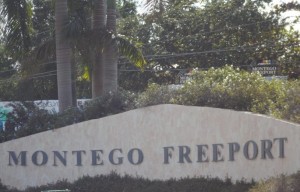
The acquisition of the Montego Freeport property is to house a business hotel, retail shops geared to the tourism industry and office spaces, Stephen Facey told shareholders at the recently held annual general meeting.

Flat profit for Ansa McAl

Ansa Mcal profit stable after a big fall in 2017.

Trinidad’s conglomerate, Ansa McAl reported flat profits of $216 million before corporate tax for the quarter to March 2018, up marginally from the $214 million in 2017.
Profit after tax attributable to shareholders’ of the group, rose 4 percent to $138 million for the period. The results, although modestly higher than for 2017, marks stability compared to a big decline in the full years results for 2017 when they reported a decline from $691 to $544 million.
Improved profit was achieved from a 7.7 percent rise in revenue to $1.5 billion from $1.4 billion for the March 2017 quarter. Growth in revenues drove profit before finance cost up to $219 million from $216 million as profit margin remained at 15 percent in both periods. Finance cost rose from $9.9 million to $11.4 million, taxation was flat at $59 million in both periods.
Segment results show progress, except for Insurance and Financial Services that reported flat revenues and a 35 percent fall in profit and the Media business where revenues declined 3 percent but had a 33 percent rise in profit. Manufacturing, Packaging and Brewing increased revenues by 16 percent and profit by the same level

Carib Beer brewed in Trinidad by Ansa McAl Group

while Automotive trading and distribution enjoyed a mere 6 percent increase but that was enough to drive profit up by a strong 35 percent.
Earnings per share amounted to 79 cents, giving it a PE ratio around 18. Net book value per share is $39 while the stock trades at 1.5 book with the last price of $59.
Ansa is one of Trinidad’s major conglomerate, owning media houses, Carib Beer brewery, and now Berger Paints and other paint brand out of Trinidad to name a few of the entities it is involved in. At the end of March, shareholders equity stood at $6.86 billion.

Angostura Holdings Q1 profit jumps 76%

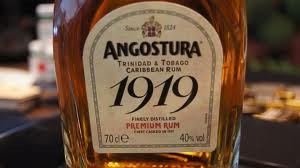
Angostura Holdings aged rum.

Profit at Trinidad’s Angostura Holdings surged 77 percent in the March quarter, to TT$41 million before tax and up 76 percent to TT$28.4 million after tax resulting in earnings per share of 14 cents.
Sale revenues climbed 15.5 percent to TT$129.5 million but a 10 per cent fall in direct operating cost took cost down by to $37.7 million and boosted gross profit margin to 71 percent form 63 percent in 2017 and gross profit by 31 percent to $92 million.
Profit declined sharply from 2015 when the company posted $164 million after tax compared to TT$153 million in 2014 and then TT$122 million in 2016 and $111 million last year.
Marketing and sales expenses rose 11 percent to TT$37 million while administrative expenses rose just 2 percent to TT$14.6 million from TT$14.3 million in 2017. Finance cost was negligible.
Cash flow resulted in an increase of TT$61 million in cash pushing cash to TT$214 million as of March and investments of $218 million. At the end of March, shareholders’ equity stands at TT$1.01 billion with borrowings at just TT$20 million. Current assets ended the period TT$795 million well ahead of current liabilities of TT$96 million.
The stock traded at TT$15.75 on the Trinidad and Tobago Stock Exchange. Based on 2017 earnings the stock was selling at a PE ratio of 29 times. If the trend in earnings for the first quarter is held for all of 2018 the PE would fall 17 times earnings. Net asset value is TT$4.9 with the stock selling at 3.20 book value.
This one needs watching to see if the improvement deepens. It is worth noting that the company is amassing cash and could well be after a takeover target.
Angostura is one of the Caribbean’s major rum producers and producers of Angostura Bitters.

Profit rise at T&TNGL

T&T NGL closed at $29 on TTSE on Friday.


Trinidad and Tobago NGL reported higher income from share of joint venture profit in the March 2018 quarter.
The company’s share rose to TT$61.4 million from $57 million in 2017 and $217 million for the twelve months to December 2017.
The company owns 39 percent of shareholding in Phoenix Park Gas Processors and ended with profit of TT$61.8 million after tax in the March 2018 quarter up from $57 million in 2017. Profit for the 2017 fiscal year was $234 million after tax.
Earnings per share amounted to 40 cents and $1.51 for the 2017 fiscal year. Shareholders’ equity $3.26 billion with net book value per share of $21. The stock trades at $29 on the Trinidad Stock Exchange.

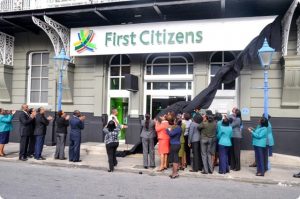
Profit grows at First Citizens

First Citizens Bank traded at $35 on Friday.

The Trinidad economy may still be under stress with some companies reporting lower profits but not First Citizens Bank.
Profit before taxation rose 17 percent in the March quarter, to TT$264 million from $225 million in 2017. For the nine months to March, profit also climbed 17 percent to $553 million from $473 million in 2017. After an increase in the tax rate profit after tax is up just 5.6 percent to $367 million for the six months to March and was flat at $164 million for the quarter with $163 million generated in the 2107 quarter.
Net interest income rose 13.75 percent for the quarter, to $397 million from $389 million and rose 13 percent for the half year to $781 million, other income was almost flat at $140 million compared to $141 million in 2017 for the quarter, but rose 7 percent for the year to date, to $341 million from $320 million in 2017 as interest income rose faster than expenses.
Administrative and Other expenses were kept under raps and rose just 3 percent in the quarter and six months period to $272 million and $531 million respectively.
Earnings per share came out at 65 cents for the quarter and $1.45 for the six months and should end the fiscal year around $3. The stock last traded at $35 on the Trinidad and Tobago Stock Exchange with a PE ratio of 12 times 2018 earnings.
At the end of March, shareholders’ equity stood at $6.76 billion with loans advanced to customers moving up nearly 14 percent from $13.9 billion to $15.8 billion.
The company declared a dividend of 44 cents, bringing the payment for the half year to 80 cents versus 69 cents to 2017. Net asset value is TT$26.89 with the stock selling at just 1.3 times book value.