Plastic ban to have minimal impact – Wisynco

Wisynco, traded the most shares on tuesday.

Wisynco Group will see little impact in the recently announced ban on plastic bags, plastic straws and Styrofoam, to take effect between 2019 and 2020 a release by the company stated.
“The areas of impact for Wisynco include plastic straws and Styrofoam, which the Company manufactures. Regarding plastic straws, it is proposed that this ban take effect on January 2019. Plastic straws represent less than one tenth of 1 percent of the Company’s revenue and the ban will therefore have no impact.”
“Regarding the ban on Styrofoam for local manufacturers, though there is still some uncertainty, it is currently proposed that this ban take effect on January 2020. Styrofoam represents 4 percent of the company’s revenue and approximately 3 percent of the company’s net income.”
For the fiscal year ended June 2018, Wisynco recorded profits attributable to shareholders of $2.3 billion or 62 cents per share on a normalized basis for the year from a 14.8 percent rise in revenues to $24.54 billion compared to a profit of $1.97 billion or 55 cents per share on a normalized basis for the corresponding prior in 2017.
Revenues for the June quarter grew 15.2 percent to $6.49 billion over the $5.63 billion generated in the 2017 corresponding quarter.
The group benefited from improved profit margins in the quarter and for the full year while general expenses rose at a much slower pace than the increase in revenues. In the quarter Selling, Distribution & Administrative Expenses for the quarter totaled $1.86 billion or 3.4 percent more than the $1.79 billion for the corresponding quarter of the prior year and for the 12 months it rose 8.5 percent to $6.37 billion.
Wisynco Group stock that has been under selling pressure from the start of May, when it was trading at $10.72, gained 20 cents to close at $9 with 320,465 shares changing hands on Thursday, on the Jamaica Stock Exchange. The stock is selling at less than 10 times 2019 earnings and remains one of the better buys in the market.
One-off gains push up Scotia’s profit

Scotia Group reports growth of 24 percent in net profit to $11.2 billion for the nine months to July, but importantly, profit jumped a strong 37 percent in the July quarter, over that of 2017 to $4.4 billion as net revenues climbed in the quarter by $940 million and costs were effectively flat.
While the results are impressive, especially in light of recent years of weak growth, the improvement is boosted by what could be considered as one-off income. The nine months profit that grew by $2.2 billion over the similar period in 2017, inclusive of gains on the sale of a subsidiary of $750 million. In addition, the group enjoyed above average foreign exchange trading gains, partially as a result of the relatively sharp slippage in foreign exchange rate of the Jamaican dollar. Excluding, the exceptional income profit would be modestly up from the results of the prior year.
The year’s operations was impacted by lower cost and lower income in some areas while income for some other segments grew. Total revenues excluding impairment losses on loans for the nine months to July increased 10.7 percent to $33 billion, over the prior year. “While there were increased loan and transaction volumes across the business lines, this was offset by reduced net interest margins as a result of lower interest rates,” the group’s CEO and President, David Noel stated in the report to shareholders. Net interest income after impairment losses for the period was $17.9 billion, compared to $18.44 billion the same period in 2017. For the quarter, net interest income declined by nearly $460 million before loan impairment losses, to $6.3 billion and by $427 million after to $5.68 billion.

David Noel new Scotia Group’s CEO.

Net fees and commission income was $6.1 billion, down $477 million or 7 percent compared to last year, impacted by the ongoing shift from branch transactions to online and mobile transactions which Scotia states, “attract lower fees,” Insurance revenue increased by $135 million to $2.4 billion or 6 percent, due to growth in core insurance business and actuarial reserve releases from changes in assumptions on valuation of the portfolios. Net gains on foreign currency activities and financial assets amounted to $4.6 billion, up $2.5 billion, more than 100 percent compared to last year based on increased market activities and revaluation gains. For the quarter, net fees and commission income dipped to $2 billion from $2.17 billion, gains on foreign trading jumped sharply from $570 million to $1.95 billion due partially to the sharp depreciation of the Jamaican dollar. Gains in financial assets rose from $228 million to $598 million but insurance revenue fell from $567 million to $525 million.
Operating Expenses of $16.3 billion for the nine months, increased $145 million or just 1 percent compared to prior year. Salaries and staff benefit costs declined $414 million, while other operating expenses grew by $575 million. For the quarter cost rose from $5 billion to $5.07 billion as staff cost dipped slightly to $2.45 billion from $2.68 billion.
Loans and advances grew 6.3 percent, with loans after impairment losses increasing to $176.9 billion since the end of the previous fiscal year in October but grew a stronger 3.7 percent between April and July quarter. Impairment losses on loans were down $310 million or 21 percent from last year, due to lower provisioning requirements on a reduced non-accrual loan portfolio as the quality of credit portfolio continues to improve.
An interim dividend of 48 cents per stock unit payable on October 24, was declared. Scotia is trading on the Jamaica Stock Exchange at $62 on Tuesday with a PE of 13.5 times 2018 earnings from continuing operation around $4.50 per share.

Express Catering profit up but concerns linger

Ian Dear Chairman & CEO of Express Catering

Profit at Express Catering (ECL) jumped 290 percent to US$3.5 million on increased revenue of 10 percent to $15.7 million. A fall of $1.4 million in administrative cost to $6.6 million and a near $1 million rise in gross profit accounted for the bulk of the profit growth.
Earnings per share came in at 0.021 US cents. With the Starbucks franchise, which should be in full operation for the entire 2019 fiscal year and continued strong showing in tourist arrivals, revenues should climb much faster than the 10 percent experienced for 2018, helping to boost profit, which IC Insider.com is estimating at 0.035 US cents or Jamaica 45 cents.
Of grave concern is that while the company is incurring $333,000 in preference dividends on $3.5 million preference shares, amounts owing by related parties, rose from $3.6 million last year to $6 million to May, but ECL gets no income from it. That seems partially on the way to be corrected, based on information provided the company’s Chief Execuitive.
The preference shares issued is exactly the same amount due on debt owing to the company by a related party and reported in the financials for the first time in the 2017 fiscal year. While the amount owed by Margaritaville Limited increased by $2.3 million with no interest payable, Express pays dividends on the preference shares. No interest is paid to Margaritaville St. Lucia by Express for an amount due to the former, partially countering the position against the dividend payable. The preference shares, denominated in US dollar, is obligated to pay dividend at 9.5 percent per annum. That is high for a US dollar instrument now, as well as when it was contracted. These matters are clearly an untidy for a listed company with amounts owing to and from related entities, with some incurring a charge while others are not.
IC Insider.com spoke with Ian Dear who is Chairman of the company on this issue. Dear advises that the dividend to be paid shortly will result in Margaritaville Limited repaying US$4.8 million of the debt in September and it is not expected that the account will return to the above level in the future. Regardless of the above payment, the situation requires regularizing to ensure equity and transparency for the investing public.

Starbucks one of the brands Express Catering will sell at the Montego Bay Airport.

Dear went on to state, “The balance of US$5.99 million at May, due from Related Parties is made up of 3 separate Related Party accounts with amounts due from ECL as well as amounts due to ECL. This is a carry forward from the period when ECL was a fully owned subsidiary of MCL Group. The company will take steps to cancel the non-active balances by paying down the amounts due to Related Parties and collecting from Related Parties amounts due to ECL. The company declared recently a dividend of US$6 million that will result in a further substantial reduction of the existing balance.”
“The existing Preference Shares were entered into at a time of higher interest rates. Since then rates have trended downwards. ECL is currently engaging funding institutions with a view to refinancing this debt. Redemption costs as well as Arranger fees will be critical factors in this decision,” Dear, Chairman & CEO informed IC Insider.com.

Dear also confirmed that the annual results had very little revenues from the Starbucks store. He also indicated that there will be three stores initially, in the Sangster International Airport of which two opened around 2 months ago and the third was opened last week. Annual revenues should be in the order of $1 million per annum, IC Insider.com estimates.
Unless otherwise stated, all amounts are denoted in US dollars.

Broken capital market no one is fixing

Gwest booked preference shares but no notice seen for the issue.

The Jamaica Stock Exchange and the Financial Services Commission regulate the financial market, but the system is seriously broken and no one is moving to really fix it.
IC Insider.com brought to the attention of the public, the appalling situation relating to Knutsford Express where the Prospectus which was signed off by both the above institutions but there is no indication how the share capital moved from 973 units to 95 million. The Auditors of the company still have not sorted out and reported on properly in the audited accounts on the movement of the share capital and the proceeds of the initial public offer, even as it was brought to public attention and the JSE was aware of it from 2014.
There is the case where a brokerage house, signed agreements and breached a series of agreements and refused to correct the errors. The FSC who should be aware of the breach failed to recognize the matter year after year, nor have the auditors dealt with the matter properly.

The FSC fell down on the job in reviewing Knutsford prospectus & reports after IPO.

GWest has published the first quarter report to June, showing the issue of 250 million preference shares, but there is no notice on the JSE website of an extraordinary general meeting called or held to approve the issue of the shares. The JSE requires that any directors’ meeting at which a change in share capital is to be considered, such information should be communicated to the JSE and when the directors consider it, the JSE is to be advised of the decision within 48 hours. The Company’s act requires that changes in share capital must be approved by shareholders. From all indications, no such thing has happened at GWest. First off GWest had no authorized preference shares up to the end of March. How and when were these shares established and approved, is the question to be answered.
GWest came to market, with results that were based on sale of property. That changed substantially in the recently concluded fiscal year, when a loss was reported. The company projected figures, showing highly profitable future, with revenues from medical services rising sharply for the just concluded fiscal year. The results to March, showed revenues well below forecast, from the new operations. The company projected medical income to March this year, at $86 million but only generated $17.4 million and that puts the issue of generating the forecasted $710 million for fiscal year ending March 2019, in grave doubt.

Knutsford Express 204, 2015 auditing accounts still filled with errors.

Admittedly, the company had projected a loss to March of $110 million but came up much lower, with a loss of $88 million. For the June interim report this year, the company generated revenues of just $25 million with a loss of $42 million. From all indications, the company will fall far short of projections, but the directors gave shareholders who gave the company, their seal of approval, very little to go on as to the immediate future. With new borrowings and big losses investors, should not be left in left in the dark as to the true state of the company’s operation and what are the likely prospects for the rest of the year. In the quarter report there is no comment about the preference shares and the reason for the increase in liability and most importantly, what are the situation relating to the expected revenues flows.
We cannot develop a serious capital market with such sloppy monitoring and total lack of concern for shareholders by directors and mentors.
The JSE and the management of Knutsford Express met in connection with the errors in the audited Financials and both parties IC Insider.com is informed are to be revised.

Big bounce in Fosrich profit

FosRich profits rose sharply in 2018

Fosrich Group reported profit of $30 million for the June quarter, an increase of 630 percent over the $4 million reported for the prior year’s reporting period.
Profit before tax climbed to $60.6 million for the half year to June, for an increase of 144 percent over the $25 million for the similar period in 2017 and by an increase of 234% over the post-tax profit of $18 million, reported for the prior reporting period.
Having listed on the Jamaica Stock exchange Junior market in 2017, profits are now free form taxes for a period of 5 years. Earnings per stock unit ended at 12 cents for the half year and 6 cents for the quarter and should end up just around 27 to 30 cents, if the trend continues.
During the second quarter, the company enjoyed an 18.7 percent hike in income to $320 million, from $270 million for the prior year. For the half year, sales revenues were just up by 5 percent to $592 million from $565 million in 2017.
Gross profit for the quarter, rose 23 percent to $141 million from $115 million, in the prior reporting period and for the six months to June gross profit increased just 6 percent to $269 million. Gross profit margin slipped from the first quarter to 44 percent with the margin for the six months ending at 45 percent. Other income for the year-to-date benefited from foreign exchange gains of $15 million.
Administrative expenses fell $14 million for the half year, to $198 million and slipped just slightly for the quarter to $102 million from $103 million. According to the Managing Director, Cecil Foster, “the decrease was driven primarily by efficiencies gained from the management of staff and related costs, reductions in selling and marketing expenses, reduced insurance costs and reductions in damaged goods write-off and warranty expenses. The cost savings were partially offset by increases in staff training, legal and professional fees, rent and bank charges,” management indicated.
Finance cost for the year-to-date was $28.5 million compared to $19.6 million for the prior reporting period, but rose 68 percent in the June quarter to $17.5 million. “This increase is being driven by a new working capital line of credit obtained to assist with the financing of operations. This new facility was obtained at more favourable rates than the previous bank facilities,” Foster advised, in his commentary on the interim results.
Inventories rose sharply from $625 million in December to $808 million in June, receivables declined to $148 million from $156 million. Amounts due to creditors fell sharply from $297 million as of December to just $35 million. The company paid off amounts due on overseas line of credit thus reducing foreign exchange risk. The switch contributed to a sharp rise in loans from $384 million to $795 million.
“The company continues to closely manage inventory balances and the supply-chain, with a view to ensuring that inventory balances being carried are optimised, relative to the pace of sales, the time between the orders being made and when goods become available for sale, to avoid both overstocking and stock-outs. Monitoring is both at the individual product level and by product categories,” foster advised shareholders.
Part of the loans was on lent to an affiliated company that is completing an apartment complex on Shortwood Road, the managing director confirmed to IC Insider.com. The financials show $243 million due form them. The amount due incurs interest at 12.5 percent rate, Foster stated. The line allowed the company to stock up on some commodities at low prices relative to what normally obtains in the trade.
Shareholders’ equity now stands at $670 million, up from the $609 million at December 2017. Fosrich trades on the Junior Market at $2.80 on Tuesday, just around 10 times earnings.

Grace performance slips in Q2

Grace Kennedy HQ

Grace Kennedy reported revenues of $48.4 billion, an increase of 4.3 percent or $2 billion over the corresponding period of 2017 for the half year to June, “driven largely by growth in its Food Trading and Insurance segments.” Don Wehby stated in a release following the release of the interim results.
Net profit for the period was $2.5 billion, an increase of $266 million or 12.2 percent compared with 2017. After minority interest net profit rose by 14 percent to $2.15 billion but by just 9 percent in the second quarter to $959 million from $881 million in 2017.
Second quarter sales revenue grew just 3.85 percent to $22.44 billion, a slower pace than the first quarter’s 6 percent. Other income rose a strong 60 percent to $718 million in the quarter over the prior year, and 61 percent for the half year, to $1.45 billion. Interest income was slightly down to $1.13 billion and $2.25 billion in the quarter and half year period respectively, over the similar periods in 2017.
Total comprehensive income a better measure of managements stewardship, more than doubled in the second quarter to $1.338 billion from $625 million in 2017 but slipped slightly to $2.39 billion for the half year.
The Group reported that its Food Trading segment experienced growth in revenue and pre-tax profits over the corresponding period of 2017. This was due to improved performance in the domestic foods business as the local economy picks up and now showing stronger growth. While showing an increase in revenue over prior year, the Company’s international foods business experienced a decline in pre-tax profits compared to the corresponding period of 2017, primarily due to the performance of Grace Foods UK.

Grace Kennedy products

Financial Group experienced mixed fortunes during the period, as the Money Services and Banking and Investments segments both experienced decline in revenue and pre-tax profits, while the Insurance segment grew revenue and pre-tax profits over the corresponding period of 2017. The performance of the Money Services segment was due to a reduction in transaction volumes in the remittance business in Jamaica stemming from the implementation of enhanced compliance measures.
Grace’s financial position remains strong with Shareholders equities of $46.35 billion and the company’s stock traded at $58.50 on Friday with a PE of 11 based on IC Insider.com’s earnings estimate for 2018 of $5.40. The PE is lower than the market’s average of 13.5 and with IC Insider.com forecasting average PE to reach 17 by late this year or early next year, the stock has room for growth.
Grace approved the payment of an interim dividend of 45 cents per stock unit, payable on September 26, an increase of 18 percent from the 38 cents per stock unit paid to stockholders in September last year. Group CFO Frank James said, “This brings the dividends declared to date to approximately $844 million, an increase of 25 percent or $169 million over the corresponding period in 2017.”

Cost control boost Purity’s profit

Consolidated Bakeries (Purity) recovering from 2017 loss

Cost fell and profit margin rose at Consolidated Bakeries in the June quarter, this year, as the company put in a vastly better performance in the quarter than for the similar period in 2017.
For the half year, administrative, selling and distribution cost rose just 2 percent to $166 million but declined 6 percent to $79 million in the June quarter. While sales revenue grew 10 percent for the six months to $493 million and less than one percent to $221.5 million in the latest quarter. Input cost climbed just 3 percent for the half year, compared to 2017 and fell 4 percent for the quarter, giving rise to increased profit margin in the first half of the year to 38 percent, from 34 percent in 2017 and in the June quarter, to 35 percent from 31 percent in the year ago period.
Profit rose from a loss of $8.5 million in 2017, for the six months to June, to a profit of $22.6 million this year and earnings per share of 9 cents, but the company is reporting a loss of just $891,000 after tax credit of $128,000, a big improvement over the loss in the prior year’s quarter of $14 million. Full year’s profit should end at around 17 cents per share. If achieved, it would be the first time since the year it listed that profit has been this high.
Administrative expenses fell 13 percent to $42 million in the quarter and increased marginally in the six months period to $92 million from $91.6 million. Distribution and sales expenses declined 4 percent to $33 million. Finance cost rose in the quarter, to $3.6 million from $812,000 in 2017 and from $2.5 million to $6.8 million for the half year.

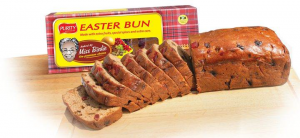
Consolidated Bakeries Miss Birdie Easter bun.

Gross cash flow brought in $38 million but growth in receivables, inventories, addition to fixed assets of $35 million offset by loan inflows and increased payables position ended at a negative $3 million. At the end of June, shareholders’ equity stood at $736 million with borrowings at just $115 million. Net current assets ended the period at $100 million inclusive of trade and other receivables of $96 million, cash and bank balances of $99 million. Current liabilities ended the period at $140 million.
The stock traded at $2.17 on the Junior Market of the Jamaica Stock Exchange with a PE ratio of 12 times 2018 earnings. Net asset value is $3.31 with the stock selling at just 66 percent of book value. The company is the only Junior Market stock to be selling at a discount to net asset value. This means management has a lot of work to do to break even and much more to reach the average of the market of a premium of more 400 percent.

Watch Lasco Financial

Lasco Financial connected parties recently purchased 15 million shares.

When persons connected with the management of a listed company trade shares in the company other investors are well advised to take note.
In some cases it means nothing, but in others it can be a telltale sign of things to come. One such trade that could be telling is embodied in a release to the Jamaica Stock Exchange by Lasco Financial Services that advised that eight connected parties purchased a total of 15.05 million shares in the company on August 9. The average price of the stock on the day the block traded, was $5.29, placing a value on the block of more than $75 million, that is no small change and is more likely than not to be a vote of confidence in the future fortunes of the company.
The purchase takes place after generating revenues of $555 million, $235 million or 74 percent more than the corresponding period in 2017 and importantly, grew $55 million over the $500 million generated in March quarter and may be suggesting the possibility of quarterly growth going forward for a while. Profit before taxation, jumped 62 percent to $132 million from $81 million in 2017. Profit after tax ended the quarter 50 percent higher than the year before at $101 million and could end up around $500 million for the full year for earnings per share around 40 cents.
The strong increase in revenues and profit comes from continued growth from the original business lines and was boosted by the acquisition of CrediScotia business in late 2017.
Profit before loan Interest more than doubled from $83 million to $172 million but funds borrowed to purchase the CrediScotia portfolio pushed interest cost to $41 million up from just $2 million in 2017.
At the end of the quarter, loans and receivables was at $1.8 billion with the majority being loans and the company borrowed $1.5 billion to help fund the acquisition and provide working capital. Shareholders’ equity was $1.47 billion.
This one is worth watching keenly as a long term buy with the large profit margin in lending.

Record profit for Palace Amusement

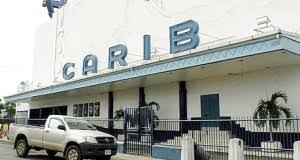
Carib Cinema, the flagship for Palace Amusement.

Black Panther delivered record profit for Palace Amusement Company, the full year’s results show. Palace reported profit after tax of $152 million up from just $33 million for the full year in 2017 and earnings per share of $96.58.
For the final quarter the company posted profit of $102 million compared to just $28 million in 2017 but a $61 million gain on sale of the Harbour View property added $61 million to the company’s bottom-line. Revenues climbed nicely by 17 percent to $1.67 billion that flowed from a 25 percent rise in patronage income at Carib in Kingston 27 percent increase at Cineplex located in Kingston and just 11.5 percent at Montego Bay Multiplex.
The major contributor to the rise, was the blockbuster film Black Panther that ran from February to May this year. In the June quarter revenues rose 10 percent to $330 million and would have been generated form increase patrons coming to the movies. Cost rose with direct expenses climbing 13 percent for the year and 7 percent in the quarter while administrative cost was up 19 percent for the quarter and 10 percent for the year.
Palace ended the year with cash and bank balances of $284 million up from $141 million in 2017. The stock last traded on the main market of the Jamaica Stock Exchange at $1,500 at a PE of almost 15.

West Indian Tobacco profit rise

Profit before tax rose 10.7 percent to $284 million, for the six months to June this year, over the 2017 period for West Indian Tobacco and profit grew 8.7 percent after tax to $194 million.
Profit before tax grew 13 percent to $178 million for the quarter over the 2017 period and after tax an increase of 9 percent to $121 million. Gross profit in the quarter rose to 79 percent, from 77 percent of revenues in 2017 and from 75 percent for the six months in 2017 to 77 percent in 2018.
The profit improvement came from a 13 percent rise in revenue for the quarter to $268 million and by 12 percent for the six months to $456 million.
Distribution costs rose to $4 million from $1.26 million in the June quarter and for the period to June $10.3 million from $6.4 million, Administrative expenses rose sharply to $22.8 million for the quarter from $18.2 million in 2017 and for the half it rose to $38.46) million from $33.12 million and Other operating expenses rose to $6.66 million in the quarter from $6 million in 2017 and for the half year to $20.7 million from just $11.7 million for an increase of 77 percent.
The company raked in cash from operating activities of $325 million in the six months compared to $232 million in 2017.
Earnings per share for the quart is $1.44 and $2.30 for the half year and should end at around $5.30 for the full year giving the stock a PE of 16.5 based on the last traded price of $88 on the Trinidad & Tobago Stock Exchange.
The company ended the period with total equity of $379 million and cash of $279 million and current liabilities of $161 million.
The Board has accordingly approved the payment of a second interim dividend of $1.14 per ordinary share payable on 27 August 2018.
All amounts are quoted in TT dollars.