Is SOS the next stock Split?

Business has been great for Stationery and Office Supplies (SOS) over the past two years, with sales rising 55 percent over 2021 last year and 16 percent over the covid-19 affected 2020 in 2021 and is up 22 percent for the first quarter to March this year.

The surge in sales drove pretax profit excluding one-time income, up 34 over last year on top of a 151 surge in 2022 over 2021. While the company has started 2023 positively, reports are that its first shipment of goods to Cayman Island, which is expected to be an ongoing trade, has been sent off and that, in addition to its connection with Trinidad and Tobago that started in the latter part of 2022 and reports indicate that arrangement is in place for regular shipments to a third Caribbean country.
The stock had nearly two million units on offer up to June 5 at just under $16, but investors aggressively bought 1.5 million on that day and the stock has since seen limited supply on offer. The $20 price level is believed to be the trigger point for the directors to seriously consider recommending splitting the stock to shareholders. The stock price hit a 52 weeks’ high on Monday when it traded a small quantity at $21 and closed there again on Tuesday after 10,230 shares were traded. The stock price is up 22 percent this year and trades at a PE of 11 times 2023 earnings, but has more room to grow, with a PE of 15 putting the price within reach of $30.

SOS executives

More than 91 percent of the issued share are in the hands of the top 10 shareholders, thus reducing the potential supply that can come to the market with only 250 million shares issued. At the close of Tuesday’s trade, stocks on offer below $25 amount to 7,200 units, with 80,000 on offer at $25. After that, the bids start at $35.
Stock splits are popular among investors in Jamaica, with each announcement accompanied by a hike in the price of the relevant stock.
The door is left open for a resolution to be put to the company’s upcoming AGM for a stock split, as the annual report filed with the JSE stated that the date of the AGM was to be determined.

Q2 profit nearly doubles for Scotia

Scotia Group head quarters

A $2.5 billion jump in net interest income and a billion dollar increase in fees and foreign exchange gains pushed profit before tax at Scotiabank Jamaica to $6.1 billion from $3.4 billion for the April 2022 quarter and $4.2 billion after tax for April 2023 second quarter from $2.4 billion for the same period in 2022 that resulted in earnings per share of $1.35 up from 77 cents in the April 22 quarter and $2.45 for the half year with an indication that full year earnings will be in the order of $5.30 per share.
Net interest income came in at $9.4 billion for the current year’s quarter, up from $6.9 billion in 2022, while expected credit losses were flat at just over $665 million in the current quarter.
Net fees, foreign exchange trading, and other income were $3.9 billion for the 2023 quarter, up 30 percent from $3 billion in the previous year. For the year to date, net interest income came in at $18.5 billion versus $13.3 billion in the year before. Expected credit losses were flat at roughly $1.2 billion, while other income came in at $8.3 billion versus $7 billion in 2022. Expenses were well contained but increased by 14 percent to $6.6 billion in the April quarter from $5.8 billion in 2022, with the year to date rising just under 11 percent to $14.4 billion versus $13 billion in the prior year.
The group’s segments are having a mixed year, with half year numbers showing Treasury generating external revenues of $5.8 billion and profit of just over $1 billion compared with revenues of just over $3 billion in the previous year’s half year but profit before tax was flat at just over $1 billion in each. Retail banking saw a big jump in segment profits of $1.9 billion compared to $500 million in the 2022 half year, from revenues of $9.9 billion compared to $9 billion in 2022.

Audrey Tugwell Henry Scotia group’s CEO

Corporate and commercial activities generated $7.3 billion in revenues and profit of $5.6 billion compared with revenues of $5.1 billion in 2022 with profit before tax of $2.8 billion, while Investment banking had revenues of $1.6 billion and a profit before tax of $800 million compared to revenues of $1.5 billion in the 2022 half year and profit $650 million. Insurance services generated income of $2.5 billion in 2023 with profit before tax of $2.15 billion compared to revenues of $1.17 billion in 2022 and profits of $789 million.
Significantly, loans grew a solid 20 percent from $207 billion at the end of the April 22 quarter to $249 billion at the end of April this year, while customers’ deposits grew 10 percent from $400 billion to $440 billion.
Despite growth in earnings, Shareholders’ equity contracted from $113 billion as of April 2022 to $109 billion. A dividend of 35 cents per share was declared for payment in July.
The stock trades at $33.60 on the Main Market of the Jamaica Stock Exchange on Friday at a PE of just 7.
Going forward, Scotia is in a great position to benefit from the resurgence in the Jamaican economy with expectations of continuing growth to take place going forward as the government continues to reduce the debt to GDP ratio thus freeing significant resources to facilitate long term spending on infrastructure development within the country provide a significant leg for continued growth in the Jamaican economy.

Profit returns for Caribbean Cream

Following a torrid 2022 fiscal year, with a loss before taxation of $13.7 million, Caribbean Cream delivered a much better performance in the fiscal year to February this year, with pretax profit of $41.8 million and $27 million after accounting for $14.7 million for taxes, up from a $9 million loss in 2022 in a year that finance cost almost doubled to $66 million from $34 million in 2022, from increased borrowings.
Sale revenues for the just completed year rose 20 percent to $2.5 billion from $2.1 billion in 2022. In the final quarter, revenues climbed 22.5 percent to $674 million from $553 million in 2022 and increased 17 percent over the $576 million in the November 2022 quarter. In contrast, revenues for the 2022 February quarter were 10 percent more than the $501 million generated in the November 2021 quarter. All in all, the 2023 fiscal year performance was well ahead of the year to February 2022, even as the year started with just $1.3 million in profit with cost of sales at 73.2 percent with the second quarter being slightly better with cost of sales down to 70.7 percent and profit improving to $7.2 million as both volume improvement and price adjustment to the output chipped in to help improve the bottom line.
Kremi, as the company is known, has had a checkered history with Profit meandering from 2015 to 2023. (See Chart)
Since 2020 the company has faced increased input costs that squeezed profit margin. In the latest fiscal year, cost of sales dropped to 64 percent in the final quarter compared to 69 percent for the year and 71 percent for the nine months to November. The jump in revenues in the fourth quarter over the November quarter would have helped to improve the margin, but it appears that raw material costs fell compared with the earlier months of the fiscal year. In 2022 cost of sales was 71.6 percent and 66.6 percent in 2021.
Cost of sales rose 16 percent, slower than sales in 2023, to $1.73 billion from $1.49 billion in 2022, with gross profit rising faster than revenues, a positive development with an increase of 31 percent to $593 million from $775 million in 2022. The cost of raw materials used in sales rose 16 percent to $1.17 billion, compared with a 33 percent rise in fiscal year 2022 over 2021. Milk solids, one of the primary raw materials, about 70 percent that is used in producing ice cream moved from an average of US$3,355 per ton in 2018 to US$5,067 in 2022 and is now $4,676 in 2023, down 9 percent. In 2022 the cost rose by 29 percent, these movements, coupled with exchange rate changes for the Jamaican dollar, would have pushed up the company’s production cost; also affecting cost would be a 7 percent movement in the exchange rate between the Jamaica dollar and the US dollar. If continued, falling commodity prices in 2023 will lower the cost for them and help improve profits. Also of note is that the price of crude oil is now 38 percent less than it was in 2023 at the start of June and that feeds directly into utility cost incurred in production, which was $166 million, 16 percent higher than 2022 and 19 percent more in Administration with $99 million versus $83 million in 2022.

Administrative expenses rose 17 percent to $598 million from $512 the previous year. Marketing and sales expenses increased by 18 percent to $72 million from $61 million in 2022 and depreciation came in at $100 million, marginally down from $102 million in 2022. Some $930 million is tied up in construction in progress at the end of the fiscal year and will result in the charge rising appreciably in the 2024 fiscal year when those assets are transferred to fixed assets but will reduce the actual taxation payable as capital allowances in the first year, will reduce the actual tax liability that will be payable. Finance cost jumped 91 percent to $66 million from $34.5 million in 2022, but a significant portion of the loans have interest rates capped and will not result in increases in the current period.
Gross cash flow generated $195 million from operating activities, up from just $53 million in 2022. Funds internally generated were augmented by loan inflows of $353 million and funds at the start of the year amounting to $145 million, which helped to fund additions to fixed assets of $541 million.

The total Current assets ended the year at $535 million inclusive of trade and other receivables of $157 million, cash and bank balances of $67 million, down from $146 million in 2022. Current liabilities ended at $389 million, up from $313 million and net current assets ended the period at $167 million, down from $212 million in 2022.
At the end of December, shareholders’ equity stood at $826 million, with long term borrowings at $920 million, up from $603 million in 2022 and short term at $107 million against $67 million in 2022. The increased borrowing helped to fund additions to fixed assets amounting to $542 million during the year, of which $490 million is construction in progress.
Earnings per share came out at just 7 cents for the year, with a steep PE of 45.7, but earnings for the current year are expected to jump well over that for 2023. IC Insider.com forecasts a considerable increase of 90 cents per share for the fiscal year ending February 2024, with a PE of 3.6 times the current year’s earnings based on the price of $3.20 the stock traded at on the Jamaica Stock Exchange Junior Market and a net asset of $2.18.
The company did not pay a dividend in 2022 but 6.94 cents in 2021.
The company may have faltered over the last two years, but it has shown in the past that it can recover. Additionally, it is not going away anytime soon. It will recover lost ground as they invest in its manufacturing operations to generate cost reductions, greater efficiency, and improved profit. The first quarter results due by July should show the first signs of this robustness as the company reports a significant profit improvement over the 2022 first quarter and a better than the 2023 February quarter.
What should investors do? Investors should buy the stock that is selling well below potential as investors reacted negatively to poor results reported in 2022 before the release of the 2023 results.

Lasco Financial EPS hides profit plunge

Net profit declined by 30 percent to $214 million for the fiscal year to March 2023 from $306 million in 2022 for Lasco Financial Services. Still, the earnings per share barely fell, according to the recently released audited report. The earning per share is actually 16.7 cents rather than the 23.94 cents reported in the audited Financial Statement, compared with 24.05 cents in 2022.
The company did not have a good year, with revenues falling from $2.5 billion in 2022 to $2.27 billion even as loan income grew during the latest year. Revenues in the fourth dropped sharply to only $410 million versus $662 million in the 2022 fourth quarter. Fourth quarter profit came in slightly below the December quarter’s $31 million at $27 million on far lower revenues than the $572 million in the December quarter.

Loans payable include two with ten year tenure amounting to $1.095 billion due to JMMB with interest rates at 8.25 and 8.75 percent per annum and 2 percent per annum loans amounting to $143 million from the Development Bank of Jamaica for on lending.
Loans advanced to borrowers ended at $1.039 billion for the fiscal year, up from $1.013 before provisions, and after provisions, loans are up nearly 11 percent to $900 million from $813 million in 2022. Quality improved in 2023, with amounts set aside for impairment dropping to $138 million, or 1.3 percent of the loan portfolio, from $201 million or 2 percent in 2022, as $60 million was recovered from impaired loans during the 2023 fiscal year. Loans that are current have a provision of $24 million compared with $13 million in 2022.

Jacinth Hall-Tracey, Managing Director of Lasco Financial.

Administrative and other expenses rose 6.8 percent to $1.18 billion from $1,105 billion in 2022, but Selling and promotion expenses fell 13 percent to $647 million from $745 million, partially as Commission and fees fell seven percent from $653 million to $609 million. Overall, non-financial expenses declined from $1.85 billion to $1.83 billion. However, staff cost jumped 18 percent to $654 million, with staffing at the end of the year jumping 23 percent to 201 employees from 164 in 2022. Finance costs fell to $117 million from $167 million in 2022 and Taxation fell from $187 million to $115 million.
At the close of the financial year, cash and short term deposits amount to $1.7 billion, giving it much dry powder to increase lending if viable opportunities arise. Shareholders’ equity increased to $2.11 billion at the end of March from $1.96 billion in 2022.
The company is a work in progress as it attempts to recover from losses suffered in its loan portfolio from 2020 to 2022, this is an area of above average potential growth, but there have been few signs that the company will be more aggressive in this potentially lucrative segment of the financial market.
The stock is listed on the Junior Market of the Jamaica Stocks Exchange and last traded at $2.35 with a PE ratio of 14 times 2023 earnings. Investors need to watch this one for possible recovery.

Agostini’s buys Jamaica’s Health Brands

The Trinidad and Tobago Stock Exchange listed Agostini’s Limited signed an Agreement to acquire all the shares of Health Brands Limited, a Jamaican pharmaceutical and personal care distribution company owned by Athol Smith.
The transaction has received regulatory approval and the due diligence process is nearing completion the company stated its release to the Trinidad and Tobago Stock Exchange. It is expected that this transaction will be finalized by the end of June 2023, and we will make a further announcement at that time.
Reports are that the owner approach some Jamaican companies in the sector but apparently, no one was willing to pay the price the seller was looking for. Smith had previously sold his Consumer Brands business to GraceKennedy in 2017, at the time, sales at the company were said to be generating sales of more than $2 billion reports are that the Health Brands revenues could be in the above region as well.
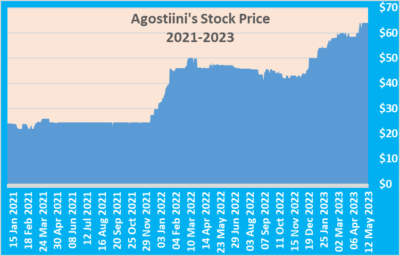
Agostini’s has a market capitalization of TT$4.4 billion with a stock price of $64.04. The company reported revenues of $1.13 billion for the March quarter 16 percent up from $971 million in 2022 with the half year coming in with an increase of 14 percent to $2.4 billion compared to $2.1 billion in the previous year. Quarterly profit attributable to shareholders jumped 43 percent to $63 million over $44 million in 2022 and the half year was up 97 percent to $209 million above the $106 million in 2022.
The company has been in an acquisition mode, acquiring 80% of the outstanding shares of Chinook Trading Canada Limited, a Canadian base consumer products business with trading operations primarily in Caribbean Region. The company states that these acquisitions are consistent with the group’s strategic objective of expansion in more business segments and greater geographical diversification.
Last year December, they acquired Collins and Carlyle business and disposed of Agostini’s Interior contractors division which the group considers is no longer strategically compatible with the group objectives.
For the half year earnings per share was $3.03 up from $1.53 in 2022 with the March quarter delivering EPS of 92 cents compared to 65 cents in 2022 and $2.91 for the 2022 fiscal year.
Shareholders’ equity closed out the half year at $1.55 billion. The stock traded on the TTSE at $64.25 on Friday, up 28 percent for the year.

Wisynco profit surge

Wisynco Group reported another solid quarter of profit to March 2023, from a 23.4 percent growth in revenues to $12 billion for the quarter over the $9.7 billion achieved in the 2022 third quarter and contributed to a 26.8 percent rise in nine months revenues to $36 billion up from $28.4 billion in 2022 with profit after tax of $3.66 billion 23.77 percent higher than $2.96 billion in 2022.

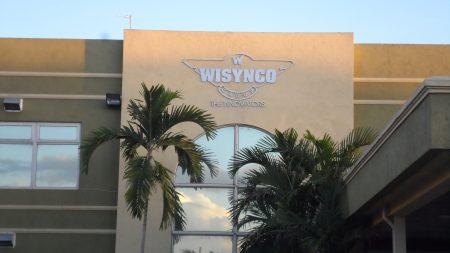
Wisynco headquarters

The group achieved a Gross Profit of $4.1 billion in the current quarter, the same as the preceding quarter and represents a 32.2 percent increase over the $3.1 billion of the prior year and was helped by an improvement in Gross Profit Margin of 34.6 percent which, up from 32.3 percent for the same quarter last year.
Profit before Taxation for the quarter was $1.57 billion, an increase of 43 percent over the $1.1 billion in the comparative quarter in 2022.
After the provision of $416 million for corporate taxes, Net Profits Attributable to Stockholders amounted to $1.2 billion, or 31 cents per stock unit for the quarter, 38.6 percent greater than the $831 million or 22 cents per stock unit earned for the prior year and 98 cents for the nine months up from 79 cents in 2022.
The company ended the period with cash and investments of $11.4 billion, placing it in a great position to fund the planned major factory expansion into 2024.

More expansion coming for Dolla Financial

Dolla Financial reported record profit for the 2023 first quarter that jumped 90 percent to $125 million before tax, from just $66 million last year, with aftertax profit coming in at $123 million, 128 percent higher than the $59 million reported for 2022, but the company is not satisfied, with that and plans increased borrowing to on lend and acquisition while having eyes on branch expansion.
The company borrowed $1.17 million in 2022 but used most of the available funds on hand at the start of the year, with loans granted to borrowers absorbing $550 million in the March quarter, leaving the company with just $117 million in cash funds. In order to maintain the current profit momentum the company will need to add new loans from lenders to keep funding the expansion.
In an investor briefing, the CEO Kadeem Mairs indicated that they are in the process of negotiating a US$7 million loan that will be used to fund loan expansion and acquisition that they are currently looking at. Such acquisitions will be subject to regulatory approval before they will be able to complete such transactions.
The company is also seeking to establish an 800 square foot branch in May Pen in the complex that houses the supermarket operated by Derrimon Trading.
Importantly, Mairs pointed out that 80 percent of loans granted are secured and therefore result in a low credit default.
IC Insider.com forecast is for the 2023 earnings per share to be 40 cents and is partially predicated on timely loan funding.

Profit surges at Dolla

Profit at Dolla Financial for the 2023 first quarter jumped 90 percent to $125 million before tax of $1.9 million from just $66 million last year, with aftertax profit coming in at $123 million, 128 percent higher than the $59 million in 2022, the robust outcome flowed from total income of $310 million up 110 percent over $141 million in 2022.
The revenue grew from a 161 percent increase in loans to customers of $2.3 billion from $870 million at the end of March 2022. The company lent out nearly $550 million in the March 2023 quarter.
Administrative expenses jumped by 110 percent to $124 million from $59 million in 2022, while Interest expense surged 285 percent to $50 million from just $13 million in 2022 following increased loan funding of $1.6 billion by 232 percent from $481 million at the end of March last year.
Profit for 2023 equates to 6 cents in earnings per share. ICInsider.com is forecasting 40 cents per share for the year, partially on the assumption that there will be an increase in loan funding to facilitate increased lending to customers and maintain the rapid loan expansion. This is likely to push the stock into the $8 region. However, the PE ratio is 7 times current year’s earnings, with the stock price at $2.79 that it traded at on the Junior Market on Wednesday. With no additional loan funding, profits should end the year at 35 cents per share or just under $900 million.
Profit for the quarter pushed shareholders’ equity to $794 million.

Revenues & profit explode at Image Plus

Revenue and profits surged solidly for the most recently Junior Market listed Image Plus Consultants for the financial year ended February 2023, with revenue jumping a robust 40.7 percent to a record $1.094 billion, up from $777 million in 2022 but, with a slower pace of 33 percent in the final quarter of $290 million compared with $218 million in 2022 as the company that specializes in diagnostic services delivered a convincing 123 percent growth in Profit before Tax to $252 million, up from $113 million in 2022.
Profit after tax jumped 139 percent to $236 million over the $94 million generated in 2022. Results equated to earnings per share of 23 cents up from 9 cents in 2022. ICInsider.com revised earnings for the current fiscal year to 40 cents from 30 cents previously and 85 cents for the fiscal year ending February 2025.

Revenue was driven by the growth in case count of 54,840, an increase of 8,469 cases or 18.3 percent over the 2022 financial year, the company advised shareholders in a release accompanying the financials.
Gross profit jumped 39 percent to $716 million from $505 million in the previous year as the company maintained a 39 percent cost of sales for a second year.
Administrative expenses rose 14 percent to $417 million from $365 in 2022, depreciation charge climbed to $43 million versus $36 million in 2022 and finance costs remained almost flat at $7 million.
Current liabilities stood at $138 million, Shareholders’ equity grew from $267 million to $945 million, helped by an infusion of $465 million in proceeds from the IPO earlier in 2023 coupled with the growth of $213 million in the year’s profit.  Long term liabilities amount to $75 million, with current loans amounting to $39 million. Cash and investment funds totalled $492 million and helped to swell Current assets to $811 million from just $223 million at the end of the fiscal year 2022.

Dr. Karlene McDonnough – Chairman of Image Consultants Ltd.

Cash flow generated $271 million, but working capital absorbed $83 million as receivables Increased by $159 million due partially to greater business activity. Addition to fixed assets consumed $152 million, with Lab equipment taking $104 million and leasehold improvement $43 million.
According to management, “a new fluoroscopy unit was acquired for our Winchester location and the relocation of our Ocho Rios operations to a larger space in White River North Commercial Complex in Q3 drove growth in leasehold improvements. The significant increase in patient scan volumes resulted in a growth of $159 million in trade receivables. Management continues to actively manage these receivables and written commitments have been received from the largest payer, which gives us confidence that these receivables will continue to be honoured.”
The company incurred income tax on profit for ten months of the financial year 2023 before listing and will enjoy five years tax free status as JSE Junior Market listed company.
The stock, around $2, is attractive and can potentially deliver good returns for investors at the current price. Investors could benefit from cash dividends as the directors will meet this month to consider a dividend payment.

Transjamaican breakout

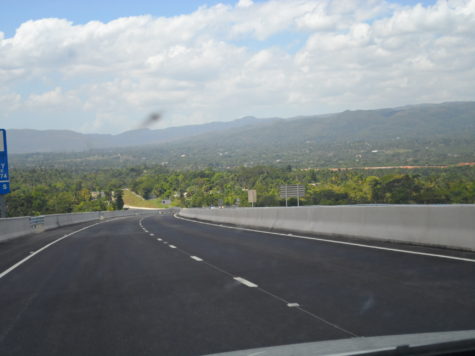
Transjamaican Highway (TJH) reported record revenues of $65 million for 2022, up 12.3 percent from $52.76 million generated in 2021, resulting in profit of $9.3 million before the one off cost, up a solid 74 percent above the $5.34 million generated in 2021.

The company reported a loss of US$7 million for 2022 after tax and after factoring in a onetime loss of US$13.7 million resulting from the acquisition of the major share of Jamaica Infrastructure Operators, the loss compares with a profit of $4 million in the previous year.
The above acquisition “will result in future cost savings, expected to significantly reduce Operating Expenses by more than 50 percent or US$12 million per annum and increase our profitability,” the directors informed shareholders in their commentary on the results. ICInsider.com projects earnings  of 0.016 US cents per share or J$0.24, giving it a PE of 7 and a target price of J$4.50.

In addition, it is worth noting that the vast majority of costs are more or less fixed, with Amortization of intangible assets amounting to $13.7 million, up from $12.3 in 2021, finance cost slipped slowly to $14.7 million in 2022 from $15.3 million in 2021. Operators fixed fees amounted to $17.7 million, up from $16.4 million but will drop in 2022, now that TJH owns the operating company. The company has been selected as the operator for the May Pen to Mandeville leg of Highway 2000, which will add to future revenues and profits.
In their commentary of the full year results, the company directors stated that “traffic since the advent of Covid19 has fully recovered and was approximately 7 percent above our 2019 pre-covid levels and 13 percent above the 2021 traffic”.
Gross cash flow brought in $10 million but with growth in receivables, inventories, addition to fixed assets offset by loan payment of $6.6 million, increased payables and paying $7 million dividends, the company ended with a net outflow of $1.3 million and closed with $5.4 million in cash funds.
At the end of December, shareholders’ equity stood at $40 billion or $3.20 per share—long term borrowings at $224 million and short term at $10 million. Current assets ended the period at $6.3 million, which comprises mostly the above cash and bank balance. Current liabilities ended the period at $16.5 million. Net current assets ended with a negative amount of $10 million.
All amounts are in US dollars unless otherwise stated.