Consolidated Bakeries turnaround

Consolidated Bakeries seems to be on the mend, with 2023 looking like the year it finally comes into its own having posted the first full year profit in 2022, the first since 2018, with sales exceeding the billion mark for a second consecutive year and the third time in four years.

Anthony Chang, Managing Director of Consolidated Bakeries

Purity, a name the company is also well known by, reported profit in three of the four quarters last year with profit in the first two quarters as well as in the December 2022 quarter but reported a $14.5 million loss in the third quarter even with revenues in that quarter being the same as the final quarter at $323 million.
The improved 2022 profit performance evolved from a 26.5 percent rise in revenues to $1.37 billion for the full year above the $1.079 billion in 2021 with profit after taxation coming in at $14 million compared to an $18 million loss in 2021. Pretax profit was even more impressive being $17.7 million versus a loss of $21.7 million in 2021 resulting in a $38 million turnaround.
The improved results show up in a strongly transformed financial position resulting in an enhanced working capital position even as sales surged, with a buildup of cash and reduction in borrowed funds.
Revenues climbed 30 percent in the March quarter, from $291 million last year, to $378 million and rose a stronger 42 percent in the June quarter to $342 million from $241 million in 2021. At the same time gross profit margin that tends to hover around 39 percent rose to 42 percent in the second quarter, from 38 percent in 2021. For the six months, revenues were up 35 percent to $720 million from $532 million in 2021 while gross profit rose 41 percent to $292 from $207 million. The Easter period provides added revenues for the company, resulting in the first half of the year producing higher revenues and profit than the second half.
In the first quarter, profit before tax rose 61 percent to $14.5 in 2022, from $9 million last year and is up 200 percent in the second quarter to $13.5 from a loss of $13.4 in 2021. For the half year pretax profit surged 735 percent to $28 million from a $4.4 million loss in 2021.
The company generated a gain on other comprehensive income from investments of $783,279 for 2022 and $6.3 million for 2021.
Administrative and other expenses rose by just 6 percent to $266 million from $250 million in 2021. Selling and Distribution expenses increased by a robust 33.4 percent to $203.4 million in 2022 over that of 2021 with $152.5 million. Depreciation rose 8 percent to $35.6 million from $33 million in 2021. Finance cost jumped sharply to $16.3 million from $11.7 million in 2021.
The company’s finances are looking much better in 2022 than in 2021. Operations for the half year generated gross cash flow from operations of $118 million after changes in working capital, allowing it to fund the acquisition of fixed assets amounting to $63 million to end the year with an increase in cash of $57 million.
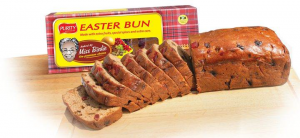
Consolidated Bakeries Miss Birdie Easter bun.

Shareholders’ equity stood at $697 million, while Long term borrowings ended the period at $136 million and short term loans at $51 million, representing a $47 million reduction from December 2021 and resulting in cash and bank balances and investments rising to $99 million, from $90 million at the end of December 2021. Current assets ended the period at $293 million, with trade and other receivables standing at $115 million, compared to $110 million in 2021. Inventories rose moderately to $79 million from $67 million in 2021. Current liabilities ended at $237 million, up from $175 million at the end of December 2021 and net current assets ended at $56 million compared with $93 million at the end of the previous year.
In the past the big concern was the ability of the company to hold on to the profit made in the first six months in the second half of the year, this changed in 2022 as revenues benefitted from increased volume sales as the company made headways into new areas as well as some new products. In an interview with Managing Director, Anthony Chang in 2022, he stated that while new products helped sales, in some cases traditional products found new takers in areas of the country where demand was not as strong in the past. Chang also stated that they are now benefiting from some changes made in personnel that is delivering improved results, he also indicated expansion of the distribution channel into smaller stores while consolidating business in the bigger stores. They also placed focus on cost by employing a cost accountant.
Retooling played an important role in the gains but Chang say this is a work in progress. According to him, bread at one stage in the past accounted for 90 percent of sales, was in direct competition with the market leader and had low profit margin, but it took time to make the shift as new machinery was needed to effect the change to new products, that needed machinery for packaging these products. The company has been adding to fixed assets as a part of the drive to have the right machines and in the quantity required to churn out new products.
Based on the above ICInsider.com projects this year’s earnings per share of 40 cents and 75 cents for 2024 with the company benefitting from full recovery of the local economy and increased efficiency and reduction in interest cost as borrowings decline.
The company has a net book value of $3.07. If achieved, the PE ratio currently would be 6.3, based on the price of $2.50 the stock traded at on the Jamaica Stock Exchange Junior Market on Friday.

Half year profit jumps 122% at One on One

ONE on ONE Educational led trading with 1.93 million shares for 33.2 percent of total volume, on Monday up from just 374,488 shares being traded on Friday, following the release of half year’s results, showing increased revenues of 47 percent to $153 million from $104 million in 2022 while the second quarter revenues rose more slowly at 17.5 percent to $72.6 million from $61.8 million.
Profit before tax jumped 122 percent in the half year to $19.7 million from $8.9 million in 2022, but with slightly lower profits in the second quarter of $7.4 million compared with $14.6 million in 2022 as administrative costs jumped much faster than revenues by 51.6 percent in the quarter to $47 million from $31 million in 2022 and 54 percent for the half year from $60 million to $92 million.

Helping with the results was a fall in direct cost that fell 27 percent from $16.3 million to $11.85 in the first quarter and a fall from $28.7 million to $26.8 million for the six months. Gross profit jumped 33.6 percent in the second quarter to $60.7 million from $45.5 million and jumped 68 percent from $75.5 million in the half year to $126.7 million.
Selling expenses climbed from $3.3 million in the quarter to $9 million and from $6.5 million in the half year to $17.7 million in 2023. Finance cost fell to $873,172 in the second quarter down from$3.9 million in 2022 and fell from $6 million for the 2022 half year to $2.4 million in 2023.
Earnings per share amounts to 0.9 cents for the half year. the company ended with cash funds at $185 million, up from the $45 million in February 2022. Receivables spiked to $144 million, representing almost 6 months of sales revenue, up from $88 million at the end of August 2022.
The company provided a Q3 Outlook: “as we move into Q3, we are optimistic about the growth and opportunities across all our divisions. The launch of OneAcademy and the continued expansion of our government and business divisions will drive our performance in Q3. Additionally, our investments in people, systems, content development, and AI will continue to yield results as we position One on One as a regional and global leader in the Ed-Tech space.”

Trading in the stock continues to be healthy with 1.17 million shares on Tuesday, with the last traded price at $1.15 after trading up to $1.19, with bids to buy 1.26 million at $1.15 and 460,888 on offer at $1.17.

Solid profit from concrete growth

Profit at Jamaica’s sole cement producer, Caribbean Cement Company was flat in the December quarter last year, with $1.48 billion earned compared with $1.5 billion in 2021, profit for the full year to December rose a solid 24 percent to a record $5.4 billion from $4.34 million in 2021.
The improved full year results flowed from an 8.4 percent rise in sales revenue to $25.8 billion, from $23.84 in 2021. Revenues were almost flat for the December quarter at $6.15 billion against $6.04 billion in 2021.

There was a notable improvement in gross profit margin that increased to 44 percent from 41 percent in 2021 as cost of sales rose by a mere 3.3 percent to $14.5 billion from $14 billion in 2021 that includes depreciation of $1.4 billion, down from $1.45 billion in 2021 and fuel and electricity that surged 37 percent from $4.1 billion, to $5.6 billion in 2022. The net effect is that Gross profit rose 15.5 percent for the year, to $11.36 billion from $9.8 billion in 2021. The moderate rise in direct cost, “was mainly attributable to the company’s decision not to undertake its planned major maintenance during the third quarter, compared to 2021,” the company stated in the release containing the results.
Administrative expenses rose close to the rise in revenues by 14 percent to $942 million in the year from $827 million while Selling Distribution and logistics expenses rose just 4 percent to $1.74 billion from $1.67 in 2021. Included in the administrative expenses are Management fees of $200 million, up slightly from $195 million in 2021 and royalty fees of $475 million with none in 2021 and write off of $120 million for non-recoverable GCT costs with none in 2021. Personnel remuneration and benefits amounted to $2.64 billion during the year, up from $2.5 billion in 2021, but actual salaries and wages were modestly lower at $1.97 billion versus $1.98 billion in 2021.
Finance cost declined in the year to $581 million from $671 million in 2021, which include a charge of $402 million during the year and $376 million for 2021 for unwinding discount on the redemption of the preference shares. The company has fully liq uidated the debt and there should be no charge in 2023 for this item
Gross cash flow generated from operations amounted to $8.8 million and was reduced by increased working capital of $5 billion to $3.8 billion. The net cash flow provided funding for the acquisition of fixed assets costing $1.26 billion, the payment of $1.26 billion in dividends. They also paid off the balance of $1.84 billion due on preference shares to Trinidad Cement.
At the end of December, shareholders’ equity stood at $20 billion with long term borrowings at a mere $608 million.
Current assets ended the period at $7.1 billion, up from $4.3 billion in 2021 including trade and other receivables of $650 million, cash and bank balances of $575 million with $5.48 billion of inventories up from $3.44 billion in 2021. Current liabilities ended the period at $6.1 billion, down from $8.5 billion in 2021. Net current assets ended the period at $1.1 billion.
Earnings per share came in at $6.33 when compared to $5.10 in 2021. IC Insider.com forecasts $7.50 per share for the fiscal year, with a PE of 7.7 times current year’s earnings based on the price of $57.50 the stock traded at recently on the Jamaica Stock Exchange Main Market with a net asset value of $23.54 and 2.5 times book value.
The company paid a dividend of $1.53 cents for the first time in 17 years in September last year.
This cost incurred for the unwinding of the discount for the repayment of the preference shares will not recur in 2023 also the write off of non-recoverable GCT cost, countering these savings will be the annual major maintenance that was not incurred in 2022, at the same time Fuel and electricity cost should fall from the Ukraine war induced spike in worldwide oil prices that has since moderated form the peak of more than US$120 per barrel to around $80 currently.
The company outlook was summarized by management, “we will ensure that our operations remain resilient by employing sound cost management strategies in this challenging economic environment.
Additionally, we expect to have a similar or better level of productivity and efficiency of the kiln in the future on completion of our planned major maintenance in 2023. During the previous quarter, the groundbreaking of our major kiln expansion project took place. This important investment will improve the self-sufficiency of the industry in Jamaica to comfortably meet growing demand, while setting the foundation to supply other export markets, effectively strengthening the external sector of our economy and essentially the country’s growth.”
The above expansion plan projected to increase the plant capacity by up to 30 percent should be completed by the second half of 2024 and will lower the unit cost of producing cement if it leads to a sufficient increase in sales volume. That won’t take place until 2025.
The stock is selling at a discount to its normal value but seems to weight down by higher interest rates and a slowdown in activity in the construction sector, but all signs point to lower interest rates in the second half of the year and continuing for a while, as such these negative factors will soon pass. With the expansion to come on stream in 2024, the stock remains a good long term buy.

Supreme increased profits

Profits jumped 32 percent to $3 billion from a 15.6 percent jump in revenues to $50.77 billion at Jamaica’s leading gaming company, Supreme Ventures, for 2022 over 2021, following a virtual stagnation in profits since 2019.

Supreme Ventures moved up from $24.25 at the end of last week to over $30.50 after the results.

Gross profit rose 20 percent to $11.3 billion, from $9.38 billion in 2021, as direct cost climbed slower than revenues, with a 14.4 percent increase in direct cost to $39.6 billion from $34.6 billion in 2021.
Selling, general and administrative expenses increased by 13 percent to $7 billion from $6.2 billion in 2021 and finance cost jumped to $535 million from just $30 million in 2021 was reduced by $374  million foreign exchange gains in 2021 compared with a loss of $82 million in 2022. Taxation fell to $781 million from $951 million in 2021, with the reduction due mainly to a credit of $203 million relating to losses at a subsidiary that was recognized in 2022.
“We have maintained our ongoing focus on managing costs”. “Our successful implementation of significant cost-saving initiatives has allowed us to continue our investment in the buildout of the company’s infrastructure,” the chairman Gary Peart advised shareholders in his update on the Group’s performance for 2022.
Segment results show the Lottery division generating a 19 percent increase in revenues to $23.6 billion and a profit of $5.1 billion compared with $19.85 billion and a segment profit of $3.28 billion in 2021. Sports Betting delivered a 20 percent rise in revenues of $14.4 billion for 2022 versus $12 billion in 2021 with a profit of $1.17 billion in 2022, up from $681 million, revenues for Pin Codes rose just 6 percent to $12.3 billion up from $11.6 billion with a profit of $333 million up from $214 million for 2021.

Gary Peart, Chairman

Current assets slipped from $7.6 billion in 2021 to $7 billion in 2022, while current liabilities climbed from $5.15 billion to $6.8 billion, primarily due to a $1.1 billion increase in prize and other liabilities owing. Shareholders’ equity rose to $4.69 billion, borrowed funding amounts to $5.8 billion due beyond a year and amounts due within a year stand at $540 million.
Earnings per share for the year amount to $1.15 is up from 87 cents in 2021, ICInsider.com projects earnings of $1.50 per share for 2023, with the price of the stock currently trading at $30, now at PE of 20 times earnings.
The Group paid four dividends of 67 cents last year, amounting to $2.45 billion, up from $2.1 billion in 2021 and just announced an interim dividend due to be paid in April of 34 cents per share, that will bring the total payment per share to $1.01 or 88 percent of profit.
The Group generated positive cash flows from operations of $3.66 billion to close 2022, with a cash and bank balance of $2.97 billion, representing a decrease from $44 billion at the end of the prior year.
“Digital innovations such as our lottery online platform SV Games, access to sports betting online through Just Bet Mobile, casino type games with Acropolis Online and horseracing through MBet are all growing mobile channels, from which we expect great things to continue. Our flagship lottery products continue to grow and the rebirth of the Instants product, “Scratchaz” has been an overwhelming success, introducing new market segments to the gaming sector. In addition, SVL has introduced the universal top up channel, “Charge Up”, which will ultimately become the source of top up for a variety of products and services from education to transportation. The SVL group’s digitization is comprehensive and its potential for growth is exponential,“ Peart informed investors.

Profit bolted 45% at Derrimon in 2023

Profit popped 45 percent higher in 2022 at Derrimon Trading Company to $580 million for shareholders, following a mere 3.8 percent rise in revenues to $18.4 billion from $17.74 billion in 2021 and following a fall in cost of sales to $13.78 billion from $14.34 billion in 2021 resulting in gross profit rising a solid 36 percent to $4.6 billion from just $3.4 billion, with profit margin climbing to 25.2 percent from just 19.2 percent in 2021.
Sales revenue fell in the final quarter compared with 2021, with $4.6 billion generated in the December 2022 quarter, down from $5.6 billion in 2021, as segment data shows the wholesale and retail segment suffering a $1.8 billion decline for the year to $8.4 billion. “We took deliberate strategic steps to focus more on our retail business that has greater margins and improves cash flows,” Derrick Cotterell, Managing Director, advised ICInsder.com in response to a question about the reasons for the lower sales in the December quarter. He continued to indicate that “going forward, there will be more focus on brands with a higher margin and less on bulk products.” He said it does not mean they are getting out of the bilk products.
Other operating income includes rental, $82 million from a gain on acquiring a subsidiary, management fees and dividend. Debt recovery generated $237 million in 2022, up from $104 million in 2021.
Operating and administrative expenses rose 28.7 percent to $2.995 billion in 2022 from $2.33 billion in the previous year. Sales and distribution expenses increased by a hefty 71 percent to $689 million from $402 million in 2021. The shift in focusing on retail business is also based on increased borrowing costs, with interest rates having risen sharply in the country and forcing attention on improving cash flows to keep borrowings down and, by extension, interest cost. Finance costs more than doubled to $464 million from $231 million in 2021.
Going forward, the group will benefit from opening a supermarket in May Pen in the last quarter, which Cotterell says is doing very well.

Gross cash flow brought in $1.25 billion, which was used to fund increased working capital of $720 million, capital expenditure amounted to $1.47 billion that was partially financed by loans inflows net of repayment of $600 million.
At the end of December, shareholders’ equity stood at $6.1 billion, with long term borrowings at $4.7 billion and short term at $476 million. Current assets ended the period at $7.3 billion inclusive of trade and other receivables of $2.2 billion, cash and bank balances of $900 million. Current liabilities ended at $4.3 billion and net current assets at $2.9 billion.
Earnings per share came out at 12.8 cents for the year, up from 9.4 cents in 2021. IC Insider.com forecasts 16 cents per share for 2023, with a PE of 14 times the current year’s earnings based on the price of $2.10, the stock traded at on the Jamaica Stock Exchange Junior Market.
The company did not pay a dividend during the year and ended with a net asset value at the end of the year at $1.22, with the stock selling at 1.73 book value.

Main Event leads in latest quarterly profit

The vast majority of listed companies have now released earnings for the period ending in December or January, recently showing various degrees of success and some failures. Results during the past week, a number of results were released to the Jamaica Stock Exchange.

Main Event revenues growing nicely profit stalls.

The star performer was Main Event posting a 211 percent rise in revenues to $627 million from just $202 million in 2022 and generating a 390 percent rise in profit to $120 million from a loss of $41 million in 2022, with earning per share of 39 cents for the January first quarter showing and seeming poised to earn $1.80 for the year.
Blue Power reported an increase in revenues year over year, with a profit of $13 million compared with a profit of $9 million for the third quarter to January 2022. For the nine months, revenues rose 82 percent to $633 million from $347 million in 2022 with profit slipping from $204 million to $29 million, with earnings per share a mere 5 cents. The 2022 results included gain on sale of Investment property amounting to $346 million. For the January quarter revenues amounted to $194 million up from $135 million with a profit of $13 million up from $9 million in 2022.
CAC 2000 reported reduced revenues of $128 million for the first quarter to January from $222 million in 2022 and a loss of $52 million down from a loss of $32 million in 2022. Management stated that the results was affected by “delays in delivery of goods due to longer lead and delivery times.”
Fosrich released full year results to December, with profit jumping to $325 million from $199 million in 2021 as revenues climbed a solid 43.4 percent to $3.37 billion and delivered earnings per share of just 6 cents and placing the stock in a seriously overvalued position. The company recorded a $61 million loss in the final quarter with revenues rising 19.5 percent in the quarter to $795 million from $665 million in 2021, with the September quarterly growth being higher at 31 percent.
Dolla Financial posted increased profit of $280 million or 18 cents per share from revenues of $746 million up 115 percent from profit of $130 million in 2021, with revenues up 90 percent on the $395 million in 2021. The company should go on to earn 40 cents in 2023. In the earning call, Trevene Mckenzie, the Chief Financial Officer stated that they expected first quarter revenues to come in around $250 million with profit rising at least 50 percent year over year. The company also indicates that they plan to open a second branch in Guyana in Berbice town, in the second quarter.

Limners and Bards delivered disappointing first quarter results of just $7 million, down from $66 million in 2022 as revenues dropped sharply by 44 percent to $248 million from $443 million. The fall came from the Production segment, with revenues down from $58 million from $140 million with segment profit down from $62 million to $29 million while Media segment revenues dipped to $135 million from $243 million with segment fell from $35 million to $18 million while Agency was relatively steady with revenues came in at $54 million with profit of $44 million from $60 million in revenues in 2022 and profit of $46 million.
Lumber Depot suffered 7 percent decline in revenues for the January quarter with $373 million in the 2023 period versus $400 million in 2022 and profit of $29 million, a fall of 19 percent from $36 million in 2022, while revenues for the nine months to January 2023 amounts to $1.15 billion, marginally below $1.16 million garnered in 2022 and profit of $107 million in 2023 down 25 percent from $143 million in 2022.
TransJamaican Highway reported a US$7 million loss for 2022, but only after accounting for a net loss of $14 million on the acquisition of a subsidiary, which compares with a profit of US$4 million in 2021 from revenues of $53 million, with improved traffic delivering a record US$65 million in revenues in 2022. Without the exceptional loss, profit for 2022 would have been US$6.7 million or earnings per share amounting to 0.0006 US cents or 9 cents Jamaican.

169% surge in profit at SOS

Stationery and Office Supplies (SOS) enjoyed a blow year in 2022, with earnings hitting a record high, after profits jumped 169 percent before tax to $284 million and $257 million after tax from a 55 percent jump in revenues to $1.75 billion from $1.12 billion in 2021. SOS benefitted from one time income from a Gain on disposal of property, plant and equipment of $30 which was partially offset by unusually large impairment losses of $11.5 million.
Income tax on the year’s profit amounts to $27 million compared with a tax credit of $1 million in 2021. Net profit in 2021 was $107 million but gross profit jumped 59 percent from $574 million in 2021 to $912 million for 2022, as gross profit margin slipped during the year to 47.8 percent from 49 percent in 2021.

Administrative and general expenses rose 25 percent to $399 million from $320 million in 2021. Selling and promotional costs rose 64 percent to $132 million from $80 million in the prior year, Impairment loss on financial assets jumped 698 percent to $11.5 million up from $1.4 million and Depreciation and amortisation costs rose 13.7 percent to $30 million up from $26.4 million. There were cost savings during the year with Loss on foreign exchange falling 85 percent to $1.2 million from $8 million in 2021 and Finance costs dropping 22 percent to $8.7 million from $11 million in 2021 as loans were partially repaid.

Allan McDaniels CEO of SOS

Gross cash flow during the year brought in $336 million, which was used to fund increased working capital needs of $84 million, capital expenditure amounting to $50 million, loan repayment of $49 million and dividend payment of $45 million, leaving $97 million to add to cash funds.
At the end of the year, shareholders’ equity grew to $1.1 billion with long term borrowings at $67 million and short term at $43 million. Current assets ended the period at $737 million inclusive of trade and other receivables of $200 million versus $124 million in the prior year. Cash and bank balances rose to $132 million from $34 million in the previous year and inventories climbed to $369 million up from $296 million in 2021. Current liabilities ended at $181 million and resulted in Net current assets of $556 million.
Earnings per share came out at $1.03 cents for the year up from 43 cents in 2021. IC Insider.com forecasts $2 per share for the current fiscal year, with a PE of 7.3 times the current year’s earnings down from 14.5 based on 2021 results, compared with 11.3 for the market based 2023 earnings at $14.50 the stock traded at on Friday on the Jamaica Stock Exchange Junior Market.

Stationery & Office Supplies hit a record high on Friday.

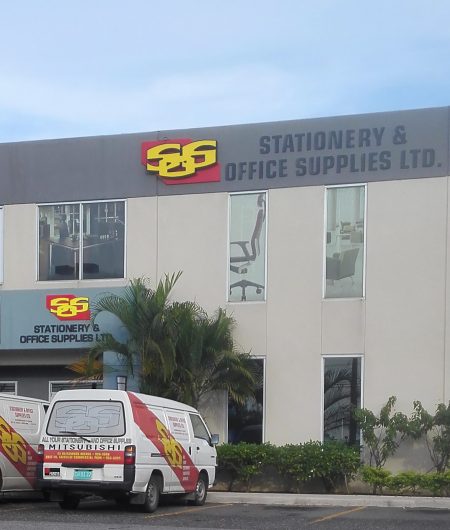
Stationary & Office Supplies – Montego Bay office.

Of note is a 37 percent increase in fourth quarter revenues, which was at a slower pace than the 63 percent increase for the nine months to September and a 45 percent rise in the 4th quarter of 2021, suggesting that the pace for 2023 should be strong, but most likely slower than that of 2022.  The pace in 2023 will be helped by a deal struck with a company in Trinidad to cross sell products as well as the possibility that other deals may be struck with others.
SEEK division produced receipts and other ruled books as well as graph paper for the first time in June last year, using machinery that was purchased from the former operators, they will enjoy increased production for the entire year in 2023 compared with approximately six months in 2022 and contributed $43 million to gross profit for 2022.
With improving profits and shrinking supplies outside of the TOP 10 shareholders, who control 91 percent of the issued shares, the stock is setting up for a stock split that cannot be far off and when given will catapult the stock price upwards.
Going forward, with the Jamaican economy recovering and now growing, the stage is being set for SOS to continue to grow at an attractive pace for a while and deliver above average returns for investors in cash dividends and stock price gains.

Q3 profit jumps 40% at Medical Disposables

Profit after tax for the nine months to December last year fell 10.7 percent to $68 million at Medical Disposables, compared with $76 million in 2021. For the quarter, it rose from $37 million to $38. Profit after tax attributable to the company’s shareholders ended 2022 with $58 million, down 10.7 percent from $65 million in the previous year. For the quarter, it climbed 40 percent to $28 million after minority interest compared with $20 million in 2021.
Improved profit margins played a pivotal role in the company’s fortunes in the December quarter, with gross profit margin increasing from 26.8 percent in 2021 to 29 percent in 2022, helping to propel it to the most profitable quarter for the nine months of operations in 2022. Gross Profit margin for the nine months in 2022 increased to 27.26 percent from 25.85 percent in 2021.

Gross profit hit $273 million from sales of $941 million, up from $250 million from sales of $930 million in the second quarter to June. Gross profit for the December quarter improved by 16.6 percent or $39 million compared to the 2021 third quarter.
Sales for the third quarter grew by $66 million or 7.5 percent over the third quarter in 2021, moving from $875 million in the 2021 December quarter, driven by increased demand for pharmaceutical and consumer items, the report stated.
Sales increased by 10.8 percent or $270 million for the nine months to December 2022, to $2.76 billion from $2.49 billion in 2021 and delivered a 16.9 percent improvement in gross profit of $108 million to $753 million from $645 million in 2021.
Selling and administrative cost dipped in the December quarter, compared with the September quarter, to $78 million versus $83 million, while selling and distribution cost rose just $2 million to $114 million. Finance cost spoiled the party, jumping to $31 million from $28.5 million and “was due mainly to an overall upward adjustment in financing, particularly working capital. The increased usage of the working capital lines of credit was deemed necessary to hold greater levels of inventory in an effort to mitigate against any additional supply chain risks that could lead to further out-of-stock instances,” management stated in their report accompanying the Financials.

Medical Disposables traded at a new all-time high of $10.

“Out of stock issues continue to affect the Group’s profitability as suppliers are faced with global supply chain challenges within their operations. The availability of key speciality products such as vaccines and oncology medicines has become infrequent and inconsistent. Our internal estimates have tracked over $100 million in lost sales due to the shortages,” the company stated. That would translate to close to $30 million more in pretax profit.
The operations generated cash inflows of $109 million for the nine months, but working capital needs consumed it all as inventory rose sharply.
At the end of December, inventories increased by $360 million to $1.53 billion, up from $1.17 billion in December 2021. Receivables declined to $603 million at the end of December 2022 from $708 million at the end of 2021. Cash and bank balances rose to $128 from $72 million at the end of 2021. Loans due to lenders amount to $1.14 billion, up from $965 million at the end of 2021 and is just a bit less than shareholders’ equity, that stood at $1.17 billion compared with $1.07 billion at the end of 2021.
The profit for the nine months resulted in earnings per share of 11 cents for the quarter and 22 cents for the nine months.
The company’s focus is on organic growth and expansion from acquisitions where possible, in furtherance of this goal, management is placing a great deal of emphasis on staff retention and recruiting talented personnel to enhance its pool of above average talents. The initial impact will be increased staff costs that will be above the increased revenues, but that will pay good dividends in future years.
ICInsider.com projects earnings of 45 cents for the year and $1 for the fiscal year ending March 2024. At the last traded price of $4.85, the stock trades at 11 times this year’s earnings and five times that of 2024, suggesting much upside potential for the stock price, with the market average PE ratio now around 13 and with several priced above 15 times earnings.

Miraculous turnaround at Palace

After nearly three years in the doldrums and on life support, helped by a number of popular and well patronized movies, Palace Amusement surged back to life in the December 2022 quarter when it made the first quarterly profit since March 2020. The profit back then was $44 million from revenues of $255 million, with the latest results surpassing it and easing much of the pain and nervousness the company and its staff encountered over the past three years.

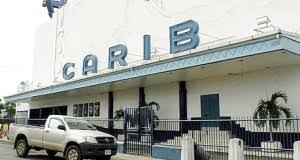
Carib Cinema, the flagship for Palace Amusement.

“The company staged three block-buster pictures in the same Quarter – Woman King, Black Panther 2: Wankanda Forever and Avatar 2: The Way of Water; Our patrons’ response was close to 215,000 visits in the Quarter and this helped to push the overall attendance at the end of the six months to over 80 percent of pre-pandemic numbers,” the company’s management stated in a report accompanying the financials.
Palace aced the December quarter with revenues of $486 million, up 222 percent from just $151 million in 2021 and $736 million for the half year, up 218 percent from a mere $232 million in 2021. Accumulated profit of $304 million at June 2019, melted away by $772 million of losses, to a deficit of $468 million up to September last year as revenues were lower than cost, but profit surged to $79 million in the December quarter from a massive loss of $112 million in 2021 and for the half year a profit of $25 million from a loss of $191 million in 2021.
While revenues surged over 200 percent, direct expenses rose a more modest 98 percent in the December quarter and 97 percent, year to date, helping to swell the profit for both periods, but administrative expenses fell from $75 million to $47 million in the quarter and from $104 million for the half year to $75 million. Finance cost rose from $12 million in the 2021 last quarter to $14 million and from $17 million to $28 million for the half year. Legal and professional fees is one of the major areas of cost reduction in the period, dropping from $44 million to just $2 million for the six months period.
Segment Results show revenues of $266 million for Carib Cinema, up from just $91 million in 2021, with a profit of $11 million versus a $21 million loss in 2021. Cineplex had no revenues in 2021 but suffered a loss of $14 million and bounced back in 2022 with revenues of $99 million and profit of $20 million. Sunshine Palace generated revenues of $203 million versus $54 million in 2021 with profit of $41 million compared with a loss of $35 million in 2021. The 2022 revenues include $43 million classified as other activities for Sunshine Palace. Multiplex delivered revenues of $143 million in 2022, up from just $35 million in 2021 with a profit of $20 million versus a loss of $23 million in 2021.
Cash flow brought in $53 million compared with outflows of $163 million in 2021 and helped in boosting funds on hand at the end of the calendar year.

Palace Multiplex in Montego Bay.

From all that can be seen movies are still attracting patronage with what have been described as some good films and by the end of the fiscal year in June, the company seems set to be on its way to justifying their new bankers backing the company with a $700 million loan some of which was used to close out the Scotiabank loan and when the full history of this period unfolds the name Carol Lee, the financial controller will be high on the list for helping to save and restore the company to financial health.
The company now boast equity of $404 million thanks to the above profit and some $772 million in revaluation surplus, with $606 million of it coming in 2020. The company has some more lifting to do to steer them out of the woods while hoping that there will be no major setback in the recovery as they have $756 million in long term debt to be cleared in addition to $60 million of short term loans. There are halfway there with cash funds of $379 million on hand that should grow in the second half of the fiscal year. Palace also has accounts payable amounting to $435 million at the end of 2022 which is up from $386 million at the end of December 2021 and is covered by current assets of $481 million.
At this year’s annual general meeting, shareholders approved a 600 to 1 split as a result the stock trades x-split starting Monday, February 27, with the record date of February 28. The split will take the total number of shares to 862 million from 1.437 million currently.
The company should deliver earnings for the full year ending in June at around $100 per share.

Allen and Bailey buy 30m One on One shares

Soho Investments and Jorden Investments acquired 15 million shares each in One on One on Monday, February 13, to increase their equity holding in the company, the company announced.
The companies, owned by Ricardo Allen and John Bailey, respectively, bring their ownership in the 2022 listed Junior Market company to just under 24 percent and under 9 percent, respectively, in a move that is a vote of confidence in the future growth of the company.
Allen said, “Obviously, as the leader of the organization, I see the tremendous value that the team has been able to create here. We would also have line of sight as it relates to the growth journey we are about to embark on. With that being said, we believe that the current share price is low, and we will take the opportunity to purchase shares on the market as they become available at this price.
“We have some excellent growth initiatives ahead, and we look forward to executing on these and sharing them with our valued stakeholders when the time comes”.

Ricardo Allen CEO of One to One

On a recently hosted Earnings Call discussing the company’s first quarter results, Allen indicated that one of the company’s key strategic focus areas for the remainder of this year would be developing its content agency. To this end, the team has already acquired 4,000 square feet of space where it will look to build out studios to host instruction sessions and otherwise produce content to support its other product offerings, such as its Classroom in a Box as well as its Award-Winning Learning Management System.
In an interview with Allen, he indicated to ICInsider.com the content studio will provide abundant opportunities for creating content in educational services for local and global consumption.
Allen also indicated that staff cost rose in the first quarter of the current year ahead of revenue growth but that the additional revenues will start to flow in the company’s second half year numbers that are expected to flow through existing partnerships with agencies such as the Ministry of Education locally and the Department of Education in the Bahamas, as well as international alliances, such as that with Community Services Foundation.
The first quarter results show revenues almost doubling to $83 million, compared with $45 million in 2021, with profit rising to $12 million before tax from a loss of $1.8 million in 2021, following a sharp jump in Administrative and marketing cost to $54 million from $32 million in 2021.