Profit climbs 16% at Jamaica Broilers

Profit rose a cool 16 percent at Jamaica Broilers Group for the quarter to July 2023, to $1.2 billion over the $1.1 billion in the July 2022 quarter from a mere two percent increase in revenues to $23.4 billion from $23 billion in 2022.

Jamaica Broilers

Gross profit grew faster than revenues, with an increase of 8 percent to $5.7 billion from $5.3 billion in the prior year. The Jamaica Operations had segment results of $1.75 billion, down 7 percent below last year’s result of $1.88 billion. “The reduction was mainly driven by increased pressure from high levels of imports, affecting baby chick sales to our small farmers,” Robert Levy, Chairman and Christopher Levy, Group President & CEO advised investors in their comments on the quarter’s performance.
“The Jamaica Operations showed an increase of 5 percent over the corresponding quarter, which was mainly driven by poultry sales. Our US Operations reported a b segment result of $1.2 billion for the first quarter, 44 percent above last year’s results,” the directors went on to state. The group earned $815 million in segment results in 2022 from segment revenues of $9.2 billion which slipped to $9.1 billion in 2023 from external business in the US Operations.
“We did have a 3 percent decline in total revenue due primarily to falling prices in most of our product lines. However, a 56 percent year over year increase in poultry volumes assisted in offsetting the negative market pressures. Our South Carolina plant which produces the Best Dressed Chicken line of products has gained impressive market acceptance in the United States,” the directors reported.
The Caribbean operations segment that had positive results of $106 million in 2022 recorded a loss of $480 million in 2023.
Administrative costs declined marginally from $2.98 billion to $2.92 billion in the current period, distribution costs rose four percent from $690 million to $720 million, finance costs almost doubled, moving from $320 million to $633 million, taxation moved up from $332 million to $393 million during the 2023 quarter.
Total comprehensive income ended the quarter at $1.45 billion up from $920 million in 2022.
The group reported earnings per share of $1.24 versus $1.07 in 2022. ICInsider.com projects earnings of $7 for the current fiscal year and $9 for the following one. The stock last traded at $32.50, with a price earnings ratio of just under 5, compared to the average of the market of 12.4 based on current year’s earnings.
The group continues to fund expansion with $952 million invested in fixed assets during the quarter, down from $1.2 billion in the similar quarter in 2022, with net fixed assets climbing almost $7 billion from $15.4 billion to $22.2 billion at the end of the quarter. Funds were borrowed to finance the investment in fixed assets, with new loan funding of $2.44 billion during the quarter compared to $3.7 billion in the previous year. Loans repaid amounted to just $664 million versus $1.6 Billion in the previous year. The increased borrowing is the major factor in the climb in interest costs during the quarter, in addition to movement in interest rates internationally.
Cash inflows before working capital requirements for $3.4 billion and is up from $2.6 billion in the previous year after working capital funding rose, the group ended up with a negative cash flow of $2 billion that is up from $1 billion in the previous year.
After the investment in fixed assets, loan payments and receipts, the group was left with negative cash flows for the quarter of $1.9 billion which reduced cash from $4.6 billion at the beginning of the year to $2.8 billion.
The statement of financial position shows a healthy financial status with equity capital of $34 billion net current assets of $17 billion, total current assets amounting to $51 billion and total current liabilities of $34 billion which includes short term borrowings of $21 billion.

Lab’s sharp turnaround in fortunes

A sharp turnaround in the fortunes of advertising agency, Limners and Bards was manifested in the July quarter, with revenues and profit rising above those in the same period in 2022 and represents a reversal of the trend of declines during the first two quarter of the year with a 31 percent revenues decline with profit plunging 83 percent for the half year.

Kimala Bennett, Chief Executive Officer of The Lab.

According to Managing Director, Kimala Bennett, the improvement in the third quarter came from the acquisition of new clients and other initiatives pursued by them, some of which will bear fruit in the next fiscal year.
The third quarter performance while very positive was not enough to erase the reduction in the top and bottom line of the company, racked up in the period to April.
Revenues came in at $913 million for the nine months to July, down 18 percent from the $1.1 billion generated in a similar period in 2022 but revenues bounced a solid 17 percent from $320 million in 2022 July quarter to $374 million in the latest quarter ending July 2023. Profit after tax for the nine months to July, amounts to $57 million, down sharply by 60 percent from $144 million reported for the similar period in 2022 but profit for the quarter jumped 76 percent from $21 million in 2022 to just under $37 million in the current year.
Finance income jumped from just under $3 million for the nine months in 2022 to $8.7 million in the current year and nearly doubled from 2.5 million in the July 2022 quarter to $4.1 million in their latest quarter.
Although revenues are down during the current year, administrative costs rose 13 percent from $227 million to $256 million, but in the quarter administrative expenses moved up by 9 percent from $80 million to $87 million. Finance costs declined from $13 million to $8.7 million for the nine months and dropped sharply from $6 million in the July 2022 quarter to just $1.7 million.
Segment performance shows the company reporting results in three segments, Production, Media and Agency. During the July quarter, the Media segment reflected revenue growth of 34 percent to $225 million, Agency was up 44 percent to $50 million but Production declined by 22 percent to $99. Gross profit jumped by 83 percent to $56 million for the Production, Media climbed 16 percent to $30 million and Agency slipped 26 percent from $49 million to $36 million. Year to date revenues are down compared to 2022 by 35 percent in Production to $229 million. Media is down 11 percent to $532 million and Agency slipped 6 percent to $152 million.

The stock trades below its 50 day moving average since March. Projected earnings = 8 cents for the fiscal year with a PE of 21.

The fourth quarter of the fiscal year is usually the company’s weakest, however, the rebound in revenues in the third quarter reflecting improvement in production and advertising revenues compared to the fiscal half year, suggests that the improved performance in the third quarter could carry somewhat into the final quarter and record improvement in revenues and profits.
Accordingly, ICInsider.com forecast is for earnings of $0.08 per share for the current year ending October and $0.20 for the next fiscal year, compared with 6 cents per share for the nine months to July this year and 4 cents per share for the July quarter.
The stock traded on Monday at $1.72, with a PE ratio of 21 times ICInsider.com’s latest projected earnings of $0.08 per share with the value at the higher end of the market, which currently averages PE of 10.3 times earnings.
The company generated gross cash flows of $75 million and net cash provided by operating activities was just under $31 million with net cash flows of just $2 million after paying dividends of $34 million and ended the year with cash and cash equivalent of $355 million.
The company’s finances remain b with current assets of $787 million and current liabilities of $244 million given the net working capital of $543 million, borrowings of $100 million with shareholders’ equity of $598 million.

Profit surges 74% at Scotia Group

Scotia Group generated a huge 74 percent jump in net profit to $12.8 billion for the nine months to July 2023 over $7.3 billion in 2022. Profits for the quarter rose a much more subdued 40 percent to $5.16 billion and is up strongly from $3.68 billion in 2022 as well as form profit $4.2 billion in this year’s April quarter.
Earnings per share for the July quarter was a strong $1.66, up from $1.18 in July 2022 and $4.11 for the nine months to July this year and puts the group on track to generate income close to $6 per share for the fiscal year end in October 2023. ICinsider.com is forecasting $5.50 in earnings for the current fiscal year.
Loans grew by $40.5 billion or a solid 18.5 percent compared to July 2022, with loans net of allowances for credit losses increasing to $259.6 billion. “Our core loan book continues to perform well with mortgages increasing year over year by 29 percent, consumer loans by 10 percent and commercial loans by 20 percent,” the group informed investors in their commentary on the results.

Audrey Tugwell Henry Scotia Group’s CEO

Total revenues excluding expected credit losses for the nine months to July, grew by $10 billion to $41.5 billion reflecting an increase of 31.5 percent over the comparative prior year period. “This was primarily driven by an increase in net interest income of $7.1 billion stemming from the strong growth in our loan portfolio, higher insurance revenue as well as higher fee and commission income earned given the significant increase in transaction volumes” the directors informed shareholders in their commentary on the financial performance.
The directors hiked the dividend to 40 cents per stock unit, payable on October 19, to stockholders up from 35 cents per stock unit last paid.
ICInsider.com is accordingly placing an ICBuyRated seal of approval on the stock, which is one of ICInsider.com TOP10 Buy Rated list of stocks. Investors have hardly noticed this performance with the share price falling from $33.44 in the morning session to $33 mid morning with trading in just over 54,000 shares with the stock trading at 5.5 times earnings currently, compared with an average of 12.2 for the overall Main Market, with a huge upside potential for growth for the next 12 months or so.

Healthy climb in profit at Wisynco

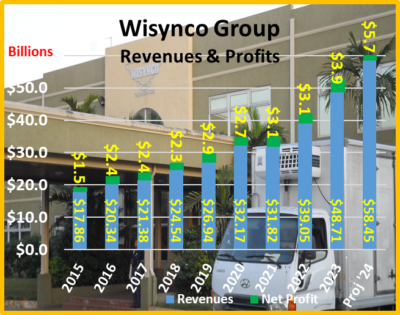
Profit jumped 21 percent at Wisynco Group to a record $4.9 billion for the year to June, this year after corporation tax, over the 2022 earnings, resulting in earnings per share of $1.31 from sales revenues that climbed 20 percent to $58.45 billion up from $48.7 billion in 2022 but after investment and other income of $697 million compared with $453 million in the prior year.

Wisynco Group’s profit rose 21% for the 2023 fiscal year.

The profit margin improved during the year, with cost of sales dropping from 66 to 65 percent, with gross profit rising faster than sales, up 27 percent to $16.9 billion from $13.25 billion.
Loss at JP Snacks, an associate, worsened during the year with a modest 4 percent rise in revenues moving from $1.65 billion to $1.72 billion, with the loss jumping from $94 million to $194 million. Wisynco wrote down their investment due to impairment by $105 million during the year.
Administrative expenses jumped 25 percent to $1.8 billion from $1.4 billion. Sales and distribution expenses increased 29 percent to $9.2 billion from $7 billion. Staff cost climbed well ahead of inflation by nearly 25 percent to $6.33 billion, with wages up 23 percent to $5 billion. Finance cost declined to $131 million from $149 million in 2023. Depreciation rose 22 percent to $1.09 billion.
The operations generated Gross cash flow of $7.6 billion, but growth in working, addition to fixed assets offset by loan inflows and increased payables and dividend payment of $1.6 billion during the year, up from $1.5 billion in 2022, resulted in net inflows of $3.5 billion of which $1.17 billion was used to purchase investments.
Addition to fixed assets absorbed $2.4 billion during the year and includes work in progress of $1.4 billion. In 2022, addition to fixed assets was $637 million as the group increased investments in plant and machinery to expand its operation, which William Mahfood advises is targeted to expand factory and warehouse space by 60 percent to meet growing demand locally and overseas for its products.

Current assets climbed from $17.8 billion to $22.8 billion, including trade and other receivables of $5.45 billion cash and bank balances of $11.2 billion. Current liabilities ended at $8.3 billion versus $7.3 billion in 2022. Net current assets stood at $14.58 billion, up from $10.5 billion in June 2022.
At the end of June, shareholders’ equity climbed to $21 billion from $17.8 billion in 2022, long term borrowings stood at $3 billion, up from $747 million in 2022 and short term loans at $1.1 billion, up from $822 million. 2022.
Going forward, the group is set to acquire the distributorship of additional products during the year, in addition to the expansion now being undertaken to meet ongoing demand.
IC Insider.com computation projects earnings of $1.80 per share for the fiscal year ending June 2024, with a PE of just over 10 times current year’s earnings based on the price of $17 the stocks traded on Thursday morning on the Jamaica Stock Exchange Main Market.
Net asset value ended the period at $5.63, with the stock selling at 3 times book value.
The stock is one for the future. Investors may not see any notable price movement from the current level in the short term, but with the expansion now on the way and new products to be distributed, a successful future seems assured and the stock price will grow appreciably into the future.

Lasco Manufacturing continues on growth path

Lasco Manufacturing‘s performance for the June 2023 quarter was subdued, with pretax profit rising a respectable 28 percent to $721 million and by 27 percent after tax to $526 million versus $414 million in 2022 from revenues of $2.83 billion, 7 percent more than 2022 sales of $2.6 billion, but that was slower growth than the profit for the 2023 fiscal year that jumped 37 percent after tax to $2 billion from revenues that rose 19 percent to $11.24 billion.
The 2023 full year results reflect a greater level of rebound from the declines suffered following the fallout in the economy as a result of the advent of covid-19 and, in particular, the fallout in the global market with higher input costs that flowed from supply disruptions as well as tourism sector that were still recovering during the 2023 fiscal year that ended in March.
Helped by a reduction in the cost of inputs, the cost of goods sold rose well below the growth in revenues by just 3 percent to $1.76 billion from $1.7 billion in 2022 and gross profit rose 19 percent to $1.07 billion from $898 million. Administrative costs rose 8 percent from $332.4 million to $360 million. Depreciation slipped 2 percent to $66.7 million, while finance cost was negligible at just $3 million.
The operations generated gross cash flow of $775 million, which grew to $960 million after movements in working capital.
Current assets ended the period at $9 billion inclusive of trade and other receivables of $2.77 billion, down from $3.35 billion in 2022 and Investment and bank balances of $4.1 billion, up from $1.8 billion in 2022.

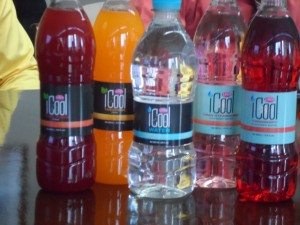
Lasco’s ICool drinks.

Current liabilities ended the period at $1.68 billion. Net current assets ended the period at $7.38 billion, up from $5.25 billion in 2022.
At the end of June, shareholders’ equity amounts to $11.65 billion, up from $9.5 billion in 2022, with borrowings at just $122 million.
Earnings per share for the quarter was 13 cents, while a dividend of 12 cents per share was paid in July, totalling $490 million. The company usually pays one dividend per annum, so this is likely to be the last payment until 2024, but with profits on the rise, the next payment seems set to be increased.
IC Insider.com computation projects earnings of 70 cents per share for the fiscal year ending March 2024, with a PE of 7.4 times the current year’s earnings based on the price of $5.35, the stock traded recently on the Jamaica Stock Exchange Junior Market. The PE compares favourably with an average of 11 for the Junior Market, an indication that the stock price will be heading higher going forward. Net asset value ended the period at $2.83, with the stock selling at just under twice book value.

Dolla Financial an attractive performer

Supreme Ventures (SVL) recently informed investors of purchasing a 15 percent shareholding in the fast-growing Junior Market listed company – Dolla Financial Services.
According to SVL, the acquisition continues to align with SVL’s growth strategy, which has expanded beyond the gaming market and has been making headway into other growth industries with significant potential to meet the ever-growing needs of an eclectic consumer base.
The purchase is a high profile one, with Dollar Financial reporting second quarter profit of $105 million, a robust 78 percent increase over the $59 million in the June 2022 quarter as it pumped up profit by a solid 91 percent to $227 million for the six months to June, versus $119 million in 2022.
Dolla recorded total income for the six months to June 2023 of $592 million, an increase of 98 percent over the $298 million for the six months to June 2022. Fees and other income brought in $13 million for the quarter, up from just $4 in the June 2022 quarter and $26 million for the half year, from $4 million in 2022.
Net interest income, before expected credit losses, rose 69 percent to $242 million in the June Quarter, up from $143 million in 2022 and for the six months to $490 million, reflecting a growth of 80 percent over $272 million generated in the prior year, driven by loan expansion.
The period shows a small amount set aside for expected credit losses, but the cash flow indicates only 75 percent of interest earned was collected during the period, down from 77 percent for 2022 wit, with the first half coming in at 80 percent for the 2022 full year.
The company indicates that some 80 percent of loans made are collateralized. As such, they may not need to provide for all late payers as it could well recover some from the disposal of collaterals held against loans granted.
Operating expenses almost doubled in the June quarter to $144 million from $77 million and rose 97 percent to $270 million from $137 million for the six months. The company stated that the increased cost is “primarily due to intensified marketing efforts and increased staff capacity.”
Earnings per share ended at 4 cents in the latest quarter and 9 cents year to date and is expected to exceed 30 cents for the year. The stock trades around $2.65 and above, an attractive entry point for medium term investment over a year.
Loans receivable net of expected credit losses reached $2.57 billion, representing a substantial increase of $1.5 billion, a 145 percent surge from $1.05 billion as of June 2022 and is also up over the $2.27 billion at the end of March this year. Business loans accounted for 81 percent of the total loan portfolio, with personal loans accounting for the rest, the company reported. Secured loans constituted 80 percent of the portfolio, with unsecured loans making up the remainder.

Loans payable increased to $1.7 billion from $430 million at the close of June 2022 and Shareholders’ Equity climbed to $900 million from $653 million at the end of June 2022.
At the end of June, cash resources stood at just $111 million, not a great deal to fund increased lending, but continued profitability will add to the amounts they can lend. Going forward, increased profitability and access to loan funding to facilitate rapid increased lending will be critical to the rapid profit growth.

Lasco Distributors profit surge

Lasco Distributors stock rose 85 percent since the middle of April but profit results released since then show strong full year results to March, with an increase of 33 percent to 39 cents per share, followed by impressive first quarter numbers almost guaranteeing another big rise in the price over the next several months.
Lasco released first quarter results, in late July, with a rise in pretax profit jumping a robust 57 percent to $602 million and post-tax climbing a solid 38 percent to $448 million from a 17 percent rise in revenues to $7.3 billion from $6.3 billion.

The company generated other income of $68.6 million, surging 142 percent from $28 4 million in 2022, but unrealized investments gains fell from $58 million to $13 million, pushing total comprehensive income to $460 million, 20 percent up from $383 million in 2022.
The cost of goods sold rose at a much slower pace than revenues at 15 percent to $5.98 billion from $5.18 billion. Gross profit jumped well in excess of the rise in revenues, with a 25 percent climb to $1.34 billion from $1.07 billion in 2022.
Administrative and other expenses rose 12 percent to $806 million from $718 million in 2022. Depreciation charge fell from $38.7 million to $31.5 million in the latest quarter, there was virtually no interest cost with borrowings having been repaid.
The quarterly result is continuing” the performance of the prior year, delivering growth in all key segments” John Dasilva, Managing Director, stated in his report to shareholders, and went on to state, “the company continues to invest in consumer focused marketing initiatives while increasing its distribution and product availability across all channels”, in his report accompanying the quarterly.
The operations, generated $484 million of Gross cash flow and $814 million after working capital movements and ended with $748 million, with net cash inflows that swell the funds on hand to $3 billion.
Current assets ended the period at $11 billion, which was similar in 2022. Trade and other receivables amount to $3.6 million, with short term investments, cash and bank balances closing at $3.6 million, while inventories amount to $3.76 billion and receivables $3.6 billion. While receivables were close to the June 2022 and fiscal year end numbers, inventories fell by $700 million from the March year end balance. Current liabilities ended the period at $4.6 Billion. Net current assets ended the period at $6.5 billion up from $5 billion at the end of June 2022.

Lasco Distributors profit rises

At the end of June, shareholders’ equity amounts to $8.9 billion, up from $7.36 billion at the close of June 2022.
Earnings per share for the quarter was 13 cents, up from 9 cents in 2022. IC Insider.com computations project earnings of 65 cents per share for the fiscal year ending March 2024, with a PE of just 6 times current year’s earnings based on the price of $3.86 the stock traded at recently on the Jamaica Stock Exchange Junior Market. Net asset value ended the period at $2.53 with the stock selling at 1.5 times book value.
The company paid a dividend of 10 cents in July 2023, a payout ratio of roughly 26 percent of the 2023 annual profit.
Investors were underrating the stock earlier the year, selling it well below an appropriate valuation of a mere 8 times the nine months results of 27 cents per share when the stock traded at a low of $2.09 in April and close to that price for most of the month. Although the stock has nearly doubled, it is selling at just 10 times 2023 earnings and well below the 2024 earnings of 65 cents, which makes the stock a solid buy for the medium term investment.
Currently selling outnumbers buying interest but with rapidly improving results that will not last forever and patient investors will win in the end.

Jamaica Broilers aced 2023 profit

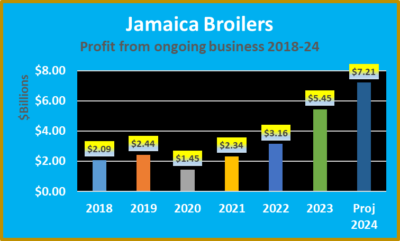
Jamaica Broilers (JBG) recently released full year results to April, with a big jump in earnings, from ongoing operations following the write off of $1 billion relating to the closure of the Haitian operations, with group revenues rising 23 percent from continuing operations and profit after tax rising a solid 56 percent to $5.4 billion from $3.44 billion in 2022.

Jamaica Broilers announced a new acquisition last week

Profit after tax rose a solid 39 percent to $4.3 billion from $3 billion in 2022 after factoring in the above one time write off of the Haitian operation.
Segment results. The group has two main operating segments split between Jamaica and The USA, with results showing revenues in the Jamaican operations jumping 30 percent to $59 billion from $45 billion and the USA climbing 11 percent from $29 billion to $32.5 billion. The Jamaican segment delivered profit of $7.57 billion, up a significant 56 percent from $4.8 billion in 2022, with the USA market delivering $3.8 billion, up a robust 55 percent, compared with $2.45 billion in 2022.
A sharp rebound in the local economy buoyed by a strong recovery in the tourism sector over last year would have contributed a significant part of the local rebound. However, reports are that the company’s main competitor, Caribbean Broilers, had challenges during the period that saw JBG filling the gap and therefore enjoying above average growth and, if correct, could revert to lower levels in the new fiscal year.
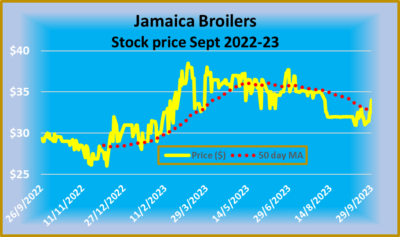
Earnings per share reported by the audited results came in at $4.43, after the write off of the Haitian operations, excluding the write off, earnings were a much more attractive $5.35 per share, with just over $7 projected by ICInsider.com for the current year, making it a compelling buy at current prices. The PE is an appealing 6.5 times last fiscal year’s earnings from ongoing operation and just 5 times this year’s earnings at the last traded price of $35 on the Jamaica Stock Exchange. The stock price has a premium of 66 percent over the Net asset value of $21.43 to Friday’s stock price, with the manufacturing sector at 100 percent, which suggest the extent of a potential rise.
Profit margin rose from 24 percent in 2022 to 26 percent in 2023, increasing gross profit by 30 percent to $23.4 billion from $18 billion in 2022.

Christopher Levy – Jamaica Broilers President and Chief Executive.

 Administrative and other expenses rose 9.6 percent, well below the gains in gross profit to $12.4 billion and distribution expenses increased by 17.3 percent to $2.67 billion. Finance cost jumped a sharp 70 percent to $1.85 billion from $1.1 billion. In comparison, finance income swung around by $670 million from $593 million that, mainly was debt forgiveness in 2022, to a loss of $177 million, representing loss on foreign exchange but other income comprising a potpourri of items, some of which may be nonrecurring, moved from $393 million in 2022 to $439 million. Taxation rose 35 percent from $1 billion to $1.37 billion.
The operations generated $9 billion in gross cash flow, up from $6 billion in 2022, that ended at $1.4 billion after working capital needs, compared with $2.2 billion in 2022, as inventories of finished goods and livestock consumed all of the funds generated. The group paid $783 million in dividends net of tax from $463 million in 2022, including $503 million or 42 cents per share paid in March this year and 36 cents or $432 million in November 2022. The payout amounts to 17.6 percent of reported profit, below the expected 20 percent the company indicated it would pay in the past.
The group incurred $8.3 billion in the acquisition of fixed assets well up on the $2.9 billion in 2022 and borrowed $11 billion net of repayment to fund the purchases. Current assets ended the period at $50.7 billion, up from $40 billion in 2022. Receivables amounted to $6 billion, inventories rose to $18.8 billion from $15.6 billion in 2022, farm animals were valued at $21 billion, up from $15 billion in 2022 and cash and bank balances stood at $4.8 billion, up from $3.9 billion. Current liabilities ended the year at $34 million compared with $27 billion the year before. Net current assets ended the period at $16.5 billion versus $13 billion in 2022.
At the end of April, shareholders’ equity amounts to $25.3 billion, with 2022 ending with $21 billion. Long term borrowings ended at $16 billion and short term at $17 billion, up from $10.3 billion and $13.6 billion, respectively, in 2022.
The stock gets an ICInsider.com BUYRATED seal of approval, but investors need to note a few things. Capital spend is impressive and bodes well for continued growth, however, the company is primarily involved in the agricultural business, that can be fickle and several factors could play a role in derailing its fortunes.

Upped capital spend for Caribbean Producers

Capital spend is set to expand at Caribbean Producers (CPJ) following approval of the Board, the company stated in a recent release with plans for “three major projects that will positively impact the growth and further development of the Company both locally and offshore” the release from the company stated.

Caribbean Producers

The plans include a U$1 million solar expansion project, with installation to commence in the first quarter of the 2024 financial year that starts in July, US$2.3 million modernization of the Meat Processing Plant, with work to commence in the first quarter of 2024, both projects will reduce operating cost. CPJ will be expanding its Operation in St. Lucia with a new store, with Operations to begin in the second quarter of the financial year 2024.
The proposed capital spend comes on the heels of a profitable nine months for the company recovering from fallout in revenues and profit during the covid-19 pandemic. For the three months to March, revenues rose 28 percent to US$35.7 million versus US$28 million in 2022 and climbed 24 percent to US$107 million for the year to March, over US$86.4 million for the similar period in 2022.
The March quarter saw cost of sales rising slightly faster than revenues, with an increase of 30 percent to US$25.3 million from $19.5 million, with a gross profit margin of 29 percent, down from 31.2 percent in 2022. For the nine months, it also rose faster than sales with an increase of 28 percent to US$75.3 million from US$58.8 million and resulted in a gross profit margin of 29.7 percent, down from 31.5 percent in 2022, negatively impacting profits.
According to  management, “We expect growth in revenue and margins going forward will translate to improved company performance.”

Caribbean Producers

Profit before tax declined sharply for the March quarter by 65 percent from US$$1.8 million to US$636,974 after accounting for a one-time charge of US$1.45 million in the third quarter relating to GCT assessment, dragging profit down to a mere US$226,000 after tax, attributable to the company’s shareholders of and down 49 percent to US$3.6 million for the nine months compared to US$6.8 million earned in 2022. For the nine months, profit before tax declined 34 percent to US$5.2 million in the current year, from US$7.9 million for the similar period in 2022, but it declined a smaller 16 percent, excluding the one-time charge for GCT. Selling and administrative expenses rose sharply by 24.7 percent in the March quarter from US$5.2 million in 2022 to $6.5 million in what management stated was due to increased staffing to position for further growth, the increase negated the improvement in the gross profit. For the nine months, the cost in this category increased 33.6 percent to US$19.6 million from US$14.7 million in 2022. That was the area of significant cost increase that depressed profits for 2023. But profit before tax would have increased to US$2.8 million when the charge for GCT is excluded compared with US$2.6 million in March 2022 quarter and US$9 million versus US$10 million.

At the end of March, shareholders’ equity stood at US$26.7 million, up from US$22.4 million at the end of March 2022 and US$23.2 million at the end of the June 2022 fiscal year. The company continues to be heavily leveraged with borrowings of US$40.5 million, of which US$9.8 million is short term and due to be repaid within twelve months.
Current assets stood at US$62 million at the end of March versus US$62.5 million at the end of June 2022 and just US$25.3 million as of March 2022. Cash and equivalents were US$4.9 million, up from US$3.9 million at the end of the 2022 fiscal year, with receivables at $18 million, virtually flat with the fiscal year end. Still, inventories slipped to US$39 million from US$40 million at the end of the fiscal year but are up over March 2022 at $30 million.
Current liabilities stood at US$25.4 million at the end of March versus US$46.75 million at the end of June 2022 and US$25.3 million as of March 2022.
CPJ is the dominant company within the hospitality sector. The expected continued expansion in the hotel rooms should be fertile ground for continued growth in revenues and profitability over the next few years. The company is highly leveraged, which is a huge negative, especially when business declined, as it did during the height of the COVID epidemic, curtailing sales in 2021 and 2022.
The company reported 0.02 US cents in earnings per share for the March quarter compared to 0.14 cents in 2022 and 0.33 US cents for the half year to March 2023 versus 0.62 cents in the prior year. As indicated above, ongoing earnings per share are better than the numbers suggest. The US$1.5 million written off for general consumption tax assessment is not an ongoing expense. As such, it should be excluded from earnings in valuing the company’s shares to assess ongoing earnings capabilities better. In addition, the tourism trade did not return to normal capacity compared to 2019 until the start of 2023, as such, the first two quarters of this fiscal year are based on lower business levels than is the norm and the 2024 fiscal year should reflect a better outcome as a result.
IC insider.com forecast earnings of J$1.35 per share for the June 2023 fiscal year and J$2.50 in the next fiscal year, with the stock currently at $9.46 on the Main Market of the Jamaica Stock Exchange with a value of 7 times the current years’ earnings. Investors can expect a period of continuing growth in the share price over the next 12 months as a result of continued improvement in profitability and lower interest rates in the coming months.

Profit climbs at Caribbean Assurance Brokers

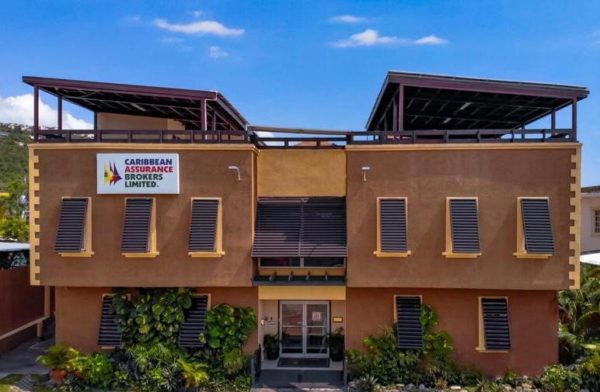
Caribbean Assurance Brokers (CAB) is not one of the more popular Junior Market stocks, coming to the market just when the Covid-19 pandemic broke out in Jamaica, and got little post-IPO bounce and has never won the support of the wider market. The company reported record full year and 2023 first quarter profits, yet the stock continues to struggle although currently trading up from the price before the release of both results.
Operating Revenues rose 11 percent from $423 million to $469 million for the year ending December 2022, while Other Operating Income generated $37 million which was down 7 percent from $40 million in 2021, resulting in total income rising 7 percent to $506 million from $463 million in 2021. Profit for the year rose 32 percent to $75 million from $57 million in the prior year, with earnings per share of 30 cents up from 21 cents in 2021.
Selling Expenses were virtually flat for the year at $146 million compared with $145 million in 2021, Administrative Costs rose 10 percent to $281 million from $255, depreciation charge fell 10 per cent to $16 million and finance costs fell 32 percent to $4 from $6 million in 2022.
For the 2023 March quarter, revenues climbed 12 percent to $101.9 million from $90.6 million for the 2022 March quarter. Other Operating Income fell from $14 million to $12 million resulting in total revenues of $114 million rising 9 percent above $105 in 2021.  The company earns the bulk of its income and profit in the September quarter. Profit jumped 840 percent to $17 million after tax from just $2 million in 2021, with earnings per share of 7 cents.
Selling Expenses fell by 30 percent to $25 million from $36 million in 2022, Administrative Cost rose 7 percent to $70 million from $66 million, depreciation charge rose 21 percent to $5 million from $4 million in 2021 and finance costs fell 45 percent to $593,176 from $1 million in 2021.

Caribbean Assurance Brokers selling at a PE of just 8 based on historical earnings & 5 times 2023.

Cash inflows from operations delivered $24 million, up from just $7 million in 2022, but cash funds climbed by $132 million by the end of March after spending $37 million on addition to fixed assets with a reduction in receivables and an increase in payables contributed $146 million in positive flows during the three months period.
At the end of March, shareholders’ equity stood at $480 million up from $390 million at the end of March 2022 and $463 million at the end of December 2022. The company continues to be lightly leveraged with borrowings of $59 million of which $53 million is short term and due to be repaid within twelve months.
Current assets stood at $536 million at the end of March versus $418 million in 2022. Cash and equivalent was $385 million up from $286 million at the end of March 2022, with receivables at $148 million, up from $127 million in 2022.
Current liabilities ended the 2023 quarter at $345 million at the end of March, up from $229 million at the end of March 2022.
ICInsider.com projects EPS of 50 cents for the current year, with the stock priced at $2.53 it last traded on the Junior Market and sits at the number 2 spot on ICInsider.com TOP10. The PE is a mere 5 times 2023 earnings and 8 times 2022 earnings and is one of the most undervalued stocks on the market currently.
The directors approved a modest dividend of 2.67 cents per share, well below the target stated in the prospectus of up to 25 percent of profits. The payment will be on October 26, with the ex-dividend date of September 14.