 Jamaica’s trade deficit declined marginally during the first six months of 2014 ending at US$2.18 billion, compared to US$2.19 billion in the 2013 period, a decline of 0.3 percent, the Statistical Institute of Jamaica reported, today.
For the period up to May the trade deficit was US$125 million. Trade balance in June effectively wiped out the small positive gains to May.
For the six months period Jamaica imported goods valued at US$2.9 billion, a decrease of US$133 million or 4.4 percent compared to the same period in 2013. Total exports for the six months to June 2014, fell by US$125 million to US$729 million, down from US$854 million in the 2013 period.
The decline in imports was due mainly to a reduction in Mineral Fuels, Chemicals, Beverages & Tobacco, Animal & Vegetable Oils Fats.Imports of “Raw Materials and Intermediate Goods” decreased during the 2014 review period, and were valued at US$1.77 billion, compared to US$1.97 billion in the 2013 period, a 9.8 percent decrease.
Crude Oil imports amounted to US$413 million, moving down from US$451 million in the similar period of 2013, a decrease of 8.4 percent. Imports of Capital Goods (Excl. Motor Cars) increase from US$243 million in the 2013 period to US$264 million in the current year to June.
National Commercial buys US$20M & sells back US$9M
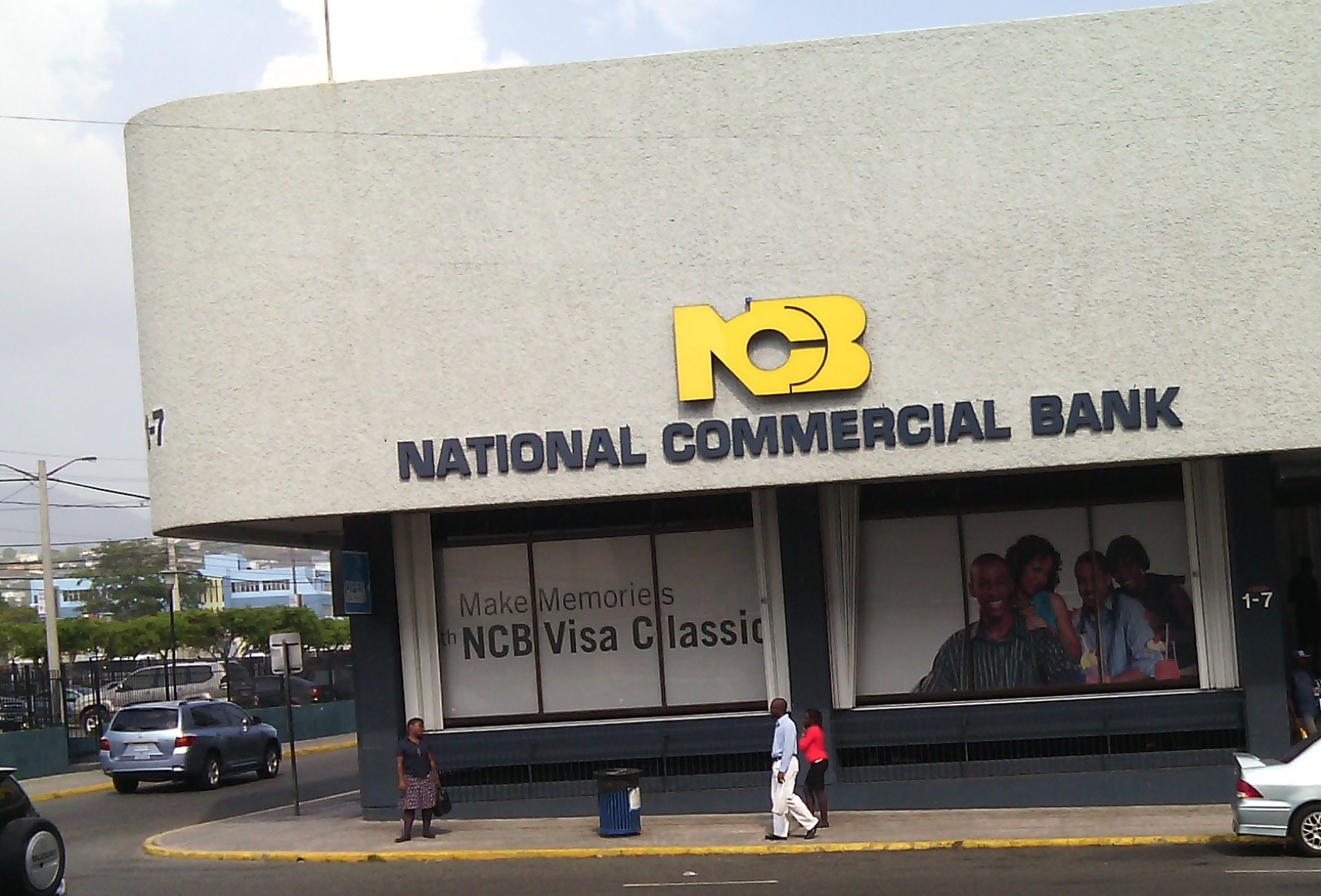 Jamaica’s, National Commercial Bank bought US$20,408,481 at an average rate of $112.70 and sold only US$8,911,292 at $112.75 on Friday, two days after selling 466 million Kingston Wharves’ shares, for the equivalent of US$26.6 million. The buy helped push the forex market into surplus on the day, by US$18 million.
Of the nine authorized dealers, Jamaica National was the only one, buying less US dollars than they sold. First Global Bank with a net purchase of US$1.9 million, is the closest to NCB, with a surplus of US dollars bought. On Thursday Bank of Nova Scotia purchased US$3,907,332 at an average of $112.36 but offloaded US$19,209,570 at an average rate of $112.72.
 The Jamaican dollar was stable against the US dollar, gained value on the Canadian dollar and fell in value against the Pound Sterling, in Friday’s forex trading. Authorized dealers purchased the equivalent of US$50,731,870 versus US$28,497,521 on Thursday, and the equivalent of US$32,356,343 was sold compared with US$39,295,678 on Thursday.
In US dollar trading, dealers bought US$48,910,642 compared to US$25,078,217 on Thursday. The buying rate for the US dollar rose 18 cents to $112.50 and US$30,734,179 was sold versus US$37,666,628 on Thursday, the selling rate eased by a cent to $112.69. The Canadian dollar buying rate, fell 34 cents to $99.06 with dealers buying C$699,897 and selling C$374,177 at an average selling rate that slipped 24 cents, to $101.40. The rate for buying the British Pound slipped $1.76 to $180.15, for the purchase of only £685,615, while £380,923 was sold, at $183.75 for a rise of 33 cents. Other currencies bought, amounted to the equivalent of US$107,024, while selling was for the equivalent of US$664,374.
 Highs & Lows| The highest buying rate for the US dollar, the lowest buying and the highest selling rates remained unchanged at $113, $91.85 and $117.70 respectively. The lowest selling rate dropped $8.45 to $101.55. The highest buying rate for the Canadian dollar rose 7 cents to $101.60, the lowest buying rate fell 33 cents to $79.93. The highest selling rate climbed $1.50 to $105.50. The lowest selling rate fell 40 cents to $96.30. The highest buying rate for the British Pound, declined 30 cents to $184, the lowest buying rate fell 33 cents to $147.16. The highest selling rate rose $1.86 to $192 and the lowest selling rate is dived 40 cents to $177.30.
Little gain from NCB’s KWH sale
 National Commercial Bank will collect $3 billion for the sale of its 32.59 percent investment in Kingston Wharves, which it executed today, on the Jamaica Stock exchange at $6.50 per share. But the banking group will not see a boost in its profit from the transaction although the shares were purchased at much lower price than what they have been sold at.
At the end of September last year, the investment was booked at $2,705,495 as the group accounted for their share of profit from the time the investment was made some years ago shortly after the banking was taken over by Lee Chin the majority owner of the bank. Since then Kingston Wharves reported profit of $734 million of which $240 million would be attributable to the bank’s holding. That would bring the amount booked up to June this year to $2.945 billion leaving a small difference which is less than the amounts of profit they would have booked had the sale not taken place.
The group will benefit going forward, from funds that it can either lend or invest in other areas. Jamaica will benefit from some foreign exchange inflows, as a result of the sale.
Kingston Wharves dominates
 Kingston Wharves $3 billion trade dominated activity on the Jamaica Stock Exchange, in Wednesday’s trading. 466 million units of the stock, was sold to Jamaica Producers and an overseas entity in the shipping industry. National Commercial Bank was the main seller. The stock traded at $6.50 up from $5.01 on Tuesday but it had a bid of $5.75 which allowed the trade to take place at 29.75 percent above the closing price on Tuesday.
Trading activity resulted in the prices of 10 stocks rising and 5 declining as only 20 securities changed hands, resulting in 470,310,461 units trading, valued at $3,066,292,531, in all the market segments.
Main Market| The JSE Market Index gained 631.80 points to 72,064.01 and the JSE All Jamaican Composite index rose 706.45 points to close at 79,288.84.
Junior Market| The enjoyed trading in 324,780 units valued at JSE $353,366. The Junior Market Index fell 2.40 points to close at 649.56 as just 5 stocks traded with 2 advancing and 2 declining.
JPG ups Kingston Wharves holding, NCB out
 NCB Capital Markets purchased 466,435,712 on behalf of a client. Shares held by the NCB group were part of the transaction. NCB Jamaica Limited had 360,807,145 or 28.27 percent of the company and NCB Capital Markets Ltd. A/C 2231 had 105,283,757 or 8.25 percent. Steven Gooden of NCB Capital Market only comment is “a release will be made after the close of the Jamaica Stock Exchange today”.
The transaction is clearly not one of a name change as that would have been done as a block transaction. As a result of the transaction, Seaboard is acquiring 21 percent and Jamaica Producers 11.59 percent of the outstanding Kingston Wharves shares. Producers will now own approximately 42 percent of the company. Jeffery Hall CEO of Jamaica Producers confirm the groups interest in the deal and advised of a release after trading on the Jamaica Stock Exchange, to provide the full details.
 Jamaica Producers Group already owns 431,777,188 or 33.83 percent of the company and would end up with just over 70 percent of the company. The transaction which was mostly done at $6.50 per share or $1.49 above Tuesday closing price cost $3 billion and would effectively trigger a compulsory takeover offer to the minority shareholders if it was all purchased by Jamaica Producers. The transaction took place in three main blocks that were all done at $6.50,and include 300,345,000 units costing 1,952,242,500, 60,462,145 shares costing $393,003,943 and 105,283,757 at a cost of $684,344,421. Apparently, the largest block was sold to more than one party to the transaction and would have been the reason for the split up of it. This arrangement could mean that Jamaica Producer’s Group would not be a majority shareholder and therefore not trigger the take over clause. the increase in the price exceeds the 15 percent rule of the JSE but the stock had closed Tuesday with a bid of $5.75 which was a set up to allow for the traded at todays price.
In 2012,Jamaica Producers had increased their holdings in Kingston Wharves when they bought Three Hundred and Fifty Seven Million Five Hundred and Fifty Thousand (357,550,000) ordinary shares of KWL at a price of $5 per share to help fund the company’s expansion and modernization in pursuit of increased business expected to flow form the Panama canal expansion.
the transaction will boost NCB 2014 earnings as it comes days ahead of the bank’s year end and whatever gains there will be, will be in the incorporated into the results.
Jamaica’s inflation up 5% year to August
 The inflation rate for Jamaica based on Consumer Price Index was 1.1 percent In August 2014 which is better that the 1.4 percent out turn in July and for the year to August is 5 percent.
This inflation rate for the month was chiefly the result of a 2.7 percent upward movement in the index for the division of Food and Non-Alcoholic Beverages.” The index for the group ‘Food’ increased by 2.8 per cent as production levels of some agricultural crops declined due to the continued drought conditions across the island, This resulted in higher prices for the classes ‘Vegetables and Starchy Foods’ and ‘Fruit’ which rose by 9.8 per cent and 2.6 per cent respectively,” Statin Said in their release on the inflation data.
KLE Group director sells out
 Two directors KLE Group sold 8,100,000 and 5,896,500 stock units of the company, on September 9, 2014, at $1 per share, bringing to three the number of directors who sold off large portion of their holding in the floundering group, within two months. One former director, Craig Powell, dumped part of his holdings, on Friday July 11, on the Jamaica Stock Exchange. Stocks and Securities acting as brokers on behalf of the seller and buyer, executed Powell’s trade at 90 cents each for the 7,181, 043 units, in July.
Powell is not the only director that has sold shares in the company. According to a listing of holdings in March, Kevin S. Bourke a director, held 10,435,250 shares, the same as of the end of 2013 and so did the CEO Gary C. Matalon with 9,295,250 units held directly, in his name, but with a total of 16,073,628 shares that he is connected with. Zuar A. Jarrett had 10,178,500 units at the end of 2013, this was down to 6,896,500 in March. Stephen Orlando Shirley had 10,111,500 units at the end of December, but 6,761,500 in March and David A. Shirley had 6,227,750 without any change in holdings, The sale are unlikely to be coming from the lesser amounts as they are no disclosure that directors bought more shares since March to have driven up their holdings. There are only two directors with enough shares to match the recent sales of 8.1 million units, either Matalon or most likely, Kevin S. Bourke. The 5,896,500 units sold looks very similar to Zuar A. Jarrett holding less 1 million units. On the same day the directors sold the shares recently, 1,849,709 shares was also sold. The latter amount seems part of JCSD Trustee Services – Sigma Optima shares which totalled 2,849,709 units in March. The sales took place against the back ground of the company reporting one of the better quarterly results since listing.
A senior manager sold Scotia Group advised of the sale of 15,960 shares on September 8, 2014 from shares held under the Employee Share Ownership Plan.
A senior manager sold 40,000 National Commercial Bank shares during the period August 18 – 26, 2014, the company reported.
Jamaica’s remittances upward climb
 Jamaica net remittances for May this year, grew US$10 million or 6 percent, to US$172 million, versus May 2013. The increase resulted from gross inflows growing by US$7 million to US$189 million, and a contraction in outflows.
Remittance Companies accounted for an increases of US$13 million in inflows, while Other Remittances saw a reduction of US$5.5 million, Bank of Jamaica stated in their report on remittances.
Net remittances for the year to May, amounts to US$795 million, representing growth of US$42 million or 5.6 percent, compared to 2013 period. The outturn for the review period, reflected an increase in gross inflows, and a reduction in outflows. For the period total remittance inflows were US$887 million, representing an increase of US$33 million or 3.8 percent.
Scotia Group’s profit down, future much brighter
 Scotia Group Jamaica made profit of $2.6 billion for the third quarter ending July, $337 million above the previous quarter ended April but $278 million below the quarter ended July 2013 and $7.4 billion for the nine months period, down from $8.2 billion last year.
The group increased bad loan provisions by $130 million to $497 million for the quarter over April this year and an Increase of $320 million over the July 2013 level. For the nine months to date provisions for loans is up $550 million to $1.376 billion.
Operating expenses have been under control with an increase of 7.3 percent for the quarter and 6.7 percent year to date but this is much higher than the 2.7 percent increase in income, net of interest cost for the quarter, and 1.4 percent increase for the nine months to July. “This is due primarily to higher staff related costs of $279 million and operating expenses of $579 million, reflecting an increase in the asset tax of $498 million, resulting from the recent increase in the rates,” management said in their report to investors.
The group would have enjoyed higher income from foreign exchange trading in 2013, as the value of the Jamaica dollar slipped more than it has done during the current period, leading to a $300 million decline for this line item. Importantly, while gross interest income was flat, at $15 billion up to April versus 2013, it has grown in the July quarter, due to the stronger loan growth.
Earnings per share (EPS) for the nine months is $2.36 compared to $2.64 for the same period last year and seems set to report $3.45 for the full year ending October and $4.50 for the next fiscal year.
The Return on Average Equity was 13.74 percent, down from 16.67 percent last year.
Scotia approved a third interim dividend of 40 cents per stock unit payable on October 16.
Total assets increased year over year by $12.5 billion or 3.2 percent to $401 billion, due primarily to growth in the loan portfolio of $13.6 billion. Loans grew by 10 percent since July 2013, to hit $144.6 billion. More importantly, while loans grew only by $2 billion up to April from October last year, it jumped $8 billion in the latest quarter, a 20 percent increase, annualised, putting it on track for a big surge in lending going forward if maintained, and strong growth in profits, as well. Deposit declined marginally to $197 billion at the same time. The stock remains Buy Rated.
Trade balance maintains improvement to May
Jamaica’s trade deficit narrowed between January and May this year, compared to the same period in 2013 by US$125 to US$1.78 billion. For the same period last year, the trade deficit narrowed by just US$36 million.
 The 2014 improvement emanated from imports of US$2.4 billion, a decrease of US$224 million or 8.5 percent and exports of US$616 million, down from US$715 million for the comparable 2013 period. The value of exports fell by US$99 million or 13.9 percent. Decline in fuel, food and beverage imports accounted for the bulk of the decline and alumina exports accounted for 14 percent of the export decline and non-traditional exports the rest.
Imports| Mineral Fuels import amounted to US$856 million, compared to the US$966 million for the January to May 2013 period. Imports of Raw Materials and Intermediate Goods fell to US$1.45 billion, a decrease of US$265 million or 15.4 percent. Imports of Other Fuel and Lubricants with the US$513 million was lower than the US$576 million recorded for the similar period of 2013, with a decline of US$63 million or 11 percent. Crude Oil imports at US$342 million, moved from US$389 million in the similar period of 2013, a fall of US$47 million or 12 percent.
Industrial supplies declined by US$146 million to US$350 million and Food and Beverages fell from US$146 million in the 2013 period to US$129 million. Capital Goods excluding Motor Cars increased moving from US$203 million to US$218 million in the current January to May 2014 period. Machinery and Equipment was the main contributor to the increase in this group moving up by 18.4 percent to US$121 million.
Traditional exports declined by 4.7 percent to US$327 million for review period versus the previous 2013 period due mainly to a decline in Alumina of US$13.5 million. Non-traditional exports decreased during the January to May 2014 by US$81 million or 23.7 percent to US$259.9 million. Statistical Institute of Jamaica (Statin) who compiled the data did not state which item accounted for the largest portion of the decline. Previous information indicate that export of ethanol fell sharply due to low demand in the USA market for the product.