
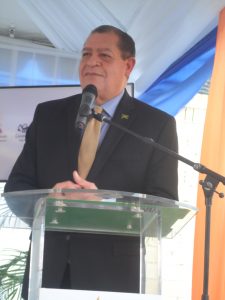
Minister of Finance Audley Shaw rolling in increased taxes.
Corporate Jamaica paid in $11.15 billion in corporate taxes, to June 2017, a huge 32.9 percent more than the $8.39 billion budgeted, as companies continue to benefit from an improving local economy, with low inflation and increasing demand.
The 2017 intake, translates to a 32.6 percent more than the amount collected in 2016 as businesses post increased profit, from moderate growth in the economy. Government collected $8.4 billion from companies to June 2016, 24.6 percent more than the $6.75 billion projected. In contrast, tax collected from dividend payments surprisingly fell to $229.5 million versus $293.7 million budgeted and $369.2 million collected to June 2016. The reduction for the first quarter of the 2018 fiscal year is likely to be purely one of timing. Dividends paid by NCB Financial Group and Scotia Group would translate to payment of over $400 million in dividend tax. Dividend paid by 4 of the largest listed companies during April and May, show that just over $800 million in tax on dividends should have been paid over to June this year.
The data shows that the budget forecast for the current Fiscal year for corporate tax revenue is in line with the intake for 2016.
 The total number of workers employed in March climbed by 19,100 persons to 1,204,800, up from 1,185,700 in December and led to the unemployment rate falling to 12.2 percent.

 Jamaica garnered US$752 million in
 Economic activity in Jamaican in the March 2017 quarter was virtually zero, according the data put out by

 Jamaica’s Non–Traditional Domestic Exports jumped sharply in the March 2017 quarter to almost equal Traditional Domestic Exports with just US$9 million separating the two.
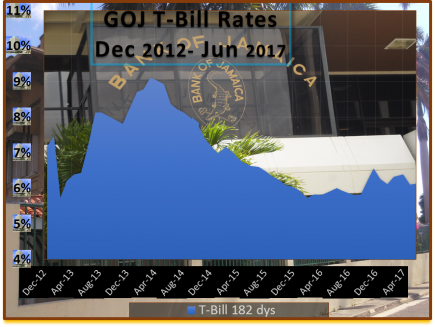 Bank of Jamaica is dropping the 30 day repo rate as its policy rate effective July 1st. According to the central bank, “its policy rate will be the interest rate that it pays on overnight deposits held by deposit‐taking institutions at Bank of Jamaica currently 3.75 per cent per annum.”
 Government of Jamaica fiscal deficit dropped by $7.6 billion below budget to end at just $4.2 billion for the first two months of the 2017-18 fiscal year. Unbudgeted inflows of $5.2 billion and reduced expenditure of $1.9 billion versus budget were mostly responsible for the improvement.
 Inflation in Jamaica after rising 0.4 percent in January and March and 0.3 percent in April has now fallen to just 0.1 percent for May this year, half of the 0.2 percent rise in February.