The economy’s recovery was highly underestimated by GOJ, with taxes on imports rising 22 percent faster than original estimates; nowhere was the forecast understated than in the tourism sector that has thrown up revenues over 100 percent in the first three months of the current fiscal year.

Faster tourism recovery in 2021 than expected
Up to June data on revenues collected shows that the sector is bouncing back by more than twice what was estimated with Travel Tax the best indicator as to visitor arrivals jumping 137 percent above estimate and accommodation Tax rising 90 percent above forecast to $367 million from a forecast of $194 million. The absolute numbers may not be meaningful in the overall fiscal income, but the percentage change tells a significant recovery story.
Travel Tax was projected to bring in $1.22 billion, actual collection ballooned to $2.9 billion in the three months to June this year, up 137 percent over forecast and is 175 percent higher than the inflows for the three months to June Last year, when just over $1.14 billion was collected with $1.6 collected in April. Elsewhere GCT on imported items surged 27 percent, resulting in $4.9 billion being collected above the forecast of $18.2 billion.
Total tax revenues are up 22 percent ahead of the $107 billion collected to June last year, with GCT on local goods and services up 16 percent and contractors levy up 38 percent, which is in line with increased cement sales for the quarter over that of 2020.
The implications of the sharp increase in the above revenue segment are that the economy is growing faster than the government agencies forecasted for the current fiscal year and, in particular, the extent of the recovery in the tourism sector.



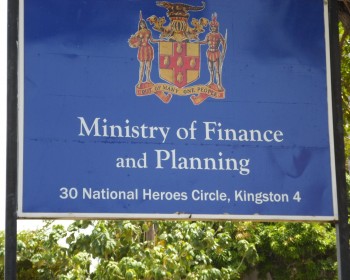 Government of Jamaica fiscal deficit dropped by $7.6 billion below budget to end at just $4.2 billion for the first two months of the 2017-18 fiscal year. Unbudgeted inflows of $5.2 billion and reduced expenditure of $1.9 billion versus budget were mostly responsible for the improvement.

Phillip’s missed opportunity to shine
This publication made some suggestions in an article in January, on minimum wages and taxes that mirrors some of Dr. Nigel Clarke’s basket of gifts to the country ahead of the general elections due by 2020.
Dr. Peter Phillips – former Minister of Finance
Earlier this year, Phillips proposed to lower the GCT rate to help those less privileged in the Jamaican society but completely missed the mark with a proposal to hike the minimum wages substantially, to spur economic growth sharply.
In the January publication captioned, “Minimum wage hike will hurt Growth,” Phillips was urged to revisit the GCT reduction issue and back off the idea of a major hike in the minimum wage that would lead to many minimum income earners losing jobs. We note that Phillips in recent days again recommended a cut in the GCT even as one of the shadow cabinet members came out publicly against it shortly after it was initially announced.
In the January 2020 article we stated, “Between 2008 and 2017, the Jamaican government increased taxes sharply to close the fiscal deficit and thus reduced disposable income significantly, which led to lower consumption. The cuts also led to a decline in productivity as businesses had to absorb higher unit costs per output as sales contracted. With the economy growing for the past five years, tax intake has been much higher in each year from the 2017 fiscal year. It is time we return some of the taxes imposed during the years of austerity back to the people”.
“What is needed is not just an arbitrary cut in one tax or the other, but a proper assessment of those that are inhibiting production. Yes, GCT should probably be reduced to 15 percent, which could well result in increased inflows as the lower tax rate would lead to increased consumption and less leakage.
Nigel Clarke, Jamaica’s Minister of Finance
Corporate taxes need to be reformed. Businesses and their owners should pay one rate based on profits. The tax rate on companies should be around 20-25 percent with no taxes on dividends. As such, shareholders would pay taxes on profits once not twice, with the latter being the case. All asset taxes that drive up borrowing costs must be removed and thereby reduce the distortion in the system. Payroll tax credits must be eliminated; they are a wasteful use of the country’s taxes. The excessive tax on financial institutions must also be eliminated as they are taxes on the end users, not the financial institutions, and they drive up the cost of production.”
“On close examination, there are several other categories of taxes that should be removed as they bring in a relatively small portion of the country tax revenues, leaving around ten in all. This would reduce the government’s operating cost for tax collection. Small businesses are burdened with all sorts of tax compliance issues and need relief from them so that they can focus on running their businesses and earning a decent income for their owners.”
“The above are some of the tax proposals that Phillips and his team should be addressing as reforming them could push economic growth.” He missed the opportunity to drive the agenda on tax reform, an important area of the economy that could stimulate growth and make lives easier for all.”
Phillips left the way completely clear for Clarke to strike some important blows and push the gap between the two parties further apart. This publication notes that a number of the above proposals made were addressed in Minister Dr. Nigel Clarke’s opening budget presentation on Tuesday. Importantly, his comments about the Asset tax not being a cost on the banks and is an inhibiting factor for faster economic growth is precisely what this publication has been saying for some time.
The minister continued on a sound footing in slowly reforming the system. We are confident that he will continue the process of reform to remove most of the other distortion in the system as tax revenues increase. The minister’s SME tax credit of $350,000 is welcomed, but that will only benefit businesses with profit. What is need is a bolder move to help ease pressure upfront. In this regard, these small businesses should be freed from some of the employer’s portion of payroll taxes like NHT, education taxes and HEART, and it is not too late to implement these.