 Consumer prices rose sharply in September, this year, as recorded by the consumer price index. The inflation rate climbed 0.7 percent according to the Statistical Institute of Jamaica (STATIN) and resulted in year-to-date inflation of 3.7 percent.
Inflation for the past twelve months is 4.6 percent and the fiscal year-to-date movement at 2.6 percent. The rise in September comes against the back ground of the rate moderating in July and August.
According to Statin, “the main contributor to this movement was the 2.6 percent rise in the division ‘Housing, Water, Electricity, Gas and Other Fuels’ due mostly to higher electricity rates. The rise in the division’s index was moderated by a fall in water and sewage rates.”
‘Food and Non-Alcoholic Beverages’ went up by 0.4 percent influenced mainly by a 1.1 percent increased for the class ‘Vegetable and Starchy Foods’. Other notable increases were for ‘Restaurants and Accommodation Services’ (1.0 percent) due to increase in prices for meals consumed away from home and ‘Education’ (2.0 percent) as a result of higher tuition fees.
Inflation jumps in September
Repo rate holds in sluggish T&T economy

Down town Port of Spain, Trinidad.
The Trinidad and Tobago economy remains growth-challenged, but early signs of improvement have appeared in the energy sector as exploration activity picked up in the third quarter.
Output of natural gas is expected to rise with the coming on-stream of the Juniper project, the Central Bank of Trinidad and Tobago stated recently, flowing from their decision to hold the bank’s repo rate at its current level of 4.75 percent.
The report goes on to state that “growth in energy and energy-related production is expected to eventually spur activity in other (non-energy) sectors that are still subdued.” “Available indicators on construction and distribution point to continued sluggishness in these areas. However, official statistics suggest that the unemployment rate has remained relatively steady at just under 4 percent on average in 2016.”
The rate of increase in general prices in Trinidad and Tobago remained low. Data from the Central Statistical Office point to headline inflation of 1.4 percent in July 2017 (12-month basis), with core inflation, which excludes food prices, also at 1.4 percent. The average for both these measures over the year to July was 2.2 percent and 2.1 percent respectively. Food inflation measured 1.4 percent in July 2017 compared to 0.5 percent in June.
The central bank reported that “Interest rates in the banking system have remained virtually unchanged for the year so far. The strongest loan categories in July were for consumers (4.1 percent growth year-on year), including the sub components for real estate mortgages (5.0 percent) and credit cards (8.3 percent), while credit to businesses increased by just 0.3 percent.”
“Liquidity in the commercial banking system remained steady in the third quarter of 2017 with banks’ excess reserves at the Central Bank averaging around $2.8 to $3 billion. There was a small increase in the TT-US interest rate differential on 3-month Treasuries from 14 to 16 basis points between July and mid-September 2017.”
J$ revalues to $128.58 vs US$ – Wednesday
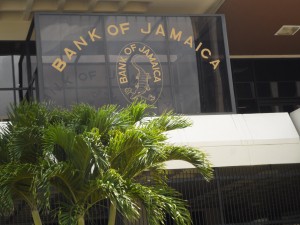 The selloff of US dollars continued in forex market activities on Wednesday.
It cost dealers on average, 9 cents less in buying the US dollar than on Tuesday.
Inflows of all currencies into Jamaica’s forex market that rose to US$53.87 million on Wednesday, up from US$48.99 million on Tuesday. Dealers sold US$52.24 million versus US$51.71 million, previously.
US currency purchases, accounted for US$47.72 million on Wednesday at an average rate of $127.89 compared to Tuesday at US$40.33 million at $127.98. Dealers sold US$47.28 million at an average rate of J$128.58 versus J$128.87 for US$43.46 million previously. The selling rate for the US dollar is coming off from a peak of $131.31 on September 15, with the Jamaican dollar recovering 2 percent of its value since.
The selling rate for the Canadian dollar rose to J$103.43 from J$103.25 at the close on Tuesday. The British Pound climbed to J$168.53 for buying the British currency versus J$168.13 on Tuesday and the euro just rose in value against the Jamaican dollar, to J$153.48 to buy the European common currency, versus J$151.18 previously.
Shaw must cut taxes in 2018

Image courtesy of cooldesign/FreeDigitalPhotos.net
All available data since 2016 show that the Government of Jamaica never needed to raise taxes to cover the lost revenues from the hiking of the threshold to $1.5 million, as revenues continue to run well ahead of forecast in the last fiscal year and for the current one.
IC Insider.com gathers that while the government never wanted to increase taxes to cover the cost of the increased threshold, as data suggested that there that the lost revenues would be covered by increased revenues, the International Monetary Fund insisted that they had to increase taxes to cover the lost revenues.
With revenues running well ahead of forecast for two years running its time government start planning to cut taxes in next year’s budget forecast.
Last fiscal year revenues were $8.6 billion better than projected, just about $2 billion short of the cost of the threshold but expenditure was $5 billion lower than planned for a net improvement of nearly $14 billion, much greater than the revenues foregone.
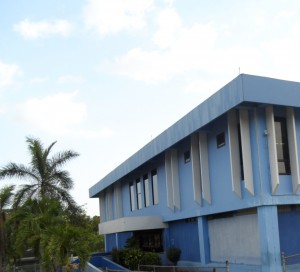
Collector of Taxes office, Constant Spring, Kingston.
After a mere 5 months of the fiscal year to August, the Ministry of Finance has amassed a tidy $14.6 billion more than forecast for the government coffers. If the trend continues by the end of the fiscal year we should be looking at $30 billion more than budgeted and would be more than the taxes foregone by the increase in the tax threshold.
In two years, government has amassed excess tax revenues of $45 billion and assuming there were no major adjustment in the tax threshold, to $70 billion.
The increased revenues over the past three years are well ahead of the increase from new taxes levied and after taking in account a major reduction in PAYE contribution in 2016-17. Not only are the inflows running well ahead of the prior year for the last two and a half years, increased revenues are well above forecast. Two factors are contributing to this buoyancy, improved economic activities and increased taxes, helped by strong increases in corporate profits that is pushing revenues higher.
GOJ revenues inflows have been extremely buoyant since the drop in budgeted inflows for the fiscal year to March 2015. While 2015 fiscal year came up short of budget by $16 billion with revenues at $412 billion, 2016 came in with $50 billion more than the out turn for 2015 at $456 billion and 2017 with total revenues of $514 billion was $52 billion more than for 2016.
Interest cost ended $2 billion lower than projected to August this year and should and the cost should decline even more going forward, with the recent cut in Treasury bill rates by over 50 basis points.
The government gave up $10 billion in payroll taxes last fiscal year and an additional amount, estimated at $13 billion this fiscal year but the revenues are still well ahead of forecast.
With the buoyancy in tax revenues and lower interest cost on loans the government should have far more room to reform taxes in 2018 and reduce taxes as well as improve allocations for social spending.
Shaw’s abundance of riches

Minister of Finance Audley Shaw rolling in increased taxes.
The GOJ approved increased spending in the second half of the year by $10 billion but still ended the year underspending the amounts allocated to be spent by $5 billion.
After a mere 5 months of the current fiscal year to August, the Minister of Finance has amassed a tidy $14.6 billion more than forecast for the government coffers.
According to data released by the Ministry of Finance, tax revenues are $11 billion higher than originally forecasted, thanks to 37 percent surge in corporate profit taxes, that added nearly $6 billion to the surplus, and $9 billion from indirect taxes, mainly local GCT and special consumption taxes.
Government operations (GOJ) raked in a small surplus for August, pushing the year to date surplus to $5.6 billion, after capital inflows of $11.4 billion, that was originally included in the budgeted forecast. The net position on GOJ operations, is $21.5 billion better than planned and pushed the primary surplus to $52 billion or $19.5 billion better than planned.
Interest cost ended $2 billion lower than projected and should enjoy even lower cost, going forward, with the recent cut in Treasury bill rates, by over 50 basis points.
GOJ revenues inflows have been extremely buoyant since the drop in budgeted inflows for the fiscal year to March 2015. While 2015 fiscal year came up short of budget by $16 billion with revenues at $412 billion, 2016 came in with $50 billion more than the out turn for 2015, at $456 billion and 2017 with total revenues of $514 billion, was $52 billion more than for 2016.
Jamaican$ slips on increased inflows – Tuesday
 The rate the public bought the US dollar at, rose on Tuesday to JS$131.18 from J$131.09 on Monday, as dealers sold US$36.32 million compared to US$38.44 million on Monday.
Dealers bought US$51.92 million in US currency, at an average of J$130.27 versus J$129.82 on Monday when they purchased US$43.67 million.
On Tuesday, dealers purchased the equivalent of US$56.56 million in all currencies, up from US$46.95 million and sold US$37.94 million versus US$40.62 million on Monday.
The selling rate for the Canadian dollar rose to J$108.04 from J$106.17, at the close on Monday while the British Pound was more costly, with J$175.99 buying the British currency versus J$173.48 previously and the euro, fell in value against the Jamaican dollar, with it taking J$157.24 to buy the European common currency, versus J$159.32 previously.
Inflation eases again in August
The rate that consumer prices rose by, moderated further in “August with an increase in the inflation rate of 0.3 percent,” according to the Statistical Institute of Jamaica (STATIN), coming down from 0.6 percent in July and 0.7 percent in June.
“The rate of inflation for the calendar year-to-date was 3 percent,” Statin stated. Inflation rate over the last twelve months is up 4.4 percent and the fiscal year-to-date 2 percent.
“Prices for Recreation and Culture rose 1.3 percent in August” and was “due to mainly to increased prices for books and other school equipment,” Statin said. Higher prices for produce such as cabbage, potato and yam, pushed the index for Food and Non-Alcoholic Beverages by 0.6 percent, the report stated.

Prices of food increased in August.
Other divisions that recorded increases in prices are: Alcoholic Beverages and Tobacco at 0.4 percent, Clothing and Footwear at 0.2 percent, Furnishings, Household Equipment and Routine Household Maintenance at 0.1 per cent, Health at 0.2 per cent, Restaurants and Accommodation Services at 0.1 percent, Miscellaneous Goods and Services at 0.1 percent. There were no movement for the divisions Communication, Education and Transport.
Huge surge in NIR mostly temporary
 Jamaica’s international reserves surged to $4.25 billion at the end of August, with net reserves climbing to $3.67 billion, up from a net of US$2.74 billion at the end of July.
The increase came from a number of sources with the inflows from the issue of bonds by the Government of Jamaica (GOJ) as well as inflows from the foreign exchange market.
“The increase in the NIR of US$933 million in August 2017 was attributed mainly to receipts from Eurobond of US$834.4 million by GOJ, net purchases of foreign exchange by BOJ from authorised foreign exchange traders and issuance of BOJ USD CDs,” Bank of Jamaica confirmed in response to an IC Insider.com’s query.
“Notably, the impact of the large inflow from the GOJ Eurobond is transitory. During September, GOJ will pay approximately US$530 million (principal and interest) to investors on prepayment of two USD Bonds,” the BOJ’s response concluded.
Data for the first two weeks in September suggest that there is likely to be no new net inflows for the month from the regular foreign exchange market and the NIR could end at just about US$3.1 billion after the payout of the GOJ bonds, if BOJ does not issue new CDs to mop up the liquidity that would flow from the payout.
Tbill rates in sharp drop
 Interest rates are falling with the Treasury rates falling sharply in the latest auction last week.
Rates fell by 53 basis points for the 182 days Treasury bills, the most since June 2014 when it fell by 57 basis points.
The average rate fell to 5.45 percent, the lowest level since 2012 and broke decisively, the resistance level at just under 6 percent and seems set to reach just around 4 percent before too long. Investors pumped $2.63 billion into the auction for the $600 million on offer. At the same time $3 billion chased $600 million offered for 91 days, with the average rate falling to 4.985 percent from 5.49 percent in August. The decline for the 91 days instrument, is the third fall since the rate rose modestly in June, to 5.77 percent and the sixth monthly decline for 2017. The fall in the rates better aligns them with the central bank’s new overnight reference rate.
Data suggest economy grew 2-3%

Agriculture was affected is said to be affected by poor weather resulting in slow GDP growth.
Criticizing official data put out by professionals within the governmental system is not easy and sometimes unwise, but when the data seems to fly in the face of reality, cautionary warning is warranted.
The PIOJ put out data on the economy for the second quarter, indicating a 0.3 percent growth over the same period in 2016. According to one of the daily papers, the head of PIOJ stated “that the preliminary cost of damage and losses incurred was $4 billion or 0.2 percent of Jamaica’s 2016 gross domestic product (GDP), which negatively impacted the performance of key sectors, including agriculture, forestry and fishing; mining and quarrying; and electricity and water supply. Mining and quarrying, and agriculture, forestry and fishing, contracted by 10.5 and 8.5 percent, respectively.”

‘Vegetables and Starchy Foods’ is said to have suffered from heavy rains in the Q2 period.
While the Statistical Institute of Jamaica is the appropriate place for GDP data, the PIOJ do have the capability to do reasonable estimates. The problem is that data on agriculture to a large extent, are “quesstimates” coming out of the Ministry of Agriculture as far a domestic crop production is concerned. The data they put out in 2016 is at a huge variance with what other more credible data suggests. In the second half of 2016, the “quesstimates” showed agriculture growing at an astonishing 29 percent in the third quarter and 16 percent in the December quarter following the 9 percent increase in the second quarter of the year. The figures for second quarter in 2016 would have been more but for the fact that the Appleton sugar factory was closed for the entire season.
Where did this strong 2016 growth come from all of a sudden and why has it stopped in 2017? The authorities would want us to believe that 2017 fall is due to floods in the quarter. The only problem with that assertion is that the floods were mostly within the Clarendon area. Clarendon mainly produces livestock, cane and citrus, there is no evidence that production of these crops were badly affected. Production of most ground provisions would not have been affected and these are mostly grown in Manchester, Trelawny and St. Elizabeth. Vegetables in some areas may have been affected but hardly likely, since St Elizabeth would have most likely welcomed the rains for the vegetables growing. The most likely factor is that the ministry assumed damage to crops beyond what actually took place and secondly and most importantly they used wrong estimates for most of 2016.

20 South, Apartment complex currently under construction in Kingston and adding to growth.
Except for sugar canes that can be harvested mechanically, it is not possible, to enjoy a major increase in agricultural production against falling employment. That there could be a huge variance between production and employment in 2016 suggest that there were error in data gathering. Sectorial GDP growth of 9, 16 and 29 percent while employment in the sector declined 7 percent, rises just 3 percent and falling 4 percent respectively seem improbable.
The strange thing is that employment in the sector rose 3 percent in the first quarter of 2017 but GDP in the sector is down 4 percent. Why would the farming community be employing 6,700 more workers, if production is falling as the PIOJ is suggesting?
GCT collected in 2017 to July on local goods and services came in at $28.751 billion, 12.5 percent higher than for same period in 2016 of $25.57 billion and the 2016 figure grew just 4 percent from $24.58 billion collected to July 2015. Tax revenues are up to $153.63 billion from $142.62 billion some $11 billion or 7.7 percent higher, after an $8 billion fall in PAYE revenues offset by some tax increases. The data suggest that the economy is probably growing around the 2-3 percent range in real terms. Higher growth is partially backed up by employment numbers of approximately 36,000 over the past year which suggests growth closer to 2 percent. JPS data shows electricity net sales, rising by a strong 7.6 percent in the second quarter of the year a 5.5 percent in the half year suggesting that growth cannot be far from these levels. In contrast growth in net sales was slightly down in both periods in 2016 and was consistent with low growth in that year.
 According to the Statistical Institute of Jamaica “Agriculture, Forestry, & Fishing: Data on agricultural production and production expenses are collected from several sources. With respect to commodities that are mainly for export, production information is obtained from commodity boards and International Merchandise Trade Statistics. For animal farming, fishing and commodities produced mainly for local consumption, data on quantity and prices are obtained from the Agricultural Marketing Information Division of the Ministry of Agriculture & Fisheries (MOA).”
“Information on cost of production is obtained from the Agricultural Marketing Information Division and commodity boards. Financial statements from large farms and studies undertaken by the MOA are incorporated into the compilation of the estimates.”
“Annual estimates: the first estimate is preliminary and this is followed by two subsequent revisions. However, estimates are open for revisions when new or improved data become available.”
“Quarterly estimates are revised when those of the subsequent quarters of the same calendar year are released. Estimates of previous years are only revised at the time of release of the first quarter estimates.”