Jamaica’s inflation up 0.8% in March

Inflation in Jamaica rose 0.8 percent in March and brings the year to 0.7 percent date data released by the Statistical Institute of Jamaica (STATIN) shows and the fiscal year inflation to 3.4 percent.
According to Statin, the movement was mainly attributable to a fall of 0.9 percent in the index for the heaviest weighted division Food and Non-Alcoholic Beverages and a 1.5 percent rise in the Housing, Water, Electricity, Gas and Other Fuels division at resulted from a 2.7 percent increase in the group ‘Electricity, Gas and Other Fuels’. Also contributing to March’s inflation rate was an increase of 1.1 percent in the index for the ‘Transport’ division. This was mainly attributable to the rise in petrol prices.

 

Jamaican economy grew 2% in 2018

Mining was the biggest contributer to GDP gains in 2019

Preliminary estimates by the Statistical Institute of Jamaica (Statin) puts growth in the Jamaican economy for the 2018 at 1.9 percent, the highest in 11 years bettering 1.7 percent achieved in 2011 and almost twice the one percent rise in 2017.
The increase is “due to a 5 percent growth in the Goods Producing Industries and a 0.8 percent increase in Services Industries,” Statin stated.
The fourth quarter last year, grew 2 percent compared to the fourth quarter of 2017. This growth is due to increases in both the Services Industries and the Goods Producing Industries of 1 percent and 4.9 percent respectively.
For the full year, growth occurred in all the Goods Producing Industries: Agriculture, Forestry & Fishing up 3.1 percent, Mining & Quarrying up a strong 25 percent mainly due to the reopening of Jiuquan Iron and Steel Company, Alpart refinery, manufacturing a moderate 2 percent and Construction up 3.7 percent.
For the first quarter of 2019, GDP is expected to accelerate at a faster pace than for 2018 and will be strongly, impacted by a surge in tourism stopover arrivals that is up in double digits for the first quarter.

Tourism drives Jamaica’ GDP to 4%

Big increase in visitor arrivals in the first quarter of 2019 set to give Jamaica’s GDP a big lift in the quarter.

The huge increase in tourist arrivals in the first quarter of 2019 is likely to result in a 4 percent growth in the country’s gross domestic product (GDP) for the first quarter of the year, data compiled by IC Insider.com suggest.
While the category of Hotels and Restaurants that tourism sector falls only accounts for around 7% of total GDP, the huge increase in stop over arrivals being enjoyed by the sector in the March quarter, will most likely more than compensate for its size in GDP computation and could add as much as one percentage point, to the quarter’s growth.
According to the Jamaica Tourist Board, “stopover arrivals in January 2019 were 216,509 an increase of 11.3% or 21,900 additional arrivals over the 194,609 recorded in January 2018.” Importantly, the arrivals from USA, the country with the high tourism spend is up 20 percent and would have contributed more in inflows as a result of the higher spend even as number of nights they stayed slipped a bit form 2018.

Construction sector is also expecetd to continue to lift the economy in 2019.


February, is up by 14.9 percent, Minister of Tourism Edmund Bartlett told The Sunday Gleaner and reported by that publication on March 3. The Jamaica Observer stated, “data provided by Delano Seiveright, communications strategist and advisor in the Ministry of Tourism, show that total visitor arrivals for the period March 1-17 amounted to 148,052, a 24.8 percent increase over the 118,597 recorded for the same period last year. Breaking down the numbers, Seiveright said that for the period March 1-17 this year Montego Bay welcomed 125,069 visitors, an increase of 22.7 percent compared to 101,967 for the same period last year, while the numbers for Kingston were 22,983, up 38.2 percent over the same period last year.”

Jamaican Government cuts transfer tax to 2%

Effective April will government will reduce transfer tax from 5 percent to 2 percent, the Minister of Finance Dr. Nigel Clarke told Parliament, in his maiden budget presentation.
The minimum business tax for all businesses and asset taxes for non-financial businesses will be abolished effective April. The taxes were a nuisance and discriminatory in nature, lacking equity as they did not equate to the size of all businesses in the country, resulting in smaller businesses bearing a larger burden than larger ones.
The threshold for filing GCT will be moved from $3 million to $10 million, a level below which no GCT return will have to be filed. The minister stated that the change will result in 3,000 businesses not having to file GCT returns.
Stamp duties relating to certain transactions will be removed and substituted by a simple fee of $5,000, equal to the cost of providing the service. They will also abolish ad valorem stamp duties and replace them with a flat fee of $5,000.

Anya Levy of ReMax Elite Realtors

The amount on which estate tax is payable, will move from $1 million to $10 million effective April. The Minister stated that the measures will result in $14 billion in taxes being given up, by the government.
The minister also stated that the primary surplus will be lowered from 7 percent of GDP to 6.5 percent and was arrived at in discussion with an IMF staff.
IC Insider .com spoke to two noted individuals within the real estate market who are positively impacted by the news on stamp duty and transfer tax reduction. Deborah Cumming of Century 21 said “that is fantastic news, it will make a tremendous difference to the industry and the economy.” While Anya Levy associate broker at ReMax Elite. “that is fantastic, it will give incentive for sellers to move their properties and increase volume. It’s the right move and government will make up the taxes given up by increased volumes.”

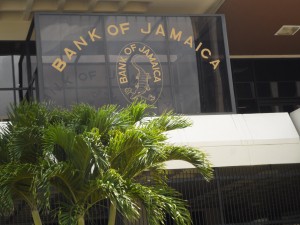
BOJ cuts interest rate & cash reserves

Bank of Jamaica announces its decision to lower the policy interest rate (the rate offered on overnight placements with Bank of Jamaica) by 25 basis points to 1.50 percent.

The central bank also announced a cut in cash reserve requirement of commercial banks by 3 percentage points to nine percent effective the begining of March.This reduction will increase liquidity in the financial system by $16.8 billion and thereby support
the expansion of credit to businesses and households at lower rates and at better terms, the central bank stated.
The liquid asset requirement is also being reduced by the same amount.

More females employed

Females accounted for 7,600 persons of the 7,800 persons between October 2017 and October 2018 to 261,800 persons employed as ‘Professionals, Senior Officials and Technicians’ that had the second largest increase in employment in the period in Jamaica, data from Statistical Institute of Jamaica (Statin) reported today.

The largest change in employment by industry group was in ‘Real Estate, Renting & Business Activities’ with an increase of 9,700 persons, (11.9 percent) moving from 81,700 in October 2017 to 91,400 in October 2018. Employment, however, decreased in ‘Transport, Storage and Communication’ by 7,500 persons (9.4 percent) to 72,000 over the same period.
Statin stated, “the unemployment rate was 8.7 percent in October last year and represented a reduction of 1.8 percentage points relative to 10.5 percent in October 2017”. There was an increase in the number of persons employed, particularly females in the industry group ‘Real Estate, Renting & Business Activities’
The Employed Labour Force for October 2018 was 1,219,700, 14,400 or 1.2 percent higher than in October 2017.

Prices in Jamaica plunged for December

Prices in Jamaica on average, fell sharply by 1 percent in December last, bringing inflation as measured by the country’s Consumer Price Index to 2.4 percent for the calendar year. The fall in inflation for December occurred across several main categories of goods and services.
The movement in the index for the fiscal year-to-date was 2.7 percent. The rate of increase on average is well below the target set by the government for the central bank to aim at, for the fiscal year of 4 to 6 percent. Had it not been for a spike in the rate of exchange between April and September last year, the rate for the year would have been even lower than the final numbers reported.
Food and Non Alcoholic Beverages and the Transport division declined by 1.5 percent. The fall in Food and Non-Alcoholic Beverages resulted from a decline of 6.2 percent in Vegetables, Starchy Foods due to increased supplies of agricultural produce the Statistical Institute of Jamaica (STATIN) stated. The decrease in the Transport was due to lower prices for petrol, while Housing, Water, Electricity, Gas and Other Fuels fell by 1.3 percent, due mainly to reduced rates for electricity, sewage and water rates.

Xmas cash suggests higher growth – BOJ

Currency in circulating increased at a much faster pace that Bank of Jamaica projected in early December. According to the Central Bank “the faster currency growth possibly reflected improved GDP growth, employment and retroactive wage settlements during the period.”
During the last six days of December, Bank of Jamaica recorded net currency issue of $5.457 billion to financial institutions. This was substantially above the Bank’s projection for net issue of $412 million as well as the $860 million currency issue for the corresponding period of 2017 and average of $1,396 billion over the past 5 years. The currency issue for the week contributed to an overall growth of $23.6 billion or 21.4 per cent in the currency stock for December 2018, above the Bank’s projection for growth of $18 billion or 16.5 per cent. The increase for the month also exceeded that for December 2017 of 16.5 percent and was the largest growth in December since 2007.

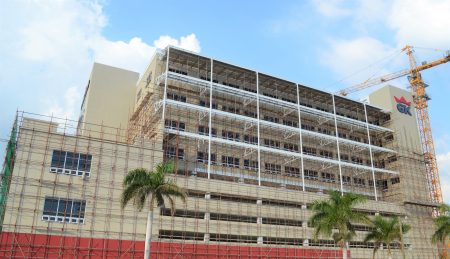
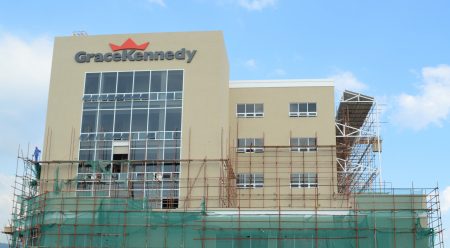
Grace new HQ close to the end of construction in downtown Kingston

At the end December 2018, the currency stock amounted to $133.5 billion, representing an annual increase of 20.4 percent, compared to annual growth of 12.9 per cent at end December 2017. The Central Bank stated that “when the estimated change in consumer prices is taken into account, the real annual growth in currency at end-December 2018 was 15.9 per cent, compared to 7.3 per cent for the corresponding period in 2017”.
The Bank is anticipating, that most of the currency issued during December, will be redeemed in January. The release from the bank stated that, “for the last five years, net currency redemption in January averaged 75.8 per cent of the net currency issued in the preceding month.”

Jamaica’s growth crawls along at 1.8% PA

Construction secrtor contributed to increased growth in Q3.

Economic growth in the Jamaican grew 1.8 percent in the third quarter of 2018 over the similar quarter of 2017. The performance result in gains in the Goods Producing and the Services Industries.
The goods producing sector grew by a strong 5.1 percent but the services sector was up just 0.7 percent over the similar period in 2017, the report from the Statistical Institute of Jamaica (Statin) stated in their release on the performance on the local economy for the third quarter of the year.
According to Statin, all industries within the Services Industries recorded higher levels of output with the exception of Electricity & Water Supply which declined by 0.1 percent and the Producers of Government Services which remained unchanged for the period. Increases were recorded for: Wholesale & Retail Trade; Repairs; Installation of Machinery & Equipment (0.8 percent ), Hotels & Restaurants (2.1 percent ), Transport, Storage & Communication (1.4 percent ), Finance & Insurance Services (0.7 percent ), Real Estate, Renting & Business Activities (0.5 percent ) and Other Services (1.2 percent ).

Mining was the biggest contributer to GDP gains in Q3.

Hotels & other short-stay accommodation benefited from a 3.8 percent increase in foreign national arrivals, the report stated. The Goods Producing Industries grew due to increased output in Mining & Quarrying, up 51 percent due mainly to the reopening of Alpart refinery and Construction up by 3.7 percent due to increased activities in the civil engineering sub-group. The major contributor to this growth was work associated with the continued expansion of road infrastructure. However, Manufacturing declined by 0.3 percent due mainly to lower production levels, in petroleum refining and non-metallic minerals. Agriculture, Forestry & Fishing remained unchanged. The growth for the third quarter brings real growth for the year to September to 1.8 percent over 2017. Gross domestic product for the calendar year, grew 0.9 percent in 2015, 1.4 percent in 2016 and 1 percent in 2017.

BOJ senses pick up in GDP growth

Image courtesy of arztsamui/FreeDigitalPhotos.net

Economic activity may has picked up pace in the latter half of the year compared with the first half, with a strengthening in real GDP growth and employment over the second half of the year, Bank of Jamaica is suggesting.
The central bank was commenting on the increase in money in circulation for December. “This projected acceleration in the growth in real currency demand for December 2018 is consistent with the higher growth rate that has been evident between August and November 2018,” the central bank stated. Economic growth in the June quarter was preliminarily placed at 2.2 per cent by the Statistical institute of Jamaica.
The bank went on to say, “when the forecasted change in the general level of consumer prices is taken into account, the projected real growth in currency for the 2018 is 10.5 percent, which is higher than the real growth of 7.3 percent for the previous year.”
The projected currency stock of $128 billion at end-December 2018 represents an annual growth of 15.5 percent, an acceleration when compared with the 12.9 percent recorded at December 2017.
Bank of Jamaica projects that the value of currency issued by the Bank will increase by approximately $18 billion (or 16.5 percent) in December 2018 to end the month. The central bank states that the projected growth for the month is broadly consistent with the 16.5 percent growth recorded for December 2017 as well as the five-year average growth rate of 17.3 percent for December.
BOJ net issued $4.2 billion in currency for December up to 14, this year (representing a 3.8 percent growth for the month to date). This compares to net currency issue of $1.4 billion over the same period in 2017.