Seprod shares attract nearly 4,000 applicants

Seprod shares sold at $24 each.

Many investors who applied for Seprod’s shares that were sold publicly in October will end up getting a relatively small allocation with nearly 4,000 applications chasing the 91.9 million Seprod shares that were offered for sale in October.
According to the release “Facey Group Offer of Seprod Ordinary Shares based on the broker’s preliminary numbers, the indication is that they received 3,799 applications.
“NCB Capital Markets advises and due to the large number of subscribers for the Offer, the process is taking longer than anticipated.” NCB Capital Markets advised that it is in the process of reconciling the applications and verifying payments received and has requested approval to provide the Basis of Allotment on Monday, November 12, 2018.
Based on the number of applications, the average allocation would be around 24,000 shares each but with NCBCM allocated 10 million units the average falls to 21,000 units however 45 million units were set aside for exiting Seprod’s shareholders, staff, current and past directors.
The shares that were offered for sale at $24 traded on the Jamaica Stock Exchange today at $39 each.
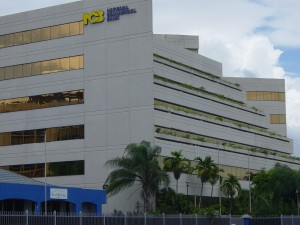
Record profit for NCB Financial

NCB had a good 2018 fiscal year with strong profit gains.

NCB Financial Group recorded record net profit of $28.6 billion for the financial year ended September 2018 with net profit attributable to the group’s stockholders of $28 billion, an increase of 46 percent or $8.9 billion over the prior year.
Based on the results an interim dividend of 70 cents per ordinary stock unit will be paid on December 7, to stockholders on record as at November 23, 2018.
Importantly, loans and advances, net of provision for credit losses, grew by 70 percent over the prior year to $372.6 billion, but was helped by the acquisition in 2017 of the majority shares and the consolidation of Clarien bank in the group financial. The inclusion in the group’s financial increased the portfolio by over US$700 million the company indicated. For the year, “there has been sizeable growth in the Jamaican loan book totalling $56.1 billion”, the company said. In addition, credit card receivables increased by 14 percent and the Cayman portfolio grew by 67 percent. Non-performing loans totalled $18.2 billion at September 2018 (September 30, 2017: $5.4 billion) and represented 4.8 percent of the gross loans compared to 2.5 percent as at September 30, 2017. This increase was due to the inclusion of Clarien which has a non-performing loan ratio of 11.8 percent.
 Customer deposits increased by $196.4 billion or 68 percent, to $484.8 billion, again primarily driven by the consolidation of Clarien which has deposits in excess of US$1.1 billion. The Jamaican deposit taking segments accounted for a total combined increase of 18 percent, the report to investors stated.

According to the directors of the group “for the financial year, operating income grew by 29 percent or $17.1 billion, to $76.5 billion. The growth in income was primarily driven by: Gains from foreign currency and investment activities increasing by 102 percent or $7.9 billion, resulting from an improving macro-economic environment coupled with high levels of JMD liquidity and declining interest rates generating a high demand for debt securities. Increased net interest income of 18 percent or $5.4 billion. The improvement was primarily attributable to the consolidation of Clarien’s results and growth in the Jamaican loan portfolio. Net fee and commission income growing by 15 percent or $2.1 billion. $1.1 billion of the increase was due to the consolidation of Clarien. The improved fees earned by our Jamaican entities were driven by an increase in the number of corporate finance, investment and financing solutions offered by NCBCM. There was also growth in fees earned by our payment services, retail and SME segments stemming from increased e-commerce and credit transactions. A 14 percent or $1.1 billion increase in premium income.”
Profit for the last quarter was $7.3 million attributable to shareholders resulting in earnings per share of $2.97 with mots of it earned from ongoing operations. For the full year EPS is $11.39 and is swollen by approximately $2 from non-recurring gains. NCB seems on target to report earnings in the $12 region for 2019. The stock traded up to $135 on Thursday and last traded at $133 for a PE of 11 times 2019 estimated earnings. With the markets PE around 15 times 2018 earnings the stock should be trading in the $175 to $200 range by the end of 2019, with dividend payments adding close to $4 to the pot. NCB Group is set to benefit from a growing Jamaican economy for some years to come and is therefore a good medium to long term investment.

Massy drops to another year’s low on TTSE

Massy traded for the second day at 52 weeks’ low.

Trading on the Trinidad & Tobago Stock Exchange closed on Thursday with Massy Holdings ending at another 52 week’s low following another one on Wednesday.
Market activities ended with 11 securities trading against 12 on Wednesday, with 3 advancing, 2 declining and 6 remaining unchanged. At the close 769,673 units valued at $3,207,315 compared to 57,944 units valued at $1,115,191, changing hands on Wednesday.
The Composite Index fell 0.34 points to 1,229.79. The All T&T Index lost 0.66 points to end at 1,688.53, while the Cross Listed Index closed unchanged at 103.77.
IC bid-offer Indicator| At the end of trading, the Investor’s Choice bid-offer indicator reading closed with 5 stocks ending with higher bids than the last selling prices and 4 with lower offers.
Stocks to Watch include, a number of companies that are exhibiting bullish tendencies and may be moving higher in the days ahead, the group includes, NCB Financial, Republic Holdings, and West Indian Tobacco.
Stocks closing with gains| Clico Investments closed with a gain of 14 cents and ended at $20.15, with 6,850 stock units changing hands, Trinidad & Tobago NGL gained 1 cent and settled at $29.50, after exchanging 9,275 shares and Trinidad Cement added 5 cents and concluded trading at $2.65, after exchanging 620,133 shares.
Stocks closing with losses| Massy Holdings closed with a loss of $1 to closed at a 52 weeks’ low of $44, after exchanging 2,300 shares and Point Lisas share fell 1 cent and ended at $3.63, with 1,400 stock units changing hands.
Stocks trading with no price change| Angostura Holdings ended market activity at $15.70, with 311 stock units changing hands, Guardian Holdings completed trading at $16.65, with an exchange of 1,000 units, JMMB Group concluded trading at $1.64, after exchanging 114,933 shares, Scotiabank closed trading with 12,756 units at $64.50 and Unilever Caribbean ended at $24, with 100 stock units changing hands.
Prices of securities trading for the day are those at which the last trade took place.

Junior Market down could slip further

Negative movement in the Junior Market continued on Wednesday with 20 securities changing hands versus 26 on Tuesday, with just 4 stocks rising, 8 declining and 8 remained unchanged leading the Junior Market Index to fall 23.46 points to close at 3,219.22.
IC bid-offer Indicator| At the end of trading, the Investor’s Choice bid-offer indicator reading flashed negative sentiments with 7 stocks ending with bids higher than their last selling prices, while 7 closed with lower offers.
The day’s activity ended with an exchange of 1,116,649 units valued at $4,642,267 compared to 1,035,040 units valued at $4,104,381 on Tuesday.
Trading ended with an average of 55,832 units for an average of $232,113 in contrast to 39,809 units for an average of $157,861 on Tuesday. The average volume and value for the month to date amounts to 136,271 units valued at $644,972 and previously 153,569 units valued at $733,759. October, ended with an average of 69,421 units valued at $347,455 for each security traded.
At the close of trading, AMG Packaging ended with a loss of 2 cents at $1.88, with 1,676 stock units changing hands, CAC 2000 finished market activity at $16, in exchanging 15,000 shares, Caribbean Cream dropped $1 to $5 and ended trading 30,000 shares, Derrimon Trading ended 20 cents higher at $2.80, with 1,526 shares changing hands, Elite Diagnostic closed 18 cents higher at $3.20, with the trading of 14,275 stock units. Eppley settled at $8, with 24,500 units changing hands, Everything Fresh ended trading of 100,000 shares, to close at $1.80, Express Catering traded 8,788 shares in closing at $8, FosRich Group traded 190,099 shares in rising 60 cents to $3.80, General Accident finished trading 1,797 shares with a loss of 25 cents and ending at $3.50. Indies Pharma ended trading of 134,987 shares at $3, Jetcon Corporation gained 10 cents to close at $3.85, in exchanging 343,605 stock units, KLE Group finished trading with a loss of 30 cents at $3.50, with 5,560 shares changing hands, Knutsford Express closed at $12, with 13,870 shares trading, Lasco Distributors ended with a loss of 4 cents at $3.95, with 76,656 shares changing hands. Lasco Financial concluded trading with a loss of 3 cents at $5.37, in exchanging 25,570 stock units, Lasco Manufacturing finished with a loss of 2 cents at $3.40, with 1,464 units changing hands, Main Event settled at $6, trading 13,118 shares, SSL Venture Capital traded 57,508 shares at $2 and Stationery and Office finished trading with a loss of 19 cents at $9.01, with 56,650 stock units.

Prices of securities trading for the day are those at which the last trade took place.

Profit jumps 71% at Eppley

Profit climbed 71 percent in the September quarter at Eppley this year, to reach $36 million from $21 million in 2017 period. For the nine months to September, profit surged a slower 56 percent to $80.7 million from $51.6 million in 2017.
Interest income rose 27 percent for the quarter, to $84.6 million, up from $66.7 million and rose 23 percent for the year to date, to $234 million compared to $191 million in 2017. Other operation income increased a strong 105 percent to $34 million from $16.7 million in the 2017 third quarter and is up 73 percent to $68.5 million for the nine months.
Net interest income grew to 47 percent of income versus 36 percent in 2017 in the quarter and 46 percent for the 2018 nine months period compared to 39 percent for 2017, the improvement resulted from cheaper funds acquired during the year as interest rates in the country fell sharply.
Administrative expenses rose 90 percent to $39 million in the quarter and increased 55 percent in the nine months period to $98 million.
Earnings per share came out at 19 cents for the quarter and 42 cents for the nine months and should end the fiscal year ending around 60 cents and for 2019 it should be in the region of 90 cents.
Gross cash flow brought in $75 million but changes in working capital and net loan inflows and the payment of $46 million, resulted in a modest decline in funds of $15 million for the nine months. At the end of September, shareholders’ equity stood at $740 million with borrowings at 2.27 billion. Loans receivables including lease and premium financing is $2,13 billion while investments in securities amounted to $363 million. Cash and bank balances the period at $384 million.
The stock traded at $8 on the Junior Market of the Jamaica Stock Exchange with a PE ratio of 13 times 2018 earnings. Net asset value is $3.85 with the stock selling at just over 2 times book value.

Nothing for Carib Cement stockholders

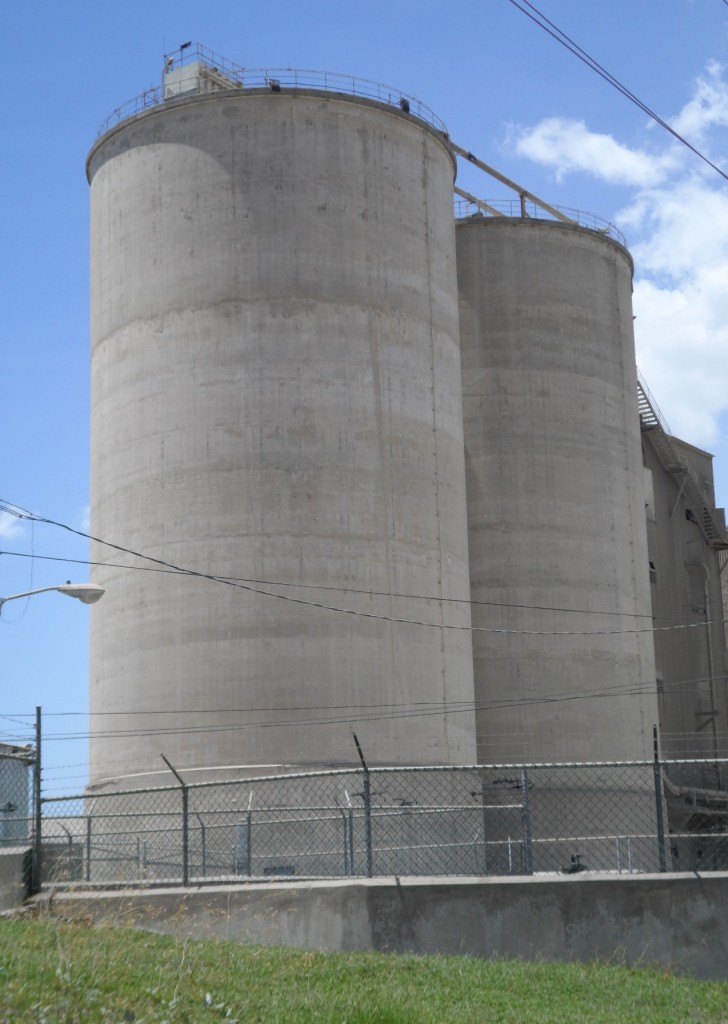
Carib Cement silos.

Jamaica’s Caribbean Cement Company slashed the cost formerly associated with leasing of Kiln 5 and Mill 5, from Trinidad Cement after acquiring direct ownership of the assets by $2 million per annum but shareholders are getting none of it the September quarterly results show.
Shareholders are unlikely to see any major benefit form the savings until 2019 when the plant upgrading costing US$45 million comes on stream and aided by a near 5 percent price increase effected in October to help offset cost increase.
For a number of years, some of the company’s shareholders have complained that the lease arrangement of the two items with the Trinidad parent was not in favour of the minority owners as it was costing too much and was not properly accounted for in past financial reports, thus suppressing the profit. With the termination of the lease and acquisition of assets it was expected that there would be a immediate noted impact on the results, that was not to be. The interim results to September, with the first period showing the full impact, indicate that shareholders are not benefitting from the $500 million cost reduction per quarter.
Data disclosed by Jamaica’s sole cement producer in their nine months interim report, show that excluding foreign exchange loss, there is a $500 million savings in the overall cost associated the acquisition of the two items formerly leased.
The equipment lease ended in April 2018 when both parties agreed to end the arrangement, leading the Jamaican company to purchase the assets. The interim figures show finance cost excluding foreign exchange loss rose of $227 million up sharply from just $11 million in 2017, in the quarter, resulting from funds borrowed to help finance the purchase of the equipment and $299 million versus $4 million year to date. Depreciation and amortisation cost rose to $342 million from $132 million in 2017 and for the nine months to $808 million from $400 million in 2017, with the increase mostly relating to the former leased equipment. The net effect is that the company enjoyed a savings of $500 million for the quarter or $2 billion per annum. None of these gains are so far flowing to the bottom-line for the benefit of shareholders.
Revenues grew 6.7 percent in the September quarter or $282 million but certain direct operating cost rose by $546 million with no indication that any attempt was made to recover the increased cost except for price increase in October. The effect is that profit before foreign exchange losses and taxation was only $148 million greater than in the prior year, when $846 million was reported.

Peter Donersloot – Managing Director

“The true story should be that the company’s performance illustrates the resilience of the its operations with the reporting of a profit even when taking a big foreign exchange loss, the company’s managing director, Peter Donkersloot, suggested in an interview with IC Insider.com. Going forward he said that, the upgrading of the plant will push the capacity to 1.2 million tonnes of cement allowing them to meet local demand and resume exports. “The upgrade should be completed and be in production around December but no later than January,” Donersloot stated. The immediate impact will be the elimination of imports that added to cost of sales and reduced profit margin, up to September”
Subsequent to the end of the quarter the price of cement was adjusted up by 4-4.5 percent Donkersloot confirmed. Information gleaned is that the increase took place for sales as of October 22 and is the first increase in 16 months.
The often talked about energy plant to be constructed to cut the huge energy bill was not an area the managing director was prepared to talk about, in light of negotiations currently in place.
As it stands, what appears to be a decision to defend their market share resulted in the company reporting much lower profit in the quarter as a result of a $464 million foreign exchange loss hitting the results for the September quarter, pulling the strong 44 percent increase in operating profit to $1.2 billion from $836 million, into lower net profit of only $305 million, versus $748 million generated for the prior year’s period.
Since the results, the stock that has been trading between $47 and $50 dropped to a recent low of $41.20.

New movie house for Portmore in 2019

Palace Multiplex in Montego Bay.

Palace Amusement is expanding with the re-entry into the rapidly growing Portmore community in 2019. The newest cinema house when complete, will bringing the number of movie houses to four.
The company in its 2018 annual report stated, “we are excited about the offerings of the four screens location to come” in Portmore. In 2004 fiscal year, the Portmore cinema brought in just over $15 million in revenue, with segment profit of $1.2 million. In 2004 the population was around 160,000 persons and with some estimates indicating it could be over the 300,000 region now, as a result, the new cinema could generate revenues of more than $100 million per year, with attendant profit to be added to the existing business. With Portmore so close to Kingston it could result in a switch in some of the existing business to the new one.
The company also stated, “It is our hope, in short order, to introduce laser technology in our cinema projection–which will offer a superior light quality for films. Additionally, we will introduce disposable 3D glasses in some of our locations–in response to customer preference and requests.”
Palace reported it best year ever with the fiscal year to June 2018 annual report states profit after tax of $152 million up from just $33 million for the full year in 2017 and earnings per share of $96.58. Revenues climbed  by 17 percent to $1.67 billion that flowed from a 25 percent rise in patronage income at Carib, 27 percent increase at Cineplex and just 11.5 percent in Montego Bay, Multiplex.
Palace share last traded at $1,500 but is on offer at $1,200 without any takers.

Carib Cement hit by exchange loss

Caribbean Cement traded at $45.200 on Tuesday.

Sale revenues at Caribbean Cement rose 6.7 percent for the quarter, to $4.46 billion from $4.18 billion in 2017 and rose 7.9 percent for the year to date, to $13.2 billion from $12.25 billion in 2017.
A $464 million foreign exchange loss hit the results for the September quarter pulling the strong 44 percent increase in operating profit to $1.2 billion from $836 million, into lower net profit of $305 million than $748 million for the prior year’s period. For the nine months to September, profit fell 28 percent to $1.3 billion from $1.8 million in 2017.
Energy cost climbed by $233 million in the quarter and $342 million year to date but other operating cost declined, with the repurchase of the mill and kiln, previously leased from Trinidad Cement with only $213 million was incurred in the third quarter versus $1.1 million in 2017. For the nine months $1.57 million was incurred compared to $3.3 billion. On-the-other-hand finance cost excluding foreign exchange loss rose to $227 million up sharply from just $11 million in 2017 in the quarter and $299 million versus $4 million year to date. Depreciation and amortisation cost rose to $342 million from $132 million in 2017 and for the nine months to $808 million from $400 million in 2017. The net effect is that the company enjoyed a savings of $500 million per quarter or $2 billion per annum as a result of the buy of the lease, but virtually none of this, benefited shareholders.
Earnings per share came out at 39 cents for the quarter and $1.54 for the nine months and should end the fiscal year ending to around $3.50, as the company reverses the foreign exchange loss in the December quarter and picks up some gains, as well as increased revenues resulting from a price increase of just over 4 percent, effective on October 22.

Carib Cement could earn $5.30 in 2019.


But IC Insider.com is forecasting a jump in earnings for 2019 around $5.30 per shares, as the plant upgrades is completed and commissioned, allowing for the elimination of costly imports that negatively impacted cost in 2018 and will see them moving back into exports.
Gross cash flow brought in $849 million but growth in receivables, inventories, addition to fixed assets, loan repayment and increased payables resulted in negative total flows thus reducing the cash on hand to $468 million. For the nine months the operations brought in $2.6 billion but working capital needs and capital transactions saw cash funds reduced from $1.67 billion to $468 million.
The sharp changes in funds is due to the repurchase of equipment that was previously leased that drove fixed assets to $23 billion from $7.7 million in 2017 and borrowing to $12 billion.
Shareholders’ equity stood at $10.26 billion with borrowings at just $12 billion and net current assets ended the period was negative $1 billion.
The stock traded at $45.20 on the Jamaica Stock Exchange with a PE ratio of 13 times 2018 earnings and sits around the centre of the market valuation. the price could double in 2019. Net asset value is $12 with the stock selling at almost 4 times book value.
Going forward, the company results should be helped from the improvement in the Jamaican economy and growth that is likely to flow from the construction sector including buildings and roads and bridges as well as from increased exports. There is also focus on cost reduction with the high energy cost being the next centre of attention.

Carib Cement chops $2B from lease cost

Jamaica Caribbean Cement Company slashed the cost formerly associated with leasing of Kiln 5 and Mill 5, from Trinidad Cement after acquiring direct ownership of the assets by $2 million per annum.
Data disclosed by Jamaica’s sole cement producer in their nine months interim report showed that excluding foreign exchange gains or loss that there was a $500 million savings in the overall cost associated with the two items formerly leased.
The equipment lease ended in April 2018 when both parties agreed to the ending of the arrangement leading the Jamaican company agreeing to purchase same. The interim figures show finance cost excluding foreign exchange loss rose to $227 million up sharply from just $11 million in 2017, in the quarter and $299 million versus $4 million year to date. Depreciation and amortisation cost rose to $342 million from $132 million in 2017 and for the nine months to $808 million from $400 million in 2017. The net effect is that the company enjoyed a savings of $500 million for the quarter or $2 billion per year.
A $464 million foreign exchange loss hit the results for the September quarter pulling the strong increase in operating profit of 44 percent to $1.2 billion from $836 million into lower net profit of $305 million than the $748 million generated for the prior year’s period. For the nine months to September, profit fell percent to $1.3 billion from $1.8 million in 2017.

Margaritaville flat profit, growth coming

Margaritaville Turks traded 531,220 shares at 20 US cents on friday

Margaritaville posted flat profit for the first quarter of the May 2019 fiscal year, with net earnings of US$290,815, down slightly from US$296,412 in 2017.
Revenue was also down moderately to $1.8 million, from $1.86 million in the 2017 period, but growth should be coming when Carnival Lines expands the port facilities in Turks and Caicos in 2019.
Cost declined modestly, with direct expenses falling to $471,386 from $483,803 in 2017, resulting in a gross profit margin of 74 percent, while administrative and other cost declined to $1.057 million, modestly down from $1.082 million in the prior period in 2017.
Earnings per share came in at 0.43 cents. For the full year to May 2018, earnings per share was 1.58 cents resulting from net profit of $1.067 million. The stock trades on the Jamaica Stock Exchange US market at 25 US cents at a PE of 16.
Equity capital stood at $5 million while current assets amounted to $2.7 million with current liabilities of $1.1 million.

Ian Dear Chairman

Going forward Chairman Ian Dear, told IC Insider.com that Carnival Line is expanding the docking facility in Turks and Caicos Islands that will allow much larger ships to dock and will result in increase in the number of passengers landing and will bring more business for the company. According to Dear, the ships currently in use can accommodate up 3,000 passengers plus crew but the newer ships will carry 8,000 passengers and they could have two of these ships on a typical day. The expectation that the first ship should dock in Turks next year. The coming on stream of the increased business will see Margaritaville adding another restaurant, with construction to commence shortly after carnival advises them of date the news ships will commence operations.