 Barita Investments advised the Jamaica Stock Exchange that a meeting of the Board of Directors will be held on December 13, 2018, at which the consideration of rights issue of the ordinary shares of the company is being considered.
IC Insider.com, has been reliably informed that a large portion of the recent $5 billion bond issue that was raised by Conerstone Investments Holdings the new majority Barita Investment shareholder is earmarked for the rights issue.
The company will need to call an extraordinary meeting of shareholders to get shareholders approval for the rights, it is therefore unlikely that if approved by the directors it will take effect until late January 2019 at best.
Barita directors to consider rights issue
December 6, 2018 by
New Elite branch now in black
December 6, 2018 by

Elite Diagnostics accounted for 31.7M of Wednesday’s Junior Market trading.
Elite Diagnostic lost money at the Liguanea branch in the first quarter of the 2019 fiscal year but the CEO Warren Chung told shareholders at the company’s annual general meeting held at the Knutsford Court Hotel on Wednesday, that October and November were two very good months at the branch.
The audited financial report on the fiscal year to June 2018 show revenues of $297 million compared to $263 million in 2017 resulting in profit of $45 million after tax credit of $9 million and $44 million in 2017 after tax expense of $15 million.
Liguanea has moved from a loss into profit and will not be a drag on profit from the original operation from now, the CEO confirmed. Data for the first quarter shows profit before tax dipped sharply from $14 million to $1.8 million the direct result of a loss at the Liguanea branch as well some cost involved in the early purchase of MRI machine to be used in the St. Ann Bay branch to be set up in mid-2019.
While revenues rose, a number of categories climbed sharply partially due to the expansion into a new location on Hope Road. Big increases were experienced in legal and professional fees that moved from just $38,000 to $3 million due primarily to the IPO in 2017, rental expense more than doubled to hit $15.8 million from $7.9 million and Utilities moved from $7.3 million to $17.5 million partially as a result of the new branch as well as some cost for storing the MRI machine to be installed in St Ann Bay location.

Elite CEO Warren Chung with a shareholder at the company’s 2018 AGM.
Cost to set up St Ann Bay is put at $20-22 million plus U$375,000 for the MRI machine. The company bought the MRI equipment early because it became available locally, but it comes at a cost as it is being stored and incurring cost as it has to be stored in certain conditions resulting in the consumption of electricity along with rent. The MRI Machine for St Ann is being stored with rental cost being incurred as well as electricity cost to maintain it at a cool temperature.
While the company has 3 other MRI competitors in Kingston, there will be no immediate competitor within 50 miles in St Ann. Operating cost at this location will less than at Liguanea with the former being staffed by 7 employees versus a planned staffing of 4 or 5 for St Ann.
For the Liguanea location to move into profit would require revenues around $36 million per quarter or 50 percent above that of the first quarter and that would likely move the profit in the second quarter well above the $1.8 million earned in the first quarter.
Elite last traded on the Junior Market of the Jamaica Stock Exchange at $2.85.
More TTSE stocks rise than fall – Wednesday
December 5, 2018 by
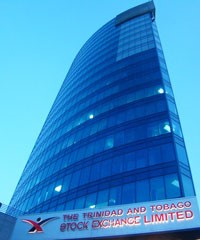 In market activity on the Trinidad & Tobago Stock Exchange on Wednesday ended with trading in 16 securities against 18 on Tuesday, with 4 advancing, 2 declining and 10 remaining unchanged on a day when both the volume a value of trading rose above Tuesday’s levels.
At close of the market the Composite Index gained 8.17 points on Wednesday to 1,305.72. The All T&T Index inched 0.38 points higher to 1,695.89, while the Cross Listed Index rose 2.21 points to close at 123.78.
Trading ended with 920,887 shares at a value of $4,495,578 compared to 261,740 shares at a value of $3,498,832 on Tuesday.
IC bid-offer Indicator| The Investor’s Choice bid-offer ended with 7 stock with the bid lower than the last selling price and 2 with lower offers.
Stocks closing with gains| Clico Investments finished trading with a rise of 5 cents at $20.20, with 70,564 stock units changing hands, Grace Kennedy closed with an increase of 15 cents at $3, with 46,000 stock units trading, Sagicor Financial ended trading 9,000 stock units with a rise of 24 cents to end at $9.24 and Trinidad & Tobago NGL finished 9 cents higher to $29.25, after exchanging 6,575 shares.
Stocks closing with losses| National Flour fell 3 cents and ended at $1.65, with 216,535 units changing hands and One Caribbean Media closed with a loss of 49 cents at a 52 weeks’ low of $10.50, after exchanging 9,350 shares.
Stocks closing firm|Ansa Mcal ended at $55 trading 111 units, First Citizens completed trading at $32.76, after exchanging 4,272 shares, JMMB Group settled at $1.77, with 538,692 shares changing hands, Massy Holdings settled at $45, in an exchange of 594 shares, NCB Financial Group completed trading 8,252 shares at $8.93, Prestige Holdings ended trading at $7.50, with 1,000 units being swapped, Republic Financial Holdings settled at $107, after exchanging 8,944 shares, Scotiabank ended at $64.74, trading 250 units, Unilever Caribbean concluded market activity at $23, with 620 stock units changing hands and West Indian Tobacco ended at $95.50, with an exchange 128 units.
Prices of securities trading for the day are those at which the last trade took place.
Barita profit jumps but 2019 to be big
December 4, 2018 by
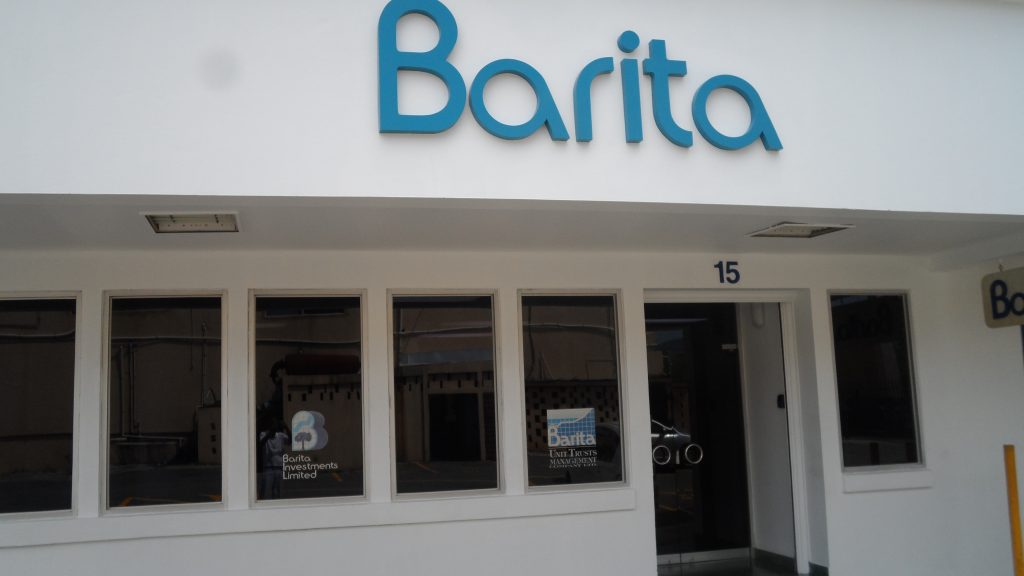
Barita last traded on the JSE at $29.
Barita Investments reported profit of $374 million after tax for the year to September, a rise of 84 percent over the 2017 results but final quarter profit after tax surged 315 percent, to $193 million.
The September quarter benefited from strong increase in net interest income moving from $69 million to $117 million and from $287 million to $424 million for the full year, even as interest rates declined sharply during the year. Gains on foreign exchange swelled earnings in this category pushing it to $145 million in the quarter from just $12 million in 2017 and to $188 million from $45 million for the fiscal year. Gain on sale of investments came in well below the level in 2017 at $25 million for the quarter down from $62 million in the quarter and from $259 million it fell to $136 million for the fiscal year. Even as realized investment gains fell, unrealised gains rose by $362 million for the year, bringing unrealized gains to $1.1 billion and shareholders’ equity to $3.26 billion.
At the close of the quarter the company had 3.3 billion in marketable securities up from $2.49 billion in 2017. Since the end of the quarter, the exchange rate that was at JS$134.65 at the close of September and $130.39 at June, is now down to just over $127 and that could mean a big drop in the value of the US dollar-based portfolio. With the movement of stock prices particularly NCB Financial and a few others, gains in investments which will now all be reported through the regular profit and loss statement will most likely wipe out the FX losses and leave a nice surplus, unless changes for the worse were to occur in the next few weeks before the end of the calendar year.
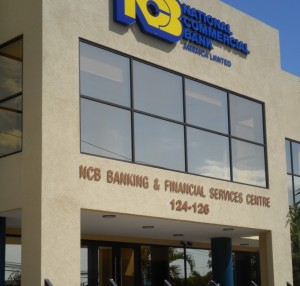
NCB stock should add gains for Barita in 2019 fiscal year.
During this year, the majority shares switched hands with Cornerstone majority owners of Myer Fletcher Merchant Bank acquiring 75 percent ownership. Barita was founded by Rita Humphreys-Lewin and quietly built into a force to be reckoned with, within the investment banking arena. The brokerage house has been seen as conservative, but observers within the financial sector are of the view that those days are over, at least for now. As a result, investors have been piling into the company’s stock as they see swelling earnings ahead. The stock which was on the IC Insider.com buy rated list for a long time finally exited recently, but there seems to be a longer road ahead before the gains are over.
Barita has so much potential for growth but was being managed in a conservative manner. Margin accounts, a big source of added revenues was not being pushed, Unit Trust was marketed more as a take it or leave it manner, than a more aggressive approach to pull in many more customers. Not even the stock market, the company best known for, has the potential been fully taken advantage of. Hopefully, the new majority owners will take a more aggressive approach, especially in light of an improving economy and one that could lead to long term growth for the economy, stocks and unit trust investing. There are some hopeful signs. One is a more aggressive dividend policy that will enhance the value of the stock. A more aggressive staff recruitment is under way that will modify the culture and drive business going forward.
IC Insider.com understands that Barita is in the process of acquiring an investment portfolio with assets of more than $10 billion from a large financial institution that they have had a close relationship with for decades. More efficient management of some resources is likely to add significant income to the operations in a full year, estimated by IC Insider.com to be around $100 million per year, not to mention the added income from the investment funds being acquired, that should contribute around $75 million in net revenues per year. But there is more, Cornerstone successfully closed a $5 billion bond issue last week at 7.25 percent per annum. Word is that the vast majority of the proceeds is slated to be used by Barita and will most likely to be invested across a wide spectrum of the investments within Barita and this could add a great deal of income and profit to the operations. With the chnage in accounting policy relating to how investment gains or losses are reported and the added income from the various changes and expansion being undertaken 2019 profit should exceed $1 billion, the first time that this nbenchmark would be acheived.
When all is said and done, the fixed income portfolio is the bread and butter earner but in this environment of a bullish stock market, it is ability of the management to take advantage of the opportunities that the market will throw up that will be the real driver of the company’s stock price in the short to medium term.
Some investors are speculating that the company could be going after a rights issue soon which could absorb much of the inflows from the just concluded bond issue. IC Insider.com had reported previously that the stocks is an ideal candidate for a split. With the current price now at $29 and the prospects looking very bright, a split seems very likely in 2019.
Persons or entities associated with IC Insider hold shares in Barita Investments.
Carib Cement locks in $170M in FX gains
December 3, 2018 by
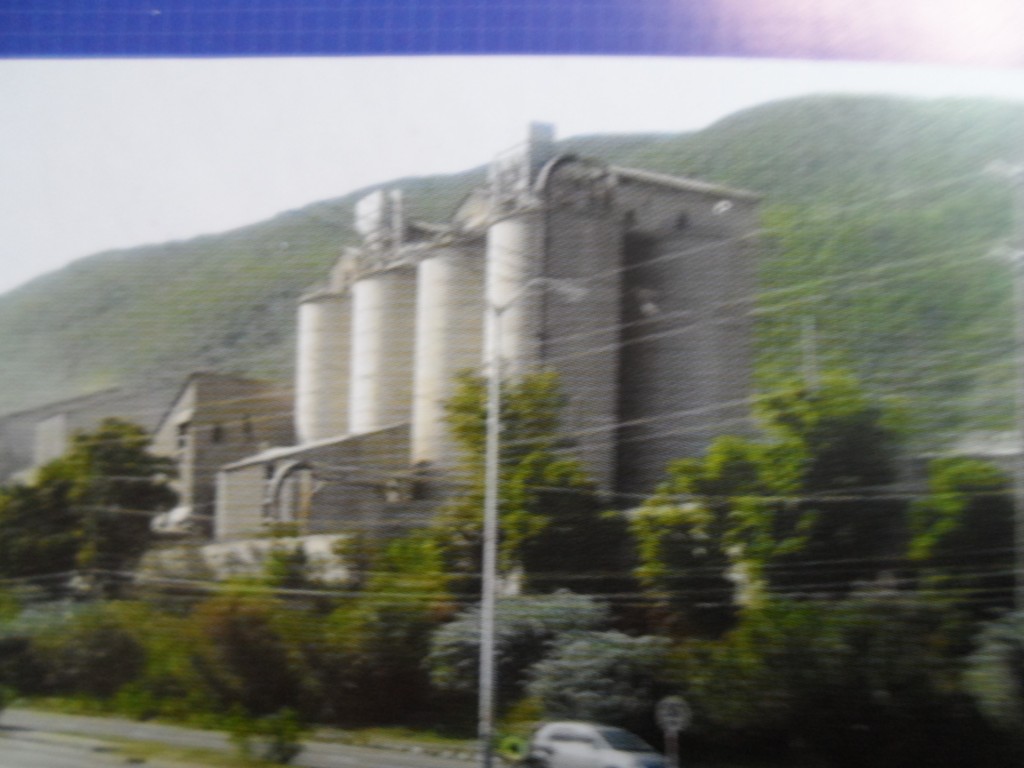
Carib Cement could earn $5.30 in 2019.
Caribbean Cement secured a Jamaican dollar denominated loan from National Commercial Bank amounting to J$3.076 billion and available in United States Dollars. The report from the company advised that Board of Directors approved the facility on November 30 the same day the facility was received.
The company advised that the proceeds from the revolving Loan Facility were received on November 30 and will be used to pay related party debt denominated in United States Dollars, diversifying the sources of funds for the company. Throughout its term, the Loan Facility will also be used for general corporate purposes, reports Caribbean Cement.
The facility is an unsecured revolving loan facility for five years at a fixed interest rate of 7.45 percent per annum.
Cement owed the parent company $11.09 billion plus $1 billion due short term as of September, the September interim results show. The amounts were contracted in US dollars and resulted in devaluation losses of $464 million. Since September, the exchange rate swung in favour of the Jamaican dollar by over J$7. Carib Cement will enjoy a big foreign exchange gain and a reduction in the amount due on the  loan to around US$65 million as a result of the revaluation of the local dollar, once NCB facility fund is used to pay down the loan from the ultimate parent company. As of today, the exchange rate is JS$127.4623 to the US dollar and on September 30, the average rate was $134.6486, a gain of more than J$7. The amount received for the loan amounts to just over US$24 million and has cut J$174 million from the devaluation losses incurred in the September quarter. The revaluation of the Jamaican dollar to date have reversed another $470 million in losses incurred on the amount of the loan that will not be paid off, with the combined savings being $640 million.
The facility, will allow the company to pay down the overseas loan from cash flow from its operations in the order of J$4-5 billion per annum. By the end of 2019, the foreign loan exposure should be reduced sharply.
Wisynco expects better Q2
December 2, 2018 by
 Wisynco held its AGM on Tuesday, November 26, at the Sam Mahfood Distribution Centre, Lakes Pen Road, St Catherine. The well attended meeting was updated on the financials for the 2018 fiscal year ending June and the 2018 first quarter by the managing director, Andrew Mahfood.
Mahfood spoke to the major developments during the year and the quarter including the successful IPO last year. Shareholders were informed on the full resumption of the storage facilities at the headquarters, with cold storage being the latest to come on stream. He stated that not much savings was expected in the switch. There will be cost savings in rental and from a more efficient operation with just one location than two.
The company reported sales revenue of $25.54 billion up 14.8 percent from $21.38 billion in 2017 and generated net profit of $3.29 billion compared to $2.45 billion in 2017. Attendees were informed by the managing director that the 2017 net profit included the one off income from the insurance claim amounting to $636 million before tax which relates to the fire that occurred in May 2016.
The installation of two new bottling lines and one new filler Mahfood told shareholders and guests, should result in 40 percent more efficiency, the lines allows for less packaging material being used to produce bottles and will also result in lower transportation costs. The new lines have created capacity to meet increased demand and facilitate increased exports sales. For the first quarter sales revenue grew

Shareholders at Wisynco 2018 AGM.
just over 12 percent to $6.8 billion but should rise faster in the second quarter with new products for distribution and increased production to meet market demand. Profit grew 15.7 percent to $779 million in the September quarter, from $698 million in 2017, with earnings per share for the quarter ending at 21 cents and is projected by IC Insider.com to reach $1.10 for the full year. Gross Profit also increased to $2.6 billion or 10.4 percent over the $2.3 billion achieved in the same quarter of the previous year. Gross Margin of 37.8 percent was slightly lower than the 38.4 percent for the 2017 first quarter due to the commissioning of the new beverage lines and the devaluation of the Jamaican Dollar, management indicated.
Selling, Distribution & Administrative Expenses for the quarter totaled $1.73 billion or 11.4 percent more than the $1.55 billion in 2017.
Both Andrew and William Mahfood seem very optimistic that the second quarter will show improved sales growth over the first quarter. The settling down of the new lines are major factors as well as continued economic growth in the Jamaican economy.
But the operations were not without problems. The operation of the new equipment took time to settle and this resulted in dislocation in supplying the marketplace with adequate supplies, which held back sales in the first quarter. That problem seems to have been resolved as sales have improved, the two Mahfood brothers told IC Insider and this will show up in increased sales in the second quarter and beyond. Distribution of the Rum Bar brand of spirits produced by Worthy Park Estates commenced in November. Sales from this is expected to reach $500 to $600 million per year, while the distribution of sugar will commence in 2019.
JSE jumps 14,819 points to record close – Thursday
November 30, 2018 by
 The main market of the Jamaica Stock Exchange, surged 14,819.23 points on Thursday, the biggest single one day ever, bettering the increase of 12,549.67 points rise on Wednesday.
Thursday move led the All Jamaica Index to close at a record high of 433,307.22, beating the record close on Wednesday of 418,487.99 and the JSE Index rose 10,027.28 points to close at a record high 381,289.90.
Strong gains in NCB Financial Group up $10.01 to end at a record close of $160, PanJam Investment and Sagicor Group were the main contributor to the market’s record move, on a day when five stocks closed at record highs.
Market activity ended with 5 securities closing at record highs as 35 securities in the main and US dollar markets changed hands, compared to a 27 on Wednesday. At the end, prices of 13 stocks rose, 11 declined and 11 remained unchanged.
The main market ended with 9,092,070 units valued at over $158,769,688 changing hands, compared with 62,089,588 units valued at over $136,855,615 exchanged, on Wednesday.
The main market ended with Supreme Ventures leading with 3,003,893 units, accounting for 33 percent of the day’s trades, followed by Mayberry Jamaica Equities with 1,516,695 units or 16.7 percent of the day’s volume and JMMB Group with 1,064,094 units with 11.7 percent of the day’s trades.
IC bid-offer Indicator|The Investor’s Choice bid-offer indicator reading shows 8 stocks ending with bids higher than the last selling prices and 3 closing with lower offers.
Trading resulted in an average of 284,127 units valued at over $4,961,553, in contrast to 2,299,614 shares valued at $5,068,726 on Wednesday. The average volume and value for the month to date, amounts to 403,611 valued at $7,228,391, compared to 410,125 valued at $7,009,413. October closed, with an average of 290,851 shares, valued $5,213,901, for each security traded.
In main market activity, Barita Investments rose $1.01 to a record close of $24.01, trading 1,000 shares, Carreras gained 45 cents and concluded trading of 60,911 units at $9.50, Grace Kennedy declined $3 in trading of 37,477 shares at $55, Jamaica Broilers gained $1, trading 116,853 stock units at $30, Kingston Wharves dropped $2.21 in trading 799 shares to end at $75.79. NCB Financial Group jumped $10.01 to end trading at record close of $160 with 103,510 shares, Palace Amusement jumped $300 to finish trading 100 shares at $1,300.00, PanJam Investment jumped $1.50 to $71.50, with an exchange of 38,300 stock units, Sagicor Group rose $4.99 trading 398,452 shares at $50, Sagicor Real Estate Fund fell 40 cents to settle at $11.50, exchanging 11,315 shares. Salada Foods climbed $3.50 to end trading of 1,000 stock units at record high of $29.00, Scotia Group traded 41,371 shares and shed $1 to close at $58, Seprod added 50 cents trading of 27,408 shares, to close at $32.50, Sterling Investments rose 60 cents and closed at $4.70, with 200 shares changing hands and Supreme Ventures fell $1.39 to end at $15.60, with an exchange of 3,003,893 shares.
Trading in the US dollar market amounted to 65,958 units valued at $15,630 as JMMB Group 6% preference share close trading with 1,000 units to close at US$1.05 and Proven Investments rose 1 cent and ended trading of 20,758 shares at 20 U$ cents and Sygnus Credit Investments US dollar based ordinary share dropped 2 cents in trading 44,200 units at 11 US cents. The JSE USD Equities Index closed with a rise of 6.77 to close at 166.21.
Where is NCB heading $150 or $165?
November 27, 2018 by
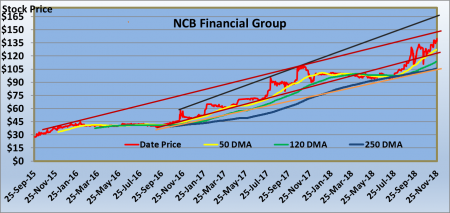 NCB Financial has been scaling record highs after record and closed on the Jamaica Stock Exchange at $139.99 on Monday as well as a new record high close on the Trinidad and Tobago Stock exchange.
The chart shows the stock moving side ways from November last year after reaching $110, until June this year before it started its climb. The move higher was spurred by record profit for 2018 and later by the announcement that they would be going after another 22 percent of Guardian Holdings’ shares. Last week directors and executives bought $650 million of NCB shares which including the sale of a lesser amount by one insider.
The chart shows short term resistance at $150 with the trendline going back to 2015, there after if and when it breaks the $150 level, then it should move on to $165. Going forward, with pick up in growth in Jamaica’s economy, NCB should have good long-term prospects of growth, ahead of it. The company should earn around $12.50 for the 2019 fiscal year and that should put the price at $190 or more in 2019.
Since July 13 last year NCB has gained 48 percent in rising from $94.50 to Monday’s close of $139.99 on the Jamaica Stock Exchange.
Profit jumps 40% at Caribbean Flavours
November 26, 2018 by
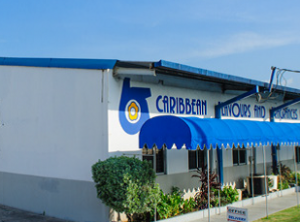
Caribbean Flavours traded on the Junior Market at $20.
Profit at Caribbean Flavours climbed 40 percent in the quarter to September this year to $25 million from a rise of 21 percent in sales to $120 million, up from $100 million in 2017 and an increase of 137 percent in other revenues to $5 million.
Improvement in profit margin in the in the quarter to 37 percent from 36 percent in the 2017 is also a contributing factor in the improved profit. The effect, gross operating profit rose 23 percent in the quarter to $45 million from $36 million.
Other operating and administrative expenses rose 22 percent to $24 million from $19.4 million in 2017.
Earnings per share came out at 28 cents, for the 2018 fiscal year earnings per share was 97 cents. The company should end the fiscal year to June 2019 around $1.50.
Growth in profit has not been always robust even though it has been positive. Profit before Taxation grew a mere 1.59 percent in 2014, 12.75 percent in 2015, a more respectful 28.34 percent in 2016, a reduced rate of 11.89 percent in 2017 and even less growth of 5.22 percent in 2018.
“The company expects that there will be improvement in our performance in the next period as we

Caribbean Flavours’ produce inputs.
expect sales of Flarorfit, our sugar reduction solution to gain traction,” Chairman of the board Howard Mitchell, stated in his report accompanying the quarterly.
Gross cash flow brought in $26 million. Addition to fixed assets used up $3.5 million and $19 million was used to pay dividends. Cash and invested funds amount to $220 million. At the end of the quarter, shareholders’ equity stands at $424 million with borrowings at just $9 million. Net current assets ended the period at $309 million well over Payables of just $30 million.
The stock traded at $20 on the Junior Market of the Jamaica Stock Exchange with a PE ratio of 13 times 2019 earnings. The stock is ripe for at least a 5 for 1 stock split, with limited supply and just 90 million units issued.
Unilever still pressured by T&T economy
November 25, 2018 by

The collapse of Unilever share price.
Profit surged sharply for the troubled Trinidad Stock Exchange listed Unilever Caribbean. The improvement was not coming from normal operations but mostly from sale of assets.
The company reported profit after tax of $167 million for the September quarter, up from just $170,000 for the 2017 period and $252 million up from $112 million for the nine months to September 2017.
The company sold off the spread business line and realised a gain of $161 million, it also sold fixed assets that realised gains of $3.5 million in the quarter. Excluding these gains, profit would be just $2 million for the quarter but a big improvement over the amount earned in 2017.

Unilever products – Unilever Caribbean continues to trade at new highs virtually each time it trades
Sale revenues dropped 28 percent for the quarter, to $79 million from $109 billion in 2017 as the sales of the spread business took effect plus continued pressure being experienced in the eastern Caribbean market, that is a big part of the area they cover. Revenues fell 16 percent for the year to date, to $294 million from $350 million in 2017.
Gross profit margin improved from 33 percent in the 2017 September quarter to 34 percent in 2018 but is down to 35 percent for the nine months from 36 percent in 2017, resulting gross profit of $27 million for the September 2018 quarter, from $36 million in 2017 and for the nine months period, it moved from $126 million down to $104 million.

Profit of Unilever Caribbean has almost evaporated in 2017.
Administrative expenses were flat at $5.6 million for the quarter and fell 19 percent in the nine months to $18 million. Marketing and sales expenses declined by 37 percent to $19 million in the quarter and 21 percent to $74 million for the nine months.
Revenues reached a high of $588 million in 2014, dipped to $549 million in 2015, recovered a bit in 2016 to $566 million before falling sharply in 2017. Profit peaked at $70 million in 2013 dropped sharply in 2014 to just over $47 million in 2015 and $42.5 in 2016 and declined to $10.5 million in 2017.
Operational gross cash flow brought in just $316,000. At the end of September, shareholders’ equity stood at $388 billion with no borrowed funds used to finance the operations. Net current assets ended the period at $243 million inclusive of trade and other receivables of $84 million, cash and bank balances of $61 million and $202 million due from related parties. Current liabilities stood at $164 million inclusive of $54 due from related parties.
The stock traded at $23 on the Trinidad and Tobago Stock Exchange with a PE ratio around 40 times 2018 earnings. The company paid a dividend of $2 in the period. Net asset value is TT$14.80 with the stock selling at 1.55 book value.