Buy Berger – Sagicor Investments

Berger Paints is worth more than $20 per share.

While the directors of Berger Paints are recommending minority shareholders accept an abysmally low $10.88 for the shares with one condition that the bidders as a result of the Offer its holding will most likely exceed 75 percent of the holdings.
No information was given as to how this was possible. Interestingly two entities that control more than 25 percent of the total shares in the company don’t appear ready to sell at least not at the low price offered.
Sagicor Investments, a subsidiary of Sagicor Group who controls more than 10 percent of Berger Paints shares have issued an analysis of the company and the fairness of the offer. They are advising investors to hold or buy more shares at the current low price. It would be an odd situation that the subsidiary of the group are recommending a buy or hold recommendation and the parent did the opposite. A fair conclusion is that they will not sell, in which case the offer fails as most investor thing it will.

Sagicor Investments concluded, “the business has made significant strides in the past three years. This has resulted in the company achieving phenomenal financial success as the company implemented its strategic goals. With a solid foundation established operational and financial performance should continue to improve over the medium term. Though the attractive dividend policy may change, the future earning potential should see the stock trading at a price to earnings ratio within the range of 10X – 12X. The stock is currently trading below this range.”
“Having considered the anticipated economic outcome along with challenges facing the company, including the strengthening purchasing power of domestic consumer, the growth trend in the construction industry and moderate growth in overseas market, the 12 month price target is within a range of J$17.05 to J$20.46.”

Carib Beer brewed in Trinidad by Ansa McAl Group

“Given the price expectation, the current offer of $10.88 is at a significant discount to the value of the company’s shares. Investors would better serve maintain the current position or take the opportunity to increase the position in the stock given the fall-off in the current market price. While there are risks, relating to changes in the management agreement and delisting, the future earning potential of the company should compensate for holding the stock.”
IC Insider.com got wind of a letter by Ideal Group of companies that commented a possible delisting Berger, “we are the largest minority shareholder in Berger Paints at 12%+ of the Company. We find the offer price of $10.88 by ANSA McAL to be woefully-inadequate and have chosen to reject the offer. In fact, given that the share price is now on or around $11 per share, we are buying Berger at this attractive price level, not selling.”
The letter goes on to say, “we are also aware that another leading minority shareholder, shares our views and has also rejected the offer. In fact, they are buying via the Jamaica Stock Exchange (JSE). Both parties between themselves own around 25 percent of BRG’s issued share capital.”
On investors on Monday bought 60,411 of the company’s shares, on Tuesday 153,142 units, on Wednesday 129,140 shares and on Thursday 148,982 units around or above $11 per share, a clear enough indication that the smart money is not buying into the Berger directors unfortunate recommendations.

Berger buyout offer extended

Berger Paints is worth more than $20 per share.

Ansa Coatings International, the major shareholder in Berger Paints Jamaica, announced an extension of their offer to acquire minority shares in the company to October 9.
No other change has been made to the offer and no reasons have been given for the extension.
It may be that the circular containing the recommendation of the directors having just been released at the end of last week would not have given enough time for some shareholders to respond to the recommendations. It is also an indication that the majority of the shareholders are not buying into the price being offered. If they were it would be expected that the extension notice would have mentioned a high level of acceptance and so encourage others to do likewise.
Berger’s minority shareholders are being offered $10.88 for each share, but the price has been consistently above this price for most of 2017 while the value based on earnings and market valuation being in the $20 range.

It makes no sense

Berger Paints is worth more than $20 per share.

Berger Paints shares are worth more than $20 each, so why would any rational person recommend that shareholders sell them at $10.88? It simply makes no logical sense as the offer to buy is not a fair price for the minority shares.
Unfortunately, a number of small shareholders are likely to get their wealth sucked out by an awful and unfortunate recommendation by the directors of Berger Paints for them to accept an offer that is clearly not in the interest of minority shareholders.
According to the directors, Ansa Coatings International controls 51.01 percent of the issued Berger Jamaica’s shares and as a result of this Offer, its holding will most likely exceed 75%. That of course is not supported by facts and no evidence is put forth to support this view. What difference does this make anyhow? The vast majority of listed companies on the Jamaica Stock Exchange, are controlled by majority shareholders having more than 75 ownership without minority suffering unduly if at all. Why should that change now?
According to the directors, PwC Advisory has stated in the Fairness Opinion that the consideration under the offer is fair to the shareholders of BPJL from a financial point of view. PwC Advisory review procedures focused on evaluating the fairness of the offer on a stand-alone basis and not relative to the price attributed to other companies included in the LBOH Acquisition.
The circular does not reveal confirmation from any of the major minority shareholders that they intend to sell and thus take the holdings for the majority shareholder beyond 80%. The 80% threshold does not automatically translate to delisting. Argument is made about transfer tax and stamp duty for transferring shares if the company were to be delisted, but no mention is made that investors bought stocks in large quantities at prices that would make the cost of transfer fees an unimportant factor. The directors seem unaware of the regulation relating to delisting and it is not a simple as they state or would want investors to think.

New building in Montego Bay.

The reality is that even if the shares are to be delisted it will likely take months before that takes place.
An analysis who is not unconnected with a major minority shareholder, had this to say “Regarding Berger, the stock is controlled by about 4 to 5 minority shareholders who own roughly half (or a little more than) of the 48.99% remaining. I have it on very good authority that the parties have unanimously chosen to REJECT Ansa McAL’s offer.”
There are other smart investors who will not accept it as well, hence the chance of the offer doing well is slim, especially as the stock has been trading above the offer price. The above assessment mirrors IC Insider.com earlier comments that 6 shareholders hold more than 31 percent of the shares and they are unlikely to sell at the offer price. That would make the possibility of the offer getting shares up to even 70 percent very slim. In addition there are others who won’t sell either.

20 South, Apartment complex currently under construction in Kingston.

New buildings going up in Jamaica to add to paint sales

The average PE of the main market is 13 times this year’s earnings so even if we used the March results, the shares are worth in excess of $19. Add to that, improved earnings to June and the value grows even higher.
Jamaica suffered from a long period of minimal economic performance and now seems to be on a path to sustainable growth, against this back ground there are several buildings under construction presently that will result in increased demand for paint. Berger is set to reap huge benefits from the increased demand and shareholders will too. Interest rates have been sliding and will continue to do so making stocks more attractive than is currently the case. PE ratios will rise and so will profits, a combination that should put Berger in the $40 region in a year’s time so why would anyone want to sell under $11. Investors should be buying around the current listed price of $11 to benefit from a huge upside after the offer fails.

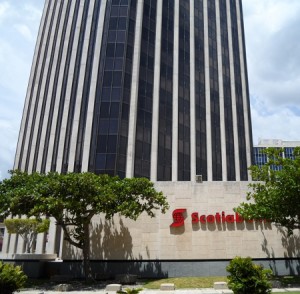
Perkins leaving Jamaica’s Sagicor Bank

Fresh on the heels of announced changes at the top of Jamaica’s second largest financial entity, Scotia Group, another major financial institution has announced changes at the top of its operations.
Sagicor Group Jamaica today advised that the Board of Directors announced the retirement of Donovan Perkins as President & Chief Executive Officer of the Bank effective September 30, after over 25 years of outstanding service to the Bank. The board advised that Philip Armstrong, the Deputy CEO will act as Chief Executive Officer of the Bank, effective October 1. Armstrong has been with group for several years, joining Pan Caribbean Merchant Bank before the merger with Royal Bank that was renamed Sagicor Bank when Sagicor Group acquired it from Royal Bank in 2014. Sagicor Bank has assets of $115 billion as of March this year or 9.4 percent of the total commercial banking system.
Earlier this week Scotia Group, announced the departure of Jackie Sharp as head of the group, to be be replaced by David Noel a long standing employee of the group. Scotia Group controls $329 billion or 26.7 percent of Jamaica’s banking assets at the end of March this year, data from the country’s central bank shows.

Sharp out Noel in at Scotia Jamaica

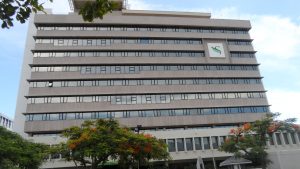
Change at Scotia Group top slot.

Scotia Group (SGJL) announced that Jackie Sharp, President and Chief Executive Officer and Head of Caribbean Central and North, will be leaving to join her family business, effective October 31.
In August 2013, the group appointed Sharp as its first female president and CEO, effective September of that year. Sharp was also appointed a director of the SGJ and the Bank of Nova Scotia Jamaica.
As CEO it not only marked the first female to be appointed to that post but the first person who did not have an early career start in the bank to make it to the top executive post, her rise is sharp indeed, taking a mere 15 years after joining the bank. The resignation brings her career at the financial group to 20 years.

Jacqueline Sharp

According to the release from the group, Jackie Sharp joined the group in 1997 as a Management Trainee and held a number of key positions including Private Banking, Insurance, and Finance, before assuming the Country Head role, and most recently Head of Scotiabank’s Caribbean Central and North covering Jamaica, Bahamas, Cayman, Belize, British Virgin Islands and Turks and Caicos Islands.
“Jackie has made significant contributions to Scotiabank and the community over the years, achieving strong financial results while becoming one of the most respected leaders in the financial sector in Jamaica and the Caribbean”, said Brendan King, Senior Vice President, International Banking, Scotiabank. “We are very grateful for her dedication, consummate leadership and passion over many years at the Bank, and wish her well in her new endeavours as she joins her family business in Jamaica.”
In the first year of her reign Scotia Group Jamaica reported a fall of $774 million or 7 percent in net income to $10.1 billion for the year ended October 2014. Profit rose 14 profit to $11.6 billion for the 2016 year from $10.1 billion in 2015.
Scotia’s closest competitor on the other hand for the year to September 2014 enjoyed a 36 percent, or $3.1 billion increase to $11.6 billion and made profit of $14.4 billion in 2016 versus $12.3 billion in 2015 for a rise of 17.5 percent.

David Noel

Scotia results for six months to April showed profit up 14 percent to $5.7 billion while NCB grew 58 percent to $9.5 billion.
Sharp is being replaced by David Noel as President and Chief Executive Officer, and Head of the Caribbean Central and North regions. Noel joined Scotiabank in Jamaica in 2001 as Legal Counsel before moving to Canada in 2008 on a leadership development rotation in Toronto.
In 2010, he took on the role of District Vice President for East New Brunswick and Prince Edward Island. He returned to Toronto in 2012 where he worked in Global Risk Management. In 2013 he was appointed Managing Director, Caribbean East, leading the Bank’s operations in Barbados and the Eastern Caribbean. In November 2016, he was appointed Deputy Chief Executive Officer of the Scotia Group with responsibility for the subsidiary units, including retail and commercial banking, life insurance, investment management and brokerage, micro-finance and mortgages.

NCB’s eye-popping $1,200 in 5 years

$100,000 invested in NCB would be worth $1.3 million in 5 years if price rose to $1,200 per share.

“Unless something changes, NCB Financial Group is the best buy on the Jamaica Stock Exchange and will be for the next 5 years. My exit price? $1,200!” That is a recent quote from a seasoned financial analyst.
That is astounding, for a stock that traded on the Jamaica Stock Exchange just below $90 this past week and around $95 on the Trinidad market and was selling at $19 at the start of 2015. To reach $1,200 in 5 years, would require growth in profits averaging close to 30 percent per annum and the PE ratio rising to match that growth rate. If that were to  happen it would mean that $100,000 invested now in the stock, would be worth $1,348,314 in 5 years.
How possible is that? First with interest rates receding to lower levels than they have been recently and seems poised to fall some more, PE ratios for stocks will increase. Not only will they increase but demand will increase for good quality stocks that are enjoying robust growth.
NCB delivered net profit of $14.7 billion for the nine months to June, this year, an increase of 48 percent over the prior year’s nine months profit of $9.9 billion. In the June quarter, profit grew 33 percent over 2016. Loans, the major fuel for growth in profits, increased a very strong 18 percent, year over year, in an economy that is probably growing around 2 percent in real terms.

Sagicor should be watched for strong gains over the next 5 years.

If growth were to pick up, and that seems likely, with several major projects on the drawing board to commence sooner than later, with some already started, then lending could picked up even more, boosting profit in the process.
In this regard, investors should not ignore Sagicor Group that reported profit jumping 31 percent to $5.65 billion, for the six months to June this year over 2016, with a 5 percent rise in revenues to $30.36 billion and was negatively affected by realized losses on securities that were sold. In the June quarter revenues slipped to $15.1 billion from $15.29 billion in 2016, as net investment income dropped from $5.55 billion to $4.24 billion, but net profit increased from $2.4 billion to $3.06 billion. While growth in insurance premium is important to fuel continued gains in profit, it is the ability to manage the investment funds effectively that will generate the growth that will make the stock price move.
Sagicor not only has the life assurance arm, but a commercial bank as well, health insurance and manages pension and other funds and a property development and management division.
Interestingly, these two companies are heavy dividend payers, investors stand to gain from sharply higher dividend income if the profit continue to grow close to current levels.

Increased Jamaica Producers’ investments

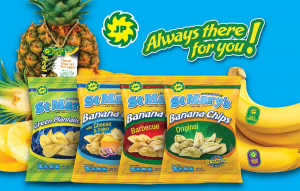
Jamaica Producers to introduce a new line of banana chips.

Jamaica Producers has been undergoing major changes for a number of years as it morphs from a predominant banana marketing company to a much more diversified group.
The group sold its banana ripening and fruit distribution business in the United Kingdom years ago bought a juice business in Holland and more recently bought more heavily into Kingston Wharves that is now considered a subsidiary.
It also bought out the Tortuga Rum Cake business and relocated production to Kingston. With all of that its core business has only recently started to show sign of profitability that the level of investment demands. In furtherance of improving return on investment in the legacy business as well as newer ones, the group says they will continue a programme of investment that is designed to improve its product and service offering while enhancing its operating efficiency.
In line with this programme, prior to the end of this year, Kingston Wharves will launch new logistics facilities for the warehousing of general cargo, and the storage of bulk and automotive cargo for domestic and transshipment markets. The location of this is slated for lands adjacent to the Tinson Pen airport.
The subsidiary, “JP Tropical Group will commission new state-of-the-art cold storage and ripening facilities at Retirement Road in Kingston for its banana and pineapple business and will introduce a new variety of St. Mary’s banana chip for the first time in 20 years.” “The group’s head office activities will move from Oxford Road in New Kingston to the locations in Kingston where operations are centred. This will mean that we will enter the 2018 financial year operating from purpose built corporate offices in Newport West with a lower overhead cost base,” the company reported.
“These new initiatives will build on the recent completion of a high specification bakery in Kingston to consolidate the production for international markets of Tortuga Rum Cakes, the launch of a new packaging facility for fresh pineapples in St. Mary, and a new juice line in the Netherlands that deploys high pressure processing technology to extend the shelf life of fresh juice produced by us. We are particularly pleased to report that these completed capital programmes are all contributing positively to the performance of the Group,” Jamaica Producer advised shareholders in a report accompanying the half year results.
The shift of Tortuga Rum Cakes production to Kingston will result in major cost savings for this operation than the other locations within the region, with lower cost and economies of scale for that operation.

Stationery shares set to gain over 150%

SOS executives at the listing ceremony at the JSE.

Stationery & Office Supplies shares were listed on the Junior Market of the Jamaica Stock Exchange on Thursday.
The price of the stock is set to gain more than 150 percent when trading resumes on Friday, if interest in the stock shown on Thursday is anything to go by.
After a successful public offering of the stock in July that was priced at $2, investors traded 278,046 units between $3.50 up to $5 on the opening day. The trades were outside the limit of $2.60 it could trade at based on the limitation of the exchange circuit breaker rule and were cancelled. The circuit breaker rule limits price movement to no more than 30 percent from the last price on the previous trading day. Normally the price would be the last closing stock price, subject some variation to this, when the bids or offers are higher than the previous closing price or the offer is lower. The stock closed with the bid at $4.70 which is the effective price on which a 30 percent change can take place in Fridays trading and could result in the price going as high as $6.11.
The market closed with bids to buy up to 4.36 million shares with offers to sell 106,922 units between $5 and $12, but supply is expected to increase on Friday with the price reaching the $5 level.
The listing brings the total of Junior Market ordinary shares listed to 32, which exceeds the listing on the Jamaica Stock Exchange main market listings. Total Junior Market listings are now 36 with 4 preference shares listed.

Stock split virtually baked in for NCB

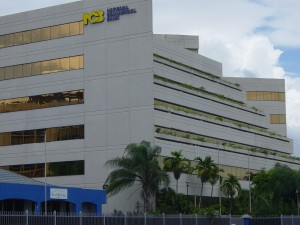
NCB Financial Group HQ.

NCB Financial Group released nine months results just over a week ago, with earnings rising 33 percent over the prior year, helping to push the stock price to a record $94.99, with investors sending the clearest message, that a stock split will and must take place, whether management wants to or not.
In an investors’ briefing, the day after the released results, Group Chief Financial Offer and Deputy CEO, Dennis Cohen in response to the question, whether they would consider a stock split for NCB shares, said they were not considering one and have not discussed the matter. According to  Cohen, they see no benefit to the group from a stock split.
The response by management, if they are honest, indicates that they don’t have all the answers in managing. The reality is that companies do benefit from stock splits, they may not be readily visible in all cases, but over time they do. In reality, it starts from the time the announcement of a split is made.
It is true that shareholders are the ones who benefit most from splits. Good management will ensure that all stakeholders benefit from their skills. They are managing the company for shareholders and ought to ensure that the owners get maximum benefit for their investments and not just the major shareholders. Too often, management feel that their role is to manage a company for profit maximization without factoring the shareholders fully into the equation. This is unfortunately the message the top executives at NCB were sending to shareholders, with their comments. Some of that was visible not so long ago, when they pursued an erratic dividend policy that no one knew what it was, creating havoc for the stock.
The stock now has less than 7,000 units on offer at the close on Friday while no stock was offered in Trinidad were it is listed. Supply in the stocks has virtually dried up in the last three weeks. Under this situation there is going to be limited trading in the stock and management will have to move to do something about it before the year ends.

Jamaica’s profit tax jumps 33%

Minister of Finance Audley Shaw rolling in increased taxes.

Corporate Jamaica paid in $11.15 billion in corporate taxes, to June 2017, a huge 32.9 percent more than the $8.39 billion budgeted, as companies continue to benefit from an improving local economy, with low inflation and increasing demand.
The 2017 intake, translates to a 32.6 percent more than the amount collected in 2016 as businesses post increased profit, from moderate growth in the economy. Government collected $8.4 billion from companies to June 2016, 24.6 percent more than the $6.75 billion projected. In contrast, tax collected from dividend payments surprisingly fell to $229.5 million versus $293.7 million budgeted and $369.2 million collected to June 2016. The reduction for the first quarter of the 2018 fiscal year is likely to be purely one of timing. Dividends paid by NCB Financial Group and Scotia Group would translate to payment of over $400 million in dividend tax. Dividend paid by 4 of the largest listed companies during April and May, show that just over $800 million in tax on dividends should have been paid over to June this year.
The data shows that the budget forecast for the current Fiscal year for corporate tax revenue is in line with the intake for 2016.