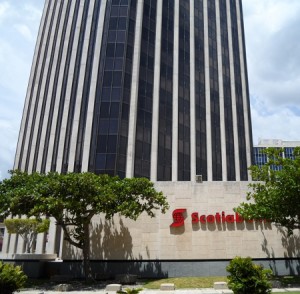
Contrast of two ScotiaBanks

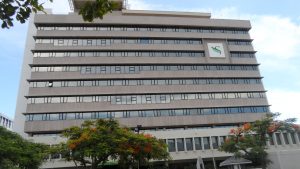
Scotia Group head quarters in Kingston.

The economies of Trinidad and Tobago and that of Jamaica have been performing in opposite directions in recent years. While Trinidad continues to be in deep recession, Jamaica has been recording mostly moderate growth.
In such environments, it would be expected that businesses would be doing better in the one that is growing and poorly in the other.
The performance of Bank of Nova Scotia’s subsidiaries in each of the countries, shows differing fortunes, with the Scotiabank Trinidad enjoying an increase in loans in its latest results to October and the Scotia Group in Jamaica remaining flat, year over year at $166.5 billion. Banks make the bulk of their profits from lending money. Lending not only generates interest on the amounts lent but fees associated with loans such as commitment fees and in a number of cases annual review fees.
For Scotia Group Jamaica, profit after tax rose just 7.7 percent for the year to October, resulting in $12.17 billion attributable to the Group’s shareholders. For the October quarter profit, rose to $3.36 billion from $3.1 billion in 2016.
Net interest income grew by $1.27 billion to $26.64 billion for 2017 versus $25.38 billion in 2016, but a sharp climb in bad loan provisioning of $746 million, reduced the impact of the rise in net interest income. Other income grew by $1.6 billion for the year to $15 billion.
Trinidad’s Scotiabank’s profit before Taxation increased by 11 percent and 5 percent after an increase in corporation tax rate in that country. Profit for the October quarter, dipped to $151 million due to increased taxation, from $158 million in 2016. Earnings per share ended the year at $3.73 for a PE ratio of 16.35.
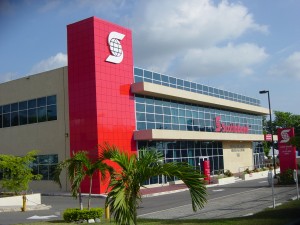
Total Revenue, comprising Net Interest Income and Other Income amounted to $1.7 billion for the period ended October 2017, an increase of $117 million or 7 percent over the comparable period in 2016. Net Interest Income for the period ended October 2017 was $1.2 billion, $115 million or 10 percent higher than for 2016, driven mainly by growth in the retail loans and investment securities portfolios. Other Income for the same period was $481 million, $2 million higher than the prior year mainly driven by revenues earned from the credit cards portfolio.
Loan Loss Expense for the period ending October 2017 was $106 million, an increase of $29 million over the prior year for the Trinidadian bank. Loans advanced to Customers, closed the period at $13.9 billion, an increase of $681 million or 5 percent compared to 2016. Retail loans grew by $645 million or 6 percent over 2016.
Total Non-Interest Expenses 2017 was $686 million, down from $691 million in 2016 for Trinidad.
The big question, what resulted in the Trinidadian company enjoying growth in loans in a declining economy while Scotia Group operating in an economy that is growing could only hold the loan portfolio steady, for the most profitable area of operation?
Virtually flat profits at Scotia Group

Scotia Group head quarters in Kingston.

Profit after tax rose just 7.7 percent at Scotia Group for the year to October, resulting in $12.17 billion attributable to the Group’s shareholders. For the October quarter profit rose to $3.36 billion from $3.1 billion in 2016.
Net interest income grew by $1.27 billion to $26.64 billion for 2017 versus $25.38 billion in 2016, but a sharp climb in bad loan provisioning of $746 million, reduced the impact of the rise in net interest income. Other income grew by $1.6 billion for the year to $15 billion.
Operating Expenses amounted to $21.3 billion for the year, an increase of $595 million or 3 percent compared to prior year. Employees’ costs increased $212 million, while other operating expenses were up $159 million. Asset tax increased by $112 million or 12 percent to $1.1 billion. The productivity ratio moved from 53.38 percent last year to 51.09 percent.
Loans remained flat, year over year at $166.5 billion, according to the company, the performance in this area is “driven by an overall decline in our foreign currency portfolio. Our small business, residential mortgages and personal loans continue to show solid performance quarter over quarter and year over year.”
Deposits by the public, increased to $260.6 billion, from $248.4 billion in the previous year, but the increase is not being put to the best use with no growth in the loan portfolio.
Results for the October quarter does not shine any light to suggest that the slow growth period is behind them. With soft demand for loans, and decline in interest rates in the wider economy, Scotia faces a tough road for the next fiscal year, in this environment the focus is going to be on cost cutting. Already, all the express locations that they currently operate will be closed in early January, the acquisition of all the minority shares in Scotia Investments is yet another move to cut cost.
On the balance sheet, assets held for sale amounted to $664 million and most likely represents the assets of CrediScotia that was subsequently sold.

In Thursday’s trading on the Jamaica Stock Exchange the stock closed at $53 at a PE of 13.5 based on earnings per share of $3.93.

Profit at Jamaican Teas rise 58%

Jamaican Teas CEO, John Mahfood addressing the company’s last AGM in 2017.

Jamaican Teas enjoyed strong growth of 86 percent in profit after corporate taxes for the quarter to September amounting $39 million up from $21 million in the previous year.
Profit before taxation rose to $54 million compared to $44 million an increase of 22 percent. For the twelve months to September, profits after taxation is up 58 percent to $186 million after the booking of some material one off cost and income in arriving at outcome for the year.
The Group enjoyed positive performance from continued improvement in core business at Jamaican Teas with increased exports sales of 24 percent for the quarter and 26 percent for the year as well as good growth in the sales at the supermarket in Kingston for the twelve months to Sept 2017 resulting in a strong increase of 19 percent in overall group sales as sales increased by 5 percent from $342 million to $358 million, during the final quarter of the fiscal year. For the year sales revenues rose to $1.53 billion from $1.29 billion in addition the group recorded other revenues of $94 million versus $61 million in 2016 and $44 million versus $21 million in the quarter.
Although the group realized gains on investments of $60 million during the year the report shows more than $37 million in unrealized gains on investments at the end of September.
The results represent another good year for the group coming off 2016, with growth in sales and profits from continuing operations of 9.5 percent and 103 percent respectively.
FINANCIAL POSITION|Shareholders’ equity continues to expand, exceeding the $1 billion market for the first time. Quoted investments and cash stood at $304 million at the end of the quarter. Working capital amounted to $529 million and includes borrowings of $167 million while long term borrowings ended the period at $70 million.
During the year, the group acquired 43 percent of the issued ordinary shares of KIW International, the company results, assets and liabilities are consolidated in the groups’ accounts.
Subsequent to the year end the directors approved a dividend of 3 cents per share payable on December 19, on the increased number of shares in issue of 682 million units. During the year the shares were increased based on a 2 for 1 stock split with the stock price rising from $1.95 to $4.10 presently the second consecutive year with gains of more than 100 percent in the stock price.
The new fiscal year has started off very well. According to management in commenting on the post quarter sales performance, “in October 2017 we doubled our export sales while our local tea sales increased by 26 percent and our supermarket sales by 8 percent. The group’s future prospects for the remainder of the quarter look favourable.”

John Jackson is acting Chairman of the group

Unilever shareholders’ pain

Unilever stock is set for huge drop on the Trinidad & Tobago Stock Exchange

Unilever shareholders face a torrid time as very poor profit result in 2017 drove the stock price vastly lower than in 2016 and the price is poised to sink even lower as profits for the year cannot support the relatively high stock price.
Unilever profit peaked in 2013 and declined each year since but the stock price kept on rising and peaking in December 2015 at $68.30. Infrequently traded, the stock has been on a slide from 2016, but limited trading and the deep fall in profit made the downward price adjustment long and drawn out as many investors don’t like taking losses, hoping that tomorrow will be better.

Profit of Unilever Caribbean has almost evaporated in 2017.

Unilever reported profit of $3 million for the June quarter or 11 cents per share and $6.8 million for the half year suggesting profit around 60 cents for the full year but the September quarter saw profit falling to just $169,000 with year to date profit of $7 million compared to $30 million for the nine months to September 2016. Full year results are unlikely to exceed the $7 million mark by much. The earnings per share which is 27 cents at September should end the year around 30 cents. The stock which last traded at $38.75, is priced at a PE ratio around 130 times 2017 earnings, the clearest indication of a huge fall in the price to come.
Profit peaked at $70 million in 2013 slipped in 2014 to $47 million in 2015 and $42.5 in 2016 and looks set to plummet in 2017 as indicated above as revenues has fallen sharply during the year. Fortunately, the company cut back on cost in the September quarter with administrative expenses falling from $7 million to $5.5 million and selling and distribution cost was $8 million lower than in 2016.
Revenues reached a high of $588 million in 2014, dipped to $549 million in 2015, recovered a bit in 2016 to $566 million and is set to hover under $500 million for 2017, with nine months inflows of $410 million and $109 million for the quarter compared to $136 million in 2016. To be fair to the company, the impact of hurricane on some of the countries they sell to affected sales in the latest quarter, making an already bad situation worse.

Part of the austerity plan effected was a cut in dividend which was slashed from a high of $1.95 in 2013 it fell to $1.77 in 2014 then to $1.20 in 2015 and rose modestly to $1.25 in 2016.
Investors should keep a keen eye on the stock when it hits a low under $20 that it seems to be heading for as it could then present a good opportunity for recovery when the time is right.

Grace Q3 results show some progress

Grace Kennedy Head Office

Grace Kennedy results for the third quarter showed some progress with the net operating profit before other income growing an attractive 26 percent in the September quarter compared to just 4.6 percent year to date.
In the June quarter operating profit before other income declined from $977 million to $956 million and year to date $1.876 billion down from $1.96 billion. Net profit for the quarter to September, rose $568 million or 57 percent to $1.56 billion. Importantly, the result includes one off gains of $419 million, excluding this gain, profit would have been up just 15 percent.
The big question, can these gains be sustained, if not accelerated going into 2018?
An increase of $51 million resulted in net profit of $3.75 billion for the nine months period from revenues of $69.3 billion, up 4 percent or $2.6 billion over the same period in 2016 with $66.65 billion. Revenues for the quarter, ended at $22.93 billion versus $22.53 billion in 2016.
Earnings per share for the quarter came in at $1.43 inclusive of the one off gain and $3.34 for the nine months the same as in 2016 a period that had large one off gains.
The third quarter shows much progress
“We have been steadily executing our strategy and are seeing the results. We are pleased with the performance of the Group and expect to finish 2017 on a strong note. With our customers at the focus of our entire operation, innovation, convenience and new technology are shaping our view of the future and how we deliver our goods and services,” Don Wehby, Group CEO said.

Group Chief Executive Officer, Don Wehby.

“We are quite optimistic about Consumer Brands and its capacity to add value to our shareholders. We have made, at the outset, a non-recurring gain of $418.5 million on the acquisition. We expect the business to continue to do well, given its knowledgeable and competent team and the Proctor and Gamble portfolio of products,” Wehby stated.
“In 2016 a non-recurring gain was attributable to the liquidation of non-operating subsidiaries. In 2017, we recorded $455 million in non-recurring gains due to liquidation of non-operating subsidiaries and an acquisition. Without these gains, net profit would have been higher than the corresponding period of 2016 by 0.7 percent. For Q3 2017, without the one-off gains, net profit for the three months ended September 2017 would have increased by 14.6 percent over prior year,” Frank James, the group’s Finance Director said.
He added that: “Shareholders will receive a dividend of .45 cents per stock unit, bringing dividends year-to-date to $1.13, an 11 percent increase over the corresponding period.”
Management commented on the various regions and divisions within the group. According to them “The Food Trading segment, which includes operations in Jamaica, Canada, the USA, the UK and Ghana continues to perform well. Some highlights include growth in the Florida and Georgia markets for GraceKennedy Foods (USA) and expanded relationships with CostCo Wholesale and other retailers in Western Canada for Grace Foods Canada.

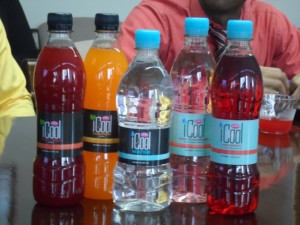
Some of Grace Kennedy’s products.

While Grace Foods (UK) experienced lower sales than projected, a bold campaign featuring Daniel Sturridge as the new brand ambassador for the food drink Nurishment, is expected to have a high impact.”
“Grace Foods Latin America & Caribbean continues to be affected by the slow recovery of corned beef sales following a ban on the sale and distribution of corned beef in several markets in March 2017. Additionally Hurricanes Irma and Maria disrupted operations on the islands of St. Maarten, British Virgin Island and Dominica. Distribution partners in those countries continue to work toward restoring normalcy to their operations.”
“First Global Bank (FGB) experienced growth driven mainly by net interest income and higher gains on securities sold when compared to the same period in 2016. Lower provisions against loan losses also contributed to the favourable performance as the bank continues to focus on delinquency management. FGB’s new direction, includes branch expansion through FGB Money Link. Money Link will see 28 new mini branches being established in locations across the island by 2018.”
The Money Services segment through Grace Kennedy Money Services (GKMS) reported growth in both revenue and pre-tax profit over the corresponding period of 2016. This is due to increased transaction volumes in the remittance business most notably in Trinidad and Tobago, Cayman and Guyana.
The Insurance segment declined in both revenue and pre-tax profit when compared to the corresponding period of 2016. This outcome was influenced by reduced investment returns and increased claims activity from Caribbean territories that were affected by hurricanes in September. The potential impact of claims relating to these hurricanes is still being assessed. GK General Insurance continues to maintain a robust reinsurance programme with highly rated international reinsurers which will lessen the impact of these claims.
Grace shares closed trading on the Jamaica Stock Exchange on Friday at $42.70 and is one of the cheaper priced stock on the market with a PE ratio around 10 times 2017 earnings.

Sagicor Group reports solid results

Sagicor Group climbed 23% for the year to September.


Sagicor Group continues to deliver reasonable growth in profit albeit from a modest increase in assets that grew 4 percent over the twelve months to September to reach $363.26 billion.
But things were not a great in all aspects of the group as the overall bottom-line growth would suggests. While the Individual Lines segment, generated profits that more than doubled that of the 2016 period, rising by 105 percent, the Employee benefits segment, delivered just 21 percent better returns than in 2016 but investment and commercial bank suffered moderate decline in profit of 2 and 6 percent respectively, while other operations turned a profit of $289 million into a loss of $197 million.
Profit for the nine-month period climbed 23 percent to $9.08 billion, than the $7.39 billion recorded last year while it grew modestly by percent 9.3 percent to $3.43 billion. Revenues for the nine months rose 18 percent to $53.53 billion and for the quarter it jumped by a strong 42 percent to $23.18 billion 2016 from $16.3 billion in 2016. The earnings per stock unit are 88 cents for the quarter and $2.34 for the year to date compared to $1.89 for last year. For the 2016 the group earned $2.90 per share which should end up around $3.50 per share by year end and importantly, even higher in 2018.
The big rise in cost has been changes in insurance and annuity liabilities moving from $2.6 billion in the 2016 quarter to $8.3 billion and from $10.8 billion to $13.3 billion in the September quarter.
Sagicor traded on Tuesday on the Jamaica Stock Exchange and ended at $37.60.

Lasco Manufacturing results disappoint

There was bad news and good news for Lasco Manufacturing shareholders embodied in the September quarterly report that was just released on Friday, after trading.

The good news is that the September quarter’s revenues and profit were greater than that of the first quarter to June, but far worse than for the similar period in 2016. The other good news is that “the outlook for the full year remains positive as the evidence shows that we are heading in the right direction and measures are in place to deliver improved results,” the management reported to shareholders.
When revenues rise in most manufacturing operations there is usual increase efficiency as overhead cost tends to rise more slowly than revenues, thus resulting in an increase in gross profit margin, the reverse is also true. This can be seen from Lasco operations with gross profit margin falling form 34 percent in 2016 to 31 percent in2017. In the quarter, revenues fell 11 percent to $1.986 billion while cost of sales fell only 7 percent to $1.36 billion but Gross profit dropped 12 percent to $524 million by $131 million.

Bottle heating machine at Lasco Manufacturing.

Operating expenses grew $46 million or 15 percent to $361 million and profit after tax fell sharply to $103 million from $363 million in 2016, resulting in earnings per share of just 5 cents, down from 9 cents in 2016. For the six months period, revenues fell by 12 percent to $3.5 billion from $3.95 billion in 2016. Gross profit dropped 17 percent to $1.1 billion from $1.32 million.
Operating expenses grew $85 million or 14.5 percent to $670 million and profit after tax fell sharply to $337 million from $587 million in 2016, resulting in earnings per share of 8 cents. “The increase was primarily due to growth in marketing investments to support our brand in an increasingly competitive environment” management stated.
IC Insider.com projects profit for the year to March 2018 at 18 cents and 30 cents for 2018 of course the out turn is going to be dependent on a lot of what new products can deliver in sales.
At the end of September, Lasco has shareholders’ equity of $4.6 billion with borrowings of $1.58 billion with $265 million to be repaid within twelve months and overdraft of $353 million. Trade receivables stood at $1.76 billion with inventories of $719 million while trade payables is at $1 billion.
The stock traded on Friday at $4.60 at a PE of 25 times 2018 earnings and 16 times 2019.

Profit rise and fall at Mayberry

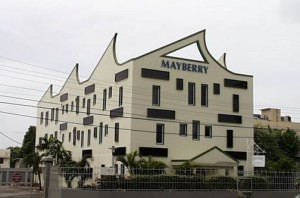
Mayberry crossed 40m C&W shares.

Profit at Mayberry Investments climbed 27 percent to $62 million, after tax for the quarter to September this year, up from $49 million in 2016 with earnings per share of just 5 cents. For the nine months to September, profit dropped to $66 million from $320 million in 2016.
While the profit performance for the year to date is mixed, the investment banker focus is the more robust comprehensive income, than the traditional profit outcome, but total comprehensive income slipped 22 percent, to $300 million, from $385 million, for the September quarter of 2016, due to a decline in the prices of some stocks held. Not factored into comprehensive income is the increased value of associated company share prices.
Net interest income climbed 28 percent to $30 million. Fees and commissions jumped 168 percent to $113 million for the quarter, compared to $42 million for the corresponding quarter in 2016. Fee income grew by increased transactions within the quarter and from Initial Public Offering whilst the increase in Net Interest Income was due to lower cost of funds. Dividend income declined 17 percent to $29 million, a reduction of $6 million compared to the similar period in 2016.

Gary Peart, Chief Executive of Mayberry Investments.

Net trading Gains fell to $68 million from $117 million for the corresponding period in 2016, a reduction of $49 million or 42 percent, due to decreased trading volumes for the quarter.
Net foreign exchange gains fell sharply to a mere $4 million, down from $58 million in 2016. Unrealized gains on investment revaluation amounted to $11 million or 37.6 percent less than the comparative period in 2016.

Operating expenses decreased by $34 million or 12.28 percent when compared to the corresponding quarter in 2016, with staff cost falling $21 million and investment impairment fell $29 million to zero. Profits from associates, increased $34 million or 199 percent, over the same quarter in 2016
Results for the nine months for 2017 is not as robust as in 2016. Net interest income is down from $135 million to only $52 million as interest cost rose by $68 million and income fell. Fees and commission income rose sharply from $142 million to $253 million, net trading gains fell from $385 million to $152 million and foreign exchange trading gains fell from $179 million to $57 million and unrealized investment gains fell to $44 million from $199 million.

The final quarter of the year is off to a robust start with a number of stocks Mayberry holds climbing these include NCB Financial, Caribbean Cement Cable & wireless to name a few. Longer term the company’s equity portfolio should rise sharply as all indicators point to a possible 60 percent rise in value of main market stocks over the next year.
Mayberry ended the quarter with total assets of $22 billion and shareholders’ equity of $7.9 billion, up from $7.24 billion at the end of 2016. Net book value stands at $6.54. The company’s stock closed trading on the Jamaica Stock Exchange at $4.30, on Wednesday.

Appalling corporate action

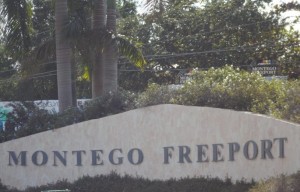
Monetgo Freeport was previously listed on the Jamaica Stock Exchange but dumb politically appointed directors made a stupid decision to have the company delisted on the basis that it would save money and the assets would be sold off and the company liquidated.
Several years have so far elapsed and the company is yet to be wound up but the more than 1,600 shareholders cannot trade their shares as there is no organized market to do so, thanks to the poor decision made by former board members, but the current board don’t seem to be leading the company any better than the previous one.
The company has $327 million worth of property being held for sale so it will be some time for the winding up to take place. Amounts held on deposit for the purchase of property is $399 million, backed by funds held in escrow. The current board rather than pay more dividend from the excess cash the company holds, is recommending that no payment be made, another poor decision. The funds have not been invested for maximum returns, as they just sit in bank deposits earning under 6 percent interest per annum and now even less with fall in interest rates, being paid on deposits. That makes no sense, when there are other assets that could enhance shareholder’s value.
Freeport should be returned to the Stock Exchange with a new mandate and UDC could cash out their shares by the company buying them back.
The financial statement up to March this year, shows profit of $10.5 million down from $45 million in 2016 with income falling in 2017 to $40 million from $92 million in 2016.
The question to be answered is why would a company that is virtually inactive need to have 10 directors that is another indication of poor management. There seems no need to be more than 6 but the company needs to have management refocus their attention in a different direction than they are current on.

Tough economics hit West Indian Tobacco

Tough economic conditions, flowing from an ongoing recession in Trinidad, together with increased Excise and Corporation Tax, the business environment resulted in significant changes in consumption patterns adversely affecting revenue of West Indian Tobacco.
The situation seems to have worsened with illicit cigarettes in the country. According to the Chairman, Anthony Phillip “the Company continues to engage with relevant authorities and stakeholders on the issue of the increased presence of suspected illicit products in the market which has negatively affected our business.”
Against this backdrop, West Indian Tobacco has recorded profit before taxation of $398 million and net profit of $276 million for the nine months to September, down from $373 million in 2016. Revenues fell from $891 million to $787 million but revenues inched just higher in the quarter to $274 million from $272 million in 2016 and revenues net of excise tax was slightly down for the quarter.
Profit after tax for the September quarter fell from $123 million to $97 with tax increasing to $44 million from $43 million in 2016.
The Company continues to proactively respond to the evolving market conditions with ongoing reviews of its Brand Portfolio, Trade Marketing, and Distribution strategies, as well as careful cost management across its operation.
The Board approved the payment of a third interim dividend of $1.14 per ordinary share payable on 24 November 2017, the payment is down compared to $1.44 paid in 2016.
Earnings per share came out at $1.16 for the quarter compared to $1.46 for the similar period in 2016 and for the nine months period $3.27 versus $4.42 in 2016 and should end around $4.75 for the full year giving it a PE ratio of 26 and should result in more decline for the stock. In 2016, earnings amounted to $6.12 per share.
The stock that traded at $127.01 earlier in the year is down to $124.96 on the Trinidad and Tobago Stock Exchange.