CrediScotia costs Lasco Financial $1.5B

Lasco Financial profit dropped for 2017 Q3.

The acquisition of company operating CrediScotia, renamed LASCO Microfinance Limited cost Lasco Financial around $1.5 billion, data disclosed in the company’s December quarterly report shows.
The acquisition was funded primarily from related party advances which stands on the books at $1.27 billion. The amount will be repaid in full from a long term instrument being arranged to raise $1.5 billion at an interest rate of 9.5% and also to provide working capital to allow for expansion of the loan portfolio.
The acquisition was the main contributor for a $1.5 billion surge in the assets of the enlarged Group, taking it to $3.26 billion at the end of December.
Scotia Jamaica Microfinance Company, name was changed, effective at the start of December, following the acquisition by LASCO Financial Services in November 2017.
LASCO Microfinance now, a wholly owned subsidiary of Lasco Financial, is the ”fourth largest contender in the local microfinance market behind Jamaica National Small Business Loans, Access Financial Services and Worldnet Investment,” a release from Lasco disclosed.
The group “aims to continue a seamless transition to merge its networks, systems and processes over the next few months to effectively organize its operations under two main business lines – money services and loans through the

Jacinth Hall-Tracey, Managing Director of Lasco Financial.

LASCO Money brand and LASCO Microfinance.”
At the end of March 2017 loans advanced to borrowers on the books was $282 million and seemed to have climbed to approximately $650 million by September last year. The acquisition has increased the group’s loan portfolio to $1.3 billion, Managing Director of Lasco, Jacinth Hall-Tracey confirms. The merger has also almost tripled the loan team to just under 90 persons, spread over 13 loan offices island-wide.
Interestingly, while the acquisition of CrediScotia took place in November, the results for Lasco show no increase in income for the December quarter. For the September quarter total revenues reached $396 million up from $272 million in 2016, but the December quarterly, reports trading income of $407 million compared to the revenue in September, but it was well ahead of the $298 million generated in the December quarter of 2016. The December quarter is usually the period of highest revenues exceeding all other quarters by a good margin. “There was reduced fX spread compared with September quarter which impacted income; it also led to a revaluation loss,” Hall-Tracey informed IC Insider.com. Profit fell in the quarter to $55 million from $100 million in September an unusual development as profit would normally be greater than the amount reported in the September quarter, after recognizing some direct expenses for the acquisition and normal seasonal operational increases,” Hall-Tracey stated. There was short term debt which attracted legal & professional fees for the short term loan and there was finance cost as well as transaction fees for the short term borrowings to settle the sale price on Hall-Tracey informed IC Insider.com.
Adjusted for the above one off cost and set back earnings from ongoing operation is well ahead of the $55 million reported for the period in 2017 and augurs well for improved results for the March 2019 results.

Sygnus Credit profit exceeding projections

Sygnus Credit Investments (SCI) raised approximately US$16 million in capital from institutional and accredited high net worth investors following a private placement in May 2017 and began operating on July 1, 2017.
By the end of December last year, Investment Income amounting to US$500,568 was earned, with total Expenses amounting to US$106,858, resulting in Net Investment Income of US$393,710, which represents the Company’s core operating earnings, data from the company’s interim results show. Unrealized gain of US$290,650 due to the appreciation of the Jamaican dollar against the US dollar, on an investments in Portfolio Companies that are denominated in Jamaican currency. This unrealized gain may fluctuate depending on movement in the Jamaican currency versus the US currency. Net Income after Income taxes of US$3,893 amounted to US$680,467 representing 0.01 cent per share, based on a weighted average number of ordinary stock units of 64,503,985.
The Company recorded Other Comprehensive Income of US$310,475 reflecting fair value gains on its investment in Portfolio Companies resulting in Total Comprehensive Income of US$990,942 for the period.

The net results for the period does not include Management Fees to be charged from January 2018 along with Performance Fees. Management Fees are computed at 1.9% of assets under management. Performance fees are computed at 15% of the return on equity above a hurdle rate of 6%.
The company has US$11.6 million invested in four Portfolio Companies in Energy Distribution, Beverage Manufacturing, Commodity Distribution and Food Distribution. At the current pace of investment, SCI is sourcing and investing an average of US$1.9 million in transactions per month, which is a faster velocity than anticipated a report by the company states.
The investment in Portfolio Companies is earning income at a yield of 10.3 percent. US$6.5 million or 56.6 percent of the initial investment in Portfolio Companies is structured with profit participation and other upside structures. At the end of 2017, the overall investment pipeline stood at US$30 million, including US$7.9 million with signed mandates. The demand is likely to be funded by new shares to be sold to the public this year.
Shareholder’s equity grew to US$16,705,798 at the end of 2017. The Company issued 159,269,523 ordinary shares initially at a price of US$0.10 and J$12.86 per share and has a book value of US$0.1049 or J$13.04 per share.
Sygnus Credit Investments is a specialty private credit investment company, focused on providing non-traditional financing to medium-sized firms across the wider Caribbean region. The investment objective of the Company is to generate attractive risk adjusted returns with an emphasis on principal protection, by generating current income, and to a lesser extent capital appreciation, through investments primarily in medium-sized firms using private credit instruments.
The Company targets Companies operating across a broad range of sectors, including manufacturing, distribution, financial services, energy, real estate, transportation, infrastructure and business services. Target companies typically have revenues between US$5 million and US$25 million.
Chairman of the board is Clement Wainright Iton, B.Sc., MBA, Non-executive Directors are Nakita Edwards CFA, FCCA,CPA, Hope Fisher, B.Sc, Ian Williams B.Sc, MBA,Peter Thompson, CFA, MSc, Damian Chin, BA, MSc and Ike Johnson, PhD, CFA. Executive directors are Jason Morris CFA and Beresford Grey.

Some impressive profit results

The latest set of listed companies to report financials show an array of impressive profits for a number of them, turn around situation in one and flat results for a few.

C&W reported a small loss of $138M for 2017 before tax.

Cable and Wireless reported a very small loss for 2017 down sharply from a billion loss in 2016 and is about to break out into a highly profitable period starting in 2018. The company that has chalked up accumulated losses of more than $48 billion reported losses of only $138 million before tax for 2017, and just $383 million after tax, flowing from a 9 percent rise in revenues to $27 billion with a big rise in mobile revenues by 54 percent to $15 billion while interest cost at $5.2 billion the company lost the year, down from a loss of $1.4 billion in 2016. With the sharp fall in interest rates locally interest cost should drop by around $2 billion in 2018 and plunge the company into an excellent profit position with continued growth in revenues. Unfortunately, the parent company wants to take over the company at a low price, after local shareholders have suffered losses for many years at just the stage when good times seem to be returning.
Newly listed FosRich Group posted an 81 percent increase in profit to $55 million and earnings per share of 14 cents from revenues that fell 9.5 percent to $1.05 billion, but helped by other income of $42 million comprising mostly interest and foreign exchange gains.
Jamaica Producers enjoyed strong gains in operating profits with an increase of 77 percent to $662 million after adjusting the 2016 results for non-recurring gains of $3.7 billion. Operating income for the year was up an impressive 34 percent resulting in gross profit rising from $3.24 billion to $5.14 billion. Earnings per share came in at 59 cents.
Stationery and Office Supplies that listed in August last year enjoyed a 29 percent bounce in revenues for the full year and 37 percent rise in the December quarter to record full year revenues of $906 million and a 78 percent rise in profits to $83 or earnings per share of 38 cents.
Kingston Wharves profit climbed 18 percent from $1.29 billion to $1.63 billion for 2018 from revenues that moved from $5.41 billion to $6.37 billion for a rise of 28 percent and ended with earnings per share of $1.14.
Grace Kennedy continues to struggle to increase profits ended 2018 with flat results of $4.15 billion versus $4.12 billion in 2016. The 2016 figures and one off gains that makes the 2018 better that it appears on the surface. Revenues rose from $88.3 billion to $92 billion in 2018 and other revenues slipped from $2.38 billion to $2.1 billion. The group reports $4.15 in earnings per share.

FosRich profit rose 77% for 2017.

Supreme Ventures reports earnings per share at $44 cents from profits that are virtually flat with 2016 results coming from a 25 percent rise in revenues to $56.2 billion. Profit for the year ended at $1.197 billion from $1.178 billion. The 29017 suffered from write off of assets and impairment amounting to $484 million while repairs and maintenance rose by $110 million.
The 2017 listed Victoria Mutual Investments reports a 9 percent rise in profits to $346 million from a 19 percent rise in net income of $966 million and produced earnings per share of 29 cents.

Jamaican Teas exports sales up 66%

Jamaican Teas CEO, John Mahfood addressing the company’s last AGM in 2017.

Export sales at Jamaican Teas grew a very strong 66 percent for the December quarter while domestic manufacturing sales increased by 15 percent. Overall sales at increased 22 percent to $456 million the quarter.
Revenues from our manufacturing operations grew 40 percent in the period while supermarket sales increased by 9 percent. Profit after tax rose 9 percent to $51 million, reflecting better performance from core operations and resulted in earnings per share of 7.6 cents.
A release accompanying the results by the company, stated that, “importantly, the trend in sales continued into the second quarter and are meeting the Company’s expectations. Our investment portfolio continued to increase in value over the December levels.”
Gross profit margin increased from 23 percent to 24 percent in the quarter over 2016. Other income was down by 59 percent, falling from $17 million to $7 million. The 2016 results benefited from greater contributions from realized investment and foreign exchange gains than in the latest quarter. In this regard realized investment gains during the quarter was $6 million compared with $12 million in the same period a year ago.Marketing and sales cost rose 16 percent to $9.6 million, administrative cost rose 34 percent to $43 million, reflecting added associated with the KIW acquisition, but finance cost fell 51 percent to $4.6 million.
The company said that “with the acquisition of KIW International and the reinvestment of the proceeds of sale from the property formerly owned by the company, quoted investments at the end of the quarter totaled $319 million.” It could have a major impact on profits, if the local stock market continues to record gains for the year.
The financial position improved over 2016 with equity capital of $1.1 billion, net current assets of $549 million and long term loan of $193 million.

The stock last traded at $4.78 on the Junior Market of the Jamaica Stock Exchange.

John Jackson is a directors of the company.

39% jump in JMMB’s Q3 profit

JMMB Group enjoyed a strong third quarter, with profit after tax jumping sharply by 39 percent, to $871 million from $628 million in 2016 and earnings per share of 53 cents, from a rise in revenues, net of interest cost of 24 percent to $4.5 billion.
Interest margins slipped in the quarter year over year, from 52 percent to 49 percent but was better than the year to date performance of 48 and 47 percent respectively. Fees and commission income jumped an impressive 71 percent to $512 million in the quarter and 53 percent in the nine months, over the similar period in 2016 with significant growth in managed funds and collective investment schemes across the Group. Gains on securities trading climbed 42 percent in the December quarter and just 5 percent for the year to date, over 2016. Foreign exchange gains were up 43 percent for the quarter but down 4 percent for the nine months.
The group posted net profit of $2.58 billion and earnings per share of $1.56 for the nine months to December, while generating 11 percent increase in net operating revenue to $12.28 billion, resulting from increases in net interest income, trading gains, fees and commission income.
Net interest income, grew 12 percent or $594 million to $5.66 billion, flowing from strong growth in the loan and investment portfolios. Financial and Related Services continued to be the leading contributor to net operating revenue with 67 percent at $8.23 billion which is 11 percent more than the $7.4 billion generated in the similar period in 2016. This improvement was due mainly to growth in trading gains, asset management fees as well as net interest income. The Banking performance of $3.86 billion reflected a 10 percent increase, up from $3.52 billion and resulted from strong growth in the loan book which translated into net interest income and fee income.
Administrative Expenses climbed 13 percent in the quarter and 14 percent year to date over 2016, slower than the growth in revenues for the quarter but faster than revenues year to date.
“Jamaica’s focus remained on operationalizing our commercial bank and maximizing our cross-selling efforts across the Group. Accordingly, growth in both the loan book and our off balance sheet offerings continued to improve.” Archibald Campbell, Chairman and Keith P. Duncan, Group Chief Executive Officer stated in their comments on the quarterly.
At the end of the reporting period, the JMMB Group’s asset base totalled $271 billion, up $19 billion or 8 percent relative to the start of the financial year. This was mainly on account of higher cash holdings as well as larger loan and investment portfolios. The investment portfolio increased by $9.6 billion or 6 percent to J$182 billion, while net loans and advances grew by $6.57 billion or 14 percent to $53.7 billion. The total invested in off-balance sheet products as at the end of December 2017 stood at $117.9 billion compared to $107.64 billion as at end of December 2016.
IC Insider.com projects earnings of $2.75 for the full year. The stock last traded on the Jamaica Stock Exchange at $25 for a PE of 9.

Solid buy – Stationery and Office Supplies

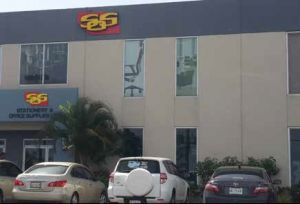
Stationary and Office Supplies – Montego Bay offices.

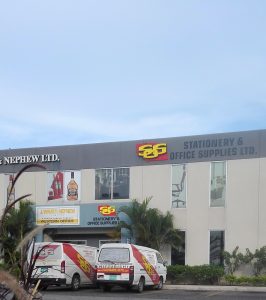
Stationery and Office Supplies stock is under pressure, having traded around the $5 level for some time, dropped to $4 in trading during last week with minimal demand for the stock currently.
But investors should probably be taking a different approach to the stock and piling into it for a big rally down the road as the fundamentals are strong and getting better.
Revenues climbed 23.7 percent in the June quarter to $212 million and 22 percent to $432 million for the half year, by the September quarter the growth climbed to 37 percent to $233 million, pushing revenues for the year to September to an increase of 27 percent to $665 million. Based on the bounce in revenues that some companies received after listing, the strong growth in revenues seen in the third quarter is said to have continued for the December quarter. Full year results are expected, by the first week in March and should be in the range of $100 million based on IC Insider.com projections. Reports are that the full year results for 2017 exceeded expectations which was around $70 million at the time the IPO was offered and adjusted internally upwards based on third quarter results. At the end of September profit before tax reached $69 million well ahead of the $48 million recorded at the same time in 2016 and vastly more than the $53 million reported for all of 2016. The 2017 results are not likely to show any weakness as occurred in 2016.
SOS had acquired a building which was converted to a warehouse to allow for expansion of It’s offerings, this is now in use with some 6,000 square feet occupied. According to reports there are “lots of plans and expectations going forward for good business growth”. IC Indsider.com gathers that the December quarter that is normally the worse quarter for them due to the holidays, but the 2017 last quarter was the best quarter in the company’s history.

IC Insider.com projects earnings before tax at 50 cents per share for 2017 based on the average number of shares issued for the year, up from 40 cents when the shares were offered for sale and 75 cents for 2018 based on projection for continued strong growth in revenues.
At a last traded price of $4.50 on the Junior Market of the Jamaica Stock Exchange, the stock remains a buy as it will benefit from strong growth in 2017 and future growth in 2018 and beyond. Investors should take advantage of the current softness in the stock price and wait for the inevitable strong gains ahead.

Caribbean Creams buying market share

Caribbean Cream outlook.

Caribbean Creams strategy of going for market share seems to be paying off with strong rise in revenues in the third quarter but at a steep cost with profits falling sharply in the quarter.
Profit at the sole producer of ice cream listed on the Junior Market of the Jamaica Stock Exchange was disappointing as shown by their latest quarterly report recently. The disappointment is not due to under performance of the company though but from what appears to a strategy to boost market share.
Profit slid 97 percent to just $653,000 in the November quarter, from $19 million in the similar period in 2016. For the nine months to November, profit slid 48 percent to $71 million from $137 million in 2016.
Input cost has risen sharply during the period but management strategy seems clear go for market share by keeping prices stable and low and revenues will eventually deliver bottom line gains.
Revenues climbed 18 percent for the quarter, to $319 million from $271 million in 2016 and rose at a slower 12 percent to $992 million from $886 million in 2016 for the nine month period.
Profit margin, declined for both the quarter and year to date period, in the November quarter to 27 percent from 33 percent in the 2016 and for the nine months to 31 percent from 39 percent in the 2016 period, as input cost climbed 29 percent in the quarter, compared to 27 percent for the year to date period. The effect, gross operating profit declined just 4 percent in the quarter to $85 million from $89 million and fell 11 percent for the year to date, to $305 million from $344 billion in 2016.
Direct operating cost was not the only area to experience steep cost rise. Administrative expenses rose 25 percent to $68 million in the quarter and increased by 15 percent in the nine months to $193 million. Finance cost jumped 58 percent in the quarter, to $6 million over 2016 and 41 percent from $8.7 million to $12 million for the nine months period.
Earnings per share came out at 19 cents for the nine months and is expected to rise with the important final quarter covering the Christmas period to impact revenues.
Gross cash flow brought in $130 million but addition to fixed assets, loan payments and paying $23 million dividends, brought cash funds at November, to $145 million. At the end of November, shareholders’ equity stood at $640 million with borrowings at just $86 million. Net current assets ended the period at $214 million well over Payables of $77 million. Amounts invested in inventories dropped from $161 million at the end of February to $96 million.
The stock traded at $5.70 on the Junior Market of the Jamaica Stock Exchange with a PE ratio of 10 times estimated 2018 earnings and with IC Insider.com forecasting 80 cents per share for PE of 7.5 times earnings.

Write offs at Carib Cement hit profit

Caribbean Cement

Profit at Caribbean Cement before exceptional charges rose 31 percent from $1.85 billion to $2.43 billion from sale revenues rose that grew by just 4.64 percent for the quarter to $16.5 billion, from $15.78 billion in 2016.
Gross profit increased 7 percent or $656 million excluding labour cost and the margin increased modestly to 62 percent from 61 percent in 2016. The company wrote off inventories amounting to $458 million and incurred redundancy and other manpower restructuring cost of $417 million, reducing the profit for the year by 12 percent to $1.22 billion.
Wages and related cost declined 6 percent to $1.94 billion while Administrative expenses were virtually flat at $4.49 billion, but depreciation rose 7 percent to $532 million flowing from additions to fixed assets and transport, marketing and selling expenses rose 22 percent.
Importantly, while revenues rose just under 5 percent for the year, in the final quarter it increased by 12 percent to $4.25 billion and helped to lift profit before exceptional cost from a loss of $225 million in 2016, to a profit of $367 million. The net position for the quarter is well down on the $748 million reported in the September quarter from revenues of $4.18 billion.

Carib Cement 2017 operating profit rose.

Analysis of the figures raises question about the costing for raw material used in production. It was reported as just $323 million in the September quarter and $520 million in the final quarter, unadjusted for inventories for finished goods sold in the period but coming from the prior period. Direct cost jumped sharply over the September quarter and is out of line with prior period. Charge for corporate taxation rose from just $49 million in 2016 to $411 million.
Gross cash flow brought in $3.2 billion but addition to fixed assets absorbed $2.2 billion with cash funds ending at $1.67 billion at the end of December. Shareholders’ equity improved to $8.96 billion with accumulated losses of $3.25 billion, roughly $700 million worse than the $2.59 billion at the end of September. There are no noted borrowings on the financial statement but the company has a long standing lease arrangement with its parent company. Usually reliable sources indicate that the arrangement with Trinidad Cement will be refinanced shortly in Jamaica and will result in significant cost savings for the company which could be as high as $2 per share. Net current assets ended the period $790 million with third party Payables of $2.58 billion.
Earnings per share came out at $1.35 cents for the year but without the one off charges would have been in region of $2.10. The stock traded at $33.05 on the Jamaica Stock Exchange with a PE ratio of 16 times 2017 adjusted ongoing earnings. With the new fiscal year normal earnings should increase with the growth taking place in the construction sector and the lowering of cost in a number of areas. IC Insider.com is projecting earnings of $5.50 per share for the year based on savings already effected in its operations, increased demand for cement and savings to flow from a new financing arrangement, for a PE ratio of 6. Investors interested in buying into the potential for may want to wait to see if there is a sell off before picking them up.

Cargo Handlers Q1 profit falls

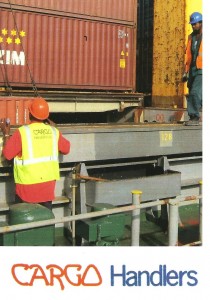
Overvalued Cargo Handlers.

Montego Bay’s based, Cargo Handlers suffered a 13 percent dip in profit, for the December quarter to $40 million from $46.2 million in 2016 from flat operating revenues of $86.57 million compared to $86.99 million in 2016 and resulted in earning per share 11 cents.
Gross profit margin declined in the quarter to 59 percent from 61 percent in the 2016, as wages increased ahead of income, leading to Other Operating Expenses rising 7 percent to $35.75 million. Other income fell 84 percent to $544,786 from $3.42 million and interest income declined by 36 percent to $470,000. Revaluation of the Jamaican dollar would have had a negative impact on other income. Administrative expenses rose 20 percent to $5.4 million and finance cost climbed by 35 percent, to $336,038. Taxation payable on the profit fell from $6.66 million in 2016 to $5.76 million.
Gross cash flow, brought in $58 million but increased working capital needs reduced cash inflows to $27 million and raising cash funds to $272 million.
At the end of December, shareholders’ equity stands at $390 million with borrowings at just $0.9 million. Net current assets ended the period at $331 million well above payables of just $17 million.
The stock that traded at a high of $30 in early 2017, last traded at $10.50 on the Junior Market of the Jamaica Stock Exchange, with a PE ratio of 21 times IC Insider.com projected earnings of 50 cents for 2018. The average PE for the market is now 10, suggesting that Cargo Handlers stock price could slip back or remain around the present level for a prolonged period.

Q3 profit jumps 73% at Lasco Manufacturing

Lasco Manufacturing products.

Lasco Manufacturing profit, jumped 73 percent in the December quarter, to $195 million from $113 million in 2016. For the nine months to December, profit fell 24 percent to $533 million from $700 million in 2016.
Sale revenues rose 22 percent for the quarter, to $1.78 billion from $1.46 billion but fell 3 percent for the year to date, to $5.28 billion from $5.42 billion in 2016.
Improvement in profit margin in the first half of the year, declined in the December quarter to 32 percent from 34 percent in the 2016, for both the quarter and year to date period, as input cost climbed 27 percent, compared to just 1 percent for the year to date period. The effect, operating profit rose just 12 percent in the quarter to $561 million from $503 million but fell 9 percent for the year to date, to $1.66 billion from $1.83 billion in 2016.
Other operating expenses fell 10 percent to $301 million in the quarter but rose 5 percent in the nine months period to $698 million. Finance cost declined in the quarter, to $34 million from $42 million in 2016 and from $126 million to $99 million for the nine months period.

Earnings per share came out at 5 cents for the quarter and 13 cents for the nine months and should end the fiscal year ending to March around 20 cents.

Bottle heating machine at Lasco Manufacturing.

“Revenues and profits were impacted earlier in the year, by a number of factors including phasing down production in April and May, and additional marketing and brand building investments to support the brands and distribution discounts to support sales. The phasing down of production allowed for critical plant upgrades necessary for sustained improvements in output, cost efficiencies and quality. The expected improvements have materialized’ the Managing Director, James Rawle, stated in his report accompanying the quarterly.
Gross cash flow brought in $694 million but growth in receivables, inventories, addition to fixed assets offset by loan inflows and increased payables and paying $143 million dividends net overdrawn position ended at $518 million. At the end of December, shareholders’ equity stands at $4.84 billion with borrowings at just $1.75 million. Net current assets ended the period $1.52 billion well over Payables of $1.05 billion.
The company rolled out new juice drink in the December quarter and plan to launch carbonated beverages and an energy drink in the March quarter.
The stock traded at $4.40 on the Junior Market of the Jamaica Stock Exchange with a PE ratio of 22 times 2018 earnings. The company will go into a new year, come April, that should result in a lowering of the PE with IC Insider.com forecasting 30 cents per share for PE of 15 times earnings.