Sagicor out C&W in TOP 10

JMMB Group Traded at a new high of $27.99 on Friday.

In a week when Jamaica Stock Exchange main market closed at record high each day, JMMB Group that IC Insider.com said was itching to rise, surged to an intraday high of $27.99 and ended at a record close of $25.11 but still remains in the TOP 10 Main market stocks.
Cable and Wireless is the only new entrant to the listings, just edging out Sagicor Group in the main market, there were no new change to the Junior Market list. With the company now clearly in the profit lane things should be getting even better in 2018 making it a long term investment proposition. Barita Investments came in for increased selling in late September and still remains under pressure with limited buying interest, as investors await details of the offer from Cornerstone, to acquire majority shares in the company. This could be a case of investors missing the bus by waiting, with the net asset value at $7 as of June this year and the price just 10 percent above.
Trading in shares of Berger Paints was suspended on Thursday with resumption scheduled for October 17, the stock has been trading ahead of the price of $10.88 offered by Ansa Coatings and should be trading in the $20 region, and is clearly one for the future with growth taking place in the construction sector. All indications suggest that very few shareholders will take up the offer when it closes at the end of Monday.
Investors appear to have switched attention from Junior Market to main market stocks, with the latter seemingly set to break through short term resistance around 300,000 points on the all Jamaica Index on the way to the next major resistance at 365,000 point range.
The average PE ratio for the Junior Market Top stocks is at 7.7 and a PE at 7.1f or the main market TOP 10. The average PE for the overall main market trades at 13.6 and 13.2 for Junior Market, based on 2017 estimated earnings.
At the close of the week, IC Insider.com’s TOP 10 stocks now trade at an average discount of 42 percent to the average of the market for Junior Market Top stocks and it remains at 48 percent for the main market.

TOP 10 – SOS & Barita back in

The recently listed Stationery and Office Supplies is back in the Junior Market Top 10 stocks along with CAC 2000 with the price falling to $6.50 while Barita Investments with a fall in price to $8 is back in the Main market list.
Barita Investments has come in for increased selling and limited buying as investors await details of offer from Cornerstone for the majority of the company’ shares.
Investors should keep an eye on Berger Paints this week, as investors could push this one higher as they sense the continuation of listing for the stock and a bounce when offer by Ansa Coatings closes early in October. JMMB Group is itching to rise with limited supply and guarded buying.
The average PE ratio for the Junior Market Top stocks is at 7.7 and the PE for the main market TOP 10, ends the week at 6.8. The average PE for the overall main market trades at 13.1 and 13.4 for Junior Market, based on 2017 estimated earnings.
At the close of the week, IC Insider.com’s TOP 10 stocks now trade at an average discount of 43 percent to the average of the market for Junior Market Top stocks and it remains at 48 percent for the main market.

Profit jumps 69% at Main Event

Main Event should earn 50 cents per sahre for 2017.

Revenues at Main Event, rose 14.8 percent in the July quarter, to $290 million, compared to only 10 percent for the year to date to reach $942 million.
The strong growth in revenues coupled with reduction in cost in some areas resulted in a loss of $4.7 million in the 2016 quarter, transformed to a profit of $26 million in this year’s third quarter and $101 million for the nine months, versus $60 million in 2016, for a strong increase of 69 percent.
Revenues in the quarter to April was flat, at $319 million compared to the 2016 period, but contributed $25 million more profit than the July quarter. Direct operating cost as reported were $147 million in both quarters in 2017, as a result, gross profit margin in the July period was less than in April. In the July quarter, administrative cost ended at $92 million, the same as in the April quarter but depreciation rose to $22 million, from $16 million, as the company acquired more equipment for its own use rather than hiring them.
Assuming the growth level in revenues for the third quarter continues, the company seems heading for profit of 50 cents per share for the 2017 fiscal year to October and 70 cents for 2018, providing room for the stock to deliver a good return for investors who get in at the right price.

Three directors of Main Event, including the mentor who is respossible to ensure compliance with the JSE rules.

“We remain very confident in our strategies and the company’s prospects for further growth and new business opportunities,” the company’s Chairman, Ian Blair and CEO, Solomon Sharpe stated in their comments on the nine months results.
The balance sheet shows fixed assets growing to $420 million from $342 million at July 2016 and improved working capital of more than $100 million versus just $12 million in 2016, while borrowings have declined from $156 million to $122 million. With increasing profit, the finances should be looking better by year end and into 2018.
The stock is BUY RATED but closer to the $5 level currently and for a limited time, as it may not trade back down there.

The stock is listed on the Junior Market of the Jamaica Stock exchange and is trading at $5.60, just over a PE of 11 compared to 13.7 for the junior market.

It makes no sense

Berger Paints is worth more than $20 per share.

Berger Paints shares are worth more than $20 each, so why would any rational person recommend that shareholders sell them at $10.88? It simply makes no logical sense as the offer to buy is not a fair price for the minority shares.
Unfortunately, a number of small shareholders are likely to get their wealth sucked out by an awful and unfortunate recommendation by the directors of Berger Paints for them to accept an offer that is clearly not in the interest of minority shareholders.
According to the directors, Ansa Coatings International controls 51.01 percent of the issued Berger Jamaica’s shares and as a result of this Offer, its holding will most likely exceed 75%. That of course is not supported by facts and no evidence is put forth to support this view. What difference does this make anyhow? The vast majority of listed companies on the Jamaica Stock Exchange, are controlled by majority shareholders having more than 75 ownership without minority suffering unduly if at all. Why should that change now?
According to the directors, PwC Advisory has stated in the Fairness Opinion that the consideration under the offer is fair to the shareholders of BPJL from a financial point of view. PwC Advisory review procedures focused on evaluating the fairness of the offer on a stand-alone basis and not relative to the price attributed to other companies included in the LBOH Acquisition.
The circular does not reveal confirmation from any of the major minority shareholders that they intend to sell and thus take the holdings for the majority shareholder beyond 80%. The 80% threshold does not automatically translate to delisting. Argument is made about transfer tax and stamp duty for transferring shares if the company were to be delisted, but no mention is made that investors bought stocks in large quantities at prices that would make the cost of transfer fees an unimportant factor. The directors seem unaware of the regulation relating to delisting and it is not a simple as they state or would want investors to think.

New building in Montego Bay.

The reality is that even if the shares are to be delisted it will likely take months before that takes place.
An analysis who is not unconnected with a major minority shareholder, had this to say “Regarding Berger, the stock is controlled by about 4 to 5 minority shareholders who own roughly half (or a little more than) of the 48.99% remaining. I have it on very good authority that the parties have unanimously chosen to REJECT Ansa McAL’s offer.”
There are other smart investors who will not accept it as well, hence the chance of the offer doing well is slim, especially as the stock has been trading above the offer price. The above assessment mirrors IC Insider.com earlier comments that 6 shareholders hold more than 31 percent of the shares and they are unlikely to sell at the offer price. That would make the possibility of the offer getting shares up to even 70 percent very slim. In addition there are others who won’t sell either.

20 South, Apartment complex currently under construction in Kingston.

New buildings going up in Jamaica to add to paint sales

The average PE of the main market is 13 times this year’s earnings so even if we used the March results, the shares are worth in excess of $19. Add to that, improved earnings to June and the value grows even higher.
Jamaica suffered from a long period of minimal economic performance and now seems to be on a path to sustainable growth, against this back ground there are several buildings under construction presently that will result in increased demand for paint. Berger is set to reap huge benefits from the increased demand and shareholders will too. Interest rates have been sliding and will continue to do so making stocks more attractive than is currently the case. PE ratios will rise and so will profits, a combination that should put Berger in the $40 region in a year’s time so why would anyone want to sell under $11. Investors should be buying around the current listed price of $11 to benefit from a huge upside after the offer fails.

TOP 10 – main market to shine

Sagiocr Group returns to TOP 10 list

IC Insider.com said last week, the main market sits just below the critical 290,000 point mark and seems headed to break through that level, based on the shortage of supply for Scotia Group shares.
During the past week the All Jamaica Composite Index (AJI) surged to 296,779.53 during trading on Thursday.
The AJI high of the past week is just shy of the 298,000 points the report stated the cut in BOJ’s bench mark rate would translate to. Having broken through the critical 290,000 points resistance level it looks like the main market is free to move to the next resistance level around 370,000 points. The junior market on the other hand raced ahead of the main market earlier this year and is struggling currently as a number of the stocks were pushed to values well ahead of the rest of the market and have been undergoing downward adjustment. The other factor is that many investors are not looking ahead as to what earnings could be. The recent trading of Stationery and Office Supplies is a case in point. Demand fell away ahead of the release of half year results, only to climb after the company released strong growth in profit, suggesting it could be just slightly ahead of IC Insider.com’s original forecast of 40 cents per share. This is not the only case of investors currently miss pricing stocks, but time usually takes care of it.
Buying came in for Barita Investments that returned to the top list last week pushing it out of the list once more, as some buying came in for the stock even with increased selling and Sagicor Group returned to the listing having been pushed out in the prior week.
The average PE ratio for the Junior Market Top stocks is at 7.3 and the PE for the main market TOP 10, ends the week at 6.9. The average PE for the overall main market trades at 13.2 and 13.2 for Junior Market, based on 2017 estimated earnings.
At the close of the week, IC Insider.com’s TOP 10 stocks now trade at an average discount of 45 percent to the average of the market for Junior Market Top stocks and it remains at 48 percent for the main market.

2 new entrants to TOP 10

“The biggest change to stocks this coming week may well be guided by the recent cut in interest rates, with Treasury bill rates falling and Bank of Jamaica cutting its overnight rate by 25 basis points.” That was part of last week’s opening statement for the TOP 10 stocks report by IC Insider.com.
During the week main market stocks surged to record levels on 3 days with Friday closing with the third highest daily gain in the market’s history. The main market sits just below the critical 290,000 point mark and seems headed to break through that level, based on the shortage of supply for Scotia Group shares on Friday with a closing bid of $52. The cut in BOJ’s bench mark rate would translate to the all Jamaica Composite Index climbing to 298,000 points.
At the close of last week, there were no changes to the TOP 10 Junior list but two new companies swapped places in the main market with Barita Investments returning, as investors cooled on the stock following a run up in the price following news out of the company that the directors were considering a bid to acquire majority shares. Based on the third quarter results showing unrealized investment gains more than doubling the level at the end of September last year to $1.1 billion at June, the company should see major gains going forward in this area, with falling interest rates and rising stock prices. Salada Foods fell in price to $8.50 and along with Barita pushed out Sagicor Group and Pan Jam Investment, both of which rose in price during the week.
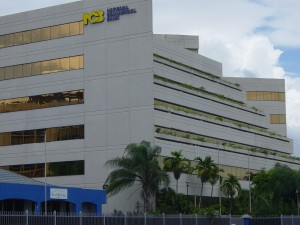
The average PE ratio for the Junior Market Top stocks is at 7.3 and the PE for the main market TOP 10, ends the week at 6.9. The average PE for the overall main market trades at 13.4 and 13.3 for Junior Market, based on 2017 estimated earnings.
At the close of the week, IC Insider.com’s TOP 10 stocks now trade at an average discount of 45 percent to the average of the market for Junior Market Top stocks and it remains at 48 percent for the main market.

NCB’s eye-popping $1,200 in 5 years

$100,000 invested in NCB would be worth $1.3 million in 5 years if price rose to $1,200 per share.

“Unless something changes, NCB Financial Group is the best buy on the Jamaica Stock Exchange and will be for the next 5 years. My exit price? $1,200!” That is a recent quote from a seasoned financial analyst.
That is astounding, for a stock that traded on the Jamaica Stock Exchange just below $90 this past week and around $95 on the Trinidad market and was selling at $19 at the start of 2015. To reach $1,200 in 5 years, would require growth in profits averaging close to 30 percent per annum and the PE ratio rising to match that growth rate. If that were to  happen it would mean that $100,000 invested now in the stock, would be worth $1,348,314 in 5 years.
How possible is that? First with interest rates receding to lower levels than they have been recently and seems poised to fall some more, PE ratios for stocks will increase. Not only will they increase but demand will increase for good quality stocks that are enjoying robust growth.
NCB delivered net profit of $14.7 billion for the nine months to June, this year, an increase of 48 percent over the prior year’s nine months profit of $9.9 billion. In the June quarter, profit grew 33 percent over 2016. Loans, the major fuel for growth in profits, increased a very strong 18 percent, year over year, in an economy that is probably growing around 2 percent in real terms.

Sagicor should be watched for strong gains over the next 5 years.

If growth were to pick up, and that seems likely, with several major projects on the drawing board to commence sooner than later, with some already started, then lending could picked up even more, boosting profit in the process.
In this regard, investors should not ignore Sagicor Group that reported profit jumping 31 percent to $5.65 billion, for the six months to June this year over 2016, with a 5 percent rise in revenues to $30.36 billion and was negatively affected by realized losses on securities that were sold. In the June quarter revenues slipped to $15.1 billion from $15.29 billion in 2016, as net investment income dropped from $5.55 billion to $4.24 billion, but net profit increased from $2.4 billion to $3.06 billion. While growth in insurance premium is important to fuel continued gains in profit, it is the ability to manage the investment funds effectively that will generate the growth that will make the stock price move.
Sagicor not only has the life assurance arm, but a commercial bank as well, health insurance and manages pension and other funds and a property development and management division.
Interestingly, these two companies are heavy dividend payers, investors stand to gain from sharply higher dividend income if the profit continue to grow close to current levels.

Watch impact of interest rate cut

Lower interest rates make real assets more valuable than before, as such the biggest change to stocks this coming week may well be guided by the recent cut in interest rates, with Treasury bill rates falling and the Bank of Jamaica cutting its overnight rate by 25 basis points.
At the close of last week, Caribbean Cream closed at $6.20 and helped to return it to the TOP 10 list, replacing Lasco Financial with its price rising to $4 from $3.40.
There were no other change to the two listings at the close of the week, even as the main market of the Jamaica Stock Exchange closed to week at record new high. For the coming week the cut in interest rates by Bank of Jamaica as well as a fall in the most recent Treasury rates could well positively impact prices.
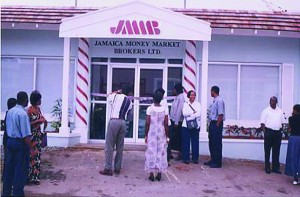
The average PE ratio for the Junior Market Top stocks is at 7.5 and the PE for the main market TOP 10, ends the week at 7.3. The average PE for the overall main market trades at 13.6 and 13.3 for Junior Market, based on 2017 estimated earnings.
At the close of the week, IC Insider.com’s TOP 10 stocks now trade at an average discount of 44 percent to the average of the market for Junior Market Top stocks and it remains at 46 percent for the main market.

JMMB pretax profit up 16%

JMMB Group profits up 16% before tax to June.

JMMB Group posted a 16 percent increase in pretax profit, for the June 2017 quarter over 2016, but increased taxation left shareholders with a much smaller 4 percent increase to $617 million, as taxes climbed from $264 million to $381 million.
Net revenues jumped 19.4 percent to $4.1 billion from $3.44 billion in 2016, operating expenses rose even faster at 20.5 percent to $3.1 billion. Net interest income improved noticeably, moving from $1.55 to $1.9 billion as interest income grew to $1.96 billion, from $3.62 billion and cost fell modestly to $2.04 billion. Gains from securities trading rose to $1.54 billion from $1.1 billion but with revaluation of the Jamaican dollar, the group earned $238 million in the quarter, down from $443 million as the group also benefited from one off gains in 2016.
The Jamaican operations contributed 23 percent to growth in operating revenues, putting it at 75 percent of overall group revenues while Trinidad with its economic challenges, remained flat with just a one percent increase and Dominican Republic generated an increase of 18 percent.
Growth in managing pension funds, unit trust and money market funds, with assets under management moving from $89.5 billion in June 2016 to $114.75 billion helped in moving fee income up from $298 million to $364 million over the same period.
The group gained commercial banking license approval in Jamaica, in the September quarter, started to convert some branches to accommodate the new thrust and were also preparing for the roll out of their pension fund management in the Dominican Republic.
Total assets grew from $252 billion to $268 billion between March this year and June, shareholders’ equity moved from $25.9 billion to $26.8 billion including $2 billion in investment revaluation reserves at June this year, lending was almost static at $48 billion versus $47 at March. Investment in resale agreements stood at $173.8 billion versus March’s $172.5 billion. Customers’ deposits rose to $50.87 billion from $49 billion in March, while securities sold under repurchase agreements stood at $169.5 billion, up from $156.6 billion as of March, representing a fairly significant increase of $14 billion in just one quarter.
On Monday, JMMB Group closed at $21.50 on the Jamaica Stock Exchange and TT$1.20 (J$22.80) in Trinidad on Monday. IC Insider.com projects earnings of $3 for 2017 up from $2.03 as of March this year, putting the PE at 7 times the March 2018 earnings. The stock continues to be IC Insider.com BUY RATED.

Two financial stocks return to TOP 10

Unlike last week when there were several changes to the TOP 10 lists, this past week had just two changes, with Lasco Financial returning to the junior market and Sagicor Group to the Main market lists.
CAC 2000 dropped out of the Junior Marketlisting, allowing for the return of Lasco Financial that dropped sharply in price, to close the week at $3.40. Mayberry Investments was edged out by Sagicor Group, dropping from $34.35 to $31.75 at the close of the past week.
Former TOP main market value stock, Barita Investments moved up from $9.40 during the previous week to close at $11.60 for a gain of more than 273 percent since September last year. The most recent Initial Public Offering, Stationery and Office Supplies that exited the TOP 10 after listing in the prior week, is fluctuating between $4 and just over $5, and should undergo some amount of wide price movements until demand and supply find some balance. JMMB Group climbed to $23 on Friday before closing back at $21.45, supply has dried up for this stock and it seems to be readying to make an early exit in the next few weeks.
The average PE ratio for the Junior Market Top stocks is at 7.5 and the PE for the main market TOP 10, ends the week at 7.2. The average PE for the overall main market trades at 13.3 and 13.2 for Junior Market, based on 2017 estimated earnings.
At the close of the week, IC Insider.com’s TOP 10 stocks now trade at an average discount of 42 percent to the average of the market for Junior Market Top stocks and it remains at 46 percent for the main market.