BOJ should cut inflation forecast

StatinInflation rate in Jamaica remains at a low level for October with the rate receding from 0.5 percent in September to 0.2 percent in the latest compilation by the Statistical Institute of Jamaica (Statin).
The rate of inflation for the calendar year-to-date was 1.1 per cent, while increase for the last twelve months to October is up 1.8 percent. The fiscal year-to-date registered an increase of 2.4 percent and is running well below the central bank’s forecast of 4.5 to 6.5 percent.
The month by month increase for 2016, should end just under 2 percent for the full year, suggesting that its time the central bank adjusts their fiscal rate target sharply down, with the price of oil under pressure and the prospect that electricity rates should decline with Jamaica Public Service switching to LNG to power their Bogue plant.

The fiscal deficit was wiped out by Peter Phillips as Minister of Finance after his fellow minister Omar Davies ran up huge deficit an high inflation under his watch

The fiscal deficit was wiped out by Peter Phillips as Minister of Finance after his fellow minister Omar Davies ran up huge deficit an high inflation under his watch

According to Statin, “the main contributors to this movement were the 0.5 percent increase in the index for the division ‘Food and Non-Alcoholic Beverages’ and 0.2 percent rise in the ‘Transport’ division.”
Higher prices for vegetables and starchy Foods’ with an increase of 1.6 percent and movement for the division ‘Transport’ mainly attributable to higher prices for petroleum locally impacted the overall increase in inflation. A decline in electricity rates charged to consumers helped to moderate the increase.
The continued low inflation is aided by a fall in oil prices and other commodities on the world market but most telling, is the elimination of the huge government fiscal deficit in the past. The large deficit helped to fuel high levels of inflation and severe instability in the rate of exchange for the local currency.

Jamaican GDP doubles 2015 growth

Image courtesy of arztsamui/FreeDigitalPhotos.net

Image courtesy of arztsamui/FreeDigitalPhotos.net

The Jamaican economy is growing in 2016 at twice the pace it grew in 2015 up to June, according to data released by the Statistical Institute of Jamaica, the entity that has the final say on the economic performance.
The economy that rose by 0.8 percent in the March quarter over the similar period in 2015 is up by 1.4 percent for the second quarter of 2016, compared to the similar quarter of 2015. If the trend were to continue, growth for the full year could hit 2 percent, the fastest pace of growth since 2006 with growth of 2.9 percent. The only other time since 2004 that the economy grew close the 2016 pace is 2007 when the economy grew by 1.45 percent and 1.43 percent in 2011.
Growth in 2015 over 2014 reflected an increase of 0.4 percent in the March quarter and 0.8 percent for the second quarter.
Agriculture added the most to GDP in Q2

Agriculture added the most to GDP in Q2

The 2016 second quarter increase, is attributed to improved performances in the Goods Producing industries 3.3 percent and the Services industries 0.8 percent but Mining & Quarrying industry declined by 1.9 percent. Increased outputs were recorded for Agriculture, Forestry & Fishing 9.4 percent, Manufacturing 0.6 percent and Construction 1.6 percent.Major growth in the service sector came from, Electricity & Water Supply grew by 5.0 percent, Hotels & Restaurants 1.3 percent, Finance & Insurance Services 1.4 percent.

Inflation set to fall below 2% for 2016

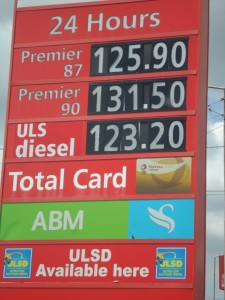
Fuel prices at the pumps in May 2015.

Fuel prices at the pumps in May 2015.

The inflation rate to August based on the consumer price index rose by 0.4 percent over July 2016, bringing the year to date inflation to 0.3 percent. With just 4 more months to go for the completion of the year and with the price of oil on the world market declining, Jamaica seems set to enjoy one of the lowest inflation for 2016, in decades.
The calendar year-to-date inflation is only 0.3 percent, while the year over year movement is 1.8 percent. IC Insider is forecasting the full year inflation to end just below 1.5 percent, barring major negative developments. If the forecast is closely achieved, it would be the lowest rate in four and a half decades and will better the 3.66 percent achieved in 2015, the previous lowest rate over the same period. The rate for 2016 would be well below the 4.2 percent forecast by the IMF for the calendar year and the Bank of Jamaica the fiscal year forecast to March 2017 with a target of 4.5 percent to 6.5 percent.
JPSAccording to Statin, inflation for August was driven mainly by the division ‘Housing, Water, Electricity Gas and Other Fuels’ which recorded the highest movement, 1.8 percent, primarily due to the increase in rates for electricity and water. The group ‘Food and Non-Alcoholic Beverages’ division increased by 0.4 percent and was influenced by the upward movement in the group ‘Vegetables and Starchy Foods’ up by 0.9 percent. The increases were partially offset by a fall in ‘Transport’ by 0.2 percent, due to lower petrol prices on the local market for the month of August.
The low level of inflation comes against the back ground of a 5 percent devaluation of the Jamaican dollar versus the US dollar and a tax package earlier in the year that saw an increase in the price of petroleum as well as a fiscal deficit that is close to zero and well below forecast.

40,100 Jamaicans found jobs

Staff at Derrimon Trading.

Staff at Derrimon Trading.

Jamaica’s unemployment rate rose in March this year, compared with the similar period in 2015, but 40,100 more Jamaicans found work in the 2016 period than at the similar time last year, data released by the Statistical Institute of Jamaica (STATIN) revealed.
The unemployment rate decreased for men from 10.3 percent to 9.6 percent but women had a big setback with unemployment for them increasing from 16.8 percent to 18.4 percent.
The year over year change resulted in the Employed Labour Force for March 2016 was 1,168,600 up from 1,128,500 reported in March 2015 and left the Unemployment Rate for March 2016 at 13.7 percent an increase of 0.5 percentage points when compared to the March 2015 rate of 13.2 percent.
StatinAccording to Statin, “the industry group “Wholesale and Retail, Repairs of Motor Vehicle and Equipment” provided employment for the majority (253,400) of the employed persons. This industry provided employment for the majority of females (117,100) but the largest number of males (157,100) were employed in the industry group “Agriculture, Hunting, and Forestry & Fishing”.
The number of persons classified as being outside the Labour Force fell by 49,000 (6.3 percent) to 735,400 in the March 2016 survey bringing the number of persons in the Labour Force to 1,353,500, which was 53,100 (4.1 percent) greater than the 1,300,400 recorded in March 2015.

Price increases slowed in July

Price fallWith more than half of the calendar year gone, overall price movements in Jamaica remained slightly negative at minus 0.1 percent, but inflation for the last twelve months amounts to 2.1 percent, while inflation since April is up 1.2 percent.
The rise in the Inflation Rate since April 2016, emanated mainly from 0.5 percent rise in prices in July 2016, according to the latest figures released by the Statistical Institute of Jamaica and a 0.9 percent movement in June.
July’s prices were mainly impacted by Electricity, Gas and Other Fuels rising 4.6 percent and Water Supply and Miscellaneous Services Related to the dwelling climbing 2.8 percent.

Increased fuel prices added to inflation.

Increased fuel prices added to inflation.


Food and Non-Alcoholic Beverages increased by a mere 0.3 percent due mainly to increased prices for vegetables and starchy foods. Price movements elsewhere for July were mild.
The decline in the price of oil on the world market in recent weeks should have a moderating effect on prices overall in August and September. Regardless, if inflation were to remain at the 0.5 percent per month as occurred in July the country is likely to enjoy one of the lowest year of inflation for some time and Jamaica seems set to report an inflation rate that is below 2 percent for 2016.

Prices up during May in Jamaica

Rising PricesPrices mostly rose in May resulting in Jamaica experiencing an inflation rate of 0.2 percent for the month over April this year with the calendar year to date figure still showing no signs of higher prices overall, with negative inflation of 1.4 percent, data from the Statistical Institute of Jamaica (STATIN) reveal.
According to STATIN, the main contributors to overall upward movement in May, were Food and Non-Alcoholic Beverages up by 0.1 percent, Housing, Water, Electricity, Gas and Other Fuels up by 0.6 percent and the Transport division advancing by 0.8 percent. The point-to-point movement, that is, inflation for the past year, is 2.1 percent.
“Mainly impacting the index for the division Food and Non-Alcoholic Beverages are increases of 0.1 percent and 0.3 percent in the index for the groups, Food and Non-Alcoholic Beverages respectively.

Petrol added to inflation in May

Petrol added to inflation in May

Within the division Housing, Water, Electricity, Gas and Other Fuels, the advance in the index for the group Electricity, Gas and Other Fuels of 1.6 percent was moderated by the fall of 1.4 percent in the index for the group Water Supply and Miscellaneous Services Related to Dwelling”, the Statin report stated. The increase in the Transport division was mainly as a result of higher petrol prices.
Other areas of price increase are, Alcoholic Beverages and Tobacco 0.1 percent, Clothing and Footwear 0.3 percent, Furnishings, Household Equipment and Routine Household Maintenance 0.3 percent, Health, 0.1 percent, Recreation and Culture 0.1 percent and Miscellaneous Goods and Services 0.2 percent. There were no increases for Education, Communication, Restaurants and Accommodation Services.

Deflation continues to April

Price fallJamaica is currently passing through a period of deflation according to data released by the Statistical Institute of Jamaica. According to the state entity responsible for gathering economic data, the consumer price index declined for the 4th consecutive month to April compared with the prior months, with the rare falling 0.40 percent in April compared to March 2016.
For the year to date there has been negative inflation of 1.7 percent.
The data was released today by the Statistical Institute of Jamaica (STATIN). According to STATIN “impacting the movement were the divisions Food and Non-Alcoholic Beverages recording a negative 0.5 percent and Housing, Water, Electricity, Gas and Other Fuels declining by 2.2 percent”. The fall recorded for the division Food and Non-BananasAlcoholic Beverages was due primarily fall in the prices of the group of Vegetables and Starchy Foods, falling by 2.6 percent. Housing, Water, Electricity, Gas and Other Fuels decrease, was due to lower electricity and water rates. Increased prices were seen Transport, due mainly to higher prices for petrol, Clothing and Footwear, Furnishings, Household Equipment and Routine Household Maintenance, Health, Recreation and Culture, Restaurants and Accommodation Services and Miscellaneous Goods and Services.

Services employed more Jamaicans

Antigua market interior

Jamaica’s unemployment rate declined in December last year, compared with the same period in 2014, as 31,400 persons more persons obtained employment than in 2014, according to data recently released by the Statistical Institute of Jamaica (STATIN).
Persons gaining employment went mostly in the Occupational group ‘Service Workers, Shops and Market Sales Workers’ with an increase of 15.9 percent or 34,700 persons, from 218,300 in December 2014 to 253,000 in December 2015, STATIN stated in their latest report on employment in Jamaica. The group ‘Elementary Occupations’ increased by 20.6 percent from 137,100 persons in December 2014 to 165,300 persons at the end of 2015.

Construction sector employed more in late 2015.

Construction sector employed more in late 2015.

The grouping ‘Clerks’ experienced a decline of 29.4 percent or 32,400 persons for the period, moving from 110,400 to 78,000.
The largest increase in the number of employed persons by Industry occurred in the groups ‘Wholesale & Retail, Repair of Motor Vehicle & Equipment’ and ‘Construction’ with an increase of 14,200 persons or 6 percent, while the group ‘Construction’ increased by 9,800 persons (12.9 percent).
Employment in the industry group ‘Agriculture, Hunting, Forestry & Fishing’ declined for the period moving from 199,600 in December 2014 to 194,000. Manufacturing suffered a decline of 5,200 persons (6.6 percent).

Unemployment edge down

From Left: Mr. Hugh Allen, Resolution Manager and Executive Director; Mrs. Natalya Petrekin, Service DeskThe unemployment rate for December 2015 for Jamaica edged down to 13.3 percent, a 0.9 percentage point decrease, compared to 14.2 percent in December 2014.
The number of unemployed persons decreased by 9,900, from 188,000 in December 2014, to 178,100 in December 2015, the Statistical Institute of Jamaica reported in April.
While the unemployment numbers decreased by just under 10,000 persons, more Jamaicans gained employment than the fall in the unemployed numbers. A total of 31,400 persons obtained employment in December 2015 over the similar period in 2014, resulting in 1,163,600 employed persons in the work force said by the STATIN to be 1,341,700 persons as of December 2015. In December 2014, a total of 1,132,200 residence in Jamaica were said to be employed.

Trade deficit continued to fall in 2015

Jamaica’s merchandise trade deficit for 2015 continues to improve with the period to October showing a decline to US$3.1 billion, 12.6 percent or US$449 million less than the US$3.56 billion in the comparable 2014 period.
Imports stood at US$4.17 billion, a decrease of 13 percent amounting US$627 million, while earnings from exports amounted to US$1.054 billion, a decrease of 14.5 percent or US$179 million, compared to the similar 2014 period.
PTL prod & Ser 10-15The main contributors to this overall decline in imports were Mineral Fuels that fell by US$668 million or 40 percent to US$1 billion in the 2015 period. “The reduction was due to lower volumes of crude oil and processed fuels as well as the fall in the prices on the international market’” the Statistical Institute of Jamaica (STATIN) stated in their release of the figures.
Traditional Domestic Exports – accounted for 66.2 percent of total domestic exports during the 2015 review period with the inflows being flat with that of 2014 at US$674 million. “Non-Traditional Domestic Exports earned US$344 million to October 2015, reflecting a 31.6 percent or US$159 million fall from 2014 as all sub-groups decreased,” STATIN stated in their release of the figures.
At the end of September imports in 2015 declined by US$581 to US$3.79 billion. Earnings from exports amounted to US$970 million, a decrease of 13 percent or US$145 million compared to the similar 2014 period leading to a narrowing of the merchandise trade deficit to September to US$2.82 billion, a fall of 13.4 percent.