 Inflation rose 1 percent in July, exceeding the 0.4 percent rise in June bring inflation for the year to July to 0.7 percent after the All Jamaica Consumer Price Index recorded negative inflation to June of 0.3 percent.
Inflation for the past twelve months to July rose 3.2 percent.
The upward movement in the July 2018 CPI was influenced mainly by a 3.4 percent rise in “Housing, Water, Electricity, Gas and Other Fuels,” the Statistical Institute of Jamaica (STATIN) stated. This resulted Statin said from increased electricity, water and sewage rates. Electricity, Gas and other Fuels and Water Supply and Miscellaneous Services Related to the Dwelling, registering increases of 5.8 percent and 1.6 percent respectively.
Food and Non-Alcoholic Beverages recorded an increase of 0.9 percent, influenced by a 2.9 percent upward movement in the prices of Vegetables and Starchy Foods. A 0.8 percent increase in the index for the Transport division due primarily to higher petrol costs also contributed to the movement in the inflation rate.
Prices jump in July in Jamaica
No Inflation in Jamaica
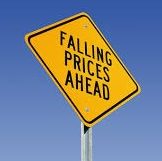 With 5 months having elapse for 2018 data put out by the Statistical Institute of Jamaica (STATIN) show Jamaica still having deflation of 0.7 percent, the same as in April.
According to STATIN, the All Jamaica Consumer Price Index recorded a negligible movement for May 2018, The main contributor to this movement was the 0.2 percent fall in the index for the heaviest weighted division ‘Food and Non-Alcoholic Beverages, due mainly to lower prices for agricultural produce, especially vegetables such as cabbage, carrot, sweet pepper, tomato and lettuce.
Tempering the declining items was a 0.2 per cent increase in ‘Housing, Water, Electricity, Gas and Other Fuels’, primarily resulting from higher electricity rates, offset by a reduction in water and sewage rates. May out turn brings inflation in the past twelve months to May to was 3.1 percent.
Jamaica’s inflation drops 0.4% in April
Data from the Statistical Institute of Jamaica reveals another month of falling prices for Jamaica with a decline of 0.4 percent in April.
April fall, follows negative 0.1 percent in February and March and no change in January. inflation for 2018 is now negative 0.6 percent and would reduce inflation over the past twelve months to 3.5 percent.
In April Statin stated that the main contributor to the deflation in March was a 1 percent fall in Food and Non-Alcoholic Beverages category, due to lower prices for agricultural produce resulting in a 4.3 percent reduction in index for the class Vegetables and Starchy Foods and Transportation also recorded a decline.
23,000 more Jamaicans employed
 More Jamaicans continue to gain employment as the economic growth gathers pace with 22,600 persons added to the employment list, an increase of 1.9 percent more persons being employed over the year to January.
The increased number of employed persons, lifted the employed in January 2018 to 1,206,600, up from 1,184,000 employed in January 2017.
Over the period, male employment increased by a mere 1,900 persons over the twelve month period to reach 664,200 in January 2018 while female employment increased by 20,700 or 4 percent to 542,400.
According to the Statistical Institute of Jamaica, the unemployment rate fell to 9.6 percent at the start of the year and is down sharply from 12.7 percent in January 2017. The lower rate of unemployment came as a result of decline in the total number of persons in the labour force and the increase in employment. In October last year the unemployment rate fell to 10.4 percent.
Deflation for Jamaica’s Q1
Prices declined for another month in Jamaica, according to data just released by the Statistical Institute of Jamaica (STATIN) but prices are still high than a year ago.
Statin stated that the All Jamaica Consumer Price Index declined for the second consecutive month as a negative 0.1 percent inflation rate was recorded for March 2018. The main contributor to this movement was the 1.0 percent fall in Food and Non-Alcoholic Beverages category, due to lower prices for agricultural produce resulting in a 4.3 percent reduction in index for the class Vegetables and Starchy Foods. Transportation recorded a decline of 0.4 percent for the period, resulting from lower fuel prices. Upward movement of a 3.2 percent in Housing, Water, Electricity, Gas and Other Fuels, primarily resulting from higher electricity, water and sewage rates help to negate the above mention declines. As at March 2018, the calendar year-to-date inflation was negative 0.2 percent and the movement in the index for the last twelve months is 3.9 percent.
Jamaican Economy grew 0.5% in 2017

Image courtesy of arztsamui/FreeDigitalPhotos.net
Preliminary estimate by the Statistical Institute of Jamaica (Statin) puts growth in the Jamaican economy at 0.5 percent for 2017, after it grew by 1.1 per cent in the fourth quarter compared to the similar 2016 quarter, data just released by Statin shows.
The result will be subject to revision when additional data is obtained. Growth in the final quarter, Statin stated “resulted from improved performances in both the Services Industries up by 1.1 percent and the Goods Producing Industries 1.2 percent.”
“All industries within the Services Industries recorded gains: Electricity & Water Supply, 0.4 percent, Hotels & Restaurants 5.8 percent, Transport, Storage & Communication 0.7 percent, Real Estate, Renting & Business Activities 0.8 percent, Wholesale & Retail Trade; Repairs; Installation of Machinery & Equipment 0.5 percent,

Growth in tourism was strong in 2017
Finance & Insurance Services 0.8 percent, Producers of Government Services 0.2 percent and Other Services 1.4 percent.”
The main contributors to growth in the Goods Producing Industries were Mining & Quarrying 14.7 percent, Manufacturing 0.3 percent and Construction 0.7 percent. The Mining & Quarrying industry benefitted from higher production levels at the alumina plants. The Manufacturing industry’s performance was attributed to increased output from both the Food, Beverages & Tobacco and Other Manufacturing sub-industries, due largely to the increase in beverages, bakery products and grain mill products.
However, Agriculture, Forestry & Fishing declined by 1.1 per cent. The performance of the Agriculture, Forestry & Fishing industry was impacted by heavy rainfall, the Statin report stated.
Zero inflation in Jamaica – January
 On average, prices in Jamaica hardly moved in the first month of 2018, according to data released by Statistical Institute of Jamaica (STATIN) as a result the inflation for the past 12 months ended at 4.8 percent.
“The inflation rate recorded a negligible movement according to the January 2018 Consumer Price Index,” Statin stated in their released today. “This was as a result of fluctuations recorded in the index for the heaviest weighted divisions: Food and Non-Alcoholic Beverages, Transport and Housing, Water, Electricity, Gas and Other Fuels. The highest weighted division, Food and Non-Alcoholic Beverages registered a fall of 0.2 percent, due mainly to the class Vegetables and Starchy Foods recording a decline in its index of 1.4 percent because of lower prices for starchy foods and vegetables.”
Housing, Water, Electricity, Gas and Other Fuels increased by 0.3 percent, primarily resulting from higher electricity and water rates. The index for Education rose by 0.5 percent.
Revaluation of the Jamaican dollar against the US dollar during the last two months of 2017 and improvement in weather conditions that resulted in more supply of local foods would have been major contributors to the moderation in inflation.
Unemployment in Jamaica drops to 10.4%
Unemployment in Jamaica took another fall in the latest survey, done by the Statistical Institute of Jamaica (STATIN) as 27,300 more persons gained employment over the 12 months period to October last year.
The latest data from Statin shows, the unemployment rate falling to 10.4 percent in October last year, “the lowest since October 2008,” Statin stated. According to Statin the rate of unemployment “has been trending downwards over the last decade”. The unemployment numbers are based on a Labour Force, of 1,347,600 representing a decrease of 6,500 compared to 1,354,100 in October 2016.
A total of 1,206,800 persons were employed in October 2017, representing 27,300 persons or 2.3 percent more than the 1,179,500 recorded in October 2016. Employment for males increased by 5,300 to 668,900 and for females an increase of 22,000 or 4.3 percent from 515,900 to 537,900 over the same period. The youth unemployment fell but remains high at 25.4 percent, the lowest since January 2008.
The overall unemployment rate for the country in July last year was 11.3 percent.
Jamaica’s inflation tops 5%
Inflation in December 2017, increased by 0.6 percent, bringing inflation for the year to 5.2 percent, according the inflation report put out by the Statistical Institute of Jamaica (STATIN).
According to Statin, “the movement was attributed largely to the upward movement recorded in the index for the divisions Food and Non-Alcoholic Beverages, 0.8 per cent and Housing Water, Electricity, Gas and Other Fuels, 1.2 per cent. The upward movement for the heaviest weighted division Food and Non-Alcoholic Beverages was primarily influenced by the class Vegetables and Starchy Foods which went up by 2.2 per cent. Higher prices for vegetables and starchy foods were the main contributors. Meanwhile, the increase for the division Housing Water, Electricity, Gas and Other Fuels was due mainly to a rise in the cost of electricity.”
Inflation in Jamaica for 2016, fell to the lowest level in decades, with the Consumer Price Index showing inflation rate at just 1.72 percent for the year, while 2015 ended with 3.7 percent increase.
Food prices pressure November’s inflation

Food category was main contributor to November’s inflation.
According to STATIN, the “movement was mainly the result of a 1.2 percent rise in the index for the heaviest weighted division Food & Non-Alcoholic Beverages. Transportation moved up by 1 percent due to higher petrol prices and airfares, and Education increasing by 0.2 per cent, as a result of an increase in the cost of CSEC examination fees. The impact of the month’s inflation was however tempered by the 0.9 percent fall in the index for the division ‘Housing, Water, Electricity, Gas and Other Fuels, with lower cost for electricity being the main contributing factor.”
Year-to-date inflation is 4.6 percent, while inflation for the past 12 months is up 4.9 percent and the fiscal year-to-date movement was 3.6 per cent.
The relatively large revaluation of the Jamaican dollar against the US dollar since September, will have a moderating impact on inflation going forward.