1990’s Jamaican like interest rates in Argentina

Argentina pushed interest rates to a record high of 60% today.

Argentina’s central bank on Thursday raised its benchmark interest by 15 percentage points to 60 percent, the highest in the world, after the peso plummeted to a new record low, Bloomberg news reported today.
According to the report, “the move comes one day after President Mauricio Macri announced he had requested the International Monetary Fund to speed up disbursements from a $50 billion credit line, in order to demonstrate the country had enough cash on hand to fund the 2019 budget without going further into debt.”
Earlier on Thursday the peso fell to a fresh record low of 40 to the U.S. dollar. It pared some of its declines following the central bank announcement. The peso is down 49 percent this year, the report concluded.
The move is reminiscent of moves by the Bank of Jamaica and sanctioned by the ministry of finance heading then by Dr. Davies that did enormous damage to the Jamaican economy from which the country has not fully recovered.

No sustained pressure on Jamaica dollar

BOJ pumped US$65M in FX market last week

Bank of Jamaica (BOJ) scheduled B-Fxitt auction last week saw 43 bids seeking to purchase US$39.9 million but only $15 million was on offer, leaving a large amount of unsatisfied demand.
Only 17 bids succeeded in getting a portion of the funds offered for sale, but then not every bid really wanted the funds. The bids left the average rate at $138.19, with $137.90 being the lowest rate that succeeded. The lowest fully successful bid was $137.97 for US$1 million. The lowest bid received was $131.10 to purchase US$1.5 million.
On Friday, BOJ offered US$40 million in what they called a flash intervention tool. On Friday August 31, last year BOJ also had a flash intervention sales that pushed the amount of buying in the foreign exchange market on that day to US$76 million. BOJ sold US$5m on the Wednesday of that week.
The flash intervention this past week, was clearly to satisfy the unmet demand from Wednesday’s auction, 42 bids were presented amounting to US$76.9 million leaving U$26.9 million of unmet demand. The average rate declined to $137.49, with the lowest accepted bid price being $136.65 and the highest being $138.70. The lowest bid that was fully allocated was US$8 million at $137.00. Bids came in as low as $129. The lowest bid that had some success was $136.65, and this compares with $137.90 on Wednesday, suggesting that those bids that did not succeed included a large amount of low bids made to satisfy the requirement that all dealers must put in a bid. On Wednesday, this week

BOJ sold US$65M into the FX market last week.

BOJ will be carrying out their usual auction at which US$15 million will be made available, to be followed by US$10 million each, on September 5 and 12.
On Thursday, dealers bought US$33.9 million at $136.37 and sold US$35.3 at $137.96, up from a rate of $137.48 on Wednesday. On Friday, US$73.2 million was purchased by dealers at $136.75 and they sold US$46.2 million at $137.90. On Monday dealers bought US$45.5 million at $136 and sold US$50.3 million at $137.52, a fall from Friday’s Average rate.

Hedging the foreign exchange rate

J$ rate stable for Wednesday

Bank of Jamaica offered US$15 million for sale today in the B-fxitt weekly auction and will auction a similar amount on Wednesday, 29 August.
US$10 million each are scheduled for auction on September 5 and 12. The country’s central bank sold US$10 million on August 15, at an average rate of $136.66 with just 14 of the 41 bids amounting to US$26.85 million, were successful.
At midday on Wednesday, dealers bought US$14.40 million at an average of J$136.6342 and sold US$9.75 million at an average of J$137.2364. At the close of trading on Wednesday dealers bought US$46.15 million at an average rate of $136.41 and sold US$35.57 million at $137.48.
Wednesday’s rates come against the background of dealers buying US$37.7 million on Tuesday at an average of J$135.57 from the public and selling US$37.7 million at an average rate of J$137.47.
On Monday, buying by dealers was US$47.3 million at 135.5055 and selling, US$49.3 million at an average of J$137.4537.

Understanding Jamaica’s fx market part 3

Understanding Jamaica’s fx market part 2


Prices jump in July in Jamaica

Inflation rose 1 percent in July, exceeding the 0.4 percent rise in June bring inflation for the year to July to 0.7 percent after the All Jamaica Consumer Price Index recorded negative inflation to June of 0.3 percent.
Inflation for the past twelve months to July rose 3.2 percent.
The upward movement in the July 2018 CPI was influenced mainly by a 3.4 percent rise in “Housing, Water, Electricity, Gas and Other Fuels,” the Statistical Institute of Jamaica (STATIN) stated. This resulted Statin said from increased electricity, water and sewage rates. Electricity, Gas and other Fuels and Water Supply and Miscellaneous Services Related to the Dwelling, registering increases of 5.8 percent and 1.6 percent respectively.
Food and Non-Alcoholic Beverages recorded an increase of 0.9 percent, influenced by a 2.9 percent upward movement in the prices of Vegetables and Starchy Foods. A 0.8 percent increase in the index for the Transport division due primarily to higher petrol costs also contributed to the movement in the inflation rate.

T&T central bank raised repo rate to 5%

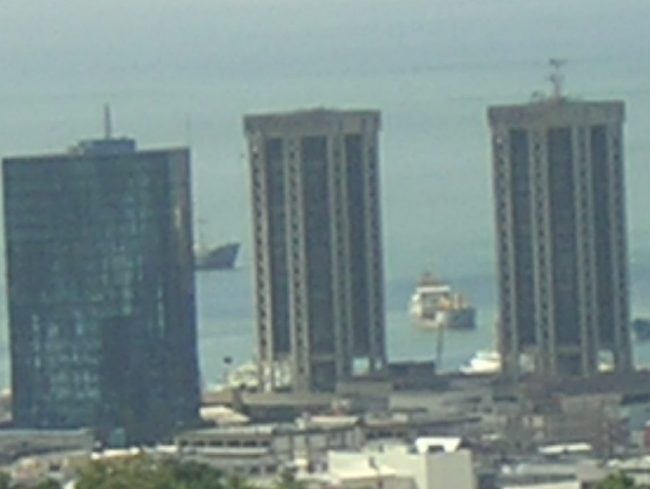
Down town Port of Spain, Trinidad.

Trinidad and Tobago Central Bank hiked the repo rate by 25 basis points to 5 percent in June, in response to rising rates in the United States and signs of some improvement in the Trinidad economy.
The bank said, “rising interest rates in the US combined with relatively stable rates domestically have pushed the TT-US yield differential on three-month Treasuries further below parity. The differential currently stands at -74 basis points. The US Fed has signaled that further hikes are planned in the context of the solid US growth outlook. Should this materialize it could further widen the negative TT-US interest rate differential if domestic interest rates remain unchanged.”
The Central Bank further stated, “on the domestic front growth in the first five months of 2018 has been concentrated in the energy sector and is expected to spill over into non-energy activities, and there are encouraging signs in distribution and a recovery of business credit, although construction remains sluggish. Meanwhile, headline inflation continued to be low, measuring 1.1 percent(year-on-year) in April 2018, up from 0.8 percent in the previous month.”
The central bank went on to state that “private sector credit growth maintained its positive momentum, rising in April by 5.8 percent (year-on-year). Lending continued to be driven by loans for refinancing and debt consolidation, while some rebound in business credit suggests that private sector confidence could be strengthening. Further, the commercial banks’ weighted average lending rate has been falling since December 2017 and stood at 8.15 percent at end-March 2018. Liquidity levels trended lower but remain comfortable.”

Investors push interest rate to 1.74%

Liquidity remains high, in the Jamaican financial market with investors driving the average to 1.74 percent on Bank of Jamaica (BOJ) 30 days certificate of deposit earlier this week, as demand of $24 billion chased $8.5 billion on offer.
In mid -July, more than $50 billion in government bonds expired with interest, but government took up less than $15 billion in new bonds, as it paid back the bonds in cash, using a large draw down from funds held at Bank of Jamaica by Public sector entities, amounting to $50 billion.
At the end of June, Public sector entities deposit at BOJ was $97 billion but fell to $46 billion after the payout of the bond. The payout added to the high level of liquidity in the market that helped drive interest rates down to 2 percent at the mid-July Treasury bill Auction.
On Tuesday, July 31, applications were received by BOJ for $8.5 billion BOJ 3 percent Certificate of deposit through a competitive price auction. The issue attracted 61 bids amounting to $24 billion, only 41 bids were successful, with the average yield of 1.74 percent. The lowest submitted rate was 1.39999 percent for $40 million and the highest was 6 percent for $40 million. The highest rate for full allocation was 1.83 percent in the amount of $100 million.
The average rate is below BOJ’s overnight rate of 2 percent and the last 91 days Treasury bill rate of 1.95963 percent.