Rum – dominant export product

Jamaica has been producing rum for centuries but with the bulk of it being exported in raw form, there is a great deal of change with several local branded processed and aged rums being produced locally and exported.
Appleton Estate rum is to be found all over the world and is one of the leading export brands dominating many overseas markets. A recent addition to the list is Worthy Park Estate rums. Last year rums brought in US$54.4 million dollars in export earnings, making it one of the country’s leading export items. The 2020 inflows were down 3 percent on exports of US$56 million in 2019, but it is up 38 percent from US$39.6 million earned in 2017. In 2018 exports of the prized product rose to $41 million. The good news is that the largest portion of rum exports are the higher value added brands rather than bulk rum that has far less value and contributes less to the local economy compared to the branded products.
Rum might be amongst Jamaica’s most popular export products but it not the only beverage making waves in the export market. A big surprise in the export market is the category of Alcoholic Beverages excluding Rum that grew 47 percent since 2017, from US$37.4 million to US$54.7 million, inching just one percent in 2020 over 2019, having jumped 46 percent in 2018 over 2017.
Non-Alcoholic Beverages rose 56 percent in 2020 over 2017 from US$12 million to US$18.65 and rose 33 percent in 2018 over 2017 and eight percent each in 2019 over 2018 and 2020 over 2019.

Coming tomorrow – Sauces could overtake rum as lead export
Declining sectors obscure export headway

Jamaicans have been talking about increased exports for a very long time; at best, the results have been mixed, with sharp declines in most traditional export products and new ones taking their places.

Image courtesy of dplanet/FreeDigitalPhotos.net

The mining sector comprising mostly bauxite and alumina, generated US$514 million or 36 percent less than the US$803 million in 2019, but that was just 4 percent lower than the amount earned in 2017. The closure of the alumina plant in Alpart towards the end of 2019 was the main contributor to the decline.
The country seems to be making some headway in increasing export earnings, with exports excluding sugar, coffee, scrap metals, mining and mineral exports, rising an attractive 61 percent since 2017.
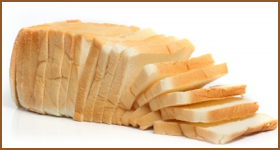
The bright spots for exports are rums, up 38 percent in 4 years, yams, ackee, the three Bs – bread, biscuits, buns and cakes, sauces, beverages, chemicals and other domestic exports.

Coming tomorrow – Rum exports

The stars in Jamaica’s export world

Jamaica’s export earnings fell in 2020 from US$1.516 billion to US$1.165 billion, but it was not all bad news on the export front. Excluding mining that fell sharply due partially to the closure of the Alpart alumina plant and a fall in re-exports of mineral and fuels, other exports actually increased as a group but not anything like the fall in other major items.

Coffee exports have fallen but could recover

Export data released recently by the Statistical Institute of Jamaica shows the dramatic change that occurred on the export front with the traditional products giving way to new ones. Traditional Exports excluding mineral fuels earned just US$18.85 million down from US$16 million in 2019 and a fall of 44 percent from US$33 million earned in 2017, due primarily to a 43 percent fall in the export of coffee.
Export earnings from manufacturing, agriculture, and mineral fuels exceed the mining sector in 2020, accounting for 56 percent of exports compared to 51 percent in 2017 and 47 percent in 2019, but excluding mineral fuels, the rest of exported products accounted for US$430 million for 37 percent of exports earning in 2020 compared to US$382 million or 35 percent in 2017 and 27 percent with US$416 million in 2019, the decline in sugar, coffee and scrap metals were the main contributors to the slower growth. Excluding the three products along with mining and mineral fuel, exports would have risen an attractive 61 percent since 2017.
For example, sugar, bananas, cocoa are now shadows of their former glory. In their places come yams, now the leading agricultural export, followed by ackee and coffee. Sugar that was said to be king at one stage, generated just US$6.5 million in export earnings last year, bananas brought in a mere US$726,000 citrus US$383,000 and cocoa US$348,000.

Coming tomorrow – Declining sectors obscure export headway.

NCB sold a stunning US$900M net in FX market in 2020

Jamaica’s largest commercial bank may not be Jamaica’s central bank, but their size and profitability probably rank them just behind Bank of Jamaica as the most powerful and influential financial institution in the country. NCB’s influence on the local forex market is only exceeded by that of BOJ, no other bank comes close, locally and their power and reach may have saved the country from steep devaluation and a major rundown of the NIR.

In September, after the Jamaican dollar rate versus the US dollar climbed above J$151, ICInsider.com was reliably informed that NCB management thought the rate was overextended and the bank sold large amounts into the market that helped to push the rate down towards $142 by the month end. The sales were made easier by the banking group, with the confirmation that they had raised US250 million from the issuance of diversified payment rights for payments due from correspondent banks.
NCB is not the darling of a large segment of Jamaican society as they dominate so much of the financial sector. Many Jamaicans see the multi-billion profit of the NCB Group as insane in a country where the majority struggle financially. Worse, many small customers of the bank see them as uncaring and lacking good customer relation practices.
The extent of NCB’s impact on the local foreign exchange market is not fully known. There are strong views by many with knowledge of developments within the financial sector that sees National Commercial Bank as the main players that influence the value of the Jamaican dollar and they do not like it.

Data out of the Bank of Jamaica for 2019 and 2020 indicate clearly that NCB impact on the market is extremely significant, but not in the manner many persons think. The data shows that when NCB is not a major net seller in the market, the exchange rate tends to depreciate and when they are not net sellers, the rate tends to appreciate.
In the period from the start of 2020 to late September, NCB sold a net of US$692 million to the market, in stark contrast to their nearest rival – Bank of Nova Scotia. BNS bought a net of US$38 million over the same period. In September last, NCB sold a net of US$127 million short and only had net purchase on just three days in the month.
NCB’s net sales in 2020 follow a significant US$453 million net sales for the twelve months in 2019. NCB sold a net of US$217 million to the system between October and December last year, bringing the total for the year to a stunning US$909 million.
According to a spokesperson for NCB, the bank actively manages its foreign exchange portfolio, buying long or selling foreign currencies short as their reading of the market dictates. Part of the net sales, they explained, came from the conversion of non-US currencies in overseas markets into US dollars. The bank is also involved in forward contracts for buying and selling of the currency, this publication was informed by someone close to the group.
Included in funds sold to the market in 2020 was the conversion of CAD$400 million that was sold into the system as US dollars.

Jamaica’s NIR jumps 50% in five years

Jamaica’s net international reserves (NIR) are at US$3.3 billion in March this year is now at the highest level since hitting a brief high of $3.67 billion in August 2017 has grown 50 percent since the start of January 2016 and 35 percent since the end of 2015.
During 2016, the NIR remained under US$2.6 billion up to November before reaching a high for the year of just over $2.7 billion and ended the year with an average of US$2.4 billion. The average for 2017 up to August was US$2.68 billion, with April with the highest of US$2.85 billion.

After peaking in August, the NIR fell back to US$3.1 in September and remained above the US$3 billion levels until October 2018, when it dipped briefly below and moved back above it in December of that year. It remained above $3 billion levels until June 2019 and dipped briefly below in July and August. In September, it moved back above it until April 2020. By September last year, the NIR slipped to US$2.75 billion and started to rebuilds reaching over US$3.1 billion in December, a month for healthy inflows and reduced demands. There was a slight slip below US$3 billion in January to US$2.98 billion, but by the end of February, it moved back above the US$3 billion levels before hitting a recent high of US$3.3 billion at the end of March.
The increased NIR comes against a dramatic fall in local interest rates, with the Treasury bill rates falling for 6 percent for 91 days instrument at the start of 2016, to just 1.94 percent in April this year. The latest increase in the NIR took place when tourism, one of the country’s major foreign exchange earners, was operating around a third of its capacity since the second half of 2020.

March inflation in Jamaica jumps sharply

Prices in the category of Housing, Water, Electricity, Gas and Other Fuels as measured by division the Statistical Institute of Jamaica (STATIN) surged sharply by in March 13.1 percent and the category of Electricity, Gas and Other Fuels’ jumped 8.6 percent to help send inflation for March to the highest increase for 2020 to date.
The major items of the increase were tempered by the decline of 1.8 percent in the index for the group ‘Water Supply and Miscellaneous Services Related to the Dwelling.’

According to Statin, the All Jamaica Consumer Price Index recorded an increase of 1.1 percent for March this year. The increase was due primarily to the upward movements in the index for the groups, ‘Actual Housing Rentals and Electricity, Gas and Other Fuels’, with the Housing, Water, Electricity, Gas and Other Fuels’ division increasing by an average of 4.6 percent for the overall inflation the index.
“The index for the heaviest weighted division ‘Food and Non-Alcoholic Beverages’ rose by 0.2 per cent, while the index for the ‘Transport’ division advanced by 0.5 per cent”, Statin advised.
For the review period, the calendar year-to-date inflation rate is negative 0.6 percent, with January having negative inflation of 1.6 percent and February 0.1 percent, while the fiscal year ending in March, the inflation rate was 4.4 percent and the rate for the past twelve months is 5.2 percent.

Jamaica’s unemployment drops again

Jamaica’s unemployment rate has dropped from 10.7 percent in October last year to 8.9 percent in January this year, which is 1.5 percentage points higher than the rate in January 2020, data from the Statistical Institute of Jamaica shows.
According to the body charged with gather and reporting on Jamaica’s economic data, there were 1,194,800 employed persons at the time of the survey, 74,300 or 5.9 percent fewer persons compared to January 2020. “The largest decline in employment by occupation was among ‘Service Workers and Shop and Market Sales Workers’, while the industry with the largest decline in employment was ‘Accommodation and Food Service Activities,” Statin said.

Jamaica’s 2020 trade gap narrowed sharply

Jamaica spent US$1.7 billion less on imports in 2020 than in 2019 but still imported a staggering US$4.71 billion in goods during the year, at the same time, the country’s exports fell $427 million or 26.4 percent to $1.22 billion, a release by the Statistical Institute of Jamaica (STATIN) shows.

Oil drilling offshore

Mining exports fell by $288 million for the year, accounting for almost all of $293 million in the decline in traditional exports. Total Non-Traditional exports fell 9.3 percent or by $59 million to $568 million as the category Mineral Fuels etcetera fell by 26 percent or $77 million to $220 million from $297 million in 2019. This category involves mostly the sale of fuel to aircrafts and ships leaving Jamaica and exports of lubricants.
Interestingly, both imports and exports declined by 26.4 percent for the year as imports fell by 26.4 percent from US$6.4 billion in 2019. STATIN states that the decline in imports was largely due to lower imports of ‘Fuel and Lubricants’ and ‘Raw Materials and Intermediate Goods’, which fell by 48.8 percent and 17.1 percent, respectively.
“The decline in total exports was mainly influenced by a reduction in the export of Alumina which fell by 39.8 per cent and “Mineral Fuels” by 36.1 percent,” the release stated.

Consolidated Bakeries Miss Birdie Easter bun.

While the data shows some disappointing areas other than mining and Mineral Fuels, etcetera, there are a number of bright spots on the non-traditional front. Food exports climbed 12 or by $22 million to $207 million, with yams increasing by 24 percent and adding $7 million to end at $37 million. The category of Breads, Biscuits, Buns, Cakes etc., grew 13.8 percent to $25 million while sauces climbed a strong 24 percent to $30 million. Other Food Exports grew by 23 percent to $33 million and other domestic exports jumped 151 percent to $9 million.

57% jump in T-bill rates

The latest Treasury bills issued by the Government of Jamaica saw a big jump in interest rates on two instruments, with the 91 day T-bill jumping by 57 percent compared to the rate in March, at the same time, the 182 days instrument rose by 36 percent.
The April auction attracted total bids of $3.6 billion for the $2.2 billion offered for three different maturity dates.
The T-bills for the 91 days ended with an average yield of just under 1.94 percent, up nearly 57 percent from 1.235 percent at the March 12 auction. The 182 days note jumped 36 percent to just under 2.071 percent and the 273 days note ended at 2.469 percent for the $800 million on offer.
The March auction had just two issues amounting to $1.4 billion, but it attracted $7.4 billion in bids while the February issues pulled in $6 billion for the $2.2 billion offered in three issues, resulting in the average yields were slightly below the latest issues in April. The rates for February ended at 1.52831 percent, 1.96323 percent and 2.41164 percent, respectively.

Tourism seems to bounce big in March

Jamaica’s tourism industry is bouncing back at a better pace than is generally known. Data on passenger movements through the country’s two major international airports show a fall of 51 percent compared to March 2020, but that is a major improvement over the 78 percent decline in the first two months this year.

Tourism is Jamaica’s largest earner of foreign exchange.

Admittedly, last years’ March numbers were negatively affected by the closure of the country’s borders on March 21, but the absolute numbers travelling in March is up substantially over both January and February this year, a sign of an improving market. With the country’s borders closed in the 2020 period, there were virtually no visitors entering the country until the end of May last year.
According to data from Aeroportuario del Pacifico, that manages many of Mexico’s airports and those in Montego Bay and Kingston, Jamaica, show the total number of passenger movements through the Kingston Airport falling 49.7 percent in March 2021 to 36,700 passenger movements, from 72,900 movements in March 2020. For the first three months of 2021, total passenger movements through Kingston’s Airport fell 67.4 percent, from 354,700 in 2020 to 115,500.
A better gauge of the rebound is the month over month change, with total passenger movements in March 2021 being up 22 percent over the 30,100 passenger movements in February this year. Kingston is not the main entrant or departure point for tourist visiting.
Montego Bay Airport saw a fall in the number of passenger movements of 50.5 percent in March 2021, from 261,500 in March 2020 to 129,400 in March this year. For the first three months of 2021, total passenger movements for the Montego Bay Airport fell 73 percent, from 1,133,900 in 2020 to just 304,600. The total number of passenger movements in March 2021 was, however, 71 percent more than the 75,600 handled in February 2021, an indication of a strong recovery trend.