Remittance flows into Jamaica play a critical role for the country, it is the second largest inflow of foreign exchange after tourism. While tourism has now reached record levels for September and October, remittances fell US$16 million in September this year from the same period last year, with the country receiving U$288 million or 5.3 percent less than in 2021.
 September is the fifth month for the year to register a decline and follows August with an increase of 12.7 percent.
The decline brings the year to date fall to 1.9 percent with a total intake of US$2.55 billion, just under a billion dollars to match the total 2021 inflows of $3.5 billion. August registered a strong 12.7 percent increase to $307 million over the $273 million in 2021, but follows declines of May 8.1 percent, 4.7 percent in June and a fall of 5.6 percent in July.
Notwithstanding the decline this year, remittances are still well ahead of the pre-pandemic inflows of $2.4 billion in 2019.
Jamaica remittances fell in September
Jamaica tourists’ arrivals 17% upon 2019
Tourist arrivals to Jamaica likely jumped 17 percent in September 2022 over 2019, the best September on record, data out of Sangster International Airport in Montego Bay indicate. According to a Tourismanalytics.com report, the total number of passengers handled by the airport in the month was 300,600, up from the 256,900 passengers passing through the airport in September 2019 and well up on the 191,000 passengers dealt with in September 2021.

Growth in tourism expected in 2023
At the same time, 137,000 passengers passed through the Norman Manley airport in Kingston in September, up from only 73,000 passengers in September 2021 and marginally down 3 percent from the 141,029 processed in September 2019.
Total passenger movements for Montego Bay increased 83.2 percent, from 1,761,000 in 2021 to 3,225,800 in the first nine months this year and was 89.1 percent of the 3,622,100 passengers handled in the same period in 2019.
Kingston Airport handled processed 99.6 percent more passengers for the first nine months of 2022, an increase from 565,900 in 2021 to 1,129,400 or 20 percent less than the 1,410,142 passengers handled in 2019.
BOJ pushes interest rate higher
Bank of Jamaica which increased the overnight rate over the past year by 550 basis points to 6 percent in August has pushed the rate to 6.5J percent in its latest decision.
 According to the Central Bank, while “the key drivers of inflation and other economic indicators are trending in the right direction, conditions have not sufficiently solidified to ensure that inflation is sustainably on a downward path.”
“Bank of Jamaica is also concerned about the slow pace at which interest rates on local currency deposits and loans have responded to its policy signals. In a context where the Bank’s policy rate has increased by 500 basis points (bps) between end-September 2021 and end-July 2022, the weighted average deposit rate offered by deposit-taking institutions to the public has increased by only 37 bps.”
“ In addition, the pace of monetary tightening among Jamaica’s main trading partners has accelerated. On 21 September 2022, the Federal Reserve Board raised its interest rate target by 75 bps, 25 bps more than anticipated by the Bank. The Fed also changed its forward guidance to signal that interest rates could rise to 4.4 percent by end-2022 and to 4.6 percent by end-2023, compared to its previous median projections of 3.4 percent and 3.8 percent, respectively. This more aggressive stance could result in US dollar assets becoming more attractive relative to those denominated in Jamaican dollars, which could cause capital outflows, prompting a faster pace of exchange rate depreciation and, consequently, a derailment of the Bank’s efforts to manage inflation.”
Jamaica tourist arrivals above 2019?
Growth in tourism in August 2022 exceeds 2019
Tourist arrivals to Jamaica may have exceeded 2019 numbers for the first time since the tourist industry suffered a major decline following the advent of Covid-19 in 2020, data from Sangster International Airport in Montego Bay shows.
The airport handled 1.1 percent more than the 401,500 passengers in August 2019 bringing total passenger movements in August 2022 to 405,800, which was 5.7 percent fewer than the 430,300 handled in July this year and was 2.9 percent fewer than the 443,100 passengers handled in July 2019. The Airport handled 294,100 passengers in August 2021.
The Norman Manley International Airport in Kingston, Jamaica handled 184,400 total passengers in August this year, an increase of 4.6 percent over July and almost twice the numbers in August last of 97,300 passengers. Traffic in August 2022 increased by 4.6 percent from 176,300 total movements in July 2022 to 184,400 in August 2022.
For the first eight months of 2022, Sangster International handled 86.3 percent more passengers, from 1,569,900 in 2021 to 2,925,100. The number of passengers this year to August is 87 percent of the 3,365,200 passengers handled in the similar period of 2019. Through the first eight months of 2022 Kingston’s Airport saw total passenger movements grow by 101.3 percent, from 492,900 in 2021 to 992,100 in the first eight months of 2022.
Inflation in Jamaica now running under 5%
Inflation in Jamaica continues to decline and running well within the Bank of Jamaica target of 4 to 6 percent since the latter part of 2021, with inflation since October at 5.3 percent and 4.6 percent per annum since November last year.
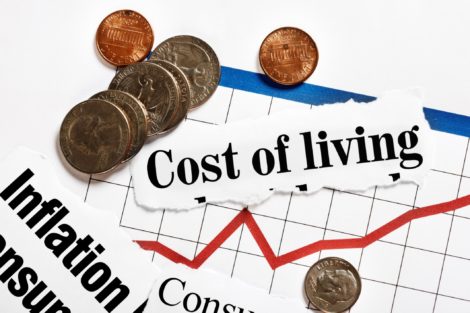 In the next few months, inflation looks set to dip even more with commodity prices falling sharply with the price of fuel which is now under US$90 per barrel, set to send inflation locally down sharply.
As measured by the Consumer Price Index, Inflation increased by 0.7 percent for July 2022, the Statistical Institute of Jamaica (STATIN) reported this week, bringing inflation since July last year to 10.2 percent, the government agency stated. The July 2022 inflation comes in well under the 1.7 percent increase in July 2021 but in line with the Inflation for June last year of 0.7 percent.
This increase for July, Statin states, was due mainly to a 1.4 percent increase in the index for the heavily weighted ‘Food and Non-Alcoholic Beverages’ division, with ‘Vegetables, tubers, plantains, cooking bananas and pulses’ rising 3 percent, ‘Cereals and cereal products’ up 1.7 percent, ‘Meat and other parts of slaughtered land animals’ increasing 0.8 percent and ‘Fish and Seafood’ up 0.7 percent.
Inflation in July was impacted by one off increase in toll rates on the two toll roads.
Inflation under 6% since October
Inflation increased by 0.8 percent for June 2022, the Statistical Institute of Jamaica (STATIN) stated in a release on Friday, with the rate for the past twelve months to June 2022 at 10.9 percent, the same level as May.
This upward movement in June was primarily due to a 1.7 per cent increase in the Food and Non-Alcoholic Beverages index and a 0.9 percent in the Transport division, Statin indicated. There was a 0.5 percent decline in Housing, Water, Electricity, Gas, and Other Fuels.
Inflation for the fiscal year to June is 1.1 percent, or an annual rate of 4.4 percent, well within the 4-6 percent range of the BOJ target and lower than the 5.8 percent change since October last year.
Jamaica on cusp of record employment
Jamaica recorded the second highest level of employment ever in April, data from the Statistical Institute of Jamaica reveals, with 1,269,300 workers, just 3,400 short of the 1,272,700 individuals employed in January 2020, the previous high, resulting in an unemployment rate of 6 percent compared to 7.3 percent in the 2020 period.
 The April outturn is the lowest level of unemployment on record, beating the 6.2 percent in January this year.
The labour force was 1.373 million in January 2020, some 20,000 more than 1.35 million employed in April this year, but the number of persons classified as unemployed is 81,000 compared with 100,200 in January 2020. There are 746,000 persons outside the labour force, including retirees and persons in their mid teen years, but the job seeking rate is 3.8 percent or around 51,000 persons and is down from 4.9 percent at the beginning of 2020. The 2020 employment was the last report before the country saw its borders closed in March to 12.6 percent in July as 150,000 persons lost their jobs.
The fall in the unemployment rate occurred when the stopover tourist arrivals were only 72 percent of what it was in 2019. The latest data out of the sector indicating that it is back to 2019 levels would lead to more persons being employed in the industry for the June quarter as such, the numbers for July are likely to show that the unemployment rate will likely decline further, with the country recording record employment.
Has Jamaican economy fully recovered?
The Jamaican economy grew 6.4 percent in the first quarter of this year over a similar period in 2020, according to the Statistical Institute of Jamaica, overall GDP was still less than for the first quarter in 2020 but not far behind and with the faster pick up in visitor arrivals in the June quarter and its linkages to the rest of the economy GDP could be back to 2019 levels.

Image courtesy of arztsamui/FreeDigitalPhotos.net
The economic rebound is happening much faster than official reports suggested. Most likely, except for mining, the overall economy could exceed that of 2019, early data from the tourism sector for the June quarter suggests. The hotel and restaurant sector that grew 107 percent in the March quarter over 2022, with the tourist arrivals at just 72 percent of 2019 outturn. Data of visitor arrivals in the June quarter show the sector looks like it may come in around 97 percent of 2019 and will help push the industry to near full recovery compared to a 78 percent the hotel and restaurant sector represents in the 2022 first quarter versus 2019. The only other sectors that are down significantly are mining at a mere 28 percent of 2019 and Other Services at 85 percent of that in 2019.
Agriculture is the best performing sector
Statin puts output for the economy in real terms at $189.9 billion at the end of March, just shy of the $191 billion for the first quarter of 2020 but 3 percent off the $195.7 billion in the 2019 first quarter. The economy would need to grow 7.3 percent in 2022 in the second quarter to equal the 2019 outturn of 197 billion.
The data for GDP going back to the early 21 century reveal that the country’s GDP growth has been anaemic as the 2019 GDP of $197 billion is just above the 2008 first quarter of $194 billion.
BOJ hikes interest rate higher to 5.50%
The Bank of Jamaica hikes its overnight rate once more by 0.50 percent to 5.50 percent following the latest meeting of the Monetary Policy Committee (MPC).
The decision the bank stated was “unanimously agreed to” by MPC who “also decided to continue pursuing other measures to contain Jamaican dollar liquidity expansion and maintain relative stability in the foreign exchange market.”
The Committee noted that “while inflation at May 2022 of 10.9 percent was lower than inflation at April 2022, core inflation remained elevated and headline inflation is likely to continue to breach the Bank’s target range over the next year.”
The MPC noted that its current decision reflects a cumulative increase in the policy rate of 500 bps since October 2021, which has taken the policy rate closer to the level that the Committee considers appropriate. The bank stated that “the measures are also aimed at reducing economic demand and, consequently, the ability of businesses to pass on price increases to consumers. These decisions are also expected to continue to support a relatively more stable foreign exchange market.”
Tourism arrivals 95% of 2019 for Jamaica
The Jamaica Tourist Board’s last release of tourism arrivals to the country is for March this year, nearly three months away, unacceptable for one of the country’s leading industries.
Tourism arrivals in April & May down just 5% on 2019
Data for March from the Jamaica Tourist Board shows the county welcomed 215,789 stopover visitors, some 29 percent less than March 2019. The Tourist Board is yet to release April numbers, but data out of Sangster International Airport suggests that arrivals in April exceeded those for March, to be the best month for the year to date. Indications are that tourist arrivals could be off by just 5 percent from 2019, the year before the closure of the sector back in 2020. Similarly, data indicate arrivals through the Montego Bay airport in May are 9 percent less than in April, some 5 percent lower than in May 2019.
The April and May figures mark a major about turn for the sector. January saw 131,730 stopover arrivals, down 45 percent from the 216,509 they came in 2019 the JTB data shows, with 162,882 arrivals for February, down 36 percent from the 220,046 in 2019.