Bank of Jamaica held its policy interest rate at 7 percent, citing concerns that there are likely to be temporary upticks in inflation above the target range during the June and September 2023 quarter, affected by recent increases in the cost of communication services, the national minimum wage, seasonally higher agricultural prices as well as pending increases in other regulated prices.
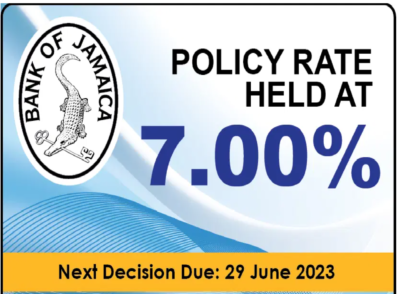 According to the Central Bank, annual inflation is projected to again be within the Bank’s inflation target range of 4 to 6 percent by the December 2023 quarter, but it noted that both core inflation and the consumer price indices are now within the 4-6 percent band at 5.7 and 5.8 percent up to April this year.
To continue underpinning inflation returning to the target range and to underwrite continued stability in the foreign exchange market, the Monetary Policy Committee (MPC) unanimously agreed to continue to hold the policy rate and maintain tight Jamaican dollar liquidity in the money market and to foster relative stability in the foreign exchange market.
BOJ holds policy rate at 7%
Government must shake up BOJ
Inflation has moderated substantially since the sharp spike in 2021 and the Bank of Jamaica has some role in it, with tighter monetary policy, but the price may be much greater than may be visible currently. A look at BOJ reports on inflation since 2021 is very worrying, when compared with the actual outcome, suggesting that the MPC that is guiding the BOJ has done a terrible job in its forecasts. This is a matter the Minister of Finance must carefully look at and so correct what is clearly a major area of concern in managing a very critical part of the country’s economy.
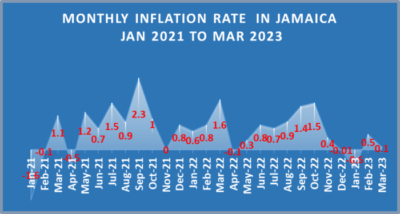 The job of fighting high inflation may be substantially done for this round, how efficiently was it executed is another matter that the country needs to have answered. A careful look at reports emanating from the Bank of Jamaica tells a tale of what looks more like guesswork, than scholarly assessment. Don’t take our word for it, compare BOJ’s utterances since 2021 and their outturn.
Up to April 2021, BOJ fiddled around telling the country that inflation was well under control and that it would remain within the band of 4-6 percent for two years, that’s before they quickly found out that it was not going to be so. Even then rather than acting promptly, they waited until August to announce an increase in the overnight rate, although admittedly they started to pull money out of the market earlier by way of certificate of deposits.
Something must be terribly wrong that within a month of assuring the Minister of Finance that all will be well they had a change of mind. The same thing seems to be happening currently, with inflation set to be within, or very close to the 4-6 percent range in April well ahead of the forecast made by the BOJ at their March meeting when they stated that the target would not be reached until the fourth quarter this year.
The Governor of the Central Bank informed the Ministry of Finance in April 2021, that they could not increase interest rates as that would trim economic growth. But by May 2021, they were singing a different song of higher inflation and forecast for increased rates.
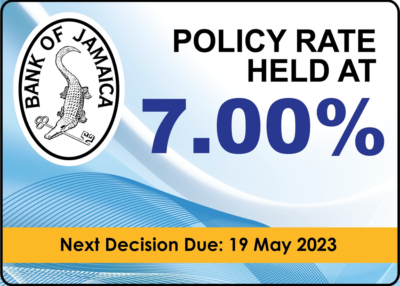 In May, last year they made an erroneous statement that inflation was still moving higher and would increase over the next two months, in fact the underlying data was suggesting that it was improving. Importantly, at their last meeting at which they reviewed the state of inflation they felt so comfortable that things were in line with their forecast that the next meeting was set for May. Had they looked at the real message that had been screaming at them for 2022 and more so since November they would have taken action to reduce overnight interest rates from then.
The MPC release stated, “Annual inflation is projected to continue to fall to the Bank’s inflation target range of 4.0 to 6.0 per cent by the December 2023 quarter. One-off regulated price adjustments may, however, result in a temporary uptick in inflation.”
“Notwithstanding these positive developments, the MPC noted that the risks to the inflation outlook remain elevated. In a context where the domestic economy continues to grow, labour market shortages carry the potential for future wage adjustments that can put upward pressure on inflation. Higher inflation could also result from a worsening in supply chain conditions and higher commodity prices if there are further geo-political disruptions. Among the factors that could lead to lower-than-projected inflation, weaker-than-expected global growth could negatively affect domestic demand, and some projected adjustments to regulated prices may not materialise.”
Therefore, to continue underpinning inflation returning to the target range and to underwrite continued stability in the foreign exchange market, the MPC unanimously agreed to hold the policy interest rate at 7 percent, to maintain tight Jamaican dollar liquidity in the money market and to continue fostering relative stability in the foreign exchange market. The Bank’s liquidity management strategy incorporates the impact of the one percentage point increase in the domestic and the foreign currency Cash Reserve Requirements applicable to DTIs, effective 01 April 2023.”
BOJ pushes interest rate higher
Bank of Jamaica which increased the overnight rate over the past year by 550 basis points to 6 percent in August has pushed the rate to 6.5J percent in its latest decision.
 According to the Central Bank, while “the key drivers of inflation and other economic indicators are trending in the right direction, conditions have not sufficiently solidified to ensure that inflation is sustainably on a downward path.”
“Bank of Jamaica is also concerned about the slow pace at which interest rates on local currency deposits and loans have responded to its policy signals. In a context where the Bank’s policy rate has increased by 500 basis points (bps) between end-September 2021 and end-July 2022, the weighted average deposit rate offered by deposit-taking institutions to the public has increased by only 37 bps.”
“ In addition, the pace of monetary tightening among Jamaica’s main trading partners has accelerated. On 21 September 2022, the Federal Reserve Board raised its interest rate target by 75 bps, 25 bps more than anticipated by the Bank. The Fed also changed its forward guidance to signal that interest rates could rise to 4.4 percent by end-2022 and to 4.6 percent by end-2023, compared to its previous median projections of 3.4 percent and 3.8 percent, respectively. This more aggressive stance could result in US dollar assets becoming more attractive relative to those denominated in Jamaican dollars, which could cause capital outflows, prompting a faster pace of exchange rate depreciation and, consequently, a derailment of the Bank’s efforts to manage inflation.”
Bank of Jamaica jacks up interest rate 1.5%
Bank of Jamaica (BOJ) jacks up its policy interest rate offered to deposit-taking institutions on overnight placements by 150 basis points to 4 percent per annum, effective 21 February 2022 and brings to four the number of increases implemented since September 2021.
BOJ interest cuts overnight rate.
According to a release from BOJ the bank also decided to pursue stronger measures to contain Jamaican dollar liquidity expansion and to maintain stability in the foreign exchange market. Finally, consistent with meeting its inflation target sustainably in the medium term, the MPC agreed to consider maintaining or expanding its suite of policy measures at subsequent policy meetings. This position is subject to inflation, inflation expectations and other macroeconomic data evolving as projected.
In general, monetary policy decisions taken by Bank of Jamaica are aimed at ensuring that the annual increase in the prices of consumer goods and services (i.e. inflation) remains within the Bank’s inflation target of 4 percent to 6 percent, the bank stated.
BOJ cuts overnight rate to 0.5%
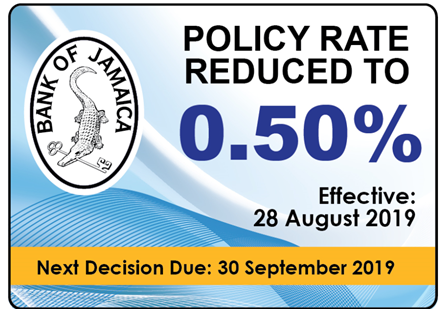 Bank of Jamaica cuts the overnight policy interest rate by 25 basis points to just 0.50 percent, effective Wednesday, 28 August 2019.
According to the central bank, the decision reflects the bank’s assessment that inflation is projected to average 4.3 percent over the next eight quarters, within the inflation target of 4 percent to 6 percent. Over the medium term, the forecast is for inflation to gradually approach the midpoint of the Bank’s target, albeit at a slower pace than previously expected. The inflation forecast is mainly predicated on the continued impact of low domestic demand conditions relative to the economy’s capacity, slower growth among Jamaica’s main trading partners and declines in international commodity prices. It also accounts for the impact of imminent changes in the fuel mix in the domestic energy sector on electricity rates.
As with previous reductions, the latest lowering of the policy rate is intended to stimulate a faster expansion in private sector credit, which should lead to higher economic activity.
Annual inflation to July 2019 reported by the Statistical Institute of Jamaica was 4.3 percent, up from 4.2 percent to June 2019 and 3.2 percent to July 2018. The marginal uptick in inflation mainly reflected the impact of increases in the prices of food items as well as an increase in electricity rates, BOJ stated. With this outturn, inflation remained within BOJ’s target of 4 percent to 6 percent for the third consecutive month.
Bank of Jamaica anticipates that inflation will decelerate to 3.7 percent in September 2019, as energy-related prices, fall before accelerating to 4.7 percent by December 2019 as food price inflation accelerates in the context of hot, dry weather conditions.
BOJ interest cuts overnight rate.
Inflation is expected to be supported by continued growth in domestic economic activity, partly in response to the lowering of the policy rate over the last eight quarters.
Over the March 2020 to June 2021 quarters, inflation is projected to remain low, in the range of 3 to 5 percent, mainly reflecting the impact of lower oil prices, more efficient domestic energy generation and low inflation among Jamaica’s main trading partners. The influence of these factors will, however, be offset by the impact of Bank of Jamaica’s past monetary accommodation.
Inflation is projected to return to the midpoint of the target, slowly over the ensuing three years. Of note, the projected trajectory of inflation is lower than previously forecasted. This reflects the Bank’s view that inflation expectations are lower than previously assessed and that the projected pace of expansion in domestic demand in the period will be slower due to headwinds from the global economy.
Jamaican government screwing savers
 The Government of Jamaica is screwing savers and making real estate and stock market investors rich, the exact opposite of what the PNP government did in the 1990s managed by Dr. Omar Davies.
Davies who managed the finance portfolio for the government led by his party, created a paradise for the moneyed class, by having a prolonged period of excessive high interest rates that slaughtered the private sector and killed off many viable financial institutions. Jamaicans to this day continue to suffer for the ill-advised and protracted policy.
The JLP led government has moved in the direct opposite direction, by severely hurting savers. People with money are getting paltry returns by putting funds in banks and not much more if they get into riskier bonds, while savvy investors who understand the stock market are making a killing investing their money in stocks. Added to that, many of the savers are pensioners and must pay tax on the interest earned, thus further reducing the return on investment. At the same time, government sells shares in Wigton Windfarm to a select group of more than 31,000 Jamaicans who are likely to benefit in two ways from the current policy.
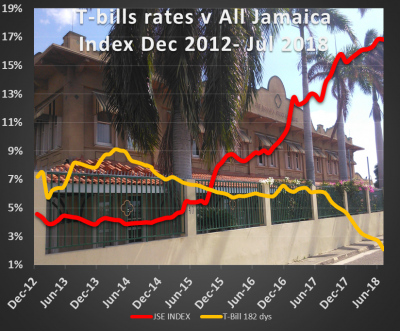
Stock market investors making a killing while savers get caned.
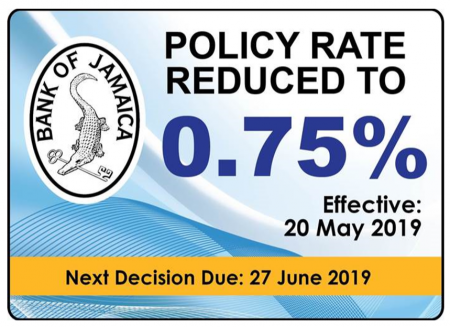
The current valuation of local stocks will result in the stock price jumping and handing many a handy profit. The latest move by the central bank in chopping the overnight rate to 0.75 percent is going to increase the valuation of stocks above present levels as investors find the dividend yield of many stocks more attractive than money market instruments.
While the central bank lowers the rate to stimulate the economy, the government has artificially helped in keeping bank lending rates much higher than needed by taxing bank customers with high bank taxes that results in interest rates being around 3 percent points higher than they should. This is where the focus needs to be and not on lowering on savings rate to stimulate the economy. The time for removing the distortion in taxes on banks is long gone. The situation is that banks do not pay the high levels of taxes consumers do, as banks pass on the cost to the end user. Lowering the high bank taxes will do far more to cut lending rates and stimulate the economy than the foolish cutting of the savings rate.
Treasury bill rates plunged
 Treasury bill rates plunged at the latest auction to raise $1.4 billion for Government of Jamaica held today.
At the latest Treasury bill auction the rate on the 91 days bill declined by just over 58 basis points to just 1.9596 from to 2.544 percent at the June auction, while the 182 days instrument average rate dipped 65 basis points to 2.07 percent from 2.656 percent from the June Auction. The two offerings of $700 million each attracted a total of just over $6.2 billion up from $5.3 billion in June, an indication of continued high liquidity in the market. The latest fall in rate follows a recent 50 basis point drop in Bank of Jamaica’s (BOJ) overnight rate to 2 percent and is almost certain to trigger another cut in the BOJ overnight rate.
The continued fall in rates comes against the back ground of negative inflation of 0.3 percent for the first half of the year. The sharp fall in rates is bound to be reflected in increased demand for stocks and real estate going forward as investors seek higher returns on their investments. Technical indicators point to a big break out for local stocks starting in August and the recent fall in rates will be a critical fuel for it.
BOJ cut interest rate
 The Bank of Jamaica’s 30-day Certificate of Deposit interest rate was reduced on Friday, 17 April 2015 Thursday to 5.50 percent from 5.75 percent, the central bank announced on Thursday. This is the first such reduction since February 2013, when the rate was cut by 50 basis points from 6.25 percent to 5.75 percent.
BOJ in its release stated, “this adjustment to the BOJ policy rate, reflects the Bank’s expectation that the rate of increase in consumer prices is likely to remain low in the coming year”.
“The recently announced inflation rate of 4 per cent for FY 2014/15 is the lowest in 48 years. The sharper than expected decline in inflation for the fiscal year was due in part to the fall in oil prices but also to the moderation in price increases that has resulted from fiscal consolidation and economic reforms. The impact of these changes will help to moderate inflation impulses over the medium term” the central bank concluded.
The reduction is also in line with a decline in Treasury bill rates over the past year, coupled with increased inflows of foreign exchange into the system that led to some amount of revaluation of the Jamaican dollar.