Trinidad recession bites Guardian Media hard

Guardian Media profit falls sharply since 2014.

A sharp fall in sale revenues in 2017, at Trinidad’s Guardian Media left the company hugging a small loss for the year ending December, according to an abridged quarterly report.
Profit dropped 94 percent in the 2017, to TT$488,000, for the December quarter before tax, from $8.5 million in 2016, but rose to $1.9 million after a tax credit of $1.4 million from a net profit of just $400,000 in 2016. For the year, the media house recorded a loss of TT$3 million after tax, from a profit after tax of $6.3 million in 2016, resulting in negative earnings per share of 8 cents.
Revenues fell 20.6 percent in the December 2017 quarter to TT$36 from $45 million and 16 percent to TTS$138 million from $164 million for the year.
The 2017 results is in stark contrast to 2015 when the company posted $35 million after tax and TT$34 million in 2014 from revenues in excess of $195 million for both years.
Cash flow brought in amounted to TT$20 million but capital payments and investments activities including paying $24 million in dividends used up $27 million, leaving cash at $72 million. Shareholders’ equity at the end of December, stood at TT$278 million, down from $305 million in 2016. Current assets ended the year at TT$131 million well ahead of current liabilities of TT$49 million.
According to the company’s chairman Peter Clarke, in his report included with the results, “2017 was a year of transition for Guardian Media as it implemented a number of planned structural changes. These changes included: (1) print automation systems to improve efficiency; (2) internal restructuring to lower the cost base and further improve the efficiency and quality of content creation and (3) re-alignment of teams to better serve our customers and fully equip the company for the digital media landscape. The one-time costs of these changes are reflected in these results. Parallel to this, the country’s economic slowdown has had a considerable impact on advertising spend across all sectors.”
The stock last traded at TT$17.98 in November on the Trinidad and Tobago Stock Exchange (TTSE), but now has an offer at $16.38. Net asset value is TT$6.66 per stock, with the stock offered for sale at 2.46 times book value. The company is a subsidiary of Ansa McAl which is also listed on the TTSE.

Angostura Holdings 2017 profit drops 9%

Angostura Holdings aged rum.

Profit at Trinidad’s Angostura Holdings dropped 8 percent in the 2017, to TT$154 million before tax on profit and was down 9 percent to TT$111 million after tax.
The 2017 out turn, resulted in earnings per share of 54 cents, with profit coming from a 7 percent fall in sale revenues, to TT$575 million. Profit declined sharply from 2015 when the company posted $164 million after tax, compared to TT$153 million in 2014 and TT$122 in 2016.
Despite the fall in sales gross profit margin rose to 64 percent from 60 percent in the 2016, as operating cost fell 18 percent. Other income declined to a loss of TT$6 million from a loss of TT$1 million while interest income rose to TT$2.3 million from TT$642,000 in 2016.
Marketing and sales expenses declined by 4 percent to TT$131 million while administrative expenses rose a hefty 24 percent to TT$82 million from TT$66 million in 2016. Finance cost declined to TT$844,000 from TT$1 million in 2016.
Cash flow brought in TT$161 million but capital payments and receipts included put aside in net new investments of TT$118 million resulted in net outflows of TT$30 after paying TT$56 million in dividends.  Shareholders’ equity stands at TT$982 million at the end of December, with borrowings at just TT$20 million. Current assets ended the period TT$765 million well ahead of current liabilities of TT$98 million and cash and investment rose to TT$369 million from TT$281 million in 2016.
The stock traded at TT$15.70 on the Trinidad and Tobago Stock Exchange with a PE ratio of 29 times 2017 earnings. The company paid a dividend of 27 cents down from 32 cents in 2016. Net asset value is TT$4.78 with the stock selling at 3.28 book value.
In spite of the fall in profit since 2015, the stock price have remained around the $16 range from then resulting in the PE ratio rising sharply by nearly 50 percent.

Purity can turn around 2017 loss this year

Consolidated Bakeries (Purity) make a loss in 2017 but could return to profit in 2018.

Profit melted away at Consolidated Bakeries for 2017 with a loss of $40 million down from a profit of $10 million in 2016 from sale revenues that slipped from $880 million to $863 million.
The company continued the loss right through to the year with a loss of $9 million before differed tax charge in the final quarter but the 2017 loss was lower than the loss of $20 million in the same period in 2016. Closer examination of the results show hope for the company going forward, into 2018
While revenues for the year fell 2 percent it rose 10 percent in the December quarter and helped to improve gross profit to 39 percent from just 31 percent in 2016 quarter. The 2017 final quarter was also much higher than the 35 percent for the full year.
Cost appeared mixed, with marketing and sales expenses rising 31 percent to $55 million and 17 percent to $158 million as this category of cost out stripped revenues by a big margin.
Administrative expenses fell 41 percent to $23 million in the quarter and fell 3 percent for the year to $158 million. Finance cost jumped in the quarter, to $16 million from $7 million, in 2016 and from $12 million to $19 million for the year.

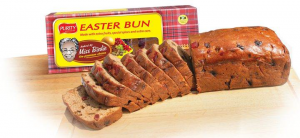
Consolidated Bakeries Miss Birdie Easter bun.

Revaluation of the Jamaican dollar cost the company $4 in the final quarter and resulted in reduction in other income ending with a negative $2.5 million versus $5.5 in 2016 and just 875,000 for the full year versus $9 million, while the big jump in Finance cost in the December quarter seems to be one off, as such without these two items the company would have reported a profit for the quarter and augurs well for the 2018 results.
Gross cash flow was negative $7 million but growth in receivables, inventories, addition to fixed assets and drawn down on investments was offset by net loan inflows and increased payables and increased in bank overdraft ended at $74 million. At the end of December, shareholders’ equity stands at $716 million which was boosted by gain on revaluation of land and building by $206 million. Borrowings at just $135 million. Net current assets ended the period $92 million well over payables of $77 million.
Earnings per share was negative for the quarter and the fiscal year. The stock traded at $2 on the Junior Market of the Jamaica Stock Exchange with a PE ratio of 12 times 2018 estimated earnings of 17 cents. Earnings could be more if revenues were to increase above 10 percent for 2018.

Paramount’s lubricant plant in operation

New Lubricant plant at Walton Park Road

Profit at Paramount Trading, jumped 137 percent to $34 in the first quarter to August last year, but declined by 35 percent in the November quarter, to $24 million from $37 million in 2016.
For the six months to November, profit rose only 13 percent to $58 million from $51 million in 2016. Sale revenues rose 28 percent for the November quarter, to $257 million from $200 million in 2016 and increased 31 percent for the year to date, to $487 million from $370 million in 2016.
The board of directors in their report to shareholders accompanying the quarterly, stated that “our lubricant business line produced strong sales during the quarter when compared to the last year growing $28 million or 261 percent and by $41.6 million with a 248 percent increase year to date. Technical grade product sales grew by $47 million or 137 on quarterly basis and $83 million or 133 percent year over the period year. We expect this trend to continue into the last two quarters.”

Processing and storage tanks inside factory.

Profit margin declined in the November quarter to 28 percent from 30 percent in the 2016, and slipped to 29 percent from 31 percent for the year to date period. The effect, gross profit rose 15 percent in the quarter to $99 million from $86 million and 19 percent for the year to date, to $200 million from $169 million in 2016.
While revenues rose solidly, so did administrative expenses that jumped 47 percent to $72 million in the quarter and increased 13 percent in the six months period to $121 million. Finance cost declined in the quarter, to a negative $2 million from $4 million in 2016 and from $7 million to $1.5 million for the half year.
Earnings per share came out at 1.5 cents for the quarter and 3.7 cents for the six months and should end the fiscal year ending to March around 25 cents with four months production and sales from the lubricant plant and the expanded chlorine and bleach operations.
Gross cash flow, brought in $72 million but growth in receivables, inventories, addition to fixed assets offset by loan inflows and reduced Payables wiped out the gains.

Another view inside of the factory.

Shareholders’ equity stands at $739 million with borrowings at just $77 million. Net current assets ended the period at $486 million, well over payables of $237 million. Inventories rose to $394 million from $320 million at the end of November 2016 and receivables climbed to $321 million from $238 million with cash and investments ending at $78 million.
The company commenced operation of the joint venture lubricant plant from around a month ago as well as production of bleach, an addition of a new product line. When the lubricant plant was announced in 2015, the estimate for revenues was in the US$5 million range but now that Alpart is reopened, the amount should rise.
The stock traded at $3.10 on the Junior Market of the Jamaica Stock Exchange with a PE ratio of 5.6 times IC Insider.com, 2019 earnings of around 55 cents per share.

Palace is much more than Black Panther

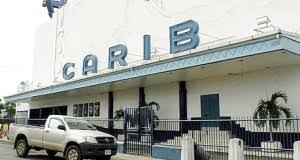
Carib Cinema, the flagship for Palace Amusement.

Revenues and profit are getting a big lift from the strong showing of the Black Panther movie currently playing at the Palace Amusement cinemas in Jamaica.
The stock jumped sharply in March, more than doubling the previous price of $560. Some investors are of the view that interest in the stock is purely as a result of the movie. While it may be a factor, Palace’s story goes well beyond that.
Although in the public eyes daily, the shares of Palace are not the focus of attention for many . One main reason is the 1,437,000 shares issued by the company, resulting in limited liquidity in the stock. The other is that historically profit can be a bit erratic. Management’s failure to split the stock for greater liquidity only adds to investors’ concerns.
Palace is reminiscent of Lascelles deMercado back in 1983 when the stock hardly traded due to liquidity issues and a lousy dividend policy. Asked then why the stock was so cheap, around $6, a broker responded —no one buys

A seen from Black Panther

Lascelles’ shares. That of course was a terrible error by investors as the stock went on to deliver one of the best returns on the local market with Campari ultimately buying out the company.
Stocks that are not sexy don’t get much attention from investors, but in many cases, these are the ones to record massive gains when the story is fully told. A reader of IC Insider.com indicated that a look at the last two years’ results revealed flat revenues. That prompted a review of the numbers. The history may not be spectacular but closer examination shows a high degree of attractiveness that is not based solely on the pile of added income Black Panther will rake in.
Revenues have been climbing since 2014 when it reached $833 million, rising to $916 million in 2015, with a slight dip in 2016 to $909 million. Revenues rose 9 percent in 2017 to $990 million and for the half year to December 2017, growth was 11 percent to $493 million with profit rising 138 percent.
Revenues will hit the billion mark for the first time in the company’s history, for the current fiscal year and remain over that level going forward. The performance of the economy is critical to the future fortunes and to a lesser degree, the quality of films. Data indicates that with a tight economy, patronage in Kingston suffered badly with the downturn in the economy from 2008 onwards. At the same time, strong growth, said to be around 7 percent per annum in the Montego Bay economy, showed up in strong revenue gains there compared to Kingston for a number of years. With the overall economy recovering and employment growing, Palace is benefitting and it’s reflected in the numbers to December 2017.

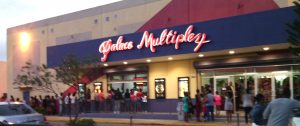
Palace Multiplex in Montego Bay.

Segment results tell the story of the strong impact of the economy on operations. For the six months to December, Box office patronage at Carib Cinema in Cross Roads rose 14 percent to $147 million, while at Palace Cineplex, the gains were 10 percent to $55 million and 8 percent at Palace Multiplex in Montego Bay to $77 million. Sales from the concessionaires surged 29 percent to $80 million at Carib, 22 percent at Cineplex to $27 million and 21 percent to $34 million at Multiplex. The fact that Carib has outgrown the other two cinemas is not an accident but is reflective of the recovery in disposable income of a large number of Jamaicans.
While revenues are on the rise, cost has been kept under control. Direct operating cost increased by 6 percent to $190 million for the quarter and 8 percent for the half year.

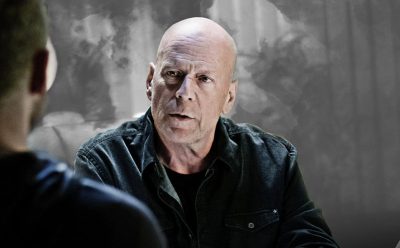
Another Palace movie – Bruce Willis and Cole Hauser star in Acts of Violence.

Administrative Expenses rose just 4 percent to $37 million in the December quarter and 7 percent for the six months to $76 million. Depreciation for the six months period rose just 5 percent to $17 million. If the trend continues into 2019 fiscal year earnings should be close to $100 per share range. Prior to Black Panther, earnings were set to reach around $45 per share but the phenomenal success of Black Panther is Projected by IC Insider.com to push 2018 earnings to be well over $100 per share when the fiscal year closes in June.
The company concluded the year with equity capital of $343 million, borrowings at just $25 million with cash funds of $130 million helping to push Current assets to $242 million as Current liabilities stand at $110 million.
The stock traded at $1,300 earlier in the month is poised to fall back with the lowest offer being $1,000. Palace trades on the main market of the Jamaica Stock Exchange at a PE around 10 times projected 2019 earnings and much lower based on the 2018 earnings.

Express Catering Q3 profit jumps 105%

Ian Dear, Managing Director of Express Catering

Profit for Express Catering jumped 105 percent in the February quarter, to US$1.14 million from US$558,267 in 2017. For the nine months to February, profit surged 166 percent to US$2.52 million from US$947,989 in 2017.
Sale revenues rose 9.7 percent for the quarter, to US$4.39 million from US$4 million and rose 12.44 percent for the year to date, to US$11.27 million from US$10 million in 2017. Revenues benefited from strong increase in visitor arrivals during the period around 10 percent.
Gross profit margin remained stable at 74 percent in the quarter and 73 percent for the nine months with gross profit of $3.25 million for the quarter up 10 percent from $2.96 million in 2017 and $8.28 million for the year to date 11 percent more than $7.46 million in 2017.
Depreciation fell 8 percent in the quarter to US$128,754 million and was 4 percent lower for the year to date, to US$400,475.

Starbucks one of the brands Express Catering will sell at the Montego Bay Airport.

Administrative expenses fell 14 percent to US$1.87 million in the quarter and fell 13 percent in the nine months period to US$5.05 million. Finance cost rose 18 percent in the quarter, to US$112,418 and moved just 1 percent for the nine months period to US$287,176 from US$283,625.
Earnings per share came out at 0.07 US cents for the quarter and 0.154 US cents for the nine months and should end the fiscal year ending to May around 0.24 cents or 30 cents Jamaican.
Gross cash flow brought in US$3 million but growth of $1.49 million in amounts owing by related companies, additions to fixed assets of US$303,103 and paying US$1.5 million in dividends, reduced cash to just US$34,145 at the end of the period.
At the end of February, shareholders’ equity stands at US$5.56 million with preference shares of US$3.5 million. Current assets ended the period US$5.68 million of which amounts due from related parties amounts to $5.3 million and I up from US$3.6 million in the prior year. Current liabilities amounted to US$1.5 million.
The company will be rolling out the Starbucks Coffee stores in the final quarter and that should boost revenues and profit in the new fiscal year.
The stock traded at J$4.50 on the Junior Market of the Jamaica Stock Exchange with a PE ratio of 15 times 2018 earnings. The company will go into a new year, come June, that should result in a lowering of the PE with IC Insider.com forecasting 48 cents per share for PE of 9 times earnings.

20% profit rise for ISP Finance

ISP Finance Services reported growth in net profit of 20 percent for 2017 to $48.5 million from $41 million in 2016. For the final quarter of the year profit was flat at $17.9 million versus the same period in 2016. The company reported earnings per share of 46 cents.
Increased loan provision of $7.5 million versus a recovery of $1 was the reason for the flat out turn for the December quarter. Interest income from loans rose 24.6 percent to $287 million from $231 million in 2016 while for the December quarter revenues form loans grew 24 percent to $78.5 million. Net interest income ended at $261 million compared to $205 million for the prior year, an increase of 27 percent while for the December quarter net interest income rose by 40 percent to $71 million. Employees cost rose 32 percent in the quarter to $27 million and 18 percent for the year to $108 million while other operating  expenses closed the year 6 percent higher for the quarter to $17 million and 18 percent for the full year at $76 million.
ISP concluded the year with equity capital of $285 million that generated an average return of 19 percent for the year. The loan portfolio ended at $439 million, up 40 percent from $313 million in 2016 with cash funds of $30 million and borrowings of $208 million.
IC Insider.com projects earnings of $1.20 per share for 2018, the stock that is in limited supply now trades at $13.50 at a PE of 11, the great attraction for the stock is one of long term growth rather than short term gains.

Scotia Group’s Q1 profit jumps but

Scotia Group released their first quarter results to January with net profit rising 54 percent to $3.4 billion from an increase in revenues of net of interest cost of 13 percent to $10.85 billion.
A reduction in loan losses from $427 million write off in 2017 to a small surplus of $6 million in 2018 and a 94 percent jump in Insurance premium to $1.17 billion help to boost the growth considerably.
Without the big change in loan provision profit from ongoing operations would have been flat compared to the similar quarter in 2017. The group also gains $753 million from the sale of CrediScotia. The group continued to struggle to grow the profit from continuing operations and the lack of growth in loan remains the number one issue. Without robust increase in this critically important area that accounts for the bulk of income, the group’s profitability is going to be stressed. The loan portfolio declined to $167.6 billion, from $168.2 billion in 2017.
The stock rose based on the results and now trades around the $54 region on the Jamaica Stock Exchange at a PE of 11 based on 2018 projected earnings. A dividend of 48 cents per share was declared and the stock should deliver a yield around 4 percent which is higher than Treasury bill rates.

Main Event Q1 profit climbs 41%

Main Event Q1 profit rise 41% to $33m.

The 2017 listed Main Event, enjoyed a bounce of 41 percent in profit for the January 2018 quarter, to $33 million from $23 million in 2017, from sale revenues that rose just 8.6 percent, to $361 million from $333 million in 2016.
Much of the success for the period arose from an improvement in profit margin that rose to 44 percent from 40 percent in the 2017, as input cost remained flat at $201 million. Operating profit rose 22 percent in the quarter to $161 million from $132 million.
Depreciation climbed 40 percent to $21 million, Marketing and sales expenses increased by 132 percent to just $7.8 million, Administrative expenses moved up by 13 percent to $97 million, from $86 million in 2017. Finance cost declined in the quarter, to $3.4 million from $4 million in 2017.
Earnings per share came out at 11 cents for the quarter up from 10 cents in January 2017.
While revenues and profit grew in the quarter, not all areas performed as well. According to the Directors’ report accompanying the quarterly, revenues “was driven by expansion in our core business of entertainment and promotions, with increased opportunities coming from our major clients and increased revenue opportunities from our growing rental and décor equipment base. Revenues from audio, multimedia and digital signage were average.”
Gross cash flow brought in $53 million but growth in receivables, inventories, addition to fixed assets offset by net loan inflows resulted in net outflows of $38 million leaving cash funds at $23 million for the quarter.
At the end of December, shareholders’ equity stands at $479 million with borrowings at just $147 million. Net current assets ended the period $115 million well over Payables of $93 million.
The stock traded at $5.81 on the Junior Market of the Jamaica Stock Exchange with a PE ratio of 10.6 times 2018 earnings with room for the price to grow.

Lease buy out to save Carib Cement $2B

Caribbean Cement could save J$2B from lease buyout.

Caribbean Cement (CCC) seems set cut leasing cost by around $2 billion per annum when the company reacquires the leased equipment from Trinidad Cement (TCL) later this year.
The company paid $3.3 billion in 2017 for the lease of the new kiln that was installed to facilitate expansion of the plant.
Caribbean Cement announced that it signed a memorandum of understanding with agreeing to the termination of the operating lease and the purchase by CCC of the assets covered under the Lease.
Agreement is for approximately USD$118 million to be paid to TCL and redemption of an aggregate number of 52 million preference shares held by TCL for approximately USD$40.5 million to be paid over a nine-year period starting in 2018 and sourced from at least one third of CCC’s profits available for distribution from the previous year. CCC will also seek financing to fund the Asset Acquisition and the Redemption.

Carib Cement kilns


The agreement flows from concerns of minority shareholders who at the company’s last AGM, at which Shareholders were given the commitment by management that the best structure would be identified to acquire ownership of the assets. A special advisory group including representation from CCC’s minority Shareholders was subsequently set in place for that purpose.”
The closing of the above transactions is subject to the satisfaction of certain conditions, including
approval from TCL and CCC’s corporate bodies, securing financing options by CCC, the absence of occurrence or potential occurrence of any material tax and/or accounting effects if the above transactions are executed, among others. The definitive agreements in relation to the foregoing
transactions are expected to be executed by TCL and CCC within 90 days from the date of signing of the MOU.
IC Insider.com gathers that CCC has already lined up potential financing at attractive rates for the execution of the asset acquisition.