 The All Jamaican Composite Index of the Jamaica Stock Exchange surged to more than 345,000 points in the early morning session on Thursday but failed to hold on at that level but still managed to end at a new record close.
At the close, the All Jamaican Composite Index held on to just 119.17 points of the early gains to end at a record closing high of 344,070.11 and the JSE Index clung to 108.58 points to end at record closing high of 313,486.71.
Trading in the main market ended with 4,999,824 units valued at over $34,788,166 compared to 34,917,482 units valued at $108,176,982 on Tuesday.
 Market activities resulted in 31 securities trading including 4 in the US dollar market compared to 29 securities trading on Tuesday. At the end of trading, the prices of 14 stocks rose, 8 declined and 9 traded unchanged.
The day’s volume was led by, Mayberry Investments trading 1,003,340 shares to close at $7, after it traded at an intraday 52 weeks’ high of $7.60 JMMB Group 7.5% preference share closing at $1, in trading 952,000 shares and Mayberry Equities closed trading at $8.50 with 522,731 shares trading.
Major price changes| Grace Kennedy traded at an intraday 52 weeks’ high of $56.70 but ended trading at a 52 weeks’ closing high of $56.01. Jamaica Producers rose 30 cents to $17, trading 5,988 stock units, Mayberry Equities lost 55 cents trading 522,731 shares to end at $8.60, PanJam Investment concluded trading 51,973 shares at $51, after falling $1.54, Sagicor Group shed 40 cents and settled at $38.10, with 21,574 shares trading, Scotia Group traded 13,284 units and rose $1.10 to end at $52.20 and Sterling jumped $1.50 and finished trading at $13.50, with 2,952 shares changing hands.
Trading in the US dollar market closed with 98,429 units valued at US$87,029 as JMMB Group 6 percent preference share completed trading 80,000 stock units at $1.05, Margaritaville ended trading 10,524 shares to close at 16.9 US cents and Proven Investments rose 1 cent to 19 US cents trading 5,105 shares. The JSE USD Equities Index rose 1.62 points to 155.14.
Trading resulted in an average of 185,179 units valued at an average of $1,288,451 for each security traded. In contrast to 1,342,980 units for an average of $4,160,653 on Tuesday. July closed with an average of 169,022 units valued at $3,514,756, for each security traded.
IC bid-offer Indicator| At the end of trading, the Investor’s Choice bid-offer indicator reading shows 7 stocks ended with bids higher than their last selling prices and 2 closing with lower offers.
Record close for JSE – Thursday
Iron Rock improvement continues
 IronRock Insurance reports vastly improved results for the second quarter and the six months period to June from rising revenues and stable administrative cost.
A loss of $4 million was incurred for the June quarter and $8.6 million for the half year compared to a loss of $19 million and $46 million in June quarter and half year in 2017 respectively.
The vastly improved bottom-line flowed from gross written premium for the half year rising 63 percent to $282 million, from $173 million in 2017 and net earned premium increasing 248 percent to $80 million, up from: $23 million in 2017. For the second quarter premium rose at a slower pace of 14 percent to $127 million and net premium income moved 213 percent from $13 million to $42 million.
Operating expenses rose to $74 million from $65 million in 2017 and moved from $33 million to $36 million in the June quarter. Insurance damages claimed $38 million for the half year, up from $21 million in 2017 and increased claims from $9 million in the June 2017 quarter to $21 million in 2018, leading to reduced underwriting loss of $30 million versus $61 million in the corresponding in 2017. Other income for the period rose to $22 million from $14 million for the 2017 period and for the June quarter, moved from $8 million to $11 million. Shareholders’ equity inched up from $512 million to $514 million helped by unrealised gains of $10 million in the equity portfolio. Total assets stood at $988 million and comprise cash and investments of $602 million, while liabilities include $360 million for claims provision.
The stock last traded at $3.10 and could enjoy some gains going forward as company extend the improvement in both the top and bottom-lines.
Financiers bullish on Carib tourism
 Entities eyeing the Caribbean region and in need of financing should be encouraged by findings by top accounting firm KPMG included in their annual survey on financing for the sector amongst banks and non-banks.
“Confidence levels of banks increased yet again for an amazing ninth year in a row,” the survey stated and went on to indicate that “confidence levels of non-banks also increased.” “Overall non-banks remain more confident than banks registering 7.43 out of 10 in terms of their level of confidence versus 7.11 out of 10 for banks. For both banks and non-banks to exhibit these high levels of confidence would be very positive at any time but for them to do so following what can only be described as a catastrophic 2017 hurricane season for the region, represents very welcome, positive news,” the KPMG report stated.
“Canadian headquartered banks have for many years been the primary financiers of developments in the region’s tourism industry. However, it is now firmly established that the landscape has changed, although the Canadian banks remain very much part of that new landscape. The consensus view appears to be that they are “back in the market but more selective than before”. Other “players” are predominantly local banks who are increasingly participating in syndicated deals, U.S. funds, pension funds and insurance companies and development banks who are also active in the marketplace,” the survey finding went ion to say.
Profit up 19% at Lasco Distributors
 Revenues at Lasco Distributors rose just 3.5 percent for the June quarter, to $4.28 billion from $4.13 billion in 2017 but profit before taxation climbed a much stronger 17 percent in the quarter to $254 million from $217 million in 2017.
The improved profit out turn was helped by modest improvement in gross profit of $50 million and improvement in other income from $18.4 million to $42.7 million. The improvement comes off a strong period in the last fiscal year with profit rising 65 percent to $1 billion from $610 million in 2017. the 2017 profit slipped below the $717 million for 2016.
Administrative and other expenses rose faster than revenues at 5 percent, to $630 million and depreciation increased 31 percent to $30 million.

Peter Chin – Lasco Distributors’ Managing Director
Taxation was flat at $20 million, leaving net profit for the quarter rising 19 percent to $234 million. Earnings per share rose to 7 cents, from 6 cents in 2017.
Gross cash flow brought in $263 million but growth in receivables, offset by reduced inventories and reduction in amount owed to creditors, resulted in negative cash flows of $222 million and left cash and equivalent with at reduced $1.33 billion.
At the end of December, shareholders’ equity stands at $4.8 billion with borrowings at just $233 million. Net current assets ended the period $3.3 billion almost equal to Payables of $3.4 billion.
The stock traded at $4 on the Junior Market of the Jamaica Stock Exchange with a PE ratio of 11 times 2019 estimated earnings. In April the company paid out $408 million in dividends.
$9.20 offered for 75% of Barita shares
Barita last traded on the JSE on Wednesday at $9.
The long awaited formal offer to acquire majority shares in Barita Investments has been released.
Cornerstone Investments Holdings is offering $9.20 per share for 334.4 million Barita shares to acquire no more and no less than 75 percent of the company. The intention is for the company to remain listed on the Jamaica Stock Exchange
The offer opens on July 26 will cost $3 billion. The company signed a lock up agreement with Rita Humphries-Lewin and Karl Lewin who have 77.5 percent of the shares to sell amounts to allow for the 75 percent acquisition as such the offer is all but done.
The company has 445.877 million shares issued contributing to shareholders’ equity of $2.86 billion or $6.40 per share.
For the March quarter comprehensive income was $165 million and $492 million for the half year or just over $1 per share and puts the purchase price at about 5 times earnings. But the acquisition is even more attractive to the buyers. Both Humphries will cease being executives that will result in cost savings. The new link up could see a more aggressive stance taken in increasing business and profit within a relatively short time frame from existing offerings as well as new ones. The Unit Trust business is a potential storehouse of huge income down the road while more can be eked out of the portfolio of investments. Investors who hold on to their shares will benefit from a promised 80 percent pay out of profit going forward.
Profit almost doubles for JSE
 Profit at the Jamaica Stock Exchange (JSE) almost doubled for the half year to June with profit after tax jumping 97 percent in the June quarter to $90 million and up 88 percent for the half year to $191 million.
Revenues grew 34 percent for the quarter to $316 million and 39 percent to $666 million. Expenses rose 14 percent for the quarter to $191 million and is up 21 percent for the half year to $398 million. Earnings per share for the June quarter ended at 13 cents and 37 cents for the six months period and should end the year around 70 cents per share. The stock that trades around $7.50 is therefore attractive with eys focused on 2019 when business should increase with more listings and hopefully more business activities.
The JSE ended the quarter with total equity of $1.03 billion. Cash and investments stood at $420 million. Property and other fixed assets climbed to $410 million from $264 million.
Collapse of the JSE US market
 Amazingly, while the JSE main market has been recording several record highs this year and the Junior market is up more than 10 percent for the year, the US dollar market has gone in the opposite direction.
The US dollar based market index is at its lowest level since February 2010 and also at levels not seen since mid-2016, with the index closing at 139.56 on Tuesday this week.
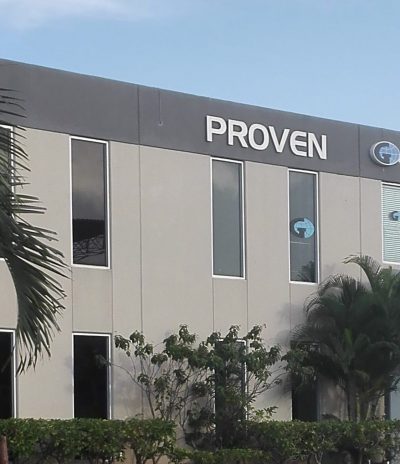
In February 2017, Margaritaville hit a high of 37 US cents and Proven Investments reached a high of 32 US cents, both have been sliding since, and hitting a 52 weeks’ low of 15 cents recently. Interestingly, Proven, the darling of many investors in the past, had very little buying interest in recent times. Margaritaville trades at 15 US cents and have lost 60 percent from the high and Proven has fallen 53 percent. Margaritaville suffered last year from dislocation that two hurricanes had on Turks and Caicos Islands and by extension on its operations while Proven picked up losses from the revaluation of the Jamaican dollar, but should recover from it, for the current year. In addition, the company raised capital by way of a rights issue that has not been put to work to avoid a dilution in returns on investment. With the fall in the price of Proven the stock is now IC Insider.com’ TOP 10 buy listed. At the same time, that the US issue has fallen the Proven Jamaica dollar listing still has a bid for 1,830 units at J$26.50 or almost 20 US cents.
Also dragging down the market is Sterling Investments US dollar listing that have fallen from 12 US cents to 8.55 US cents.
For the fiscal year to March, Proven reported US$5.68 million or 0.94 cents per share for shareholders versus $8.85 million in 2017.  $8 million of the 2017 earnings was non-recurring, coming from gain on acquisition of a subsidiary. Importantly, the company suffered from the revaluation of the Jamaican dollar in the last half of the fiscal year, resulting in a loss of $444,000 but resulted in a $3.3 million turn from gains of $2.9 million in 2017. Even without the benefit of foreign exchange gains profit from ongoing operations was up nearly 100 percent from $6.6 million to $12.6 million for the year. The first quarter results that are expected to be released next week should show recovery from the FX losses. “All our segments are doing well and this year should be our best ever” Christopher Williams, President of the Company told IC Insider.com. “We await regulatory approval for the investment brokerage company in the Cayman Island,” Williams stated.
Margaritaville reported a loss of US$88.5 thousand in the February quarter, from revenues of US$1.8 million and US$4.06 million for the nine months period that delivered profit of $147,324 versus $339,122 in 2017.
Profit jumps 59% at Carib Cream
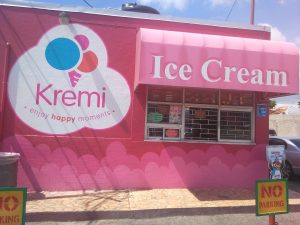
Caribbean Cream outlook.
Profit jumped 59 percent in the quarter to May, to $55 million from $35 million in 2017 from sales revenue that rose 29 percent to $412 million from $319 billion in 2017 for Caribbean Cream that trades as Kremi.
The improvement brings to an end falling profit for the past fiscal year when profit fell to $90 million from $176 million in 2017, from increased revenues and from profit of $164 million in 2016.
For the quarter, gross profit margin rose to 36 percent from 34 percent in the 2017, as input cost climbed 25 percent, compared over for the 2017 first quarter. The net effect, operating profit rose 37 percent to $147 million from $107 million.
Administrative expenses increased 25 percent to $76 million and marketing and sales expenses climbed 24 percent to $13 million. Finance cost was up to $3.4 million from $3.15 million.
Earnings per share came out at 15 cents for the quarter and should end the year around 70 cents, just slightly lower than the 80 cents forecasted at the end of the fiscal year.
 According to Chairman Carol Clarke Webster and Managing Director, Christopher Clarke in their joint statement to shareholders, “these results are attributable to improved products supply as a result of greater production efficiencies, along with the introduction of a new range of novelties which are performing well in the market. In addition, we continued our sales and marketing thrusts to expand our market penetration and ‘Top of the mind” awareness of our product range.”
Gross cash flow brought in $65 million but growth in receivables, inventories, offset by payables reduced it to $44 million, in addition, fixed assets purchased for $101 million offset by net loan inflows of $65 million resulted in a cash increase of $8 million, pushing the cash and bank balances to $183 million. Shareholders’ equity stands at $693 million with borrowings at just $147 million. Net current assets ended the period at $221 million well over Payables of $134 million.
The stock traded at $4.90 on the Junior Market of the Jamaica Stock Exchange with a PE ratio of just 7 times 2019 earnings leaving quite some room for a good bounce from the current price. The stock is one of the TOP 10 Junior Market listings.
The company declared a dividend of 4.8 cents payable on September 21 to shareholders on record at the end of September 7. The stock will traded ex dividend on September 6.
JSE majors 300 points from record
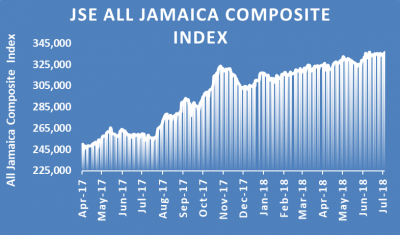
Jamaica Stock Exchange main market continues its slow upward climb as it eyes new highs ahead.
At the close of the trading on Friday, the All Jamaican Composite Index sits just 300 points and the JSE Index just 276 points from the record high reach on June 13, after rising over 1,200 points on Friday.
The All Jamaican Composite Index climbs 1,332.76 points to close at 336,390.30 while the JSE Index advanced by 1,214.30 points to close at 306,489.55.
Trading activity on the Jamaica Stock Exchange on Friday remained low, with an exchange of just 2,029,215 units valued at $42,587,552 compared to 4,036,088 units valued at $49,293,055 on Thursday.
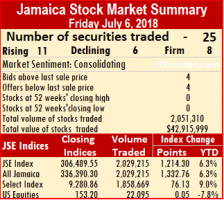 Activities in the main and US dollar markets resulted in 25 securities trading including 3 from the US dollar market, compared to 27 securities trading on Thursday. At the close, the prices of 11 stocks advanced, 6 declined and 8 closed unchanged.
Thursday’s volume was led by Mayberry Investments that settled at $6.52, with 501,000 units trading, Scotia Group traded at $50.12, with 447,178 units and Sygnus Credit Investments traded 378,850 shares at $13.71.
Stocks with major price changes are, Berger Paints that rose 71 cents to $22, Grace Kennedy climbing $1.39 to $53. Jamaica Broilers lost 50 cents to end at $23, JMMB Group declined 40 cents to $29.50, Kingston Wharves lost 70 cents to end at $46.55 and Supreme ventures lost 40 cents in closing at $14.10.
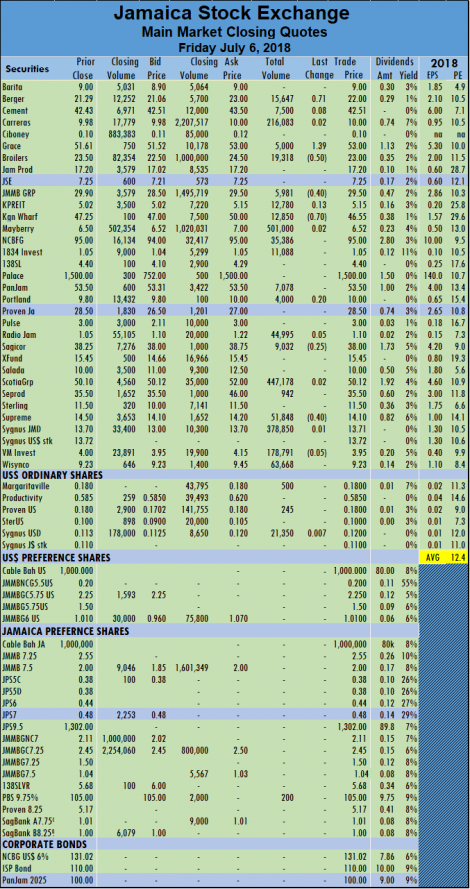 In the US dollar market, 22,095 units valued at $2,546 as with Margaritaville traded 500 shares at 18 US cents, Proven Investments closed at 18 US cents with just 245 units changing hands and Sygnus Credit Investments ended trading 21,350 shares after rising 0.7 cent to 12 US cents. The JSE USD Equities Index inched 0.05 points up to 153.20.
Trading resulted in an average of 92,237 units valued at an average of $1,935,798 for each security traded. In contrast to 161,444 units for an average of $1,971,722 on Thursday. The average volume and value for the month to date amounts 167,222 units valued at $2,763,542 compared to 183,396 units valued at $2,264,736, on Thursday. June closed with an average of 250,168 shares with a value of $5,895,281, for each security traded.
IC bid-offer Indicator| At the end of trading, the Investor’s Choice bid-offer indicator reading shows 4 stocks ended with bids higher than their last selling prices and 4 closing with lower offers.
Derrimon hikes profit 45%

Staff at Derrimon Trading.
Revenues for the Derrimon Trading first quarter March this year, climbed 27 percent to $1.94 billion above the $1.53 billion reported for the 2017 quarter and led to a big hike in profit.
The company reported a strong 45 percent jump in its first quarter results, from $35 million to $52 million or 21 cents per share to March this year, but profit could have been even higher had they not incurred finance cost which jumped 56 percent to $38 million from $25 million in 2017, in refinancing the preference shares they held previously at higher rates than the new ones. IC Insider.com is forecasting earnings per share of just over 80 cents for the current year.
This year is the last for profit to enjoy full tax free status, in 2019 profit will be taxed at half the usual 25 percent rate less payroll tax credits.
“The full quarter’s performance of the retail stores as well as the impact of the joint venture positively influenced the growth of the revenue during this reporting quarter,” Derrick Cotterell, the chairman reported to shareholders.
 Gross profit for the period was $353 million representing 18 percent of revenues and was up from gross profit of $279 million in the 2017 period with a similar percentage of revenues. According to Cotterell there was improved margin in the core business resulting from “a combination of improvement in margins arising from strategies employed within both the distribution & retail segments of the business, the positive impact from the culled distribution portfolio and improved margins from growth of the supermarket portfolio.” Margins for the non-manufacturing arm rose to 17.2 percent from 16.94 percent in 2017.
The company’s equity position is $1.04 billion but borrowed funds stand at $1.22 billion, cash and investments amounts to $432 million thus negating some of the negative of the high leveraging of the group. With much of the cash and investments held by Caribbean Flavours, the larger portion is not readily available to Derrimon. Current assets amount to $2 billion and current liabilities at $413 million.
The company is proposing to do a major increase in the authorized share capital, with some being set aside to facilitate the 10 for 1 stock split. With the stock price having climbed to the $20 region, the company should take the opportunity to raise equity capital and retire some of the debt now being carried by the parent company.