Profit jumps 225% at overvalued Salada

It was difficult to understand the factors driving a pile of investors into Salada Foods shares after the stock split at prices as high as $10, even after the second quarter results were posted, showing strong increases for revenues and profits in that quarter.
Alert investors would have found that the big jump in the second quarter’s performance was due to the underperformance in the first quarter. Unfortunately, the company directors did not help investors to understand what was going on. Many investors will learn that when companies’ products are sold through distributors, sales can be jerky for the producers while the distributors can be showing a totally different picture. That seems to be what happened at Salada, where the second quarter sales fill the void left in the December quarter when sales were low.
The latest quarterly report has leveled the playing field and many investors are going to weep for not heeding the suggestion that the stock was highly overvalued.
Sales in the third quarter popped 17 percent to $311 million, from $257 million in 2020. For the nine months to June, sales rose just 9 percent to $890 million from $920 million in 2020.
Profit after tax climbed 53 percent to $51 million for the current year’s June quarter compared to $24 million in 2020 and for the nine months this year, it rose an impressive 225 percent to $115 million from a mere $36 million in 2020.
Gross profit margin rose in the June quarter to 32.97 percent, with the year to date ending at 30.4 percent as gross profit rose 29 percent in the quarter to $102 million from $79 million 17 percent for the year to date, to $271 million from $231 million in 2020.
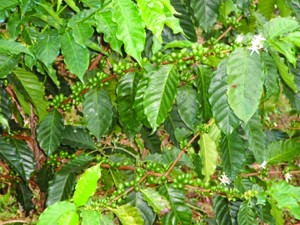
Coffee plant

Administrative expenses varied marginally than in the prior year, ending at $31.2 million in the quarter from $30.3 million in 2020 and slipping in the nine months to $96.7 million from $897.5 million in 2020. Marketing and sales expenses were effectively flat at $13 5 million versus $13.4 million in the 2020 June quarter and down sharply in the nine months to $36 million from $46.7 million last year. Net finance income saw a positive contribution in the June 2021 quarter of $8.6 million compared to a loss of $3.6 million in 2020 and $15 million in the nine months to June of $15 million from a loss of $12.5 million in 2020. Taxation rose to $16 million in the June 2021 quarter from $6 million last year and $38.5 million in the nine months to June this year from $12.5 million in 2020.
Gross cash flow brought in $174 million, but increased investments and additions to fixed assets and the paying of $108 million in dividends resulted in net outflows of $4 million. At the end of June, Current assets amounted to $964 million, with inventories of $487 million, receivables of $159 million, cash and bank balances of $167 million and investments of $151 million.
Current liabilities ended the period at $256 million. Net current assets closed the period at $707 million while shareholders’ equity stood at $964 million with no long borrowed funds used to finance the operations. In addition to investments in current assets, is $105 million classified under non-current assets.
Earnings per share came out at 5 cents for the quarter and 11 cents for the year to date. IC Insider.com is forecasting 17 cents per share for the fiscal year with a PE of 46 times, current year’s earnings.
The stock traded at $7.79 on the Main Market of the Jamaica Stock Exchange. Net asset value is 93 cents, with the stock selling at 8.6 times book value.


Rebound for Stationery & Office Supplies

Stationery & Office Supplies is enjoying a strong rebound from the COVID-19 afflicted 2020 financial year, with profit swinging from a loss of $22 million in the June 2020 quarter to a small profit of $3 million in the 2021 second quarter and well off from a profit of $34 million in the 2019 June Quarter.

Stationery & Office Supplies Montego Bay

Profit rose over 168 percent year on year for the first 6 months of 2021, from $21.8 million in 2020 to $58.4 million.
Sales surged 76 percent in the June quarter to $238 million from the 2020 covid-19 battered quarter and 17 percent for the half year to $551 versus $472 million in the 2020 period. While making a good recovery, this year’s revenues trail that of 2019 by some degree. Revenues in June 2019 quarter were 24 percent higher at $295 million and for the half year, 15 percent greater than the $633 million generated in 2019.
The cost of goods sold rose 61 percent in the quarter to $117 million and 7 percent for the half year to $261 million. Gross profit margin rose to 51 percent in the quarter, with gross profit of $120 million up from 46 percent in 2020, with gross profit of $63 million. For the half year, gross profit margin rose to 53 percent from gross profit of $290 million up from 46 percent in 2020, with gross profit of $228 million.
Administrative and general expenses rose 54 percent to $82 million from $55 million in 2020 during the June quarters and climbed a milder 16 percent to $163 million from $141 million for the six months period. Selling and promotional costs rose from $14.6 million in the June 2020 quarter to $22 million and moved from $38 million for the six months in 2020 to $43 million in 2021.
Depreciation, amortisation and impairment charges were slightly down in the quarter at $8.2 million versus $8.7 million in 2020 and $16.5 million compared to $17.8 million for the half year. Finance and foreign exchange cost accounted for $5.2 million in the quarter versus $6.4 million in 2020 and $10 million in the six months period this year, from $12 million in 2020.
“History has shown that SOS’s second quarter is normally the slowest period during the year, but even though we continue to suffer through the Covid-19 virus and all of the issues that come along with it, SOS was able to post a profit, with significant improvements compared to the second quarter of 2020. These are good indicators that Jamaica’s economy is continuing to rebound and as we progress through the summer months, we will see the return of children to school which will also help improve the sales of SEEK back to school products in the market,” stated David McDaniel, Managing Director and Marjorie McDaniel, Chief Administrative officer in their joint commentary of the results.

Earnings per share for the second quarter for 2021 amount to one cent and 23 cents for the half year. ICInsider.com projects full year earnings at 85 cents per share and $1.50 for 2022. The stock traded at $7.50, with a PE of 9, based on 2021 earnings and that compares favourably with the market average PE of 12.4.
The company remains in a healthy financial position at the end of half year period. At the end of June, shareholders’ equity stood at $668 million, with long term borrowings at $114 million and short term borrowings at $39 million. Gross cash flow amounts to $89 million but, with growth in working capital and repayment of loans, the company ended the half year with net negative flows of $6 million. Current assets stood at $509 million, including inventories of $276 million, trade and other receivables of $102 million, and cash and bank balances of $91 million. Current liabilities ended at $126 million, with net current assets ending at $382 million.

Big savings from Kremi’s power plant

In collaboration with Power Factor Technologies, a power engineering services company, Caribbean Cream has embarked on a major project to install a 630 kilowatt capacity Combined Heat & Power plant fueled by LNG at the company’s premises.

Caribbean Cream post big gains in profit in Q1.

The cost of the project is estimated to be just under US$2 million. The company expects to complete installation and commissioning of the power plant before the end of 2021. “While the company will remain connected to JPS, as to ensure sufficient power supply in the event of higher energy demand, we anticipate greater efficiency and increased market reach,’ a release from the company stated.
The company incurred utility costs of $204 million in the last financial year and is set to grow with more production and expanded cold storage space. Historical data indicates that water is approximately 10 percent of the utility bill; based on this, the electricity cost is currently around $180 million.
“One electricity unit for running machines and the use of heat from electrical generation to be used to heat water and oil to do pasteurization is the maximization of energy efficiency of the plan” an engineer who ICInsider.com spoke to states, the cost savings will be significant, with the estimated savings he stated could be in the region of two thirds which ICInsider.com puts at over $120 million per annum.
The company reported a profit of $101 million for the financial year to February this year, with the first quarter to May coming out at $54 million twice the 2020 first quarter profit.

30% Cement plant expansion on the blocks

Caribbean Cement Company has decided to expand its plant during the second half of 2022 to increase its production capacity by thirty percent.
The company “currently produces and supplies over One Million Metric Tonnes (1,000,000 MT) of cement to the local market annually. The planned capacity upgrade is expected to increase CCCL’s production by Three Hundred Thousand Metric Tonnes,” the company disclosed in a release to the Jamaica Stock Exchange.
“This planned capacity upgrade also involves the implementation of state-of-the-art technologies which will introduce novel grinding additives to the manufacturing process to reduce the clinker content in the cement produced by [CCC]. In addition, this upgrade is intended to minimize Jamaica’s carbon footprint by optimizing the heat consumption involved in the cement production process”, the release from the company further stated.
“The total investment for this capacity upgrade is estimated at Thirty Million United States Dollars, the Company stated. The planned expansion comes against the background of a 33 percent rise in the sale of cement by the company in the June quarter following a 31 percent increase in the first quarter and complaints by some dealers about a shortage of cement in the local market at a time when demand is at an all-time high.
The company’s shares that are listed on the Jamaica Stock Exchange closed at $94.90.

Profit at Republic financial in major recovery

The Trinidadian based Republic Financial Holdings put in a spirited performance in the third quarter to June this year, with profit rising an impressive 54 percent after tax to $378 million from $245 million to June 2020, with profit due to shareholders of the company climbing to $349 million, up 51 percent from $231 million in 2020.
Profit rose an impressive 32 percent after tax to $1.13 billion from $854 million for the nine months to June 2020, with profit due to company shareholders of $1.04 billion up 34 percent from $774 million in 2020.
While operating revenues, net of interest cost jumped 15 percent to $1.43 billion, operating expenses rose a mere 2 percent from $820 million to $837 million, resulting in operating profit popped 39 percent to $595 million, after $1.4 million in contribution from associated companies. Amounts set aside for credit losses rose from $74 million to $107 million in the quarter, pushing pretax profit up 37 percent to $487 million from $355 million. Taxation for the quarter was relatively flat with that of 2020, at $110 million.
For the nine months to June, operating revenues net of interest expense inched to $4.3 billion from $4.23 billion. Operating expenses slipped marginally from $2.574 million to $2.559 billion and operating profit rose 6 percent to $1.76 billion from $1.656 billion, with $4 million in contribution from associated companies in both years. Provision for credit losses moved from $346 million to $382 million in the nine months, putting pretax profit up 26 percent to $1.5 billion from $1.2 billion. Taxation for the period ended at $382 million, up from $346 million in 2020.
While profit shows good improvement over 2020, it lags 2019 earnings by a small margin, but things generally seem to be improving, with 2022 likely to see a move forward for profit. The group earned $6.37 per share for the nine months period. Management did not think it important to provide investors with the earnings per share for the quarter and did not report it. Based on the issued shares of 162.53 million units, earnings per share for the June quarter amounts to $2.15. The group should end up earning around $9 per share for the year and now trades around 15 times the current year’s earnings at the last traded price of $138 on the Trinidad and Tobago Stock Exchange.
While the overall numbers appear to be a good turnaround from a Covid-19 impact in 2020, the group that operates within Trinidad and the wider Caribbean and Ghana in Africa showed mixed fortunes in the various locations. Segment profit rose a strong 43 percent from $516 million in the home country to $739 million in 2021, with flat operating income of $2.04 billion. Barbados contributed profit of $178 million on revenues of $421 million, up from a profit of $139 in 2020 from revenues of $403 million. Revenues and profits were down in Suriname, with revenues falling from $155 million to $122 million and profit collapsing from $46 million down to $17 million. The Eastern Caribbean was slightly better, with revenues rising from $488 million to $501 million but profit suffered from a reduction from $177 million to $145 million. Guyana suffered a reduction in both revenues and profit as operating income declined from $296 million to $282 million and profit fell to $124 million from $143 million. The Cayman Islands division enjoyed a slight bounce in operating revenues of $485 million from $482 in 2020, with profit surging from $100 million to $166 million. The British Virgin Islands operations that were acquired from Scotiabank in 2020 delivered $110 million in operating revenues with none in 2020 and achieved a profit of $29 million. Ghana delivered a profit of $118 million from $77 million in 2020, with revenues that rose from $318 million in 2020 to $356 million.
 Republic controls assets of $108 billion with shareholders’ equity of $10.7 billion. Customer deposits amount to $92 billion and loans advanced of $55 billion, Investment securities amount to $19 billion.

All amounts are in Trinidad and Tobago dollars. 

Grace closes EC Insurance acquisition

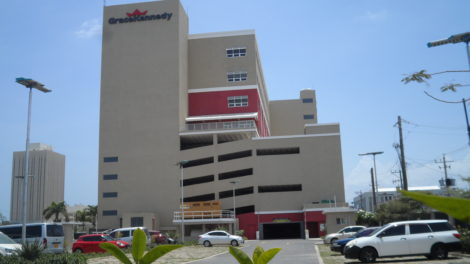
GraceKennedy completed its acquisition of Scotia Insurance Eastern Caribbean that will be rebranded under the name GraceKennedy Life Insurance Eastern Caribbean.

Grace Kennedy HQ

According to a release from GraceKennedy, the company will continue to offer credit protection on personal loans, residential mortgages, personal lines of credit, personal and small business credit cards in the seven Eastern Caribbean countries in which it operates which are, Anguilla, Antigua and Barbuda, Dominica, Grenada, St. Kitts and Nevis, St. Lucia, St. Vincent and the Grenadines.
CEO of GraceKennedy, Don Wehby, states, “the granting of the necessary approvals by regulators and completion of the transaction to acquire SIECL marks the culmination of months of hard work by our team and is a major strategic move for our Group. We have been actively expanding our offerings in general and life insurance, as we see this sector as having significant opportunities for growth. GK Life will strengthen GKFG’s position as one of the leading financial groups in the Caribbean as we continue to expand our presence in the region.” In March this year, GraceKennedy announced that it had come to an agreement with Scotia Insurance Caribbean to acquire 100% of the shares.”

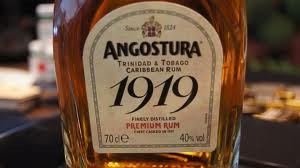
Profit jumps 32% in Q2 for Angostura

Profit before tax popped 20 percent for the Trinidad based Angostura Holdings, for the six-month to June 2021, to $74 million, up from $62 million in 2020 comparative period, while profit before tax rose 10 percent to $46 million from $42 million and profit after tax climbed 32 percent to $36.5 million for the quarter from $28 million and moved to 36 percent from $41 million in the half year to $55.6 million in 2021.

Angostura Holdings aged rum.

Revenue rose 6 percent to $218 million from $205 million for the quarter and was up 3 percent to $370 million for the half year from $358 million in 2020.
“Owing to improvement in the efficiency of the wastewater treatment facility, gross profit margins increased to 48 percent from 46 percent over the prior period as distillery alcohol production normalized in 2021 compared to 2020,” Terrence Bharath, chairman, advised shareholders in his report on the results. Cost of goods sold slipped by one percent to $117 million from $118 million in 2020 and for the half year rose at a slower pace than the increase in revenues after rising by just one percent to $194 million from $192 million in 2020. Gross profit popped 16 percent to $102 million from $87 million, while it rose 6 percent to $176 million for the six months to June 2021, from $167 million in 2020.

Angostura Bitters produced by the company.

Heineken offered J$31 per share for D&G in 2015 when the stock was trading at J$8 on the JSE.

Improvement in international markets, in terms of revenue and credit outlook, directly impacted the Expected Credit Loss Model resulting in a significant write back $2.7 million in the June quarter versus a write provision of $8 million in 2020 and write back of $4.2 million for the half year compared to a provision of $8.4 million in 2020.
Investment income rose to $3.5 million in the June quarter from $3 million last year and climbed from $5.5 million to $8 million for the six-month period.
“Revenue growth over the prior year was mainly driven by recovery in sale of bitters in the markets of Australasia, North America, Europe and the UK and rum in Europe, but faced more severe revenue challenges in the local Trinidad market,” the chairman informed shareholders.
Selling and marketing expenses rose sharply by 64 percent to $36.3 million in the June quarter and 15 percent for the half year to $67.5 million while Administrative expenses rose 20 percent to $25 million for the June quarter to $25 million and 7 percent for the six months to June to $44.6 million.
Current assets Net cash from operating activities delivered $71 million, but investing activities utilized $79 million, leaving negative funds flow of $10 million and $14 million in 2020.
Taxation slipped to $9.8 million from $14.2 million in the quarter and ended at $18. 4 million for the half year from $39 million in 2020.
Current assets amount to $1.08 billion and Current liabilities $104 million. Investments ended at $568 million and cash and equivalents closed the period at $51 million. Shareholders’ equity stood at $1.3 billion.
Earnings per share came in at 18 cents, up from 13 cents in 2020 for the June quarter and 27 cents for the half year versus 20 cents in 2020 and should end the year around 90 cents and would put the PE ratio at 18 times 2021 earnings at the last traded price of $16.48 on the Trinidad and Tobago Stock Exchange.
The Board of Directors approved an interim dividend of 9 cents per share to be paid on October 25.
The stock may be fully valued currently, based on PE ratio, but it possesses a good brand and products that could become attractive to international spirit companies that may well be prepared to pay a nice premium for it, as was done in Jamaica for Desnoes and Geddes brewers of the world famed Red Stripe beer and Lascelles Demercado producers of the Appleton brand of rums.

Grace segments hide important tales

GraceKennedy reported their six months results to June, showing continued strong growth in revenue and profit for a third year running. The group’s segment results make for more interesting reading when the data is examined closely.
The group reported revenues of $63.4 billion, representing an increase of $6.8 billion or 12.1 percent over the prior year’s corresponding period. Profit before tax was $5.4 billion, reflecting a 20.4 percent improvement over the same period in 2020. Net profit after tax came in at J$4 billion, a 30.3 percent increase over the same period in 2020, while net profit attributable to stockholders enjoyed a double digit increase of 30.6 percent over the prior year.
GraceKennedy group is categorized into four main segments, with all contributing positively to the half year’s performance.
The Food Trading segment saw revenues rising 11 percent in the half year to $49.6 billion, but segment profit surged 50 percent to $2.8 billion. Banking and Investments revenues rose by a mere 7 percent to $3.3 billion and delivered a 32 percent increase in segment results to $348 million, Insurance pushed 23 percent higher to $5.6 billion, with just a 5 percent rise in profit to $515 million and Money Services revenues were up 18 percent to $4.8 billion, with profit climbing 15 percent to $2.1 billion, remaining the most profitable segment of the group by far.

For the June quarter, while the Food Trading segment did well in the first quarter, the second quarter saw a blast of momentous proportion, with revenues rising 15 percent to $24.65 billion over 2020, but with segment, profit surging a stunning 99 percent to $1.32 billion over the $667 million generated in 2020. Banking and Investments revenues rose 9 percent in the second quarter to $1.66 billion, but could only deliver a 9 percent increase in segment results to $199 million, up from $184 in 2020, well off from the 86 percent increase in quarter one, when profit came in at $148 million versus just $80 million in the March 2020 quarter last year. Insurance revenues rose 17 percent to $3.16 billion, with a 13 percent contraction in profit to $432 million, but a major change to the profit of $84 million garnered in the 2021 first quarter and Money Services revenues were up 20 percent in the second quarter compared with the first quarter increase of 16 percent and ended with $2.49 billion, with profit climbing a mere 4 percent to $1.1 billion from a rise in profit in the first quarter of 30 percent.
The data indicate that the Food Trading and Money Services divisions are likely to be the greatest profits drivers in the short to medium term.
GraceKennedy stock remains as an ICInsider.com BUY RATED stock that last traded at $102, on Wednesday on the Main Market of the Jamaica Stock Exchange at a PE ratio of 9.3 ICInsider.com earnings for the year of $11.

Construction boom boost Fosrich profits

After a few years of mediocre performance since it was listed in late 2017 on the Junior Market of the Jamaica Stock Exchange, Fosrich is enjoying a most robust year in 2021, with a surge in revenues and a major blast in profits as the construction sector is enjoying the best performance in history and lifting sales of entities involved in the sector.
Revenues for the June quarter blasted 33 percent to $544 million, from $408 million in the similar 2020 period, helping to contribute to a 28 percent increase in six months revenues of $1,093 million, up from $857 million in 2020. Net Profit leaped 336 percent in the second quarter to $76 million, up from just $17 million in 2020 and for the half year, profit bolted 414 percent to $115 million from a mere $22 million in 2020.

Gross Profit blew 44 percent past $169 million for the June quarter last year to $244 million this year and rose 29 percent from $339 million in last year to $435 million for the six months this year, resulting in improvement in profit margins.
“These increases were attributed primarily to the greater availability of the products required by the market. While the overall increase in revenues was 28 percent, the product lines that had significant increases were PVC which saw increases of 105 percent, hardware 93 percent, wiring devices 52 percent and control devices 48 percent,” the Managing Director, Cecil Foster advised shareholders about the increase in sales, in his commentary of the results.

FosRich traded at $7.99 on Tuesday.

Administration expenses, year-to-date, were $310 million, an increase of 14 percent over 2020, with $271 million. For the quarter, these expenses grew much faster than in the first quarter at 32 percent to $166 million from $126 million in 2020. “The changes were driven primarily by increased staff related costs for salary adjustments, increased sales commission due to improved sales performance and improvements in staff benefits, increased staff training cost with the launch of the new FosRich Corporate University, increased motor vehicle expenses, increased occupancy cost due to the commencement of obligations in January for the second Hayes factory building and increased depreciation charges,” Foster advised shareholders. Finance cost for the year-to-date was $51 million compared to $57 million for the prior reporting period.
The operations delivered gross cash flow of $152 million, but growth in receivables, reduction of inventories, addition to fixed assets and payments on loans and lease funding of $58 million left the net position, with a cash flow deficit of just $1 million. Current assets ended the period at $1.99 billion, including inventories of $1.37 billion, trade and other receivables of $424 million, and cash and bank balances of $33 million. At the end of June, current liabilities stood at $496 million and resulted in net current assets of $1.5 billion. A related party owes $288 million, being funds loaned to complete an apartment complex, with sales expected to be completed this year, with proceeds slated to pay off the amount during 2021.
 Shareholders’ equity stands at $983 million, up from the $869 million at the end of December 2020. Borrowings amount to $1.8 billion.
Earnings per share for the second quarter surged to 15 cents from 3 cents in the prior year and climbed to 23 cents compared to 4 cents in 2020. ICInsider.com forecasts 60 cents per share for 2021 and $1 for 2022. The current year’s PE is now 13.3, with the last traded stock price at $7.99 on the Junior Market of the Jamaica Stock Exchange. The average Junior Market trades at a PE of 12.7 and net asset value is $1.96, with the stock selling at 4 times net book value.

Profit climbs 20% at Paramount

Reduced administrative, selling and distribution expenses overcame a fall in revenues for the Junior Market listed Paramount Trading, for the fiscal year ending May 2021, to deliver a 20 percent rise in after tax profit to $64 million from $53 million in 2020 after profit surged more than nine times in the final quarter versus the similar period in 2020.

Paramount Trading had expanded into Chlorine and bleach processing.

In the final quarter, revenues rose 15 percent to $421 million from $366 million in 2020 and netted a profit of $36 million versus just $4 million in 2020. Sales revenue slipped 5 percent for the year to $1.44 billion, from $1.52 billion. Other income slipped from $25 million to $23 million, but foreign exchange gains contributed $19 million in 2021 versus $10 million in 2020.
Improvement in profit margin in the year saw margins rise from 30.9 percent in 2020 to 31.6 percent in 2021, but gross profit slipped 3 percent to $454 million, from $468 million in 2020.
Administrative expenses fell 32 percent to $68 million in the quarter, up from $100 million in 2020, and slipped 3 percent for the year, to $355 million from $367 million, a fall of $27 million in staff costs accounted for the bulk of the decline as salaries and wages fell from $179 million to $152 million as the average number of workers employed fell from 91 to 70. Distribution and sales expenses dipped from $19 million to $11 million. Finance cost inched higher from $48 million to $49 million in 2021.
The operations delivered gross cash flow of $121 million, but after changes in working capital, net cash flow from operations ended at $135 million. The company increased fixed assets by $9 million, had a net $15 million repayment of loans and paid $62 million in dividends, ended with increased funds at the end of the year of $49 million, pushing cash and investments to $261 million at the end of the fiscal year.

Paramount lubricant factory.

At the end of May, net current assets stood at $472 million. Current assets ended the period at $836 million inclusive of trade and other receivables of $323 million, cash and bank balances of $91 million. Current liabilities closed the year with $364 million. Non-current Investments being held for more than a year stood at $170 million. Shareholders’ equity ended at $796 million with long term borrowings at $473 million, down from $492 million in 2020 and short term loans amounted to $47 million versus $43 million in 2020.
Earnings per share amount to 4.1 cents for the year. ICInsider.com forecasts 10 cents per share for the fiscal year ending May 2022 with a PE of 12.5 at the last traded stock price at $1.25 on the Junior Market of the Jamaica Stock Exchange. Net asset value is 52 cents per share, with the stock selling at 2.5 net book value.
The Company’s principal activity is the importation and distribution of chemicals, lubricants and other related products, provision of haulage services and blends lubricants.