Where are the overdue RJR financials?

The fallacy in the JSE granting extension to companies to file annual reports a month and a half after they are, without requiring them to file the interim in the meantime, is one more exposed.

RJR shareholders deserve better.

In a notice to the Jamaica Stock Exchange on June 29, Radio Jamaica advised that they were making use of the general extension being allowed for companies with the financial year ending March 31, 2021, to report their annual audited results by July 14, 2021. This extension assists the management and auditors in managing the ongoing challenges on regular business activities posed by the COVID-19 pandemic, the advice stated.  At near midnight on July 15, the report is nowhere to be found on the exchanges’ website and there I no notice indicating the reason for the lateness.
Had good sense prevailed at either RJR of the JSE, investors in a major listed company would have had interim figures to digest. The JSE needs some major surgery and fast.

Barita’ financials speak eloquently

Financial statements don’t lie; they provide a window into the stewardship of companies for good or bad. There are good management and not so good ones and the financial reports tend to separate the good from the bad. In this regard, investors need to be assured that both interim and audited results are informative and can be trusted.

Barita eyeing expansion

Unfortunately, the stock exchange relies on the ICAJ to set standards for companies to report, but these fall short of what investors need to make a proper assessment in investing. The matter of reporting on the performance of companies to show gross profits separately from pretax profit is an area that is inconsistently applied. Some companies show direct cost and gross profit so investors can see the level of contribution made before selling marketing and administrative cost.
This publication finds Barita’s financials quite up to acceptable levels with disclosures, so why are investors questioning management’s stewardship?
Directors of Barita Investments met on July 14 and are recommending raising additional capital by the Company to be voted on at an extraordinary meeting set for August 3.
The announcement coming after the third such capital raise, with the last being September last year that raised $13.54 billion. The announcement has set off a mini storm within the financial community, with questions raised about the company and what is happening there.

Jason Chambers

Some investors marvel at the approach the directors are taking to fund capital needs. Worse they are asking the question, where has the money raised in public offers gone?
Cornerstone acquired 75 percent of the company in 2019 and set an aggressive dividend policy of 80 percent of net distributable profits. Since they acquired control of the company, profit retained exceeded the total profit reported for the last few years under the former management. But those funds are inadequate to fund the company’s expansion needs, fueled by growth in some critical areas of the Jamaican economy and soon regionally.
In commenting on Barita’s investment activity over the period from its September 2020 Additional Public Offering (“APO”) to March 2021, Jason Chambers, Chief Investment Officer of Cornerstone, said that the Company has “focused on allocating capital across high conviction, value-oriented opportunities.” He cited the marked expansion in credit and investment assets, acquisition of a twenty percent stake in Derrimon Trading Company costing north of J$2 billion as examples of the results of Barita’s year to date investment activity. We have materially expanded capital to our Investment Banking business line. In line with previous guidance, we have also originated and/or acquired significant investment assets, which will eventually form the basis of the launch of new and innovative investment products and structures. We have commenced investing in our footprint expansion and technological overhaul, which we expect will require staged investments over the next several quarters”, Chambers stated.
He cited the doubling of Barita’s 6-month profits to March 2020 as being a by-product of the Company’s ability to deploy the capital it raised in the APO efficiently and profitably. We, therefore, see certain aspects of our business as appropriately funded by long term capital to reduce the risks presented by asset-liability mismatches. This has served us very well, particularly most recently during the height of the market fall-out related to the COVID-19 pandemic last year when Barita maintained healthy liquidity, said Chambers.
Barita Investments was a sleepy little conservatively run investment bank whose directors focused on maintaining the status quo rather than taking advantage of the vast opportunities in the market.

Shareholders at Barita Investments AGM.

The company has gone about raising equity capital, not debt capital, so they don’t have to worry about repayment. They can also vary the aggressive dividend policy, even though that could affect the share valuation.
The argument by investors is reminiscent of two cases. One is the pile of negative comments Access IPO received when going public, back in 2010, by persons who were not adequately informed to be commenting on the issue.  In late 2016, a leading brokerage house concluded their assessment of Barita Investments as follows, “we expect just a marginal increase in year on year net profit. Given this expectation, we estimate BIL shares to be valued at approximately $2.35 by applying the market average P/E to the estimated EPS. Therefore at a current market price of $3.10, we are recommending a SELL on BIL.” At that time, ICInsdier.com placed a BUY RATING on the stock and it occupied the number 2 spot on the main market BUY RATED list.
The rationale by ICInsoder.com, while reported profit was down to $207 million from $242 million in 2015, total comprehensive income, the better measure of profitability was $691 million or $1.55 per share, compared to $201 million, a huge increase. In 2017, traditional profit slipped to $172 million after an impairment on investments charge of $81 million, total comprehensive income ended at $492 or $1.10 per share. For 2018, reported profit jumped to $374 million and total comprehensive income moved to $736 million or $1.65 per share. The lesson, if investors look only at traditional profits, they could miss big gains.
Profit after tax rose from $509 million to $1.04 billion in the March quarter and from $1 billion in the half year ended March 2020 to $2.06 billion in 2021, helped by the improved equity base.
Revenues nearly doubled for the quarter to $2.05 billion from $1.13 billion in 2020 and from $2.26 billion last year to $4.05 billion in 2021.
Total assets are now $79 billion, up from $49 billion at the end of the year ago and $71 billion at the end of September last year. Shareholders’ equity climbed from $14.4 billion in March 2020 to $28.7 billion in 2021. When the majority shares were acquired, total assets were just $17 billion and shareholders’ equity a mere $3 billion. Pledged assets jumped from $21.5 billion in March 2020 to $47 billion in the latest quarter, while loan receivables increased from $1.1 billion to $7.3 billion.

First Citizens Bank closed at 52 weeks’ high on Wednesday.

The 2020 raise of $13.5 billion was invested in increased loans to third parties amounting to $6 billion, net investment instruments of 13 billion and a 20 percent stake in Derrimon Trading amounting to $2 billion and a reduction in amounts due for payables of $5 billion. When the company meets with its shareholders, what is planned for the new raise will undoubtedly be put on the table. In the early months of 2019, this publication pointed to sources suggesting that the first rights issue should bring in fresh capital that is primarily targeted to fund an acquisition that has Caribbean wide locations and will make a big impact on profitability when fully integrated into the existing structure if the deal goes through. ICInsider.com gathers that the deal which is yet to materialize may not be off the table but may be taking longer than originally thought possible. Any fresh raise could well bring such prospects to the fore in addition to funding normal operations.
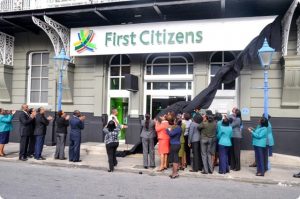
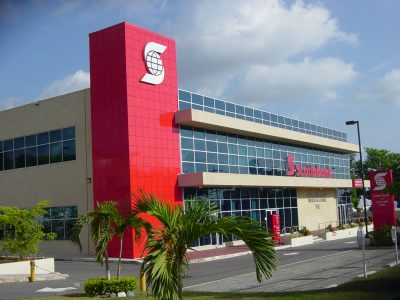
When all is said and done, First Citizens Bank in Trinidad, a bank group with total assets of J$1,090 billion, bought shares in last year’s APO and added to it subsequently, a strong seal of approval for the strategy Barita is pursuing. With the financial muscle of First Citizens and the small size of Barita there are areas for cooperation, including partnering to acquire assets or businesses. First Citizens is in talks to acquire Scotia Bank assets in Guyana as the bank pushes its regional expansion plans. Will Barita play a major role in this?

Lumber Depot profit bolted higher

Lumber Depot profit surges

Profits at Lumber Depot bolted 555 percent from $22 million for the nine months in 2020 to $145 million for the year ended April 2021, as it grew revenues 14.7 percent to $1.43 billion from $921 million in 2020 nine months period.
The company operates a hardware store in Papine, St Andrew, for more than two decades and generated revenues that rose 7 percent in the April quarter over the January 2021 quarter to $377 million from $353 million and 21 percent over the April 2020 quarter of $311 million. Gross profit margin for the full year was 21 percent, an improvement on the 18 percent for the 2020 nine months period. Administrative costs rose 42 percent to $154 million from $108 million in the nine months to March 2020, but it would be up by 7 percent if the comparative periods were the same number of months.
Cash inflows for the year pulled in $157 million, but after working capital adjustments the amount climbed to $186 million and ended the year with a net gain of $114 million after dividend payment of $14 million and loan repaymentof $33 million. The company has cash funds of $143 million and investments of $117 million at the end of April, with the latter shown as a noncurrent asset.
Current assets stood at $317 million and current liabilities at $139 million, resulting in net current assets of $178 million. Shareholders’ equity grew 68 percent to $523 million and pushed cash and investments to $360 million from $129 million in 2020.
The company reports earnings per share of 21 cents, up from just 3 cents in 2020.
The stock traded 580,827 units up to $3.65 in early trading on the Junior Market of the Jamaica Stock Exchange, but the price dropped back to close at $3.50  at a PE of 16.7 times 2021 earnings and 13 times ICInsider.com’s projection of 27 cents for 2022.

QWI nominated for best value creation strategy

QWI Investments, a Jamaica based investment company specializing in stock market investments in jamaica, the USA and Trinidad has been shortlisted and nominated as the Best Value Creation Investment Strategy – Caribbean 2021, by Capital Finance International after just over two years of operating.
The confirmed nomination and shortlisting was driven by voting from our readers, subscribers and staff working for global organisations, Jane Cartwright, CFI Awards Liaison Officer, informed QWI recently.

QWI Investments went to the Jamaica capital market in late 2019 and raised  $900 million after the issue was oversubscribed by three times the $600 million dollars, the initial target of the IPO that attracted more than 4,800 new shareholders to the company’s list of owners.
According to CFI, their publication is supported by groups and readers such as the World Bank Group, various UN and EU bodies, as well as other prominent entities. CFI.co provides insight into some of the more complex areas of international finance and development issues both in print and online, with emphasis on identifying examples and drivers of economic convergence, by combining their journalistic experience with reports from influential organisations.
The CFI.co award selection panel utilises a wide range of criteria to help facilitate informed decisions regarding the awards, lending the critical eye of a collective 170 years of business journalism, corporate leadership and academia, to the exhaustive information gathered by the award body’s own research team including: Demonstrated Shareholder Value Creation, Growth in Enterprise Value, Customer Value-Added Products and Services, Innovations Championed by Management Team, Strategic Alliances, Partnerships and Supply Chain Management, Organic Sales Growth and/or M&A Activity, Corporate Governance and Quality and Strength of Nominations.

For 2020, National Commercial Bank Jamaica won the “Best Digital Banking Services Caribbean award given by CFI.co.

Staffing chopped 30% at CPJ

Successful investors usually have keen eyes that spot good opportunities from afar before the crowd usually finds out that seems to be the case at the Montego Bay based Caribbean Producers (CPJ).

Caribbean Producers back in TOP 10

We have cut staffing from 450 to 315 and we did a lot of cost containment and some amount of restructuring of the operations, which Mark Hart, chairman of the company, puts at US$600,000 per annum. According to Hart, they believe that the manning levels will be adequate for the immediate future.
CPJ chalked up losses following the closure of the hotels last year and while the company lost money up to the March quarter this year, the stock price has more than doubled since the end of June last year, moving from $2.06 to $4.74 on Thursday. Most investors missed the train on this one.
The first thing investors ought to have observed was the reopening of the tourist sector with increasing visitor arrivals since travel restrictions were lifted in June last year. The second was a reduction in cost at the company and the strong cash flow since the closure in March last year.
One of the best signals, pointing to improvement, was trading in the stock by insiders and connected parties since the latter part of 2020. Last month, the company advised the Jamaica Stock Exchange that a connected party purchased 470,707 units of the company’s shares on June 29.
On December 23, last year, a connected party purchased 464,765 shares that followed a connected party purchase of 2,930,211 shares at around $2.63 on December 8. On November 25, last year, another connected party purchase took place for 185,002 shares. The only negative message was to the sale by a connected party of 5,500,500 shares on April 20, this year, at approximately $3.74. A deeper review by ICInsider.com indicates that the sale was a specially arranged deal to someone close to the seller. On February 19, the stocks closed, trading at $2.67 with just 12,000 shares traded but on the next day, 752,023 shares traded with the last traded price of $3.20, and then on the next day, 8,622,338 shares traded at $3.50. The above trades are a big vote of confidence that things were on the mend for the company.
Following the above, it should not be surprising to hear two directors speaking glowingly about developments at the company over the past year and plans for expansion for the future. “We have seen quick recovery for our core business,” said Thomas Tyler.
Hart stated that he thinks that the forecast made by Don Theoc of Mayberry Investments of $6 for the company’s shares in the next twelve months is conservative.
“We have expanded our grocery stores in St Lucia from 3,000 to 8,000 square feet in May and we are building out 9,000 square feet grocery store in the centre of Castries and working on breaking ground and should be ready in six to nine months.  In the north of St Lucia, we are looking at a 19,000 square foot retail store and in Montego Bay, we are expanding a 1,200 square feet retail store to 6,000 square feet.” “We have identified acquisition candidate in Jamaica and we are exploring,” Thomas Tyler stated; he went on to further state that the plan is “for revenues in St Lucia to move from US$15 million per annum now to $50 million in 3 years.”

The company suffered a loss of US$903,258 for the March quarter, up from US$553780 in the similar period last year and for the nine months to March, the loss ballooned to US$3.6 million from a loss of just US$29,609 in the prior year.
Sale revenues dropped 52 percent for the quarter, to US$12.7 million from US$26.5 million but fell 57 percent for the year to date, to US$37 million from US$86 million in 2020.
The company enjoyed an improved profit margin in the March quarter, with gross profit falling at a slower pace of 56.4 compared to the steeper decline in revenues, but gross profit for the nine months period, slipped by 54 percent.
Selling and administrative expenses fell 37 percent to $3.2 million in the quarter and 42 percent in the nine months period to US$9.4 million from US$16.4 million.
Finance cost declined in the quarter, to $442,000 from $581 million in 2020 and $1.83 million to $1.34 million for the nine months period, while depreciation was fall at US$1 million for the quarter and US$3.2 million for the year to date period.
The rationalization resulted in Inventories falling from US$28 million in March 2020 to US$18.7 million receivables fell from US$18 million down to US$10.5 million, while payables fell from US$15.3 million to US$6.33 million. Some of the declines are due to a lower level of business activity. Amounts borrowed to fund the operations remained at a high US$34 million, with shareholders’ equity of just $14 million.

Pick up in demand for Wigton’s shares

Demand for shares of Wigton Windfarm was weak leading into the week ending June 11, with the company’s stock closing at 63 cents and trading as low as 60 cents, with only one bid of size to buy 4,847,000 shares at 60 cents each and a mere six other bids to buy 872,000 shares, with prices ranging from 50 cents to 59 cents. Since then, demand has seen a marked increase.

Wigton closed at anew high of $1

Wigton traded nearly 90% of shares on Thursday.

At that close of trading in early June, offers to sell the stocks started at 63 cents with 204,000 units and climbed to over six million at 65 cents. Since then, the stock enjoyed strong support with the trading of 55.5 million units at an average of 4.6 million per day, with the highest, taking place on June 25, with 12.6 million shares and on the 28th, trading resulted in 9.2 million units changing hands.
On Tuesday, this week, total bids for the stock are up to 21.3 million units well above the close of June 11 and offers stand at 56 million units for 59 cents up to $1.55. A total of 52 million shares are on offer below $1 at the close on Tuesday, with more than 4 million units at 60 cents, while the bids remain weak below 55 cents.
The company reported earnings of $793 million or seven cents per share for the fiscal year ending March 2021. Those results would suggest a higher valuation than its currently getting but with nearly $400 million of revenues to be cut this year with the downward adjustment to the traffic on the number two turbine, earnings for the 2022 fiscal year is set to plummet below 5 cents per share and most likely below 4.5 cents, with no short term prospect of reversing that position.

Medical Disposables acquisition expansion

Medical Disposables and Supplies entered into an asset acquisition agreement with Cornwall Medical and Dental Supplies, a Montego Bay based company that distributes island-wide medical equipment, medical disposable products as well as a wide range of dental supplies.

The Company also operates three pharmacies, two in Montego Bay and one in Savanna-la-Mar, under the brand name Corn-med Pharmacy. “The vehicle which will be used to carry the operation is a newly formed subsidiary, Cornwall Enterprises Limited, in which MDS will own 60 percent stake,” stated Medical Disposables and Supplies in a release to the Jamaica Stock Exchange.
Medical Disposables and Supplies is listed on the Junior Market of the Jamaica Stock Exchange and is a distributor of medical and Pharmaceutical supplies island-wide.

Q2 profit jumps 22% at Scotia Group

Profit for the April quarter rose a decent 22 percent to $2.73 billion from $2.23 billion for the same period last year for Scotia Group, helped by lower staff cost and steeply reduced credit loss provision, with net interest income sagging sharply.

Scotia Group Kingston Branch

Net profit of $4.5 billion for the six months to April 2021 is up by $463 million or 11.5 percent compared to the corresponding period last year.
Net interest income dropped 13 percent from $6.3 billion to $5.5 billion in the quarter and for the half year, it slipped 9.5 percent to $11 billion from $12.48 billion. After providing expected credit losses, net interest income for the six-month period was slightly up to $9.9 billion from $9.8 billion in 2020, as expected credit losses were cut by $1.3 billion from $2.67 billion down to $1.4 billion. Other income increased $1 billion or 11 percent for the half year to $10.2 billion from $9.2 billion and increased by 11 percent from $4.29 billion for the April quarter to $4.78 billion. Foreign exchange gains contributed most to the rise in other income, with the April quarter enjoying a 39 percent bounce to $2.56 billion from $1.84 billion and for the half year an increase of 28 percent from $3.55 billion to $4.55 billion.
Segment results show a mixed picture for the half year, with Banking Treasury showing less income of $1.98 billion compared to $2.22 billion in 2020, with segment results of $833 million versus $1.08 billion. Retail banking saw a major about turn with a profit of $537 million from revenues of $9.5 billion against a loss of $139 million from revenues of $9.7 billion in 2020. Corporate and Commercial banking kicked in with revenues of $5.7 billion and profit of $2.18 billion from $5.45 billion and profit of $2.2 billion in 2020. Investment Management Services saw income and profit rising appreciably after generating $1.73 billion and contributed a profit of $1.3 billion to April this year versus $1.23 billion in revenues and profit of $627 million last year. Insurance revenues decreased by $700 million or 30.3 percent to $2.05 billion from $2.75 billion in 2020, while profit fell from $2 billion to $1.35 billion. The directors state that the fall is “due to the reduction in premium income stemming from the pandemic as well as lower actuarial reserve releases.”
Salaries and staff costs fell from $2.7 billion in the 2020 quarter to $2.49 billion and six months from $5.45 billion to $5.05 billion. Total operating expenses ended down at $5.59 billion from $5.88 billion and for the half year, cost rose from $13 billion to $13.36 billion.
The improved results are of import and the higher increase in the April quarter, encouraging. Still, the fall in net interest income suggests that major recovery in the Group’s core business may be some distance off, especially with contraction in the loan portfolio from $221 million at the end of October to $217 in January. Now $215 billion in April, the trend, however, suggests a slowing in the rate of decline. With, strong recovery in the tourism sector, the last major leg of the economy to recover, the bank may find new opportunities for increased lending and possible recovery of loan losses.
Before the impact of Covid-19 on the group’s operations, loans net of provision for credit losses was growing at a decent clip with an increase of 7 percent in 2020 to $216 billion, for 2019 loans grew 13 percent to $202 billion, in 2018 growth was 10 percent to $179 billion there was no growth in 2017 with $162 billion after an increase of 8 percent in 2016 and 7 percent in 2015.
Stockholders’ Equity rose to $118.4 billion from $112.4 billion at the end of April 2020. Deposits by the public grew to $361 billion from $334 billion at the close of April 2020 and Investment Securities remained at $145 billion as of April, similar to the same time last year, while cash resources jumped from $92 billion at the end of April 2020 to $136 billion at the end of the latest quarter, but down from $141 billion at the end of October last year.
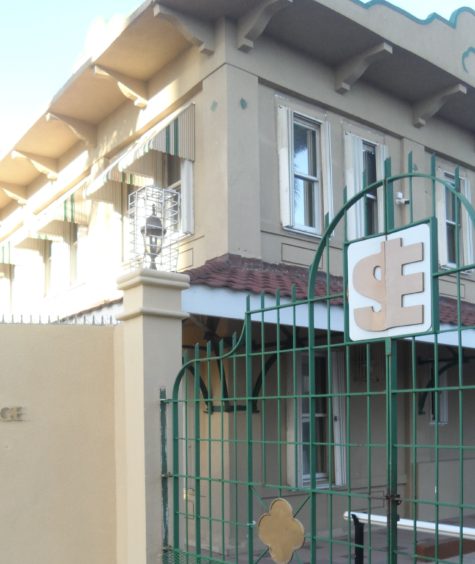
What seems clear is that customers are using the Branches less to transact business and this is set to lead to reductions in costs in the future and help improve profitability and the bank’s image.
The group approved an interim dividend of 35 cents per share, payable on July 21, to stockholders on record on June 29. The stock traded at $41 on Monday at PE between 10 and 12 times 2021 estimated earnings.

Dangers in the Jamaican stock market

Andrew Holness, Prime Minister of Jamaica, seems to want to go down in history as the PM who has divested the most government assets through the Jamaican Stock Exchange. While there are clear benefits for the country and investors, major dangers lurk around the corner for many investors.

Wigton closed at anew high of $1

Rate cut for Wigton’s number 2 turbine to cut profit by nearly $400m.

The local capital market has many challenges for investors and in some cases, it is downright ugly and terrifying. One such is Wigton Windfarm that went to the market with information in the prospectus indicating that all the energy output would be sold to JPS at predetermined prices for twenty five years for each turbine. This publication has reviewed the prospectus and cannot find any information to indicate that the rate on turbine no 2 was to be reduced effective April 2021. That information is critical and could have meant the issue price for the stock might have been inflated. Worse, investors who bought a pile of the stock post IPO around $1 region could be facing serious losses for years to come. Investors are now likely to see their investment stagnate for a long time due to the downward adjustment to the rate for the number two turbine. This is not the way to build a capital market.
The company’s 2021 audited accounts state “Wigton Phase II which was commissioned in December 2010 and supplies 18MW power to the grid. The plant was awarded the avoided rate for the energy it supplies and as per the terms and conditions of the Power Purchase Agreement (PPA), the final rate adjustment for this plant was applied at the end of March 2021. The rate adjustment will translate to approximately fifty percent reduction in the revenue from Wigton Phase II in United States Dollars. This is projected to equate to an overall fourteen percent decrease in revenue in Jamaican Dollars.”
ICInsider.com’s calculation shows the effect of the rate adjustments will reduce revenues by approximately $380 million per annum before tax and will result in net profit coming in around $470 million of 4.3 cents per share for the 2021/22 fiscal year that would put the value of the stock around at the latest price of 63 cents at a PE of 15. That would be fine if there were likely to be growth in sales.
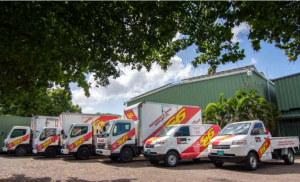
The prospectus list a series of risks and it goes on to state that If one or more of them described in the Prospectus or other risk not mentioned were to arise, Investors could suffer a material loss of their investment.
Electricity is sold by the Company to JPS under three (3) separate Power Purchase Agreements for twenty years each. Wigton one expires in April 2024 but can be extended up to 6 years. Wigton two expires in December 2030, with an extension of up to 5 years and Wigton three expires in May 2036 with any additional period to be agreed.
According to the prospectus, “the payment for energy supplied to JPS by each wind farm is determined by a formula fixed by the relevant PPA. Each formula, while different from the others, essentially determines the price payable by reference to the energy price for the relevant month and the Net Energy Output delivered to JPS. The Company regards the pricing formula in each PPA as highly confidential and disclosure might breach the confidentiality clause in each PPA but would be highly detrimental to the competitive interest of the Company in bidding for future generating capacity”.

Profit bounces at Stationery & Office Supplies

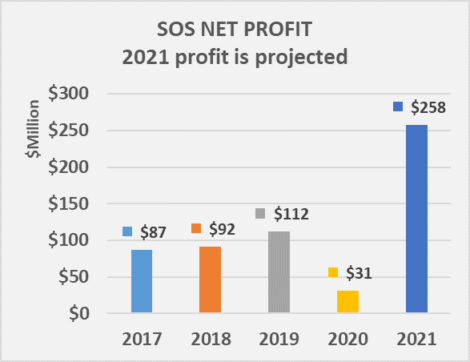
Many investors miss out on highly profitable investments in the stock market by focusing on the wrong things. Take the case of Stationery and Office Supplies that suffered a major reversal in profits in 2020 with just $33 million versus $135 million in 2019, with earnings per share of a mere 13 cents versus 54 cents in the prior year.

Operating profit at Stationery & Office Supplies grew 33% in 2021 Q1 over 2020.

Some investors see the historical PE Ratio for Junior Market for 2020 to be around 24 cents per share, as such, the company would be worth around $3 per share. Others would prefer to use the trailing four quarters earnings. Based on that, the company’s trailing earnings to March would be just 22 cents and the value would be even less than the full year’s numbers suggest. On the above two bases, at $7.52, the last price the stock traded at would be highly overvalued. The stock price jumped from $6 in trading before the results to trade mostly over $8 suggesting others investors are looking beyond the historical earnings and focusing on the future.
For the March quarter, revenues fell 7 percent to $313 million from $337 million in 2020. Importantly the average monthly sales rose 29 percent over the average for all 2020 to $104,522 but fell 7 percent against the 2020 first quarter. Despite the fall in revenues, profit rose 33 percent before gains on sale of fixed assets and loss of fair value of financial investments. A loss of $22 million was incurred in the June quarter last year, with negative 9 cents per share and profit in the September quarter last year was a mere $6.8 million from a 19 percent fall in revenues to just $240 million or $79,855 per month.
The company enjoys a ten-year tax profit break and will be subject to zero taxation until mid-2022 and 50 percent thereafter for five years.
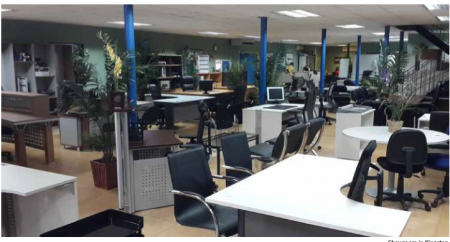
Gross profit margin rose to 54 percent for the quarter, from 49 percent in 2020, as gross profit rose just four percent to $170 million. Administrative and other costs fell six percent to $81 million from $86 million in 2020.  Selling and promotion expenses fell 10 percent from $23 million in 2020 to $21 million. Finance costs dipped from $3.3 million to $2.5 million as the company continues to use limited debt financing to grow its business.
The principal activities of the company are the sale and distribution of stationery and office furniture.
Shareholder’s equity stood at $665 million at the end of March 2021 and loans amounts to $163 million, with $36 million earmarked to be repaid to March 2022. Current assets totaled $522 million and current liabilities $140 million. Inventories rose to $245 million from $226 million in 2020 and receivables dropped from $172 million to $124 million representing around a month of sales.
Cash funds and investments amount to $121 million after the company generated cash funds of $69 million before working capital and capital financing needs. ICInsider.com projects earnings of $1 for the financial year to December 2021 and $1.60 for 2022.
The stock last traded at $8.20, with a PE ratio of 8 based on the reported earnings and 5 based on the 2022 projected earnings.
Contributors to this article own shares in the company.