 Limners and Bards (the Lab) reports pretax profit of $72 million half year to April, up 18 percent versus $61 million last year on revenues of $334.5 million compared to $261 million in 2018.
After-tax profit for the six months ends at $57 million, up 9 percent against $53 million in 2018. For the quarter to April revenues brought in $145 million and delivered pretax profit of $30 million against revenues of $136 million and pretax profit of $24.5 million.
The data suggest seasonality in earnings with full-year’s income of $483 million for the year to October last year and profit before tax of $76.5 million. The 2018 half year’s revenues amounted to 54 percent of income. Of significance is a sharp fall in operating expenses from $100 million in the second quarter of 2018 to $88 million in the 2019 period even as revenues rose resulting in gross profit rising from $36 million to $57 million. For the six-month period, gross profit moved from $100 million to $125 million. Partially offsetting the gross profit improvement is a $15 million in the second quarter is a rise in administrative expenses to $26 million in the quarter but was only up by $11 million for the half-year to $51 million.
The stock was listed on the Junior Market of the Jamaica Stock Exchange today at traded a small amount at $1.30 but closed with bids to buy at $1.65.
JSE profit jumps 36%
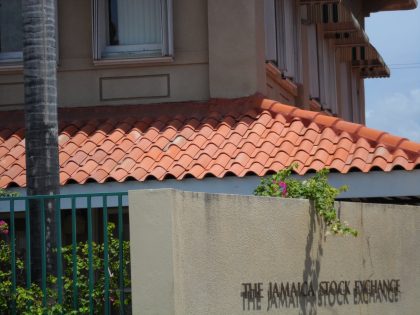 Profit climbed 36 percent in the June quarter, to $122 million from $90 million in 2018 at Jamaica Stock Exchange, from a 36 percent rise in revenues to $429 million, from $316 million in 2018.
For the six months to June, profit after tax climbed a robust 28 percent to $245 million from a 31 percent rise in revenues to $874 million compared to $666 million in 2018.
Administrative other expenses rose 37 percent to $262 million in the quarter and increased 32 percent in the six months period to $524 million. Staff cost rose 23 percent to $105 million for the quarter and 24 percent for the half-year, to $212 million. Advertising and promotion expenses were 192 percent higher in the quarter to hit $26 million and more than doubled in the half-year to $63 million from $31 million in 2018.
Earnings per share came out at 17 cents for the quarter and 35 cents for the six months and should end the year around $1.
 The growth in 2019 is consistent with that from 2014. With the continued increase in the number of listings on the exchange and increasing trading activities, the immediate future looks promising for increased revenues and profit.
Gross cash flow brought in $400 million and after paying dividends of $175 million ended up with cash and equivalent of $151 million and investments of $413 million. Shareholders’ equity stood at $1.2 billion up from $1 billion at the end of June last year. Net current assets ended the period at $404 million.
The stock traded at $40 on the Jamaica Stock Exchange with a PE ratio of 40 times 2019 estimated earnings.
Watch this one – RJR Group
 Investors should be watching keenly developments at Radio Jamaica as the company seems poised for a turnaround in its fortunes.
The company today reported to the Jamaica Stock Exchange that a connected party purchased 26.5 million of the company’s shares on July 5, 2019. The trade took place at $1.03 and is very significant, sending a strong message of the group fortunes ahead, but few are watching this one. The RJR purchase may not mean much to most, but IC Insider.com assessment of recent results suggests otherwise.
In November last year, IC insider.com posted an article, captioned “NCB Insiders sending a powerful message.” The article highlighted the fact that some directors and executives at NCB Financial Group see big things ahead, to have put down $650 million in buying a block of 4,793,610 shares close to the highest price it traded at in recent times. Since then the stock rose from $136 to more than $200 for a gain of 47 percent, with more to come.
RJR Group, reported profits that more than doubled in the December quarter from $79 million to $168 million on revenues that climbed from $1.39 billion to $1.5 billion but for the year to March this year, the group reported a small loss of $22 million thus reversing the profit of $34 million at the end of December 2018. Operating revenues rose an attractive 9.7 percent in the March quarter to reach $1.29 billion, segment results show that revenues grew 5.3 percent for television, 7.4 percent for radio and 8.2 percent for print in the March quarter over the prior year’s March quarter. Some cost incurred in the 2019 fiscal year will not repeat in 2020, while income as a result of the World Cup football, will not recur. The group lost around $40 million in doing world cup coverage and that loss will disappear in 2020. RJR ended the year with shareholders’ equity of $2.35 billion, borrowings of $387 million. Current assets amounted to $1.5 million with cash funds at $448 million and current liabilities at $662 million. In spite of the loss for the fiscal year, gross cash inflows amounted to $485 million.
The gains in revenues are an important message about future income and a very good indication that the 2020 fiscal year should be a profitable one. The purchase of the block of shares when coupled with growth in revenues seems a positive indicator of what to expect for 2020.
There are a few other indicators as well. Some entities placing advertisements in the Gleaner faced cancellation as a section of the paper attracted increased business that they had to turn away advertising and that seemed to have gone on for weeks in the June quarter. Faced with a growing economy with sales rising as well as increased competition companies will spend more on advertising to move more products and services, a trend that should continue going forward. Of significance, is that GDP growth in the first quarter of 2019 is 21 percent faster than in the same period in 2018 if this trend continues for the rest of the year growth would be in the 2.5 percent level or more. That would mean more advertising dollar spend and the RJR Group is in a good position to benefit from that going forward.
IC Insider.com projects 15 cents per share in earnings for 2020 with the stock that traded at $1.10 on the Jamaica Stock exchange on Friday, is now at a PE of just 7, well under the market average of 15.6.
Barita blowout profits
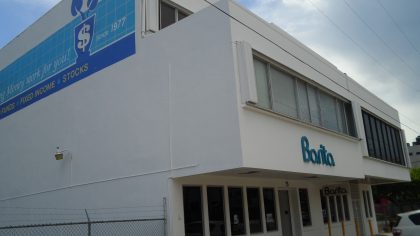 Barita Investments is reporting a huge jump in profits for the third quarter and the nine months to June compared to the similar periods in 2018 as revenues surged to record levels under new management.
For the quarter, profit after tax jumped 594 percent from just $131 million in 2018 to $911 million with the nine months ending with $1.43 billion up 691 percent from just $181 million in 2018.
Revenues net of interest cost, leaped 371 percent to $1.65 billion for the quarter from $352 million a year ago and to $2.8 billion for the nine months, up 234 percent from $842 million in 2018.
For the quarter and year to date, the company record strong improvement in revenues in every major category but gain on investment activities was the most outstanding, with revenues rising to $626 million in the quarter from just $31 million in 2018 and from $112 million for the nine months in 2018, it jumped 1,073 percent to $1.24 billion. While investments brought in a pile, they can be volatile as gains or losses are subject to market gyrations from time to time. Going forward there are no certainty that gains will be at the above levels. The company also recovered $312 million in investments losses incurred earlier in the year, of which $310 million is accounted for in the third quarter.
Expenses rose sharply but at a much slower pace than income, with the quarter seeing cost of $365 million including impairment and expected credit losses of $58 million against $171 million in 2018 while the nine months incurred cost of $829 million versus $542 million in 2018.
The company earned $1.44 per share for the quarter and $2.26 for the period to June and seems on course to record profits closer to $4 for the full year. More importantly, the latest quarter’s earnings suggest 2020 earnings could be in the $6 region all things being equal.
Barita ended the quarter with assets of $31 billion, up from $17 billion in 2018 with shareholders’ equity of $9.3 billion and securities sold under repurchase agreements amounting to $19.5 billion which grew from $12.3 billion at march 2018.
Barita is not satisfied with their outstanding achievement so far. The company will be going back to market to raise around $4 billion by way of a renounceable rights issue to help fund an acquisition.
The stock traded on the Jamaica Stock Exchange at $45 at a PE ratio around 11 times 2019 earnings compared to an average of 15.5 for the overall main market.
Shift in Easter impact Purity

Consolidated Bakeries Miss Birdie Easter bun.
Consolidated Bakeries profit dropped sharply for the March 2019 quarter as the company suffered an estimated $50 million shift in some Easter sales coming in April compared to March in 2018.
Quite a bit of Easter bun sales will show up in the second quarter and should help to boost the quarter and half year the profit.
Unaudited financial statements, showed profit declined sharply by 34 percent to $13.5 million in the March 2019 quarter from $20 million after tax in the 2018 first quarter.
Revenues increased marginally to $273.6 million for the 2019 quarter from $271 million in 2018 but the shift in Easter to mid- April affected sales. Direct operating cost rose 2 percent to $161 million, resulting in gross profit ending at $112 million similar to that of 2018, but gross profit margin slipped slightly, to a still healthy 41 percent compared to 42 percent for the same period last year.
For the quarter, administrative and other expenses moved up 3 percent to $50 million, depreciation was flat at $7.5 million while Finance cost declined 14 percent to $2.8 million compared to the 2018 March quarter.
Earnings per share came out at 6 cents for the March 2019 quarter, down from 9 cents for the corresponding quarter in 2018. IC Insider.com forecast 25 cents in earnings per share for 2019 as sales rise in double digits going forward and that should provide a decent lift for the stock price that has languished around the $2 mark for a long time. The stock traded at $1.80 on the Junior Market of the Jamaica Stock Exchange with a PE ratio of 7 times 2019 earnings.
Gross cash flow, brought in $23 million but growth in inventories and receivables, purchase of fixed assets, reduced cash funds of net of overdraft at $46 million at the beginning of the year to $24 million at the end of March. Shareholders’ equity stood at $733 million with borrowings at $167 million. Net current assets ended the period at $114 million inclusive of trade and other receivables of $112 million, as well as cash and equivalents of $79 million. The company ended the quarter with current liabilities of $185 million.
GWest shocking financial status
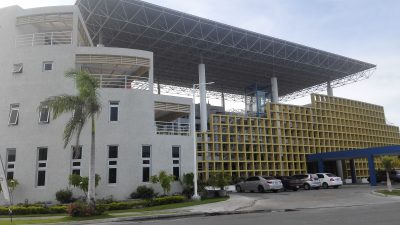 GWest went to market in 2017, presenting a picture to investors of a prosperous future but within less than two years of listing on the Junior Market of the Jamaica Stock Exchange, the picture is bleak.
The company’s auditors issued a qualified report casting doubts on the ability of the company to continue in business as a going concern. According to the company’s auditors Calvert Gordon and Associates, “the company recorded a net loss of $135.876 million during the year ended March 2019 and a net loss of $88.109 million in the previous year.”
These conditions along with other matters as set out in note 28, indicate the existence of an uncertainty which may cast doubt about the company’s ability to continue as a going concern.
Note 28 of the financial statements reads “The above factors indicate a material uncertainty that may cast doubt on the company’s ability to continue as a going concern and to therefore realise its assets and discharge its liabilities in the ordinary course of business. The continuation of the company as a going concern is dependent on the availability of the third party financing and on future sustained profitable operations.”
“Management is committed to continue operations as a going concern and is pursuing a number of strategies to return to profitability, which include: – sale of investment property units – commencement of operations of planned new surgery centre – increased marketing and promotion of new services being offered – continue rationalisation of expenses – obtaining additional third party financing for improved working capital “
“ At the date of these financial statements, the company was in an advanced stage of negotiations with its bankers regarding the restructuring its current borrowing arrangements and to obtain further financing for its strategic plans.

Dr. Konrad Kirlew, chairman of GWest.
Additionally, subsequent to the year end, the company has signed sale agreements for two units of its investment property.”
“The ability of the company to generate sustained profitable operations is dependent on the successful implementation of the strategies being pursued. Based on these plans and strategies, the directors and management believe that the company will generate adequate cash flows and return to profitability.”
GWest presented a rosy forecast at the time of the IPO, to suggest a highly profitable future with revenues from medical services rising sharply in the 2018 fiscal year. The results to March that year, last year showed revenues well below forecast of $86 million from the new operations with only $17.4 million generated. Admittedly, the company had projected a loss to March of $110 million but came up much lower, with a loss of $88 million. The audited accounts show revenues from patients fess at just $77 million well up on the $17 million generated in the 2018 fiscal year but below the forecast for 2018 and mere 11 percent of the forecast of $710 million for 2019. With losses exceeded revenues for the 2019 fiscal year, the company will need to grow gross income considerably in the current year to prevent another year of losses. GWest reported revenues of $130 million and $66 million in 2018 with expenses of $228 million up from $119 million.
The company has just $465 million in shareholders’ equity owes $980 million in interest bearing debt and virtually has no free cash left on hand. The sale of some units owned by the company will go a far way in easing the crunch but it must generate a lot more income to stem the cash out flow that has plagued it.
The writing was on the wall for this stock from the start, it had no track record in the business it hoped to make most of its profit from, projections had no credible foundation and management exposed there weakness with the manager they handled the conversion of shareholders loans to preference shares. The stock that was sold to the public at $2.50 and rose to a high of $4 after listing but is now down to $1.05 just above the net book value of 95 cents and seems heading lower.
Main Event growing for higher profits

Main Event revenues profit growing nciely.
Growth in revenues while not an exact proxy for increased profits is often a very good indicator of greater gains ahead. That may be exactly what is happening at the Junior Market listed Main Event.
That was the opening comments of IC Insider’s reporting on the nine months results for 2018. Nearly one year on, Main Event is quietly forging ahead with strong gains in sales and profit for the quarter ending April this year and slightly less growth for the six months period. The 2019 performance outdistance the modest rise in both revenues and profit for 2018.
Revenues for the July quarter last year, surged nearly 26 percent to $364 million, but profit fell 7 percent to $24.5 million and for the nine months to July, profit was up just 4 percent to $105.5 million flowing from a 13 percent rise in revenues to $1.07 billion.
For the current fiscal year, profit climbed 29 percent for the quarter to $62 million from $48 million in 2018. For the six months to April, profit rose a more moderate 15.4 percent to $92 million from $81 million in 2018.
Sales revenue rose 29 percent for the quarter, to $438 million from $341 million and is up 27.5 percent for the year to date, to $896 million from $702 million in 2018. Management in their report on the results states that, “revenue growth reflects higher volumes in the company’s core business as well as success with our new products while 13 percent of revenues or $118 million is attributed to the M-Style products and our presence in the West”
Gross profit grew much slower than revenues in the April quarter increasing 14.8 percent and 16.7 percent for the half of the year. Gross profit margin is still a healthy 47.5 percent in the latest quarter and 45.3 percent in the 2018, for the year to date period.

Three directors of Main Event, including the mentor who is respossible to ensure compliance with teh JSE rules.
Earnings per share came out at 20 cents for the quarter and 31 cents for the half year. Last year, figures for the nine months showed signs that profit would end up in the 40 cents region but foreign exchange and increased bad debt provisions resulted in a loss in the final quarter and earnings of just 32 cents per share. IC Insider.com is forecasting earnings around 75 cents the current fiscal year ending October and $1.50 per share for the 2020 fiscal year, giving it a PE of around 7 times 2019 earnings and just 3 times 2020 projected earnings.
Gross cash flow brought in $148 million but growth in receivables, inventories, addition to fixed assets offset by loan inflows and reduced payables pushed net cash intake down and liquid funds of $59 million at the end of April. At the end of April, shareholders’ equity stood at $616 million with borrowings at $295 million. Net current assets ended the period at $260 million inclusive of trade and other receivables of $354 million, cash and bank balances of $98 million. Current liabilities stood at $214 million at the end of April.
Scotia Group to pay $7.6b in dividends

Scotia to make big payout.
The directors state that the special dividend is to payout years of accumulated surplus that has built up over the years. The payments comes against the drop ground of net profit for the April quarter coming in a $3.295 billion versus $3.3 billion in 2018 and $5.6 billion compared to $6.76 billion year to date in 2018 with the latter being boosted by one off gain from sale of a subsidiary of $753 million.
The group reports an eleven percent growth in its loan portfolio to reach $189 billion from $171 billion in April 2018, but just 3.4 percent since October last year.
The decision to make the special payment is not surprising with the sharp cut in cash reserves requirement at the country’s central bank and the low levels of interest rates that currently prevail in the economy.
Sunshine Palace opens June
 Palace Amusement is expanding with the re-entry into the rapidly growing Portmore community with the new cinema Sunshine Palace expected to open around mid-June.
The newest cinema house when complete, will bring the number of movie houses operated by Palace to four. The new cinema has 4 auditoriums, providing seating for 674 persons. Patrons will be enjoy the best movie facilities in Jamaica with some seats equipped to recline for greater comfort and will enjoy digital screens for better quality viewing experience. The company in its 2018 annual report had stated then, “we are excited about the offerings of the four screens location to come” in Portmore. Reports reaching IC Insider.com is that the resident of the area are eagerly awaiting the opening new facility that will be located at the new Portmore Sunshine Mall, next door to the Sovereign Village Portmore.

Recliner box seats exclusively for cinema 4.
In 2004 fiscal year, the then Portmore cinema brought in just over $15 million in revenue, with segment profit of $1.2 million. In 2004, the population was around 160,000 persons and is now around 200,000, but the cinema can pull support from the wider environs including the parish capital, Spanish Town. IC Insider.com estimates that the new cinema could generate revenues of more than $350 million per year, assuming that at least just one person on average from the area attends the cinema annually. The estimated revenue would be just ahead of that is generated in the Montego Bay. With Portmore so close to Kingston, it could result in a switch in some of the existing business to the new one.

The plaza that will house Palace latest movie house.
Palace share last traded on the main market of the Jamaica Stock Exchange at $1,300.
Lasco Distributors profit disappoints

Lasco Manufacturing dropped 40 cents to push Junior Market down.
Revenues rose by 11.44 percent to $18.1 billion from $16.3 billion at Lasco Distributors for the 2019 fiscal year to March, but the good news stop there.
Cost rose rapidly while other revenues declined. Administrative, marketing and sales expenses rose sharply by 20 percent to $2.98 billion from $2.49 billion resulting in pretax profit dropping sharply to $692 million from $1.08 billion.
Operating profit rose 11.9 percent to $3.55 billion from $3.17 billion. Taxes rose to $94 million from $75 in 2018 leaving net profit at $598 million and earnings per share at 17.5 cents versus $1 billion or 29 cents in 2018. The 2018 result, got a boost from inflows from a claim against Pfizer that resulted in other income of $395 million with 2019 generating just $139 million.
Gross cash flow brought in $880 million but the company ended with net cash outflows of $400 million. Cash and short term investments amounted to $1.5 billion down from $1.8 billion in 2018. Fixed assets grew to $1.8 million from $1.48 billion in 2018.
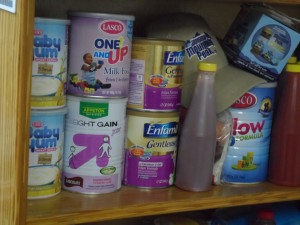
Lasco Distributors products.
At the end of the year, borrowed funds amounted to $540 million. Payables ended at $2.84 billion down from $3.6 billion in 2018. Current assets slipped to $6.6 billion from $5.9 billion. Shareholders’ equity grew to $5.2 billion from $4.57 billion.
Earnings per share for 2019 came out at 17.5 cents with IC Insider.com projecting 30 cents for 2020.The stock traded at $3.70 at a PE Ratio of 13 times current year’s earnings.