General Accident acquisition to boost results

General Accident head quarters

The junior Market listed General Accident acquired a 55 percent stake in Motor One Insurance, a Trinidadian based company, with a large branch network throughout Trinidad.
Motor One, is said to be one of Trinidad and Tobago’s smaller general insurance companies but the acquisition provides General Accident with a ready platform expand in the Trinidad market into motor vehicle and catastrophic insurance business in the Caribbean twin-island state which is said to be over 40 percent larger than the general insurance market in Jamaica. The acquisition will provide a platform for the local company to expand in the wider region and importantly, into Guyana where the economy is already growing strongly with the country set to benefit even more from the near term production of oil but that seems a bit off for now.
The acquisition, “is an important first step in our wider regional growth strategy which we believe will increase economies of scale, spread our risk and significantly enhance shareholder value,” General Accident’s chairman, Paul Scott stated in the release announcing the purchase.
General Accident is having a good two-year run, with rising income and profit, in 2016 revenues from core business hardly changed but investment income rose and helped to push pretax profit up by a third. In 2017, net underwriting revenues grew 28 percent over 2016 and by 22.6 percent in 2018 over 2017but profit declined 42 percent for 2017 and rose 50 percent in 2018 but was still below the pretax profit delivered in 2016. The company’s profit performance in the 2019 June quarter improved 31 percent to $104 million from $80 million in 2018 after tax and for the six months period by 42 percent to $135 million from $95 million in 2018.
Gross premiums written, rose 59 percent for the quarter to $4 billion from $2.4 billion and by 41 percent for the year to date to $7 billion from $5 billion in 2018.
Net premium earned rose 25 percent in the quarter to $503 million from $403 million and climbed 29 percent for the year to date to $989 million from $767 million in 2018. Commission expense increased 15 percent in the quarter to $116 million from $100 million and by 20 percent for the year to date to $260 million from $216 million in 2018 while commission income rose 14 percent in the quarter to $170 million from $149 million in 2018 and for the half-year, it rose 21 percent to $406 million. Investment and other income fell 18 percent in the half-year to $117 million from $143 million and rose 22 percent to hit $111 million.
Management expenses increased 26 percent to $227 million in the quarter and 19 percent in the six-month period to $419 million. Claims grew 28 percent to $339 million in the quarter and 23 percent in the half-year to $633 million. Other operating expenses increased in the quarter to $23 million from $11 million in 2018 and from $21 million to $35 million for the six-month period.
Gross cash flow from operating activities brought in $922 million, but net of amounts due to reinsurers and co-insurers and other working capital movements reduced cash provided by operating activities to $363 million. General Accident paid dividends of $150 million during the year and ended with cash and investments of $3.3 billion, up from $2.7 billion at the end of June 2018. At the end of June, shareholders’ equity stood at $2.2 billion. Total assets ended the period at $7.9 billion inclusive of dues from reinsurers and co-insures of $2 billion, cash and bank balances of $190 million and liabilities of $6 million.
Earnings per share came out at 0.10 cents for the quarter and 0.13 cents for the six months. IC Insider.com is forecasting 80 cents per share for the full year for a PE of 8 times earnings.


Increased cost stunts Main Event’s profit

Main Event revenues growing nicely profit stalls.

Sales climbed 29 percent for the quarter to $469 million from $364 million in 2018 but increased cost melted away the revenue gains leaving 40 percent less profit in the July quarter at $15 million, down from $25 million reported in 2018 for Main Event.
The third quarter’s performance is in stark contrast to the second-quarter performance. With $31 million lower revenues, profit in the April 2019 quarter was $62 million, well up on the July quarter’s outcome.
The company, an entertainment production and planning agent, recorded a strong 28 percent growth in revenues for the nine months to July of $1.36 billion, up from $1.07 billion in 2018. Very little of the increased income percolated into more profit for the nine months to July, as profit increased slightly by 2 percent to $108 million from $105 million in 2018.
The strong increase revenue is attributed to the company’s focus on diversifying its income stream that includes M-Style experience that focuses on the wedding market, expansion to the western end of the island and M Academy project, the company directors advised investors.
Gross profit margin in the nine-month period fell to 44 percent from 48 percent in 2018 and was also down in the July quarter by 42 percent, from 45 percent in 2018. Direct expenses climbed 37 percent in the nine months ending July to $761 million from $556 million in 2018, and by 36 percent in the quarter ending July to $271 million from $200 million. Gross profit rose slower than revenues by 21 percent in the quarter to $198 million from $164 million but increased 18 percent for the year to date to $604 million from $510 million in 2018.

Three directors of Main Event, including the mentor who is responsible to ensure compliance with the JSE rules.

Operating and administrative expenses rose a sharp 35 percent to $182 million in the quarter and 25 percent in the nine months to $492 million. Finance cost declined in the quarter to $8 million from $5 million in 2018 and from $14 million to $18 million for the nine-month period. “We have taken note of increased prices in third party inputs and increased inefficiency internally”, the directors indicated.
Gross cash flow from operating activities brought in $213 million, payables of $146 million and dividends of $18 million. At the end of July, shareholders’ equity was $631 million, long term loans of $139 million, net current assets ended the period at $470 billion inclusive of receivables of $375 million, cash and bank balances of $50 million and current liabilities of $240 million.
Earnings per share came out at 4 cents for the quarter and 36 cents for the nine months. IC Insider.com is forecasting 40 cents per share for PE of 14 times earnings, importantly, with the 2019 fiscal year ending in October investors should be looking at the 2020 results to deliver increased profits and stock price appreciation. Continued strong top-line growth and implementation of cost control measures will enhance gains in 2020 and should see earnings hitting 85 cents per share for a PE of 7. The shares are listed on the Junior Market of the Jamaica Stock Exchange and last traded at $5.72.

69M Access shares offered at $32 each

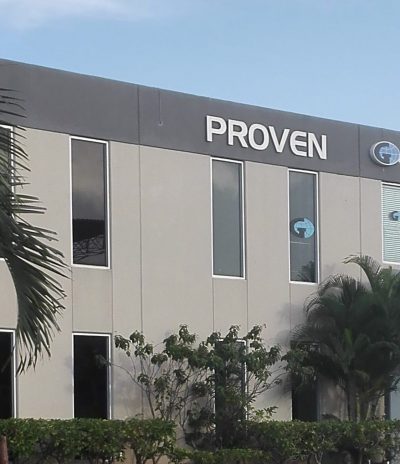
Proven Investments is offering 68.6 million or 25 percent of the shares it currently owns in Access Financial Services for sale, at $32 per share starting today with the issue not expected to be open beyond today.
The prospectus suggests that the offer could be upsized if deemed appropriate but information obtained by IC Insider.com indicates that it will not be. Proven bought the block of shares mainly from Mayberry Investments on December 30, 2014, at $9 each, to become the largest shareholder. On several occasions in the past, the CEO Christopher Williams maintained the view that they had no intention of selling the shares, but that was before they bought 20 percent of JMMB Group from NCB Group in December 2018, costing $9 billion and financed by debt. With JMMB Group going back to the market to issue new shares, Proven will need to have funds to buy enough shares to maintain their 20 percent holdings if they intend to account for profits on an equity basis.
At $32, the stock is an attractive buy for investors looking for a value play investment. It is priced under 10 times current year’s earnings and could double within a year.
Access is one of the most rewarding investment for shareholders over the years, with an outstanding record of increased profits high return on equity and good and consistent dividend payments. Return on equity slipped in the past two years as interest rates and new accounting standards took effect but the company continues to grow. In recent years, growth was boosted by acquisitions of other micro-lending companies. Last year the company acquired Embassy Loans located in the Florida area in the United States.
The company realized Net Operating Income for the quarter ending June 2019 of $539 million of which the new US subsidiary Embassy Loans contributed $151 million. Interest income from loans increased by $8 million or 2 percent to $408 million while net fees and commission for the period was $153m. For the period, Embassy Loans contributed $44 million and $103 million respectively to the group’s Interest and fee income.

Christopher Williams, Proven Investments CEO.

Operating expenses for the quarter, increased by 90 percent or $179 million compared to the corresponding period ended June 2018, resulting from an increase in allowances for credit losses, based on the implementation of the IFRS 9 provisioning methodology and the inclusion of Embassy’s operating expenses for the quarter amounting to $110 million.
Net profit after tax for the quarter ended June 2019 declined 24 percent to $165 million compared to the 2018 period and resulted in earnings per share of 60 cents. Annualised earnings work out at $2.40, at a PE of 15, the value would be $36.
Access will generate cash flow from profits monthly and increase the amount available for lending, as such, earnings per share should be in the $3 region for the current year putting the likely value around $45.
The stock tends to be scarce and the potential for long term growth remains positive if a bit diminished in recent times with pressures on interest margins. Consolidation in the industry locally is to be expected and Access should be able to take over more of the smaller players going forward. It is most likely that Access will move most of the administrative functions to Jamaica with the lower cost than in Florida and therefore cut the cost of the US operations.

Drop in CAC 2019 profit

CAC last traded at $13.10.

The past twelve months have been tough for air-conditioning company CAC 2000 with sales and profit plummeting as major road works around their business place disrupted business in a serious way.
Revenues and profits were significantly impacted by the disruption to business resulting from major road works in the Spanish Town and Hagley Park Road area. Additionally, to compliance with IFRS 15 which stymied revenues by an estimated 10 -20 percent, chopping $171 million off revenues for the nine months, Steve Marston, the company’s Chairman and CEO reported to shareholders in a commentary included with the quarterly financials.
Profit in the July quarter plummeted 326 percent from a profit of $19 million in the corresponding 2018 period to a loss of $43 million as sale revenues fell by 22.5 percent for the quarter to $221 million from $285 million in 2018 and declined 19 percent for the year to date to $738 million from $909 million in 2018. For the nine months to July, profit dropped 154 percent from $72 million in 2018 to a loss of $39 million.
Cost of sales fell 14 percent in the quarter, compared to 10 percent for the year to date leading to a fall in gross profit margin in the nine months to 32 percent from 39 percent in the 2018 period. Gross profit margin declined 30 percent from 36 percent in the 2018 quarter. Other income that included income from professional service undertaken in Barbuda declined from $4.4 million to just $73,478 for the quarter but jumped sharply in the nine months to $47 million from just $7 million in 2018.

Steven Marston,
Chief Executive Officer

Selling & Distribution expenses fell 49 percent to $5.3 million in the July quarter and 42 percent for the year to date to $16 million. Administrative and other expenses rose 24 percent to $97 million in the quarter and increased 13 percent in the nine-month period to $291 million. Finance cost rose in the quarter to $6 million from $5.5 million in 2018 and increased to $18 million from $17 million for the nine months. CAC paid a dividend amounting to $4.5 million in 2019.
Gross cash flow was negative with the consumption of $26 million but the company still ended with more cash funds at the end of the period of $149 million. At the end of July. Current assets ended the period at $1.06 billion inclusive of trade and other receivables of $522 million. Current liabilities stood at $459 million including Payables of $381 million. Shareholders’ equity stood at $444 million with borrowings at just $208 million.
The future for the company for the current fiscal year lies in the ability to close as many of the projects of the more than $800 million of projects Management says is on hand.
Companies hurt from temporary disruptions can be candidates for big recovery in stock price when they return to normal operations CAC seems to one such entity. Investors in looking at this company should focus on the next fiscal year when the operations should not suffer from the disruptions encountered in the past year. Earnings per share ended with a loss of 33 cents for the quarter and a loss of 31 cents for the nine months. The company’s shares are listed on the Junior Market of the Jamaican Stock Exchange and last traded at $13.10.

Stanley Motta doubles Q2 revenues

Stanley Motta 58 Half Way Tree building.

Rental revenues rose 105 percent for the quarter to $109 million from $53 million and climbed 118 percent for the 6-months to $205 million from $94 million in 2018, resulting from increased rental space in May of 2018 at real estate holding company Stanley Motta.
Profit soared 302 percent in the quarter ending June to $46 million, up from $12 million in 2018.
For the six months to June, profit grew a stunning 418 percent over the $22 million earned for the same period in 2018 to hit $115 million. The sharp increase in income is due from added rental space let from the completion of the newly constructed building, the larger tenanted unit that was handed over to the new tenant in May last year.
Operating margin before finance cost in the first half of the year, climbed 48 percent, from 50 percent in the year 2018, and by 55 percent in the quarter from 41 percent in 2018. Operating profit rose by 176 percent in the quarter to $59 million from $21 million in the 2018 quarter and increased 198 percent from $47 million to $139 million for the half-year.
Administrative expenses rose 56 percent to $49 million in the quarter and by 38 percent in the six-month period to $65 million, due to a foreign exchange loss of $19 million on the revaluation of the long-term loan and the cost of producing the 2018 annual report. Finance cost increased to $13 million from $10 million in the 2018 quarter and declined from $24 million to $22 million for the six-month period.
The Company ended June with shareholders’ equity of $3.9 billion, current assets of $62 million, current liabilities of $173 million. Cash funds ended at $47 million paying an interim dividend of $93 million. Amounts owing to creditors amounted to $114 million and long-term borrowings stood at $708 million. Real estate held amounted to $4.7 billion in value.
Earnings per share came out at 6 cents for the quarter and 15 cents for the six months. IC Insider.com is forecasting 30 cents per share for the full year from operations but gains in the value of the property will most add to reported profit by the end of the year. was paid in the year to date. The stocks that are listed on the Jamaica Stock Exchange closed at $6 on Thursday.

The Lab almost doubles Q3 profit

Profit at newly listed Junior market Limners and Bards climbed 94 percent in the July 2019 quarter, to $12.7 million after taxation of $4 million from $6.5 million in the 2018 quarter.

The company that is primarily involved in the production of television and multimedia commercials, video productions feature films and advertising agency saw, profit rising just 17 percent to $70 million from $60 million in 2018 for the nine months to July.
Operating revenues rose 16 percent for the quarter, to $152 million from $131 billion and grew 24.4 percent for the year to date, to $486 million from $391 million in 2018.
In contrast to the third quarter, revenues for the April quarter brought in $145 million and delivered pretax profit of $30 million against revenues of $136 million and pretax profit of $24.5 million for the similar period in the prior year.
Gross profit margin in the nine months to July rose to 31.5 percent from 23.5 percent in 2018, as gross profit rose much faster than revenues to be up 56 percent to $48 million from $31 million in 2018. Gross profit margin climbed 36 percent for the nine months from 33 percent in 2018 with gross profit climbing 32 percent over the prior year’s third quarter to $173 million from $131 million.

Kimala Bennett, Managing Director of The Lab.

Administrative expenses rose 70 percent to $30 million in the quarter and increased 42 percent in the nine months period to $81 million from $57 million. Finance cost was flat in the quarter at $1.3 million but rose from $1.2 million to $3.7 million for the nine months.
Earnings per share came out at one cent for the quarter and 9 cents for the nine months and should end the fiscal year ending around 12 to 13 cents.
Gross cash flow from operations brought in $99 million but growth in receivables, offset by an increase in payables, reduced net flows to $52 million. The company ended the period with $237 million in the bank after receiving $179 million from the sale of shares to the public and paying a dividend of $40 million.
At the end of June, shareholders’ equity stood at $332 million with borrowings at just $42 million. Net current assets ended the period at $281 million inclusive of trade and other receivables that jumped sharply from $65 million at the end of October last year to $181 million.
The stock traded at $3 on the Junior Market of the Jamaica Stock Exchange with a PE ratio of 23 times 2019 earnings of 13 cents per share.

Lasco’s Q1 interest income jumps 42%

Lasco Financial enjoyed increased revenues but slightly lower profit in Q1.

Growth in revenues can be a good indicator to identify good future investment candidates even if profits may be moving slowly. By that measure, Lasco Financial is a good stock to watch for future growth.
The company reported strong growth in revenues but virtually flat profit results in the first quarter to June. Interest income grew a strong 42 percent to $219 million from $154 million in 2018 helping to grow overall operating income to $586 million, up 11 percent from $526 million in the June 2018 quarter. Annualized, interest earned is set to exceed the $781 million earned for the fiscal year to March 2019. Other income rose to $69 million from $28 million in 2018.
While the top line moved up well, the gains were overtaken by the faster increase in expenses. Administrative and other expenses climbed 23 percent, to $247 million from $200 million while selling and promotional expenses moved up 26 percent to $230 million from $182 million. Finance cost rose to $49 million from $41 million in 2018 while taxation charge increased to $39 million from $31 million in the 2018 first quarter.
Provision for loan losses amounting to $84 million, was made in the quarter, with none in 2018. The increase in loan losses played a major part in keeping the 18 percent rise in revenues from bettering the $101 million profit realized in the 2018 quarter and ending with $91 million.

Lasco Financial Money Gram

Excluding the loan loss provision, profit before tax would have risen by 62 percent and lead to earning per share rising from 7.2 cents to 11.7 cents or close to 50 cents per share for the full year. Loan loss provision for the 2019 fiscal year was $215 million net of recoveries and seems set to exceed this amount by the year-end with the growth in the loan portfolio.
Total assets increased year over year by $481 million to $4 billion with loans and receivables rising to $2.66 billion from $1.85 billion at the end of June 2018 and $2.37 billion in March 2019. The increase was partially funded by a reduction in cash and short-term deposits that fell to $125 million from $456 million in June 2018 and is down from $283 million as of March this year. Shareholders’ equity rose to $1.68 billion from $1.47 billion at the end of June 2018. Lasco’s borrowings rose from $2 billion to $2.2 billion over the same periods to help finance the growth in loans.
Lending is the area of growth for Lasco Financial and the pace seen the first quarter could carry through for the rest of the year and have a domino effect on revenues and profit. The company’s shares are listed on the Jamaica Stock Exchange Junior Market and last traded at $5.50 with a PE of 9 times estimated 2020 earnings.


Fontana Q4 sales jump 15%

the stock remains the main attraction in trading.

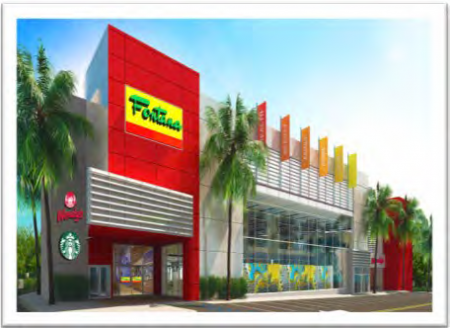
Fontana upcoming Waterloo Road branch set to open in September.

Sales at Junior Market listed Fontana grew 6.8 percent in the March 2019 quarter over 2018 and 7 percent for the nine months to March as well as for the full year to June but surged by a strong 15 percent in the final quarter to June.
Audited financial report show sales for the full year at $3.7 billion, up on the $3.42 billion recorded in 2018, representing growth of $594 million in the June 2019 quarter over the $3.108 billion generated up to March this year. Revenues for the June 2018, added $516 million to the nine months’ sales of $2.9 billion recorded to March last year. The June quarter revenues are much lower than in the March quarter with sales of $951 million that is up from $890 million in 2018. The acceleration in growth in the June quarter is significant and is worth watching to see if it continues.
The audited accounts when compared with the March quarter show profit margins that were better in the final quarter than in the March quarter with gross profit coming in at $281 million versus $297 million but with the June quarter sales being just 63 percent of the March sales. The company reversed $56 million in provision for inventory obsolescence during the year and this could be the reason for the sharp improvement in the fourth quarter margin.
Administrative and other expenses that rose 10.5 percent to March to $721 million finished the year off with an 8.3 percent increase to $1 billion. Some of the cost increase would be as a result of staffing and other cost associated with the new store at Waterloo Road in Kingston that is slated to open in mid-September.
Fontana ended with profit before taxation of $270 million, down from $303 million in 2018 but closed with profit after tax at $307 million versus $247 million in 2018. The operations generated gross cash flows of $305 million for the year and expended $441 on the acquisition and property development and inflows of $223 million from the issue of shares to the public. Cash and equivalent rose to $383 million at year-end with receivables at just $67 million while payables stood at $460 million and loans at $157 million.
Inventories excluding provision for obsolescence is down from $712 million to $639 million at the end of the fiscal year. Fixed assets grew to $701 million after the sale of $302 million of buildings and spending of $464 million on the Waterloo Road store. Shareholders’ equity climbed to $1.27 billion from $1.06 billion in 2018.
The stock traded at $8.20 on Friday at a PE ratio of 11 based on IC Insider.com forecasted earnings of 75 cents per shares.

Jamaica Producers’ 3 years profit surge

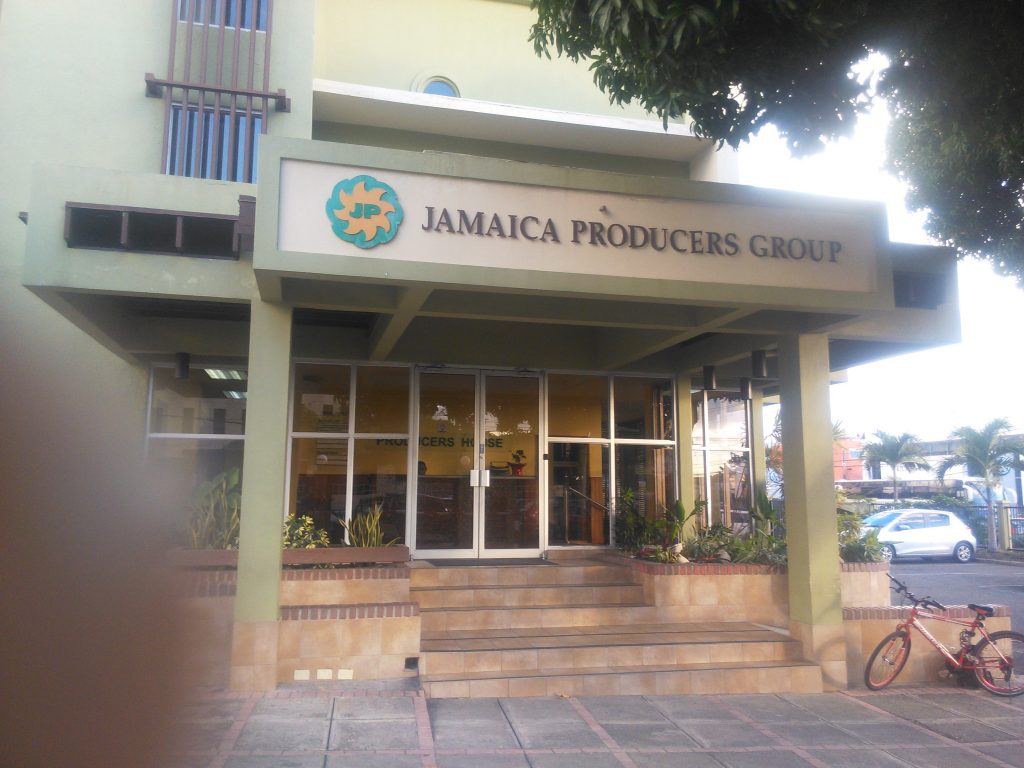
Jamaica Producers profit up 52% in June 2019 quarter.

Jamaica Producers (JP) increased second-quarter revenues by 12 percent to $5.4 billion over the 2018 period and net profit attributable to shareholders by 52 percent to $399 million from $263 million.
For the half-year, JP posted a 52 percent rise in profit due to the group’s shareholders of $629 million compared to $415 million with revenues that rose 9 percent from $9.3 billion to $10.16 billion.  Profit was boosted by other income of $191 million in the quarter, up from $100 million in 2018 and $163 for the half-year versus $153 million in the 2018 half-year. The current year is not the only one that profit jumped sharply for the group, in 2018, profit attributable to the Group’s shareholders rose 66.5 percent for the June quarter over that of 2017 and 65 percent for the half-year from revenues that grew 20 percent and 25 percent respectively. The group saw a major improvement in profit from ongoing operations in 2017 over 2016 when profit from operation was negligible.
Gross profit rose 22 percent to $1.85 billion and 23 percent for the half-year to $3.5 billion. Selling, administration and other operating expenses rose 16 percent to $954.4 million in the June quarter from $823.3 million in the similar period in 2018 while the half-year recorded an increase of 12 percent to $1.83 billion from $1.64 billion in 2018.

Jamaica Producers snacks


The group recorded a gain of $575 million on disposal of 30 percent of its interest in JP Snacks but is shown directly in the group’s shareholders’ equity and not a part of the regular profit statement. Producers, as the company is fondly called. reported earnings per share of 36 cents for the quarter and 56 cents for the half-year.
Segment results show the food and drink business with sales of $5.95 billion compared to $5.46 billion in 2018 and contributed profit of $438 million for the group. The Logistics & Infrastructure segment generated revenues of $4.2 billion versus $3.83 billion in 2018 and recorded a profit of $1.56 billion from $1.26 billion in 2018.
The Group closed the half-year with shareholders’ equity of $13.5 billion, loans borrowed amounted to $6 billion, cash funds of $792 million, securities amounting to $5.7 billion, current assets of $10.3 billion and current liabilities of $4.5 billion.
The group’s stock is listed on the main market of the Jamaica Stock Exchange and last traded at $27.50 and a PE of 18 times 2019 earnings.

RJR/Gleaner charting new course

RJR/Gleaner launched TVJ International with 24 hours service in the Cayman Islands in August and two other Caribbean Countries are in line with other countries also showing interest in the service.
The launch of a new TV service is just one of a number of changes to the group’s services that the directors updated more than 160 shareholders attending the annual general meeting held at the Jamaica Pegasus Hotel in Kingston today. The vast majority of RJR shareholders in attendance continue to be representative of the older loyal RJR AM listeners.
Some of the several changes that the group is undertaking including merging of certain operations will lead to greater efficiency, reduced rental and personnel cost. Work is being carried out to expand RJR 94 in areas that currently have room for improved coverage that is expected will lead to greater listenership and ultimately increased revenues. A number of transmission sites were merged with existing ones in the past financial year, reducing rental expenses, electricity, repairs and maintenance.
A raft of changes within the group that are underway if successful, will result in major changes to the group and generate increased revenues and profit as well as a number of new revenue-generating services. The effect, the future will look markedly different than the past, with digital technology playing an increasing role in providing services and driving revenues not only locally but globally.
Shareholders were told that the main reasons for the loss of $22 million made for the year to March 2019 were due to losses in staging the FIFA World Cup in 2018 amounting to approximately $40 million and adjustments occasioned by adopting new accounting standards that accounted for $60 million in added cost. The group nevertheless recorded growth in revenues across all segments of the business, with TV revenues climbing 16 percent, audio mainly radio up 4 percent and print 4 percent.

RJR shareholders at the 2019 AGM at the Jamaica Pegasus

All companies within the group will be on one accounting platform that will allow for the completion of financial statements within five days of the month-end. The move will also result in reduced costs in maintaining accounting records.
The group saw a major turnaround in fortunes in the first quarter to June for the 2020 fiscal year, with profit of $24 million up from a loss of $70 million in 2018 although revenues from sales rose modestly to $1.36 billion from $1.35 billion but gross profit jumped to $700 million from $597 million. The improved position in the quarter over 2018 is due primarily, to losses incurred in staging the World Cup matches in 2018 that has no recurred in 2019 and good growth in regular revenues in the 2019 quarter. IC Insider.com forecast is for earnings of 25 cents per share for the current fiscal year and 35 cents for the 2021 fiscal year. RJR’s stock price started the year at 85 cents has gained 129 percent so far and closed trading at $1.95 the Jamaica Stock Exchange on Wednesday with a PE of 8 times current year’s earnings.