Omni’s audited report is erroneous


Auditors are supposed to be experts at accounting matters, and their audit reports, especially for public companies, are expected to provide users with accurate information. At the same time, the Jamaica Stock Exchange (JSE) monitors financial reports put out by the companies listed on their exchange, while the Financial Services Commission advises that they also review them.

Since 2010, around 60 companies have listed shares on the JSE with new shares to the public. The vast majority of them split the shares to facilitate meeting the JSE rules or for greater liquidity of the shares. One would have thought that qualified accountants would by now be fully conversant in computing the correct number of shares and the average where applicable, thus computing the correct earnings per share. That is not the case. The JSE gets and vets financial reports and is clueless about what is happening with many of the financial reports put out by companies. If they did, they would not allow Omni Industries to report critical information that is incorrect in their financials for three quarters without revisions, now the audited statements have also incorrectly reported it.

Omni did so for their quarterly reports since listing in the early summer. Their auditors compounded the error by issuing financial statements with serious errors.
In February last year, the company converted 20.09 million shares into 2.25 billion units by splitting each issued stock. In May, 250 million new shares were sold to the public, increasing the total issued shares to 2.5 billion units and the weighted average to 2.47 billion units. In a strange twist, the company reported an average number of shares at just 1.402 billion units, a figure the auditors have unfortunately used as well.
The critical factor is that the earnings per share are overstated. This is crucial as many investors use EPS to value stocks. The market average is now around 15 2024 earnings, so at 9 cents, some may consider the stock to be undervalued at 94 cents, it traded today. If the correct EPS of 5 cents is used, the stock would be valued at nearly 21 times 2024 earnings and is well above the market average, too vastly different pictures.
In addition, neither the company nor the auditors have reported the appropriate earnings per share for 2023 nor the correct average number of shares issued.
Accounting standards require that the average number of shares in issue is the weighted number of shares outstanding during the period. The company split the 20.9 million shares before the IPO into 2.25 billion units; as such, the average issued shares cannot be less than this plus the average for the new shares issued.

The audited report shows a profit of $127 million and an EPS of 9 cents for 2024. In reality, EPS for 2024 is around 5 cents and 6.7 cents for 2023.
In another matter that is not related to Omni, auditors are computing deferred taxes at 25 percent on revaluation surplus on land and buildings.  That would be in order if gains on disposal of land and buildings were taxed at the rate of income. Such an application is blatantly incorrect as the only amounts that will be taxed would be amounts relating to capital allowances already claimed on buildings and not lands. The applicable tax would be a transfer tax, which is at a far lower rate than income tax.

Scotia profit surges 35%


Profits jumped a solid 34.5 percent at Scotia Group with $4.2 billion in net profit for the quarter that ended January, this year, for an increase of $1.1 billion over the $3.21 billion in 2024, with earnings per share rising to $1.35 from $1 in 2024.

Total revenues excluding expected credit losses for the year ended January 31, 2025, grew by $2.2 billion to $17 billion, for an increase of 14.9 percent over the prior year period, primarily driven by growth in loans leading to an increase in net interest income of $1.1 billion or 10 percent as well as an increase in other revenue of 26.2 percent.
Other income, other than interest income, increased by $1.2 billion or 26.2 percent. Net fee and commission income for the period amounted to $2.2 billion. an increase of $672 million or 42.9 percent, primarily driven by the higher volume of client transactions and activities.
Total loans increased from $275.7 billion to $313 billion, an increase of 13.3 percent over the $276 billion in January 2024 but flat with October last year. Growth over January 2024 “includes a 12 percent increase in Scotia Plan personal loans and a 24 percent increase in mortgage loans. Commercial loans also increased by 5 percent over the prior year period,” the release from Scotiabank stated
The Board of Directors approved a dividend of 45 cents per share for the first quarter, payable on April 17, to stockholders on record at March 26.

Omni Industries shows promise but..


Omni Industries, the first company listed on the Junior Market of the Jamaica Stock Exchange in 2024, reported results for the nine months to September, with the first full quarter after the IPO offer in May. The result for the quarter is promising, with pre-tax profit moving from $32 million to $38 million and after tax from $24 million to $38 million with the listing resulting in no taxes payable for another 5 years on profits, since listing on the Junior Market.
 

For the 9 months to September, earnings before tax amounted to $184 million and after the provision of $38 million corporate profit tax, ended with a net profit of $146 million. Based on the average number of shares outstanding, earnings per share ended at 6 cents instead of the 10.4 cents reported by the company and 1.5 cents for the September quarter instead of the reported 2.7 cents per share that was based on the 1.4 billion shares instead of approximately 2.375 billion units. For the year to December the company used the same number of shares as they used for the September results to compute per share earnings and provided no EP for 2023. Instead of EPS of a loss of 1.8 cents for the December quarter and 8.6 cents for the full year, earnings per share are actually a loss of 1-.4 cents for the last quarter with 2023 being 7 cents and 5 cents for the full year with 2023 being 6.7 cents.
The performance achieved with the Gross profit margin climbing is probably the most telling feature of the results if it is sustainable. Margins surged in the third quarter from 37 percent in 2023 to more than 50 percent in 2024, pushing the nine months to September to 47.4 percent from 37.5 percent in 2023. Unfortunately, this performance was not carried into the final quarter in December with the margin dropping to 38 percent down from 45 percent in 2023 and helped in plunging the company into a loss in the final 0224 quarter of $25 million versus a loss before tax in 2023 of $21 million, with the full year profit coming in at $135 million before tax versus $180 million in 2023.
Revenues declined by 12 percent to $427.5 million for the three months to September 2024, compared to $488 million in the same period in 2023. Revenues declined marginally, to $1.51 billion for the nine months in 2024 from $1.57 billion in 2023. The decline is “largely attributed  to adverse weather conditions, including Hurricane Beryl in early July and ongoing heavy rains impacting the island. Additionally, a cement shortage has affected the construction industry, which directly impacted our revenue streams,” the company managing director, Patrick Kumst informed shareholders in his commentary on the results.

Administrative costs rose by a third from $60 million to $80.4 million for the quarter and up 43 percent from $162 million to $230 million for the nine months. Selling expenses jumped by 30 percent for the quarter to $33.5 million from $26 million in 2023 and for the year to September, it increased by 16 percent to $111.5 million from $70 million in 2023. For the reporting quarter factory expenses rose by 10 percent to $56 million, from $51 million and increased by 9 percent to $163 million for the nine months to September from $150 million in the 2023 period.

The managing director went on to state, “this rise in administrative costs was primarily due to higher professional fees, marketing, and other expenses related to our IPO. Selling expenses year‐to‐date were driven mainly by haulage and export-related costs, while the 9 percent increase in factory expenses resulted from increased repair and maintenance costs. With our ongoing strategic retooling and new equipment acquisitions, we anticipate a reduction and improved optimization of these expenses in the near term. Finance costs for the quarter totalled $9.8 million, reflecting a 20 percent decrease compared to the same period in 2023. Year‐to‐date finance costs amounted to $29 million, a 32 percent reduction from the prior year. This decrease primarily stems from the company’s proactive debt reduction efforts, resulting in lower interest expenses for the period.”
“Retooling process has commenced, and the additional capital raised post‐IPO will be utilized to acquire further equipment. Currently, we are in the negotiation phase with suppliers, and one machine has already been commissioned as of September 2024.”
The operations generated gross cash flows of $211 million, with increased working capital consuming it, leaving a cash deficit of $153 million before capital spend of $67 million. After accounting for $239 million from the IPO the company ended with a cash flow deficit of $50 million and a reduction of funds on hand to $62 million. Loans net of new funding amounting to $40 million were repaid and a dividend of $24 million was paid out before the IPO.
Current assets ended the period at $1.2 billion, including trade and other receivables of $469 million, inventories of $661 million cash and bank balances of $61 million. Current liabilities amount to $432 million. Net current assets ended the period at $513 million.
The company ended with Shareholders’ equity of $946 million and long term borrowings at $312 million and no short term loans. Net asset value ended the period at $0.38 with the stock selling at 2.8 times book value, compared to the Junior Market average of 1.8.
Another error in the quarterly report is that the share capital is still being stated as $20.09 million in the statement of changes in equity but that has been increased by $250 million new shares that were issued in the IPO, as such the caption headed share capital should reflect the change but it is not. The company should seek the advice of a knowledgeable accountant to get the presentation and computation right as they clearly don’t have that in house.

Acquisition doubles ISP Finance


Micro financier, ISP Financial Services has more than doubled its size by acquiring the principal balance of a loan portfolio of approximately $1.2 billion. The acquisition more than doubles the company’s loan portfolio of just over $1 billion at the end of September last year net of provision for loan losses, pushing it to $2.2 billion.

The terms of the acquisition were not stated in the release by ISP at the close of the day on Wednesday but ICInsider.com has been reliably informed that the acquisition took place using a combination of internal and external funding which a portion of the principal deferred to be paid at some time in the future.

Last year’s annual general meeting scheduled to be held on November 21, 2024, was postponed until January, this targeted date has been pushed back, but no doubt will be held drown about March or April. The portfolio is acquired from a large Jamaican owned banking group. ISP had stated in 2021 that they were in discussions to acquire a portion of the loan portfolio of Micro lender, Mundo Finance but that deal was never materialized.

The current acquisition is likely to double revenues that stood at $520 million in 2023 and were 9 percent higher for the nine months to September last year to $400 million with $118 million generated in the September quarter. The acquisition could push profits sharply higher and also with the benefit of economies of scale. Profit for the nine months last year was up 66 percent to $55 million. IC Insider.com estimates that profits could exceed $2 per share or more in a full year of operation if all goes well.

At the end of September 2024, ISP equity capital was $641 million, with borrowings of $520 million. This recent acquisition stretched the capital base considerably with the debt to capital ratio out of line with acceptable levels, accordingly, ICInsider.com expects the company at the upcoming annual general meeting to have shareholders approve an increase in the share capital with the possibility that the stock could be split ahead of a likely return to the capital market to raise fresh equity capital to needed to normalize the capital base and to fund growth in the loan portfolio.

Omni Industries overstates profit per share

Omni Industries reported incorrect earnings per share for the year to September and for the third quarter with the report with the errors remaining on the Jamaica Stock Exchange to date.

Last year May 250 million new shares were offered to the public, effectively increasing the total issued shares to 2.5 billion units. In a strange twist, the company reported an average number of shares at just 1.402 billion units, far less than the amounts originally issued, instead of approximately 2.376 billion. Accounting standards require that the average number of shares in issue is the weighted number of shares outstanding during the period. The company split the 20.9 million shares before the IPO into 2.25 billion. The effective number of shares from the beginning of January is total after the split, of 2.25 billion.  The 250 million new shares issued in May are to be taken together with the 2.25 billion units to compute the weighted average share issued in computing the earnings per share for the year to date and the total issued shares of 2.5 billion are used to compute the EPS for the quarter as there is no average as all 2.5 billion shares were issued before the quarter started.
The effect of the error is that the critically important earnings per share reported in the quarterly are severely overstated. Instead of 2.7 cents for the quarter and 10.4 cents for the nine months, earnings should be 6 cents for the nine months and 1.5 cents for the September quarter.

The company seems to have used the originally stated capital and computed the average based on that. Stock splits or bonuses do not change the equity capital of a company, all they do is to increase the number of issued shares. There is no averaging of the amounts before and after the split as the new shares in issue replaces the original amount. Only freshly issued shares will result in the need for a weighted averaging of the amounts in issue.
Almost three months have elapsed since those results were posted with the glaring error and it still remains on the website of the Jamaica Stock Exchange. This and other issues are reminders that investors are not well served in Jamaica.


Acquisition boosts Mailpac profit


Expansion by acquisition helped push net profit up a robust 66 percent in the third quarter for the Junior Market listed Mailpac, with the bottom line coming in at $114 million from $69 million in 2023. Nine months profits nevertheless declined by 10 percent to $183 million from $203 million in 2023, with revenues climbing a sharp 83 percent in the latest quarter to $732 million from $400 million in the prior year and 43 percent from $1.2 billion for the Nine months to September 2023 to $1.72 billion to September 2024.

Cost of sales jumped 81 percent to $363.7 million in the 2024 third quarter from $200.8 million in 2023 and increased 46.2 percent to $895.5 million from $612.6 million for the nine months to September 2023.

Gross profit climbed 84.7 percent to $368.4 from $199.5 in the September quarter and increased 40 percent to $829 million in 2024 from $592 million for the nine months to September. Gross profit margin improved to 50.3 percent from 49.8 percent in the 2024 third quarter versus 2023 and 48.1 percent for the 2024 year to date from 49.1 percent in 2023.
Selling and Promotion Expenses for the nine months to September 2024 increased by 37 percent to $62.6 million versus $45.7 million to September 2023. For the September quarter, promotional expenses jumped 68.6 percent to $24 million from $14 million in 2023.
Administrative and General Expenses increased 71.3 percent for the nine months to September 2024 to $513 million compared with 2023 at $299 million and for the quarter it climbed 95 percent to $200 million from $103 million in 2023.
Profit before finance costs for the nine months ending September 2024 increased just 2.8 percent to $254 million from $247 million in 2023 and jumped 75 percent to $144 million from $83 million in 2023.
Finance costs jumped 59.5 percent to $71.8 million for the year to September 2024 from $45 million in 2023 and climbed 116 percent to $30 million from $14 million in 2023.
Cash Position rose to $254 million at the end of September 2024 compared to September 2023 at $138 million, helped by inflows from operations of $229 million before dividend payment of $67 million, working and other capital needs. $56 million was added to the $199 million on hand at the end of 2023.
Shareholder’s Equity ended September 2024 at $807.6 million, up from September 2023 of $505.8 million. Equity includes $137 million relating to the acquisition of MyCart Express to be converted to shares as compensation for the acquisition of that operation. The exact conversion will be dependent on the performance of the acquired portfolio, up to March 2025.
Earnings per share for the latest quarter comes in at 5 cents, up from 3 cents last year and 7 cents for the nine months to September 2024 compared with 8 cents in 2023. Importantly, the acquisition and some changes to operations that contributed to increased profit are set to deliver higher profits in the future, accordingly, ICInsider.com projects 2024 earnings at 20 cents per share and 30 cents for 2025 and the company’s management seems optimistic about the immediate future.
“The performance of the third quarter has already started to show the expected results from the investments outlined in previous quarters. To date, we have been able to drive seamless integration of MyCart Express, the newly reorganized management team, and implement technological improvements to cut costs and drive innovation. As we continue to assess the strengths and competencies of the newly formed team and infrastructure, we anticipate significant synergistic benefits, enhanced revenue streams, operational efficiencies and increased shareholder value to result from emerging strategies. We are confident that the Company is strategically positioned for continued growth, industry leadership and sustained success in the evolving e-commerce landscape,” the Directors’ report to shareholders stated.

Scotia a Xmas of goodies in 2025 & beyond

Scotia Group delivered a respectable 17 percent jump in profit to shareholders in the just concluded fiscal year to October. Investors drove the price up a solid 34 percent for the year to date, in addition to dividends amounting to $1.70 as revenues climbed 15.8 percent to $69 billion from $59.6 billion in the October quarter, with profit after tax rising to $20.15 billion from $17.2 billion in 2023. For the October quarter, profit rose a solid 32 percent to $6.16 billion from $4.67 billion in 2023.


The group paid dividends amounting to $5.1 billion during the fiscal year versus $4.2 billion in 2023 a payout ratio of roughly 25 percent of the annual profit. A dividend of 45 cents per share has been declared for payment in January 2025.
Total revenues rose 16.2 percent for the October quarter to $18.4 billion from $15.84 billion in 2023.
B growth in loans the main propeller of increasing profits, climbed 16 percent for the year to $312.76 billion but rose at an annual rate of 22 percent in the second half and 29 percent in the final quarter. With lower interest rates expected in 2025, the demand for loans could grow even faster than in the final quarter, subject to demand and management’s decision to take on increased risk.
Interest Income rose 14.5 percent in the last quarter to $12.64 billion from $11 billion in 2023 and for the year it moved up 18.4 percent to $59.7 billion from $48.34 billion in 2023.
Net interest income rose 15.4 percent to $12 billion in the last quarter of this year, from $10.57 billion in the prior year and for the full year, it jumped 17.4 percent to $46.3 billion from $39.46 billion in the previous year. Net fee and Commission income went from $1.8 billion in the $2.1 billion in October 2024 quarter and increased 17.2 percent from $6.74 billion in the half year in 2023 to $7.23 billion in the current year.
Other income amounted to just $158.6 million in the October 2024 quarter, up from $67 million in the previous year and for the fiscal year, rose 25.5 percent to $661 million from $527 million. Insurance premium income jumped 51 percent to $1 billion for the latest quarter, up from $673 billion in the prior year and for the year to October grew 26 percent from $2.79 billion in 2023 to $3.5 billion.
Net foreign currency activities generated revenues of $2.48 billion up 9.5 percent from $2.27 billion in the comparative period in 2023 and for the year, revenues rose 6.4 percent of $9.3 Billion versus $8.75 billion in 2023.

Credit impairment losses jumped sharply by 71 percent to $1.26 billion in the October quarter from $740 million last year and for the fiscal year, it climbed 73.5 percent to $4.16 billion from $2.4 billion in 2023.
Segment results show third party revenues for Corporate and Commercial banking increasing 11.3 percent to $15.8 billion, with revenues of $14.2 billion in 2023. Net segment results surged 24 percent to $13.7 billion over $11.1 billion in 2023. Treasury segment generated revenues of $15.75 billion up 24 percent from $12.68 billion in 2023 with a profit of $4.86 billion in 2024 up 36 percent compared with $3.57 billion in the previous year. Investment Management Services generated a 1.7 percent growth in revenues of $3.14 billion and net results that rose just 2 percent to $1.77 billion in 2024, with revenues of $3.1 billion in 2023 and net results of $1.73 billion. Insurance Services accounted for revenues of $4.76 billion, up 13 percent over $4.2 billion in 2023 and net results of $4.8 billion up by 24 percent compared with 2023, with revenues of $4.2 billion and profit of $3.9 billion.

Staff cost fell 10 percent in the last quarter to $2.92 billion from $3.24 billion in 2023 and rose 6.3 percent to $11.8 billion in the current year from $11.1 billion last year. Other operating expenses rose 4.2 percent to $3.1 billion in the quarter from $2.99 billion in 2023 and increased 4.6 percent in the year to $13.24 billion from $12.66 billion in the prior year. Tax on assets rose 13 percent to $1.55 from $1.376 billion in 2023. Taxation rose 16 percent to $9.55 billion, for the year from $8.2 billion in 2023.
Customer deposits grew by 7 percent to $479 billion. Shareholders’ equity ended the period at $138.5 billion, up from $126.5 billion at the end of October 2023.
Earnings per share for the quarter amounts to $1.98 and $6.48 for the year. IC Insider.com projects earnings of $9 per share for the 2025 fiscal year, with a PE of 5.8 times the current year’s earnings based on the price of $52 the stock traded at on the Jamaica Stock Exchange. Net asset value ended the period at $44.50 with the stock selling at a low 1.15 times book value.
Scotia Group has the ICInsider.com Buy Rated seal of approval.

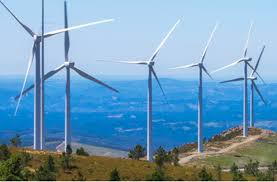
Expectations for Wigton 50MW expansion


Wigton Energy is one of two entities that gained approval from the Government of Jamaica in the tender process to install 100 megawatts of renewable energy for Jamaica’s national grid.

According to a release from Wigton, the company “will install a 49.83MW solar energy facility in Clarendon” which, upon completion, will result in the company almost doubling its generating capacity, with existing wind turbines accounting for nearly 60 MW.
The size plant will likely take approximately one year to come on stream in late 2025 and should cost under US$50 million, our source informed ICInsider.com
Profit could double in the first full year of the expanded operations, in the March 2027 fiscal year

Wigton closed at anew high of $1 Bids for another phase are expected to be open to the public in early 2025 covering roughly 160 MW.  Wigton is in a good position to participate in the bidding process and if successful could see further expansion and income generation.
Profit before taxation at Wigton increased 121 percent to $413 million, from $187 million in 2023 during the six months to September 2024, with net profit falling 39 percent to $310 million from $504 million in the same period last year, primarily due to an adjustment in the income tax rate from 33.33 percent down to 25 percent, resulting in a one-off tax credit recorded, 2023 compared to a tax liability in the September 2024 period. Profit before taxation for the three months, to September, more than doubled to $192 million, from $79 million in 2023, with after-tax profit ending at $143 million.
he stock value was already well ahead of the Jamaica Stock Exchange average PE of 14.4 at 23 times 2025 fiscal year earnings and climbed to 26 following the announcement.

Profit blown off course at overpriced Wigton


Profit surged 121 percent before corporate taxes, to $413 million, from $186 million at Wigton Energy for the six months to September 2024, net profit decreased 39 percent, to $310 million, from $504 million in the similar period last year, due primarily to a tax credit of $318 million arising from a reduction in the tax rate from one third to 25 percent that was retroactively applied to profits.

Wigton closed at anew high of $1For the latest quarter, profit jumped a solid 144 percent before tax to $192 million, from $79 million in 2023, with net profit falling to $144 million following taxation of $48 million compared with a profit of $436 million following a tax credit of $357 million in 2023.

Total revenue comprising sales and other income for the six months to September 2024, amounts to $1.42 billion, an increase of 13 percent compared to $1.25 billion earned in 2023. Management in their report to shareholders stated that “the increase in total revenue was as a result of (i) the higher production levels up to June 2024, which assisted in achieving the total production of 63.6 million kWh during the period despite the lower average availability being 74.9 percent as a result of the downtime associated with hurricane Beryl, and (ii) a provision of $239.4 million representing the anticipated business interruption insurance proceeds related to Hurricane Beryl.” Investors also need to be aware that there are seasonal variation in power generation, with the best periods being in the June quarter.
Cost of sales fell to $229 million in the September quarter from $256 million in 2023 and from $495 million in 2023 for the half year to $428 million.
General administrative expenses rose 11 percent to $387 million from $349 million in 2023 in the half year and was down slightly in the second quarter to $191 million versus $193 million in 2023.

Finance costs declined to $90 million in the September quarter from $103 million and in the half year, it declined from $210 million to $183 million.
Current Assets ended at $4.6 billion in September which includes cash and equivalent of $3.55 billion and receivables of $772 million and Current Liabilities amounts to $1.09 billion of which current portion of long term loans amounts to $869 million.
Shareholders’ equity amounted to $5.4 Billion and Long term liabilities ended at $2.6 billion.
The directors advised that “ongoing discussions with key stakeholders are centred on the repowering of Wigton Phase I located in Rose Hill, Manchester. The Company was one of two (2) entities pre-awarded by the Generation Procurement Entity (GPE) in their September 2023 tender for additional energy to the grid. The decision of the GPE as to the final award is now awaited.”
Wigton is involved in a critically important area of economic activity in Jamaica, with scope for expansion, this makes it an attractive vehicle, but the stock with a PE around 23 times current earnings is well above the market average of 14.5. The company is banking on getting approval for their bid to be awarded to supply power to the national grid. With just two entities preapproved they stand a good chance of getting approval. They have received approval for renewal of the number one wind turbine, the price of the output is yet to be disclosed.
Investors in this stocks will find greater and more compelling values elsewhere currently.

Revenues jump at Express Catering


Revenue grew an impressive 20.7 percent to US$25,590,638 from $21,198,904 in 2023, with profit before taxation falling by 37.9 percent from $2,938,003 in 2023 to $1,825,441 and profit after tax dropping 76.9 percent to $1,408,276 from $2,702,227 for the year to May 2023 at the Montego based Express Catering.
Results for the August 2024 first quarter saw revenues rising marginally to US$6.5 million compared to US$6.4 million in 2023, with net profit for the Quarter climbing 18.6 percent to US$1.0 million for an EPS of 0.062 US cents per share, compared to a net profit of US$843,114 for an EPS of 0.051 US cents per share in the similar period in the prior year, with an increase spend rate rising by 9.83 percent, the company reported. The quarterly results would have been negatively affected by a falloff in traffic passing through the Jamaica’s busiest airport during the quarter.
For the latest quarter, gross profit rose 5.4 percent to $4.54 million from $4.3 in 2023, as cost of sale declined from $2.1 million down to $1.94 million. Administrative expenses fell from $2.13 million in 2023 to $1.85 million in 2024, Depreciation climbed by 41 percent to $941,539 from $666,526, following the establishment of addition outlets at the Sangster International Airport and finance costs rose from $536 million to $641 million. There was no provision for taxation in either periods.
The performance would be vastly better had the company been compensated for lending a large sum to related group companies. Amounts outstanding continue to climb and sit at US$17 as of August according to the latest interim accounts and jumped from US$12.47 million at the end of May 2023.

For the 2024 financial year, the cost of sales rose by 14 percent, slower than the growth in revenues, with the cost climbing to $8,470,019 from $7,432,646, resulting in a Gross profit of $17,120,619, up by a respectable 24.4 percent over $13,766,258 in 2023.
Promotional expenses for the year jumped 246.5 percent to $41,449 from $11,962, while Administrative expenses climbed 50 percent from $5,883,155 to $8,819,337. Depreciation climbed by 16.2 percent to $3,153,325 from $2,714,003.
Profit before interest expenses and taxation amounts to $5,106,508 for the fiscal year to May, compared to $5,157,138 in 2023
Finance costs jumped 44.5 percent to $3,257,186 from $2,253,791, Income tax climbed 47.9 percent to $417,165 from $235,776 in 2023.
The directors in their report on the August quarter stated that “Cost of ingredients as a ratio of revenue improved appreciably for the Quarter, registering a 2.82 percentage point improvement to close at a ratio of 29.96 percent, compared to 32.78 percent for the same period in the prior year. The company successfully implemented wide ranging price increases across most concepts beginning in August 2024. We are assessing any impact on volumes and expect to see the full impact of that change in the second Quarter. The expectation is for an additional 1.5 percent improvement in the COS ratio due to the price changes.”
The directors went on to state, “In June 2024, the national minimum wage was increased by 5.38 percent. This contributed to the overall 11.39 percent increase in the salaries and wages component of administrative costs for the Quarter. Other noteworthy cost increases were in utilities and insurance. There were savings in occupancy costs due to the increase in the minimum guaranteed rent. The lease liability and the underlying right-of-use assets were already adjusted to account for the increase. There were also some savings in franchise fees as well due to the change in the spread of revenue amongst proprietary vs franchised brands during the Quarter.”
Current assets ended the period at $18.75 million including $17.4 million due from related companies and cash and bank balances of $90,853. The related companies should not be treated as current as the amount has been climbing for several years. Current liabilities ended the period at $8.3 million. At the end of August, shareholders’ equity amounts to $8 billion with long term borrowings at $40 million including lease obligations of $14 million and short term loans at $3.5 million.
The company was able to resume dividend payments. An interim dividend of US0.0306 cents per share for a total of US$501,075 was paid on August 30, 2024. A second interim dividend of a similar amount was declared for payment on October 31.
ICInsider.com projects 40 Jamaican cents per share for current years’ earnings and 65 cents for 2026, with a PE ratio of 8 at the last traded price of $3.28, compared to the market average of 12.2. The stock is undervalued but management has not treated the minority shareholders equitably and this needs to change.