The latest IPO for a Junior Market listing is now out, with Dolla Financial Services, a company that is involved in the business of short term lending, with is set to sell 500 million Ordinary Shares at $1 each to the public, with the offer including 250 million newly issued Ordinary shares and the sale of 250 million existing Ordinary Shares by the Selling shareholders.
 The 2021 financial statements show a total income of $395 million and a profit of $168 million before tax. Currently, the number of issued shares is 2.25 billion units, with earnings per share of 7 cents per share. Results for March 2022 show revenues of $141 million compared to $64 million in 2021, with a profit of $66 million, up from $17 million in 2021. For the full year earnings should hit the $300 million mark with earnings per share of 20 cents per share with a PE ratio of 5, compared to 13 for the overall Junior Market.
The Company intends to use the anticipated proceeds of the invitation of $250 million to expand its loan portfolio regionally through acquisitions and organic growth and strengthen its capital base. It currently operates eight branches in Jamaica and one in Guyana and has an equity base of $373 million, the issue if successful will take equity to just over $600 million.
The issue opens on May 27, 2022. Victoria Mutual Wealth Management, the receiving agent for the purposes of the Invitation.
$1 for Dolla IPO
Results push Junior Market to record 4,613
The release of results for Junior Market companies since Friday’s market close helped to push the Junior Market to a new record of 4,613.27 points after the market opened on Monday, surpassing the record close of 4,537.15 on Friday, with the index crossing over into the 4,600 mark for the first time.
 Spur Tree Spices generated revenues of $237 millionin their first quarter to March, an increase of 40.7 percent over the $168 million in 2021, helped by the newly acquired subsidiary, Exotic Products generated revenues of $73 million for the quarter, with only $2.18M is included in the consolidated revenue of $237 million. Profit before tax was $51 million, an improvement of $28.6M or 128 percent above the $22.4 million for the 2021 quarter. Investors traded 9 million shares for $36 million up to $4.30.
Dolphin Cove reported US$2.3 million in revenue in quarter Q1 2022, up from just US$374,000 in 2021, as visitors to the parks bounced sharply in the quarter to reach 58 percent of the attendance in the first quarter of 2019. Profitability was enhanced by the strict management of costs, with the quarter incurring only US$1.5 million of expenses, a decline of almost US$1 million compared to the first quarter of 2019, reflecting permanent efficiencies that were put in place. Net profit amounted to US$795,000, compared to a loss of US$154,000 in 2021. The stock traded up to $23.25 before settling at $22.51 after trading 131,329 shares.

Fosrich traded 368,000 shares early Monday.
Fontana grew revenues by 24 percent to $1.52 billion, over the $1.22 billion for the 2021 first quarter, with net profits popping by 43.4 percent, to $105 million from $72.9 million in the first quarter last year. Investors traded the stock at $11.18 after an exchange of 158,512 shares.
Fosrich posted blowout results with a 64 percent surge in revenues to $900 million from$549 million in 2021 and profits surging 314 percent to $159 million in the March Quarter from just $38 million in 2021. The investors responded instantly to the news by trading 368,361 shares up to $36.22.
Profit grows 35% at Wisynco
Profit before Taxation for the March quarter at Wisynco Group jumped $283 million from $813 million for a 34.8 percent increase to $1.1 billion, from the comparative year ago quarter and for the nine months to March, pretax profit climbed $1.2 billion for a 46.4 percent increase to $3.9 billion, up from $2.7 billion in the prior year. After provision for taxes on profit, earnings attributable to stockholders rose 24 percent to $831 million from $673 million earned for the preceding year.

Wisynco ended at $25 on Friday.
The current quarter “includes foreign exchange loss of $35.4 million compared with a $68 million foreign exchange gain for the 2021 quarter,” the directors William and Andrew Mahfood stated in their commentary on the results.
The results equate to earnings per share of 22 cents for the quarter, up from 18 cents in the 2021 quarter and 79 cents, up from 59 cents in 2021 for the nine months. ICInsider.com projects earnings of $1.20 for the year to June or $4.4 billion, with earnings of $1.70 or $6.3 billion in 2023.
The 2022 quarter’s revenues rose 27.8 percent to $9.7 billion, the highest in the company’s history, above the $7.6 billion achieved in the 2021 third quarter. Revenues for the nine months rose at a much slower pace than the current quarter of 20 percent to $28.4 billion, from $23.6 billion in 2021.
“Revenues were driven by strong demand in all product categories and channels. Usually, our Q1 and Q2 Revenue patterns represent our higher earning quarters, however, this Fiscal Q3 trended higher than Fiscal Q1 and Q2, reflecting the anticipated bouncing back of our economy from the Covid measures being relaxed. Additionally, our increased focus on Exports continued driving growth in the channel and we are embarking on additional strategies to continue this trajectory,“ the Mahfoods stated.
The period was not without its challenges. Cost of sales rose 31 percent in the quarter to $6.6 billion resulting in gross profit rising at a much slower pace of 21.6 percent to $3.1 billion from $2.6 billion in the previous year. “Gross Margin at 32.3 percent was 170 basis points lower than the 34 percent for the corresponding quarter in the prior year due mainly to our LNG plant experiencing disruption in energy supply resulting in the company having to spend an additional $81m to purchase electricity,” the directors reported. They went on to state, “additionally, we had production downtime which led to some higher costs of production as well as increased input costs.”

True Juice bottled and distributed by Wisynco.
Selling and Distribution expenses increased 16 percent for the quarter to $1.78 billion from 1.54 billion in 2021 and increased 12.8 percent to $5.2 billion in the nine months from $4.6 billion in 2021. Administrative expenses fell in the latest quarter to $289 million from $339 million in 2021 and slipped slightly to $1.02 billion from $1.03 billion for the nine months. Depreciation fell from $782 million to $718 million for the nine months and taxation jumped 108 percent from $465 million to $957 million and 86 percent from $141 million to $265 million for the quarter.
Gross cash flow brought in $4.3 billion and $3.3 billion after working capital growth and ended at $1.2 billion after investments, addition to fixed assets and paying $1.5 billion in dividends.
But the group remains in robust financial health, with shareholders’ equity of $17 billion and long term borrowings at $1 billion, while short term loans stood at $800 million. Current assets ended at $16 billion, including trade and other receivables of $3.6 billion, and inventories of $3.4 billion, while cash, bank balances, and investments stood at $9.2 billion. Current liabilities ended the period at $5.8 billion and net current assets ended at $10.4 billion.
The stock traded on the Main Market of the Jamaica Stock Exchange at $25 at a PE of just over 20 times earnings and seems to be heading for the mid $30 region over the next twelve months.
Seprod slated to make big acquisition
 Seprod is in the process of acquiring a distribution company headquartered in Trinidad and Tobago and is involved in food, grocery, hardware, housewares, pharmaceuticals and beverages.
ICinsider.com gathers the acquisition, which Seprod states is slated to be concluded by the end of May, would about double Seprod’s size in revenues. The target has 1,300 employees and revenues of US$240 million around J$37 billion, just below Seprod‘s sales of J$43 billion for 2021. The group, AS Brydens which is being acquired, also operates in Barbados and Guyana and is expected to boost Sperod’s profit per share, from the majority ownership that they will hold along with others within the Musson Group.
IC Insider.com gathers that Seprod expects to benefit from increased sales of locally manufactured goods through the new linkage.
Knutsford Express revenues & profit nearing normal
Knutsford Express, the Montego Bay based cross country luxury transport, is set to deliver increased revenues and profit for the fiscal year to May, compared to 2021, but the results will be far from normal levels, nine months’ results to February show.
Revenues and profit for the third quarter reveal that things are not far from normal, following the economic fallout in 2020 from the impact of the covid-19 virus. Revenues for the nine months rose 70 percent to $775 million from $456 million in 2021 and delivered a profit of $52 million, a big turnaround from a loss of $55 million in 2021, but the third quarter numbers saw revenues jumping 63 percent to $301 million from $185 million same the similar quarter in 2021 with a profit of $37 million compared to a slight loss of $1 million.

Knutsford Express
Revenues in the latest quarter are just 5 percent below the $318 million generated in the February 2020 quarter when the company reported a profit of $40 million before tax and for the nine months with revenues then, of $925 million or 20 percent higher than the current period, with a profit of $113 million before tax.
Administrative and other operating costs rose 39 percent from $515 million in the nine months to February 2021 to $716 million in 2022, with the third quarter ending with $258 million, up 38 percent versus $187 million in 2021. Depreciation rose from $87 million for the nine months in 2021 to $107 million in 2022. Finance cost amounts to $7 million in the 2022 latest quarter against $4 million in 2021 and year to date $17 million, compared to $11.4 million in 2021.
Gross cash flow brought in $190 million, a $144 million addition to fixed assets offset by loan inflows of $50 million, increased payables and dividends paid of $40 million, resulting in cash on hand at the beginning of the period of $132 million falling by $36 million.
At the end of February, shareholders’ equity stood at $845 million, with long term borrowings at $223 million and short term debt at $21 million. Current assets ended the period at $357 million, including trade and other assets of $103 million, cash and equivalent of $236 million. Current liabilities amount to $94 million at the close of the period and net current assets of $263 million.
Earnings per share for the quarter was 8 cents and 9 cents for the nine months. ICInsider.com projections suggest earnings per share for the fiscal year to May at 20 cents and 2023 at 50 cents.
The February quarter results fall in a period when tourism flows to the country were down around a third compared with the 2020 period, suggesting a better period ahead for traffic as the company benefitted from patronage from visitors coming into the island. Accordingly, the coming fiscal year should see the company’s revenues and profit bouncing sharply over that of the current fiscal year.
The stock last traded on the Junior Market of the Jamaica Stock Exchange at $7.99, with a PE of 40 versus the market average of 24, the PE falls to 16 versus 13 for the market.
Rate hike pushes earnings higher at Scotia
If there was much competition in the banking sector in Jamaica, Scotia Group would be on its way out of business, unless they mended the poor service there are currently dishing out to customers.

Scotia Group stock could deliver handsomely in 2022.
The banking arm is delivering some atrocious customer service of late such as bouncing cheques for no funds when such accounts were adequately funded. Customers can’t get the use of the transfer of funds feature, for the credit cards are expired but no one within the bank advises of the expiration and the availability of the new card. Even when communication is made, with the bank, months pass without action. What about tokens that don’t work, leading to a nightmare trying to get the problem resolved. The service has rotted recently and they need to do something about it fast.
Though the service has gotten lousy of late and some may say it never was good, investors may find positives that they can profit from, at least that is what the group’s first quarter results to January this year show, thanks partly to the action by the country’s central bank. Most investors would not come to that conclusion from the net profit for the quarter compared to that in 2021, for while the 2021 quarterly profit came in at $1.75 billion, the latest results were only up marginally by $34 million to $1.784 billion. On the surface, there is nothing to get excited about, but closer examination tells a different story.
The results were vastly better than the $1.12 billion reported for the October quarter which suffered from a big drop in revenues. Loans fell in the quarter from $208 billion at the end of October to $201 billion at the end of January while investable funds grew to $339 billion from $321 billion at the end of October but net interest income climbed to $6.16 billion from $5.7 billion in the October quarter coming from a rise in gross interest income of $454 million quarter over quarter. Interest cost was static at $452 million. There was a strong improvement in net fee and commission income that rose from $1.1 billion in the October quarter to $1.5 billion but was a bit lower than the $1.67 billion in the January 2021 period, other revenues dropped from $973 million to $295 million in the latest quarter compared to January 2021.
Net interest income increase “was primarily attributable to an increase in interest earned on the investment portfolio and improved retail loan performance,” Scotia Group reported in their release of the quarterly results.

Audrey Tugwell Henry Scotia group’s CEO
Since the end of January, the Bank of Jamaica hiked the overnight rate to 4.50 percent from 2.5 percent, this move will drive an increase in net interest income for the group as the cost of funds will remain fairly flat while investments income balloons.
Expected credit losses on loans rose from $430 million in 2021 to $569 million in the January quarter this year but show an improvement over the $819 million in the October quarter. Net interest income after credit losses rose to $5.6 billion from $5.4 billion in 2021. Net fees and other income fell from $5.44 billion in the January 2021 quarter to $4.78 billion in 2022, resulting in a total net income of $10.37 billion, down from $10.8 billion in 2021.
Lower costs helped with the 2022 results, with expenses falling to $6 billion from $6.5 billion, net of asset tax of $1.36 billion in 2022 versus $1.26 billion in 2021, Other operating costs fell by $500 million from January 2021 to $2.8 billion in 2022.
Other comprehensive income shows an unrealized loss of $1 billion on investments compared to just $123 million in the 2021 first quarter.
Segment results provide another view of developments within the group that could point to the way forward. The Treasury segment delivered 22.4 percent more revenues from third parties to hit $763 million with a profit before tax of $138 million up from $120 in 2021. The retail division suffered a decline of 15 percent, with revenues from third parties hitting $4.57 billion from $5.38 billion in 2021 resulting in profit before tax of $103 million, down sharply from $492 million in 2021. Corporate and Commercial Banking pulled in net income of $2.7 billion, down from $2.8 billion, with profit surging to $1.44 billion versus $967 million in 2021. Investment Management pulled in $822 million in revenues with a profit of $404 million, from revenues of $878 million in 2021 with a profit of $718 million. The insurance division raked in $1.33 billion in revenues up from $984 million, with profit jumping to $857 million from $567 million. The segment classified as Other, generated revenues of $217 million and a profit of $175 million and delivered revenues of just $83 million and a profit of $30 million in 2022.
The Group’s assets grew by $38 billion or 6.9 percent to $591 billion at January 2022. This was predominantly, a result of the growth in cash resources of $42 billion or 32.4 percent due to increased deposits and places the group in a good position to expand the loan portfolio when demands pick up, with the resurgence now taking place in the wider economy.
A dividend of 35 cents per stock unit in respect of the first quarter, was approved for payment on April 20 to stockholders on record as of March 29.
Bullishness rises on the JSE as 2022 ages
Trading levels are soaring at the Jamaica Stock Exchange in 2022 with the amount of funds passing through the Main Market for trading jumping 141 percent over 2021 with an exchange of $14.87 billion over the $6.16 billion in the first quarter of 2021, at the same time the Junior Market attracted 184 percent more funds for all three months amounting to $4.6 billion up from just $1.62 billion in 2021.
 New listings helped considerably in pushing the value of trading in the Junior Market in March but not significantly in January and February. March benefitting strongly from Spur Tree that was listed in January, accounting for $617 million, JFP Ltd with trading of just $160 million and EduFocal $286 million with the three accounting for $1.06 billion of the $1.84 billion increased trading in March over 2021. Spur Tree in January when it was listed accounted for $208 million and just $186 million in February.
The Main Market benefitted from the listing of Massey Holdings in January but has had a moderate impact on the value of stocks traded, with March showing the largest amount of $1 billion, with just $369 million in February and $150 million in January.
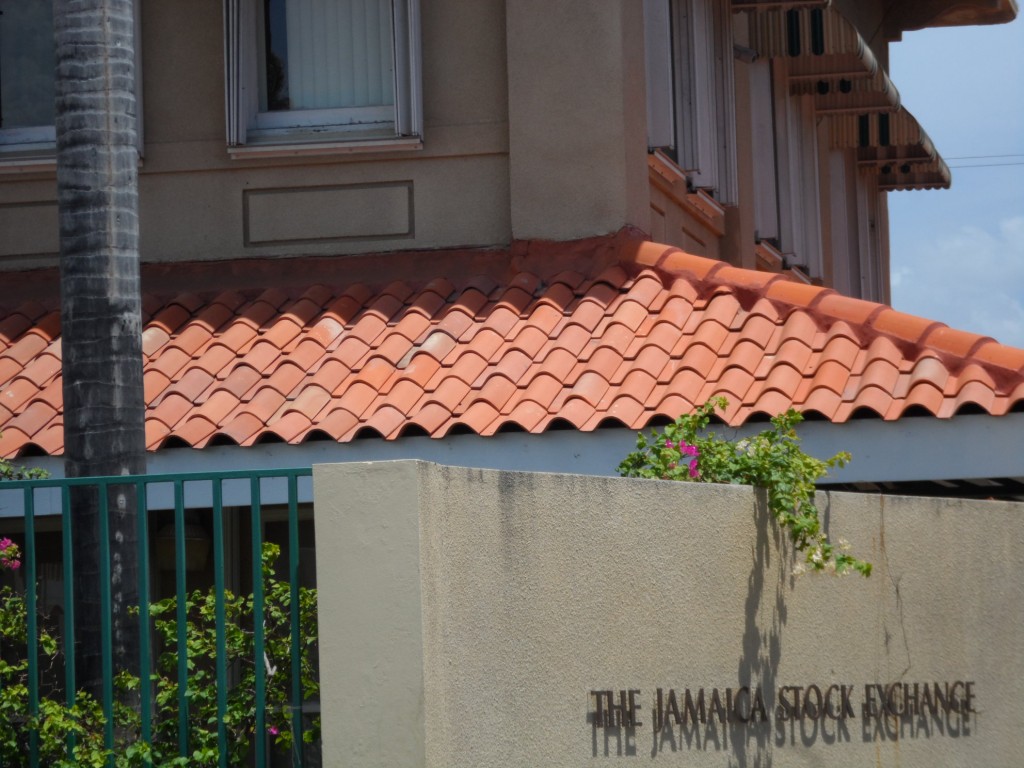 Trading rose 145 percent in January 2022 over 2021 for the Junior Market to hit $979 million and 90 percent in February to $1.19 billion, with March enjoying a big 309 percent rise to $2.4 billion. In the Main Market trading rose 114 percent in January 2022 over 2021 to $2.7 billion, 66 percent in February to $3.64 billion and 215 percent to $8.5 billion in March.
Importantly, in both markets, the increases are reflected in higher value month over month suggesting that investors are getting increasingly more aggressive in trading stocks. The buoyancy in the market will swell revenues and profit in the first quarter for the JSE.
Junior Market at record high on Friday
 The Junior Market of the Jamaica Stock exchange is now trading at a new record high of 4,197.38 at 11.40 on Friday, up from 4,104.06 at the close on Thursday, as Express Catering (ECL) climbed to $6, Lasco Manufacturing rose to $5 and Spur Tree Spices hit $3.80.
Since then the market pulled back slightly to trade at 4,196.81.
The Junior Market’s previous highest level was reached on Friday, March 4, when it ended at a record closing high of 4,168.16, up 95.60 points for the day after hitting all-time intraday high of 4,185.95 at 11.45 am that morning.
Trading the shares of ECL is suspended for breaching the 15 percent circuit breaker limit. The JSE Main Index is up to 386,151.14 from Thursday’s close of 384,196.74
10 stocks for 10 years
In the world of investing, it would be nice to find big winners at all times and invest in them just before their prices explode; that is not how stock markets work. Most investors need to buy and wait, to be rewarded with much higher prices later on. History is replete with many examples that show patience paying off handsomely.
 In more recent times, some investors are demonstrating levels of exuberance in buying some stocks at excessive values that will take a long time to generate a reasonable return on investment.
In Jamaica, over the past few years, there are several stocks that recorded huge gains, allowing persons who hold them for years to make a bungle. One of the most celebrated is Lascelles DeMercado is no longer listed on the Jamaica Stock Exchange having been acquired by Angostura in late 2007 for the equivalent of $643 or US$10.65 per share valuing the company at $61.7 billion. The stock traded at $4.25 (the equivalent of 10.5 cents) in 1983, with 2.4 million shares issued, valuing the group then at just $10 million and it gained 6,000 percent between 1983 and 2007. In other words, a $10,000 investment in 1983 would be worth over $6 million in 2007. How many persons saw that coming? Not many but some seasoned investors did. But Lascelles is not the only stock on the local market to provide rich rewards for Investors.
What the information above shows is that long term investment can be very rewarding. This is especially so for persons with limited time to spend monitoring their investment on an ongoing basis.
In 2017, this publication recited portions of an article captioned “Teachings from silly Unilever Investors.” “In 2013 ICInsider.com posted a report on the Unilever Caribbean, a company based in Trinidad and traded on the country’s stock exchange. “
”Since the report, the company stock has been on a downward slope after rising to a new record in 2013. On November 8, 2017, Jamaica Stock Exchange Junior Market listed Knutsford Express, after a long period of overvaluation relative to the market, dropped $2.75 as demand for the stock evaporated. Similarly, Cargo Handlers was pushed unrealistically to $30, only for it to currently be trading at $10, which is still above normal valuation. This latter stock came as a big buy recommendation on the way up by a brokerage house at the time.
“Unilever’s profit peaked in the period to September 2014 and started a downhill ride since, but investors kept on pushing the price higher until it peaked at an unrealistically high of TT$68.30 in December 2015.”
The IC Insider.com recommendation at the time was as follows: When stock prices rise much faster than the growth in profits, time out is needed to discover what is happening. That recommendation is as true then as it is now.

Knutsford Express
Notably, after several years, all three of the above stocks are currently trading well below their peak while many other stocks in the markets have gone on to record high prices. At the last trade Unilever is trading at TT$15.20, Cargo Handlers for a long time around $7, but recently hit $12 and Knutsford that traded at a high of $17, with a PE of 31 now trades at $8, with a PE closer to 40.
Investing in undervalued stocks that have products to support growth, as was the case in Lascelles shares, can pay rich dividends over time.
Investors should be mindful of chasing after the popular stocks that are fully valued or overpriced as was the case in the above three stocks that failed to perform in more than four years while others have delivered outstanding gains. That is why ICInsider.com has come up with a list of 10 stocks in both the Main and Junior Markets that, in our estimation, are good candidates for long-term investment for the next ten years. 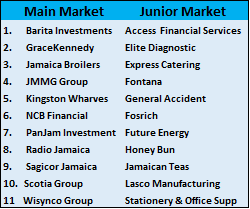 The numbers climbed to 11 each as we could not separate the 11th ones from the lists. The listings are a compilation based on inputs from some knowledgeable investors as well as ICInsider.com’s own assessment. The selections are based on an evaluation of the quality of management, products and services each company offers to their customers, and prospects for growth by these companies and the economies they service.
Most importantly, the analysis considers that management has the quality or will get the talent to steer the companies successfully over a ten year period.
Note is taken of the local economy, the commitment to fiscal surplus or modest deficit financing if at all for a number of years. This will lead to low interest rates and stimulate long term economic growth, subject to world conditions. In such an environment investors can look to invest for the long term rather than a few months or years.
Caribbean Producers almost made the cut with expected strong growth in the tourism sector in which it is a major player, but the historical performance since it was listed on the Junior Market in 2012, leaves doubt if management can in fact deliver predictable good returns for investors over the next ten years.
ICInsider.com was assisted with the selection by Karl Wynter and an individual investor, with years of managerial experience working for some leading groups in the Caribbean. Karl Wright former head of VM Group and individual investor, Ryan Strachan of GK Capital and Nigel Coke former investment advisor and trader at one of the leading Jamaican stockbrokers and an individual investor.
Coming in two separate articles are commentaries on the rationale for each selection.
JFP lists on Monday
Trading of shares that were recently offered to the public in JFP Limited, will commence on Monday on the Junior Market of the Jamaica Stock Exchange and bring the total listings on the market to 44 and will move to 45 on Tuesday after the listing of Edufocal.
A total of 280 million ordinary shares were offered to the public with the issuing opening on February 21 and closed the offer being oversubscribed.
JFP production
Employee Reserve Pool applicants received 100 percent of their application with the balance not applied for was made available for Key Partner Reserve Pool who received all they applied for. GK Investments Reserve Pool applicants got all shares applied for, applicants from the General Public got 12,500 shares plus approximately 22.8 percent of the excess shares applied for above the Base Allotment. The oversubscription should provide a bounce for the stock when it opens.