Stocks slipped in trading on Tuesday with the Jamaica Stock Exchange Combined Index skidding 521.04 points to close at 410,985.67 points as the Junior Market suffered a 92.56 points fall of 2.33 percent.
The market’s PE ratio slipped to 17.5 based on 2021/22 earnings and 12.7 times those for 2022/23 at the close of trading on the Jamaica Stock Exchange.
Investors need a series of measures and pertinent information to successfully navigate the many investment choices in the local stock market. ICInsider.com introduces a chart of all ordinary shares listed on the exchange that allows investors to see the values of stocks stacked against their immediate peers.
The accompanying ICInsider.com PE chart covers all ordinary shares listed on the Jamaica Stock Exchange and shows companies grouped on an industry basis, allowing for easy comparisons between same sector companies as well as the overall market. The net asset value of each company is reported as a guide to easily assess the value of stocks based on this measure.
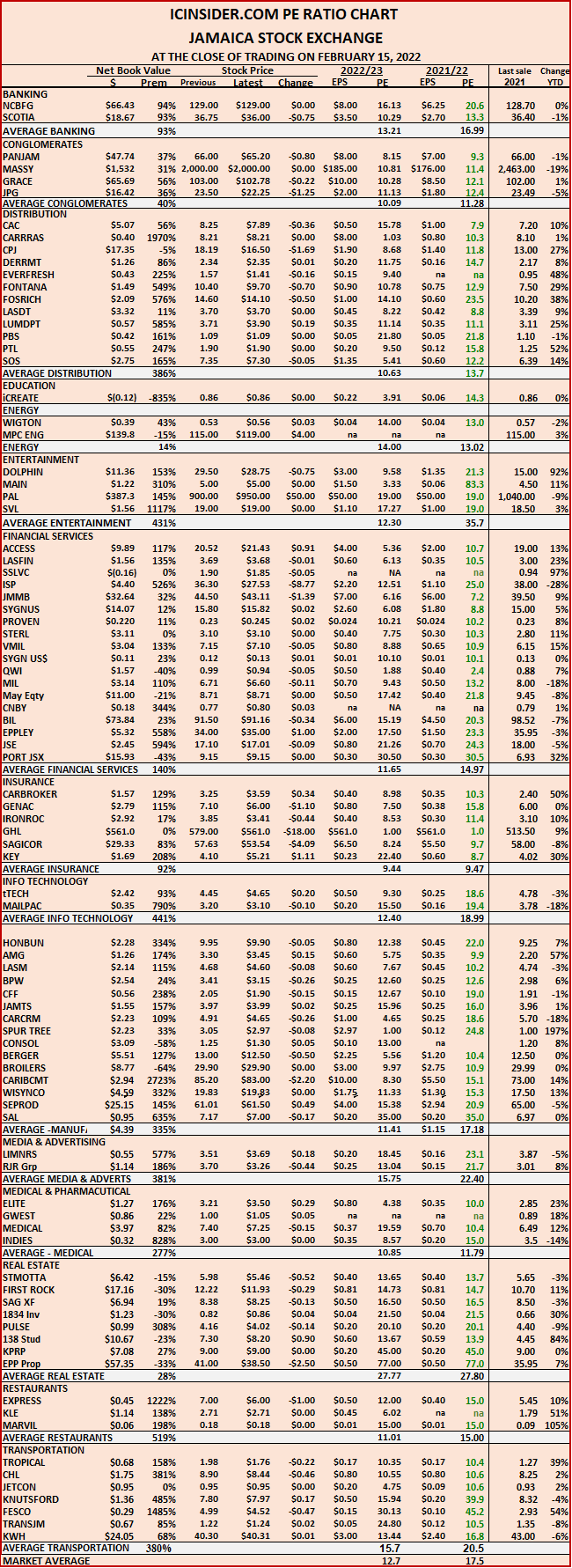 The EPS & PE ratios are based on 2021 and 2022 actual or projected earnings, excluding major one time income or expense. The PE Ratio is the most popular measure used to determine the value of stocks for a formula for computing appropriate stock values, averages 17.
The chart also shows daily changes in stock prices and the percentage year to date changes based on the last traded prices. Dividends payable and yields for each company are shown in the Main and Junior Markets daily report charts that also show the closing volume for the bids and offers.
Jamaica stocks lost ground on Tuesday
Profit bolts 43% at Lasco Manufacturing
Profit popped 43 percent in the December quarter to $403 million at Lasco Manufacturing, from $281 million in 2020. For the nine months to December, profit climbed 16 percent to $1.19 billion from $1 billion in 2020 resulting in earnings per share of 10 cents for the quarter and 29 cents for the year to date.

Lasco Manufacturing dominated Junior Market trading with 3.3 million shares.
Sales revenues rose 16 percent for the quarter, to $2.4 billion from $2.1 billion in 2020 and increased 14 percent for the year to date, to $7 billion from $6.2 billion in 2020.
Profit margin rose in the December quarter to 38 percent from 36 percent in 2020 and slipped from 38 percent in 2020 to 37 percent for current the year to date. The effect, gross profit rose 22 percent in the quarter to $920 million from $754 million and increased 11.7 percent for the year to date, to $2.6 billion from $2.35 billion in 2020.
Administrative and other expenses rose marginally by 4 percent to $327 million in the quarter and slipped 3 percent in the nine months to $950 million from $983 million in 2020. Finance cost declined in the quarter, to $11 million from $15 million in 2020 and from $46 million in 2020 to $40 million for the nine months. Corporate taxes jumped 45 percent to $194 million from $134 million in the 2020 December quarter and by 87 percent to $521 million for the nine months from $279 million.
Gross cash flow brought in $1.4 billion but changes in working capital, loan repayment and the paying of $300 million in dividends, moved the cash position up by $331 million and resulted in cash funds on hand at $2.2 billion.
At the end of December, shareholders’ equity stood at $8.8 billion with long term borrowings at just $8 million and short term loans at $455 million. Current assets ended the period at $6.6 billion including trade and other receivables of $2.5 billion, cash and bank balance $2.56 billion. Current liabilities ended the period at $1.95 billion. Net current assets closed out the year at $4.7 billion.
IC Insider.com forecast is for earnings of 40-45 cents per share for the fiscal year with a PE of 11 times current year’s earnings at the last traded price of $4.60 on the Junior Market of the Jamaica Stock Exchange.
ICInsider.com assigns its coveted ICBUYRATED accolade on this stock.
Profit jumps 220% at Salada but be wary
Helped by a big jump in foreign exchange gains of $11.7 million versus a loss of $1.76 million in 2020 profit at Salada Foods surged 220 percent in the December 2021 quarter to $42 million from $13 million in 2020 from sales revenues that rose 28 percent to $289 million from $226 million in 2020.
 The big improvement in results owes a lot to the dislocation the company suffered in the 2020 period resulting in a 22 percent fall in revenues and the small profit shown above. Salada does not sell to the end users so disruption in sales in one period may only be a shift from one period to the next. So it was not surprising the sales jump 29 in the second quarter last year to $353 million, with a profit of $51 million
The company suffered a reduced profit margin to 31.88 percent from 32.98 percent in the September 2021 quarter, but it is up substantially on the 25.5 percent in the December 2020 quarter. The September quarter had revenues of $300 million and profit of $41 million as such the improvement in profit margin wade the difference in the December quarter’s performance that had lower sales.
 Administrative expenses rose 11 percent to $33.4 million from $30 million. Marketing and sales expenses increased 10 percent to $16 million. Finance income rose to $13 million from $1.25 million in 2020. Taxation on profits jumped from $4.6 million to $14 million.
Gross cash flow brought in $62 million and ended at $116 million after changes in working capital and after paying $57 million in dividends the company ended with $176 million in cash funds. At the end of the quarter, shareholders’ equity stands at $989 million with no borrowed funds used to fund the operations. Current assets ended at $1 billion, including inventories of $578 million.  Net current assets ended the period $759 million well over Payables of $254 million.
Earnings per share came out at 4 cents for the quarter. The stock traded that was already highly overvalued at $6.90 was pushed up to an incredible $8.50 on Tuesday after the results were released on Monday on the Main Market of the Jamaica Stock Exchange with an elevated PE ratio of 42.5 times ICInsider.com forecast of 20 cents per share for the 2022 fiscal year’s earnings, well above the market average of 16.5.
Profit climbs 24% in Q2 at Wisynco
Revenues at Wisynco Group jumped 19 percent for the quarter to December to $9.5 billion above the $8 billion for the similar quarter of the previous year while for the half year revenues were up 17 percent to $18.7 billion from $16 billion in 2020.
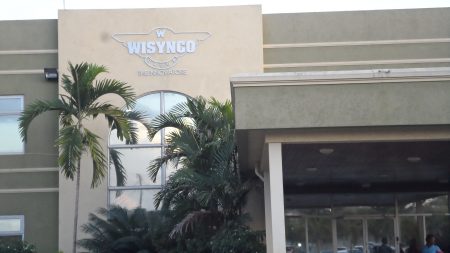
Wisynco traded at $20 on Friday after the posting of results.
“We have seen a continued recovery in our Revenues with all Channels increasing at vibrant levels. Exports as well for the quarter were up 103 percent over the same quarter of the prior year. Our increased efforts and focus have resulted in improved results in this area and we have noticed wider consumer acceptance for our products in these important export markets.” William Mahfood, Chairman and Andrew Mahfood, Chief Executive Officer stated in their joint report to shareholders. “Exports have moved from 3 percent of overall sales to 5 percent,” the chairman informed ICInsider.com.
Gross Profit climbed 24.3 percent for the quarter to $3.3 billion from $2.7 billion in the same quarter of the previous year while it grew 18.6 percent from $5.6 billion to $6.6 billion. Improvement in gross margin from 33.3 percent for the 2020 December quarter to 34.8 percent helped to swell the gross profit and helped to drive net profit for the quarter as well as a smaller rise in margins from 34.6 percent to 35.2 percent contributed to improved numbers for the half year and bodes well for the second half. Selling, Distribution expenses grew at a slower pace than sales revenues at 17.6 percent to $1.74 billion for the quarter and 11.4 percent for the six months to $3.39 billion from $3 billion in 2020. Administrative expenses for the quarter rose by 6 percent to $357 million from $337 million in 2020 and for the year to date, they rose 6.4 percent from $691 million to $735 million in the prior year.

Wata is one of Wisynco best-known brands
Profit before Taxation surged 84.6 percent for the quarter to $1.5 billion, over the $836 million in the comparative quarter for the prior year and includes an exchange gain of $280 million compared to an exchange loss of $26 million for the 2020 quarter. Profit before taxation for the half year jumped 51.6 percent to $2.8 billion compared to $1.9 billion in the prior year.
After provision for taxes, Wisynco recorded net profits attributable to stockholders of $1.2 billion, or 31c per share for the quarter, 74 percent greater than the $688 million earned for the prior year and the six months net profit rose from $1.54 billion to $2.13 billion, with 57 cents in earnings per share.
Cash inflows from operations were $2.9 billion, up from $2.45 billion in 2020.
Shareholders’ Equity stood at $17 billion, with borrowings at $1.9 billion. Current Assets ended the quarter at $16 billion up from $13 billion the previous year and Current Liabilities stood at $5.6 billion compared to $4.6 billion at the end of 2020. Cash funds and short term investments ended the period at $9.6 billion up from $6.9 billion in 2020, Mahfood points to this amount and suggests that it is not contributing much to profits. The conclusion is that the company will be on the watch for viable acquisitions to provide a better rate of return.
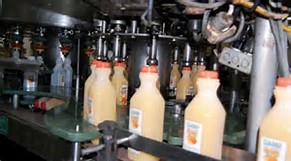
True Juice orange juice bottled and distributed by Wisynco.
The board declared an interim dividend of 20c per share, up from the 10 cents per share interim dividend declared in January 2021. The dividend will be paid on March 1, to shareholders on record on February 15. The stock trades ex-dividend February 14, 2022.
“We started to see a better turnaround in the operations from the middle of last year,” William Mahfood advised ICInsider.com. He felt that improved service to customers and increased attention paid to the cost were contributing factors as well. Mahfood indicated that January was a strong month for the group and hopes that it will carry through for the rest of the quarter. Although only around 10 percent of revenues go directly into the hotel sector, there is evidence of a strong rebound in tourism in the sector that is contributing to the resurgence in sales.
ICInsider.com projection is for earnings of $1.30 for the current year ending in June and $1.75 for the next fiscal year. The stock climbed from $17.75 before the release of the results after the market closed on Thursday to $20 at the close on Friday for a PE ratio of 15 and 11 times next year’s earnings.
Will Junior Market succumb to resistance?
The Junior Market index is up an incredible 16.3 percent for the year to date, with the average rise in prices at 19 percent. That sharp upward movement which is more than half of the gains for the entire 2021 is equivalent to an annualized gain of 194 percent, but that is unlikely to happen.
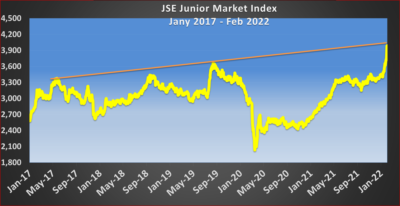 As of Friday, the Junior Market is trading smack at a long term resistance level (see orange line)that could result in sideward movement or even a decline, but a number of company results are due over the next two weeks and will influence the market’s direction in the short term, in which case it could break well over the 4,000 mark that it did on Thursday and Friday but failed to hold above it on both occasions after hitting a high of 4,041.54 on Thursday and 4,050.04 on Friday before closing below the 4,000 points mark. The rally seems poised to break through this resistance shortly and move higher, with results for the December quarter supporting it.
The market was in a consolidation mode from early May last year and technical reading suggests that this rally will take it into the 5,000 region.
Profit falls at NCB Financial
 Loans at NCB Financial jumped 19 percent from the year ago period to $549 billion at the end of December 2021, from $461 billion in 2020, with net interest income rising to $16.3 billion from $13.8 billion in the final quarter of 2020, while fees and commission income rose to $6.4 billion from $5.9 billion but foreign exchange gains plummeted from $5.4 billion to just $1.6 billion while Insurance revenues net jumped from $8.6 billion to $9.3 billion.
Expenses rose from $25.6 billion to $27 billion helping to reduce profit for the quarter and resulting in $2.64 billion due to NCB shareholders compared to $3.9 billion in 2020 for earnings per share of $1.15 versus $1.66 in 2020.
The group’s future performance is highly dependent on growth in loans, normalization of interest rates and improved performance of the life insurance arm that dropped $1 billion in profits in the quarter. Foreign exchange gains have played a big part in the past but this is unlikely to be an area that can be relied on for sustainable high income growth going forward. The banking arm also has to find ways to reduced costs in personal banking to turn the loss of $322 million into a profit.
The group now has total assets of $2,025 billion up from $1,797 billion at the end of 2020 and total equity capital of $164 billion.
The group did not declare a dividend at the meeting of directors.
Junior Market index jumps 114 points
 The Jamaica Stock Exchange Junior Market sprang into action in early trading on Thursday, with the market index surging 114.24 points within 15 minutes of the opening to reach 3,616.99 points just 46 points from the all-time high of 3,662.94 at the close on August 14, 2019.
With 40 minutes of trading, the Junior Market index slipped back to 3,574.73 with newly listed Spur Tree trading at $2.57 and the JSE Main Market was marking time with the All Jamaican Composite Index at 436,547.28, up marginally from the 435,448.73 at the close on Wednesday.
The sharp move today is in conformity with ICInsider.com’s forecast that the Junior Market was in a highly bullish technical stance to break higher sooner than later on the way to more than 4,000 points.
30% gain for Spur Tree Spices
 Shares in Spur Tree Spices started trading this morning at $1.30, with a mere 3 shares changing hands as the newly listed Junior Market stock attracts huge demand, with 389 bids posted ahead of the market’s opening, ranging from $1 to a high of $1.30, with demand totaling 6.46 million units at $1.30.
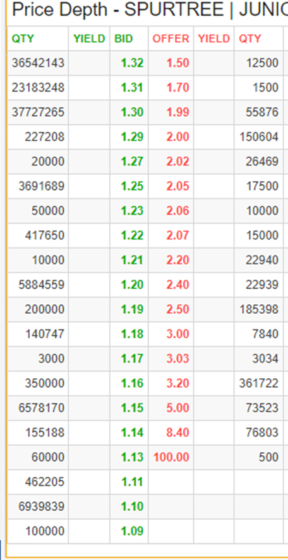 An indication of demand to buy below $1.30, is as follows; 527,000 units at $1.29, a total of 3.9 million shares at $1.25 and 3.6 million at $1.20. Sell orders start at $1.50 with 12,500 followed 1,500 units at $1.70, 26,000 at $1.80 56000 at $1.99 and 107,000 at $2 with other reasonable offers going up $3.20.
Under the stock exchange rules, trading in the stock is now frozen until 10.30 this morning and cannot trade at a higher price than $1.30 today. Following the reopening of the stocks for trading, after trading was frozen, bids have come in for more than 36 million units at $1.32, over 23 million at $1.31 and 38.46 million at $1.30.
The movement in the stock helped push the Junior Market Index over the 3,500 mark for the first time since early October 2019.
Spur Tree Spices lists on Friday on the JSE
Shares of Spur Tree Spices will list on Friday on the Junior Market of the Jamaica Stock Exchange following the successful Initial Public Offering said to have attracted applications from more than 5,000 investors and raised $335.4 million before expenses for the company.
 The company indicated that the issue attracted $1.3 billion and was 6 times oversubscribed. Proceeds will be used to pay listing expenses, with the remainder to be used for the repayment of debts of $170 million and to facilitate business expansion.
The listing, the second such listing on the Junior Market since the start of 2021 will bring the total stocks on the exchange to 42. A few others are expected to follow in short order as new offerings are made to the public early in 2022.
Earnings per share for Spur Tree should end the year at 11.5 cents before taxation at a PE of 8.7 times earnings, below the market average of 14.4 currently, with a high degree of oversubscription, the PE ratio will jump on Friday and into next week. IC Insider.com projects 18.5 cents earning for 2022 from a profit of $300 million at a PE of 5.4 times 2022 profit.
Profit drop at Elite but watch this stock
 Revenue of $118 million for the first quarter in 2020 fell 7 percent to $110 million in the first quarter to September 2021, resulting in a loss of $10.3 million compared to a profit of $16.7 million the previous year for Elite Diagnostic.
Reduced revenues impacted profit margin with a decline to 61.4 percent from 66.25 percent in 2020 and from 63.3 percent for the fiscal year to June. Input cost climbed 6 percent to $42 million from $40 million and gross profit fell 14 percent to $67 million from $78 million.
On the surface, the last reported results for the company may drive fear into the minds of investors but that would lead to a miss of potentially profitable investment for the future. “Net profit was impacted by increased administrative expenses, depreciation and foreign exchange losses”, management advised shareholders in their commentary on the results.

Elite Diagnostics
The report to shareholders continued, “revenue was affected by Covid-19 with reduction of operating hours and reduced procedures. Currently, the company’s operational hours are back to normal. An unusually lengthy breakdown of the CT also impacted our revenues during the quarter. Along with our regular preventative maintenance of the machines, the company has invested in equipment and parts to reduce some of the downtimes of the machine breakdowns”.
“The St Ann location revenue is increasing month over month since all modalities became operational in the first quarter of 2020. The company is cautiously optimistic as the effects of Covid-19 more negatively impact the rural areas of the country. The company continues to see steady demand for imaging services at all locations.”
Administrative expenses rose 13.5 percent to $46 million in the quarter from $40 million and depreciation jumped 44 percent to $25 million from $17.4 million in 2020. Finance cost was steady at $10 million, while foreign exchange movement resulted in a $3 million swing from a surplus of $1 million in 2020 to a loss of $2 million in 2021.
In spite of the loss incurred in the quarter, gross cash flow was positive with inflows of $15 million, down from $28 million in 2020. Additions to fixed assets offset by loan inflows utilized just over $15 million as net cash outflow for the period ended at $503,581. At the end of September, shareholders’ equity stood at $449 million, long term loans at $209 million and short term loans at $10 million. Current assets ended at $679 million, including trade and other receivables of $44 million, cash and bank balances of $39 million. Current liabilities ended the period at just $20 million, with net current assets ending at $659 million.
The results ended with earnings per share being a loss of 3 cents for the quarter, down from 4 cents for the quarter in the prior year. Based on the latest results, most investors would be looking elsewhere for investment opportunities. In doing so, they could miss one of the biggest winners in 2022. IC Insider.com forecasts 30 cents per share for the fiscal year ending June 2022, with a PE of 10 times the current year’s earnings based on the price of $3.05 the stock traded at the Jamaica Stock Exchange Junior Market. The company has more room for revenue growth from the addition of new equipment, continued growth in the relatively new St Ann location and additional branches in the future.

Drax Hall branch of Elite.
The company paid a dividend of 9 cents in October this year 2021. Net asset value is $1.29, with the stock selling at just over 2.4 times book value.
Reporting to shareholders in the annual report for the year to June, the chairman, Steven Gooden, stated, “we have been fortunate to see an increased demand for imaging services and were prudent to have sought to capitalize on this demand – through the acquisition of new equipment. We will continue to pursue this growth strategy by installing a new MRI system at the Liguanea branch, which we anticipate will be operational beginning early 2022. This new machine, we expect, will serve to reduce the company’s operating hours and thereby its related expenses. Additionally, with the St Ann branch issues finally resolved, the location is now operating at the desired capacity. Looking ahead, the near to medium term holds the classic combination of challenge and opportunity.On the one hand, we see continued challenges in terms of rising prices, compounded by the depreciation of the local currency; the company pays all its rent and purchases equipment and supplies from overseas in US dollar, so any depreciation in the dollar will affect the bottom line. On the other hand, we also see our cash flows remaining stable, if not strong, amid the continued high demand for our services. The demand is so strong that, were it not for dealing with the issues associated with the Drax Hall branch, the company might well have advanced plans for another branch. We intend to approach growing the company’s footprint with alacrity and all seriousness in the coming year”.