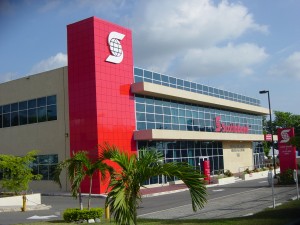
Scotia Group shares jumped sharply to end at a record $57.99 on Wednesday.
Fresh from the announcement that Scotia Group is changing their chief executive officer, the stock continued on its merry way and jumped sharply at the start of trading on Wednesday to a new high, before ending trading at another record close.
Scotia ended the day trading 153,874 shares with the price climbing $2.99 to a record close of $57.99.
A the close of trading the All Jamaica Composite Index declined 790.64 points to close at 290,539.74, the JSE Market Index fell 720.36 points to 264,714.57 and the JSE US dollar market index declined 4.57 points to 182.61. At the close of trading, 25 securities changed hands in the main market with 3 trading in the US dollar market, leading to 12 stocks advancing and 5 declining. The main market ended with 3,180,409 units valued at $81,180,237 changing hands compared to 3,062,518 units valued at $54,223,292 at the close on Tuesday. The US dollar market accounted for 1,054,890 units valued at US$243,418 bringing the total of all trades to J$112,337,685.
 IC bid-offer Indicator| At the end of trading in the main and US dollar markets, the Investor’s Choice bid-offer indicator reading shows 4 stocks with bids higher than their last selling prices and 2 with lower offers.
The main market ended trading with an average of 127,216 units valued at $3,247,209 for each security traded compared to an average of 122,501 units valued at $2,168,932. The average volume and value for the month to date ended at $173,624 units with an average value of $3,492,967 compared with an average of 189,094 units with an average value of $3,574,886 on the previous trading day. The average volume and value for August ended at 184,094 units with an average value of $4,336,090.

 The All Jamaica index of main market stocks of the Jamaica Stock Exchange blast through the critical resistance level of 290,000 during the morning session on Tuesday and held above it at the close to end at a record close as
 The main market ended trading with an average of 122,501 units valued at $2,168,932 for each security traded compared to an average of 309,660 units valued at $7,056,282. The average volume and value for the month to date ended at 189,094 units with an average value of $3,574,886 compared with an average of 222,390 units with an average value of $4,277,863 on the previous trading day. The average volume and value for August ended at 184,094 units with an average value of $4,336,090.
 Trading in the Jamaican foreign exchange market jumped sharply on Tuesday, resulted in US$53.88 of purchases by dealers of all currencies and outflows of US$42.39 million.
 Trading in the Jamaican foreign exchange market dropped sharply on Monday, resulted in only US$21.92 of purchases by dealers of all currencies and outflows of just US$13.99 million.
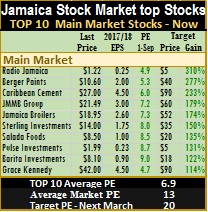 During the week main market stocks surged to record levels on 3 days with Friday closing with the third highest daily gain in the market’s history. The main market sits just below the critical 290,000 point mark and seems headed to break through that level, based on the shortage of supply for Scotia Group shares on Friday with a closing bid of $52. The cut in BOJ’s bench mark rate would translate to the all Jamaica Composite Index climbing to 298,000 points.
 Salada Foods fell in price to $8.50 and along with Barita pushed out Sagicor Group and Pan Jam Investment, both of which rose in price during the week.
 The main market of the Jamaica Stock Exchange surged to a new high at 12.30 pm on Friday with the all Jamaica Composite index jumping 8,505.30 points to a record 289,062.69 while the main market index rose 7,749.29 points to a record 263,368.84.
 The main market of the Jamaica Stock Exchange surged to a new high at 11 am on Friday with the all Jamaica Composite index jumping 4,315.47 points to a record 284,872.86 while the main market index rose 3,931.88 points to a record 259,551.43.
 Trading in the Jamaican foreign exchange market on Thursday resulted in a big surge in the amounts purchased and sold by dealers and a fall in the value of the local currency against the US dollar.