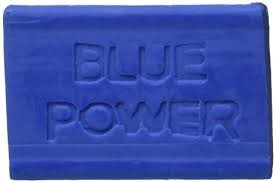
 Blue Power will split into two separate companies, the directors of the group decided on, to enhance prospects for growth of the two divisions.
The “Board of Directors considered the issue of growth of the two divisions of the Company and has reached the conclusion that having the Lumber Depot Division operate as a separate company will enhance its prospects for growth through acquisitions of and or mergers with other companies in related lines of business. The same considerations would apply to the growth of the Blue Power Soap division.”
In order to effect this move, an Extraordinary General Meeting will be held following the Annual General Meeting on August 14, to consider the matter.
Shareholders will be asked approve the issue or transfer of shares in a newly created subsidiary, Lumber Depot Limited, to the group’s shareholders on record as at August 1, with the intent that after such actions, shares in New Lumber Depot shall be held by the shareholders of the group in proportion to their existing holdings..
Blue Power shareholders will also vote to transfer the business, assets and relevant liabilities of the Lumber Depot Division to the new Company.
The directors approved the payment of a dividend of 2 cents per share on August 12. The record date is July 25 and the ex-dividend date, August 9, 2019.
The last audited financial statements, show the Lumber shop division with sales to April this year of $1.197 billion and profit of $74 million, while the Soap division recorded sales of $469 million and profit of $85 million.  In the previous year, the Lumber division recorded sales of $1.07 billion and profit of $62 million and the Soap division had sales of $440 million and profit of $53 million.
The assets of the Lumber shop amounts to $222 million at the end of April with liabilities of $54 million. The soap division had assets of $761 million and liabilities of just $31 million.
The two divisions are involved in two completely different business with little synergies. The two companies should have their own management and boards, suited to move the separate companies to much higher levels of operations and profits.
The stock last traded at $6 on the Junior Market of the Jamaica Stock Exchange on Thursday.
Blue Power to split in two
Elite Drax Hall opens August
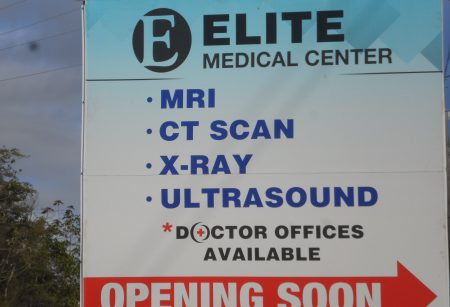 Word reaching IC insider.com is that the third branch of Elite Diagnostic is set to open by the beginning of August.
Earlier this week, IC Insider.com sited the new building that is substantially complete and seems ready to welcome patrons. Elite had purchase of MRI machine from early in 2018 and had it store for installation at this location.
The new location is expected to carry a smaller staff compliment that the two in Kingston. The new location will be a drag on earnings for the company until it gets up to speed, but the cost will be less than for the second location.
At the 2018 annual general meeting, the directors indicated that the cost to set up St Ann Bay is in the region of $20-22 million plus U$375,000 for the MRI machine.
The company bought the MRI equipment early because it became available locally, but it comes at a cost as it was being stored with rental and electricity cost incurred to maintain it at a cool temperature. While the company has 3 other MRI competitors in Kingston, there will be no immediate competitor within 50 miles in St Ann. Operating cost at this location will less than at Liguanea with the former being staffed by 7 employees versus a planned staffing of 4 or 5 for St Ann.

Drax Hall branch of Elite nearing completion.
Elite reported net profit for the December 2018 quarter of $5 million compared to $1 million for the same period a year ago. Net profit for the 6 months was $6.8 million, down from $12 million for the same period in 2017. Revenues rose strongly to $97 million in the second quarter compared to $72 million for the 2017 period. For the six months to December, revenues rose to $182 million compared with $142 million for the year ago period. The stock traded at $4.80 on the Junior Market on Tuesday, with PE ratio of 7.5 based on estimated 2020 earnings of 65 cents per share.
Junior Market drops 90 points in July

Fontana ended at a record close of $6.20.
It has not been a good July for the Junior Market of the Jamaica Stock Exchange so far, as the market index continuing to slide, with a 26.77 points fall on Monday on top of the 26.62 points drop on Friday.
The market that started the month at 3,103.60 has now lost 90 points to close at 3,013.40 on Monday on a day when declining stocks outnumbered rising stocks 3 to 1.
Trading ended on Monday with 30 securities changing hands, similar to Friday’s level, resulting in an exchange of 2,734,886 units valued at $7,413,545 compared to 2,783,254 units valued at $9,535,345 on Friday. At the close of market activities, the prices of 5 securities advanced, 14 declined and 11 remained unchanged.
Trading ended with an average of 91,163 units at $247,118 for each security trading, in contrast to 92,775 units for an average of $317,845 on Friday. The average volume and value for the month to date amounts to 90,896 shares valued at $308,570 for each security traded, compared to 90,868 shares valued at $314,884 traded previously.  June ended with an average of 166,169 units at $674,841 for each security traded.
Fontana closed at an all-time high of $6.20, GWest Corporation closed at a 52 weeks’ low of 70 cents and Jetcon Corporation ended at a 52 weeks’ low of $1.60.
IC bid-offer Indicator| At the end of trading, the Investor’s Choice bid-offer indicator reading shows 8 stocks ended with bids higher than their last selling prices and 2 closed with lower offers.
Stocks ending with price changes| AMG Packaging climbed 11 cents in exchanging 35,696 shares at $2.27,after trading as high as $2.50, with investors responding positively to improved profit posted for the company’s May quarter. Blue Power traded 1,550 shares, after rising 40 cents to end at $5.35, Caribbean Producers lost 4 cents trading 5,260 shares to close at $4.76, Consolidated Bakeries ended market activity exchanging 58,600 shares to close at $1.80 after falling 10 cents. Derrimon Trading ended trading with 78,832 shares, after rising 13 cents to end at $2.30, Express Catering declined 65 cents in trading of 44,521 units at $6.10. Everything Fresh ended market activity in exchanging 84,200 shares to close at $1.36 after falling 4 cents, Elite Diagnostic fell 15 cents trading 4,210 units at $4.80. Fosrich Group dipped 10 cents in trading of 29,637 units at $4.10,  Fontana closed trading of 171,573 units and gained 13 cents to end at $6.20. General Accident lost 10 cents trading 1,540 units at $4.20, Gwest Corporation declined 14 cents in trading of 558,259 units to end at an all-time closing low of 70 cents, Honey Bun lost 5 cents in exchanging 6,000 units at $5.95, Jamaican Teas dipped 5 cents in with 44,032 units changing hands at $4.40. Jetcon Corporation declined 35 cents to end at a 52 weeks’ low of $1.60, trading 85,000 shares, Key Insurance ended market activity exchanging 2,021 shares, to close at $2.90 after falling 10 cents. Lasco Financial ended with a loss of 1 cent at $4.49 with 18,200 stock units changing hands, Lasco Manufacturing climbed 14 cents after exchanging 134,182 shares at $4.20 and Main Event lost 38 cents in trading 12,734 shares to close at $6.32.
Prices of securities trading for the day are those at which the last trade took place.
Trading drops sharply on TSE – Monday

Junior Market volume contracts on Thursday.
Trading activity dipped sharply on the Trinidad & Tobago Stock Exchange on Monday with just 76,614 shares valued $1,275,582 traded, compared to 561,729 shares valued at $5,509,075 on Friday.
Market activity ended with 14 securities trading against 19 on Friday. At the close on Monday, 2 stocks advanced, 4 declined and 8 remained unchanged.
At close of the market, the Composite Index slipped just 0.26 points to 1,384.28. The All T&T Index declined a mere 0.51 points to 1,788.27, while the Cross Listed Index remained unchanged to close at 132.55.
IC bid-offer Indicator| The Investor’s Choice bid-offer indicator ended at 4 stocks with bids that were higher than their last selling prices and 3 with lower offers.
Gains| Calypso Macro Index Fund rose 50 cents to close at $14.50 with 25 shares trading and Massy Holdings rose 2 cents to close at $55.10, with just 36 stock units changing hands.
Losses| Clico Investment Fund fell 5 cents to $24.20, with 10,782 stock units trading, Guardian Media shares lost 50 cents trading of 6,300 shares at a 52 weeks’ low of $11,  Trinidad & Tobago NGL declined 5 cents trading 7,283 units to close at $28 and West Indian Tobacco closed with a loss of 2 cents at $110.25, with 365 stock units trading.
Firm trades| First Caribbean Bank completed trading at $8.32, after exchanging 1,000 shares, First Citizens Bank settled at $40.03, with 850 units crossing the exchange, Guardian Holdings ended at $18.40, with 2,000 stock units changing hands, NCB Financial settled at $9.50, with investors exchanging 11,371 shares. Point Lisas completed trading of 1,290 stock units at $3.45, Sagicor Financial settled at $10, with 32,175 stock units changing hands, Scotiabank closed at $60, with 3,032 units trading and Unilever Caribbean ended at $25, after exchanging 105 shares.
Prices of securities trading for the day are those at which the last trade took place.
Watch this one – RJR Group
 Investors should be watching keenly developments at Radio Jamaica as the company seems poised for a turnaround in its fortunes.
The company today reported to the Jamaica Stock Exchange that a connected party purchased 26.5 million of the company’s shares on July 5, 2019. The trade took place at $1.03 and is very significant, sending a strong message of the group fortunes ahead, but few are watching this one. The RJR purchase may not mean much to most, but IC Insider.com assessment of recent results suggests otherwise.
In November last year, IC insider.com posted an article, captioned “NCB Insiders sending a powerful message.” The article highlighted the fact that some directors and executives at NCB Financial Group see big things ahead, to have put down $650 million in buying a block of 4,793,610 shares close to the highest price it traded at in recent times. Since then the stock rose from $136 to more than $200 for a gain of 47 percent, with more to come.
RJR Group, reported profits that more than doubled in the December quarter from $79 million to $168 million on revenues that climbed from $1.39 billion to $1.5 billion but for the year to March this year, the group reported a small loss of $22 million thus reversing the profit of $34 million at the end of December 2018. Operating revenues rose an attractive 9.7 percent in the March quarter to reach $1.29 billion, segment results show that revenues grew 5.3 percent for television, 7.4 percent for radio and 8.2 percent for print in the March quarter over the prior year’s March quarter. Some cost incurred in the 2019 fiscal year will not repeat in 2020, while income as a result of the World Cup football, will not recur. The group lost around $40 million in doing world cup coverage and that loss will disappear in 2020. RJR ended the year with shareholders’ equity of $2.35 billion, borrowings of $387 million. Current assets amounted to $1.5 million with cash funds at $448 million and current liabilities at $662 million. In spite of the loss for the fiscal year, gross cash inflows amounted to $485 million.
The gains in revenues are an important message about future income and a very good indication that the 2020 fiscal year should be a profitable one. The purchase of the block of shares when coupled with growth in revenues seems a positive indicator of what to expect for 2020.
There are a few other indicators as well. Some entities placing advertisements in the Gleaner faced cancellation as a section of the paper attracted increased business that they had to turn away advertising and that seemed to have gone on for weeks in the June quarter. Faced with a growing economy with sales rising as well as increased competition companies will spend more on advertising to move more products and services, a trend that should continue going forward. Of significance, is that GDP growth in the first quarter of 2019 is 21 percent faster than in the same period in 2018 if this trend continues for the rest of the year growth would be in the 2.5 percent level or more. That would mean more advertising dollar spend and the RJR Group is in a good position to benefit from that going forward.
IC Insider.com projects 15 cents per share in earnings for 2020 with the stock that traded at $1.10 on the Jamaica Stock exchange on Friday, is now at a PE of just 7, well under the market average of 15.6.
5 TTSE stocks rise 3 fall – Thursday
 Trading on the Trinidad & Tobago Stock Exchange ended on Thursday with 17 securities changing hands against 17 on Wednesday. Prices of 5 stocks rose, 4 declined and 8 remained unchanged.
Trading ended with 216,609 units valued $3,950,131 changing hands, compared to 936,221 units valued $5,215,766 on Wednesday.
At close of the market, the Composite Index rose 1.58 points to 1,389.05. The All T&T Index fell 0.19 points to 1,798.22, while the Cross Listed Index rose 0.46 points to close at 132.47.
IC bid-offer Indicator| The Investor’s Choice bid-offer ended at 2 stocks with bids lower than their last selling prices and 5 with lower offers.
Gains| Calypso Macro Index Fund rose 50 cents to close at $15 with 66 shares changing hands, JMMB Group finished trading 41,995 shares, resulting in a rise of 5 cents to end at $2.25, Sagicor Financial added 1 cent and settled at $10.01, with investors exchanging 19,200 shares. West Indian Tobacco closed with a gain of 1 cent and ended at $110.27, with 83 stock units trading and Unilever Caribbean traded 3,040 units and rose 5 cents to settle at $25.30.
Losses| Massy Holdings fell 58 cents to $54.50, after exchanging 6,400 shares,  National Enterprises lost 1 cent to close at a 52 weeks’ low of $6.65, with 42 units changing hands, Republic Financial rose 2 cents and completed trading of 13,259 shares at $121 and Trinidad & Tobago NGL lost 5 cents and ended at $28.05 trading 3,625 units.
Firm Trades| Clico Investments closed at $24.15, with investors exchanging 3,263 shares, Ansa McAL ended at $55.18, after trading 7,524 units, CinemaOne settled at $9, with investors exchanging 111 shares, First Citizens Bank ended at $40.10, with 2,936 stock units trading. Grace Kennedy settled at $3.24, with the swapping of 30,900 shares, NCB Financial completed trading of 83,316 shares at $9.50, Point Lisas traded 710 shares to close at $3.45 and Scotiabank concluded with 250 stock units changing hands at $62.
Prices of securities trading for the day are those at which the last trade took place.
Barita blowout profits
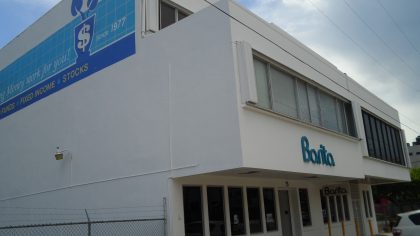 Barita Investments is reporting a huge jump in profits for the third quarter and the nine months to June compared to the similar periods in 2018 as revenues surged to record levels under new management.
For the quarter, profit after tax jumped 594 percent from just $131 million in 2018 to $911 million with the nine months ending with $1.43 billion up 691 percent from just $181 million in 2018.
Revenues net of interest cost, leaped 371 percent to $1.65 billion for the quarter from $352 million a year ago and to $2.8 billion for the nine months, up 234 percent from $842 million in 2018.
For the quarter and year to date, the company record strong improvement in revenues in every major category but gain on investment activities was the most outstanding, with revenues rising to $626 million in the quarter from just $31 million in 2018 and from $112 million for the nine months in 2018, it jumped 1,073 percent to $1.24 billion. While investments brought in a pile, they can be volatile as gains or losses are subject to market gyrations from time to time. Going forward there are no certainty that gains will be at the above levels. The company also recovered $312 million in investments losses incurred earlier in the year, of which $310 million is accounted for in the third quarter.
Expenses rose sharply but at a much slower pace than income, with the quarter seeing cost of $365 million including impairment and expected credit losses of $58 million against $171 million in 2018 while the nine months incurred cost of $829 million versus $542 million in 2018.
The company earned $1.44 per share for the quarter and $2.26 for the period to June and seems on course to record profits closer to $4 for the full year. More importantly, the latest quarter’s earnings suggest 2020 earnings could be in the $6 region all things being equal.
Barita ended the quarter with assets of $31 billion, up from $17 billion in 2018 with shareholders’ equity of $9.3 billion and securities sold under repurchase agreements amounting to $19.5 billion which grew from $12.3 billion at march 2018.
Barita is not satisfied with their outstanding achievement so far. The company will be going back to market to raise around $4 billion by way of a renounceable rights issue to help fund an acquisition.
The stock traded on the Jamaica Stock Exchange at $45 at a PE ratio around 11 times 2019 earnings compared to an average of 15.5 for the overall main market.
Shift in Easter impact Purity

Consolidated Bakeries Miss Birdie Easter bun.
Consolidated Bakeries profit dropped sharply for the March 2019 quarter as the company suffered an estimated $50 million shift in some Easter sales coming in April compared to March in 2018.
Quite a bit of Easter bun sales will show up in the second quarter and should help to boost the quarter and half year the profit.
Unaudited financial statements, showed profit declined sharply by 34 percent to $13.5 million in the March 2019 quarter from $20 million after tax in the 2018 first quarter.
Revenues increased marginally to $273.6 million for the 2019 quarter from $271 million in 2018 but the shift in Easter to mid- April affected sales. Direct operating cost rose 2 percent to $161 million, resulting in gross profit ending at $112 million similar to that of 2018, but gross profit margin slipped slightly, to a still healthy 41 percent compared to 42 percent for the same period last year.
For the quarter, administrative and other expenses moved up 3 percent to $50 million, depreciation was flat at $7.5 million while Finance cost declined 14 percent to $2.8 million compared to the 2018 March quarter.
Earnings per share came out at 6 cents for the March 2019 quarter, down from 9 cents for the corresponding quarter in 2018. IC Insider.com forecast 25 cents in earnings per share for 2019 as sales rise in double digits going forward and that should provide a decent lift for the stock price that has languished around the $2 mark for a long time. The stock traded at $1.80 on the Junior Market of the Jamaica Stock Exchange with a PE ratio of 7 times 2019 earnings.
Gross cash flow, brought in $23 million but growth in inventories and receivables, purchase of fixed assets, reduced cash funds of net of overdraft at $46 million at the beginning of the year to $24 million at the end of March. Shareholders’ equity stood at $733 million with borrowings at $167 million. Net current assets ended the period at $114 million inclusive of trade and other receivables of $112 million, as well as cash and equivalents of $79 million. The company ended the quarter with current liabilities of $185 million.
Watch Barita with a new rights issue
Barita eyeing acquisition.
Barita Investments is planning another rights issue to raise new capital that is being earmarked IC Insider.com gathers to fund a major expansion.
A Directors meeting is set for Thursday, July 11, at which they will consider the recommendation of a rights issue to the company’s ordinary stockholders.
IC Insider.com gathers that the issue will be fully underwritten but will likely be renounceable which means shareholders will be able to sell their rights if they want to. The terms and conditions are likely to be approved at an extraordinary meeting of shareholders to be convened by August.
The price has not yet been set but there is a view that it will be at about around 30 percent to the then market price. There are views suggesting that the nine months’ earnings are likely to be boosted by a sharp bounce in the company’s investment portfolio, courtesy of a booming stock market, increased fee income and a rise in fees from a growing unit trust portfolio that is benefitting from the buoyant stock market and pulling in new investors. Strong gains from investment banking activities are said to be major factors driving revenues and profit, the result of several deals that were finalized during the June quarter. IC Insider.com also gathers that foreign exchange trading has also ballooned and brought in much more income than previously.
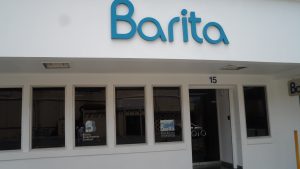
Barita Investments headquarters
Importantly, our source is suggesting is that the rights issue that should bring in around $4 billion in fresh capital is primarily targeted to fund an acquisition that have Caribbean while locations and will make a big impact on profitability when fully integrated into the existing structure, if the deal goes through. IC Insider.com had projected the earnings for 2019 at $3 per share> With the consolidated of operations and acceleration in earnings that seems to be taking place starting with the second quarter earnings for the full year is most likely to exceed the above forecast handily. If that happens then the stock could be trading in the $60 region before too long after the third quarter numbers are released later this month.
The third quarter report shows total assets jumping to $27.7 billion from $16 billion at the end of March 2018 with equity capital at $7.8 million up from just $2.9 billion at the end of March 2018. Revenues net of interest expense more than doubled in the March 2019 quarter to $770 million from $329 in 2018 and profit rising to $408 million for the quarter compared to just $88 million in the 2018 quarter. For the half year net revenues grew to $1.16 billion from $490 million in 2018 and profit rose to $517 million from $49 million.
GWest shocking financial status
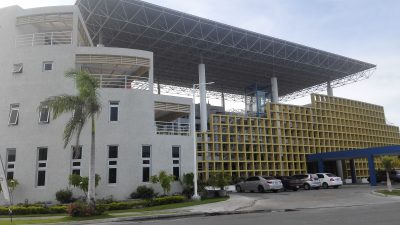 GWest went to market in 2017, presenting a picture to investors of a prosperous future but within less than two years of listing on the Junior Market of the Jamaica Stock Exchange, the picture is bleak.
The company’s auditors issued a qualified report casting doubts on the ability of the company to continue in business as a going concern. According to the company’s auditors Calvert Gordon and Associates, “the company recorded a net loss of $135.876 million during the year ended March 2019 and a net loss of $88.109 million in the previous year.”
These conditions along with other matters as set out in note 28, indicate the existence of an uncertainty which may cast doubt about the company’s ability to continue as a going concern.
Note 28 of the financial statements reads “The above factors indicate a material uncertainty that may cast doubt on the company’s ability to continue as a going concern and to therefore realise its assets and discharge its liabilities in the ordinary course of business. The continuation of the company as a going concern is dependent on the availability of the third party financing and on future sustained profitable operations.”
“Management is committed to continue operations as a going concern and is pursuing a number of strategies to return to profitability, which include: – sale of investment property units – commencement of operations of planned new surgery centre – increased marketing and promotion of new services being offered – continue rationalisation of expenses – obtaining additional third party financing for improved working capital “
“ At the date of these financial statements, the company was in an advanced stage of negotiations with its bankers regarding the restructuring its current borrowing arrangements and to obtain further financing for its strategic plans.

Dr. Konrad Kirlew, chairman of GWest.
Additionally, subsequent to the year end, the company has signed sale agreements for two units of its investment property.”
“The ability of the company to generate sustained profitable operations is dependent on the successful implementation of the strategies being pursued. Based on these plans and strategies, the directors and management believe that the company will generate adequate cash flows and return to profitability.”
GWest presented a rosy forecast at the time of the IPO, to suggest a highly profitable future with revenues from medical services rising sharply in the 2018 fiscal year. The results to March that year, last year showed revenues well below forecast of $86 million from the new operations with only $17.4 million generated. Admittedly, the company had projected a loss to March of $110 million but came up much lower, with a loss of $88 million. The audited accounts show revenues from patients fess at just $77 million well up on the $17 million generated in the 2018 fiscal year but below the forecast for 2018 and mere 11 percent of the forecast of $710 million for 2019. With losses exceeded revenues for the 2019 fiscal year, the company will need to grow gross income considerably in the current year to prevent another year of losses. GWest reported revenues of $130 million and $66 million in 2018 with expenses of $228 million up from $119 million.
The company has just $465 million in shareholders’ equity owes $980 million in interest bearing debt and virtually has no free cash left on hand. The sale of some units owned by the company will go a far way in easing the crunch but it must generate a lot more income to stem the cash out flow that has plagued it.
The writing was on the wall for this stock from the start, it had no track record in the business it hoped to make most of its profit from, projections had no credible foundation and management exposed there weakness with the manager they handled the conversion of shareholders loans to preference shares. The stock that was sold to the public at $2.50 and rose to a high of $4 after listing but is now down to $1.05 just above the net book value of 95 cents and seems heading lower.