 Iron Rock Insurance is one of 5 junior market companies poised to hit the market between February and March, ahead of the deadline for the ending of the tax break, accorded junior market companies.
Iron Rock is expected to be capitalized at just under $500 million and has as two of its principals William McConnell formerly managing director of Lascelles deMercado who use to own Globe Insurance Company and Evan Thwaites former of Globe Insurance.
Informed sources tell IC Insider that the prospectus should be out by the February 22, with the issue to be opened before the end of the month.
Mayberry Investments are the brokers for Iron Rock while JMMB Securities is handling two issues. The new listings if they are all approved, will raise the number of junior market listings to 34 and the number of companies listed to 30. In contrast the main market and the US dollar market has 35 companies listed plus a number of preference shares issued by companies with ordinary share listing.
The main market has almost stagnated and seems set to contract with two main market companies, that of Hardware and Lumber and Desnoes and Geddes look set to be delisted.
Iron Rock IPO hits market shortly
CWC Caribbean business grows
 Strong mobile growth in the Caribbean, 7 percent, was offset by a 9 percent decline in BTC, consistent with our expectations CWC PLC reported today. Mobile revenues (40 percent of total Group revenue) was up 1 percent in the third quarter the report stated.
Caribbean growth was driven by continued subscriber additions in Jamaica (+15 percent) where investment in our mobile network led to revenue growth of 16 percent, with data revenue up 72 percent. Broadband (13 percent of Group revenue) was 5 percent higher against the prior year, as subscriber growth in the Caribbean drove Group subscribers up 6 percent.
The company said that they are training new customer service agents for our new call centre in Jamaica which is expected to open in March quarter.
Regulatory approval for Liberty Global to acquire the entire share capital of CWC PLC is ongoing. It is expected that the Scheme Document to be dispatched by mid-March with completion in the second calendar quarter of 2016, as stated in the Offer Announcement.
$18.50 offer for H&L shares
 Hardware & Lumber gets offer from the new majority shareholders Argyle Industries to buy for cash the 33,764,719 ordinary stock units not already owned by the offeror. The purchase price is J$18.50 per stock unit, the same price Grace Kennedy sold their majority holding to the company for in December last year.
On December 30 Argyle Industries Inc. announced that it had acquired approximately 58.23% of the issued stock units of H&L Shares. As a result of the Offeror acquiring over 50% of the issued ordinary stock units of the Company it became obliged under the Securities Act to make the offer to the minority.
The offer was received by the Hardware & Lumber board who advices, that a special subcommittee of the Audit Committee to comprise directors unconnected to Argyle or to any other significant shareholder of H&L will be appointed. This sub-committee will have a mandate to propose for adoption a recommendation as to acceptance or rejection of the Offer for inclusion in a directors’ circular to be issued by the Board containing all relevant information required for the benefit of H&L’s stockholders, in compliance with all regulatory requirements.
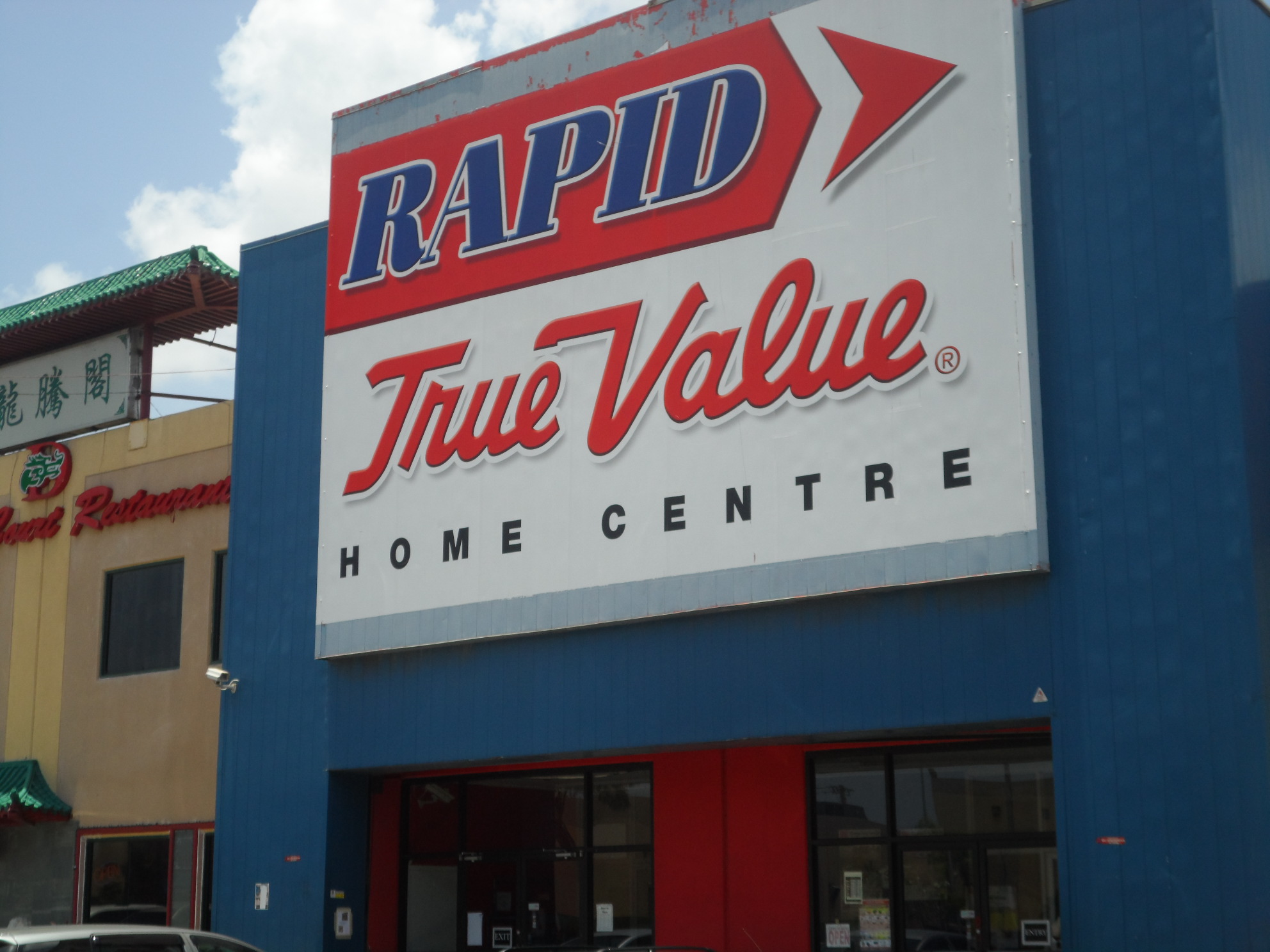
Rapid True Value owned by Hardware & Lumber
Directors of Argle are Joseph Bogdanovich Director of Downsound Records and Director of K.L.E Group, Marcus Richards Managing Partner, Greystone Equity Partners Inc. and Christopher Bovell Attorney-at-Law.
80% of Dolphin Cove overseas
 World of Dolphins increased their holding in Dolphin Cove to 79.99 percent following the closing of compulsory offer to purchase shares from the minority shareholders, the company reported in a release to the stock exchange.
The Offer was accepted by 110 shareholders of Dolphin Cove who tendered 48,815,711 ordinary shares representing approximately 12.44 percent of all the shares issued by Dolphin Cove. Stafford Burrowes former majority owner sold a further 35,475,929 shares to World of Dolphins at the offer price of US$0.1338 per share.
On November 18, 2015, World of Dolphins Inc. acquired 58.51 percent amounting to 229,610,218 shares in Dolphin Cove’s issued shares. The majority of these shares were purchased from Stafford Burrowes, the founder and principal shareholder of Dolphin Cove. On December 18, 2015, World of Dolphins Inc. made the follow-up offer (“the Offer”) to purchase all shares in Dolphin Cove not already held by World of Dolphins at a price of US$0.1338 per share.
NIR climbs US$94m in December

Jamaica enjoyed a week of strong net inflows on the FX front
The inflows brought the net inflows to US$93.9 million for the month, moving the reserves to $2.437 billion from $2.34 at the end of November.
Reserves now amount to 33.37 in Weeks of Goods Imports, up from 31.80 weeks and 22.98 weeks in reserves of Goods & Services Imports up from 21.90 weeks from the November amounts a release from Bank of Jamaica disclosed.
Bank of Jamaica confirmed that for the December 2015 quarter the net purchase by them amounted to US$137.48 million. The intake by the bank helped to build up the reserves.
Chin confirms US$300m vs Pfizer

Lasco Distributors products
The amount mention in the article, US$300 million equates to nearly 18 years of 2011 Pharmaceutical sales, an amount confirmed by the company’s chairman Lascelles Chin. Damages would not compensate for loss of sales but loss of profit up to the point that the company could restore its market share. IC Insider tried to put the pieces together.
An extract from the Gleaner reports states “Lasco Distributors Limited has claimed that it suffered US$300 million in damages when it was barred by a court order from distributing the drug Amlodipine (Norvase) which is used to treat high blood pressure. Last month LASCO put in its claim in the Supreme Court to recover the money from international pharmaceutical company Pfizer, which had obtained an injunction against LASCO. The injunction, which was granted in 2005, remained in effect until 2012 when the United Kingdom Privy Council upheld rulings by the local courts which favoured LASCO”.
In 2010, when Lasco went public the prospectus stated in connection with the case; “no provisions have been made in the Company’s accounts for the impact of the outcome of this decision and the accounts contained in this prospectus do not take it into account. It is the expectation of the Company, based on legal advice it has received, that its lost sales of the product to date (estimated to be $400 million) are likely to be recovered in the event that it succeeds in this matter but it is difficult to quantify the amount of damages that could potentially be awarded as they will continue to accrue until the matter is decided”
The 2012 audited report, said pretty much the same. “There is a claim by Pfizer Limited (Pfizer) against Lasco Distributors Limited, (“the company”), and others for damages for breach of a patent relating to a particular product. The action has been tried and judgement entered in favour of the company. The judgement has been appealed by Pfizer. The appeal has been heard and the court has reserved its judgement. The attorneys are of the opinion, that the company should be successful on this appeal and anticipate that the amount to be recovered by the company may be approximately $400M, if not, the company will be liable for cost estimated at $25M and for an accounting as to profits made by the company as damages to Pfizer for its loss of profit attributable to the sale of the product from the commencement of the company’s dealing in it to the date of the interim injunction issued on 29 March 2005”.
The big question, how did sales of $400 million plus cost and damages get to US$300 million in 5 short years? If the sales lost, as stated in the prospectus was $400 million up to late 2010, then it would appear that to be generous, sales to the end of 2012, around two additional years, should not exceed another $400 million bringing the total to probably $800 million. Lasco Distributors’ gross profit is around 20 percent and would translate to $160 million over the period plus interest. Applying interest at 15 percent per annum, translates to around J$300 million plus cost. Based on the estimates that cost that would be payable to Pfizer amounting to $25 million, the Lasco’s cost should be in that region or a bit more based on the drawn out nature of the case.
Of course there could be damages for the loss of market share as it would take some time to get back to the level of business that they would have been at had they not ceased selling the product.
Chin advised IC Insider that the amount now claimed is compiled in a comprehensive and detailed manner and takes into account the fast pace that sales were growing by amounting to 500 percent per annum as well as the size of the market but does not have interest computed as yet. Chin also indicated that the profit margin of the tablets was 70 percent and that it will not be until 2018 that they would get back to the level of sales that would have had they not been barred from selling.
The amount plus interest would work out at around 10 US cents per share before taxation of around 12.5 percent.
JSE to host investment conference
The Jamaica Stock Exchange INVESTMENTS & CAPITAL MARKETS CONFERENCE 2016, will be held at the Jamaica Pegasus Hotel on Monday, January 18, to Wednesday, January 20 and comes against the background of the exchange being rated as the best performing global exchange in 2015, with gains over 100 percent for the year.
 The conference with its theme “Positioning the Caribbean in the International Arena” will cover the following topics:the UK an Invaluable Trading Partner: Going Beyond Traditional Exports and Identifying Higher Value Products and Services. Building and Deepening the Caribbean, Cuban Relationship in the Areas of Education, Health and Tourism. Investing in and Training the Labour Force is the Conduit for Growth in the Caribbean. Start, Run and Grow Your Business. Confronting the Challenges of Climate Change: Protecting the Caribbean Water Resources as an Economic Strategic Advantage. The Caribbean as an Ideal Sports Destination. New Approaches to Funding Ideas Regionally – Crowd Funding the Newest Rage. Venture Capital Pitch Room for Entrepreneurs and Innovators.
RJR shareholders set to halt merger
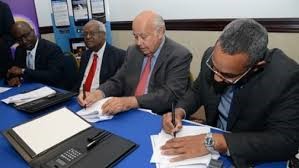
Gleaner & RJR execs signing merger agreement earlier in 2015
A number of the larger shareholders are of the view that the deal does not benefit them as much as it bails out a struggling Gleaner that has had great difficulty making a profit from the media business for several years now.
One point put forth is that is that print media is not an area of growth compared with the electronic media, that is seen as having good growth potential. The effect of the merger would result in a dilution of the RJR shareholders interest the disgruntled shareholder say and that appears to be the case initially. The proponents of the merger says there will be savings and added revenues amounting to $275 to $450 million that will enhance the fortunes of the new group, but only half of that will be attributable to the existing RJR shareholders.
What have not been said publicly, is that since the valuation in March, much have changed with RJR fortunes improving and Gleaner’s lagging, which would most likely change the values of each.
For the nine-months, the Gleaner made $130 million net profit or 122 per cent more than the $58.6 million earned a year earlier. Revenues continued its downward drift, by 5.6 percent to $2.38 billion, partially helped by a fall of $34 million in investment income to $90 million while media income fell $120 million for the same period. RJR was going in the opposite direction with profit jumping 227 percent in the September quarter to $30 million and 44 percent in the June quarter to $22 million from revenues that rose 24 percent in the September quarter and 7 percent in the June quarter.
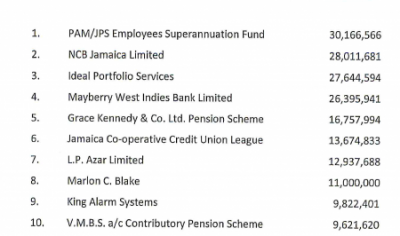
RJR’s Top 10 shareholders at September 2015
Apart from Gleaner offering the media assets they will contribute $665 million in cash and equivalent. While the latter could theoretically buy around 50 percent of RJR’s current outstanding shares, at existing prices under $4, supply would not allow them to do so. By pumping in the funds that is likely to be earning very low returns until they can be used in an efficient manner, will result in dilution of existing RJR shareholders’ interest.
With 75 percent of shareholding required to approve the deal, there are enough disgruntled shareholders on the RJR side to vote it down. Based on feed-back received from some larger holders, it appears that at best the principals of both companies will have to go back to the drawing board and involve the larger shareholders in the talks if they are to succeed, something Chairman of the Gleaner Oliver Clarke says he is not opposed to.
Shareholders openly opposed to the deal, account for 49 million shares or 13.7 percent others who have been opposed at least up to recently, would bring the tally to more than 21 percent.
70c for Goodyear Ja shareholders?
 Goodyear Shareholders could get another 70 cents from the liquidation of the company according to information gleaned by IC insider. Shareholders in Good Year Jamaica expected the liquidation of the company to have been completed long ago. The liquidators made two payments and then there was dead silence since, with no one indicating what was happening.
The liquidators sold off inventories and fixed assets but Income Tax refund of $17 million and General Consumption Tax (GCT) refund $9 million was outstanding up to 2008 with recovery having been protracted and unlikely to be fully collected due the absence of withholding tax certificates on interest income. Of $21 million claimed for withholding tax between 2000 and 2008 only $14 million is accounted for leaving $6.9 million primarily for 2003 and 2006 to 2008. Seems strange that the staff of the company have left shareholders to suck up such losses and they will end up getting all the surplus on the pension fund.
Refunds totaling $12 million up to and including 2012 were agreed with the tax authorities and the amount for GCT seems to be collectible and should amount to $16 including interest.
The liquidators indicate that they accepted the liquidation for a fixed fee of $1.5 million on the basis that the company was solvent and the winding up process would be resolved within a reasonable time. They are now requesting $18.7 million which is well above the original figure and collected $4.3 million to 2014. But looking at the details it is noted that sitting in a bank current account is $5.7 million in 2013 and $5.4 million in 2014. At the start of 2013 the current account balance was $6.8 million. The big question is why were the funds left in the current account and not placed on an interest earning account to generate interest income? It is difficult to see how the liquidators want more funds when they have fowled here and one wonders how much interest income has been lost due to poor handling of the funds.
Assuming no more funds are collected than those agreed to, the amount that is available should be in excess of $55 million before the liquidator’s fees are finalized.
Cayman could be lucrative for Grace
 Grace Kennedy Money Services will be expanding operations into the Cayman Islands through GraceKennedy Money Services (Cayman) Limited (GKMS Cayman), a member of the GraceKennedy Group and authorized agent of Western Union, CEO Don Wehby announced recently.
With this new market, Grace Kennedy through its money services subsidiaries now represents Western Union in ten countries across the Caribbean, the other nine being . Jamaica, Trinidad and Tobago, Guyana, St. Vincent and the Grenadines, St. Kitts and Nevis, Antigua and Barbuda, Anguilla and Montserrat and the British Virgin Islands. The market should be quite lucrative for the Grace Kennedy group, as it is the fourth largest country from remittances into Jamaica with US$124 million entering the island from the tiny group of island, according to Bank of Jamaica data, but the market could be a challenging the going forward with concern about money laundering within the region.
Scotiabank will be partnering with Grace Kennedy and Western Union to deliver money transfer services to the residents of the Cayman Islands.
GKMS Cayman will initially have a total of four locations in Grand Cayman and one in Cayman Brac, all opening Monday to Saturday. “There is a vibrant community in the Cayman Islands and we look forward to not only welcoming our new customers into the GKMS family, but working with all stakeholders and contributing to the development of their communities,” Allen added.