Profit soars 103% at Seprod

Seprod expected their entry into sugar production in 2009 was going to be a lucrative endeavour with their business acumen, strong capital base and vision they would succeed where others failed for decades. According to a Gleaner report in 2010, “the company not only acquired some 820 hectares of lands last year to add to its Golden Grove Sugar Company operations but also upgraded its factory. The strategy of an upgraded factory and “economies of scale” is expected to reap increased revenues for the group, according to Group Chairman Paul Scott.” Shortly after they acquired the business, the directors were told they were undertaking a huge gamble and would have been better off if they had left it alone. Ten years later, with billion-dollar losses, Seprod finally stopped the costly experiment.
Having disposed of the sugar manufacturing operation, the company slashed its sugar losses by 89 percent from $139 million for the first quarter in 2019, to just under $15 million for the quarter just ended. The reduction in the sugar operating losses helped the net profit to soar 103 percent to $633 million, up from $312 million from the first quarter of 2019 that includes net loss from discontinued operations of $139 million. So strong are the first-quarter numbers that the profit amounts to 65 percent of the full year’s profit in 2019. Earnings per share came out at 86 cents for the quarter.
First-quarter revenues increased six percent to $9.14 billion over the $8.6 billion for the comparative period last year. Manufacturing segment revenue was up 17 percent to $5.2 billion compared to March 2019, while distribution revenues increased 14 percent to $6.9 billion. Segment profit for the Manufacturing segment grew from $682 million to $1.14 million and that for the distribution segment increased from $156 million to $418 million. Export sales rose 13 percent over last year’s first quarter, accounting for $405 million in revenue or 4 percent of the total revenue.

Some of Seprod’s products.

The net profit increase for the quarter comes on the heels of an 8 percent decline in profit for the year ended 2019, dropping from $1.1 billion in 2018 to $973 million, although revenue increased for the year by 45 percent to $32.7 billion, resulting from acquisition and mergers mostly from businesses within the Musson Group.
For the quarter, direct expenses rose a modest one percent coming in at $6.4 billion and other operating expenses increased two percent to $1.78 billion year over year and finance costs fell three percent, from $287 million at the end of March 2019 to $280 million at the close of 2020 first quarter.
Seprod raked in $1.1 billion in operating profit for the quarter, a 32 percent increase over the $835 million in the corresponding period to March 2019. Operating profit margin rose 20 percent from 10 percent to 12 percent, year-over-year.
The group generated gross Cash inflows of $1 billion and ended with cash and equivalents of $1.1 billion, down from $1.48 billion at the start of the year. There was a sharp reduction in payables but a big increase in receivables since December 2019 and there was a near billion-dollar drop in inventories. Net current assets ended the period at $7.8 billion, after accounting for current liabilities of $6 billion. At the end of March, shareholders’ equity stood at $15.6 billion, but borrowings totaled $13.5 billion. Seprod paid $366 million in dividends compared to $330 million in the previous year’s first quarter.
The company executives note that COVID-19 had a “minor negative impact” on its first-quarter results and it is expected that the full effect of the pandemic on company operations will be realized in subsequent quarters. Notwithstanding, it is important to note that the Seprod group includes several companies that manufacture or distribute what many consumers deem as essential foods and pharmaceutical items, which should also factor into the company’s ability to withstand this economic shock during this period.
IC Insider.com is forecasting $4 per share for 2020, with the stock trading at $51 on the Jamaica Stock Exchange with a PE ratio of 12.8 times 2020 earnings.

Q1 profit down 57% at Carib Cement

Jamaica’s sole cement processing company, Caribbean Cement recorded a modest 2 percent increase in revenues to $4.5 billion for the quarter ending March 2020, over the 2019corresponding period and finished with a 57 percent decline in profit to $483 million, down from last year’s $1.1 billion for the March quarter.  
The quarterly performance followed a weak December 2019 quarter when profit dropped from $1.1 billion in the 2018 December quarter to just $319,276.

Helping to pressure the company’s performance for the latest period was a 16 percent rise in direct production cost that moved from $2.3 billion to $2.6 billion, with repairs and maintenance increasing $100 million and equipment hire moving up by $170 million over the 2019 period with raw materials accounting for most of the balance of the increase. The Directors pointed to the fact that the annual maintenance shutdown occurred in the first quarter this year versus the second quarter in 2019. As a result, operating profit decreased by 23 percent, moving from $1.58 billion to $1.22 billion resulting in profit margin falling from 35.5 percent in the 2019 first quarter to 27 percent in 2020.
Other operating expenses rose 15 percent from $568 million to $651 million in the quarter. Finance cost declined in the quarter, from $236 million to $164 million as the company paid down loans during the past year. Foreign exchange losses rose to $281 million for the quarter, from a surplus of $67 million in the previous year’s corresponding period.
The Directors note that “the full impact of COVID-19 on the company’s operations, particularly in its export market, is yet to be seen.”
The company continues to enjoy a healthy cash flow with the quarter bringing in $1.1 billion, just a few million dollars lower than for the 2019 period. Shareholders’ equity stood at $8.8 billion and total borrowed funds of $12 billion down from $14.8 billion in March 2019. Current assets ended the period at $3.1 billion inclusive of trade accounts receivables of $450 million and cash and bank balances amounting to $348 million. Current liabilities rounded out the quarter at $4.9 billion, including short-term borrowings of $1.7 billion.
Earnings per share came out at 57 cents for the quarter, down from $1.33 in 2019. IC Insider.com is forecasting around $4 per share for the year with the PE currently at 12.5 times 2020 earnings, but a lot will depend on if there are not many dislocations to cement demand from the current economic slowdown. The stock last traded at $51.50 on the Main Market of the Jamaica Stock Exchange.

Depreciation melts Kremi profit

A quick look at the audited accounts for Caribbean Cream to February shows another year of disappointing results that cut across the likely outturn the November 2019 results suggested. Closer examination of the data reveals a far better picture of the company’s performance than initially meets the eye.

Caribbean Cream Kremi brand

Profit for 2020 fell sharply, but gross cash flow rose for the year in which revenues rose 10 percent as a sharp rise in depreciation charge knocked net profit down to $55 million from the $89 million reported in 2019 with earnings per share falling to 14 cents, down from 23 cents in 2019.
The depreciation charge more than doubled in the year, with an increase of $63 million, to end at $115 million as fixed assets amounting to $432 million were added during the year and were subject to be depreciated. Leased assets costing $115 million, also incurred depreciation, a different treatment than in the prior year. Although the profit fell sharply by 38.5 percent, increased depreciation resulted in gross cash inflows being $195 million compared to $165 million in 2019.
Revenues rose 10 percent from $1.55 billion to $1.7 billion for the year, with the final quarter growing at a faster pace than the 7.7 up to November. In the last quarter, revenues grew a healthy 16.2 percent to $471 million from $405 million in 2019. Unfortunately, of the $115 million depreciation charge for the year, only $53 million was booked up to November last year, resulting in $62 million booked in the final quarter.
Gross profit margin declined in the year leading to gross profit rising slower than the increase in revenues at 5 percent to $546 million and is due primarily to a 12 percent rise in raw material cost and a 76 percent increase in depreciation charges in the manufacturing operation. Overall, cost rose faster than the increase in revenues for the year with Administrative, selling and distribution expenses 15 percent for the year.
The company is in a healthy financial position at the end of February, with shareholders’ equity stood at $744 million with borrowings of $232 million. Net current assets ended the period at $74 million inclusive of trade and other receivables of $58 million, cash and bank balances of $129 million while Current liabilities closed the period at $232 million.
IC Insider.com is forecasting earning per share of 50 cents for the current fiscal year, assuming only minimal negative impact from Coronavirus. The stock traded at $2.20 on the Junior Market of the Jamaica Stock Exchange with a PE ratio of 4.5 times 2021 earnings.

The top profit performers for 2020

Its earnings season for Jamaican stocks and usually most companies would have posted first-quarter results already. The Jamaica Stock Exchange has permitted companies to publish results later, due to the Coronavirus outbreak and the disruption caused to businesses.

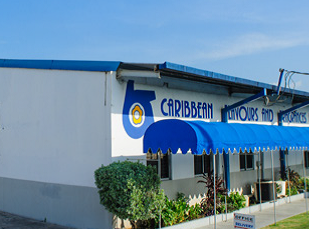
Caribbean Flavours Derrimon’s subsidiary

Some results have been lower than for last year’s first quarter, but a number of them have posted robust increases. Outstanding results published last week were led by Grace Kennedy with a 50.6 percent spike in profit before tax, to $1.99 billion for the March quarter, while profit after tax attributable to shareholders of the group rose an impressive 47 percent, to $1.32 billion. tTech’s profit for the March quarter climbed 5,375 percent from $758,000 to $4.15 million as revenues rose a healthy 32 percent. Revenues grew 33 percent to $149 million at Caribbean Flavours while profits before tax rose 31 percent to $19 million from $14.4 million, profit after tax rose 19 percent to $14.2 million. The first-quarter profit is 45 percent of the 2019 full-year results.
Revenues at 138 Student Living climbed 29 percent to $278 million for the February quarter and 71 percent to $734 million for the half-year, with profit ending at $87 million, for earnings per share (EPS) of 21 cents for the quarter, up from a loss of $68 million in 2019. Profit for the half-year to February was $270 million, with EPS of 65 cents, up from a loss of $67 million in 2019. Profit at Eppley jumped 541 percent over the 2019 outturn of just $6 million after-tax to $40 million, with EPS of 21 cents.

Kingston Wharves profit rose 22%.

Kingston Wharves results for the quarter ended in March rose two percent to $1.9 billion, over the corresponding period in 2019 while net profit attributable to shareholders increased 22 percent or $101 million over the prior year, to $554 million. Sterling Investments reported a profit of US$4.6 million, versus a loss of US$7.2 million in the March 2019 period as a significant swing around in exchange gains pushed earnings higher for the March 2020 period.
Prior to this past week, Barita Investments reported a 25 percent rise in March quarter profit and 96 percent increase in the half-year results, profit for the first quarter at Derrimon Trading rose 34 percent to 91.6 million from a 5.5 percent rise in sales revenues, a rise of $18 million in other revenue and a drop in finance cost from $58 million to $49 million. iCreate increased revenues by 106 percent to $24.5 million for the three months to March with net Profit of $1.25 million, up from a loss of $1.48 million made in 2019. Pulse Investments profit rose 136 percent for the March quarter profit and 121 percent for the, nine months to March, Seprod profit for the March quarter increased 103 percent and Mailpac Group reported 71 percent increase in first-quarter profit

GraceKennedy’s blowout quarter

GraceKennedy reported its best performance in years with substantial gains in revenues and profits for the first quarter ending March this year compared to the similar period in 2019. Still, not all segments of the group perform well in delivering increased profit.

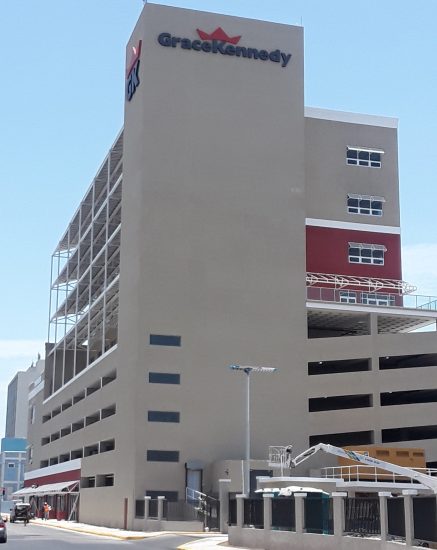
Grace Kennedy new headquarters in downtown Kingston

Group revenues rose 11.3 percent to $28.85 billion, over $25.93 billion over the 2019 period. Profit before tax, jumped an astounding 50.6% for the period to $1.99 billion, while profit after tax attributable to shareholders of the group, rose 47 percent to $1.32 billion. Profit got a boost of $184 million goodwill gained on the acquisition of the majority shares in Key Insurance that was more than offset by impairment losses on financial assets amounting to $248 million.
Earnings per stock unit for the period was $1.33, up from 90 cents in 2019.
Revenues for the Food Trading segment rose 12 percent to $23.45 billion, while profit jumped a robust 60 percent to $1.2 billion from $752 million in 2019.  The improvement came from Jamaica and international sales, Grace indicated.
“Our Jamaican food distribution business experienced growth in both revenue and pre-tax profits, coupled with improved margins. GraceKennedy Foods (USA) LLC continues to show significantly improved performance for the three months when compared to the corresponding period of 2019. For the March quarter, sales for Grace Frozen Patties showed triple-digit growth, closing the first quarter of 2020 with a 68 percent increase in volumes compared to the corresponding period of 2019. Grace Foods UK and Grace Foods Canada also reported increased revenue for the three months when compared to the corresponding period of 2019.”
The banking and Investments segment reported modest growth in revenues to $1.54 billion from $1.49 billion in 2019 with profit falling from $163 million to just $48 million and the
The insurance segment reported an increase in revenue from $1.74 billion to $1.844 billion, with profit evaporating from $125 million to a loss of $858,000. GraceKennedy completed its acquisition of 65% of the issued shares of Key Insurance.
Money Services division saw profit rising 31 percent to $842 million from $644 million.
The company’s stock is trading on the Jamaica Stock Exchange at $58 at a PE ratio of 9.4 times 2020 earnings based on IC Insider.com forecast of $6.20 and well below the average PE of market of 13.6 times 2020 earnings. Grace declared a dividend of 25 cents per share payable 15th June 2020, down from 40 cents in 2019.

Trans Jamaica & Wigton can’t compute EPS

This is proving to be very embarrassing; accountants unable to compute earnings per share (EPS) properly for companies issuing additional shares. A number of listed companies have been releasing quarterly and audited results with the wrong calculations for earnings per share.
Trans Jamaica, the latest company, to be divested by the Government of Jamaica, reported a profit for the quarter to March of US$2.27 million but only the application of a tax credit of US$3.77 million saved it from a loss for the quarter. Revenues for the quarter were $12.96 million, up from $12.79 million in 2019, but after incurring $5.6 million in interest cost they ended with a pretax loss of US$1.5 million. In the 2019 March quarter, they barely eked out a profit of $1.58 million but that was only after crediting US$1.234 million in shareholders’ grant that ended at the end of 2019. The company’s reported EPS are all wrong.
Interestingly, Trans Jamaica’s top 10 shareholdings, make for interesting reading. Others are NROCC with 2.5 billion shares and JMMB Group with 763 million units, NCB Group and connected entities dominate the top 10. Interestingly, the National Investment Fund, which acquired a large portion of Wigton Windfarm shares, is nowhere on the top 100 listings for Trans Jamaica shareholders.
For the December quarter, Wigton Windfarm reported the earnings per share for the December 2018 quarter as $56,701. That, of course, is completely incorrect.

Wigton closed at anew high of $1

Wigton posted a loss in the December 2019 quarter.

The company stated in the quarterly, “the average number of shares was 10,000 units”, and at the same time, they stated that 10,999,990,000 shares were added, in May 2019. In reality, no shares were added as the existing stocks were split to become 11 billion units. This is what the prospectus stated, “in anticipation of this Offer for Sale PCJ as sole shareholder adopted the following resolution in writing on April 3, 2019, with respect to the Company; namely (a) sub-dividing the Company’s 10,000 ordinary shares into 11,000,000,000 ordinary shares.”  That change required that 2018 and all prior years’ earnings, must use 11 billion shares to compute the company’s earnings per share. Wigton’s June to December quarterly reports published for 2019 are all incorrect and require revisions, as the incorrect information is still on the Jamaica Stock Exchange’s website.
The latest company to run foul-up this rule is Trans Jamaica Highway. The company, in its first report to the Jamaica Stock Exchange, reported EPS of 0.02 US cents for the March quarter, 5.8 US cents for the 2019 quarter and 30.7 cents for the year to December last year— all of which are incorrect. A note accompanying the share capital of the quarterly to March states. “On January 22, 2020, an extraordinary shareholders’ meeting passed a resolution to restructure the authorized share capital pursuant to section 65(1)(d) of the Companies Act, 2004, in anticipation of NROCC completing an initial public offering on the main market of the Jamaica Stock Exchange. Pursuant to this resolution, the Company’s share capital was restructured by dividing each of the 27 million existing ordinary shares to create 12.5 billion ordinary shares.”
As is the case for Wigton, the total number of shares now issued must be used to properly compute EPS for all three periods included in the quarterly report.
Limners and Bards, in releasing their audited accounts, made the same mistake that was quickly corrected after IC Insider.com brought the matter to the public.

Profit jumps 71% at Mailpac

A big 33 percent surge in revenues, pushed profit at the late 2019 Junior Market listing, Mailpac Group, up an impressive 71 percent compared with what the business delivered in the March quarter last year. MailPac Group was formed late in 2019 and acquired Mailpac Services Limited and Mailpac Local Limited from Norbrook Equity Partners, majority shareholders, for the purpose of amalgamating both logistics platforms into one operating business.
For the March 2020 quarter, revenues hit $365 million, up from $274 million in 2019 while profit jumped to $102 million from $60 million in 2019. The revenue performance is stunning, having exceeded the $362 million generated in the busy fourth quarter last year with the usual strong Christmas demand.
Historically, the company enjoyed growth in revenues of 12.2 percent in 2017 and 25.7 percent in 2018. Revenues increased by 28.8 percent for the first half of 2019, with the full year rising 25 percent.
Before the acquisition, the businesses in 2018, revenues grew from $851 to $969 million in the first three-quarters of 2019. Net income for the periods was $213 million and $203 million, respectively.
Improvement in profit margin remains consistent at an attractive 50 percent in the March 2020 quarter.

Mailpac CEO Khary Robinson.

Administrative expenses declined from $71 million in 2019 to $67 million in the latest quarter. Marketing and sales expenses declined marginally from $10 million to $9.9 million, despite the sharp rise in revenues. Finance and depreciation charges were modest. The company added to the fleet of vehicles after the quarter and this will result in a pickup in depreciation charges for the rest of the year.
The company generated $92 million in cash inflows, lifting cash at the end of the period to $194 million. At the end of March, shareholders’ equity stands at $456 million, with borrowings at just $25 million. Net current assets ended the period at $165 million, well over Payables of $72 million.
“We have substantially expanded our delivery infrastructure and have employed various in-store strategies to limit person to person contact”, Khary Robinson, the Executive Chairman, stated in his report accompanying the quarterly.
Earnings per share came out at 4 cents for the quarter and IC Insider.com projecting earnings of approximately 25 cents per share at the end of the fiscal year to December. The stock traded at $1.69 on the Junior Market of the Jamaica Stock Exchange at a PE ratio of 7 times 2020 earnings, and is heading to the $3 region during 2020.

Q3 profit rises at Knutsford Express

Knutsford Express (KEX) profit rose in the company’s fiscal third quarter, but that was before the coronavirus hit the country and disrupted business and social activities in March.
Net profit at Knutsford Express climbed 7 percent in the February quarter to $36.4 million from just under $34 million for the corresponding period in 2019. For the nine months to February, profits fell sharply by 35 percent to $103 million from $158 million for the comparative period in 2019. Losses in the new operation in Florida negatively affected profit, with the segment bringing in revenues of $20.6 million for the three quarters, but lost $26 million. The new operation generated $8 million in revenues for the February quarter, an improvement over the $7.2 million generated in the July quarter and much more than in the November period. The loss in the latest quarter was down by $1.2 million at $8 million in February compared to July. The numbers suggest that it will take another two to three years or the Floridian operations to breakeven.
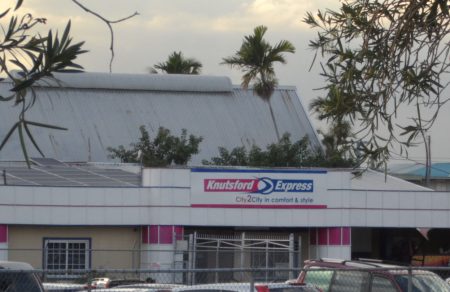
Revenue rose 11 percent to $318 million from $287 million for the KEX’s third quarter. It was up 10 percent for the nine months ending February to $925 million, from $842 million for the similar period in 2019.
Unlike other listed companies, KEX refuses to break out operating expenses from other expenses, making it difficult for investors to get a better understanding of the company’s performance. Operating and Administrative costs rose 9 percent to $272 million for the third quarter and 19 percent in the nine months to $797 million, in comparison to the corresponding periods for the last fiscal year. Finance cost increased in the quarter, to $7 million from $6.5 million in 2019, but declined from $22 million to $20 million for the nine months.

Knutsford’s New Kingston depot

Cash inflow from operations was $190 million to February. The acquisition of fixed assets of $228 million used up the inflows and resulted in cash funds at the end of the previous year was used to help fund the purchases. Cash and bank balances moved from $120 million at the end of February 2019 to $96 million this year. Shareholders’ equity ended at $845 million, with borrowed funds at $244 million. Net current assets ended the period at $357 million inclusive investments, cash and bank balances of $236 million, Current liabilities amounted to just under $94 million at the end of the period.
Fixed assets acquired include a property at Drax Hall, just outside of St Ann’s Bay on which a new logistics hub is under development. This new hub is expected to account for increased efficiencies, particularly for the company’s passenger services.
Covid-19 hit the company’s operations, resulting in cuts in passenger usage and routes in March. The company will experience the full effects of the pandemic in its fourth quarter to May, made worse by the all-island curfews as well as the shuttering of the country’s borders, and effectively the tourism market.
Earnings per share for the February 2020 quarter was 8 cents and 21 cents for the nine months. IC Insider.com projects that earnings per share will end the fiscal around 24 cents with earnings for the 2021 fiscal year ending around 60 cents, placing the PE at 15 times forward earnings at the last traded price of $8.98 on the Junior Market of the Jamaica Stock Exchange.

Berger Paints set to surprise

Berger Paints is one of IC Insider.com’s top stocks for 2020.  It is may not the most popular company listed on the Jamaica Stock Exchange, but it seems set to surprise many investors with its performance in 2020.
It gained much attention with strong growth in profits in the financial year to March 2017, ahead of a switch in majority ownership in August 2017 to the Trinidad based ANSA McAL Group resulting in significant changes in directorship and management. In 2019, the company changed the General manager after a relatively short stint at the helm, a move that could augur well for the company going forward.
In 2019, raw materials accounted for 50 percent of the input into paint production. Most of the raw material used in paint production is petroleum-based, resulting in paint companies benefit when the petrochemical industry goes into a downswing and conversely, a hike in the price of petroleum products raises input costs. Titanium dioxide and crude derivatives form about 50 percent of the raw material cost of paints. In 2019 the average price of crude oil on the world market US$57 for WTI, for 2020 so far, it is at US$43 per barrel, with the current price around US$22 per barrel. If the current trend holds, it will result in lower input costs for Berger for 2020. Management in reporting to shareholders for the year to December stated, “year to date to February 2020, performance indicators are ahead of 2019 with signs of a positive trajectory”.
Between 2012 and 2017, profits increased at an outstanding rate, however, in 2018, the profit was relatively flat and declined in 2019. The company reported lower sales and sharply reduced profit for 2019. The company recorded a two percent reduction in revenues to $1.12 billion for the six months to June and a 6 percent reduction to $1.6 billion for the nine months to September 2019, versus $1.7 billion for the corresponding period in 2018. It ended the year down 7 percent at $2.5 billion. Adverse weather conditions experienced in the third and fourth quarters, negatively impacted revenues, the company told shareholders in a statement accompanying the third and fourth quarter reports. Also affecting sales was the extensive road works that disrupted their customers’ businesses.

Berger Paints is one of IC Insider’s TOP 10 stocks.

The company reported a loss in the final quarter of 2019, a period that generates by far the highest revenues and usually the highest profit. Berger ended with a profit of $29 million compared to the full year compared to $40 million at the end of September. While revenues fell in the fourth quarter to $892 million versus the 2018 period, it was the highest revenues in any quarter with the June quarter of $601 million being the closest. Yet, it recorded a loss when the June quarter recorded a profit of $28 million. Analysis of the reports shows that other operating expenses of $118 million in the September quarter jumped to $254 million for the December quarter. The 2019 fourth quarter also much higher than in the same period in 2018 at $136 million, suggesting there may be some one-off cost that was incurred in the period and distorted the results.
“The company implemented a new an Enterprise Resource Planning Software (ERP) system which provides a fully integrated manufacturing and financial platform and is providing the required details and analytics for the business, the management stated.” The company also introduced a new automotive line of paints to deepen BPJL’s reach into the automotive market.
IC Insider.com projects earnings per share amounting to $2 for the current year and it now trades at an attractive P/E of just over six times projected earnings.

Buy Caribbean Producers now for 2021

There are few opportunities in the stock market to generate significant gains than from a beaten-down stock that has strong credentials, dominating the sector it focuses on and has been growing. This is the case with the Montego Bay-based, Caribbean Producers that has seen good times and bad times in the recent past but was enjoying a strong rebound in the first two quarters of the 2020 fiscal year.

Caribbean Producers back in TOP 10

The company’s primary market is the tourist industry. With a virtual closure of the industry currently, sales have come under severe pressure and that will hit the bottom-line severely, even if for a few months. Until the adverse reaction of the market to the Coronavirus outbreak, technical indicators showed that the stock was consolidating with the possibility of a break out from the $5 level with six months results coming far better than the disappointed 2018 half-year results. All that has changed for now as the stock nosedived to $2 as heavy selling pressured the stock.
Expectations are that the company’s third and fourth-quarter results will show the negative impact of the closure of hotels on sales and profit. Investors should bear in mind that the fiscal year starting July may not be affected or not as severely as the second half of the current fiscal year. Importantly, revenues rose 11 percent in September and in the December quarters to US$32.4 from US$29.4 million. IC Insider.com forecast is for a small profit in the March quarter to add to the profit of US$89,000 reported for the 2019 half-year. The stock price collapsed from $5 it was trading at in February to a low of $2 recently. This fall is worse than when they lost US$1.2 million in the year to June 2019 when it still traded above $4. Admittedly, the company has US$39 million of borrowed funds that exposes it to a high degree of risk if the disruption in the business is prolonged. While interest-bearing debt climbed during the year, shareholders’ equity stood at US$22.5 million.
CPJ‘s profit declined 162 percent for the year ended June 2019 to a loss of US$1.17 million compared to a profit of US$1.88 million for the year ending June 2018, with operating revenue for the year amounting to US$94.6 million from US$93.3 million in 2018. The loss resulted from a decline in profit margin in the year and US$679,713 write-off of the cost of developing the inventory IT management system.
For six months to December 2019, gross profit rose faster that growth in revenues at 19 percent to US$8.5 from $7.1 million. Selling and administrative expenses slipped from US$5.8 million in 2018 to US$5.4 million to US$20 million. Finance costs increased in the year to US$791,818 from US$411,143 in 2018 and depreciation jumped from US$609,271 to US$1.4 million.
There are risks in investing in the stock current, but the low price makes it a compelling buy for a big pay off in 2021. IC Insider.com rates the stock a buy based on full or nearly full recovery, for the 2021 fiscal year.