
Increased taxes pushed inflation in April.
Jamaica’ business sector paid 39 percent more taxes to government than projected, for the year to September, with $23 billion collected in corporation taxes resulting from a $6.5 billion increase ahead of forecast.
For the 2017 fiscal year, $16.4 billion was raked in, to September while $52 billion in corporate taxes was paid by the business sector for the full twelve months. Special Consumption taxes on local goods rose 50 percent above forecast with a $5 billion increase while local GCT grew 6 percent or $2.6 billion and travel tax jumped 26 percent or $2 billion above the amounts budgeted earlier in the year. Tax on interest fell $2 billion below forecast to $5 billion and was the only major area of underperformance
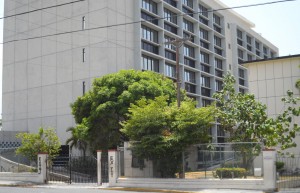
Jamaica’s Ministry of Finance newest office building
Revenues for the government of Jamaica continues to outperform forecast with inflows rising $15 billion more than the amount projected, bringing the half year take to $262 billion.
Expenditure underperform projections by $3 billion as interest cost fell $2 billion and the wage bill fell $1 billion.
Government operations ran at a deficit of just $620 million in September, but for the year to date, a surplus of $5 billion. Interestingly, the capital expenditure that have struggled to keep pace with forecast, is down by just $144 million with $18.3 million having been spent. The primary surplus, one of the major target under the IMF agreement, came in at $62 billion or $17 billion better than planned.
 The Jamaican economy seems to be humming along pretty well, based on a number of critical measures that are available as well a physical evidence seen elsewhere.
 Education tax is running 7.7 percent ahead of projections and 13 percent above last year’s intake. Contractors levy is up over 2016 by 27.5 percent ahead of forecast, to reach $391 million and some 33 percent ahead of the intake for 2016 of $293 million, a good indicator of the health of the construction sector.
