 The government of Jamaica enjoyed increased inflows into their coffers in January, bringing the total to $34.4 billion, $1.4 billion more than the $33.2 billion projected. The major area contributing to the improvement is tax on interest delivering $1.2 billion more than forecast.
The intake took the 10 months revenues to $322 billion down by $8.6 billion, just 2.6 percent short of estimates. The major contributors to the year to date shortage is corporate taxes, down $7 billion and production and consumption taxes on local goods and services down by $7.3 billion. Out-performing the target set are, PAYE, non-tax revenues and taxes on interest.
Payments are down, with capital spend coming in at $10.3 billion below projection, interest cost is $5.6 billion lower than originally projected due no doubt to lower interest rates, wages spend is $2.6 billion less than forecast and other expenditure is up by $3.3 billion. The fiscal deficit came in at $6.5 billion ahead of target and the primary surplus at $76 billion is just slightly ahead of target.
The data suggests that the fiscal deficit originally projected at $11.4 billion is likely to end at less than $4.5 billion for the fiscal year.
GOJ targets on track but

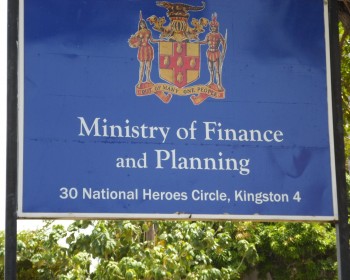
Jamaica’s Ministry of Finance – newer office building
The primary surplus at the end of November is $54.4 billion against a target of $48.2 billion. The excess was achieved although revenues are off by $6.8 billion a slightly worse position than at October by $500 million with a revenue shortfall then of $6.28 billion. Tax revenues fell short by $700 million in November and was the major reason for the shortfall in the month.
On the payment side the wages bill in on target with very little variation but other cost fell by $1.36 billion in November bringing the year to date cut to $2.8 billion. Interest saved climbed to $3.4 billion in November from $3 billion in October. Capital expenditure is underspent by a further $2 billion in November and $7.4 billion so far for the fiscal
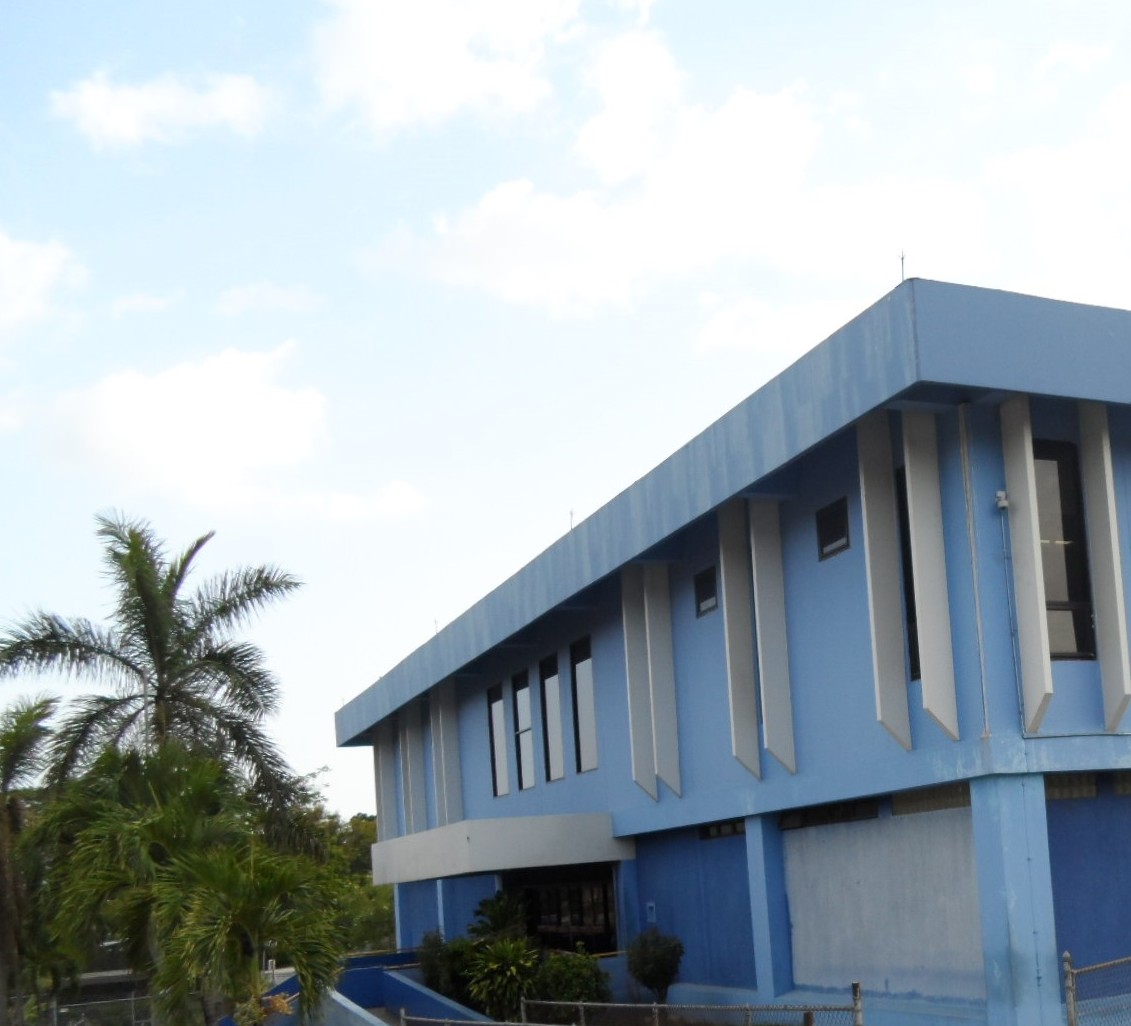
Collector of Taxes office, Constant Spring, Kingston, Jamaica
Government borrowed $10 billion less on the local market but foreign borrowing is up by $73.4 billion but loan repayments are in line with original forecast.
The fiscal deficit that was targeted at $34.4 billion is down by $9.6 billion to $24.75 billion and is better than the deficit at the end of October when it reached $26.8 billion.
Tax on interest brought in $2.9 billion in revenue over budget, PAYE is up by $1.7 billion. The shortfalls were mostly local GCT down by $4.3 billion, Corporation tax $4.6 billion, Special consumption $2.2 billion, International traded $2.4 billion and grants $1.2 billion.
PAYE gains can’t cover corporate shortfall
PAYE collections, outperformed forecast for September, by $620 million and $677 million, for the six months to September, this year, but that was inadequate to cover the $2.5 billion drop in corporate taxes, in the latest month, for government of Jamaica revenues.
At the end of August, corporations paid over $6.63 billion versus a projection for $8.8 billion, resulting in a shortfall of $2.18 billion, by the end of September, what should have been collections of $15.3 billion turned up to be only $10.65 billion, $4.7 billion short, resulting in a $2.5 billion shortfall, in the latest month alone. The underperformance for company tax collection, was the main reason why the revenue forecast of $156.5 billion for the six months period, suffered an increased shortage of $1.4 billion in tax revenues, bringing the year to date shortfall, to $7.33 billion. Overall revenue shortage, amounted to $7.13 billion, as grants fell short by $337 million in September, but non tax revenues outperformed forecast, by $400 million for the month.
Expenditure| Payment for expenses is well below target, as capital expenditure almost crawled to a halt in September, with only $590 million spent, raising the underspending for the year to date to $7.8 billion, up from $5.38 billion at the end of August. Programmes saw savings in payments of nearly $900 million, in the month, and wages and salaries was $350 million more, in the month, than planned, but there is still a reduction year to date, in this area.
At the end of September, the fiscal deficit of $18.95 billion was ahead of target by $6.3 billion, as the capital programmes have once more taken the bulk of the hit, as revenues fall short of target.
GOJ Tax revenues on target
 Jamaican government’s tax revenues, were on target for the first 4 months of the 2014/15 fiscal year, coming in just $611 million short of the target of $112.23 billion.
Only $609 million was collected in grants, as this category fell nearly $3 billion short of target. Overall, total collections, amounted to $121.8 billion, short by $2.6 billion for the period. For the similar period in 2013 inflows amounted to $118.7 billion.
Expenditure fell by a much larger amount than inflows, at $7.7 billion to end at $139.7 billion. Lesser amounts than budgeted were paid out for wages, interest, general and capital expenditures. Government only paid $7.8 billion on the capital side, versus $12 billion budgeted. Reductions of payments were, $737 million for general expenses, wages $1.2 billion and interest $1.6 billion.
The fiscal deficit, improved by $5 billion over target, to reach $18 billion, while the primary surplus was $3.6 billion better than planned. At the same time last year, the deficit was only $5.7 billion and the primary surplus $25 billion or $4.7 billion ahead of target.
Jamaican Government revenues short $3.5b
A $2.5 billion shortfall in the collection of company tax and a $2 billion shortfall in the collection of grants, offset by some areas that over performed, resulted in the overall tax take for the first 3 months of the 2014/15 fiscal year to June, falling short of budget by $3.5 billion revenues.
On the expenditure side, reduced payments of $2.3 billion for non-wages and interest and a billion less in the wage bill, coupled with a $3 billion reduced capital spend, helped to cut expenditure by $6.3 billion, leaving the fiscal deficit better off by $2.8 billion.
Revenues came in at $93 billion for the three months and expenditure at $110 billion, for an overall fiscal deficit of $17 billion.
Areas of revenues that were major out performers are, PAYE with $578 million or 3.6 percent, tax on dividends, $100 million or 24 percent, tax on interest, $726 million or 255 percent, special consumption tax on local goods $737 million or 27 percent, education tax, $231 million an increase of 5 percent.
Local GCT fell sort by 5.5 percent amounting to $792 million, GCT on imports fell short by 5 percent or $723 million.
Wipe out of Ja fiscal deficit seems likely
With two months out of the 2014/15 fiscal year reported on, the Peter Phillips led Ministry of Finance seems set to again report a wipe out of the fiscal deficit at the end of the fiscal year that ends in March 2015. The budget had suggested a deficit of just over $11 billion. So far there is a $5 billion improvement in the deficit to May with a $2.1 billion improvement in revenues and a $2.9 billion cut in expenditure with capital expenditure accounting for $1.5 billion of the expenditure reduction,but it would be the buoyancy of the revenues that would have been pleasing to the Minister. The country in the past has seen impressive performances in the early months of the financial year only to be face with cuts in expenditure later, as revenues failed to meet the targets set. It will not be clear if the current revenue trend continues, the next few months to come will paint a clearer picture of the likely outturn.
Total revenues which were projected at $52 billion ended at $54 billion and expenditure of $69.6 billion came in at $66.7 billion instead. $752 million less was spent on the wage bill and $676 on programs. Tax revenues brought in $1.87 billion more than projected. The deficit ended at $12.6 billion versus $17.6 billion projected.