Profits down as Dolphin Cove closed

Dolphin Cove listed on the Junior Market nearly ten years ago and became the darling of many investors attracted by the lure to a company that earned nearly all their income in foreign currency. For the past five and a half years, things have been tougher, with profit falling each year, but for a rise in 2017.
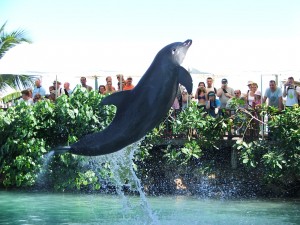
Dolphin Cove suffered a decline in business for sometime

Nothing has been as devastating as the impact of Coronavirus on the tourism industry that the company is highly dependent on. Jamaica closed its borders to international traffic in March and effectively shuttered the tourism sector and by extension, the various parks within the Dolphin Cove. The company also suffered over the past two and a half years from a sharp fall in the number of cruise ships docking in Jamaica.
After starting 2020 on a promising note, profit for the first quarter declined 16 percent to US$708,914 from US$842,802 in 2019. Administrative and Other Operating expenses were up marginally to US$1.5 million, from US$1.49 million while selling costs dropped 37 percent to US$643,192 from US$1 million.
Revenues declined 15 percent to US$3.3 million from US$3.9 million in 2019 with the main income from attractions, falling 19 percent from US$2.2 million to US$1.79 million while ancillary services generated US$1.5 million, 11 percent less than the US$1.7 million, in the comparative quarter in 2019.
Cost of sales declined 12 percent from US$458,000 to US$405,000 for the 2020 quarter, resulting in gross profit of US$2.89 million, down from US$3.4 million in 2019 and leading to a 16 percent decline in gross profit from US$3.43 million in 2019 to US$2.9 million.

Dolphin Cove profit sliding from 2014 onwards

“In the first two months of 2020, the company had an increase in revenue, 4.5 percent for the programmatic revenue and 11 percent for their ancillary – and a decrease in operating expenses,” the Company’s Directors reported to shareholders by way of the directors’ statement that accompanied the financials.
For the first quarter of 2020, cash generated from operating activities brought in US$1.44 million before working capital needs and capital expenditure and dividend payment and closed the quarter with cash on hands of US$802,000. The company paid a dividend of 30 cents Jamaican, to shareholders in the first quarter of 2020, costing US$803,000.  Current assets stood at US$4.4 million, with accounts receivable of US$1.8 million, inventories of US$288,940, and amounts due from related companies of US$1.25 million. Current liabilities totaled US$1.86 million with accounts payable of US$1.7 million and a current ratio of 2.4. At the end of December, shareholders’ equity equaled US$28.5 million.
Earnings per share came out at 18 cents for the quarter and IC Insider.com is forecasting 25 US cents per share earnings for 2020, with PE of 33 times based on the last traded price of J$7 on the Junior Market of the Jamaica Stock Exchange.

Carib Cement Q2 profit jumps 41%

Profit at Jamaica’s sole cement producer, Caribbean Cement rose 41 percent in the June quarter, to $521 million from $368 million for the comparable quarter in 2019 and thus reverses the poor first-quarter performance, with results that fell 57 percent.
For the six months to June, profit fell 33 percent from $1.5 billion in 2019 to $1 million for the 2020 half-year. First-quarter profit fell sharply from that in 2019 to just $483 million, with the major repairs and maintenance of the plant carried out in the first quarter compared with the second quarter in 2019. Foreign exchange losses also contributed to the fall in the profit for the March quarter.
Sale revenues rose two percent for the June quarter to $4.78 billion from $4.68 billion and for the year to date, to $9.33 billion, from $9.13 billion in 2019.
Gross profit was flat for the first half of the year at $4.1 billion but grew 13 percent in the June quarter by from $2 billion in 2019, to $2.25 billion.
Administrative and Other expenses rose three percent to $604 million in the quarter and increased nine percent in the six months to $1.25 billion. Finance cost declined 28 percent in the quarter, from $231 million in 2019 to $167 million and dropped by 29 percent from $468 million to $330 million for the six months. The company repaid $231 billion in loans for the year to June, and This will help in reducing interest expenses going forward, including the second half of the current year. Losses incurred primarily on loans denominated in foreign currency resulted in foreign currency losses of $167 million, 18 percent lower than a loss of $231 million for the second quarter of 2019 but increased 69 percent for the year to date, to $658 million from $390 million in 2019.

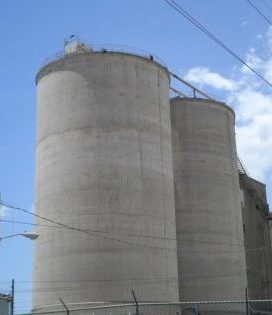
Caribbean Cement silos

Depreciation charge was flat at $401 million for the June quarter and was slightly down to $765 million for the half-year. Provision for corporate profit taxation, jumped 70 percent in the June quarter to $526 million and is up 34 percent for the half-year to $739 million.
Gross cash flow amounted to $2.7 billion, after repaying loans and spending $342 million on new fixed assets and working capital needs, the company ended the half with $527 in cash funds. At the end of June, current assets stood at $3.2 billion, down from $3.47 billion at the end of 2019 and current liabilities ended the period at $4.75 billion.  At the end of December, shareholders’ equity stood at $9.3 billion and borrowings at $10.35 billion compared to $13.8 billion at the end of June 2019.
Earnings per share came in at 61 cents for the quarter and $1.18 for the half-year, with a net asset value of $11 per share. IC Insider.com is forecasting a profit of $3.50 per share for 2020 and places the value of the stock at a PE of 13 times earnings and four times net asset value, based on the last price of $46 the stock traded on the Jamaica Stock Exchange.

GWest results a plea for better IPO standards

Investors in GWest public share offer were supposed to be swimming in a pile of profit by now, according to the forecast of revenues and profit included in the company’s prospectus back in 2017.
Nearly three years after the public issue, they only have a depressed stock to look at, with no sign of relief anytime soon.
That is the story of the terrible side of the stock market, with investors being lulled in by tantalizing prospects of making a killing, but fed with poor information and thinking that there are people in higher places looking out for their interest.
According to projections, the company included in the prospectus and vetted by regulators, the company should have produced revenues of $158 million for the year to March 2018 and a loss of $111 million but could only muster revenues of $66 million with a loss of $88 million. For the 2019 fiscal year, forecasted revenues were to surge to $803 million, with a profit of $166 million, with revenues projected to reach $1.19 billion in the year March 2020 and profit of fiscal year to reach $389 million. So abysmal was the forecast, the company produced revenues of just $130 million in the fiscal year 2019 and $129 million in 2020 with loss of $48 million after-tax in 2020 and $136 million in 2019.
The forecast was much more wishful thinking than one based on professional rigor. How did those projections get into the prospectus, is the question that needs an answer, more importantly, what are the lessons learned if any for preparation of future prospectuses?
Medical services were the area that should deliver the sharp rise in revenues and increased profit, instead of growing, income from this area are stuck at $75 million from $77 million in 2019 after being up from $17 million in 2017. Importantly, the revenues are far below projections and some way off from a breakeven position, which would require revenues to double to the region of $260 Million.

Importantly, the 2020 result includes $58 million in gains from the net increased value of investment property, an element of income that was not included in the forecast. Excluding that income, the loss for the company would be closer to $100 million than the amount shown above.
During the year, the company made progress in cost containment, with Repairs, maintenance and waste disposal cost falling to $19 million from $70 million in 2019. Staff cost dropped from $57 million to $46 million, while bad debts fell from $16 million to recovery of $1 million. The cost for laboratory and medical supplies fell to $13 million from $23 million. Depreciation charges jumped from $6 million to $49 million and finance cost climbed to $45 from $31 million.
The results for 2020, consumed $74 million in cash funds. Property and equipment fell from $390 million to $231 million, with a transfer to investment property that rose to $947 million after the sale of $171 million. Current assets grew from $224 million to $367 million with cash of $39 million and $148 million from, sale of investment properties and $75 million owing by the Strata Corporation. Payables rose from $183 million to $231 million.
The company’s borrowings rose to $847 million from $690 million and now exceeds shareholders’ equity of $688 million. The net asset value at March was 86 cents per share, with the stock selling at 89 cents on Friday gone.

Wigton profit climbs 30%

Profit at Wigton Windfarm jumped 29.5 percent after-tax to $664 million or 6 cents per share for the March 2020 financial year, up from $513 million or four cents per share in 2019.

Wigton closed at anew high of $1

Wigton posted a profit of $66am for the twelve months to March 2020

Sales of power generated, to Jamaica Public Service Company, declined slightly to $2.417 billion from $2.448 billion in 2019. Gross operating cost slipped from $740 million with depreciation cost of $670 million in 2019 to $764 million that includes depreciation of $665 million and resulted in gross profit of $1.65 billion in 2020 from $1.7 billion in 2019.
Other income, including $456 million in foreign gains in 2019, dipped to $221 million from $503 million in 2019 while finance cost dropped to $527 million from $1.05 billion due mainly to foreign exchange loss incurred in the 2019 period amounting to $662 million and none in the 2020 fiscal year. Administrative cost moved slightly higher in 2020 to $479 million from $434 million in 2019.
Gross cash inflows amounted to $1.55 billion and helped push cash and bank balances to $2.7 billion. Current assets ended the year at $3 billion and current liabilities at just $847 million. Loan funding stood at $6.3 billion, with $730 million due for repayment by March next year. Shareholders’ equity stands at $3.5 billion, comprising issued shares of 11 billion units.
The stock closed trading on the Main Market of the Jamaica Stock Exchange at 78 cents for a PE ratio of 13 times earnings. Going forward into the 2021 fiscal year, there is uncertainty as to the outturn for profit, with earnings remaining around the six cents per share the most likely outcome.

NCB starts group rationalization

NCB Financial Group announced the commencement of the streamlining of the group’s insurance portfolio. The move is in keeping with one of the rationales for acquisitions, to maximize returns from combining two or more entities.

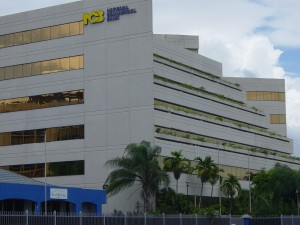
NCB Financial Head Quarters in Kingston

According to NCB “in a bid to strengthen its Jamaican insurance portfolio and optimise its product and service offerings and customer experience, NCB Financial Group has begun the process of streamlining the insurance business currently offered by its competing subsidiaries – NCB Insurance Company and Guardian Life”.
NCB Insurance made applications to the Financial Services Commission seeking approval for the transfer of NCB Insurance of insurance and annuities business portfolio to Guardian Life and for the NCB Insurance to become licensed dealer under the Securities Act and to be registered as an insurance agent under the Insurance Act.
The submission also indicates that the application for approval of transfer of business and the application for registration as an insurance agent are contingent upon each other. If approved, these applications will allow NCBIC to discontinue its business as an insurance underwriter, retain and continue to operate its business as a Pension Fund Administrator and Investment Manager, while selling insurance products as an exclusive agent of Guardian Life under a new company name.
Other areas that investors can look forward to for cost-cutting will be in administrative costs, marketing, while the merger of the investing arms locally and overseas will bring enormous benefits.

Big drop in Sagicor Financial profit

Sagicor Financial Company, the parent company of the Jamaica-based Sagicor Group, had a torrid 2020 first quarter, with revenues and profit collapsing. The second quarter ending June could be better as capital markets are enjoying some rebound that could reverse some of the investment losses in the first quarter.
Premium income dropped from US438 million in 2019 to $342 million and net premium Income declined to $318 million from $265 million. Profit for the quarter was impacted, mostly by the performance of the banking and investment operations, with credit impairment losses rising, from just $48,000 to $16 million and fair value changes and interest income falling from a positive contribution of $36 million to a loss of $94 million. The net effect of the above resulted in total revenues plummeted from $516 million to $343 million in 2020. Thankfully, a sharp drop in Policy benefits and change in actuarial liabilities contributed $232 million to a reduction in expenses bringing net benefits to policyholders down to $203 million versus $348 million in the 2019 March quarter. Administrative and other expenses rose, from $131 to $153 million and resulted in a loss after taxes and results of the associated company to $25 million from a profit of $32 million in 2019.

The company ended the quarter with total assets of $8.5 billion and shareholders’ equity of $1.05 billion, down from $1.15 billion in March 2019.
The company’s shares trade on the Toronto Stock Exchange.

Limners & Bards LAB Q2 profit jumps 54%

Profit rose 26 percent before tax in the second quarter for Limners and Bards (the LAB) 20 percent for the six months to year-over-year to April this year. With no corporation taxes payable since listing in 2019, profit after tax increased 52 percent for the six months to April and 54 percent for the second quarter.
Net profit soared from $25 million in 2019 to $38 million for the quarter and the six-month net profit was up 52 percent, at $87 million from $57 million. The Lab incurred Corporation taxes of $15 million for the half-year for 2019 and $5.4 million for the 2019 April quarter. Profit for the half-year was 81 percent of pretax profit for all of 2019 when the company reported $107 million in profit before taxation, while revenues are 75 percent of the 2019 outturn. The principal activities of the company are production, media and advertising services.
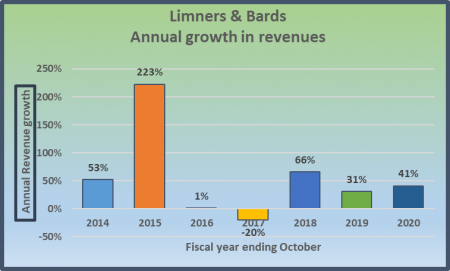
Growth in profit in 2020 to date is disappointing considering the blistering pace that revenue grew by, with an increase of 44 percent for the quarter, to hit $208 million from $145 million in 2019 and 41 percent for the six months, to $471 million from $334 million in 2019. Growth over the six months for revenues “was driven by growth in media by 72.5 percent increase and agency, up 78 percent,” Steven Gooden, Chairman and Kimala Bennett, CEO, reported to shareholders in their joint commentary accompanying the quarterly. The sharp rise in revenues follows a 31 percent increase in the 2019 fiscal year over 2018.
Direct costs increased at a faster pace than revenues at 51 percent for the quarter, to $133 million and 46 percent for the six-months with expenses of $306 million. The result is a slight decline in the gross profit margin down three percentage points at 36 percent for the quarter from 39 percent in 2019 and down two percentage points, at 35 percent for the six months.
Gross profit increased by 32 percent for the quarter and 33 percent for the month at $75 million and $166 million, respectively.
Administrative and selling costs increased 44 percent to $37 million for the quarter and 55 percent year-over-year for the six-months to $79 million.
Gross cash inflows pulled in $92 million for the half-year, but after payment of dividend, loans and working capital increase $61 million remained, when added to funds on hand before cash funds ended at $352 million. Net current assets ended the period at $490 million inclusive of receivables of $119 million, down from$133 million at the end of April 2019 but up from the year-end of $84 million and cash and bank balances of $352 million. Current liabilities stand at $111 million for a healthy current ratio of 4.4. At the end of April, shareholders’ equity stood at $424 million with long-term loans and lease payable amounted to $64 million.
Earnings per share came out at 4 cents for the quarter and 9 cents for the six months. IC Insider.com is forecasting 18 cents per share for PE of 14.5 times 2020 earnings and 25 cents for 2021.
The stock traded at $2.46 on the Junior Market of the Jamaica Stock Exchange with a PE ratio of 14 times 2020 earnings.

Indies profit doubles for Q2 – but

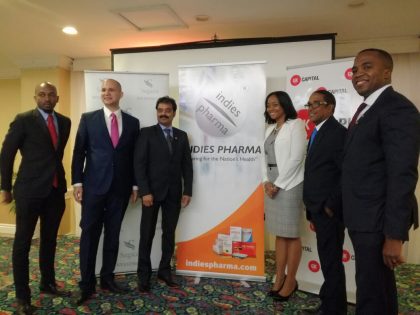
Net profit at Indies Pharma, increased a stunning 110 percent for the second quarter to March this year, from $33 million in 2019 to $69 million. With a mere seven percent rise in the quarter, sales hit $207 million over the $193 million for the same period in 2019, but there seems to be more to this profit upsurge than meets the eye.
Sale revenues rose 11 percent for the six-month, to $401 million from $361 million in 2019 and net profit increased 36 percent to $108 million from $79 million in the prior year.

Gross profit margin improved by four percentage points for the quarter as cost of sales slipped 5 percent to $57 million from $60 million, It rose 12 percent in the half-year, just ahead of the increased revenue of $122 million, from $110 million in 2019.
Gross profit ended at $150 million for the March quarter up 13 percent from $133 million for the corresponding 2019 period and ended the half-year at $279 million up 11 percent from $251 million in 2019. Meanwhile, other income jumped 330 percent for the quarter to $150,628 and 490 percent for the six months to $848,999.
Administrative expenses declined 18 percent for the quarter, moving from $100 million to $82 million in 2020, but rose marginally, for the six months to $173 million, compared with $172 million in 2019.  Profit before exchange rate adjustments and finance cost rose 107 percent in the quarter to $69 million from $33 million and 33 percent for the six months to $106 million from $79 million in 2019.
Cash flow from operating activities brought in $138 million for the six months, but increased receivables of $74 million and purchase of fixed assets, amounting to $411 million, left the company with cash of $153 million at the end of March after loan inflows of $399 million. Shareholders’ equity stood at $875 billion, compared to $647 million at the end of March last year. Net current assets at the end of March stood at $731 million, including receivables of $367 million, cash and bank balances of $153 million and $64 million due from a director. A loan of $399 million to finance to the acquisition of a three-acre property in Ironshore, Montego Bay, for its headquarters and warehousing. Current liabilities came in at $467 million for the six months. The loan to a director represents an increase over the prior periods and is not a good signal, being sent to investors.
As impressive as the results appear, investors should be cautious. The improvement in the margin in the second quarter is out of line the year to date, with the first quarter coming at 66 percent, suggesting that some profit shifted to the second quarter from the first, most likely due to an error. There are no indications that management has come to grips dealing effectively with the expiry of drugs and the appropriate manner in booking the write-offs. While the interim figures showed the gross profit margin at the 70 percent range in the past two years, by the end of the fiscal year, it fell to 61 percent in 2018 and 63 percent in 2019 and spoiled what was looking like promising earnings, until the final numbers were in for the years. Based on the 2018 and 2019 final numbers, there is likely to be a big adjustment to inventories in the last quarter that will pull down the profit levels.
Earnings per share came out at 5 cents for the quarter and 8 cents for the six months. IC Insider.com is forecasting 15 cents per share for a PE of 19 times 2020-21 earnings.
Following the release of the recent results, the stock traded at $2.85 on the Junior Market of the Jamaica Stock Exchange and is priced well ahead of most Junior Market stocks.

Virus hits SOS in 2020 Q1

The 2019 financial year was an excellent one for Stationery and Office Supplies, with record revenues of just over $1.2 billion, resulting in net profit rising 47 percent to $135 million over the previous year.
On the heels of the robust 2019 performance, SOS started the 2020 fiscal year on a much more somber note as the Coronavirus intervened and changed what started as a promising quarter and ended with lost sales in the final month. The Deputy Managing Director, Allan McDaniels and Marjorie McDaniels,  Chief Operating Officer in their joint report accompanying the interim results, reported that the ”revenues dropped 17 percent year over year for March, after a strong showing for the first two months of the quarter.” The directors also stated that the company “was only able to deliver on one of three planned shipments of goods for the first four months of the year to Grenada.” as a result of the disruption caused by the Coronavirus.”
SOS closed out its first quarter with sales of $337 million, a 2 percent decline versus the $343.5 million in comparative period for 2019, net profit dropped a more aggressive 24 percent, from $57.4 million in 2019 to $43.8 million in 2020.
Direct expenses were down 2 percent to $172 million, but the Gross profit margin for the quarter was constant at 49 percent in the 2020 quarter, similar to the 2019 first quarter. Gross profit closed out the quarter at $165 million down slightly from $168 million in the March 2019 quarter.
Net profit margin before finance cost declined for the March quarter to 14 percent with $45.54 million generated compared to $60 million for a 17 percent margin, in 2019.
Administrative expenses grew by 11 percent to $86 million, but selling and promotional expenses were effectively flat at $23 million. SOS realized $3.3 million profit from the disposal of property and equipment, helping to offset some of the reduced operating profit for the period.
Earnings per share
came out at 18 cents for the quarter, down from 23 cents for the 2019 first quarter. IC Insider.com is forecasting $1 per share for PE of six times earnings, but that depends on how quickly the company can recover from the dislocation to sales.
The operations generated $50 million in cash inflows and the company paid out a net amount of $22 million in increased working capital, capital expenditure and loan repayment.
Cash and equivalents rose 66 percent between March 2019 and 2020 to end at $90.4 million. Current assets increased by 8 percent to $521 million with trade and other receivables accounting for $173 million, down from $182 million from a year ago. Inventories ended at $226 million from $223 million at the end of March 2019. Current liabilities stood at $120 million down 23 percent year over year from $156 million.  Current liabilities include borrowings of $30 million and payables of $91 million. Overall total loans payable amounted to $91 million. Shareholder’s equity climbed to $640 million up from $540 million at the end of March 2019 and $597 million at the end of December last year.
The stock traded at $6 on the Junior Market of the Jamaica Stock Exchange with a PE ratio of 6 times 2020 earnings.

Traffic returning to Highway2000

Toll transactions for the first two months of 2020 were increased 2.1 percent increase over to the same period last year at Trans Jamaican Highway, the company reports in a news release to stakeholders.
The impact of national measures taken to limit the spread of the Coronavirus weighed on motorway traffic since mid-March 2020. “The decrease in traffic for March was 19.3 percent following the closure of schools, all-island curfews and the ‘work from home’ order issued by the Government of Jamaica for non-essential workers,” the release stated. According to the company, April, “saw a significant decrease of 52 percent when compared with April 2019, due to additional measures introduced such as the lockdown of the parish of St Catherine, which started on April 15.”
“The end of this confinement on May 1, was immediately followed by an increase in traffic on the motorway, as the decline fell to 34.2 percent when compared to May 2019. The trend being observed thus far for June 2020 is down 20 percent compared to the previous year,” the statement continued to say. The company estimates that the overall decline for the first semester of 2020 will be close to 20 percent.
“It is to be noted that the initial forecasts for 2020 showed traffic growth of around 1 percent compared to 2019 where the number of transactions were 24.2 million (66,223 vehicles per day)”, the statement concluded.
The company’s stock is listed on the Jamaica Stock Exchange and closed trading on Tuesday at $1.33 on the Main Market, down from the IPO price of $1.41.