86% surge in Scotia Group Q3 profit

An 86 percent surge in profit after taxation at Scotia Group pushed the July 2021 quarter profit to $2.8 billion over $1.55 billion reported in 2020, a period heavily impacted by a massive provision for credit losses amounting to $2.57 billion. Profit after tax for the nine months to July climbed 31 percent to $7.29 billion compared to $5.56 billion last year, helped by the drop in credit loss provisioning in the current year.
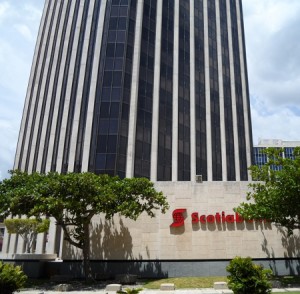
Scotia Group headquarters in Kingston.

Net interest income fell 8.4 percent for the third quarter to $5.7 billion from $6.2 billion in 2020 and slipped 9 percent to $17 billion for the nine months to July from $18.7 billion in 2020. Expected credit losses for the latest quarter of $584 million was a fraction of the 2020 provision. For the nine months expected credit losses dropped sharply to $1.99 billion from $5.25 billion in 2020. Falling interest rates on investments, reduction in lending and growth in funds deposited by the public would have negatively impacted the results. The recent increase in interest rates by the Bank of Jamaica could benefit the group with investments and loans that could generate higher income and widen the net interest income margin.
Net fees and commission income rose to $1.95 billion from $1.65 in 2020 in the third quarter but fell slightly from $5.08 billion in 2020 to $4.99 billion in 2021 for the nine months. Gains on foreign currency activities slipped from $1.75 billion in July 2020 quarter to $1.65 billion and rose 17 percent to $6.2 billion from $5.3 billion for the nine months. Insurance revenues grew to 35 percent in the latest quarter to $696 million from $516 million and fell in the nine months to $2 billion from $2.4 billion. Other revenues brought in $1 billion for the nine months compared to just $39 million for the prior period and are attributable primarily to gains realized on the extinguishment of debt facilities.
Loans advanced to customers that stood at $222 billion at the end of July last year declined modestly to $216 billion at the end of July this year but is up slightly from $214.7 billion at the end of April this year. The report to shareholders stated that mortgage loans recorded growth of 11 percent year over year and is similar to increase up to the April quarter. Growth in loans is essential for the group is it is an area that contributes most to the rise in profits and creates stability in earnings.

Audrey Tugwell Henry Scotia group’s CEO

Operating expenses slipped marginally from $5.76 billion in 2020 to $5.69 billion for the July quarter as employment cost fell from $2.46 billion to $2.26 billion and property expenses slipped to $492 million from $573 million in 2020. For the nine months to July, Operating expenses rose to $19 billion from $18.75 billion in 2020, primarily due to an increase in other operating expenses of $1 billion and partially offset by the reduction in salaries and staff benefit costs of $602 million. The increase in other operating expenses was due to restructuring costs and technology expenses. The group reported that operating expenses would be $263 million or 1.4 percent lower than the prior comparative period, excluding restructuring and additional one-off costs.
Segment results show the problem local banks have with retail banking. That segment generates the most income for Scotia but contributes the least in profits. For the nine months to July, Retail Banking contributed $1.3 billion to profit on revenues of $14 billion and in 2020, the segment contributed a loss of $975 million from revenues of $14.5 billion. Treasury generated $1.3 billion in segment profits from $2.9 million in revenues to third parties against $1.46 billion from revenues of $3.1 billion in 2020. Corporate Banking resulted in a profit of $3.5 billion on revenues of $8.44 billion and profit of $3.23 billion on revenues of $8 billion in 2020. Investment Banking delivered a profit of $1.85 billion on revenues of $2.6 billion and profit of $1.3 billion on revenues of $2.29 billion in 2020 and Insurance produced profit of $2.12 billion on revenues of $3.1 billion and profit of $2.5 billion with revenues of $3.48 billion in 2020.
Customer deposits grew 10.7 percent to $371 billion to July, from $335 billion for the comparable quarter of 2020. Investment securities rose from $141 billion at the end of July 2020 to $146 billion after dipping to $116 billion at the end of the 2020 fiscal year and cash resources stood at $147 billion, up from $116 billion at the end of July 2020.
Shareholders’ equity ended at $116 billion at the end of July this year, up from $110 billion as of July 2020.
Earnings per share stood at 90 cents for the July quarter and $2.34 for the nine months this year and should end up around $3.50 for the entire year; for 2022, and earnings should exceed $4 per share.  At the close of trading on the Jamaica Stock Exchange Main Market to stock at $39 at the start of the final week of September.
While the stocks trade at 11 times the current year’s earnings, 2022 should see growth in profits, thus reducing the valuation most likely below ten times 2022 earnings.

Shocking 4 years of Cargo Handlers errors

The number of shares issued by publicly listed companies is very important information for investors to know, but investors would not think so when examining interim financial statements in Jamaica and Trinidad and Tobago of some of the companies.
There have been so many occasions one has to search high and low to find it if at all it is reported in the interim numbers. This is such a simple matter and the stock exchanges in the region could cure it easily, by making it one of the items that must be included in quarterly reports. It should be included as a part of the statement of movement in Shareholders’ equity.
The latest shocking reporting is that of Cargo Handlers that shows the number of shares issued as a part of the statement of shareholders’ equity. The oddity is the company reporting only 37.466 million issued shares since 2018 when it increased to more than 374 million units. The Jamaica Stock Exchange website shows them as having 416.25 million shares issued and the audited accounts show that the change took place in 2018 the numbers moving from 37.485 to 374.653 million shares. One wonders why no one discovered this glaring error when the list of top 10 shareholders show four of them having more shares than what they list as issued. The error goes back to 2018 for all of the quarterly reports.
This is such a glaring error and neither the Stock Exchange, the Financial Services Commission the directors of the company or its accounting staff have found out.
Our reporting standards are not up to scratch and some persons in the financial system love to talk about best practices globally.
Take the matter of segment reporting. Some companies report it quarterly and some only annually. Most correctly report the current period and the comparative previous year’s period. Why can’t the JSE insist on some minimum standards for the benefit of investors so they get information consistently? Limners and Bards is the latest company to provide a quarterly report with no segment results yet they report it in the audited report albeit just one year forcing investors to have to go back to the previous year’s report for the comparison. Seems if that is the approach they should just report the current year’s figures and let investors go back to the previous year’s reports for profit and balance sheet information.
The vast majority of listed companies report profit results with direct and indirect costs and gross profit. But others do not. The group shockingly includes GraceKennedy, 138 Student Living, Knutsford Express. It is full time that companies lift the standard of reporting so that investors can get pertinent information to use in their investment decision making. In response to a question put to Don Wehby about the bulking of all cost on the profit statement suggest that they are in compliance with accounting standards, but that is such a lame and shocking excuse from a company of such standing in the country. Seprod produces it, Jamaica Broilers does it and several other listed companies so why not Grace. Are grace directors suggesting that their shareholders are lesser persons than those of other companies? The case of 138 Student Living is shocking when one considers that the Chairman, Ian Parsard is also Group Senior Vice President – Finance & Corporate Planning at Jamaica Broilers.
Communication with investors is a subjective matter but there are some simple matters that it just takes some thinking or consulting to get right.
AMG Packaging is in a class by itself when it comes to poor communication. The company has embarked on a major capital project, but the directors appear to be of the view that minority shareholders are best kept in as much darkness as possible about it. The audited accounts for 2020 are silent on any commitment to the project.
The latest quarterly the only capital spend, is shown as work in progress on the balance sheet in the amount of $57 million, with no comments on the progress, the total commitment and when it is expected to be complete and be in use. Worse there are no comments on its use. It is noted that the purpose has moved from a warehouse to a factory between 2018 and now.
In the 2018 annual report, the Chairman stated that “the Company recently took an option to purchase an adjoining property. If the transaction is completed, the additional space will be used to alleviate some of the space constraints in the existing facility, making operations more efficient.”
In the 2019 annual report “The Company completed the acquisition on the property at 12 Retirement Crescent which will allow us to expand our operations and to better serve our customers.” The company also stated that they “obtained funding from Proven Wealth Limited to assist with the development of 12 Retirement Crescent. The KSAC is in the process of reviewing the architectural drawings for 12 Retirement.”
The 2020 annual report states, “the company plans on utilizing the strong cash and cash equivalents position into developing 12 Retirement Crescent.  The pandemic had caused the development of 12 Retirement Crescent to delay from 2020 to 2021. A contractor has been chosen and the building of an additional 11,370 square feet is set to begin in February 2021.”
In the results to February this year, the only comment made about the development is “that the new steel frame warehouse purchased from China arrived and construction commenced. The financial statement shows WIP at $49 million, with a zero balance in the November quarter.”

Bright profit spots but cloudy elsewhere

A number of listed companies recently posted results for the second quarter of 2021, with some recording a strong rise in revenues and outstanding profits or lower losses than in 2020 and a few with lower profits.
Fontana had a good year to June and for the June quarter. The Junior Market listed company reported profit that surged 85 percent for the year to June of $512 million, with earnings per share of 41 cents, up from a profit of $277 million in 2020, with revenues rising 14 percent to $5.15 billion from $4.5 billion in 2020.
Blue Power suffered a reversal in fortunes, with a suspension of exports of soaps to Caricom, following a decision of the Jamaica Government to stop issuing Certificates of Origin for soaps manufactured in Jamaica, using imported soap noodles.
For the quarter to July, total revenues fell 23 percent from $150 million generated in 2020 to $116 million, leading to profits from operations dropping 62 percent to $8 million, from $21 million in the previous year, but gains on sales of investments of $26 million and other income, resulted in after tax profit of $46 million.
Jamaica Broilers posted revenues that surged 32 percent to $17.6 billion from $12.5 billion in 2020 for the first quarter to July 2021 but profit of $275 million dropped 28 percent from $383 million in 2020, as the Jamaican and Haitian segments posted lower profits for the quarter as the USA segment enjoyed a 84 percent jump.
Revenues at KLE Group recovered from just $7.8 million in the June quarter in 2020 to $38 million this year, with the half year returning revenues of $73 million versus $80.5 million in 2020, with losses showing slight improvement to $18 million for the quarter from $24.6 million in 2020 and from a loss of $43.7 million in 2020 half year to $40 million in 2021.

Scotia Group

Revenues at Lumber Depot increased 16 percent to $420 million in the  July quarter, this year, from $361 million in 2020, helping to drive profits 140 percent higher to $71.8 million, from $29.9 million in 2020. The strong increase resulted from a surge in gross profit margin from 18.7 percent in 2020 to 24.6 percent in the 2021 July quarter and contributed $26 million to the $42 million of increased profit.
Scotia Group reported a profit of $2.8 billion, an increase of 81 percent over the depressed 2020 third quarter and slightly more than the $2.7 billion generated in the April quarter. Profit for the nine months jumped 31 percent from $5.6 billion to $7.3 billion as expected credit loss provision fell sharply from $5.3 billion in 2020 to $1.99 billion for the nine months to July, thus negating a fall in interest income and increased operating expenses and taxation.

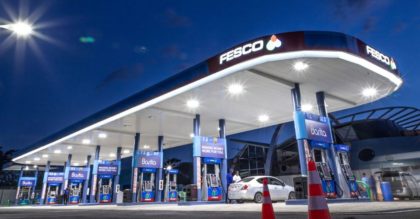
Is Fesco’s pricing rational?

Investors who bought shares in Future Energy Source in the IPO in April or a few months after are laughing all the way to the bank, with the price providing a gain of 311 percent up to Friday. The recent rally in the stock has moved it from an IPO price of 80 cents to $3.29 at the close on Friday, making it the highest valued Junior Market stock at a PE of 25 times current year’s earnings, with the next closest being, Honey Bun at 18.3.
With just 15 service stations within its network and the planned opening of the Beechwood Avenue station, there is much scope for the company to expand and grow profits in the future, but it seems a bit overdone for Fesco to be priced at a 38 percent premium to the next highest priced stock on the Junior Market.
The company’s latest financial report shows profit surging 55.5 percent to $40 million before taxes for the 2021 June quarter versus $25.7 million in the first quarter of 2020. Profit after taxes rose 66 percent from $24 million. There is no tax charge for the latest quarter, resulting from listing on the Junior Market of the Jamaica Stock Exchange. The tax incentive provides a 10 years tax concession, with no taxes payable for 5 years and at 50 percent of the normal rate for the second 5 years.
A 29.5 percent spike in the volume of fuel sold added 2.9 million litres to volume sales, helping to push revenues for the quarter up 58 percent to $1.9 billion from $1.2 billion in 2020 and much greater than the $1.5 billion generated in March 2021 quarter. Most of the June increase over the March quarter would be due to the increased price of imported fuel, emanating from the upward movement in world oil prices during the period. Sales for the June 2020 quarter, was negatively affected by disruption to business following the outbreak of covid-19 last year.

Beechwood Avenue service station, under construction.

The first quarter performance is ahead of the opening of the new Fesco Ferry service station on July 15, which is dealer owned and operated.
The Company recorded a gross profit of $55 million, an increase of 63.4 percent over the June 2020 quarter of $34 million.
Operating and administrative expenses for the 2021 first quarter popped 139 percent from $8.6 million to $20.5 million, due mainly to spending in new areas during the quarter, with no cost in 2020. Advertising consumed $2.9 million, directors fees $1.4 million, amortization of right of use assets $867,000, while legal and professional fees rose from $310,000 to $2 million and audit and accounting fees added $1 million, with virtually none in 2020.
Finance Income increased from $1.7 million to $6.4 million, with foreign exchange gains accounting for $4.4 million in the 2021 quarter. Interest cost was minimal at under $1 million in the 2020 and 2021 periods.
Current assets amount to $547 million and current liabilities $210 million, with net current assets of $336 million versus $145 million in 2020. Cash funds amount to $282 million and receivables and amounts due from related parties amount to $250 million.
Shareholders Equity stands at $582 million, up from $231 million at the end of June 2020, reflecting the net proceeds from the IPO earlier this year and an increase in retained earnings. The company outlaid $238 million in work in progress in building out the service station on Beechwood Avenue in Kingston, with $114 million incurred in the June quarter.

Is Barita really worth as much as JMMB?

Barita Investments headquarters

JMMB Group reported profit at $1.7 billion, for the quarter ending June this year, with comprehensive income, a better measure of assessing management performance, of $3 billion. Barita Investments reported profit and comprehensive income of $1.6 billion, almost 50 percent less than JMMB’s comprehensive income and yet Barita’s shares are selling 2.6 times that of JMMB and the market value is 32 percent greater.
Barita has 1.085 billion shares issued to investors, with total assets of $84.5 billion and shareholders’ equity of only $30 billion. JMMB Group has 1.9 billion shares issued almost twice that of Barita and assets of $545 billion and shareholders’ equity of $63 billion, more than twice that of Barita, but the market has placed a higher value on the much smaller company.
At the close of trading on the Jamaica Stock Exchange on Wednesday, the market value for Barita is $99 billion and JMMB $75 billion, nearly 25 percent less than Barita. Why is the market pricing Barita at a steep premium to JMMB? Barita has only a small percentage of its stock in the public’s hands and therefore is enjoying a scarcity premium, while JMMB is far more liquid with more shares in the public’s hands.
ICInsider.com TOP10 selection revealed over the years is that most investors appear to chase momentum and popular stocks of the day than invest in stocks that are likely to be big winners down the road.
Seeking relevant and credible information for proper investment decisions is not an area of focus for many. Radio Jamaica is a case in point. The stock has been in the upper level of the Top 10 for the better part of a year and a half, with investors being fed with lots of information to inform them of the big run that was and is still ahead of them. They would not buy into it until the company released full year results in July and even then, only a few bought into what is now unfolding and reflected in the huge rise in the first quarter results. There is a huge demand for the stock that is not easy to find at current pricing levels.

Scotia Group.

The message from the market is that out of favour, stocks are the last to get a following, but the ones that are likely to deliver huge gains. There is the case of Salada Foods, where investors are buying the stock at 40 times earnings when the market is nowhere near that level, while they ignore JMMB Group, for example with PE less than 10.
Investors were treating Barita Investments in the same manner as JMMB is now when Barita was on IC TOP 10 until sometime after the switch in majority ownership to Cornerstone, but few would buy into what was a terrible undervalued stock with much promise.
JMMB enjoyed a big bounce in its June quarter earnings that saw profit 123 percent from $769 million in 2020, but those results were down 31 percent from the $1.1 billion generated in 2019 that makes the 2021 first quarter results so outstanding, as it is up 54 percent over the 2019 results.
Profit for Barita is up 62 percent from $990 million earned in the June quarter of 2020 and up 76 percent over the June 2019 quarter earnings of $910 million.
Interestingly, Scotia Group is worth just 24 percent more than Barita. If Barita gets investors to subscribe to the 240 million shares in the upcoming IPO and the stock price holds at the current level after the issue closes, Barita market value would surpass that of Scotia.

Q3 profit bolts 62% at Barita

Fresh from recommending the issue of new shares to their shareholders, the directors of Investment bankers, Barita Investments, approved the payment of an interim dividend of $3.029 per stock unit to be done on October 7, to shareholders as of September 23, 2021, to cost $3.29 billion.
The company also reported nine months results to June, with profit after tax for the June quarter coming in at $1.6 billion, up a strong 62 percent from $990 million reported in 2020 June quarter and ended the quarter, with earnings per share of $1.48 versus $1.21 in 2020. Earnings for the nine months ended at $3.38 per share from after tax profit of $3.67 billion, up 82 percent from $2 billion in 2020.

Barita eyeing acquisition.

Revenues net of interest expenses rose an impressive 75 percent in the quarter, to $2.64 billion from $1.5 billion and spiked 77 percent from $3.78 billion to $6.69 billion. Fees and commission income generated half of the revenues for the quarter in contributing $1.34 billion and $2.7 billion in the year to date period accounting for 41 percent of net revenues. Foreign exchange gains brought in $647 million in the quarter versus $321 million in 2020 and $1.78 billion year to date versus just $428 million in 2020. The above two areas are the fastest growing for the current fiscal year. Gain on investment activities is down in the quarter, from $257 million to $214 million and down from $1.1 billion in the nine months last year to $1 billion in 2021.
Expenses for the quarter surged 178 percent from $345 million in 2020 to $959 million and jumped 87 from $1.3 billion for the nine months to $2.43 billion. The latest results suggest that earnings per share for the full year could come close to $4.50, of course, with investment banking institutions, they could pick up or drop revenues in many different areas.
Shareholders approved the directors to issue 160 million shares to the public, its fourth capital raising foray since the majority shares in the company was acquired by Cornerstone United Holdings, but the issue may be upsized to as much as 240 million shares.
The shares to be issued may be upsized to a maximum of 80 million additional units if the invitation is oversubscribed. If all 240 million shares are taken up, the company could raise as much as $18 billion in fresh capital, ICInsider.com estimates on the basis that there will not be a steep discount to the price the stock has been mostly traded at up to last week.

Shareholders at Barita Investments AGM.

The pricing and date of the issue are to be determined by the directors, but the offer document seems to be with the Financial Services Commission awaiting signing off of the issue. The last APO was done in August of 2020, the offer document was dated July 30, at which time the JSE closing price was $57.93, with the last traded price of $54, the offer was set at $52 for the general public and existing shareholders. With the stock trading around $82 recently, the price for the new APO could be around $75 to $80. The company could offer existing shareholders a much steeper discount as they did back in 2019, in which case the total take would be less.
Barita Investments is listed on the Jamaica Stock Exchange and has total assets of $84 billion, up from $49 billion a year ago, with Shareholders’ equity of $30.3 billion in June 2021. The company has $2 billion invested in Derrimon Trading, shown as Investment in Associated Company on Barita’s balance sheet. Derrimon contributed $42 million to profit in the quarter.
On Monday, the shares closed trading at $90.24 after jumping $7.24 and boast a PE of 20 times this year’s earnings.

Sweet profits for Honey Bun

Net profit at Honey Bun surged 221 percent above the 2020 June quarter to $65 million from just $20 million in 2020, with net profit for the nine months hitting $177 million for a 56 percent increase over $113 million earned in 2020.
Revenues rolled in for the quarter, with a 54 percent increase to $566 million, from $367 million last year and the nine months pulling in a 25 percent growth at $1.555 billion from $1.24 billion in the prior year. Export sales were up by 21 percent over the prior year,, the company revealed.
Gross profit for the quarter came in at $279 million, 61 percent over 2020, whilst the gross profit ratio closed at 48.3 percent, similar to the outturn in the prior year. Gross profit for the nine months came in at $751 million, 25 percent more than in the prior year, with $600 million with the gross profit ratio remaining consistent at 48.3 percent, as was the case in the prior year.
“The improvement was attributable to a number of factors, including the introduction of new products such as Cinnamon raisin loaf and the Hot dog roll,” Chief Executive Officer Michelle Chong and Herbert Chong, Chairman, advised shareholders in their management discussion and analysis report.
Administrative expenses increased 27.5 percent to $118.6 million $93 million in the June 2020 quarter, and for the nine months to June, the company incurred $335 million, up 21 percent from $277 million in 2020. Selling and distribution costs climbed 31 percent from $61 million in the June quarter in 2020 to $80 million and rose 9 percent to $208 million from $190 million in 2020. Taxation ended at $16.7 million from $2.6 million in the June 2020 quarter and jumped to $32.88 million for the nine months in 2021 from $17.75 million in 2020.
Gross cash flow brought in $230 million and ended with $259 million after working capital financing but ended with $78 million after addition to fixed assets of $84 million, $32 million for the acquisition of investments, loan payment of $4 and the payment of $59 million in dividends. The $84 million in capital expenditure was mainly used to upgrade the vehicle fleet to service new routes and acquire additional manufacturing equipment.
At the end of the quarter, Current assets ended with $574 million, including cash of $375 million and receivables of $82 million. Payables amount to $229 million and Net current assets ended the period $1.03 billion. Investments amount to $96 million at the end of the period, while Shareholders’ equity stands at $987 million, with borrowings at just $23 million.
Earnings per share came out at 14 cents for the quarter and 37 cents for the nine months. ICInsider.com forecasts earnings of 50 cents per share for the current year and 80 cents per share for 2022. The stock traded at $7.50 on the Junior Market of the Jamaica Stock Exchange on Friday with a PE ratio of 15 times, current earnings and is above the Junior Market average of 12.7 but lower than the average of 17 the market was valued at in March this year.
The company’s tax holiday for listing on the Junior Market expired May 2021; as such, all earnings from June 2021 will be fully taxed at 25 percent less any tax credits. The company is well managed and is poised for further growth; the stock can be scarce and may not be easy to get at the current price.

RJR Q1 profit hits the roof

We boldly predicted that profit at Jamaica’s leading media house – Radio Jamaica, would exceed the full 2021 fiscal years’ earnings of $171 million and stun the market with the full year’s profit on the way to just under $1 billion. We messed up but we were darn close, with the first quarter numbers, but now expect full year’s results to beat the original forecast and end up over $1 billion. 
We projected revenues of $1.465 billion and they delivered $1.449 billion in the quarter. Our forecast for TV revenues was $626.344 million, they reported $639.377. Radio revenues came in at $199.605, somewhat higher than ICInsider.com’s projection of $184.05 and the print division delivered $610,217 million versus ICI’s forecast of $635,697. Other income amounts to $29 million versus IC forecast of $19 million.

RJR added approximately $70 million in provision for bad debt that to drive up administrative expenses above the recent trend thus producing a profit to $110 million in the quarter, a level never before done by them in the quarter. In achieving this performance, operating revenues surged 34 percent to $1.42 billion from $1.06 billion in 2020 and beating 2019 June quarter, with revenues of $1.36 billion.
Profit margin in the quarter rose to 65 percent from 64 percent in the 2020 quarter as direct input cost climbed 28 percent to $494 compared to $385 million in 2020 for the year’s quarter. The effect, operating profit rose 37 percent to $926 million from $675 million.
Sales expenses climbed by 6.5 percent to $243 million from $228 million in 2020. Administrative expenses rose 25 percent to $362 million from $290 million. Other operating expenses rose 14.5 percent and ended at $190 million from $166 million in 2020. Finance cost increased to $12 million from $11 million in 2020. Corporation taxes amount to $37 million and just $284,000 in 20.20

TVJ one of RJR’s subsidaries

The chief Executive officer Gary Allen and Chairman Joseph Matalon, in their report, accompanying the quarterly attribute the improved results to “cost cutting and improved income generation with “increased advertising revenues across all divisions, the continued collaboration with the Ministry of Education and the staging of ISSA/GraceKennedy boys and girls championship”.
Gross cash flow brought in $227 million but growth in receivables, inventories and increased payables resulted in an additional increase of funding of $120 million, addition to fixed assets and loan payment used up funds and created an overall net outflow of $119 million thus reducing the opening cash balance of $725 million to reflect the cash on hand at the end of the quarter. At the end of the quarter, Current assets ended at $2.34 billion including cash of $606 million and receivables of $137 billion, Payables amount to $1.29 billion and net current assets at $1.05 billion. Shareholders’ equity stands at $2.6 billion with borrowings at just $399 million.
Earnings per share came out at 4.5 cents. ICInsider.com forecasts earnings of 45 cents per share for the current year and 80 cents per share for 2023. The stock traded at $2.15 on the Main Market of the Jamaica Stock Exchange on Thursday with a PE ratio of 5 times, current earnings well below the average of 16.3 currently for the Main Market. The stock remains ICInsider.com BUY RATED.

Profit jumps 225% at overvalued Salada

It was difficult to understand the factors driving a pile of investors into Salada Foods shares after the stock split at prices as high as $10, even after the second quarter results were posted, showing strong increases for revenues and profits in that quarter.
Alert investors would have found that the big jump in the second quarter’s performance was due to the underperformance in the first quarter. Unfortunately, the company directors did not help investors to understand what was going on. Many investors will learn that when companies’ products are sold through distributors, sales can be jerky for the producers while the distributors can be showing a totally different picture. That seems to be what happened at Salada, where the second quarter sales fill the void left in the December quarter when sales were low.
The latest quarterly report has leveled the playing field and many investors are going to weep for not heeding the suggestion that the stock was highly overvalued.
Sales in the third quarter popped 17 percent to $311 million, from $257 million in 2020. For the nine months to June, sales rose just 9 percent to $890 million from $920 million in 2020.
Profit after tax climbed 53 percent to $51 million for the current year’s June quarter compared to $24 million in 2020 and for the nine months this year, it rose an impressive 225 percent to $115 million from a mere $36 million in 2020.
Gross profit margin rose in the June quarter to 32.97 percent, with the year to date ending at 30.4 percent as gross profit rose 29 percent in the quarter to $102 million from $79 million 17 percent for the year to date, to $271 million from $231 million in 2020.

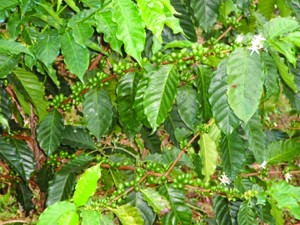
Coffee plant

Administrative expenses varied marginally than in the prior year, ending at $31.2 million in the quarter from $30.3 million in 2020 and slipping in the nine months to $96.7 million from $897.5 million in 2020. Marketing and sales expenses were effectively flat at $13 5 million versus $13.4 million in the 2020 June quarter and down sharply in the nine months to $36 million from $46.7 million last year. Net finance income saw a positive contribution in the June 2021 quarter of $8.6 million compared to a loss of $3.6 million in 2020 and $15 million in the nine months to June of $15 million from a loss of $12.5 million in 2020. Taxation rose to $16 million in the June 2021 quarter from $6 million last year and $38.5 million in the nine months to June this year from $12.5 million in 2020.
Gross cash flow brought in $174 million, but increased investments and additions to fixed assets and the paying of $108 million in dividends resulted in net outflows of $4 million. At the end of June, Current assets amounted to $964 million, with inventories of $487 million, receivables of $159 million, cash and bank balances of $167 million and investments of $151 million.
Current liabilities ended the period at $256 million. Net current assets closed the period at $707 million while shareholders’ equity stood at $964 million with no long borrowed funds used to finance the operations. In addition to investments in current assets, is $105 million classified under non-current assets.
Earnings per share came out at 5 cents for the quarter and 11 cents for the year to date. IC Insider.com is forecasting 17 cents per share for the fiscal year with a PE of 46 times, current year’s earnings.
The stock traded at $7.79 on the Main Market of the Jamaica Stock Exchange. Net asset value is 93 cents, with the stock selling at 8.6 times book value.

Rebound for Stationery & Office Supplies

Stationery & Office Supplies is enjoying a strong rebound from the COVID-19 afflicted 2020 financial year, with profit swinging from a loss of $22 million in the June 2020 quarter to a small profit of $3 million in the 2021 second quarter and well off from a profit of $34 million in the 2019 June Quarter.

Stationery & Office Supplies Montego Bay

Profit rose over 168 percent year on year for the first 6 months of 2021, from $21.8 million in 2020 to $58.4 million.
Sales surged 76 percent in the June quarter to $238 million from the 2020 covid-19 battered quarter and 17 percent for the half year to $551 versus $472 million in the 2020 period. While making a good recovery, this year’s revenues trail that of 2019 by some degree. Revenues in June 2019 quarter were 24 percent higher at $295 million and for the half year, 15 percent greater than the $633 million generated in 2019.
The cost of goods sold rose 61 percent in the quarter to $117 million and 7 percent for the half year to $261 million. Gross profit margin rose to 51 percent in the quarter, with gross profit of $120 million up from 46 percent in 2020, with gross profit of $63 million. For the half year, gross profit margin rose to 53 percent from gross profit of $290 million up from 46 percent in 2020, with gross profit of $228 million.
Administrative and general expenses rose 54 percent to $82 million from $55 million in 2020 during the June quarters and climbed a milder 16 percent to $163 million from $141 million for the six months period. Selling and promotional costs rose from $14.6 million in the June 2020 quarter to $22 million and moved from $38 million for the six months in 2020 to $43 million in 2021.
Depreciation, amortisation and impairment charges were slightly down in the quarter at $8.2 million versus $8.7 million in 2020 and $16.5 million compared to $17.8 million for the half year. Finance and foreign exchange cost accounted for $5.2 million in the quarter versus $6.4 million in 2020 and $10 million in the six months period this year, from $12 million in 2020.
“History has shown that SOS’s second quarter is normally the slowest period during the year, but even though we continue to suffer through the Covid-19 virus and all of the issues that come along with it, SOS was able to post a profit, with significant improvements compared to the second quarter of 2020. These are good indicators that Jamaica’s economy is continuing to rebound and as we progress through the summer months, we will see the return of children to school which will also help improve the sales of SEEK back to school products in the market,” stated David McDaniel, Managing Director and Marjorie McDaniel, Chief Administrative officer in their joint commentary of the results.
Earnings per share for the second quarter for 2021 amount to one cent and 23 cents for the half year. ICInsider.com projects full year earnings at 85 cents per share and $1.50 for 2022. The stock traded at $7.50, with a PE of 9, based on 2021 earnings and that compares favourably with the market average PE of 12.4.
The company remains in a healthy financial position at the end of half year period. At the end of June, shareholders’ equity stood at $668 million, with long term borrowings at $114 million and short term borrowings at $39 million. Gross cash flow amounts to $89 million but, with growth in working capital and repayment of loans, the company ended the half year with net negative flows of $6 million. Current assets stood at $509 million, including inventories of $276 million, trade and other receivables of $102 million, and cash and bank balances of $91 million. Current liabilities ended at $126 million, with net current assets ending at $382 million.