Crude oil falls set for more losses

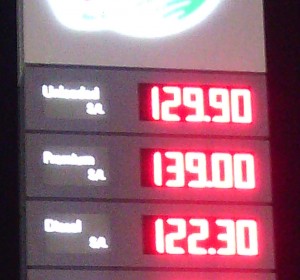
Fuel prices at the pumps in May 2015.

Fuel prices at the pumps in May 2015.

Jamaica and most of the Caribbean excepting Trinidad and Tobago are benefiting from a soft oil market with prices having fallen from a recent high of US$51.23 per barrel in June.
Excess inventories said to be near the 97-year high reached in April and increased drilling has pushed the price down to US$40 per barrel on Monday. Technical indicators point to a fall to the low, between US$35 to US$30, before too long.
Increased drilling and the rise in supplies will add more downward pressure on prices going forward, it will take a very long time for inventories to normalize. Added to this, is the pressure that investors have placed on prices, as they continue to sell oil short, at an increasing pace.
For every US$1 fall in the price, Jamaica will save approximately US$9 million per year. The fall back of oil prices will result in lower electricity and transportation cost for the majority of the region and boost companies profits.
Jamaica’s remittances up 10%

FX_USPoundJamaica enjoyed a strong 10.4 percent growth amounting to US$17.2 million in net remittances in April 2016 to reach US$184 million compared to April 2015. The growth reflected an increase in gross remittance inflows buttressed by a slight contraction in remittance outflows.
Gross remittance inflows for the month were US$203 million, an increase of US$15.5 million or 8.3 percent versus the similar period last year. While the April’s increase climbed sharply over 2015, net inflows for the first 4 months of the year is up just 3.5 percent, reflecting swings in the rate of growth for various months, with January suffering a contraction of 6.4 percent and March rising by just 1.5 percent.
Net remittances for the first four months of 2016 were US$22 million or 3.5 percent above the 2015 period, to end at US$660 million, flowing from an increase in gross inflows, partially offset by an increase in outflows. Total inflows were US$740 million, an increase of US$25 million or 3.5 percent.
In 2015 total remittance inflows, amounted to US$2.23 billion or 3 percent ahead of the amount generated in 2014.

JSE off to rousing start – Friday

Jamaica stocks started trading on Friday where they left off on Thursday with both the main market and the junior market indices rising. Caribbean Cream traded at a new high of $6.78 with 56,000 units as investors continue to respond to the company’s first quarter results.
The all Jamaica Composite Index jumped 1,506.48 points to 179,177.69, the Jamaica Stock JSE intra 15-07-16Exchange Market Index gained 1,347.06 points to 161,258.48, the Jamaica Stock Exchange combined index climbed 1,499.13 point to close at 171,976.49 points andthe junior market index gained 19.20 points to 2,177.83.
Trading after 75 minutes of the market’s opening resulted in 23 securities changing hands, accounting for a volume of 1,330,966 shares with the average number of shares traded amounts to 63,379 units compared to an average of 45,559 units on Thursday. Trading has so far resulted in 10 stocks gaining and 6 declining as stocks trading over 100,000 units include Cable & Wireless that traded 167,000 at $1.12, Consolidated Bakeries traded 400,000 shares at $2.10, Honey Bun with 185,000 units traded at $5.60 and Lasco Manufacturing with 236,850 shares trading at $5.05. Scotia Group gained $1.10 while trading 18,490 shares at $31.90 while Pan Jamaican Investments lost $1 in trading 27,900 units at $24.

Huge increase in Government revenues

MOFGovernment revenues jumped by nearly 6 percent over budget for the first two months of the fiscal year to May, while payments dropped sharply resulting in the fiscal deficit of just $4 billion for the two months, down by $11 billion projected.
Revenue in take for the two month period is just over $9.2 billion or 15 percent ahead of the similar period for 2015.
Tax revenues jumped 6 percent or $3.8 billion over forecast, flowing mainly as a result of an increase of, $530 million in withholding tax on interest, local GCT amounting $1.26 billion, stamp duty of nearly $500 million and GCT and special consumption tax on imports of $1.1 billion.
Interestingly, the increase is taking place with little input from the new taxes government implemented in May this year.
On the expenditure side, interest cost fell by $1.5 billion and normal housekeeping expenses is down by $3.4 billion while the wage bill moved up by $966 million. Capital spending was under, by $3.2 billion, with only $1.6 billion spent by May. Information, gleaned indicates that much of the under spending is due to a slow start to the fiscal year, with June spending expected to catch up.
The increase in revenues is in keeping with a trend seen in the first 9 months of 2015, when revenues were growing well ahead of forecast. Total revenues are up 21 percent or $5.9 billion ahead of the amount generated in April 2015 and 10 percent or $3.37 billion more in May this year, than for May 2015.
It early days yet, but if the trend on the revenue collection continues close to what is now being experienced, it would make it much easier for the government to meet some of the commitments they have, for 2017 onward.

Cable & Wireless reports profit

CW flow hqCable & Wireless reports profit for the year ending March of $1. 2 billion, up from a loss of $8.9 billion in 2015. The company got help from net exceptional credit of $1.2 billion, even without this credit, the company made a small profit after finance cost but before taxation.
Importantly, C&W made an operating profit in the second half of the year of as Mobile revenues climbed by 22 percent.
The exceptional income stems from a reversal of $3.4 billion of restructuring cost written off in the 2015 fiscal year offset by employment restructuring cost in 2016. The company reports profit of $178 million in the March quarter compared with $486 million in the December quarter.
Revenues for the group rose moderately to $23 billion from $21.9 billion in the 2015 period while operating expenses fell to $15.8 billion from $17.4 billion but depreciation rose to $2.3 billion from $1.7 billion. Amortisation cost climbed to $1.1 billion from $848 million while finance cost remained fairly steady at $3.9 billion.
The company’s stock trades at $1.48 up 10 cents in the morning session from Monday’s closing price, on the Jamaica Stock Exchange today.

Bank of Jamaica cuts interest rate

BOJ sold US dollars into the system on Monday

BOJ sold US dollars into the system on Monday

Bank of Jamaica announced a cut in its Certificate of Deposit rate to take effect on May 31, accordingly, the rate offered on its benchmark 30-day Certificate of Deposit will be reduced to 5 percent from 5.25 percent.
The rate was last reduced from 5.50 percent to 5.25 on August 18, 2015.
According to the central bank “the adjustment to the signal rate reflects the Bank’s assessment that the inflation outlook for the fiscal year 2016/17 will continue to be favourable and is expected to be within the lower half of the 4.5 percent to 6.5 percent target range for the fiscal period. Although growth has been weaker than expected, macroeconomic indicators have been reflecting generally positive trends. Inflation expectations remain firmly anchored in single digits, international reserves are above adequacy levels, the current account of the balance of payments is projected to be at a sustainable level, private sector credit is expanding, market interest rates have been trending downwards and the fiscal accounts continue to be strong.”
The reduction follows falls in Treasury bill rates that are now just ahead of the pre adjusted CD rate.

Jamaica’s $ competitiveness may be up 5%

J$ - 500front The Jamaican dollar may have gained 5 percent in competitiveness for the year to date against the US dollar. The closing selling rate for 2015 ended at $120.42 and has so far slipped by 3.5 percent to Monday, with inflation being negative 1.7 percent between January and April this year, the Jamaican dollar has picked competitiveness above the change in the rate of exchange.
The foreign exchange market closed on Monday, with dealers buying the equivalent of US$47,761,762 and selling US$44,338,122, in contrast to US$35,541,148 purchased and US$47,935,497 sold on Friday with the rate for the important US dollar rising to record new lows for the Jamaican dollar.
In US dollar trading, dealers bought US$44,507,300 compared to US$32,883,247 on Friday, as the buying rate for the US dollar rose 5 cents to $123.83.FX Sum-16-05-16 A total of US$42,340,729 was sold versus US$41,138,924 on Friday with the selling rate rising 8 cents to $124.65. The Canadian dollar buying rate dipped 8 cents to end at $92.26 with dealers buying C$1,069,725 and selling C$866,429, at an average rate that rose 86 cents to $96.50. The rate for buying the British Pound fell 89 cents to $174.92 for the purchase of £1,621,031, while £658,096 was sold, with the rate falling $1.81 to $177.42.
At the end of trading, the selling rate for Euro, fell $1.08 to close at J$140.75, from Friday’s rate, according to data from Bank of Jamaica, while dealers purchased the European common currency at J$137.76, for a fall of $1.14 from Friday’s rate. The US dollar equivalent of other currencies traded amounts to US$167,489 being bought, while US$390,004 was sold.
FX HL -16-05-16Highs & Lows| Notable changes to the highest and lowest rates the Jamaican dollar traded at in the foreign exchange market on Monday, include, a decline in the highest selling rate of $29.21 for the US dollar to $130.79, a drop of $19.40 in the lowest selling rate to end at $100.70. There was a rise of $3.45 in the highest buying rate of Canadian dollar to end at $98.75 and a rise of $3.11 in the lowest buying rate to end at $76.11, while the lowest selling rate fell $2 to $89. The highest buying rate for the British Pound dropped $3.35 to $179.65 and the highest selling rate slipped $1.08 to $184.68.


$1.275m threshold for all

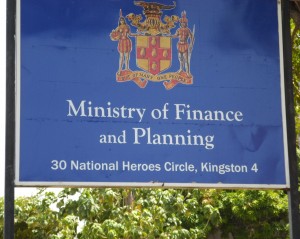
Minister of Finance Audley Shaw

Minister of Finance Audley Shaw

Minister Audley Shaw, announced an across the board threshold for individual tax payer of $1.275 million, effective July 1 this year, and to move it to $1.5 million, starting April 2017.
Shaw stated that 251,000 persons will benefit from the plan which is said to cost $12 billion in this fiscal year. The Minister announced a series of tax measures to fill the gap caused by the shortfall arising from the tax plan. Taxes will go up on cigarettes, petrol, heavy fuel, LNG and departure tax.
Tax payers earning over $6 million per annum will pay taxes above the threshold at 30 percent instead of the current 25 percent.
The Minister stated that the plan is to move from direct taxation to indirect taxation with the expectation to fully phase out personal tax.
Shaw presentation place a great deal of focus on growth and development, including focus on improved infrastructure including extension of the south coast highway to Negril.
The minister projected economic growth at 1.8 percent for the fiscal year up from 0.8 percent for the 2015/16 fiscal year. The Minister also stated the drive for comprehensive tax reform to be pursued.

Grace Kennedy’s blow out quarter

Grace Kennedy profit for Q1 jumped 153%

Grace Kennedy profit for Q1 jumped 153%

Grace Kennedy reported a 153 percent jump in it results for the first quarter ending March with profit after tax of $1.5 billion versus $589 million in 2015. Grace reports that $606 million of the increase came from disposal of investment, with the bulk of it coming from the liquidation of a subsidiary.
Earnings per share ended at $4.51 compared to $1.78 in 2015 and the full year’s earnings looking to exceed $13 per share.
Grace reported sales revenues of $22 billion up from $19.36 billion in 2015, with profit from operations doubling to $1 billion, while other income amounted to $991 million up from $316 million in 2015.

Group Chief Executive Officer, Don Wehby steering the Grace ship to safer waters.

Group Chief Executive Officer, Don Wehby steering the Grace ship to safer waters.

The food and trading division enjoyed the most growth, moving from $398 million to $855 million, the banking and investing segment recorded lower profits of $29 million than the $89 million in the 2015 period, while the money transfer segment, continues to deliver attractive increases of 26.5 percent, with profit of $587 versus $464 million and the Insurance division went up 48 percent from $67 million to $99 million.
The company attributed the strong increase in the food and trading division to “improved performance of our food distribution and manufacturing business in Jamaica and internationally.”
Grace’s stock has come in for increased demand on the Jamaica Stock exchange over the last few trading days, with the price closing at $84 on Thursday with 1,021,582 units traded.

Pan Jam’s 5 for 1 split

pan_jamaican_logo280x150IC Insider.com long standing BUY RATED stock, Pan-Jamaican Investment Trust (PJAM) may now be set to come into its own with an announced 5 for 1 stock split approved by the board in February, with the Jamaica Stock Exchange being informed more than 2 months after they should have been.
The stock last traded on the Jamaica Stock Exchange at $98, but based on its earnings of $15.19, the price should be much higher. The stock price has struggled for some time to achieve the valuation that most other stocks in the main market have attained, since the start 2015. As one of the highest priced stocks on the Jamaican market, investors have been looking elsewhere, to invest their money, leaving the stock attractively priced and undervalued.
Various investors in the past, have been saying that the company needed to split the stock to make it more attractive for investors. Management felt otherwise, saying that a split would make it appear to be a penny stock, in the eyes of overseas investors.
It seems like the decision of both Jamaican Teas and the Lasco group to split and the impact that the spilt has had on the prices of these stocks may have convinced the Pan Jam directors to take the plunge.
The company in a release to the Stock Exchange today, advised that the following resolution was recommended by the Board of Directors at its meeting held on February 29, 2016: “Special Resolution- Resolution for the Sub-Division of Shares – “That each of the 250,000,000 ordinary shares in the capital of the company be subdivided in 5 ordinary shares each thereby making a total share capital of 1,250,000,000 ordinary shares of no par value at the existing total stated capital of 2,141,985,000 with effect from the close of business on May 31, 2016”.
The resolution is subject to approval at the Annual General Meeting scheduled for Thursday, May 26, 2016.
Interestingly, the Jamaica Stock Exchange rule states that a company is required to give notice to the Exchange of at least a week in advance, the date of the Board meeting at which the declaration or recommendation of a dividend, bonus issue or rights issue will be considered. Question did Pan Jamaican comply?